Home Chongqing China Chongqing Hotels About
Home  ›  Asia  ›  China  ›  Chongqing  ›  Real Chongqing Food
🇨🇳 Chongqing Sichuan Cooking · 2026

Beyond the hotpot
the taste that says you've reached Chongqing

Chongqing isn't only hotpot. Behind it sits a málà flavour system built on beef tallow — spicier and richer than Chengdu — and the everyday 川菜馆 plates locals order daily: twice-cooked pork, mapo tofu, fish-fragrant pork. Read the flavours first and the whole table tastes better.

The flavour

川菜, the Chongqing way — Sichuan turned heavier, richer, bolder

Here's the thing: most visitors land in Chongqing and head straight for hotpot, eat, and leave — which is fair enough, because Chongqing really is China's hotpot capital. But step into an ordinary 川菜馆 (chuān cài guǎn — a Sichuan restaurant) at lunchtime and you'll see the local tables stacked with wok plates throwing chilli and beef-tallow aromas across the room. That's the real meal Chongqing eats every day — not hotpot.

Chongqing food is Sichuan cuisine (川菜), the same as Chengdu, but the bolder branch — spicier, oilier, more rustic. The heart of it is málà (麻辣), from Sichuan peppercorn (花椒, which sets the tongue tingling) plus hot dried chilli, all built on a base of beef tallow (牛油) that carries the chilli aroma deep and makes the flavour linger. Chengdu is rounder, gentler and lighter, prizing balance. As locals put it: Chengdu is the polite side of Sichuan; Chongqing is the rough-and-ready one.

This page doesn't run through the famous greatest hits like the Chongqing must-eats guide does, and it doesn't deep-dive hotpot or jianghu cooking dish by dish. Instead it walks you through the language of flavour behind every plate in a Sichuan restaurant — the málà-and-beef-tallow system that is the soul of this city, the everyday home-style plates locals actually order, and — crucially, if you're not a chilli warrior — how to order a balanced table instead of a wall of fire you can't finish.

麻辣 · The Chongqing system

6 pillars of flavourthat make Chongqing, Chongqing

Learn these core seasonings and tastes and you'll read a Sichuan menu, understand why Chongqing hits so heavy and rich, and order like a local.
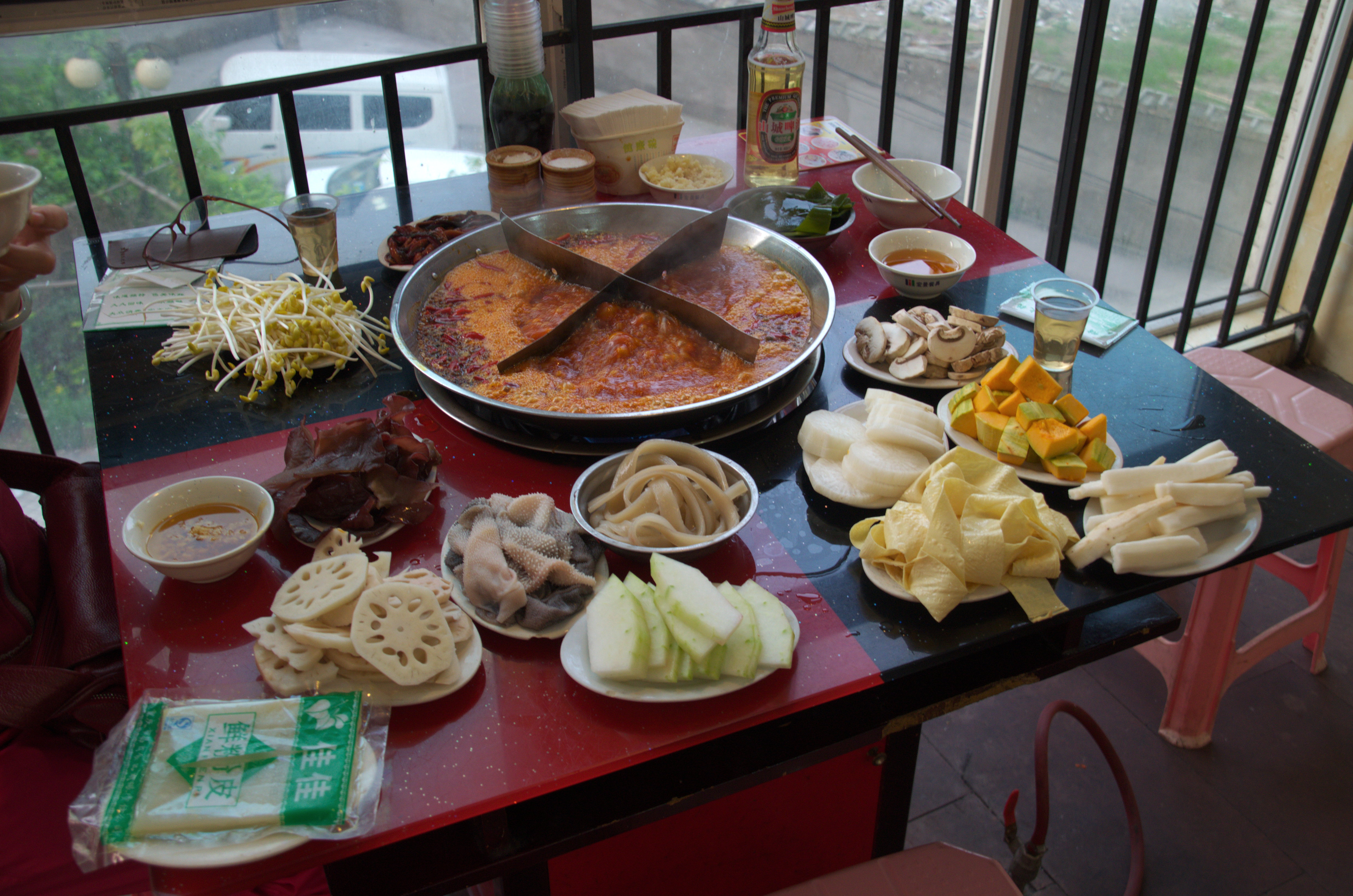
A Chongqing yuanyang split hotpot, one side a red málà broth of beef tallow afloat with dried chilli, the other a clear soup, on a table ringed with fresh raw ingredients 1
Málà
麻辣 · numbing-and-hot — the heart of Chongqing flavour

The taste everyone pictures when Chongqing comes up — but a lot of people misread it as just "very spicy". Málà actually comes from two characters: 麻 má (numbing) from huajiao (花椒 Sichuan peppercorn, which isn't pepper at all but the husk of a citrus-family fruit that makes your lips tingle like a mild electric buzz), plus 辣 là (hot) from dried chilli. Together they give that "numb first, heat after" sensation you don't get from chilli anywhere else. Chongqing leans into málà especially hard, in the hotpot and the home-style wok plates alike.
Found in: mapo tofu · shuizhu yu (fish in chilli oil) · hotpot
Level: very spicy + numbing — the strongest taste in the group
Tip: if you go numb, warm soy milk or tofu water helps more than plain water
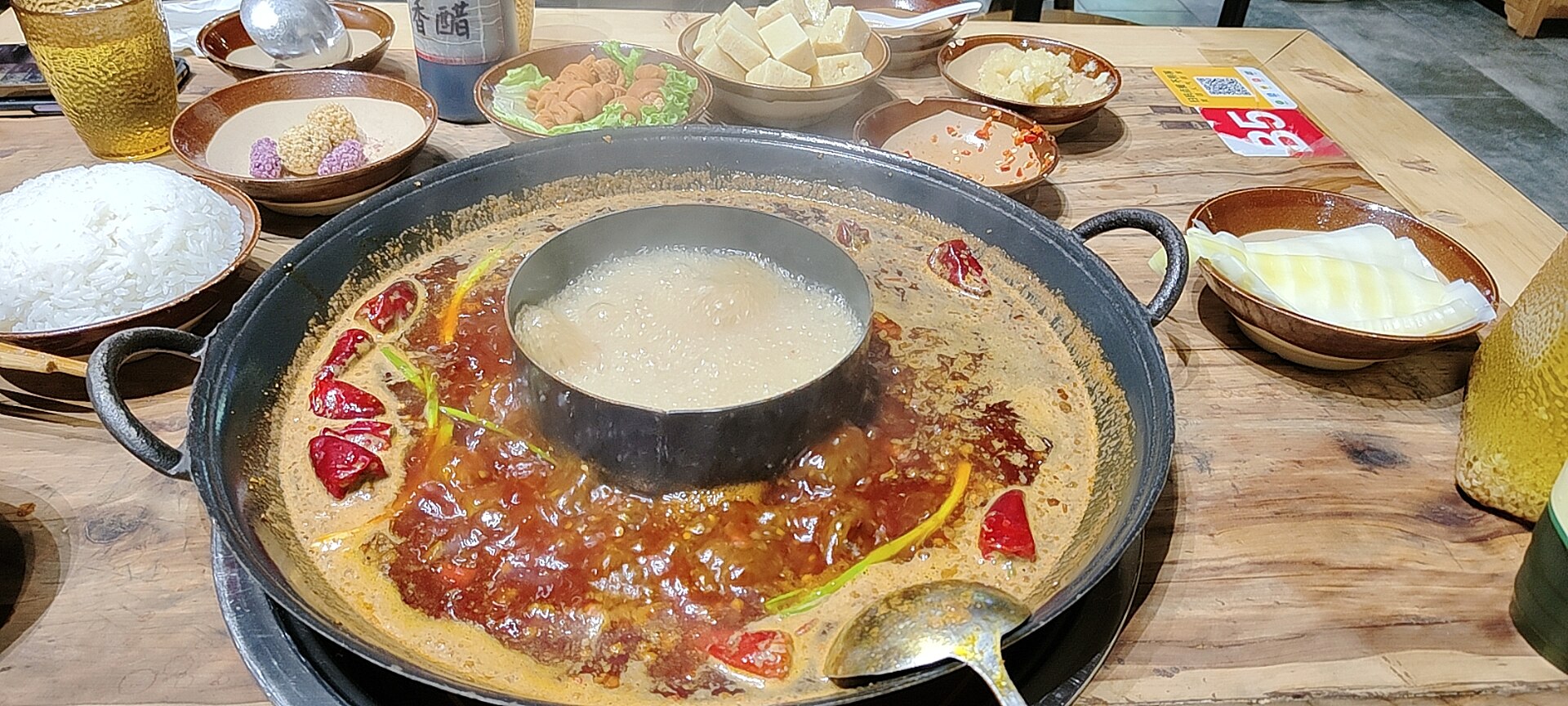
A Chongqing hotpot with a thick red beef-tallow broth and a clear-soup well in the centre, set on a wooden table surrounded by side dishes and dipping bowls 2
Beef Tallow (Niú Yóu)
牛油 · the rendered-beef-fat base — Chongqing's proudest flavour

If málà is the face, beef tallow is the soul — and it's the clearest thing that sets Chongqing apart from the rest of Sichuan. Rendered beef fat (牛油) carries the aromas of chilli, huajiao and spice far better than vegetable oil, so the flavour clings to the noodles and the ingredients and lingers longer. The red broth in a Chongqing hotpot is built on pure beef tallow, and home-style wok plates often have that same rich aroma. The richness that startles a lot of first-timers is exactly the taste of this city — and locals eat it year-round, summer heat and all.

Found in: Chongqing hotpot · málà wok plates · jianghu dishes in red oil
Level: very rich — heavy, fragrant, lingering
Tip: tallow firms up as it cools, so eat it hot · hot steamed rice cuts the richness well
🫙3
Doubanjiang
郫县豆瓣 · Pixian chilli-bean paste — the soul of the wok plates

The seasoning behind nearly every home-style Sichuan plate — Pixian chilli-bean paste (郫县豆瓣酱), made from broad beans and red chilli fermented for months or even years, giving a savoury, umami, mildly spicy taste and a natural deep-red colour. When you cook with it you fry it in oil first to bloom the aroma (this is called 炒香) until the oil turns red. This is the base of huiguorou, home-style tofu and most spicy stir-fries. Chongqing uses a heavier hand and often fries it in beef tallow, which makes the flavour deeper and richer.

Found in: huiguorou · mapo tofu · home-style tofu (家常豆腐)
Level: mild to medium spice — savoury, fragrant, umami-forward
Tip: if a plate tastes savoury-fragrant-rich rather than blazing hot, that's good doubanjiang at work
🌶️4
Pickled Chilli (Pào Jiāo)
泡椒 · brined chilli — the sour-spicy taste you don't notice

Not every Sichuan flavour comes at you with raw heat — pickled chilli (泡椒) is red chilli brined in salted water until it turns mildly sour, followed by a round, gentle warmth. It's stir-fried with meat or offal for a bright, palate-opening, richness-cutting taste, and it's the lead in yuxiang (鱼香 "fish-fragrant"), the flavour whose name means "fish aroma" yet contains no fish at all — sour, sweet, savoury and gently spicy, all in one bite. People who don't love fierce heat often fall for it, because the chilli is a supporting act here, not the star.

Found in: yuxiang rousi (shredded pork) · yuxiang qiezi (eggplant) · pickled-chilli stir-fries
Level: mild spice — sweet-and-sour forward
Tip: a great plate to order alongside the spicy ones, to cut the heat and rest your tongue
🔥5
Dried-Chilli Heat (Gānlà / Húlà)
干辣 / 糊辣 · a mountain of dried chilli — bold, rough-and-ready fire

This is the flavour that makes your stomach flip on sight — the plate where dried chillies pile up like a mountain and you fish out the meat. It comes from tossing whole dried chillies into hot oil until they're toasty and just shy of charred (húlà 糊辣 literally means "fragrant-burnt heat"), giving a roasted aroma and a dry heat unlike wet, saucy spice. The dish that takes this to its extreme is laziji (辣子鸡, fried chicken buried in chilli) from Chongqing's jianghu repertoire — spicy, fragrant, crisp, and perfect with a cold beer. Most plates in this lane sit in the jianghu category rather than everyday home cooking.

Found in: laziji (chilli chicken) · gongbao jiding · dry-fried chilli fish or prawns
Level: very spicy + roasted aroma — but most of the chilli is for show, not eating
Tip: don't eat the dried chillies; just dig out the meat · the heat is in the oil soaked into it
⚖️6
Chongqing vs Chengdu
重庆 vs 成都 · bold Sichuan vs polite Sichuan

The debate people love to have — how do the two cities' food actually differ? Both are Sichuan (川菜), but Chongqing is heavier in every direction: spicier, oilier (more beef tallow), more rustic, with a straight-up, bold flavour. Chengdu is rounder, gentler, prizing the delicate balance of its composite flavours (复合味). Chengdu is the provincial capital and famous for a "lighter, rounder" taste, while Chongqing is the river-port city where a hard-working people's cooking was born — so the flavour is direct, strong and honest. Love spicy and rich? Pick Chongqing.
Chongqing: spicy-rich-bold · heavy beef tallow · jianghu cooking + hotpot
Chengdu: round-gentle-balanced · 24 composite flavours · hole-in-the-wall joints
Compare deeper: read real Sichuan food in Chengdu side by side
9 sit-down plates

The 川菜馆 dishesChongqing locals order daily

The plates on the local tables in a Sichuan restaurant — not hotpot, not street food, but real lunch-and-dinner cooking ordered to share with steamed rice.

🥩1
Huiguorou (Twice-Cooked Pork)
回锅肉 · twice-cooked pork belly — the dish Sichuan loves most

If you order one plate that proves you get Sichuan cooking, order this. "Twice-cooked" means the pork belly is boiled whole first, sliced thin, then stir-fried again with Pixian chilli-bean paste, green garlic shoots (蒜苗) and a little beef tallow until the slices curl up like little lamps with crisp edges and rich, juicy fat. The taste is savoury-fragrant with a balanced, mild heat. This is the home-style flavour every Chongqing kitchen can make, and the plate that shows whether a restaurant can handle its doubanjiang. With hot steamed rice it's so good you'll order more rice.

Where: nearly every 川菜馆 · a benchmark dish
Price: ¥28–48 / plate (~฿140–240) · shares between 2–3
Heat: mild to medium · fine even if you don't love spice
🌶️2
Mapo Tofu
麻婆豆腐 · málà tofu — the clearest lesson in málà

Soft white tofu in a thick red-orange sauce, dusted with ground huajiao and scallion — this dish is a málà lesson in a single bowl. The silky tofu soaks up a sauce of chilli-bean paste, minced pork and Sichuan peppercorn, giving a tingling numbness chased by hot chilli. "Mapo" means "pockmarked old woman", after the cook said to have invented it. The trick is to eat it piping hot over rice, so the huajiao buzz runs right across your mouth. It looks simple but tells a good restaurant from a lazy one instantly.

Where: every Sichuan restaurant · dedicated tofu shops
Price: ¥18–38 / plate (~฿90–190)
Heat: clearly spicy + numbing · you can ask for 微辣 (mild)
🥢3
Yuxiang Rousi (Fish-Fragrant Pork)
鱼香肉丝 · fish-fragrant shredded pork — not very spicy, a beginner favourite

A dish whose name means "fish-fragrant" yet contains no fish — that's the magic of yuxiang. Pork tenderloin is cut into strips and stir-fried with wood-ear mushroom, bamboo shoots and pickled chilli, tossed in a sauce of pickled chilli, ginger, garlic, scallion, sugar and vinegar for a sour-sweet-savoury-gently-spicy taste all at once — strikingly balanced. The chilli is a supporting act, not the star. It's a great plate to order alongside the málà ones to rest your tongue, and a safe pick if you're with someone who can't take much heat.

Where: any 川菜馆 · on almost every menu
Price: ¥28–48 / plate (~฿140–240)
Heat: mild · sweet-sour forward · good for first-timers
🥜4
Gongbao Jiding (Kung Pao Chicken)
宫保鸡丁 · chicken with peanuts and dried chilli — the famous Kung Pao

The Sichuan dish that went global as "Kung Pao" — but the real Chongqing version is far spicier and more chilli-fragrant than the Western one. Diced chicken is stir-fried over high heat with dried chilli, huajiao, roasted peanuts and scallion, seasoned with a touch of sugar and vinegar for a sour-sweet-spicy-chilli-fragrant hit all together. The chicken is tender, the peanuts crunchy — an easy crowd-pleaser on any table. The heat varies by restaurant: some load on the chilli for a rough-and-ready version, others keep it rounded.

Where: every Sichuan restaurant · one of the most popular plates
Price: ¥28–48 / plate (~฿140–240)
Heat: mild to medium · sweet-sour notes cut the heat
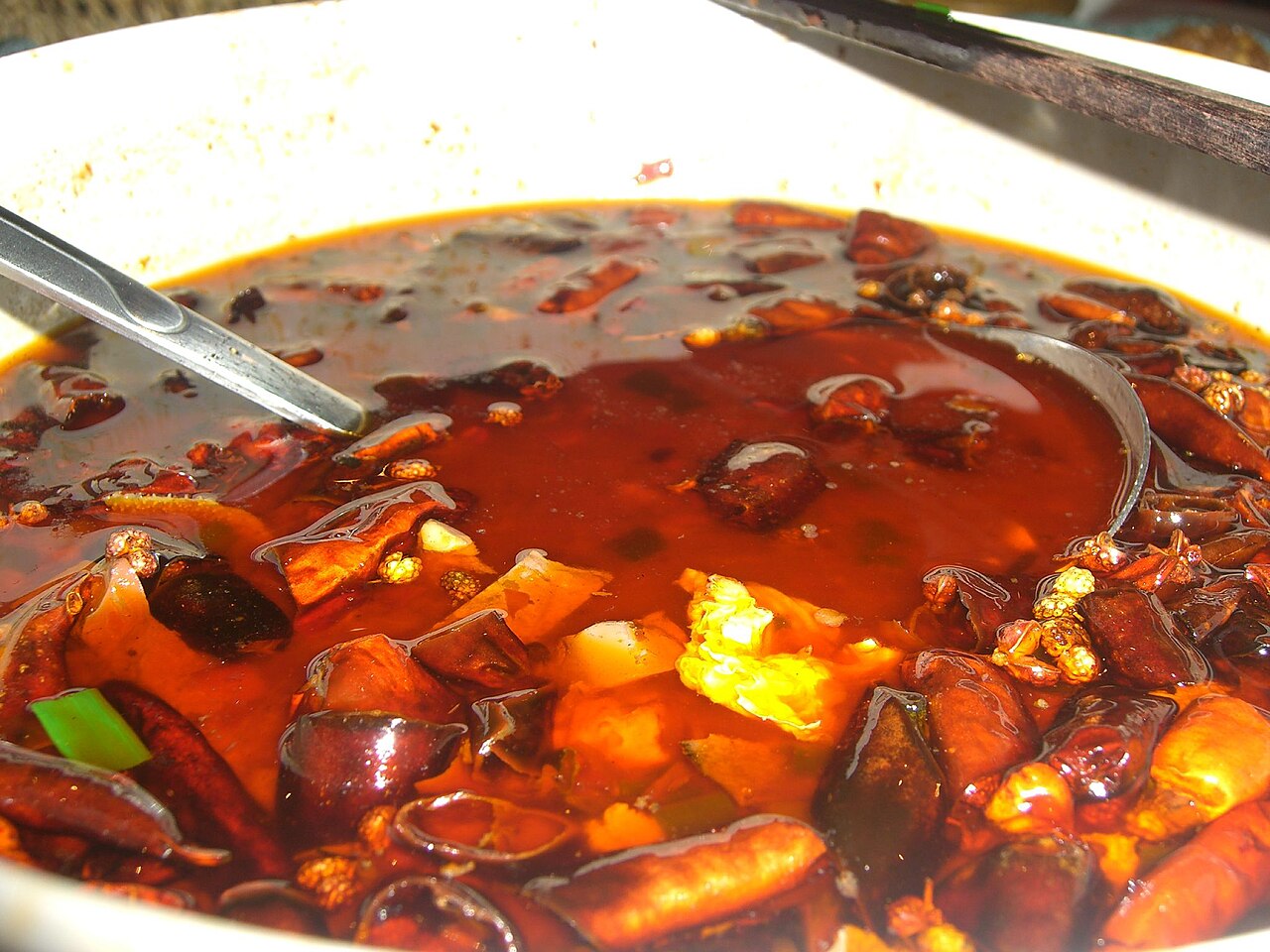
A bowl of deep-red málà broth thick with chilli oil, full of dried chilli and offal in hot soup, in the shuizhu and maoxuewang style of Chongqing 5
Shuizhu (Poached in Chilli Oil)
水煮肉片 / 水煮鱼 · meat or fish poached in chilli oil — gloriously spicy

Don't let the name fool you — "shuizhu" means "water-boiled", which sounds plain, but it's one of the most gloriously spicy dishes around. Thin slices of pork or fish are poached in a broth topped with a thick slick of red chilli oil, dried chilli and a heavy layer of huajiao, over a bed of vegetables like bean sprouts or cabbage. The málà is at full throttle, and the meat stays silky because it's cooked in oil, not water. Shuizhu yu (fish) is the most-ordered version — lift the fish onto rice and let the sauce soak in. Pure joy for chilli lovers, and the heat can be adjusted.

Where: Sichuan & jianghu restaurants citywide · a flagship for spice lovers
Price: ¥48–88 / plate (~฿240–440) · a big plate to share
Heat: very spicy + numbing · you can ask for 微辣 but it's still hot
🧄6
Suanni Bairou (Pork in Garlic Sauce)
蒜泥白肉 · sliced pork belly in garlic sauce — a cooling cold dish

Boiled pork belly sliced almost translucently thin, wrapped around cucumber and dressed in mashed garlic mixed with red chilli oil, soy and a touch of sugar, for a punchy garlic aroma, fragrant heat and silky texture. It's a cold dish you order first to eat while the hot plates cook. The pork is boiled just right so it's never dry, and its richness is balanced by the garlic and chilli oil. Sichuan diners love it as a table-opener, and it helps rest your tongue between the málà plates.

Where: any Sichuan restaurant · the cold-dish menu (凉菜)
Price: ¥28–48 / plate (~฿140–240)
Heat: medium, fragrant · garlic-forward
🥗7
Fuqi Feipian
夫妻肺片 · beef-and-offal in chilli oil — a legendary cold dish

The name literally translates as "husband-and-wife lung slices", after a couple who once sold it — but there's no lung; it's beef and beef offal (tongue, tripe) simmered with spices, sliced thin and dressed in fragrant red chilli oil (红油), toasted sesame, ground peanut and huajiao. The result is spicy, fragrant, tender and moreish, a legendary Sichuan cold dish no table is complete without. If offal doesn't put you off, this is one to try — a range of textures in a single bite, fragrant-spicy without being overwhelming.

Where: any Sichuan restaurant · cold-dish menu · a classic
Price: ¥28–48 / plate (~฿140–240)
Heat: medium, fragrant · contains beef offal; easy to skip if you'd rather
🫛8
Ganbian Sijidou (Dry-Fried Green Beans)
干煸四季豆 · dry-fried green beans — the vegetable plate everyone reorders

A vegetable plate so good people order it twice — green beans (四季豆) dry-fried over high heat until the skins wrinkle and lightly blister (the 干煸 ganbian technique fries them dry until all the moisture goes), then tossed with minced pork, Sichuan preserved vegetable (芽菜), garlic and dried chilli for a savoury-fragrant-mildly-spicy taste. The beans are chewy with a toasty aroma and go brilliantly with rice. It's the vegetable that isn't boring and cuts the richness of the meat plates — ordered on nearly every Sichuan table.

Where: any 川菜馆 · a go-to vegetable
Price: ¥22–38 / plate (~฿110–190)
Heat: mild · savoury-and-toasty forward · fine for everyone
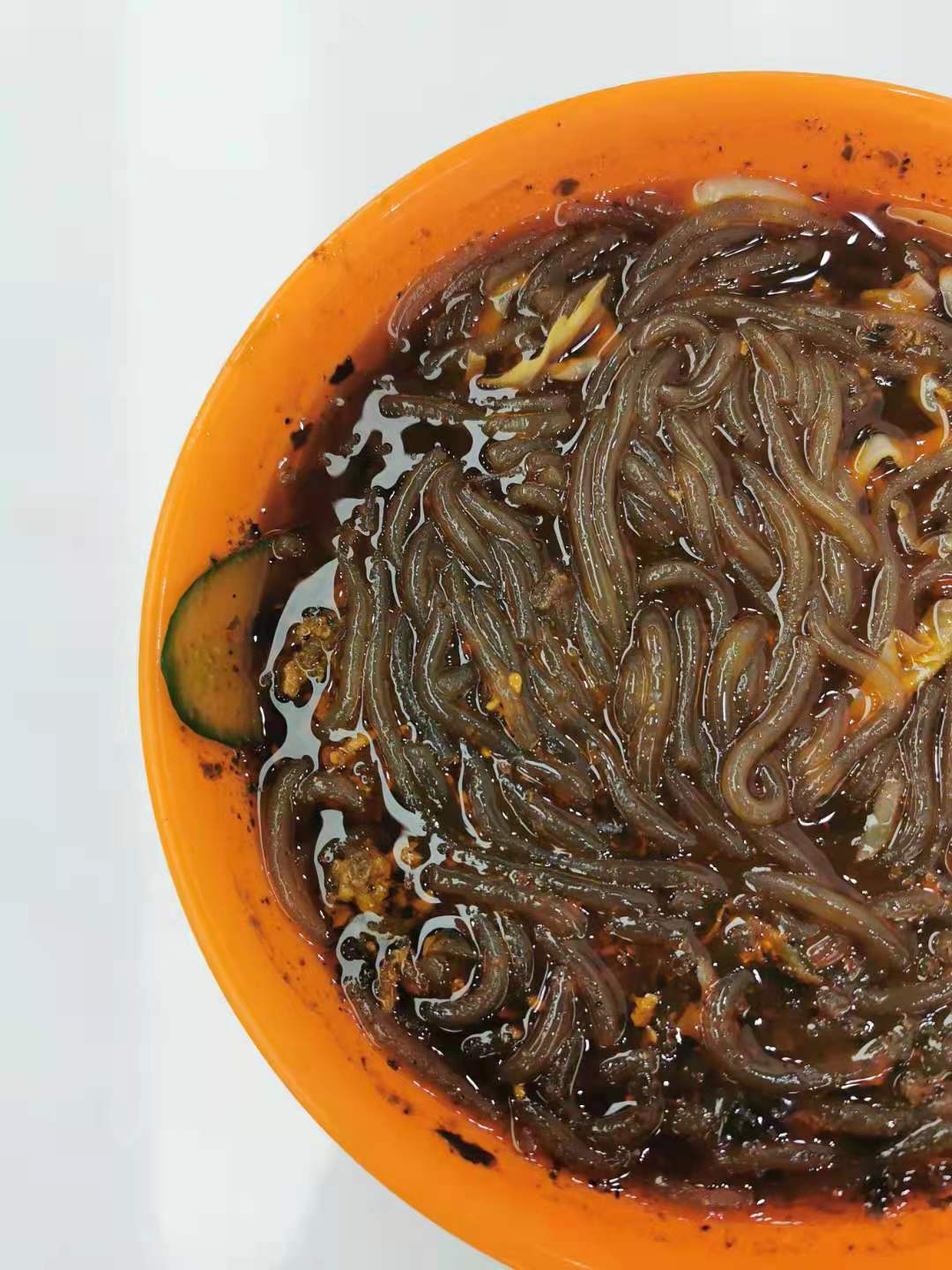
A bowl of suanlafen — translucent brown sweet-potato noodles in a dark sour-and-spicy broth, topped with peanuts and pickled vegetables 9
Suanlafen (Hot-and-Sour Noodles)
酸辣粉 · hot-and-sour sweet-potato noodles — street food in a bowl

Honestly, this one is half street food, half restaurant dish — and Chongqing is its birthplace. Chewy, slippery sweet-potato noodles sit in a broth made sour with black vinegar and spicy with chilli oil, topped with roasted peanuts, pickled vegetables, scallion and crisp pork crackling. The sour-spicy-fragrant taste is wonderfully palate-opening, and the slippery noodles slurp down hot. You'll find it both in the lanes and in restaurants — a great pick on a damp, cool Chongqing day. Cheap, and filling enough on its own.

Where: dedicated noodle shops · the lanes · Chongqing street food
Price: ¥8–15 / bowl (~฿40–75)
Heat: medium · sour-forward · ask for mild if you like
The bold showpieces we cover separately: Chongqing's headline plates like laziji (辣子鸡), maoxuewang (毛血旺) and shuizhu yu in the jianghu repertoire and málà grilled fish (烤鱼) each get their own dedicated guide, because they're "showpiece" plates ordered as the star of the table rather than everyday home cooking — this page focuses on the plates Chongqing locals order as a daily routine.
Eat like a local

Order a balanced Sichuan tablenot a wall of fire

The order of ordering — for a group sit-down

A good Sichuan meal isn't every plate spicy — locals order for balance too. Start with a couple of cold dishes (凉菜) on the table first — suanni bairou, fuqi feipian or cold peas — to eat while the hot food cooks. Then order a mix of hot plates: have one full-on málà dish like a shuizhu or mapo tofu; add a sweet-sour, non-spicy one like yuxiang pork or kung pao chicken; add a vegetable like dry-fried green beans; and finish with a plain soup to break the heat. Every plate goes in the middle to share, and rice is ordered separately.

Group size: 2 people pick 3 plates + rice · 4 people order an easy 5–6 plates + soup · Cost per head: a regular 川菜馆 runs ¥50–100 (~฿250–500) and leaves you full · a big jianghu place where you order a giant whole fish or chilli chicken can climb to ¥120–200 per person (~฿600–1,000).

Managing the heat — say your level

Heat levels in Chongqing restaurants run from 微辣 (wēi là, mild) → 中辣 (zhōng là, medium) → 重辣 (zhòng là, heavy) → 特辣 (tè là, extra hot). If spice isn't your thing, just say 微辣, or 不要辣 (bú yào là, no chilli) for the plates that can be made plain. But be warned — some dishes like shuizhu or laziji are still spicy even at 微辣, because the heat is the whole point of the dish.

Heat-cooling tricks that actually work: warm soy milk or tofu water cuts the numbness of huajiao better than plain water (water just spreads the heat) · a bowl of hot steamed rice is your best friend · always keep a sweet-sour plate and a cold dish on hand · and remember — beef tallow firms up as it cools, so eat while it's hot to keep it tasty and not greasy.

Paying + language — set up first

Most 川菜馆 take WeChat Pay and Alipay first; some accept yuan cash, but many won't take foreign credit cards — set up Alipay/WeChat Pay linked to a Visa/Mastercard via tourist mode before you go. Many spots down the lanes have no English menu, so just show staff a photo of the dish from this guide or point at a picture menu. Restaurants in malls or tourist areas like Jiefangbei usually have picture menus and staff who can help you choose.

Chongqing signatures

The flagship plateswe cover in depth

A few dishes are the city's true icons that deserve a whole guide — here's a one-line taste, then tap through to read the full thing.

🍲
Chongqing Hotpot (火锅)
the city's number-one signature · pure beef-tallow red broth · eaten year-round

Chongqing is China's hotpot capital — the red broth is built on pure beef tallow, afloat with dried chilli and huajiao, and you dip ox tripe (毛肚), duck intestine and duck blood one item at a time, timing each. Locals eat it summer and winter alike. There's a split yuanyang pot with a clear well for anyone who can't take the heat, and a sesame-oil-and-garlic dip to cool things down.

🍜
Xiaomian (重庆小面)
the city's breakfast noodle · a dozen-plus seasonings built into the bowl

The spicy noodle Chongqing eats for breakfast — twenty-odd seasonings are built into the bowl before the noodles go in (chilli oil, huajiao, preserved veg, garlic water, scallion), then alkaline noodles are added. Order it soupy or dry (干溜). The popular upgrade is wanza mian, with yellow peas and minced pork on top. A bowl runs ¥8–15 (~฿40–75).

🐔
Jianghu Cooking (江湖菜)
rustic, rivers-and-lakes cooking · big plates, bold flavour, no fuss

"Rivers-and-lakes" cooking born from boatmen and roadside cooks — bold, generous, no ceremony. The stars are laziji (chicken fried in a mountain of chilli; fish out the meat), maoxuewang (duck blood and offal in a málà broth), fish poached in chilli oil and whole stewed rooster. This is the anti-fine-dining heart of how Chongqing eats.

🐟
Chongqing/Wanzhou Grilled Fish (烤鱼)
a whole fish grilled then simmered in málà broth · a centrepiece that went nationwide

A whole fish is grilled until fragrant, then brought to the table to simmer on in a málà broth with potato, tofu skin, enoki and lotus root. You pick the fish, the spice level and the flavour (málà / pickled chilli / fermented black bean). The fish soaks up the broth as you eat — a shareable centrepiece, and the Chongqing/Wanzhou version went famous across China.

Frequently asked

FAQ · what to know before eating Chongqing food

What's the difference between Chongqing food and Chengdu Sichuan food?
Both are Sichuan cuisine (川菜), but Chongqing is the bolder branch — spicier, oilier and more rustic. Chongqing leans hard on both Sichuan peppercorn (花椒 huajiao, which numbs the tongue) and dried chilli, and crucially it builds a lot of dishes on a beef-tallow (牛油) base, in the hotpot and the wok plates alike, which makes the flavour heavy, rich and lingering. Chengdu is rounder, gentler and lighter, prizing the balance of its composite flavours over sheer force. As locals put it: Chengdu is the polite side of Sichuan, Chongqing is the rough-and-ready side — compare deeper with real Sichuan food in Chengdu.
What is málà (麻辣), and how is it different from ordinary spicy?
Málà comes from two characters — 麻 má (numbing) from Sichuan peppercorn (花椒), which isn't actually pepper but the husk of a citrus-family fruit that makes your lips tingle like a mild electric buzz, plus 辣 là (hot) from dried chilli. Together they create a "numb first, heat after" sensation unlike spicy anywhere else. Chongqing leans into málà especially hard, and usually builds it on a beef-tallow (牛油) base that carries the chilli and peppercorn aromas better than vegetable oil, making the flavour heavier and more lingering than other parts of Sichuan.
At a 川菜馆 in Chongqing, what should I order that isn't hotpot?
The sit-down plates locals order regularly at a Sichuan restaurant (川菜馆): huiguorou (回锅肉 twice-cooked pork belly with chilli-bean paste) · mapo tofu (麻婆豆腐 málà tofu) · yuxiang rousi (鱼香肉丝 fish-fragrant shredded pork) · gongbao jiding (宫保鸡丁 kung pao chicken) · shuizhu rou pian / shuizhu yu (水煮肉片/水煮鱼 meat or fish poached in chilli oil) · suanni bairou (蒜泥白肉 sliced pork belly in garlic sauce) · fuqi feipian (夫妻肺片) · ganbian sijidou (干煸四季豆 dry-fried green beans) and suanlafen (酸辣粉). Order several to share with steamed rice.
If I can't handle much spice, how do I order Chongqing food without disaster?
Tell the staff you'd like it mild — 微辣 (wēi là) — or with no chilli — 不要辣 (bú yào là). Heat levels in Chongqing restaurants run from 微辣 (mild) to 中辣 (medium), 重辣 (heavy) and 特辣 (extra hot). Order a balanced table: have some full-on málà dishes, but add a sweet-sour one like yuxiang pork, a cold dish, and a plain soup to break the heat. Warm soy milk or tofu water cuts the numbness of huajiao better than plain water, and a bowl of hot steamed rice is your best friend.
How does beef tallow (牛油) make Chongqing food different?
Beef tallow, or 牛油 (niú yóu), is the base that makes Chongqing's flavour heavier, richer and more lingering than the rest of Sichuan. It carries the aromas of chilli, Sichuan peppercorn and spices better than vegetable oil, so the flavour clings to noodles and ingredients. You see it most clearly in Chongqing hotpot, where the red broth is built on pure beef tallow, but home-style wok dishes often have that same rich aroma too. The richness that surprises a lot of first-timers is exactly what locals are proud of — it's the taste of the city.
How do you pay for Chongqing food, and is there an English menu?
Most 川菜馆 take WeChat Pay and Alipay first; some accept yuan cash, but many won't take foreign credit cards — set up Alipay/WeChat Pay linked to a Visa/Mastercard via tourist mode before you go. Many neighbourhood spots down the lanes have no English menu, so just show staff a photo of the dish from this guide or point at a picture menu. A meal at a regular sit-down restaurant runs roughly ¥50–100 per person (~฿250–500) when you share several dishes with steamed rice.
Klook · food tours

Chongqing Food Tour — eat at the right places, with someone who knows

A Chongqing food tour with a local guide who walks you through the lanes and the bold Sichuan plates at 川菜馆 that visitors struggle to find on their own — no language barrier, no guessing the menu, and the heat dialled to your liking.

See Chongqing Food Tours on Klook →
Wherebest is a Klook affiliate partner — we may earn a commission when you book through our link, at no extra cost to you.