Home Chongqing China Chongqing Food Guide About
Home  ›  Asia  ›  China  ›  Chongqing  ›  Breakfast Guide
Chongqing Breakfast Guide · 2026

Breakfast in Chongqing
Start the day with a fiery bowl of xiaomian

Before this 8D mountain city heats up, locals perch on plastic stools in a back lane, slurping a fiery red bowl of xiaomian — twenty-odd seasonings layered in before the noodles ever go in. A breakfast under ¥15 that's spicier, oilier and far more real than any hotel buffet.

Why get up early

Breakfast is the real life of the mountain city

You know the trap — you arrive in Chongqing, sleep in, eat the hotel buffet, and leave thinking "Chongqing food is just hotpot." Honestly, that's because you missed the best meal of the day. The real thing in the morning is in tiny noodle shops on the street, on plastic stools in residential lanes, not in the buffet room.

Chongqing is a city of málà (麻辣) — the numbing buzz of huajiao (Sichuan peppercorn) meeting the burn of chilli, built on a generous base of lard and chilli oil. The star of breakfast is xiaomian (重庆小面), the alkaline-noodle bowl in spicy broth that locals eat every morning, where twenty-odd seasonings are spooned into the bowl before the noodles ever arrive. Compared with Chengdu, Chongqing is heavier, spicier, rawer. Around xiaomian sit wanza mian with stewed peas and minced pork, chaoshou wontons in red oil, savoury youcha rice paste, and sweet little shancheng tangyuan to cut the heat — all of it for no more than ¥20–30 (~฿100–150) a head.

This page walks you through Chongqing breakfast one dish at a time, straight up — what to order, what's gentle, how to manage the spice, where to find it and how early to go. And if you want to go deeper on xiaomian itself, follow the link to its own dedicated guide.

King of breakfast

重庆小面 — xiaomian, the spicy noodle bowl locals eat every morning

If you only have room for one thing, make it this — ¥8–12 (~฿40–60), with 20-odd seasonings in a single bowl.
How xiaomian works — the seasonings live at the bottom

Xiaomian is the art of the seasoning, not the noodle. Before the noodles go in, the cook spoons chilli oil, ground chilli, huajiao, preserved yacai greens, garlic water, lard, scallions and crushed peanuts into the bottom of the bowl — twenty-odd ingredients in all — then drops in blanched alkaline noodles to be tossed through it. Order it with broth, or dry-tossed with no soup (干溜 gan liu). Shops open from 6 am and are busiest as the city heads to work.

🌶️
Chilli oil
辣椒油 · Làjiāo yóu

The heart of the red, the burn — spooned in generously

💢
Huajiao
花椒 · Sichuan pepper

The tongue-numbing málà buzz

🥬
Pickle + garlic
芽菜 + 蒜水

Yacai greens and garlic water add depth

🍜
Alkaline noodles
碱面 · added last

Springy noodles tossed through it all

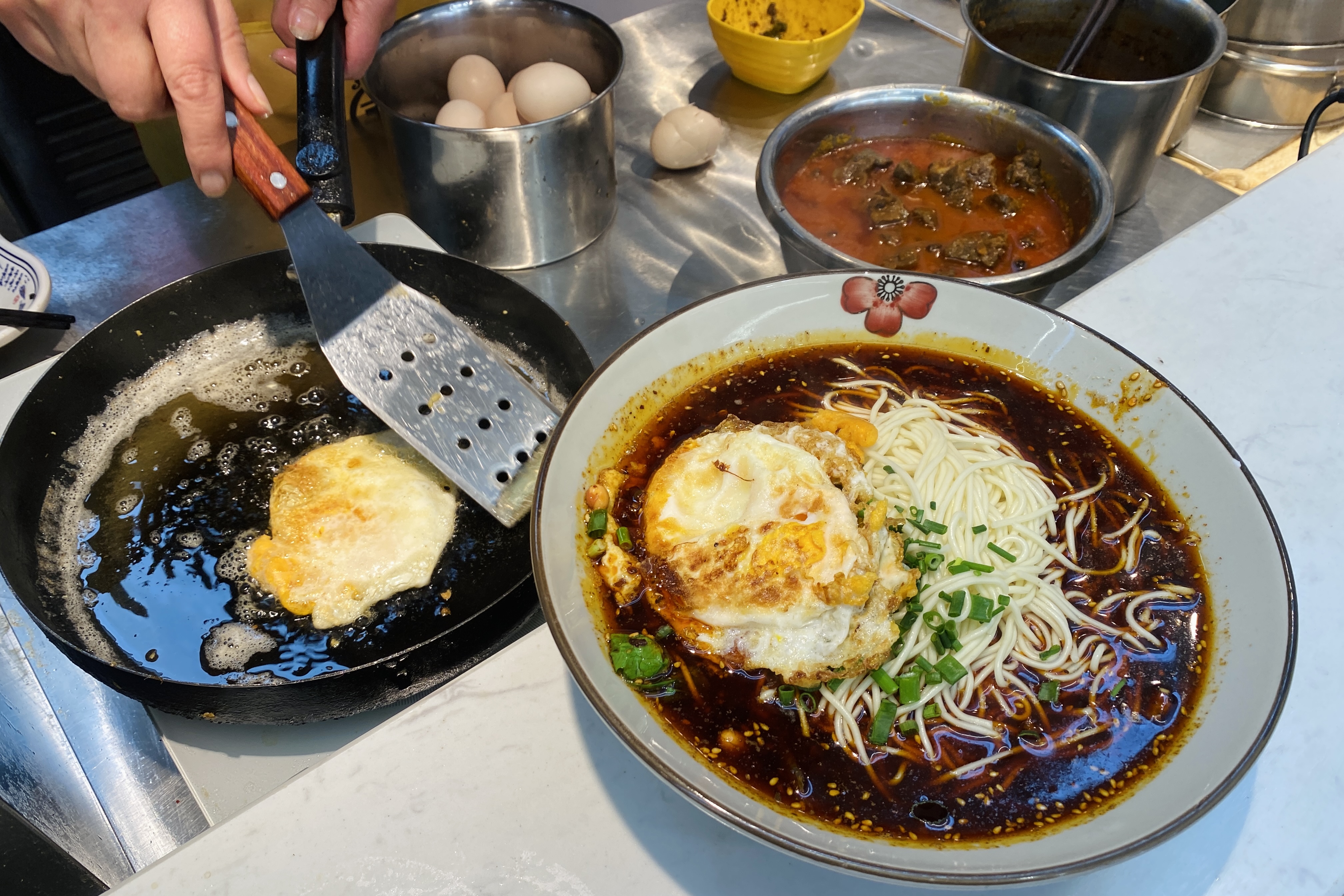
A bowl of Chongqing xiaomian — noodles in a dark, spicy chilli-oil broth topped with a fried egg and scallions, with an egg frying in a pan beside it and tins of seasonings lined up behind 1
Xiaomian
重庆小面 · the spicy alkaline-noodle king of Chongqing breakfast

This is the breakfast Chongqing eats more than any other — and it's all about the seasonings, not the noodle. The cook layers twenty-odd ingredients into the bottom of the bowl first: chilli oil, tongue-numbing huajiao, preserved yacai greens, garlic water, lard, scallions, then blanches alkaline noodles and tosses them through. A fiery red bowl that's spicy, numbing, oily and fragrant all at once. Have it with broth or dry-tossed (干溜). People eat it from 6 am — including the city's 'bangbang' porters who haul loads up the hills and need fuel first. For the full story on the seasonings and the best shops, read the dedicated xiaomian guide.
How to order: Name your heat — wei la (mild) / zhong la (medium) / say "gan liu" for dry
Price: ¥8–12 / bowl (~฿40–60)
Where: Noodle shops in every lane — open 6.00–10.30 am
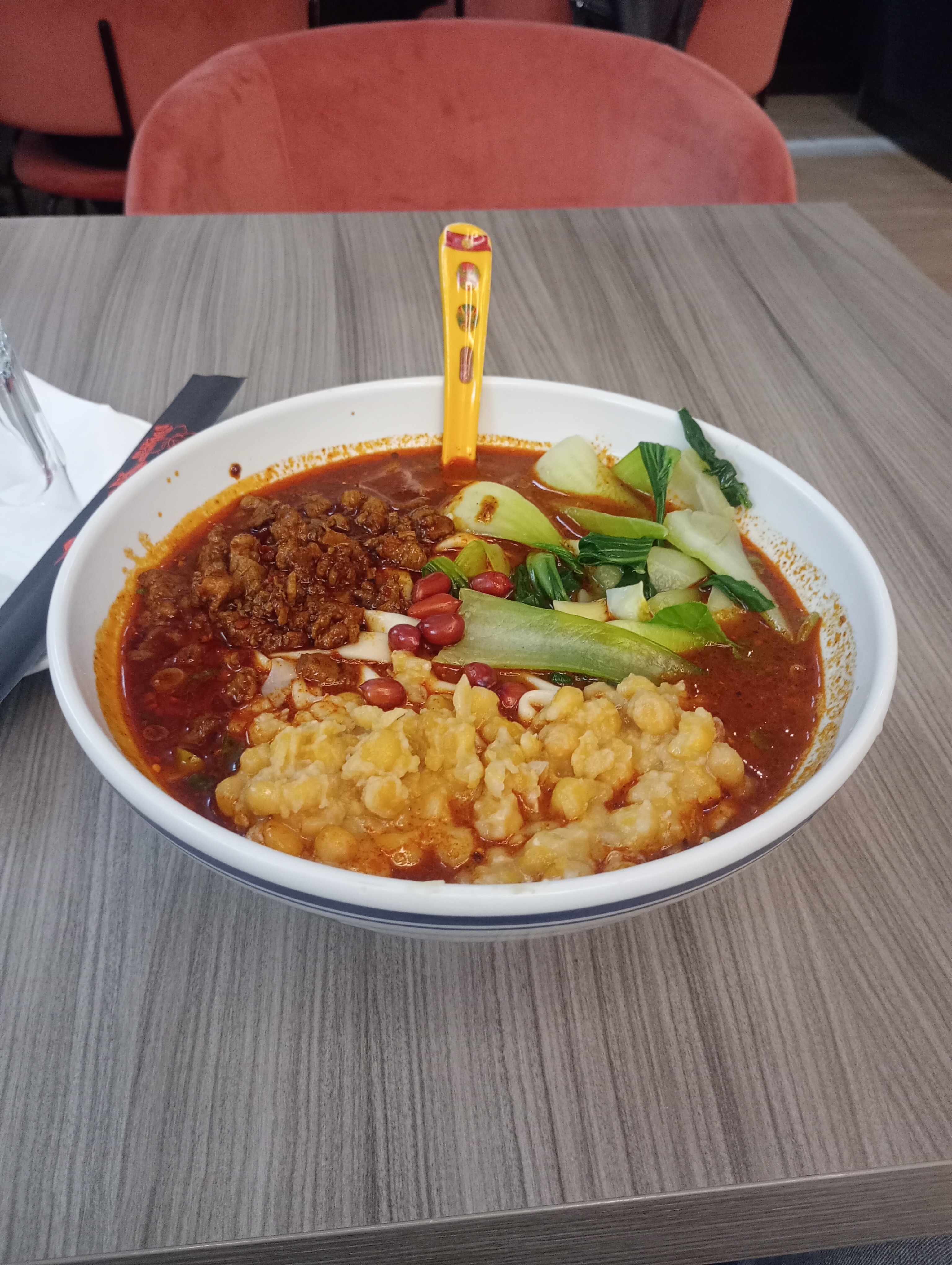
A bowl of Chongqing wanza mian — noodles in a red málà broth topped with soft stewed yellow peas, minced pork, peanuts and leafy greens, with a yellow plastic spoon 2
Wanza Mian
豌杂面 · xiaomian with stewed peas + minced pork

If it's your first time in Chongqing and you're not sure which xiaomian to order, wanza mian is the most complete, best-value answer — it's the same xiaomian bowl with two toppings locals love: yellow peas stewed until they collapse into a creamy mush (wandou), and minced pork in a rich sauce (zajiang). The soft peas melt into the broth and round the bowl out, taking a little edge off the heat and making it more filling than plain xiaomian. It's the most popular version, available at almost every shop. Start here, then work your way up.

How to eat: Stir the soft peas and pork through the noodles before slurping
Price: ¥10–15 / bowl (~฿50–75)
Good for: First-timers — filling, mellower, just-right heat
🥟3
🌶️ Numbing málà · red-oil wontons
Chaoshou
抄手 · Sichuan wontons in fiery red oil

Chaoshou is what Sichuan and Chongqing call wontons — but not the clear-broth kind you might expect. These are pork-filled wontons swimming in red chilli oil and huajiao, known as hong you chaoshou (红油抄手): tender wrappers, a generous pork filling, all tossed in a numbing-spicy dressing. Some shops do a lao ma (老麻) version loaded with extra huajiao until your whole mouth tingles. The famous name is Lao Ma Chaoshou (老麻抄手) near Jiefangbei, which serves both chaoshou and xiaomian and is packed from early. If you like that real Chongqing numbing heat, this is a bowl not to skip.

Where: Lao Ma Chaoshou (老麻抄手) · chaoshou shops around Jiefangbei
Price: ¥10–18 / bowl (~฿50–90)
How to order: Red oil (hong you), or try "lao ma" for a heavy numbing hit
🍡4
Shancheng Tangyuan
山城小汤圆 · tiny sesame-filled rice balls

You've been eating spicy food since dawn and your tongue has gone numb — time for something sweet to break the heat. Shancheng tangyuan (shancheng, "mountain city," is Chongqing's nickname) are tiny glutinous rice balls in a warm sweet syrup, filled with ground black sesame, sugar and peanut. They're much smaller than ordinary tangyuan, chewy and soft, in a fragrant, gently sweet broth. Locals eat them as a dessert after a fiery bowl of xiaomian to put out the fire and finish on something sweet. You'll find them at old sweet shops and snack houses across the city — soft, sweet, and easy for anyone to enjoy with nothing to fear.
Where: Old sweet shops · Chongqing snack houses citywide
Price: ¥6–12 / bowl (~฿30–60)
When: To close out breakfast after the spice — sweet puts out the fire
The rest of the morning

Beyond the noodle bowl — what else locals eat

Four more morning staples you'll find at breakfast shops — some fiery, some gentle for those who don't do chilli

🥣5
Youcha
油茶 · savoury rice paste topped with crunchy fried dough

Youcha is neither tea nor dessert — it's an old-Chongqing breakfast many visitors never discover. It's a savoury rice paste cooked until thick and smooth like a loose porridge, then topped with sanzi (馓子, crisp fried dough strands), peanuts, roasted soybeans, ground huajiao, chilli oil and sometimes pickles, all stirred together before you eat. The texture is the point: the softness of the paste against the crunch of the sanzi in a single mouthful. The flavour is savoury, rich and lightly spicy, and it warms you up. An institution like Chen Ji Lao Youcha (陈记老油茶) is the kind of old youcha shop Chongqing locals seek out. This is a genuinely local morning dish that few visitors get to try.

Where: Chen Ji Lao Youcha (陈记老油茶) · old youcha shops in the lanes
Price: ¥6–10 / bowl (~฿30–50)
How to eat: Stir the crunchy sanzi through the paste first — crunch against soft
🥟6
Baozi + Soy Milk
包子 + 豆浆 · steamed buns + soy milk

If there's a morning you want nothing spicy at all, this is the safest place to start — baozi are hot steamed buns from the bamboo basket, classically filled with pork and scallion, but also pork belly, vegetables, or sweet fillings like red bean or black sesame. Pair them with doujiang (fresh hot soy milk, sweet or savoury) or a warm bowl of rice congee. This is the universal Chinese breakfast you'll find on every corner, and anyone can eat it: no huajiao, no chilli oil, just a comfortable, filling start before a day of walking up and down this vertical mountain city.

Where: Stalls and breakfast shops citywide · steamed-bun chains
Price: Baozi + soy milk ¥5–10 (~฿25–50)
Good for: Non-spice eaters · a light start before sightseeing
🍚7
Douhua Fan
豆花饭 · silken tofu + rice + chilli dip

Douhua fan is the home-style Chongqing breakfast (and lunch) that locals genuinely eat — it comes as a three-part set: a bowl of soft, silky tofu curd (douhua), a bowl of hot steamed rice, and a dish of chilli dipping sauce mixing chilli oil, huajiao, chopped green chilli, and at some shops the herb zhe'ergen (折耳根, fish mint). You scoop the tofu, dip it in the sauce, and eat it with the rice; the plain, soft tofu balances the fierce dip perfectly. The beauty is that you control the heat — dip lightly for mild, dip hard for fiery. If you don't want a whole spicy bowl of noodles but still want that Chongqing flavour, this hits the spot, and it's cheap and filling.

Where: Street douhua fan shops · local rice-plate eateries
Price: ¥8–14 / set (~฿40–70)
How to eat: Scoop tofu, dip in chilli sauce, eat with rice — you set the heat
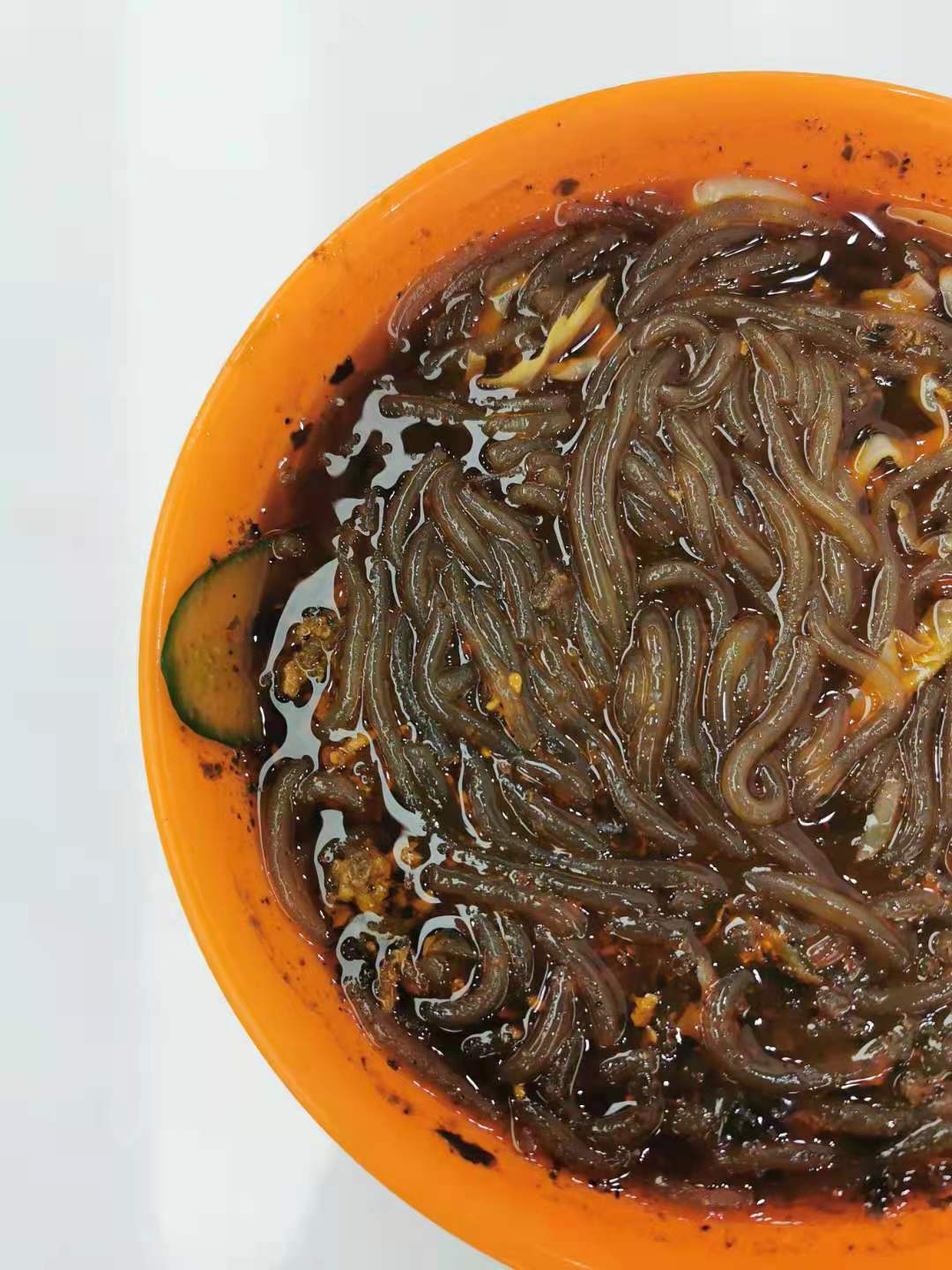
A bowl of Chongqing suanlafen — translucent sweet-potato glass noodles in a reddish-brown hot-and-sour chilli-oil broth, with sliced cucumber and peanuts, in an orange plastic bowl 8
🌶️ Hot & sour · works as breakfast
Suanlafen
酸辣粉 · hot-and-sour sweet-potato glass noodles

Elsewhere, hot-and-sour glass noodles for breakfast might sound extreme — in Chongqing it's normal. Suanlafen is slippery, springy sweet-potato glass noodles in a broth that's sour with vinegar, hot with chilli oil and numbing with huajiao, loaded with minced pork, roasted peanuts, pickles and scallions. The noodles soak up the broth, and one slurp of that sour-spicy punch wakes your whole body up. It's a street snack sold from morning till late, cheap and everywhere, and pure Chongqing in its bold, no-holding-back flavour. If you wake up wanting something to jolt your senses, this bowl delivers.

Where: Stalls and street shops citywide · Ciqikou and markets
Price: ¥10–15 / bowl (~฿50–75)
Note: Sharply hot and sour — a great wake-up, not for the chilli-shy
Where to eat, early

Where to go on the morning

The best xiaomian shops are in the lanes, not on the main drag — know this and you'll eat like a Chongqing local

Jiefangbei & the lanes around it (解放碑)
Downtown · Metro lines 1/2/6, Jiaochangkou station

The heart of Chongqing, home to several famous names — Lao Ma Chaoshou (chaoshou and xiaomian) is here, packed from early. But honestly, the central spots are convenient yet pricier with longer queues. The trick is to slip off the main streets into the side lanes, where you'll find tiny noodle shops with locals slurping on plastic stools — cheaper, and every bit as good.

Eat: Chaoshou · xiaomian · Hours: 6.30–10.00 am
Guanyinqiao & Jiangbei (观音桥)
North of the river · Metro line 3, Guanyinqiao station

A commercial district on the north bank where Chongqing actually lives and works. Behind the shopping streets are residential lanes packed with noodle shops doing xiaomian, wanza mian and douhua fan for the neighbourhood. This is where you eat the xiaomian that's someone's regular daily bowl, not a tourist spot — easy on the wallet, fierce on flavour.

Eat: Xiaomian · wanza mian · douhua fan · Hours: 6.30–9.30 am
Ciqikou (磁器口) old town
Shapingba district · Metro line 1, Ciqikou station

A riverside old town and popular pedestrian street, full of sweet shops and snacks later in the day — mahua (twisted fried dough), suanlafen, desserts. The old atmosphere makes it a lovely wander, but be clear this is a tourist area: prices run higher and flavours are dialled toward the middle. Come to graze and take photos, but for real local-priced xiaomian, head to a residential district instead.

Eat: Mahua · suanlafen · snacks · Hours: shops open later, ~9.00 am
Residential lanes & "xiaomian 50 qiang"
小面50强 · citywide · follow the locals' rankings

The secret of Chongqing breakfast: the tastiest, cheapest shops are little places in lanes with no English sign. Locals even have a noodle-ranking culture — the "xiaomian 50 qiang" (the top-50 list) they use to seek out the best bowls. The easiest method for a visitor is to look for a lane where people are queuing and slurping on plastic stools in the morning, and order what they're having — that's the shop the neighbourhood trusts.

Eat: Xiaomian · wanza mian · chaoshou · Hours: 6.00–9.30 am
Before you go

What to know before you head out for breakfast

Go early — the best noodle shops run out fast

Most xiaomian shops and breakfast stalls open 6.00–6.30 am, and the sweet spot is 7.00–9.00 am — fresh broth, hot, full seasonings, short queues. Some small lane shops simply sell out and close before noon once the seasonings run low. If you sleep in, fall back on baozi or all-day chains instead. Tourist-area spots like Ciqikou tend to open later, around nine.

📱
Use Alipay or WeChat Pay

Small shops and street stalls mostly don't take credit cards, and some take no cash at all — you'll need Alipay or WeChat Pay. Download Alipay before you travel and link a Visa or Mastercard using its international visitor mode — get this sorted while you're still at your hotel. Lane noodle shops rarely have English-speaking staff, so paying by QR code is the quickest, smoothest option.

🌶️
Manage the spice — state your level before ordering

Chongqing xiaomian really is spicier and oilier than Chengdu's. If you're wary, say your level up front — bu la (不辣, none), wei la (微辣, mild), zhong la (中辣, medium) — or ask for the chilli oil on the side (少油, less oil). The huajiao making your tongue tingle is normal, not dangerous, but if you don't like the numbing you can ask for less. The seasoning is the heart of the bowl, and shops are happy to adjust it.

👆
Point and order — no Chinese needed

Most lane noodle shops only have Chinese signs, but ordering is easier than it looks — point at someone else's good-looking bowl, or show the Chinese names from this page (小面 xiaomian · 豌杂面 wanza mian · 抄手 chaoshou). State a portion (一两/二两 = noodle size) and nod. Vendors are used to point-ordering, so there's no need to feel awkward.

🪑
A plastic stool in a lane is the best meal

The best Chongqing breakfast isn't in a smart restaurant — it's in a tiny street shop with plastic stools set out on the pavement, people slurping noodles side by side. If you spot a lane with a morning queue, dive in: it's cheaper than downtown, fiercer in flavour, and the real atmosphere of this city. Buy it, slurp it hot straight away, and don't let the noodles go soft.

Frequently asked

FAQ · before you head out for breakfast in Chongqing

How much does a Chongqing breakfast cost?
Chongqing breakfast is cheap and great value. A bowl of xiaomian is ¥8–12 (~฿40–60). Wanza mian (with peas and minced pork) runs ¥10–15. A bowl of chaoshou is ¥10–18. Suanlafen is ¥10–15. Douhua fan is ¥8–14. Youcha is ¥6–10. Baozi with soy milk is ¥5–10. Sampling several things in one morning costs no more than ¥20–30 per person (~฿100–150) — remarkable value.
How do I order xiaomian in Chongqing, and is it very spicy?
Xiaomian is built from 20-odd seasonings layered in the bottom of the bowl before the noodles go in — chilli oil, huajiao (Sichuan peppercorn that numbs the tongue), preserved yacai greens, garlic water, lard, scallions. Order it with soup (the standard) or dry-tossed with no broth (干溜 gan liu). Spice levels run from bu la (none), wei la (mild), zhong la (medium) up to fiery. Chongqing's version is genuinely spicier and oilier than Chengdu's because it goes heavy on chilli oil and lard. If you're wary, ask for "wei la" or for the chilli oil on the side.
How is Chongqing breakfast different from Chengdu?
Both cities belong to the Sichuan (川菜) school, but Chongqing is heavier, spicier and oilier, leaning hard on lard and chilli oil, while Chengdu is more refined and balanced. The Chongqing morning is a fiery bowl of xiaomian, eaten from 6 am before work — including by the city's "bangbang" porters who carry loads up the hills and need fuel before they start. Slurping a hot bowl on a plastic stool in a back lane is the real life of this city.
How do I pay at Chongqing street-food stalls?
Most small shops and street stalls accept WeChat Pay or Alipay only. Some still take cash in RMB, but this is increasingly rare. Download Alipay before you arrive and link a Visa or Mastercard using its international visitor mode while you're still at your hotel. Many noodle shops have Chinese-only signage, so just point at someone else's bowl or show the Chinese names from this page.
Where in Chongqing is best for a local breakfast?
The tastiest and cheapest spots are usually small xiaomian shops in the back lanes and residential districts, not the central tourist areas. Chongqing has a noodle-ranking culture — the "xiaomian 50 qiang" (小面50强) top-50 list locals use to hunt down the best bowls. Packed institutions like Lao Ma Chaoshou (老麻抄手) near Jiefangbei are famous, and good noodle holes-in-the-wall fill the lanes around Jiefangbei, Guanyinqiao and Shapingba. Central spots are convenient but pricier with longer queues. To eat like a Chongqing local, find a lane where people are queuing and slurping on plastic stools.
Klook · Food tour

A Chongqing food tour with a local guide

Walk the lanes to the noodle shops Chongqing locals actually eat at, the legendary chaoshou spots, the málà hotpot where the queues form — no language worries, no guessing which shop is good, and no risk of over-ordering the spice.

See Chongqing food tours on Klook →
Wherebest is a Klook affiliate partner — we may earn a commission when you book through this link, at no extra cost to you.