Jiefangbei (解放碑), on the Yuzhong Peninsula, is the heart of Chongqing's CBD — the Liberation Monument and pedestrian streets sit in the middle, a few minutes' walk takes you to the gold-lit Hongyadong stilt houses, the Bayi snack street and Shibati, and the tip of the peninsula is where two rivers meet. Metro Line 1/2 walk you through all of it.
Honestly, Chongqing is not like any Chinese city you have been to, and the place where you feel its strangeness most clearly is right here — Jiefangbei (解放碑), in the middle of the Yuzhong Peninsula (渝中). Picture a tongue of land held between the Yangtze River on one side and the Jialing River on the other, then imagine hundreds of skyscrapers stacked up a steep hillside. That is what people mean by the "8D city": here the upper street and the lower street sit on different levels, and you can leave a metro station and pop out on the fifth floor of a shopping mall without blinking.
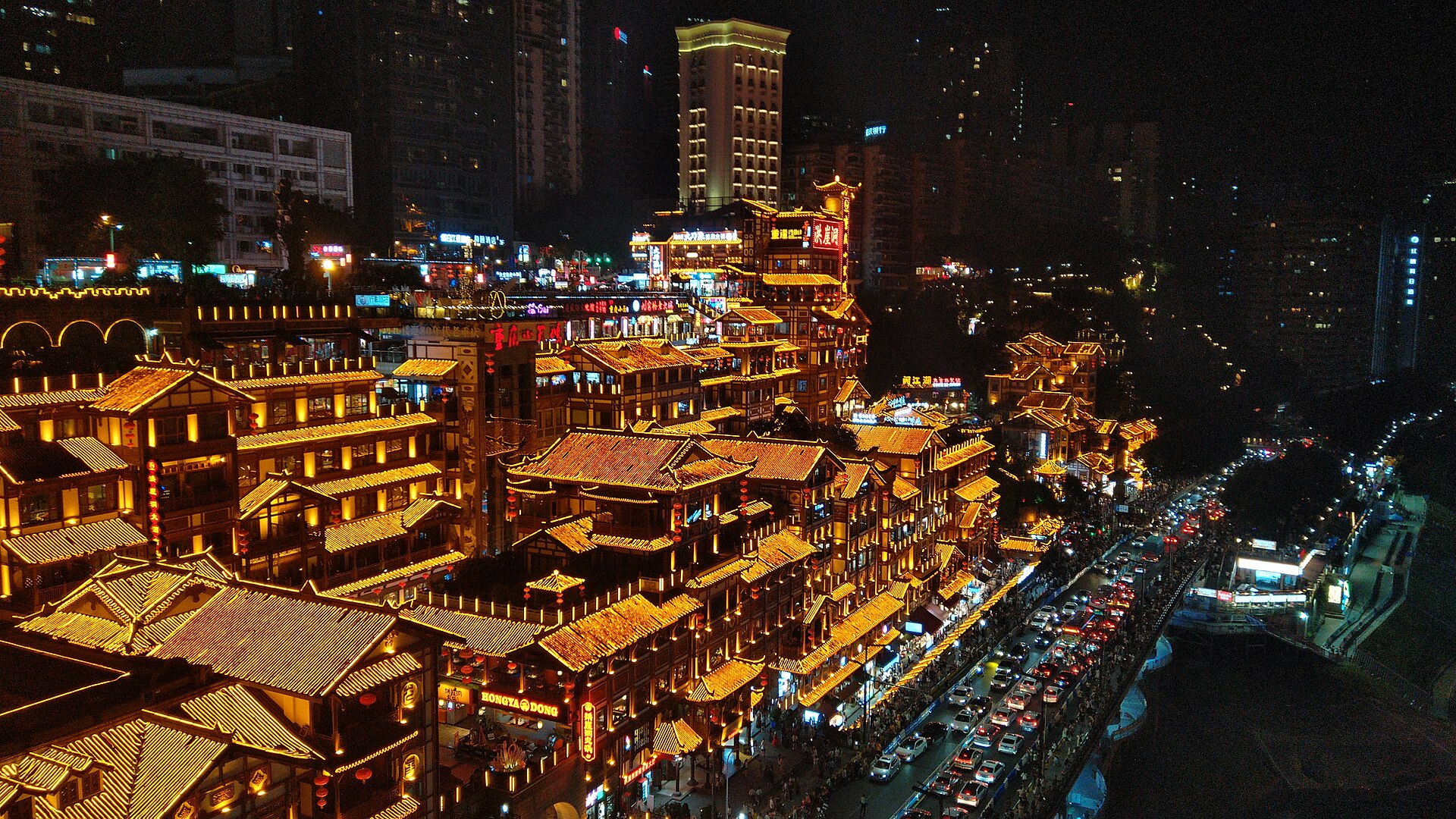
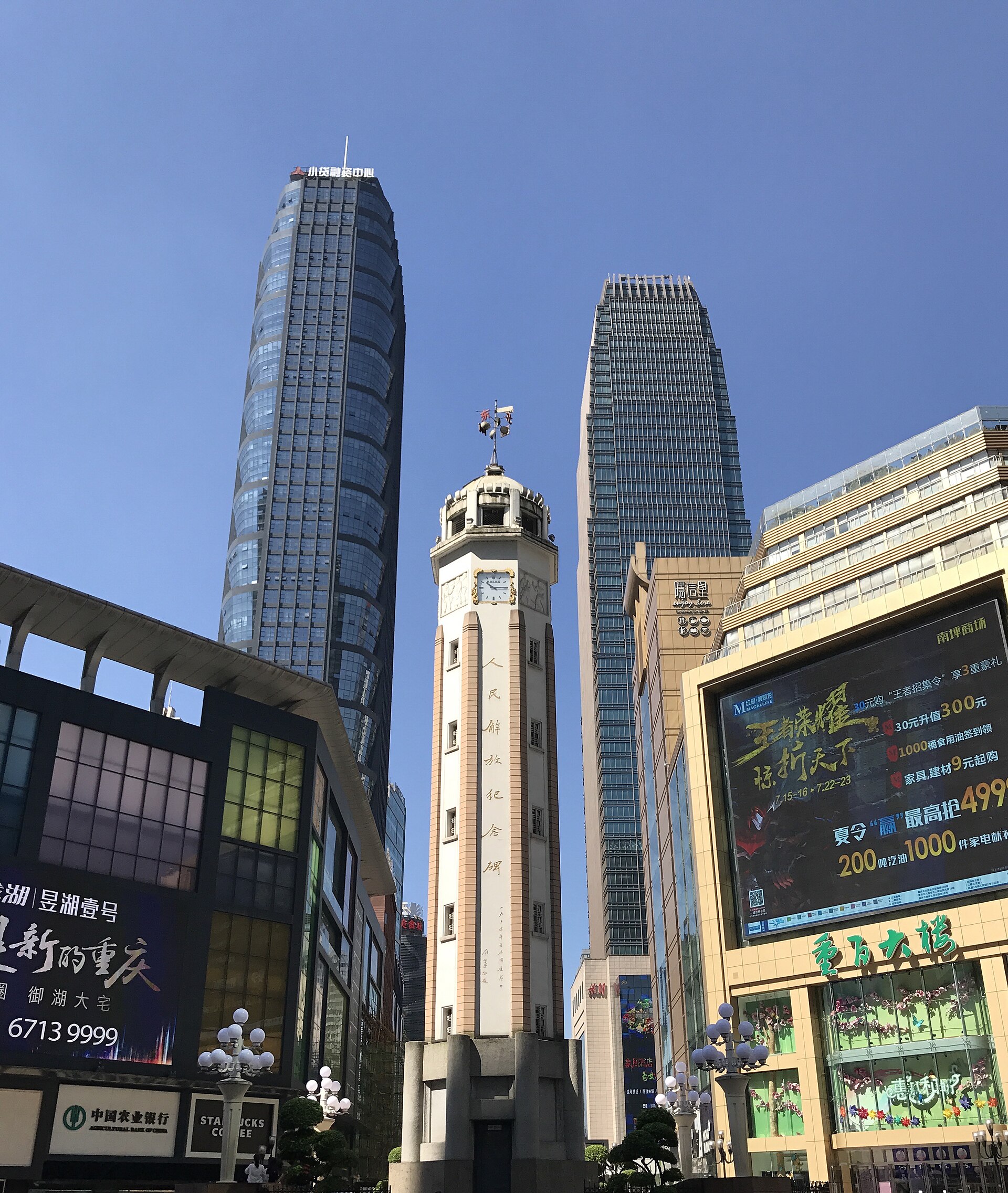
The core of the district is the Liberation Monument (解放碑), a tall column in the middle of a plaza built after the war, now ringed by the Jiefangbei pedestrian street — a car-free shopping zone packed with malls, restaurants and street snacks, busy all day. A few minutes' walk from the plaza takes you to Hongyadong (洪崖洞), a cluster of stilt houses stacked 11 storeys up a cliff that lights up gold at night; the Bayi snack street (八一好吃街), which gathers Chongqing's street food; and Shibati (十八梯), an old flight of stairs restored into a retro lane to wander.
Ever had this happen — a city where the good stuff is so spread out you spend the whole day in a car? Chongqing is enormous and mountains cut it up, but if you stay in Jiefangbei you get the monument, the pedestrian street, Hongyadong, the snack streets, a viewing deck and the two-river confluence — almost all of it within one walkable area. That is why we point first-timers here as their first base.
This is the version of Chongqing where everything piles up tightly on a hillside — busy, stacked, full of food, and lit up at night in a way that makes you stop and stare.
The charm of Jiefangbei is that it is a vertical city that confuses and excites you at the same time. By day the pedestrian street around the monument is packed with people, malls and snack stalls; keep walking up and down the slopes and you find a new angle at every turn. In the evening you walk out to the cliff edge and Hongyadong lights up gold across its whole face. After dark, ride up the WFC deck or head out to Chaotianmen at the tip of the peninsula and the city lights reflect off both rivers. All of it sits within one area you can mostly cover on foot.
If this is your first Chongqing trip, this is the smoothest answer — you can walk to Hongyadong, the Bayi snack street and Shibati from one base, and Metro Line 1/2 cross the area. Once you find your feet, the metro takes you to other sights such as the Liziba train that cuts through a building or Ciqikou old town in tens of minutes.
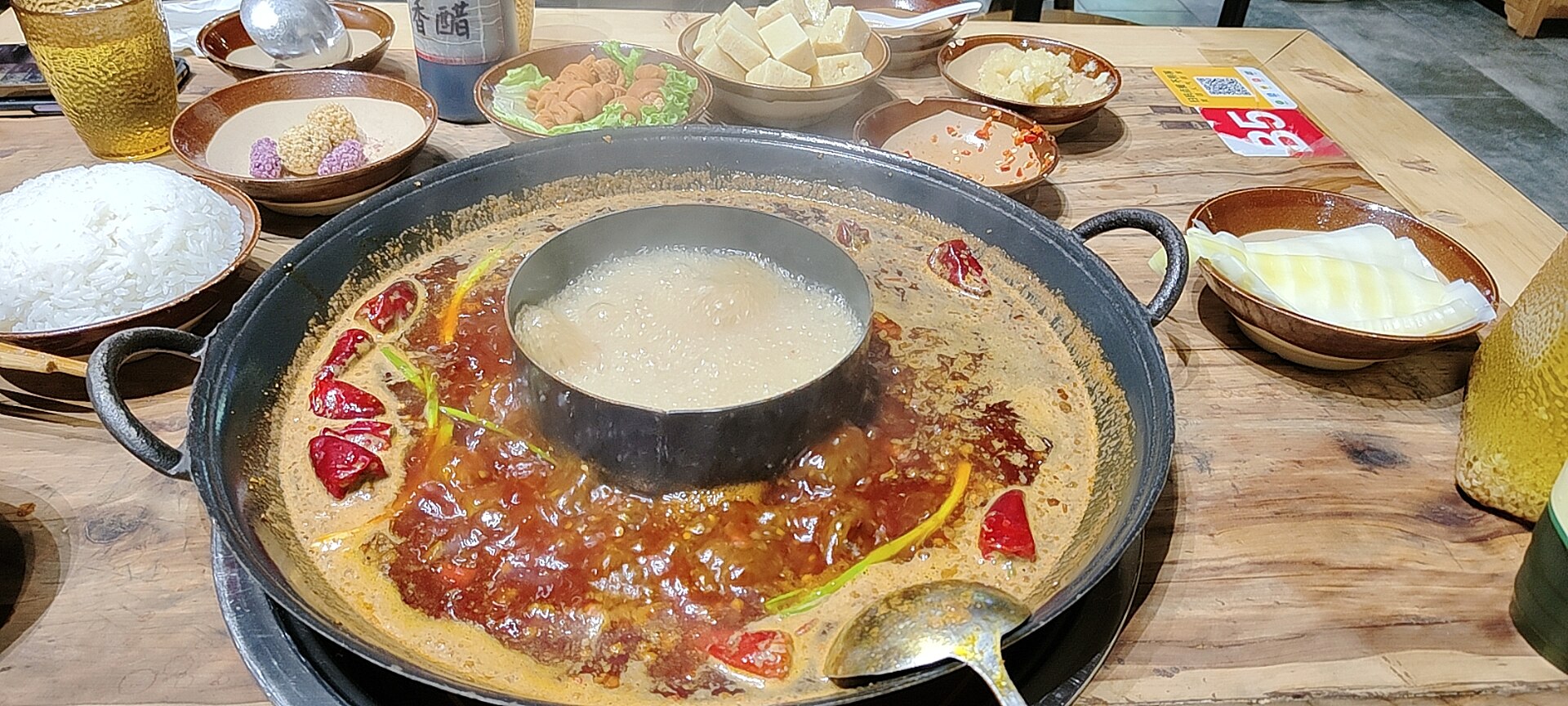
Chongqing is the home of beef-tallow hotpot (火锅), and Jiefangbei is where the famous hotpot restaurants cluster most densely. Next to that is the Bayi snack street, a full lane of street food. Step out of the hotel and you can start tasting straight away — ideal if you want to eat your fill without travelling far.
This area is a paradise for city photographers — Hongyadong lights up gold at night, the WFC deck on floors 73–75 looks over the whole peninsula, and Chaotianmen at the tip frames the two-river confluence with the Raffles City towers that look like a giant sailing ship. Night is the prime time here.
Jiefangbei is a central hub that connects onward easily. From here you can ride the cable car across the Yangtze to the Nan'an side, take the metro to the Liziba monorail, or catch a high-speed train from Chongqing North to Wulong or Dazu — all starting from here.
The tall column in the middle of the plaza is the centre of the district and gives it its name. Around it is the Jiefangbei pedestrian street, a car-free shopping zone full of malls, brands, restaurants and street snacks. It is free to wander any time — busy with shoppers by day, lit up by signs at night. It is the best starting point for every walking route in the area. Read the deep dive in our full Liberation Monument guide.
The highlight everyone who visits Chongqing has to see — a cluster of traditional Diaojiaolou (吊脚楼) stilt houses stacked 11 storeys up the cliff above the Jialing River, only a 10 to 15 minute walk from the monument plaza. Entry and walking through are free. After dark (roughly 18:30 to 22:00) the whole complex lights up gold, so striking that many people say it looks like a scene from an animated film. The best photo angle is from the Qiansimen Bridge on the opposite bank. Read more in our full Hongyadong guide.
Just a few minutes' walk from the monument plaza, this is a food lane that gathers Chongqing street food along its whole length — from hot-and-sour glass noodles (酸辣粉) and Sichuan noodles to grilled skewers and cold desserts. Dishes run about ¥10–40 (~฿50–200) each, perfect for tasting one thing at a time. If you want to understand what Chongqing eats, start here. Read on in our Chongqing street food guide.
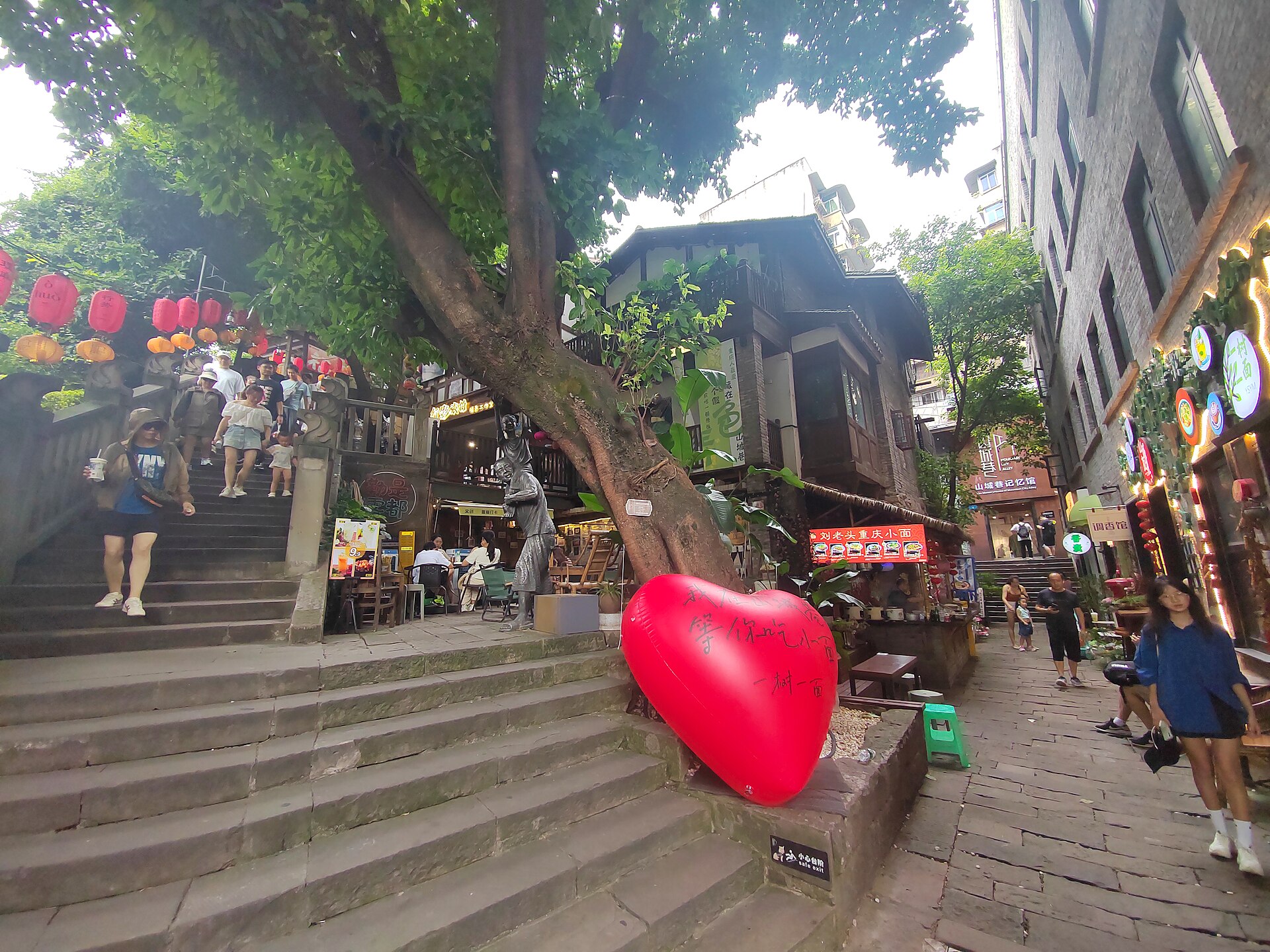
"The Eighteen Steps" was an old flight of stairs that once linked the upper city to the wharves below. It has been restored into a retro lane to wander, with tea houses, cafés, souvenir shops and snack stalls lining stone steps that drop down the slope. You can walk down to it from Jiefangbei easily, and it is the clearest place to see Chongqing's "mountain city" (山城, Shancheng) character. Entry is free; best in the morning or late afternoon when the sun is gentle.
The WFC (World Financial Center) tower in the heart of Jiefangbei has a viewing deck called Huixianlou (会仙楼) on floors 73–74 and an open-air floor 75, around 339 m up — one of the highest open-air decks in western China. It looks over the whole Yuzhong Peninsula, the two rivers and the sea of skyscrapers in 360 degrees. Tickets run about ¥120–160 (~฿600–800), and sunset to dusk is the best value — check prices and time slots before you go.
At the very tip of the Yuzhong Peninsula is the point where the Yangtze and the Jialing rivers meet, with a visible line between the two water colours. It sits beneath Raffles City, the cluster of towers shaped like a giant sailing ship, crowned by "The Crystal" skybridge linking the tops. Walk the riverfront, go up the skybridge for the view, or board an evening river cruise from here. Take Metro Line 1/6 to Xiaoshizi and walk down.
Jiefangbei is the centre of Chongqing eating, from famous beef-tallow hotpot to street snacks to cafés and bars with a city view.
Chongqing is the birthplace of beef-tallow hotpot (火锅), and Jiefangbei is the area where the famous hotpot restaurants gather most densely — from old-school places in the lanes to view restaurants on high floors. Expect about ¥80–180 (~฿400–900) per person depending on the place and what you order. Order a "yuanyang" broth (spicy and mild in one pot) if you are not used to the heat yet. Read how to eat it and where in our Chongqing hotpot guide, or get the overview in the full Chongqing food guide.
Beyond the fiery food, Jiefangbei also has cafés inside the towers and bars on high floors that look over Hongyadong and the sea of skyscrapers. Along the pedestrian street and in the malls you will find both big café chains and specialty coffee, with an ordinary coffee running about ¥30–55 (~฿150–275) a cup. Rooftop bars usually open in the evening — the best time to sit with a drink and watch the city lights after a day of climbing the slopes.
This is the most concentrated, walk-to-everything hotel location in Chongqing — with options at every level within the same walking radius.
The upside of staying in Jiefangbei is that you buy all the convenience in one place. Step out of the hotel and you can walk to the monument, the snack streets, Hongyadong and the metro. Many hotels here also have river or Hongyadong views straight from the room. Room rates here run a bit higher than the outer districts, but for a first trip where you don't want to lose time travelling, many people find it worth it — you save both time and taxi fares.
One thing to know: this is a hill area, so some hotel entrances sit on a different level from where the map pins them. Check reviews for "which floor is the entrance," and picking a hotel near a metro exit makes dragging luggage much easier — and if you want a Hongyadong-view room, book ahead, because view rooms are limited and sell out fast.
Or jump straight to individual hotel reviews in this area:
The heart of the area is Jiaochangkou and Linjiangmen on Metro Line 1/2, while Xiaoshizi (Line 1/6) is closest to Hongyadong and Chaotianmen. Within the area you can walk almost everywhere — just remember this is a hill city.
15:30 — Start at Jiaochangkou or Linjiangmen, walk up to the monument plaza and the pedestrian street
16:15 — Stop at the Bayi snack street for hot-and-sour glass noodles and Chongqing snacks
17:00 — Walk down to Shibati for the old stairs and the retro lane; photograph the mountain city
18:15 — Walk to Hongyadong for the gold lights around 18:30, then cross the Qiansimen Bridge for photos
19:30 — Dinner of beef-tallow hotpot in the area, finishing at a café or rooftop bar over the city lights
Spend the morning into the afternoon walking the area and shopping, then add:
16:30 — Up the WFC observation deck (Chongqing Eye), floors 73–75, for the peninsula and two rivers at sunset
18:00 — Metro to Xiaoshizi, walk to Chaotianmen for the two-river confluence beneath the sail-shaped Raffles City
19:30 — Dinner in the area, then Hongyadong at night or a ride on the Yangtze cable car for the city lights from mid-air
Jiefangbei connects to other sights like the Liziba monorail through a building and Ciqikou old town by metro in a single day — see the full plan in the top Chongqing attractions and the full Chongqing guide.