Home Chengdu China Chengdu Hotels About
Home  ›  China  ›  Chengdu  ›  Attractions  ›  Wuhou, Jinli & the Jin River
Chengdu · Wuhou & Jinli 武侯区

Wuhou, Jinli & the Jin River
Three Kingdoms heritage by day, red lanterns and riverside bars by night

The heritage-and-evening side of Chengdu — a thousand-year-old Three Kingdoms shrine, an ancient street that glows with red lanterns after dark, and a hundred bars lined along the Jin River at Jiuyanqiao. All within walking distance of each other.

The neighbourhood

What Wuhou and Jinli are — and why this side of Chengdu deserves an evening

Picture an ancient shrine built to honour characters from the Three Kingdoms, set among bamboo groves and red walls in the middle of the city. One wall away sits a lane of old grey-brick Sichuan buildings that, after dark, lights up with red lanterns end to end. And not far beyond it runs a river edged with bars for nearly a kilometre. That is the Wuhou District (武侯区) in Chengdu's southwest — the side many visitors skip while chasing pandas and the shopping at Chunxi Road.

The heart of the neighbourhood is three things sitting close together: Wuhou Shrine (武侯祠), the Three Kingdoms memorial honouring the statesman Zhuge Liang and the emperor Liu Bei; Jinli ancient street (锦里), a pedestrian lane attached to the shrine and packed with Sichuan street snacks and red lanterns; and a small Tibetan quarter around Wuhouci Street, where shops sell prayer flags, sheepskin cloaks and Tibetan butter tea. To the east of the district runs the Jin River (锦江), with the old Jiuyanqiao (九眼桥) bridge and the busiest riverside bar strip in the city.

The appeal here is the contrast across the day. By daylight you read Three Kingdoms history under the bamboo; by night you sit with a beer and live music by the river. Chengdu is famous for its slow, easy rhythm, and this is the part of the city where you feel it most — daytime calm and night-time buzz that are a single DiDi ride apart.
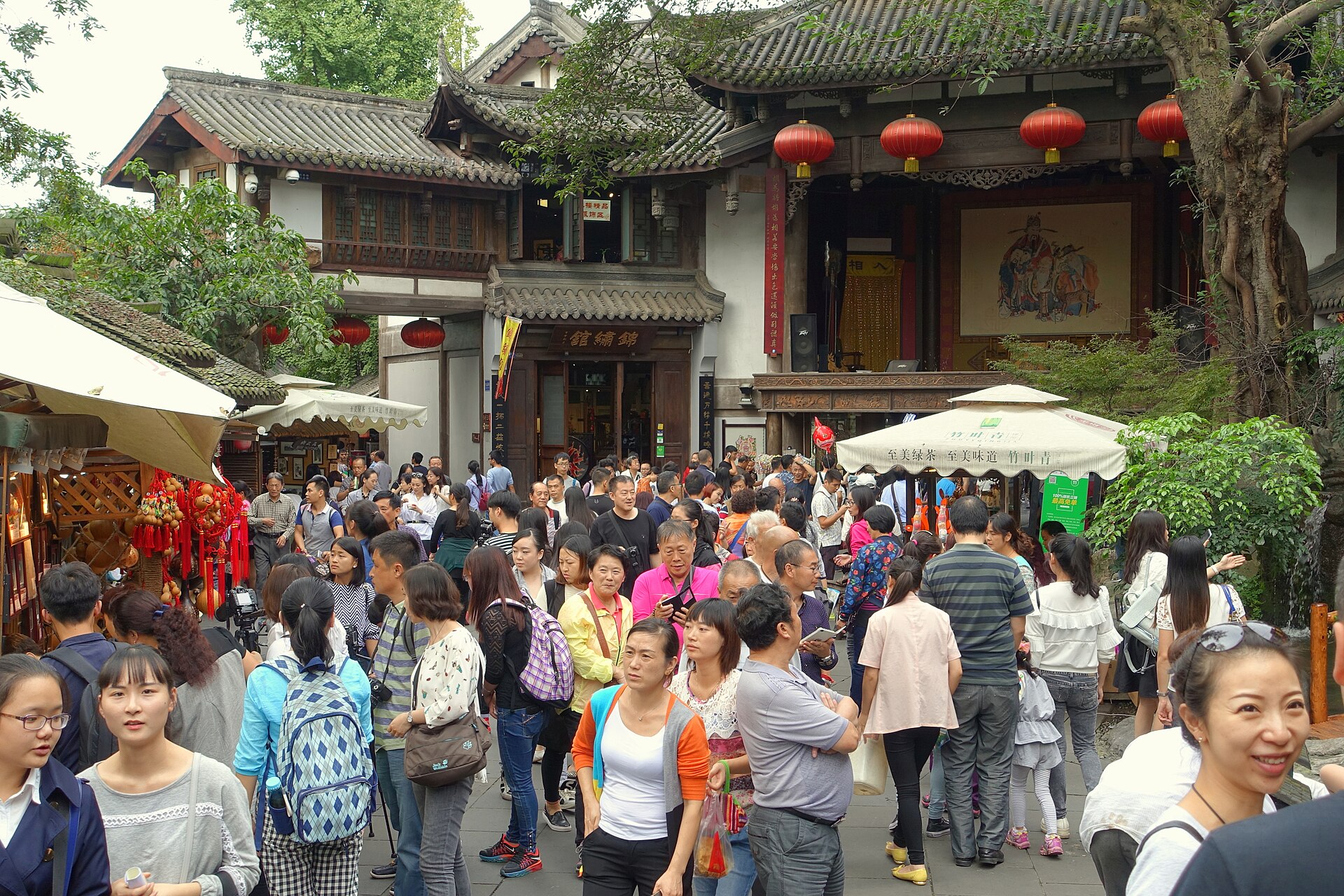
Jinli ancient street (锦里) Chengdu — grey-brick Sichuan-style buildings and red lanterns next to Wuhou Shrine
Jinli ancient street after dark — red lanterns end to end against grey-brick Sichuan architecture, the image that sums up this side of Chengdu
🏯
Key heritage
Wuhou Shrine (武侯祠)
Honours Zhuge Liang & Liu Bei · Three Kingdoms
🏮
Ancient street
Jinli (锦里)
Sichuan snacks + red lanterns · free entry
🍺
Riverside nights
Jiuyanqiao 九眼桥
100+ bars along the Jin River
🕉️
Tibetan culture
Wuhouci Tibetan quarter
Prayer flags · butter tea · Tibetan hotpot
🌊
The river
Jin River (锦江)
River views · evening cruises · Anshun Bridge
🚇
Nearest metro
Gaoshengqiao Line 3
Walk to Wuhou Shrine + Jinli · or Line 10 Wuhouci
How it feels

The character of the district — calm by day, lively by night, in one place

This is not the shopping energy of Chunxi Road, nor a staged old town. It is the side of Chengdu you come to for history in the afternoon and the river in the evening.

The charm here is several worlds packed close enough to walk between. Leave the shrine and you pass straight into Jinli; finish Jinli and turn into a Tibetan quarter where the smell of incense and butter tea reaches you before you see the shops; and once it is dark, you walk or take a short DiDi to the Jin River to find a bar. Chengdu is known for a slow, comfortable pace — this is where it shows clearest.

What to see

The key stops — and which not to miss

🏯 Wuhou Shrine (武侯祠)

The shrine honouring Zhuge Liang and Liu Bei is the most famous Three Kingdoms memorial in China, now a museum set among bamboo and red walls. Admission is around ¥50 (~฿250). It opens daily, roughly 08:00–18:00 from November to April and extending to around 08:00–20:00 from May to October (ticket sales stop about an hour before closing — check before you go). Inside are statues of the Three Kingdoms figures and the much-photographed red-walled corridor.

More detail in the full Wuhou Shrine guide.

🏮 Jinli ancient street (锦里)

A pedestrian lane of old Sichuan-style architecture attached to Wuhou Shrine — you can walk straight through from one to the other. Shops open roughly 09:00–22:00, and entry is free. The draw is grey brick, strings of red lanterns and Sichuan snack stalls the whole way along. It is at its best after 20:00, once the lanterns are lit. For thinner crowds, come around 16:00 on a weekday and stay until evening.

More detail in the full Jinli street guide.

🍺 Jiuyanqiao — the Jin River bar strip (九眼桥)

An old Ming–Qing stone bridge with nine arches (hence "Nine-Eye Bridge"). The area around it is now a bar strip running nearly 800 metres along the Jin River, lined with more than a hundred bars and clubs — Chengdu's liveliest night-time district. You will find everything from small live-music bars to the large EDM clubs of the Lan Kwai Fong complex. It is busy and well-lit at night, and a DiDi back to your hotel is easy.

🕉️ The Tibetan quarter (武侯祠横街)

Around Wuhouci Hengjie and Wuhouci Dongjie, near Wuhou Shrine, is the largest Tibetan community in Chengdu — sometimes called "Little Lhasa". Shops sell prayer flags, beads, sheepskin cloaks, silverwork and Tibetan Buddhist ritual objects, and there are restaurants serving butter tea and hotpot. Entry is free, but prices are usually set high in expectation of bargaining, and shops close fairly early, around 20:00–21:00.

🌉 Anshun Bridge and Jin River cruises (安顺廊桥)

Near Jiuyanqiao stands Anshun Bridge, a covered walkway-bridge that looks its best at night when it is lit and reflected in the water. In the evening, boat cruises run along the Jin River, passing the bridge and the bar district; prices vary by route and operator (check before you go). It suits anyone who would rather see the riverside from the water than from the bank.

🏞️ Linking to Kuanzhai Alley and Taikoo Li

Wuhou sits in the southwest, while the old town at Kuanzhai Alley and the Taikoo Li shopping district are in other corners of the city — but they are only a few metro stops apart. To combine Three Kingdoms heritage, red lanterns and the old town in one day, save Jinli for the evening and start at Kuanzhai in the morning. Read on in the Kuanzhai Alley & People's Park guide and the Chunxi Road & Taikoo Li guide.

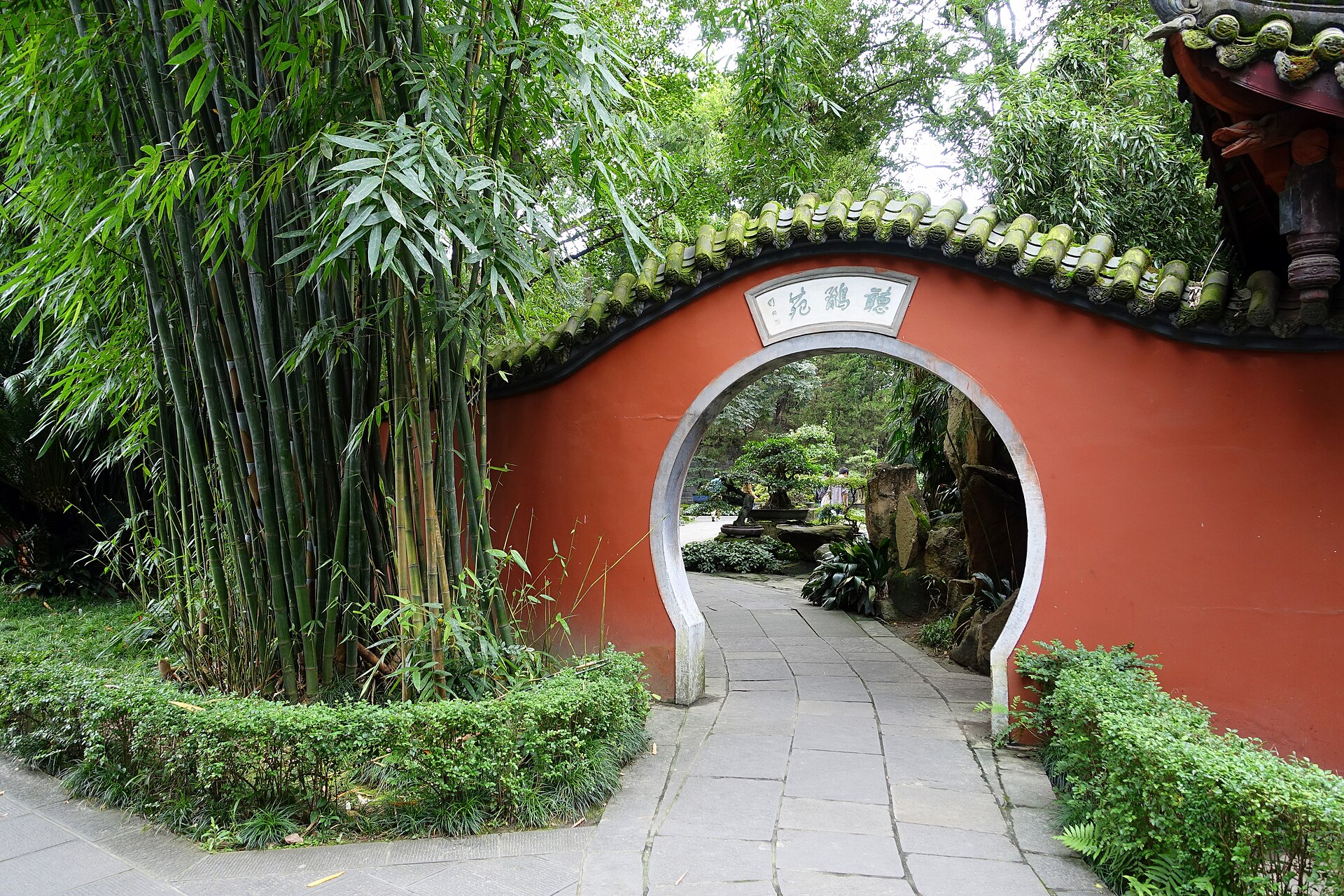
Wuhou Shrine (武侯祠) Chengdu — red walls and bamboo gardens in the Three Kingdoms heritage site
Wuhou Shrine — red walls against green bamboo, a Three Kingdoms heritage site that opens directly onto Jinli street
Eat and drink

Eating in the district — from Jinli snacks to Tibetan hotpot

This is the side for street-snack grazing and atmosphere rather than mall dining — eat your way along Jinli in the evening, then move on to hotpot and a beer by the river.

🥢 Street snacks in Jinli

Jinli is a lane built for grazing. Things to seek out: san da pao (三大炮), glutinous-rice balls rolled in sesame and brown sugar that the vendor slams onto a brass tray three times with a bang; bobo chicken (钵钵鸡), skewers steeped in cool chilli oil; Zhang Fei beef (张飞牛肉), dense and chewy marinated beef; and crisp griddled flatbreads. Snacks run around ¥10–30 (~฿50–150) a piece, and grazing your way down adds up to a full meal.

Read more: Chengdu street food guide · full Chengdu food guide.

🌶️ Sichuan hotpot by the river

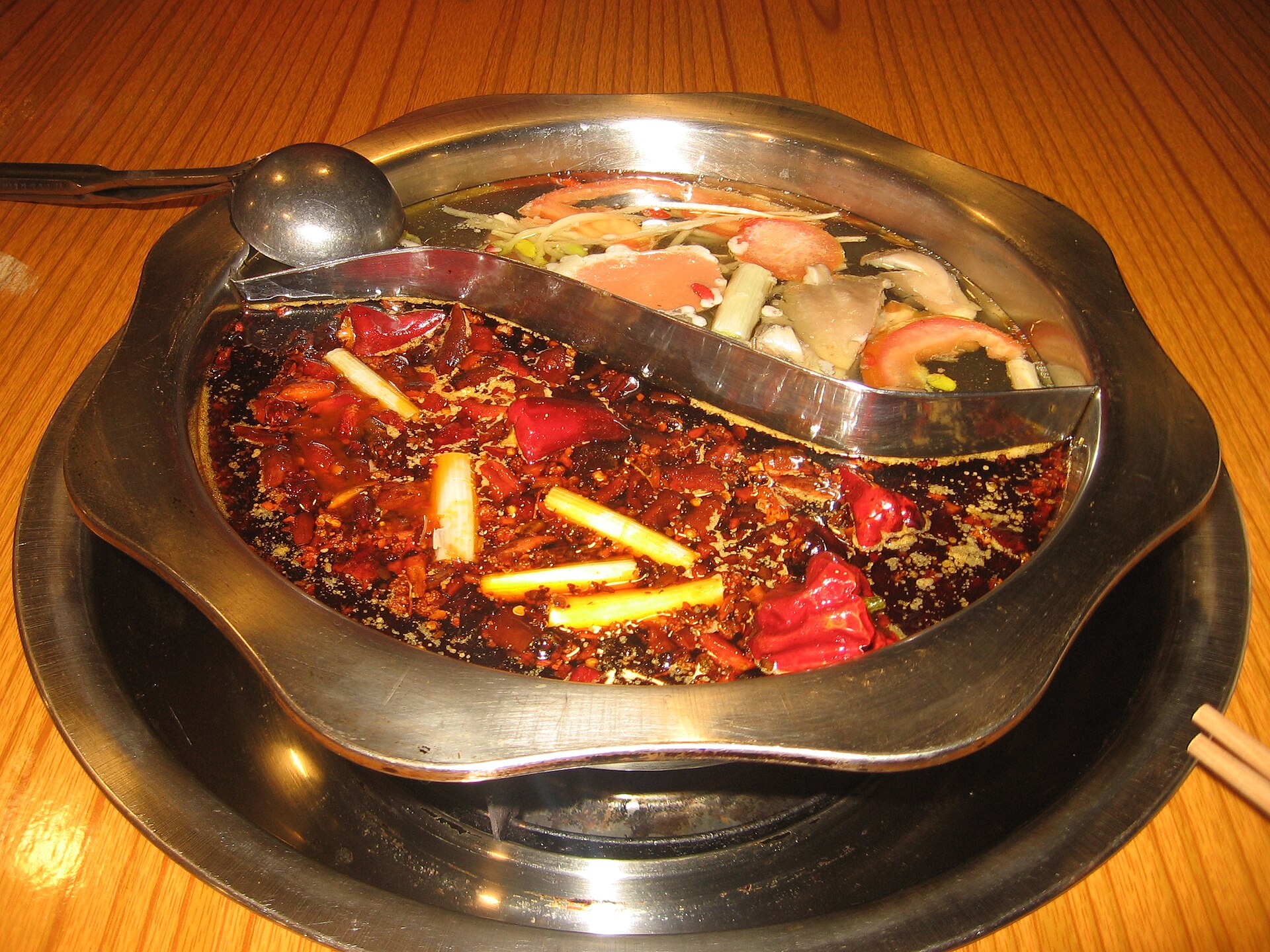
Come to this side and skip hotpot, and you have missed the point. Chengdu is the home of mala hotpot — a chilli and Sichuan-pepper broth that brings heat and a numbing tingle. Around Jiuyanqiao and the riverside are plenty of hotpot restaurants that stay open late, ideal before or after a bar crawl. Order the half-spicy, half-mild split broth (鸳鸯锅) if the full heat is too much. Expect around ¥80–150 (~฿400–750) per person.

Read more: Chengdu hotpot guide.

🍵 Tibetan hotpot and butter tea

In the Tibetan quarter around Wuhouci Street, restaurants serve dishes you will struggle to find elsewhere in Chengdu — Tibetan hotpot with yak meat and vegetables, salty-rich butter tea, and momo (Tibetan dumplings). It is an experience completely different from standard Sichuan fare, and a good one if you want to try something new. Prices tend to be gentler than in the main tourist lanes.

Chengdu mala hotpot — fiery Sichuan chilli broth served by the Jin River in the Wuhou district
Sichuan mala hotpot — the natural late dinner alongside the riverside bars at Jiuyanqiao (representative image of Chengdu hotpot)
Where to stay

Staying by the Jin River — and which hotel to pick

This side suits travellers who want river views and riverside bars within walking distance — especially if a night out is part of the plan.

The advantage of staying by the Jin River is that you get heritage by day and the river by night in one base. Walk Wuhou Shrine and Jinli before the crowds in the morning, then step out to the riverside in the evening without a long trip. The standout address here is the Shangri-La Chengdu, set on Binjiang East Road directly on the Jin River — within easy walking distance of Jiuyanqiao and Anshun Bridge, and about a 10-minute walk from the metro.

The one trade-off is that the riverside is not served by as many direct metro lines as the Chunxi Road / Taikoo Li area. If your main aim is daytime shopping and reaching lots of places quickly, a central base may be more convenient. But for river atmosphere and nightlife, this side clearly wins.

Plan onward from this neighbourhood:

Getting there

How to reach Wuhou and Jinli

Wuhou Shrine and Jinli sit right next to each other — pick whichever station is handier and walk through. The riverside bar strip is in another corner of the district, best visited separately in the evening.

🚇
Gaoshengqiao (高升桥)
Line 3
Exit D, then follow signs to Wuhou Shrine + Jinli, ~1.5 km
🚇
Wuhouci (武侯祠)
Line 10
Exit A2 · close to the shrine entrance and Tibetan quarter
🚇
Jiuyanqiao riverside
Near Lines 2 / 6
For the bar strip · a DiDi is easier at night
🚆
From Chengdu East station
Line 2 → transfer
Main HSR hub · connects through to the Wuhou district
✈️
From Tianfu Airport (TFU)
Line 18 → transfer
The newer airport to the southeast · ~1 hour into town
🚕
Taxi / DiDi
Name your destination
Easiest at night · use Amap to set the right drop-off
Tip: save Wuhou Shrine and Jinli for late afternoon into the evening — walk the shrine while the light is soft, then linger in Jinli until the lanterns come on around 20:00, and finally take a DiDi over to Jiuyanqiao for hotpot and the bars. Chengdu's metro stops running around 23:00, so a DiDi is the simpler way home late at night. More in the Chengdu metro guide.
Plan your visit

A walking route — an afternoon-into-evening, or a full day

⏱️ Afternoon-to-evening (~4–5 hours)

15:30 — Start at Wuhou Shrine (metro Gaoshengqiao on Line 3, or Wuhouci on Line 10), reading the Three Kingdoms statues and the red-walled corridor in the softer light.
16:45 — Walk through from the shrine into the Tibetan quarter around Wuhouci Street; browse the prayer flags and silverwork.
17:30 — Enter Jinli, grazing on snacks — san da pao, bobo chicken, Zhang Fei beef — while you wait for the lanterns.
20:00 — Jinli's red lanterns are all lit; capture the prettiest stretch.
21:00 — Take a DiDi to the Jin River at Jiuyanqiao for hotpot or a bar to finish the night.

🌇 A full day (+ the Panda Base in the morning)

With a whole day, start somewhere else in the morning and arrive on this side in the afternoon:
08:00 — Head to the Panda Breeding Base early, when the pandas are awake and feeding (it is in another corner of the city — go first thing).
12:00 — Lunch in town, out of the midday warmth.
15:00 — Pick up the afternoon-to-evening route above, beginning at Wuhou Shrine, then the Tibetan quarter and Jinli.
20:00 onward — Jinli under the lanterns, then hotpot and the riverside bars at the Jin River.

Wuhou is in a different corner from the Kuanzhai old town and the Taikoo Li shopping district, but they connect by metro — see the full plan in the complete Chengdu guide, or start from all the Chengdu attractions.

Frequently asked

FAQ · Wuhou, Jinli & the Jin River

What are the opening hours and admission fee for Wuhou Shrine?
Wuhou Shrine opens daily, roughly 08:00–18:00 from November to April and extending to around 08:00–20:00 from May to October (ticket sales stop about an hour before closing). Admission is around ¥50 (~฿250). The shrine connects directly through to Jinli ancient street, which is free. Check the latest hours before you go, as they shift by season. See the Wuhou Shrine guide.
When is the best time to visit Jinli ancient street?
Jinli is at its best after sunset, from around 20:00, when the red lanterns light up along the whole lane. Shops generally open 09:00–22:00. For thinner crowds, arrive around 16:00 on a weekday and stay until the lanterns come on; avoid weekends and holidays, when it gets very busy. Entry is free and a relaxed walk takes one to two hours. See the Jinli street guide.
Which metro line goes to Wuhou Shrine and Jinli?
The most convenient station is Gaoshengqiao on Line 3 — leave the station and follow the signs to Wuhou Shrine and Jinli. Alternatively, take Line 10 to Wuhouci station, Exit A2. The riverside bar strip at Jiuyanqiao sits in a different corner, closer to Lines 2 and 6. At night, a DiDi is easiest, since the metro stops around 23:00. See the Chengdu metro guide.
What is Jiuyanqiao, and is it safe to visit at night?
Jiuyanqiao means "Nine-Eye Bridge", an old Ming–Qing stone bridge on the Jin River. The area around it is now a bar strip running nearly 800 metres along the river, with more than a hundred bars and clubs — from small live-music spots to the large clubs of Chengdu's Lan Kwai Fong complex. It is popular with younger locals, busy and well-lit at night. Watch your belongings as you would in any nightlife district, then grab a DiDi home.
Is the Jin River riverside a good place to stay?
It suits travellers who want river views and a base by the nightlife. The standout address is the Shangri-La Chengdu on Binjiang East Road, directly on the Jin River, within walking distance of Jiuyanqiao and Anshun Bridge, and about a 10-minute walk from the metro. If your priority is daytime shopping and multiple metro lines, the Chunxi Road / Taikoo Li area is more convenient. See where to stay in Chengdu.
Klook · Chengdu tours & activities

Wuhou Shrine, Jinli and an evening Jin River cruise

Explore the Three Kingdoms heritage at Wuhou Shrine, walk Jinli ancient street as the lanterns come on, and take an evening cruise on the Jin River with a guide. Book ahead on Klook.

See Chengdu activities on Klook →
Wherebest is a Klook affiliate partner — we may earn a commission when you book through our links, at no extra cost to you.