The corner of Chengdu where the city keeps its love of taking it easy — restored Qing-era lanes with teahouses hidden in old courtyards, gaiwan tea at ¥16 a cup, the clink of a long-spouted kettle being poured at your table, and locals who sit for the whole afternoon with nowhere they need to be.
If there is one word people use about Chengdu more than any other, it is "relaxed" — and nowhere captures that better than the old-town corner where Kuanzhai Alley (宽窄巷子) meets People's Park (人民公园) in Qingyang District. The two sit barely a 15–20 minute walk apart, and they share the same mood: the unhurried side of Chengdu, where you sit in a courtyard with a cup of tea, play cards, and listen to people talk in the soft Sichuan accent.
Kuanzhai Alley is actually three parallel lanes — Kuanxiangzi (the Wide Alley), Zhaixiangzi (the Narrow Alley) and Jingxiangzi (the Well Alley) — with roots in the Qing dynasty, restored into a walkable district of courtyard teahouses, Sichuan snack stalls, cafés and craft shops. Entry is free. People's Park, open since 1911, is the central city park, and its beating heart is Heming Teahouse (鹤鸣茶社), an open-air teahouse beside a lake that has been running since 1923.
You know the kind of tourist district that looks lovely but feels hollow because only visitors are left? Neither of these does. Chengdu locals still come to these teahouses every single day. You will see grandparents who have their regular seats, parents bringing children for a walk, and the famous marriage-market corner where parents lay out the details of their single adult kids. This is a city still being lived in — not a backdrop for photos.
This is not a tick-the-box-and-move-on neighbourhood. It is one you have to let slow you down to the city's own rhythm.
The charm here is a deliberately slower pace. In People's Park you hear hot water poured into teacups, mahjong tiles tapping on tables, and the steady ring of an ear-cleaner's tuning fork. In Kuanzhai Alley you can walk from a lane packed with snack stalls into a quiet courtyard where a few people sit over tea — all within a few steps. These are the four kinds of traveller who get the most out of it.
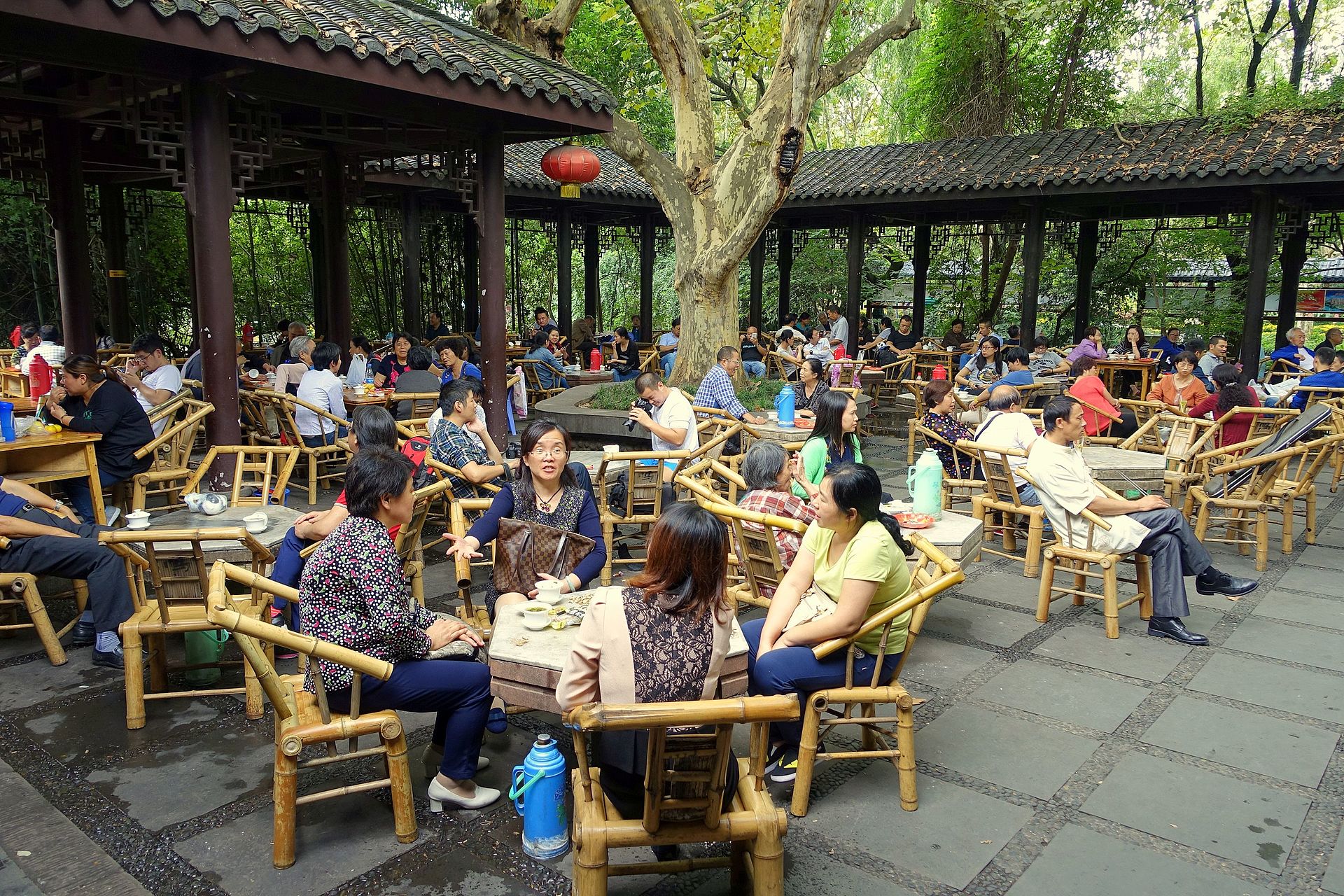
Chengdu is China's real teahouse city, and spending a whole afternoon over a gaiwan in an open courtyard for a few dozen yuan is one of its basic pleasures. At Heming Teahouse in People's Park you get the tea, a bamboo chair, and unlimited hot-water refills. To go deeper, read our Chengdu teahouse culture guide.
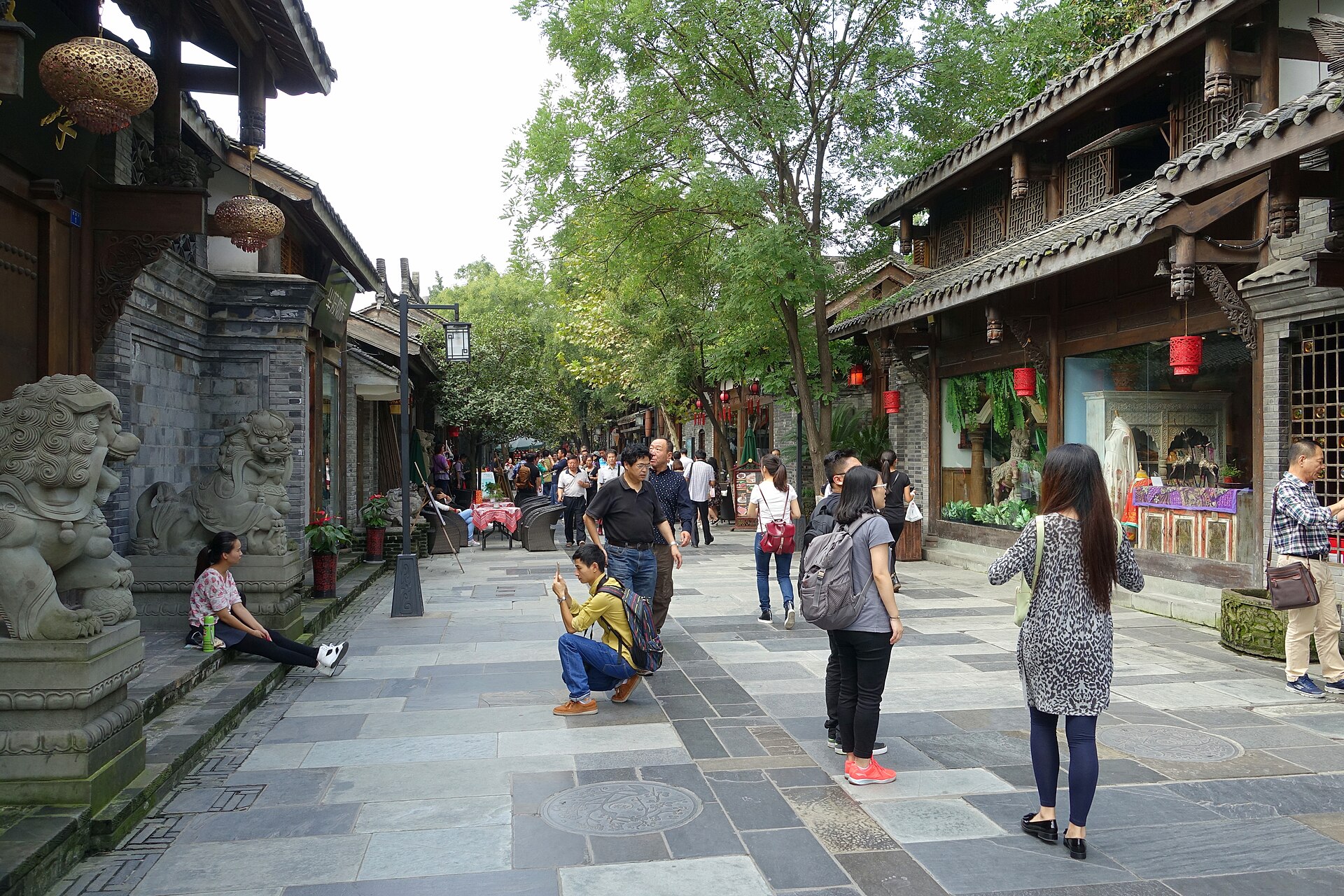
Kuanzhai Alley has grey-brick walls, big wooden doors and red lanterns that photograph beautifully day or night. The Wide Alley (Kuanxiangzi) is the smartest, with design shops; the Narrow Alley (Zhaixiangzi) is quieter. Walk slowly and peer into the courtyards behind each door — read the full deep-dive in our Kuanzhai Alley guide.
People's Park is the city's living room. Grandparents have their usual seats, younger people play cards, and the marriage-market corner — where parents post the details of their single children — is a rare window into Chinese society. It is free to wander and shows you a side of the city most tours skip. See our People's Park guide.
The lanes of Kuanzhai Alley are full of Sichuan snacks — stinky tofu, chilli-oil wontons, old-fashioned sweets and bubble tea. Grazing a bite at a time beats one big meal here. For the proper food story, see our Chengdu street food guide and the wider Chengdu food guide.
This open-air teahouse beside the lake in People's Park, running since 1923, is the heart of the whole neighbourhood and one of the best-preserved traditional teahouses in the city. No booking needed — find a free bamboo chair and order. A gaiwan (盖碗, lidded tea set) starts at around ¥16 (~฿80) per cup, with better grades around ¥20–30 (~฿100–150), and the price includes unlimited hot-water refills, so you can stay all afternoon. Staff move between tables with long-spouted kettles, topping up cups from a distance — a classic Chengdu image worth seeing at least once.
While you sit over tea, practitioners walk between tables ringing a small tuning-fork instrument and offering ear-cleaning. Cai er (采耳) is an old Sichuan tradition: a practitioner uses a set of fine tools to gently clean and massage the ear canal until it feels strangely relaxing. The price runs around ¥30–100 (~฿150–500) per session, depending on length and skill — always agree the price before they start. Many people say it is odd the first time but oddly addictive. If it is not for you, a polite wave is enough.
A corner of the park where parents post the details of their unmarried adult children — age, height, job, salary, whether they own a flat — on sheets of paper or open umbrellas, hoping to find a match. It is one of modern China's most fascinating social scenes, busiest on weekend afternoons. It is free to walk through, but be respectful: do not photograph individuals up close without asking. Read it as a window into how families here think about marriage.
Three parallel lanes, each with its own character. Kuanxiangzi (the Wide Alley) is the smartest, with restaurants, cafés and design shops; Zhaixiangzi (the Narrow Alley) is quieter, with boutiques and teahouses; and Jingxiangzi (the Well Alley) leans towards bars and nightlife. Entry is free at all hours, with most shops opening around 10:00 until evening. Walk slowly and look into the Qing-era courtyards behind each door — full detail in our Kuanzhai Alley guide.
The lanes of Kuanzhai Alley suit grazing more than a big sit-down meal. Try Sichuan snacks as you walk: fried stinky tofu, chilli-oil wontons (抄手), dan dan noodles, old-style sweets, and san da pao (三大炮, sticky-rice balls that thump loudly as they are made). Lane snacks run about ¥10–30 (~฿50–150) a piece; a larger meal in the area is roughly ¥40–80 (~฿200–400) per person. More in our Chengdu street food guide.
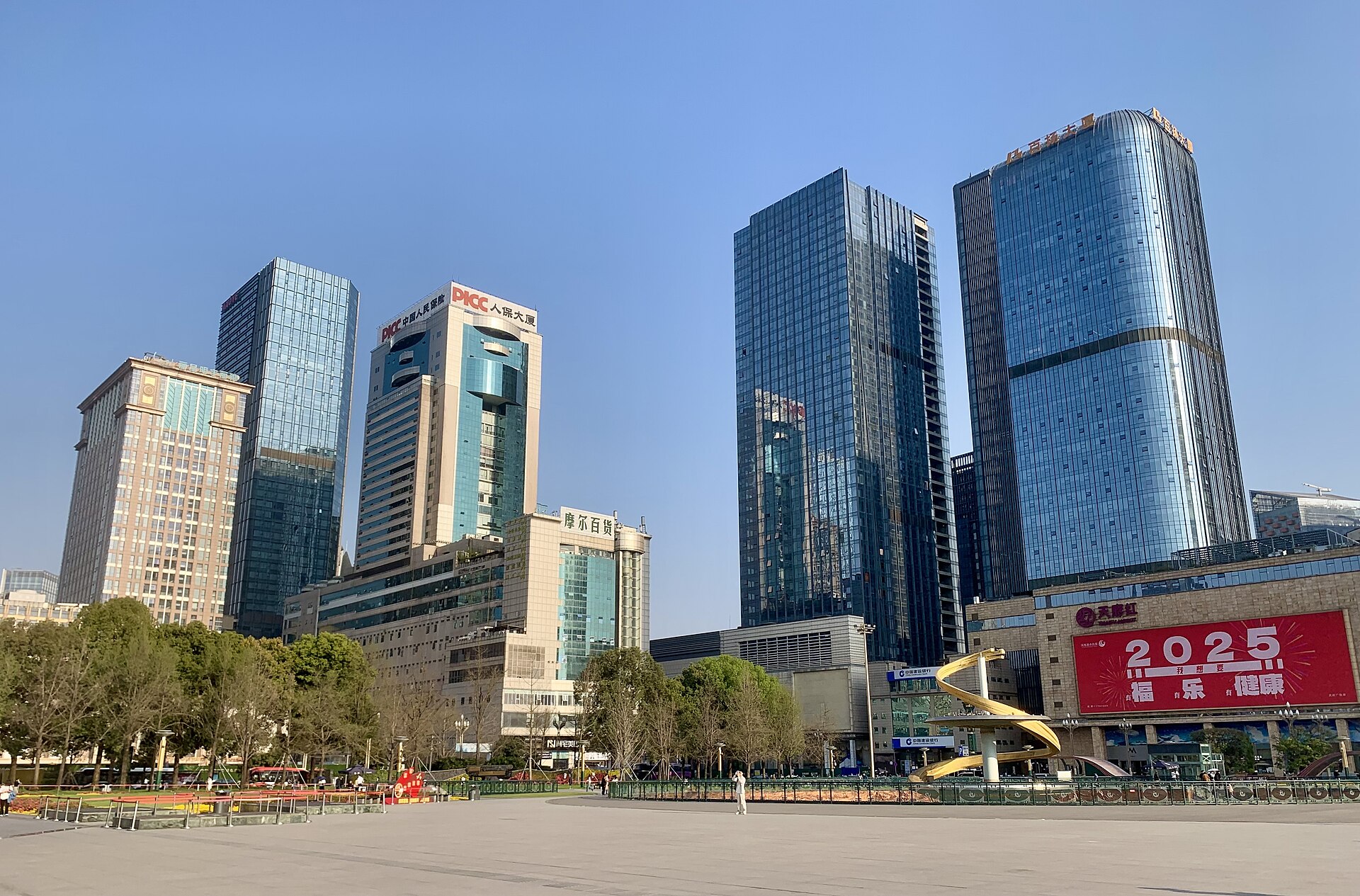
From this neighbourhood, a short metro ride or walk brings you to Tianfu Square, the central plaza with its statue of Mao Zedong and the adjacent Sichuan Science and Technology Museum. It is the most convenient metro interchange (Lines 1 and 2) for moving on to other districts — Chunxi Road for shopping, or the train stations. See our Tianfu Square guide.
The best thing about this area is that you do not need a plan. Walk until something smells good and stop; find an empty tea-table and sit.
The heart of eating and drinking here is not a restaurant — it is "sitting in a teahouse", whether at Heming Teahouse in People's Park or in one of the old courtyards of Kuanzhai Alley. Order a gaiwan of tea (from ¥16 in People's Park; the chicer courtyards in the lanes run a little higher, around ¥20–40 a cup), then watch the world go by. Many teahouses serve snacks too, and some put on short Sichuan opera face-changing (bian lian) sets in the evening.
Go deeper: Chengdu teahouse culture — why this city drinks tea all day.
Kuanzhai Alley has both snack stalls and full Sichuan restaurants, from hotpot to chilli-oil wontons (抄手) to old-fashioned sweets. Prices in the tourist lanes run a touch higher than streets outside the district, so if you want a serious meal at local rates, walk a few blocks out. For proper Sichuan hotpot, see our Chengdu hotpot guide.
The wider food picture: Chengdu food guide · Chengdu street food.
This area suits travellers who want a central base that is calmer than the shopping districts but still within walking distance of the main sights.
The upside of staying near Kuanzhai Alley and People's Park is a central location with a calmer atmosphere. The area is in Qingyang District, close to Tianfu Square, and well covered by Metro Lines 2, 4 and 17, so getting to other districts is easy. Wake up early and you can walk straight into People's Park for tea before the crowds arrive — a Chengdu start you cannot get if you are staying further out.
Worth knowing: this area has fewer five-star hotels than the Chunxi Road / Taikoo Li side. If big-brand luxury and shopping are your priority, that district has more choice. But if you want a base that is just as well connected, quieter, and that opens onto the old town in the morning, this corner does it well. Compare all the areas before you book in our Chengdu where-to-stay guide.
Or explore the other nearby districts of Chengdu:
Both spots are in Qingyang District in central Chengdu, easy and cheap to reach by metro (¥2–8). Scan to pay with Alipay or WeChat, or buy a 天府通 card. Pick your station depending on where you want to start.
09:30 — Start at People's Park (off the metro at People's Park, Line 2). Walk in to Heming Teahouse, find a free bamboo chair and order a gaiwan (¥16). Sip slowly and watch Chengdu start its day.
10:30 — Stroll around the park; visit the marriage-market corner (busiest at weekends) and watch the card and chess players. Try ear-cleaning if you are curious (¥30–100, agree the price first).
11:15 — Walk out of the park towards Kuanzhai Alley (~15 minutes).
11:30 — Wander the three lanes, graze on Sichuan snacks, peek into the old courtyards and photograph the grey-brick walls and red lanterns.
Follow the half-day route in the morning, then in the afternoon:
13:00 — Lunch on Sichuan food or hotpot around Kuanzhai Alley.
14:30 — Take the metro or walk to Tianfu Square; stop at the adjacent Sichuan Science and Technology Museum.
16:00 — Head back for another teahouse session in the lanes, or hop on Line 2/3 to Chunxi Road for shopping.
18:30 — Return to Kuanzhai Alley in the evening, when red lanterns light the lanes and the mood shifts completely. Finish with dinner in the lanes or nearby.
This neighbourhood pairs easily with the Jinjiang & Jinli district, another slice of old Chengdu, in a single day — see the full plan in our complete Chengdu guide.