Home Zhangjiajie China Zhangjiajie Food Guide About
Home  ›  China  ›  Zhangjiajie  ›  Breakfast Guide
🇨🇳 Zhangjiajie Breakfast Guide · 2026

Zhangjiajie Breakfast
Start the day with rice noodles

Before the Tianmen Mountain cable car opens, before the buses into Wulingyuan fill up, locals are slurping a hot bowl of rice noodles and spooning in their own pickled chilli — a breakfast that costs under ¥15, keeps you going on the trail all day, and tastes far more like this Hunan town than any hotel buffet.

Why get up early

Breakfast here is a warm bowl before the climb

Here's the thing — plenty of visitors eat a hotel buffet, then queue for the cable car all morning and get hungry halfway up the mountain. What locals do is get up a little earlier and stop at a rice-noodle shop near where they're staying: a hot bowl, their own pickled chilli and sour beans spooned in, light enough not to weigh you down but filling enough to last. Then they head for the trail.

Zhangjiajie sits in Hunan (湖南), in the land of the Tujia people (土家族), so breakfast here isn't coffee and toast — it's a real local meal that genuinely rules the morning table. The star is rice noodles (米粉), smooth rice noodles in a clear pork-bone broth topped with beef, pork or stir-fried sour beans. Around it you'll find youbaba crispy fried rice cakes, ciba pounded glutinous rice cakes, soy milk with youtiao (fried dough sticks), and congee with Hunan pickles for anyone who wants it mild — all of it for no more than ¥10–25 (~฿50–125) a head.

This page walks you through Zhangjiajie breakfast one dish at a time, straight up — where to eat, how to eat it, how to keep it from being too spicy, what time things open, and which dishes are best for a morning when you have to be on the trail early. For the deeper smoked-and-fermented Tujia flavours, we've linked a separate guide at the foot of the page.

The morning staple

米粉 — rice noodles, what Zhangjiajie eats every morning

If you only have time for one thing before the trail, make it this — ¥8–18 (~฿40–90), made fresh, seasoned by you.
How a bowl of mifen works — watch before you order

Fresh rice noodles are blanched in hot water, dropped in a bowl, flooded with hot pork-bone broth, and topped (braised beef, minced pork, pig's trotter or stir-fried sour long beans). Then the condiment tray is yours — chilli flakes, chilli oil, pickles, spring onion, roasted peanuts, add to taste. Rice-noodle shops open before 6:30am and are busiest as people head out to the mountain.

🍜
Noodles & broth
米粉 + 骨汤

Blanched noodles, clear bone broth

🥩
Pick a topping
牛肉 / 猪脚 / 酸豆角

Beef, trotter or sour beans

🌶️
Season it yourself
辣椒 + 酸菜

Chilli & pickles, add to taste

⏱️
Eat before the trail
早 · all-day fuel

Light but keeps you going

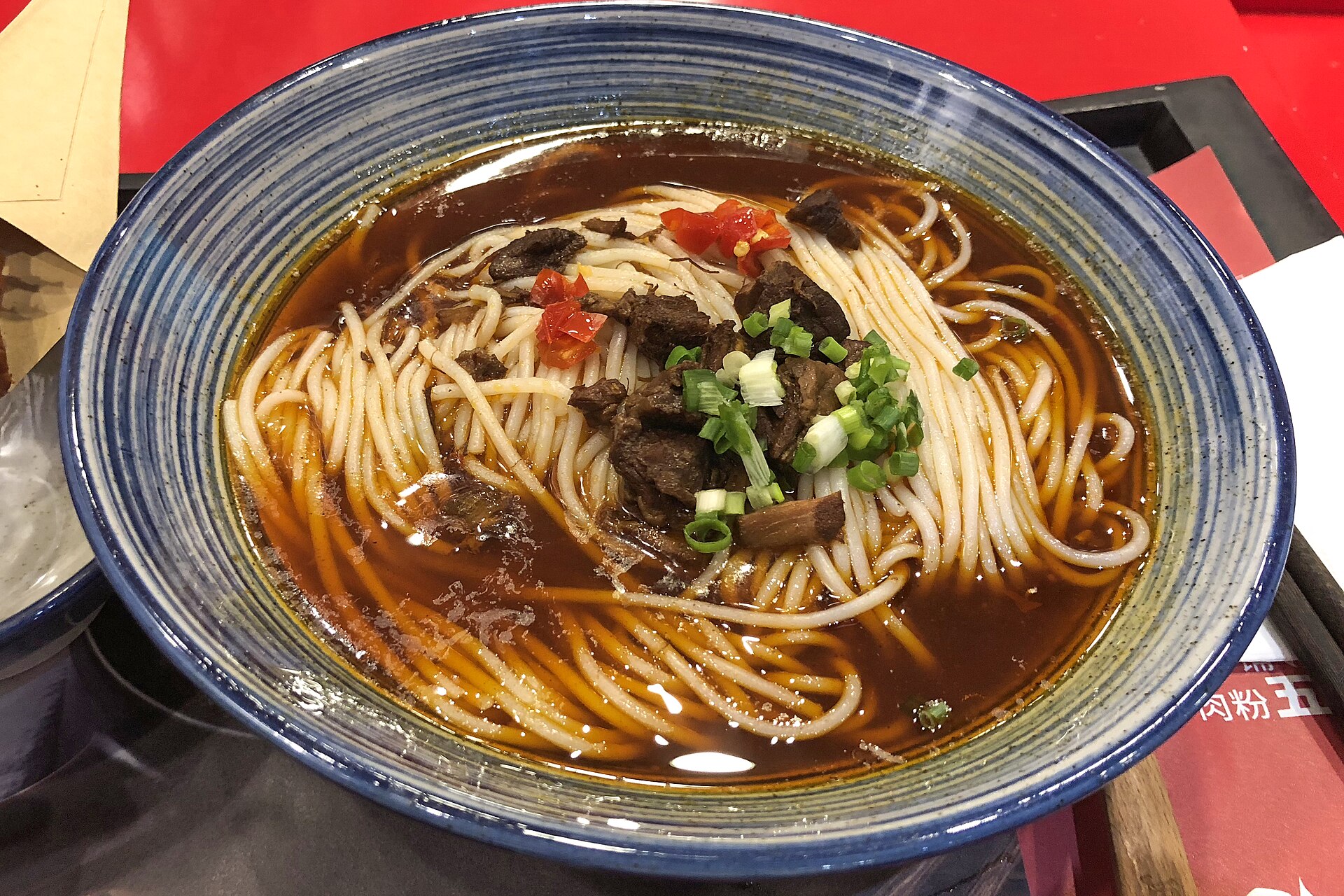
A bowl of Hunan rice noodles (mifen) in a dark, spicy broth with braised beef, red chilli and spring onion — Zhangjiajie's morning staple 1
Rice noodles (Mǐfěn)
米粉 · the morning staple, in clear broth

This is what Zhangjiajie eats most for breakfast — round, smooth rice noodles blanched fresh and flooded with hot, slow-simmered pork-bone broth, then topped however you like: braised beef, pig's trotter, minced pork or stir-fried sour long beans (酸豆角). You add the chilli, pickles, spring onion and roasted peanuts yourself. The morning broth tends to be clearer and rounder than the fierce dishes later on, so the heat is entirely up to you. Some shops also do a "dry mixed" version (拌粉) tossed in sauce with no soup. Try a few and you'll find a favourite — it's a light, filling start that gets you up the mountain.

How to eat: slurp it hot · add chilli and pickles · ask for 微辣 if you want it mild
Price: ¥8–18 / bowl (~฿40–90)
Find it: rice-noodle shops in the city · around the railway stations — open from 6am
🧅2
Youbaba
油粑粑 · crispy fried rice cakes, soft inside

The fried staple of Xiangxi morning stalls — a batter of rice flour with a little fermented glutinous rice spooned into round moulds and deep-fried until golden and crisp, soft and chewy inside. Some stalls tuck in a filling of spring onion, garlic chives or a little chilli. Bite into one hot off the pan and it's nutty and rice-fragrant — the thing locals grab to eat alongside their mifen or congee. They cost just a few yuan each. Kids around here grow up on these, and if you like something crunchy in the morning, you'll be happy.

How to eat: hot from the pan · alongside mifen or congee
Price: ¥1–3 / piece (~฿5–15)
Find it: fried-snack stalls at the morning market · beside rice-noodle shops
🍵3
Kudzu jelly (Gěgēn fěn)
葛根粉 · mountain-root powder, stirred hot

A health-minded morning drink-and-snack from the mountains — kudzu root (gegen) is processed into a starch powder, and to serve it you stir it with hot water until it thickens into a clear, soft jelly, pale amber and faintly sweet. Hunan people treat it as a "cooling", restorative food, and warm in the morning it sits well on the stomach. Some stalls serve it hot in a cup to sip; others set it into a cool, clear jelly with a little sugar on top. The dried powder is also a popular souvenir around the park gates — though honestly, buying a bag in a city market is much better value than at the park entrance.

You'll find it as: a hot stirred cup · a cool clear jelly with sugar
Price: ¥5–15 / cup (~฿25–75)
Tip: buy the dried powder in a city market — cheaper than at the park gate
🥣4
Congee + Hunan pickles (Xīfàn)
稀饭 + 酸菜 · the mild, settle-the-stomach option

The easy, light choice for a morning when you don't want chilli — plain white rice congee (稀饭/白粥), hot, served with small saucers of Hunan pickles and ferments: pickled radish, sour long beans, mustard greens, chilli pickles and fermented tofu. You spoon the pickles into the congee and keep it simple — the sour-salty bite of the pickles plays off the plain rice nicely. Hunan people eat this all the time and it's very cheap. It's the dish for anyone with a sensitive stomach, for kids and older travellers, or for when you've had chilli all trip and your stomach wants a break. Almost every breakfast spot has it.
How to eat: spoon the pickles into the congee · sour-salty against plain rice
Price: ¥5–12 / set (~฿25–60)
Best for: non-chilli eaters · sensitive stomachs · a break from the heat
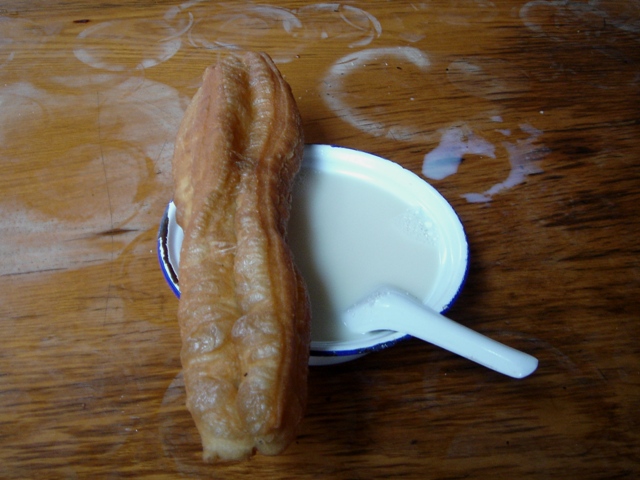
A golden crispy youtiao (fried dough stick) next to a bowl of hot soy milk with a spoon, on a wooden table — the classic Chinese breakfast pairing 5
Soy milk + youtiao (Dòujiāng + Yóutiáo)
豆浆 + 油条 · soy milk + fried dough sticks

The most familiar pairing on this list — youtiao is a fried dough stick, hollow and fluffy inside with a crisp shell, and doujiang is fresh, hot soy milk, sweet or plain. The traditional way is to tear the youtiao and dip it in the soy milk, so the dough soaks up a little and the texture changes in your mouth. If you're not yet brave enough for the local rice noodles or the pickles, start here: safe, filling, nothing to fear, and easy to find all over the city. Some stalls sell boiled eggs or jianbing crepes alongside.

How to eat: tear the youtiao and dip it in the soy milk · sweet or plain
Price: ¥5–10 / set (~฿25–50)
Find it: stalls and breakfast shops across the city · breakfast chains
🍮6
Sour-spicy · local
Rice tofu (Mǐ dòufu)
米豆腐 · cool, slippery, sour-spicy dressing

A morning and snack food across Xiangxi, Hunan and Guizhou — rice tofu is made by cooking ground rice until it sets into a soft, springy, jelly-like block, pale green or cream-coloured, then cut into pieces or strips and dressed with a sour-spicy sauce of chilli, vinegar, pickled beans, spring onion and peanuts. You eat it cool and slippery, bright and refreshing. People around here have it as a light breakfast or a midday snack, and it's well known from Shen Congwen's Border Town. If you like sour and tangy, dive in — but if you don't want it spicy, ask for less chilli.
How to eat: cool and springy · sour-spicy dressing · ask for less chilli
Price: ¥5–10 / bowl (~฿25–50)
Find it: morning-market stalls · Tujia snack shops
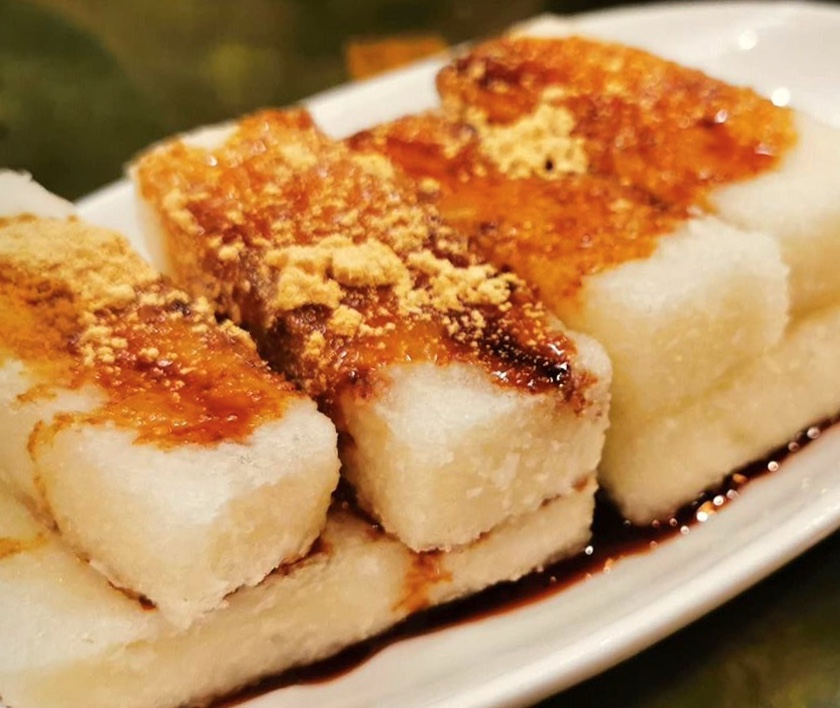
Ciba pounded glutinous rice cakes cut into squares, dusted with brown sugar and golden soybean powder on a white plate — a Tujia morning and dessert food 7
Ciba
糍粑 · pounded glutinous rice, grilled or fried

A Tujia festival food that's become a morning and snack staple — ciba is glutinous rice that's steamed and then pounded in a mortar until sticky and dense, shaped into discs or blocks, then grilled over charcoal or fried until the surface turns golden and fragrant, soft and chewy inside. It's rolled in brown sugar, soybean powder or sesame, with the warm scent of toasted rice. Some morning stalls grill it fresh to eat on the spot. Traditionally Tujia families pound ciba together at New Year as a ritual; today it's a sweet breakfast or a snack to top up your energy before a hike. Kids love it and visitors buy plenty.

You'll find it: charcoal-grilled or fried · rolled in brown sugar, bean powder, sesame
Price: ¥5–15 / piece (~฿25–75)
Find it: morning stalls · markets · the park gates
🥟8
Baozi + zongzi (Bāozi + Zòngzi)
包子 + 粽子 · steamed buns + bamboo-leaf rice

Grab-and-go breakfast for the mornings you have to make the bus into the park — baozi are hot steamed buns from the bamboo basket, filled with pork and spring onion, greens or something sweet, filling and easy to eat on the move. Zongzi are pyramids of glutinous rice wrapped in bamboo leaves, both sweet (jujube, red bean) and savoury (pork belly); steamed hot, you just peel the leaf and eat. Xiangxi zongzi are known for their dense, chewy sticky rice and bamboo-leaf fragrance. Both are easy to buy at morning stalls and city shops, both are cheap, and both work as a quick breakfast or trail provisions.

How to eat: on the bus / on the trail · baozi hot, peel the zongzi leaf
Price: baozi ¥2–5 · zongzi ¥5–10 (~฿10–50)
Find it: morning stalls · city shops · provisions for the mountain
A note on the heat: most Zhangjiajie breakfasts start from a clear, unspicy broth and let you spoon in your own chilli flakes, chilli oil and pickles. If you're not a big chilli eater, just add a little, or tell the shop 微辣 (wēi là = less spicy) / 不要辣 (bù yào là = no chilli). The ferments — pickled long beans and pickles — pack a sharp sour-salty punch, so try a little first.
Where to eat, early

Where to go that morning

The city and the park gateway are different — knowing which is which saves money and gets you there before the buses leave.

Zhangjiajie city — local rice-noodle shops
张家界市区 · Renmin Road · Huilong Road

Downtown (Yongding district) is where locals eat breakfast for real. Rice-noodle shops are scattered along Renmin Road (人民路), Huilong Road and the residential lanes, open from 6am. Look for the one that's busy with a pot of broth bubbling out front — friendly prices, genuinely local flavour. This is the base if you're staying in the city for Tianmen Mountain or catching onward transport to the park.

Best for: rice noodles · youbaba · congee & pickles · Hours: 6:00–9:30am
Around the railway & bus stations — eat before you go
张家界站 / 西站 · near the railway and bus stations

If you've got an onward train or an early bus into the park, the area around Zhangjiajie Railway Station (张家界站) and the West Station (西站) has rice-noodle shops, baozi and zongzi stalls and fried-snack vendors open early for travellers — easy to grab and carry onto your ride. Some open as early as 5:30am for the first trains. It's the spot for a quick breakfast on a travel day or any morning the bus leaves before 8.

Best for: quick mifen · baozi · zongzi · fried snacks · Hours: 5:30–9:00am
Wulingyuan — by the park gate
武陵源 · near the Avatar forest entrance

If you're based in Wulingyuan to hike the Zhangjiajie pillar forest (the Avatar mountains), the easiest breakfast is usually your hotel's morning spread, or the stalls and rice-noodle shops near the park gate and along Xibu Street (溪布街). Honestly, prices run higher than in the city and there are fewer truly local places — but it's convenient, and you can eat and walk straight to the gate. Good for the mornings you want to be inside the park before the crowds.

Best for: hotel breakfast · mifen by the gate · Hours: 6:30–8:30am before the park
Morning market & Dayong Fucheng — graze a little of everything
早市 · 大庸府城 · the city morning market

Want to try several breakfast things in one go? Walk the city morning market (早市) or the Dayong Fucheng (大庸府城) block and you'll find stalls of freshly fried youbaba, grilled ciba, rice tofu, kudzu jelly and rows of pickles and ferments. It's fun to graze one stall at a time, it's cheap, and it's where you'll really see the city's morning life. Good for early risers who want to soak up the atmosphere before the day's sightseeing starts.

Best for: youbaba · ciba · rice tofu · pickles · Hours: 6:00–9:00am
Before you go

Tips worth knowing before you head out

Eat before the climb — the best use of your time

Most rice-noodle shops and morning stalls open at 6:00–6:30am, which lines up perfectly with anyone heading out early for the Tianmen Mountain cable car or into Wulingyuan park. Eat a solid breakfast before you start hiking and you'll stay full all day, instead of relying on the pricey, long-queued restaurants inside the park. Youbaba and fried items tend to sell out by mid-morning, while some rice-noodle shops sell all day.

📱
Use Alipay or WeChat Pay

Rice-noodle shops, morning stalls and market vendors mostly don't take credit cards, and many take no cash at all — you'll need Alipay or WeChat Pay. Download Alipay before your trip and link a Visa/Mastercard through its international mode — get this sorted from your hotel. Hotels and resorts around the park are more likely to accept foreign cards.

👆
Point and order — no Chinese needed

Most rice-noodle shops have no English menu, but you can point at the pot up front or at what someone else ordered and nod, or show the Chinese name from this page (e.g. 米粉 rice noodles · 牛肉粉 beef rice noodles · 油粑粑 youbaba). The chilli and pickle condiments sit on the table for you to help yourself — watch what the person next to you does and follow along. No need to be shy.

🌶️
The heat is up to you — add it yourself

The nice thing about Zhangjiajie breakfast is that the mifen broth usually isn't spicy to begin with — the heat comes from the chilli flakes, chilli oil and ferments you add yourself. Want it mild? Add a little, or tell the shop 微辣 / 不要辣. The ferments like pickled long beans are sharply sour-salty, so try a little first. If you've eaten chilli all trip and want a break, order the congee with pickles or a kudzu jelly instead.

🌡️
Eat it hot — especially the fried stuff

Youbaba and youtiao are best straight out of the fryer; once they cool they go soft and lose their crunch. Grilled ciba is the same — warm and chewy is best at first. And mifen is best slurped hot, when you get the full hit of the broth. Buy it and eat it right there at the stall, or carry it warm onto the bus. Standing and eating, walking and eating in the morning is part of the meal here.

More on the food

Dig deeper into Zhangjiajie flavours

Breakfast done. What about lunch and dinner? We've got a separate guide for each part of the table.

Frequently asked

FAQ · before you go hunting for breakfast in Zhangjiajie

What should I eat for breakfast in Zhangjiajie?
The city's morning staple is rice noodles (米粉) — rice noodles in a pork-bone broth, topped with beef, pork, pickles or stir-fried sour beans, around ¥8–18 (฿40–90) per bowl. It's what locals eat before work or a day on the mountain. After that come youbaba fried rice cakes, glutinous rice cakes (ciba), soy milk with youtiao, and congee with Hunan pickles for anyone who wants something mild. Kudzu-root jelly is a warm, health-minded drink at morning stalls. All of it is cheap and tastes far more like the real city than a hotel buffet.
Are Zhangjiajie rice noodles (米粉) spicy? Are they hard to eat?
Breakfast rice noodles are usually a clear pork-bone broth that's far milder than the lunch and dinner dishes. The noodles are smooth and soft, the broth round and savoury, and the heat comes from the pickled chilli, chilli flakes and chilli oil you add yourself. If you don't want it spicy, ask for 微辣 (less spicy) or 不要辣 (no chilli), and add the pickled long beans or Hunan pickles to taste. Much easier to eat than the fierce Hunan dishes later in the day · more in our Hunan spicy food guide.
What is youbaba (油粑粑)?
Youbaba is a batter of rice flour with a little fermented glutinous rice, shaped into round cakes and deep-fried until crisp outside and soft inside. It's a popular morning and snack food across Xiangxi and Tujia areas. Some stalls add a filling of spring onion, garlic chives or chilli. You eat it hot straight from the pan; it tastes nutty and rice-fragrant and costs just ¥1–3 (฿5–15) a piece. Find it at morning-market stalls and beside the rice-noodle shops, and it pairs well with mifen or congee · more in our snacks guide.
Where should I eat breakfast — Zhangjiajie city or near Wulingyuan park?
The city has many more local rice-noodle shops and morning stalls, and they're cheaper — Renmin Road (人民路), Huilong Road and the area around the railway stations all have places open from 6am. The Wulingyuan park gateway and Xibu Street have breakfast spots aimed at tourists and hotels: convenient if you're based there to hike, but pricier and less authentically local. If you're staying in the city, look for a busy rice-noodle shop in the morning. If you're in Wulingyuan, eating at your hotel or a stall near the gate before you hike is the easy choice · see our street-food guide.
How early do I need to go for breakfast?
Most rice-noodle shops and morning stalls open from 6:00–6:30am, which lines up nicely with anyone heading out early for the Tianmen Mountain cable car or into Wulingyuan park. The sweet spot is 6:30–8:30am — everything is fresh and you beat the buses out. Some rice-noodle shops sell into the late morning or all day, but youbaba and other fried items tend to sell out by mid-morning. Eating a solid breakfast before you start hiking is the best use of your time and keeps you full all day.
Do Zhangjiajie breakfast spots take cards or do I need cash?
Rice-noodle shops, morning stalls and market vendors mostly take WeChat Pay or Alipay only. Many take neither cash nor foreign cards. Download Alipay before your trip and link a Visa/Mastercard through its international mode. Hotels and resorts around the park are more likely to accept foreign cards.
Klook · Food tour

Zhangjiajie Food & Local Tour — find the rice noodles with someone who knows

Food and local tours in Zhangjiajie with a guide who takes you to the best rice-noodle shop, the morning-market eats and the Tujia food in town — taste it for real, no language stress and no wandering around lost.

See Zhangjiajie tours on Klook →
Wherebest is a Klook affiliate partner — we may earn a commission when you book through our link, at no extra cost to you.