Home Zhangjiajie China Zhangjiajie Hotels About
Home  ›  China  ›  Zhangjiajie  ›  Local Cuisine
🇨🇳 Tujia-Xiangxi Food · 2026

Zhangjiajie Local Cuisine
mountain food that's smoked, soured & spiced

Before you chase down which dishes to try, it helps to understand the flavour of this place. Zhangjiajie food is the Tujia cooking of Xiangxi — preserved over the fire-pit all winter — meeting Hunan's fragrant-hot, sour chilli. This is the master guide that ties every food article about this mountain town together.

Know it before you eat

The Zhangjiajie taste — it starts with a mountain that had no fridge

Most people come to Zhangjiajie for the Avatar mountains and Tianmen's Heaven's Gate, with food as an afterthought. Then they actually sit down to a meal, and the question comes up again and again: why does this taste so different from the Chinese food I know? The answer is geography. Zhangjiajie (张家界) sits in the northwest of Hunan (湖南), in the region called Xiangxi (湘西), a mountain home to the Tujia (土家族) and Miao (苗族) peoples. Winters up here were cold and there were no fridges, so Tujia families had to keep food edible all year — and that is where a flavour you won't taste quite the same anywhere else begins.

Picture it this way: the Zhangjiajie taste is two strands meeting. The first is Hunan heat, which is fragrant-hot and sour-hot (香辣 / 酸辣), heavy on fresh chilli, dried chilli and pickled chilli, built for aroma and a clean burn — not the tongue-numbing huajiao of Sichuan-Chongqing málà, and not the steam-and-dim-sum cooking of Canton. The second is Tujia mountain food, which gets its character from being smoked, fermented and foraged — whole pigs hung and smoked over the fire-pit for weeks, fish and meat fermented in rice bran until sour, mushrooms and bamboo shoots gathered from the hills in season. When those two strands land on one table, you get the flavour that says "this is Xiangxi." This page walks through the whole picture, then links a deeper guide to each category — it's the master guide that ties the set together.

Three pillars of the flavour

What Tujia-Xiangxi cookingis built on

Understand these three pillars first, and every dish in Zhangjiajie starts to make sense.

🔥
Smoked over the fire-pit
熏 · SMOKE-CURED

The heart of the Tujia kitchen — pork, sausage, chicken and fish are salt-cured then hung and smoked over the household fire-pit for weeks or months, until the meat is firm, dark and deeply smoky. This is how la-rou (腊肉) cured pork and blood tofu (血豆腐) came to be the pantry staples of mountain homes.

🫙
Fermented until sour
酸 · FERMENTED-SOUR

Xiangxi is famous for its ferments — fish and pork are tossed with rice bran and salt, then packed into jars for months or even a year, giving deep-sour sour fish (酸鱼) and sour pork (酸肉). The Tujia have a saying that three days without something sour leaves your legs wobbly, so a sour note runs through almost every meal.

⛰️
Foraged in season
山 · FORAGED

The mountains around Wulingyuan are a natural larder — cliff rock fungus (岩耳) climbed for off the rock faces, several kinds of wild mushroom, wild bamboo shoots, mountain greens, free-range chicken, even wild kiwi and persimmon. These foraged ingredients give the non-spicy Tujia dishes a clear, naturally sweet taste that balances the heat.

Why this matters: because the root of the flavour is preserving food on the mountain, most Tujia dishes are bolder — saltier, smokier, more sour — than the Chinese food of other cities. They're built to be eaten with plenty of hot steamed rice, not on their own. Knowing that, you'll order enough rice and pick a non-spicy dish or two to balance the meal.
The main dish families

9 families that tellthe whole Zhangjiajie story

Ordered by how distinctive they are — each family has its own deep guide, so read on in the dish you most want to eat first.
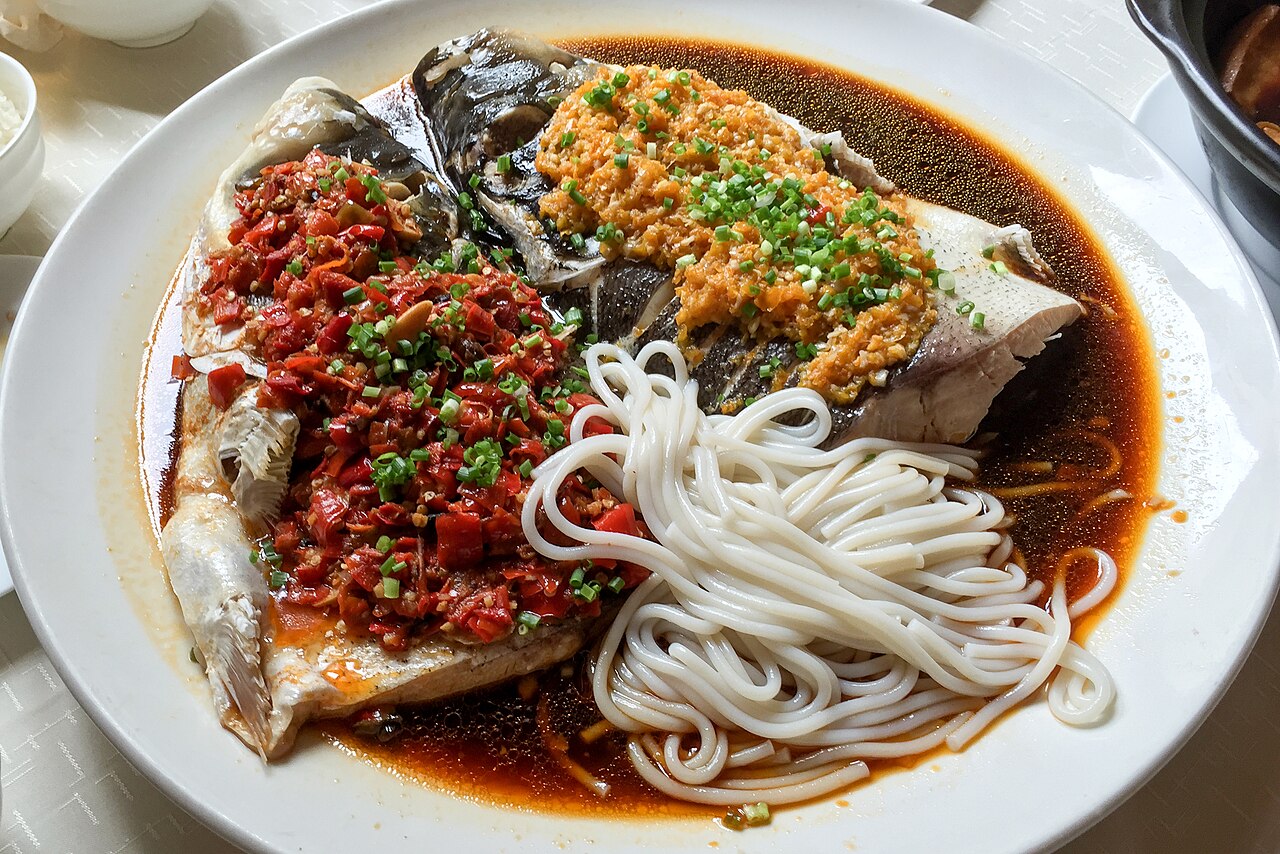
Hunan chopped-chilli fish head, representing Zhangjiajie's fragrant-hot cooking, a fish head topped with red chopped chilli on a large plate 1
Sanxiaguo
三下锅 · the city's signature dry pot

Order this first if you want to know the city — a dry pot of several things stir-braised together, usually smoked pork, beef tripe, radish and tofu, cooked with chilli and no soup. Legend traces it to the Ming dynasty's Jiajing era (around 1555) as the "combined dish (合菜)" Tujia soldiers ate in a hurry before being conscripted to fight pirates. Locals queue for it daily. You eat it dry with rice first, and some places add broth afterwards to turn it into a hotpot — read the full guide.
Main flavour: fragrant-hot, dry, intense · with steamed rice
Price: ¥30–80 (฿150–400) / pot (shared by 2–3)
Read on: the full sanxiaguo guide
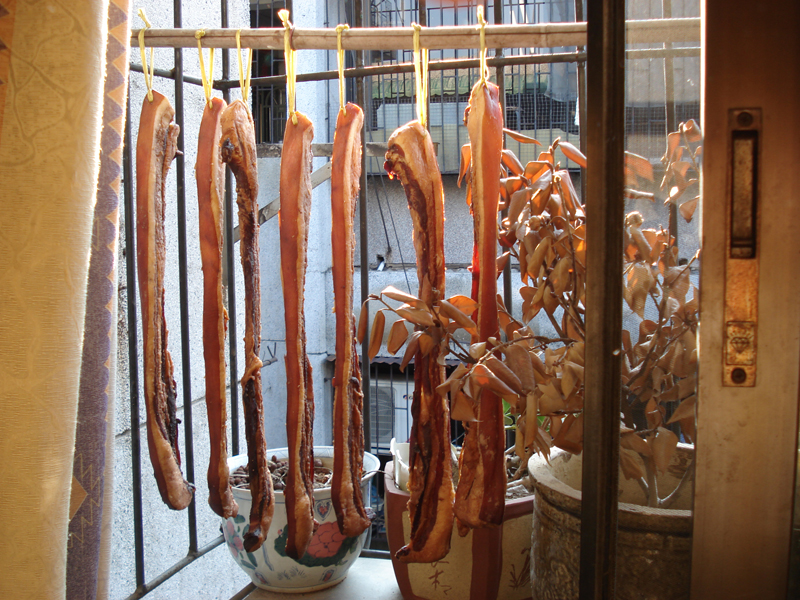
Tujia la-rou smoked pork, pork belly salt-cured and hung to smoke until dark and chewy, drying on a rack by a window 2
La-rou
腊肉 · Tujia fire-pit smoked pork

The signature flavour of Tujia mountain food — pork (along with sausage, chicken and fish) is salt-cured and then hung and smoked over the fire-pit for weeks or months, until it's firm, dark and deeply smoky. It was the way to preserve food through a fridge-less winter. To eat, it's thin-sliced and stir-fried with green garlic, dried chilli or dried bamboo shoots, the salt-smoke-fat playing off the fragrant chilli. Every Tujia home keeps some by the stove, and it's the star of sanxiaguo too — read it in the Tujia food guide.

With: hot steamed rice · stir-fried with green garlic / dried bamboo
Price: ¥40–70 (฿200–350) / plate
Read on: the Tujia food guide
🫙3
Sour Fish & Pork
酸鱼 · 酸肉 · rice-bran ferments of the Tujia

The heart of Tujia preserving — fish and pork are tossed with rice bran (糟), salt and roasted rice, then packed into jars for months or even a year, until they take on a deep fermented sourness. To serve, they're fried or steamed: firm, tangy-salty, scented with roasted rice. It's a flavour people from outside Xiangxi don't know, and one the Tujia love deeply, born of an age with no fridge and a need to keep protein through the cold. It's one of the dishes that tells the mountain way of life best, and worth trying if you want the truest Tujia taste — read it in the Tujia food guide.

Usually served: fried / steamed · tangy-salty, roasted-rice aroma
Price: ¥35–60 (฿175–300) / plate
Read on: the Tujia food guide
🧊4
Blood Tofu
血豆腐 · tofu with pig blood, smoked dry

Another fire-pit staple of the Tujia — tofu is mashed with pig blood, minced pork and seasonings, shaped into blocks and then smoked until dry, giving dark, dense, smoky cakes. To eat, it's thin-sliced and stir-fried with green garlic and chilli, or dropped into sanxiaguo. The taste is salty, smoky and chewy — like a smoked sausage but firmer. Tujia families made it during the new-year pig slaughter, and it's a regular ingredient in the mountains' stir-fries — read it in the Tujia food guide.

Usually served: thin-sliced, stir-fried with green garlic-chilli · in the dry pot
Price: ¥30–50 (฿150–250) / plate
Read on: the Tujia food guide
🍄5
Cliff Rock Fungus
岩耳 · wild black lichen of Wulingyuan

The rarest, hardest-to-get mountain treasure in Zhangjiajie — yan'er is a wild black fungus that grows clinging to the sheer rock faces of Wulingyuan, so it has to be climbed for, which makes it scarce and many times pricier than ordinary mushrooms. It's crisp and springy, thicker than wood-ear, and usually simmered into soup with free-range chicken or an old duck, the broth clear and naturally sweet. The Tujia serve it to honoured guests. If you spot it on a menu and the budget stretches, it's worth trying once, because you'll rarely find it outside Xiangxi — read it in the Tujia food guide.

Usually served: simmered soup with free-range chicken / old duck · clear, sweet
Price: by weight · a premium dish, ask the price first
Read on: the Tujia food guide
🐟6
Chopped-Chilli Fish Head
剁椒鱼头 · the classic Hunan fragrant-hot dish

The face of the Hunan-heat strand in Zhangjiajie — a big fish head split in half, topped with bright-red fermented chopped chilli (剁椒), garlic and ginger, then steamed and finished with hot oil poured over. The cheek and head meat come out soft and juicy, the fermented chilli's fragrant heat cutting any fishiness. It's a centre-of-table dish to share with rice, and the heat is Hunan-style — fragrant, not numbing. If you don't take much chilli, ask for 微辣 (mild)read it in the Hunan spicy food guide.

How to eat: shared with rice · go for the cheek meat first
Price: ¥60–120 (฿300–600) / fish (shared)
Read on: the Hunan spicy food guide
🎍7
Wild Bamboo & Mountain Greens
山笋 · 野菜 · seasonal foraging from the Xiangxi hills

The light, mountain side of the meal that deserves a place on the table — the Xiangxi hills are rich in wild bamboo shoots (山笋), often stir-fried with la-rou smoked pork so the smoke plays off the crisp sweetness of the shoots, and in seasonal mountain greens (野菜) of many kinds, stir-fried or simmered into soup. Some seasons there are dried bamboo shoots kept for stir-frying year-round. These dishes are inexpensive but taste genuinely of the hills, and they balance a meal full of smoked meat and chilli. Foraged greens are simply part of mountain life for the Tujia.

Usually served: wild bamboo stir-fried with la-rou · greens stir-fried / in soup
Price: ¥25–50 (฿125–250) / plate
Tip: seasonal · ask what wild greens they have today
🫘8
Hezha
合渣 · soybean mash simmered with wild greens

A home-style dish the Tujia have eaten in every household forever — finely ground soybeans simmered together with chopped greens (mustard greens or pickled greens), giving a thick, pale-green pot with a mild, nutty taste. Some homes add chilli or minced pork. The Tujia have a saying that a bowl of hezha a day takes you to ninety-nine. It's filling, cheap and gentle on the palate, and it balances the other spicy dishes well — when you've eaten heat all day, a bowl of hezha is just the thing to rest your palate — read it in the Tujia food guide.
Taste: mild and nutty · some add chilli / minced pork
Price: ¥15–30 (฿75–150) / pot
Read on: the Tujia food guide
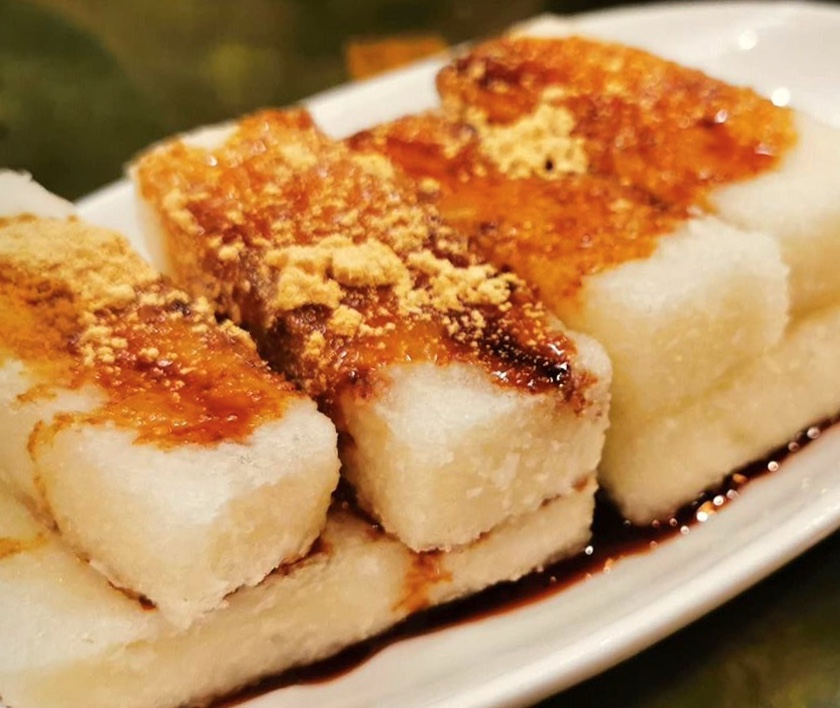
Tujia ciba glutinous rice cakes, pounded rice cakes grilled and drizzled with dark syrup and yellow soybean powder, arranged on a white plate 9
Ciba
糍粑 · pounded glutinous-rice cakes, grilled or fried

The sweet bite that closes a mountain meal nicely — ciba is made from glutinous rice steamed and then pounded in a mortar until chewy, shaped into slabs or rounds, and grilled over charcoal or fried until the crust is golden and the inside stays soft. It's eaten with sugar, ground peanut or sesame, fragrant with toasted rice. Markets and the park gates have stalls grilling ciba fresh to eat hot on the go. Traditionally the Tujia pounded ciba together around the new year as a ritual. Kids love it, and travellers buy plenty to snack on — read it in the snacks guide.

Usually found: charcoal-grilled / fried · with sugar-peanut-sesame
Price: ¥5–15 (฿25–75) / piece
Read on: the snacks & sweets guide
A note on the heat: Hunan heat in Zhangjiajie is fragrant-hot and sour-hot, not the tongue-numbing burn of Sichuan málà. If you don't take much chilli, tell the restaurant 微辣 (wēi là = mild) or 不要辣 (bù yào là = no chilli), and pick non-spicy dishes like hezha, a foraged-mushroom pot or wild bamboo to balance the meal.
Eat like the Tujia

How a Zhangjiajie mealactually runs

Ordering — sit-down dining as a group

Most Tujia meals are eaten as a group, dishes set in the middle of the table to share, with white rice ordered separately. Start with the city's signature dish — one pot of sanxiaguo for the local flavour. Add a smoked-meat plate like la-rou stir-fried with green garlic or wild bamboo, then a shared centre dish like chopped-chilli fish head. Bring in a non-spicy dish to rest the palate — hezha, a foraged-mushroom and free-range chicken pot, or mountain greens — and finish with hot grilled ciba glutinous rice cakes.

That set covers smoke, fragrant heat and a sweet in one meal — group size: 2 people pick 3 dishes plus rice; 4 people order 5–6 dishes easily. Per person: a homestyle Tujia restaurant in the city runs ¥50–80 (~฿250–400), while tourist restaurants near Wulingyuan or inside the park are often roughly double.

Payment + language — set up first

City restaurants, market stalls and street vendors mostly take WeChat Pay and Alipay. Many don't take cash and won't take foreign cards — set up Alipay/WeChat Pay with a linked Visa/Mastercard through the tourist mode before you travel. Larger restaurants and resort hotels near the park usually do accept cards.

Many local places have no English menu — show staff the Chinese name of a dish from this article (三下锅 · 腊肉 · 剁椒鱼头) or point at a picture menu. Restaurants around the Dayong Ancient City block and tourist spots usually have picture menus and staff who can recommend.

Where to eat

Zhangjiajie city vs Wulingyuan are different

A Zhangjiajie trip usually splits into two bases — know what each is good at before you plan where to eat.

Zhangjiajie city — the real, cheap eats
张家界市区 · Dayong Ancient City · Huilong Rd

Downtown is where locals eat their real meals — sanxiaguo joints and homestyle Tujia restaurants at friendly prices. The Dayong Ancient City (大庸府城) block is a food-culture quarter that gathers Tujia eats in one place, and Huilong Road / Renmin Road (人民路) have night eats, dry pots, grills and ciba to graze on. This is your base for the genuine Tujia-Hunan taste at prices that aren't tourist prices.

Best for: sanxiaguo · smoked pork · Tujia food · When: midday to late
Wulingyuan — park gateway, convenient eats
武陵源 · by the Avatar park entrance · Xibu Street

The gateway town to the Zhangjiajie pillar-forest park (the Avatar mountains), where people stay to hike. Restaurants here and inside the park are tourist-facing, serving sanxiaguo, chopped-chilli fish head and Tujia food the convenient way. The Xibu Street (溪布街) walking street by the stream buzzes in the evening once people come down off the mountain, with grills, ciba, bars and cafés. To be honest, prices are usually higher than in the city and the flavours middling — best for a quick meal between hiking days.

Best for: convenient meals near the park · evening grills · When: daytime–evening

Want to know what each quarter does best and which streets to walk? Read on at the Zhangjiajie street food guide — it works through Dayong Ancient City, Xibu Street and the city night markets stall by stall.

Go deeper on each category

The full set of Zhangjiajie food guides

This page is the master guide — each category has its own deep dive. Read the one you most want to eat first.

Frequently asked

FAQ · what to know before you try Tujia food

What kind of cuisine is Zhangjiajie food? Is it as spicy as Sichuan?
Zhangjiajie food is the Tujia-Xiangxi cooking of Hunan province — not numbing Sichuan and not Cantonese. The flavour comes from two directions. The first is Hunan heat, which is fragrant-hot and sour-hot (香辣 / 酸辣), heavy on fresh, dried and pickled chilli, built for aroma and a clean burn rather than the tongue-numbing huajiao of Sichuan-Chongqing málà. The second is Tujia mountain food, which gets its character from smoking, fermenting and foraging, because the mountain winters were cold and there were no fridges. If you don't take much heat, ask for 微辣 (mild) or 不要辣 (no chilli) · read on at the Hunan spicy food guide.
Who are the Tujia (土家族), and what does that have to do with the food?
The Tujia are one of China's 56 ethnic groups, living across the Wuling mountains including Zhangjiajie and the wider Xiangxi (湘西) region of northwest Hunan. Mountain life — cold and without refrigeration — made preserving food the heart of the kitchen: smoking meat over the fire-pit, fermenting fish and pork in rice bran, and foraging cliff fungus, bamboo shoots and mountain greens. Tujia cooking is the root of the Zhangjiajie flavour you won't taste quite the same anywhere else · read on at the Tujia food guide.
What is sanxiaguo (三下锅), and why is it the city's signature dish?
Sanxiaguo is a dry pot where several things are stir-braised together with chilli and no soup — usually smoked pork, beef tripe, radish and tofu. Legend traces it to the Ming dynasty's Jiajing era (around 1555), when Tujia soldiers conscripted to fight Japanese pirates ate a hurried farewell meal by throwing smoked pork, tofu and radish into one pot. It was first called 合菜 (the combined dish) and later became sanxiaguo. You eat it dry with rice first, and some places add broth afterwards to make it a hotpot · read on at the sanxiaguo guide.
How much does a meal in Zhangjiajie cost?
Eating in Zhangjiajie city is much cheaper than near the park. Sanxiaguo for 2–3 people is ¥30–80 (฿150–400) for the whole pot, Tujia smoked pork stir-fried with chilli is ¥40–70 (฿200–350) a plate, and a big chopped-chilli fish head to share is ¥60–120 (฿300–600). Street snacks like ciba or rice tofu are ¥5–15 (฿25–75) each. A sit-down meal at a homestyle Tujia restaurant in the city runs about ¥50–80 (฿250–400) per person, while tourist restaurants near Wulingyuan or inside the park are often roughly double.
If I'm new to Tujia food, what should I order first?
For a first meal, order one pot of sanxiaguo to get the city's signature flavour, then add la-rou smoked pork stir-fried with green garlic and a chopped-chilli fish head to share. Bring in hezha or a foraged-mushroom and free-range chicken pot as a non-spicy dish to rest your palate, and finish with hot grilled ciba. That set covers smoke, fragrant heat, ferment and a mountain sweet in one meal. Sour fish and sour pork are worth trying if you want the truest Tujia taste, but they're bolder and unfamiliar to people from outside Xiangxi · see the full menu at the 11 must-eat dishes guide.
Do Zhangjiajie restaurants take cards, or do I need cash?
Restaurants in the city, market stalls and street vendors mostly take WeChat Pay or Alipay only. Many don't take cash and won't take foreign cards. Set up Alipay in advance and link a Visa/Mastercard through the tourist mode before you travel. Larger restaurants and resort hotels near the park usually do accept cards.
Klook · Food tour

Zhangjiajie Food & Local Tour — eat at the right place, with someone who knows

A Zhangjiajie food and local tour with a guide who takes you to the best sanxiaguo, Tujia food in the city and snacks in the old quarter — taste it for real, no language barrier and no wandering around lost.

See Zhangjiajie tours on Klook →
Wherebest is a Klook affiliate partner — we may earn a commission when you book through our link, at no extra cost to you.