The ceremonial heart of old Xi'an, still ringed by a complete 12-metre wall — a Tang-dynasty gate-opening ceremony in the morning, the ramparts to cycle at sunset, the ink-scented Shuyuanmen calligraphy street, and hotels you can walk to the Bell Tower from.
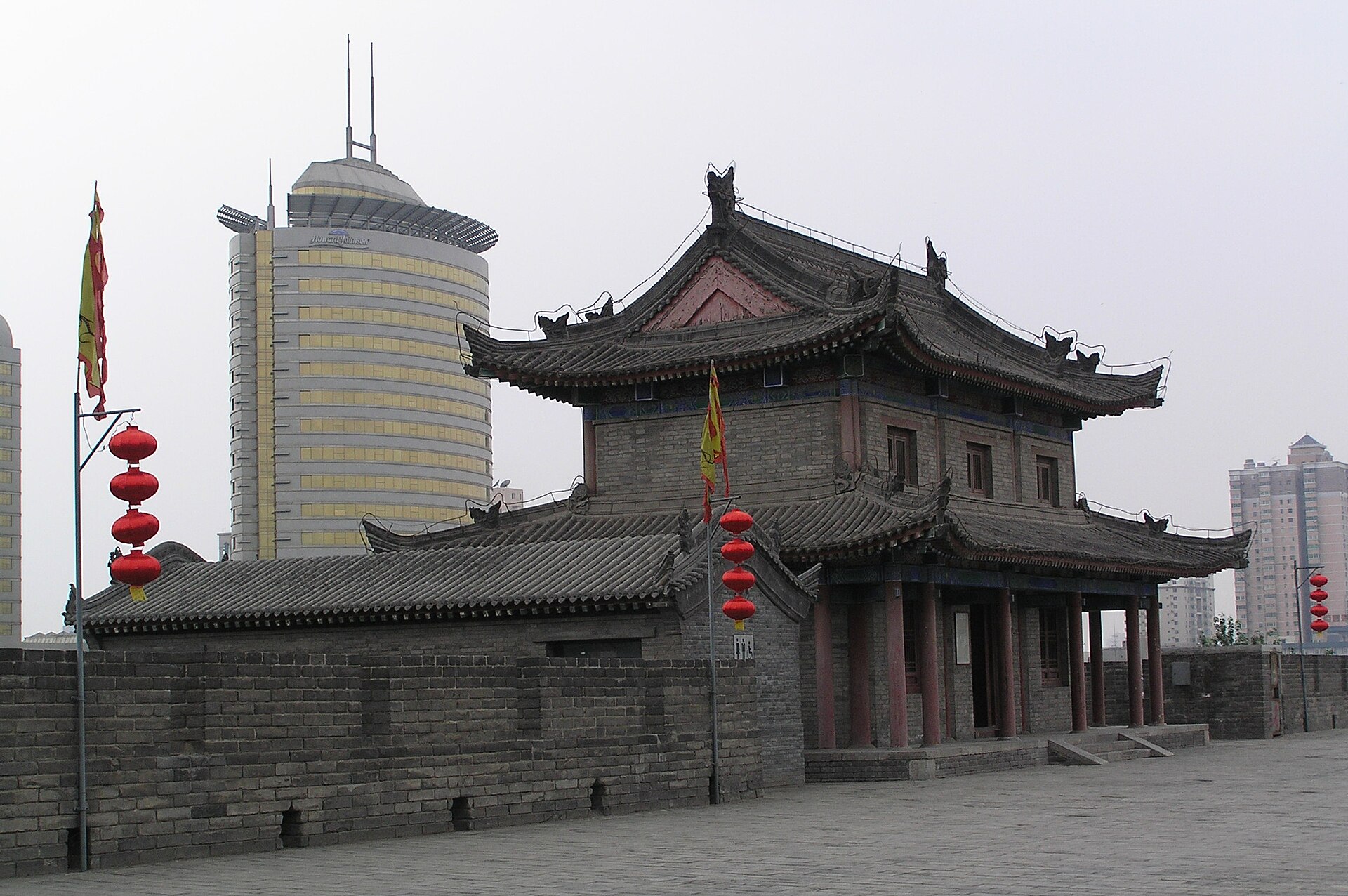
Most cities tore their old walls down generations ago. Xi'an kept the whole circuit — a rammed-earth rampart faced in grey brick, about 12 metres high and 13.7 kilometres long, enclosing the old city in a rectangle. At the centre of the southern side stands Yongningmen (永宁门), the South Gate, the largest and most complete of the four main gates. The name means "eternal peace," and it has served as the city's front door since the Ming dynasty.
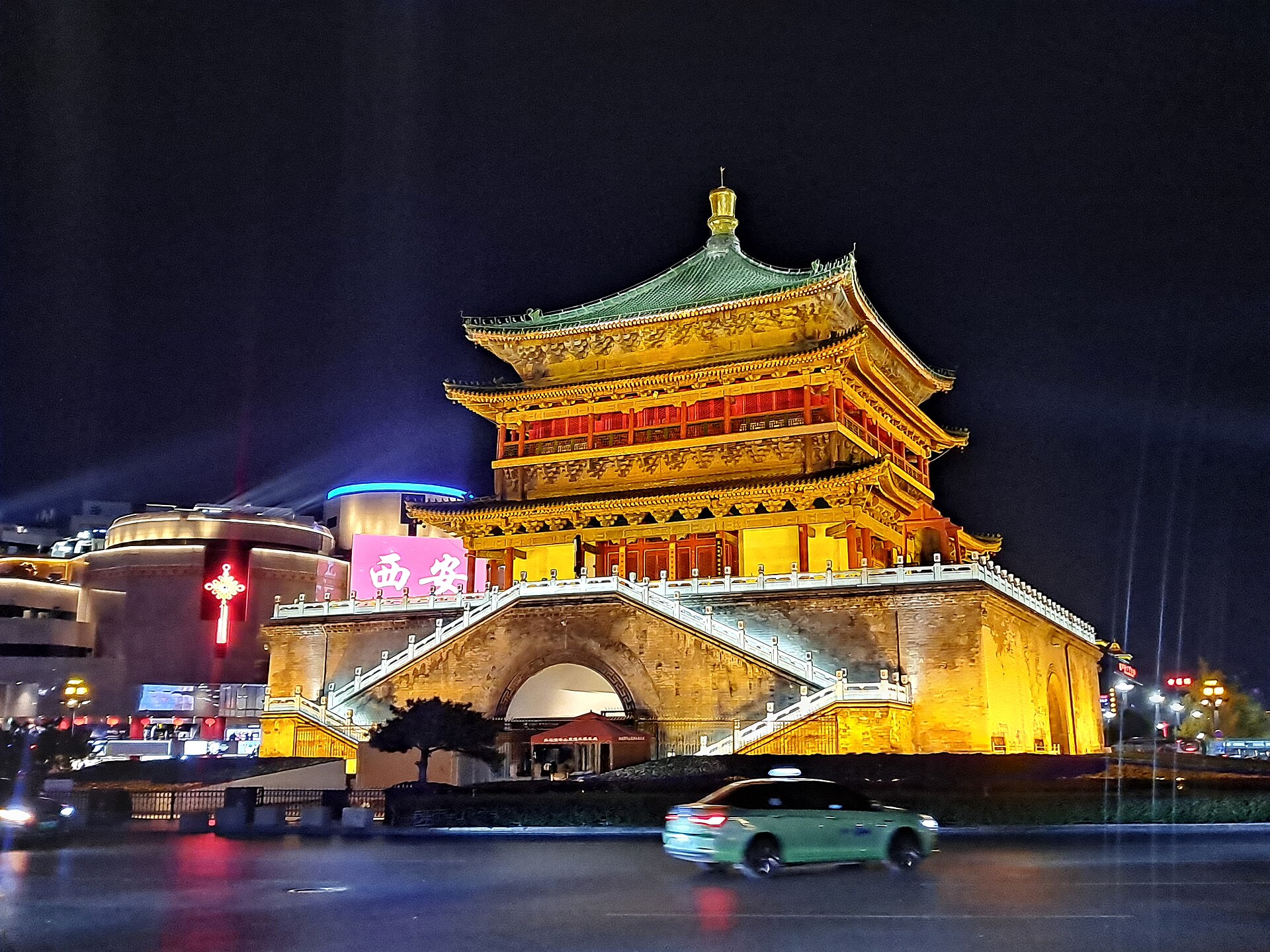
What makes this area work so well is that everything lines up. From the South Gate, South Street (南大街) runs dead straight north to the Bell Tower at the centre of the old city — a 10 to 15 minute walk. On the eastern side of South Street is Shuyuanmen (书院门), a calligraphy and culture street that runs all the way to the Forest of Stone Steles (碑林 Beilin), China's great treasury of inscribed script. All of it sits inside the same wall, all of it walkable.
This is not a gate you photograph and move on from. Staying inside the wall around the South Gate means you wake up with an eighteen-centuries-old fortification in front of you, then spend the day eating, cycling and sightseeing without once needing a taxi. For first-time visitors to Xi'an, it is the address that shortens every other day of the trip.
Inside Xi'an's walls is not the hushed calm of a preserved heritage town laid on for tourists. It is a district that locals still use — and that is exactly the appeal.
The character of the South Gate area comes from old and new stacked on top of each other. In the morning you hear ceremonial drums from the gate-opening. At midday schoolchildren walk home through Shuyuanmen. In the evening the wall glows warm gold under floodlights and the rampart fills with cyclists. Each part of the day feels different, and each gives you a reason to stay a little longer.
Cycling the top of the wall — wide enough for bikes to pass each other comfortably — is the thing visitors talk about most. From the South Gate you ride with the old city on one side and the modern city on the other, both in view at once. The 13.7 kilometre circuit takes 1.5 to 2 hours at an easy pace, and late afternoon into sunset gives you the best light.
The South Gate is the only gate with a daily ceremonial programme: the ancient gate-opening ceremony around 09:30 at the drawbridge plaza, and a Warrior Formation show inside the gate barbican around 10:30 and 16:30. On Friday and Saturday evenings the larger "Chang'an Impression" Tang-dynasty welcoming performance runs roughly 20:30 to 21:20, with full costume, drums and lighting. Check current times before you go, as they shift by season.
Shuyuanmen is a stone-paved street lined with shops selling brushes, ink sticks, xuan paper, stone rubbings and calligraphy works. Some of the stock is souvenir-grade, but watching a shopkeeper draw characters live with a loaded brush is reason enough to walk it. Entry is free, hours are roughly 10:00 to 21:00, and the street runs right up to the Forest of Stone Steles at its far end.
Staying inside the wall near the South Gate or South Street means you wake up within walking distance of the Bell Tower, Drum Tower, Muslim Quarter, the wall and Shuyuanmen. Options run from the Sofitel Legend in a 1953 heritage building to the well-rated Han Tang Inn hostel beloved by backpackers. It is the base that cuts the most time off each day of the trip.
The South Gate is the city's main ceremonial gate, with a complete defensive system: the main gate tower, an arrow tower (箭楼), and a barbican (瓮城) enclosure between them. Climb onto the wall and the layered fortifications are clearly visible. A ticket to go up costs ¥54 (~฿270), and the South Gate keeps the longest hours of any gate, roughly 08:00–22:00 — which means you can also go up for the evening illumination.
Full details at the Xi'an City Wall complete guide.
This is what sets the South Gate apart from the other gates — an ancient gate-opening ceremony around 09:30 at the drawbridge plaza, and a Warrior Formation show inside the South Gate barbican around 10:30 and 16:30. On Friday and Saturday evenings the larger "Chang'an Impression" Tang-dynasty welcoming performance runs roughly 20:30–21:20, with costume, drums and full lighting. Times can change by season, so always check before you go.
A culture street inside the wall, on the eastern side of South Street near the South Gate. Stone-paved and flanked by shops selling the "four treasures of the study" — brush, ink, paper and inkstone — along with calligraphy works, stone rubbings and seals. Locals call it Calligraphy Street. Entry is free and hours are roughly 10:00–21:00. The street runs straight to the Forest of Stone Steles museum at its far end, so the two pair naturally into one walk.
One of Xi'an's most important museums, holding inscribed stone tablets and epitaphs spanning more than 2,000 years of Chinese script — "a paradise for calligraphy lovers." The southern part of the museum was originally Xi'an's old Confucius Temple. Admission is around ¥85 (~฿425), open roughly 08:00–18:30 in peak season (last tickets 17:45). Even if you cannot read the script, the carving craftsmanship and the temple architecture make it an absorbing hour.
From the South Gate, walk straight up South Street for 10 to 15 minutes and you reach the Bell Tower at the centre of the city. Just beyond it are the Drum Tower and the Muslim Quarter, Xi'an's most famous street-food district. It is all inside the same wall and entirely walkable. See more at the Bell and Drum Tower guide.
For many visitors the best window is the late afternoon, when low sun turns the wall gold, followed by the evening when red lanterns light the gates and towers along the whole length. Because the South Gate stays open until 22:00, you can walk or cycle the rampart at night — far quieter than daytime, with the lit old city inside contrasting against the new towers outside. It is a view you will not find anywhere else.
Being inside the wall means Xi'an's most famous street food, in the Muslim Quarter, is within walking distance — while the South Gate area itself has local restaurants and small cafés tucked into the lanes.
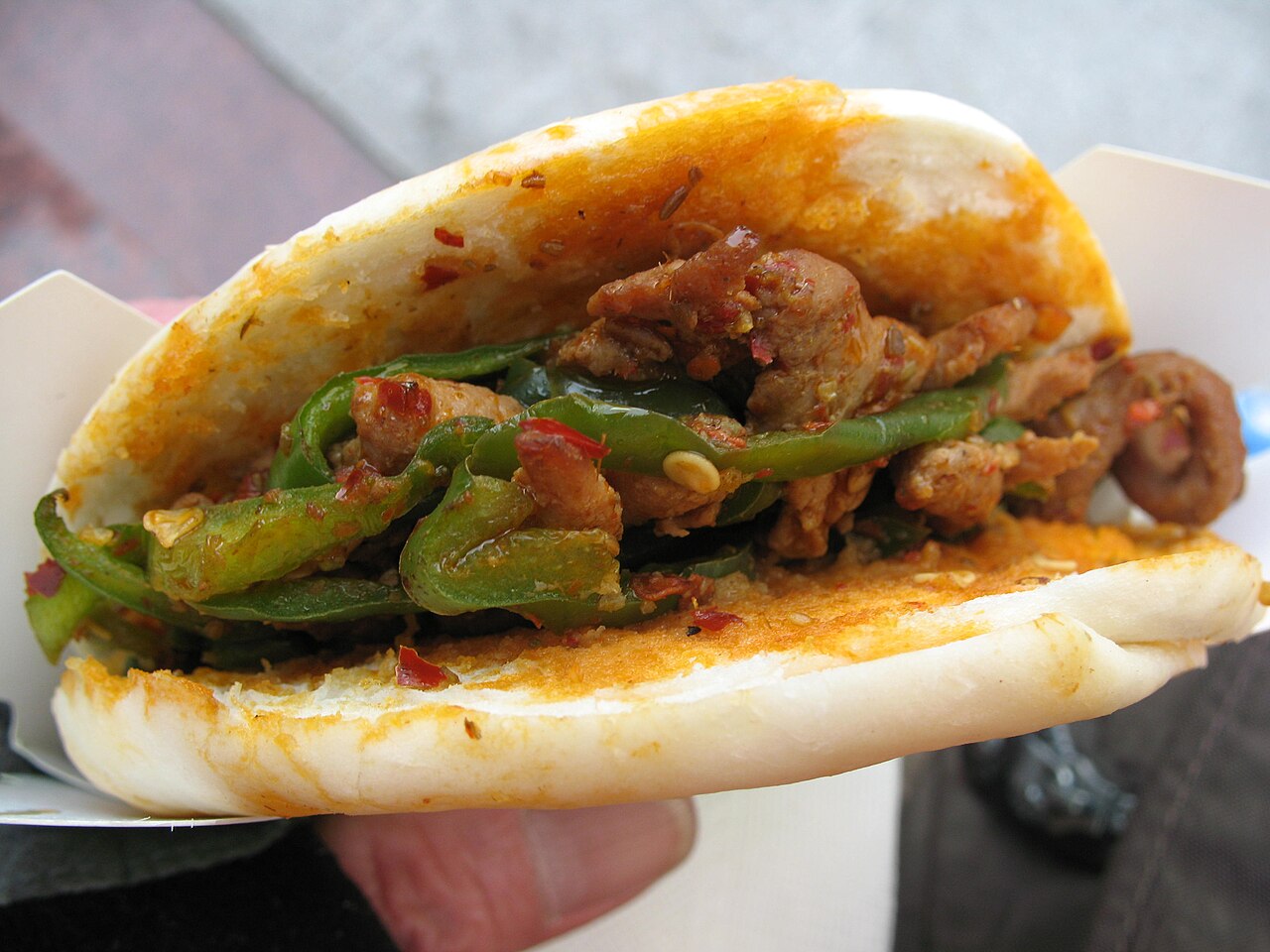
The pleasure of staying inside the wall is that you can walk to almost any meal. Xi'an's signatures — roujiamo (肉夹馍, the braised-meat "burger"), biangbiang noodles (hand-pulled, an inch wide), and yangrou paomo (torn flatbread in mutton soup) — are sold all over the old city. Local restaurants in this area mostly run ¥15–45 (~฿75–225) a dish, and walking north into the Muslim Quarter gives you the widest choice.
Read more: Xi'an food guide · Muslim Quarter street food · biangbiang noodles
Around the South Gate and Shuyuanmen you will find small cafés in old buildings and Chinese teahouses tucked into the lanes — good for a rest after the wall. For something special, the Sofitel Legend People's Grand inside the wall has bars and dining rooms in its 1953 heritage architecture, with a genuinely lovely atmosphere. Coffee at ordinary cafés in the area runs around ¥30–55 (~฿150–275) a cup.
Staying inside the wall around the South Gate or South Street cuts the most time off each day, because almost all of old Xi'an's main sights are within walking distance.
The advantage of staying inside the wall is that you can walk to everything — Bell Tower, Drum Tower, Muslim Quarter, the wall, Shuyuanmen and the Forest of Stone Steles are all 5 to 20 minutes on foot. Metro Line 2 at Yongningmen connects to the airport and the railway station. Go up on the wall early before the crowds, come back for lunch, and head out again without any long transfers.
One thing to know: inside the wall is an old-city district. Some streets get congested and parking is limited, so if you arrive with a rental car or heavy luggage, check the hotel access first. On price, options inside the wall span hostels to five-star — there is something at every budget.
Or read individual reviews of hotels in this area:
The South Gate is the easiest of the four to reach — Metro Line 2 stops right at it, and it sits at the end of the street that runs straight down from the Bell Tower.
09:00 — Arrive at the South Gate (Metro Line 2 to Yongningmen, Exit D2) in time for the gate-opening ceremony around 09:30 at the drawbridge plaza
10:00 — Buy a wall ticket (¥54), then walk or rent a bike and ride a stretch of the rampart, taking in the full South Gate defensive system
11:00 — Come down and walk into Shuyuanmen for the brush shops and live calligraphy
11:45 — Follow the street to its end at the Forest of Stone Steles (¥85) for the inscribed stone tablets
Follow the half-day route in the morning, then in the afternoon:
13:00 — Lunch in the old city; try roujiamo or biangbiang noodles at a local spot
14:00 — Walk north up South Street to the Bell Tower and Drum Tower
15:00 — Continue into the Muslim Quarter for street food and souvenirs
17:00 — Return to the South Gate and cycle the wall at sunset (best light 16:30–20:00), then watch it light up after dark
The South Gate area sits next to the Bell and Drum Towers and all of Xi'an's attractions — plan a full trip with the complete Xi'an guide.