Paid and free — don't miss the good stuff
From the brewery at the source and a Taoist mountain by the sea to the beaches, a night cruise, the seafood market and a trip out of town — with price ranges and how to get there.
 1
1
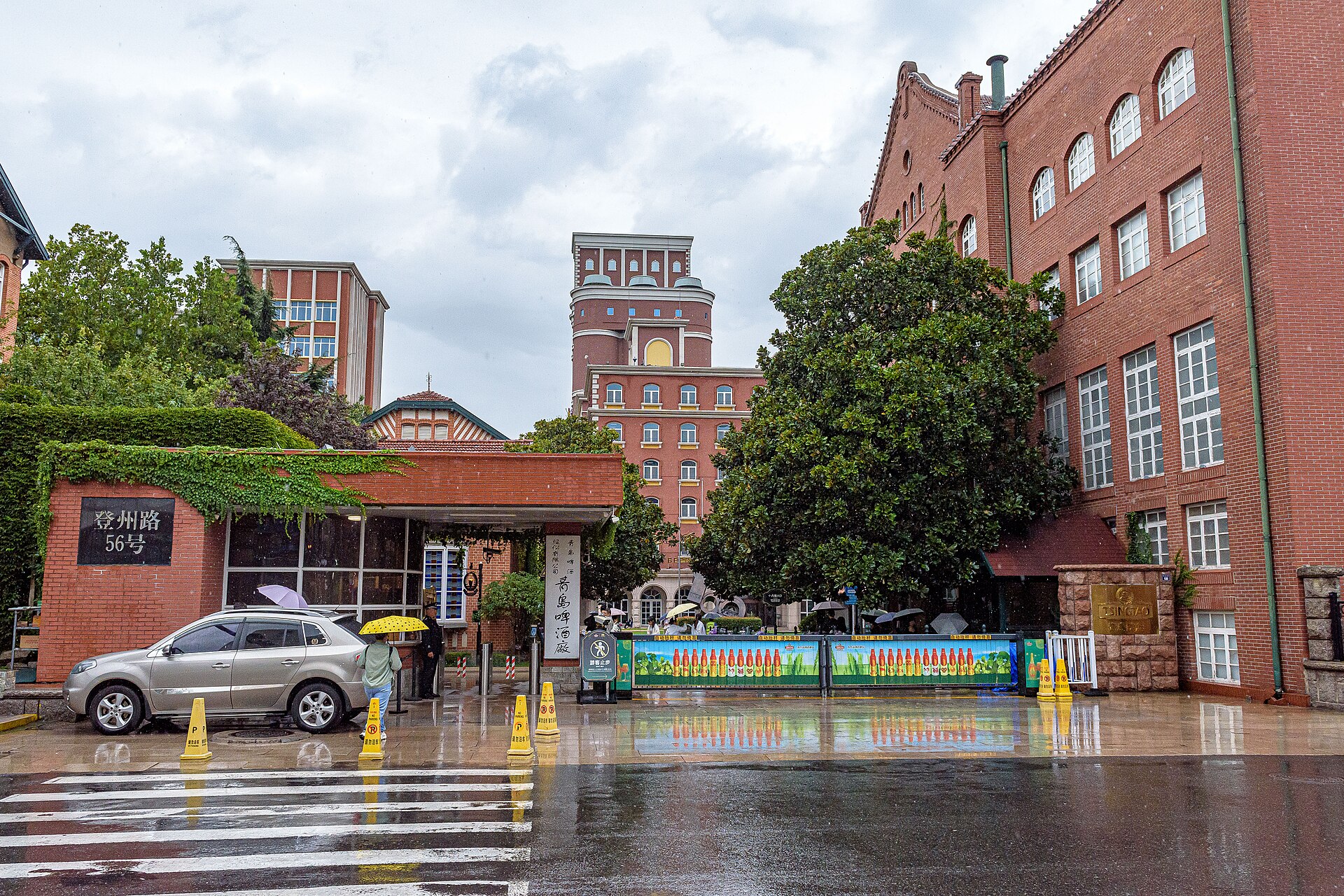
If you could do only one thing in Qingdao, plenty of people would say "the Beer Museum" — because this is where Tsingtao, the Chinese beer the whole world knows, was born. The museum sits inside the original German brewery on Dengzhou Road, running since 1903. You walk past the early production line, old machinery and a century of the brewery's story, but the highlight is the tasting: a standard ticket usually includes two glasses, one the unfiltered raw beer (yuanjiang) that is genuinely hard to find elsewhere, the other a stout. There is even a tilted "drunk room" that is fun to photograph. Book ahead on Klook, especially in summer and during the beer festival, when it gets very busy.
Book the Beer Museum on Klook → Read more: we have a full Qingdao beer guide — tickets, how to taste, and the beer district you should not miss.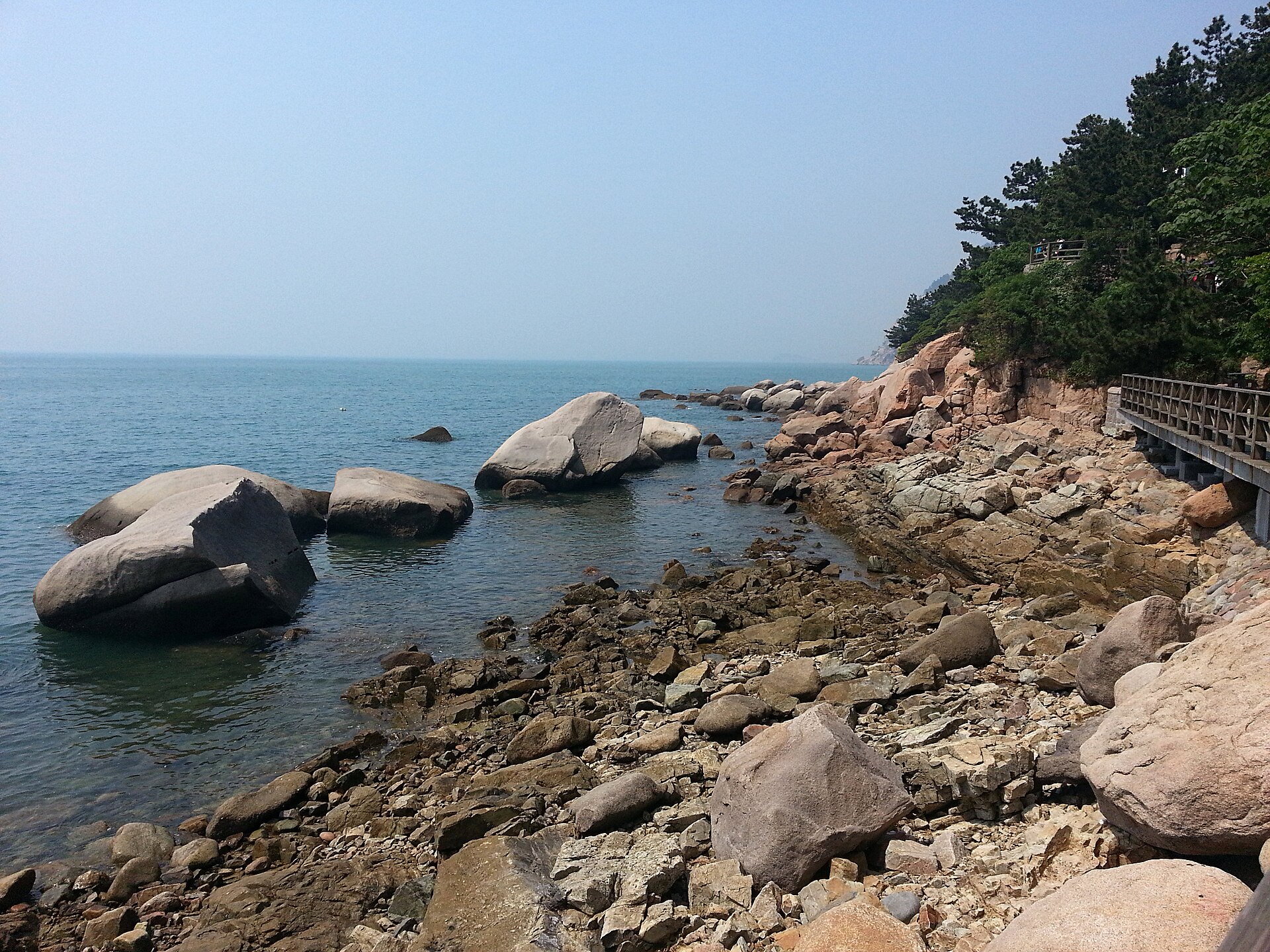 2
2
Mount Lao (Laoshan) is the highest mountain on China's coastline and a sacred Taoist peak going back centuries. What sets it apart from other mountains is that its granite cliffs drop straight to the sea — stand at the top and the blue ocean opens out below you to the horizon. Inside the park are the ancient Taiqing Taoist temple, streams, waterfalls and walking trails of various difficulty, and a cable car saves your legs to the upper viewpoints. On a clear day it is stunning. The mountain is around 30–40 km from the city and the park's internal bus system is fiddly, with several changes, so most foreign visitors find a one-day tour with return transport and a guide (bookable on Klook) easier than doing it alone.
Book a Mount Lao tour on Klook → Read more: the Mount Lao guide — the Jiushui and Taiqing zones, admission and how to plan the day.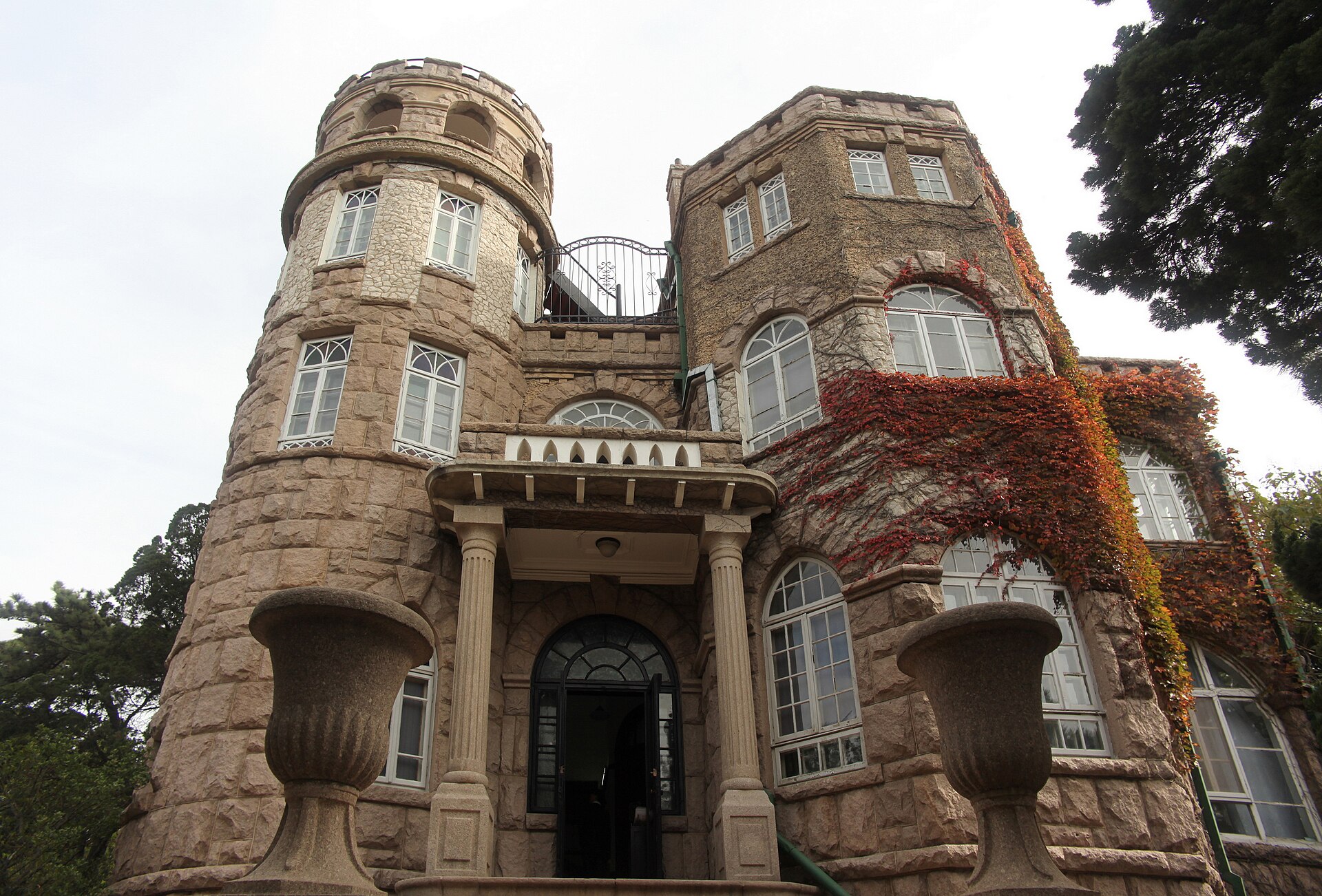 3
3
To see the prettiest, quietest side of Qingdao, walk Badaguan, the seaside villa district named after eight passes of the Great Wall. Each street is planted with a different species of tree, so the area changes colour through the year, and as you stroll under the canopy you pass old mansions built in the styles of more than twenty nations — Russian, German, British, French — all in one neighbourhood. The standout is the "Huashi Villa", a stone castle by the sea that ends up on the city's postcards. Walk through the district and you come out at No.2 Beach. The atmosphere is so photogenic that locals come here for their wedding photos. Free to walk (a few of the villa interiors charge separately), and lovely on a slow morning or afternoon.
Read more: the Badaguan guide — the Huashi Villa, walking routes and photo spots.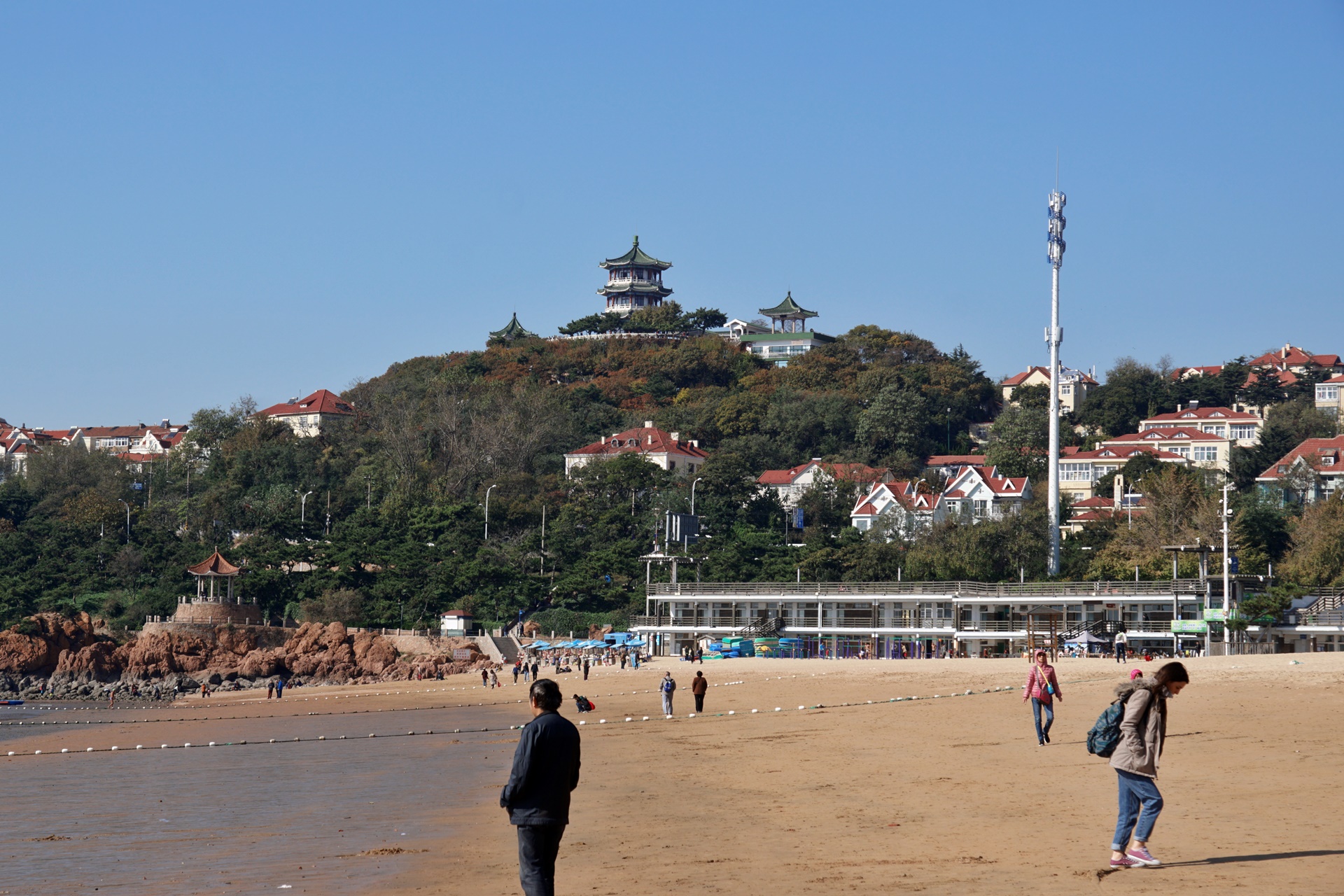 4
4
Qingdao has been a Chinese seaside resort since the German era, so its city beaches are easy to reach and free. The most popular is No.1 Bathing Beach, a long curved stretch of sand in the middle of town that fills up in summer, and No.2 Bathing Beach, quieter, next to Badaguan and once the German governor's private beach — the two walk together. In summer (Jun–Aug) the water is warm enough to swim and there are lifeguards on duty; the rest of the year, a walk along the shore in the sea air is still lovely. Early mornings you will often see locals swimming and exercising — an easy, pleasant slice of seaside life. One thing to know: on some summer days there are jellyfish, so check the warning signs before you get in.
Read more: the Qingdao beaches guide — which beach to swim at, which is quiet, and the right season.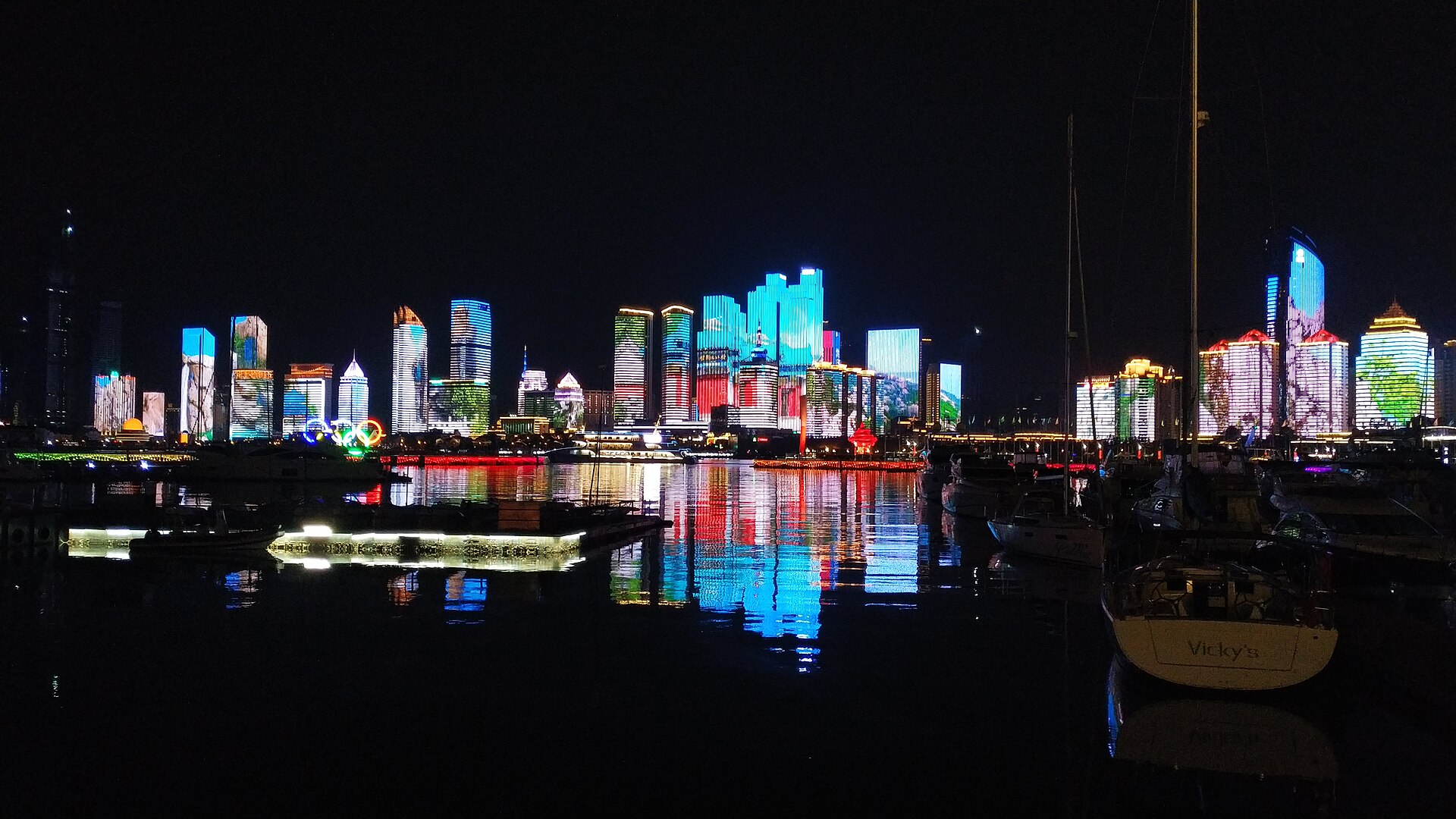 5
5
Qingdao after dark is a different city. The towers around Fushan Bay — the modern district that once hosted a leaders' summit — light up with synchronised LED displays, images and text running across the buildings in waves. It already looks great for free from the bayside around May Fourth Square, but for the best angle take a night cruise out into the bay and watch the towers and bridges on both sides reflect off the water. Boats leave from the piers around Fushan Bay, and the light show usually starts after sunset (about 19:30–20:30 depending on the season; some weekdays it is off). Check the show times and book the boat ahead on Klook. It is the kind of end to a day that people talk about afterwards.
Book a night cruise on Klook → Read more: the May Fourth Square guide — the free viewing spots and the seafront walk.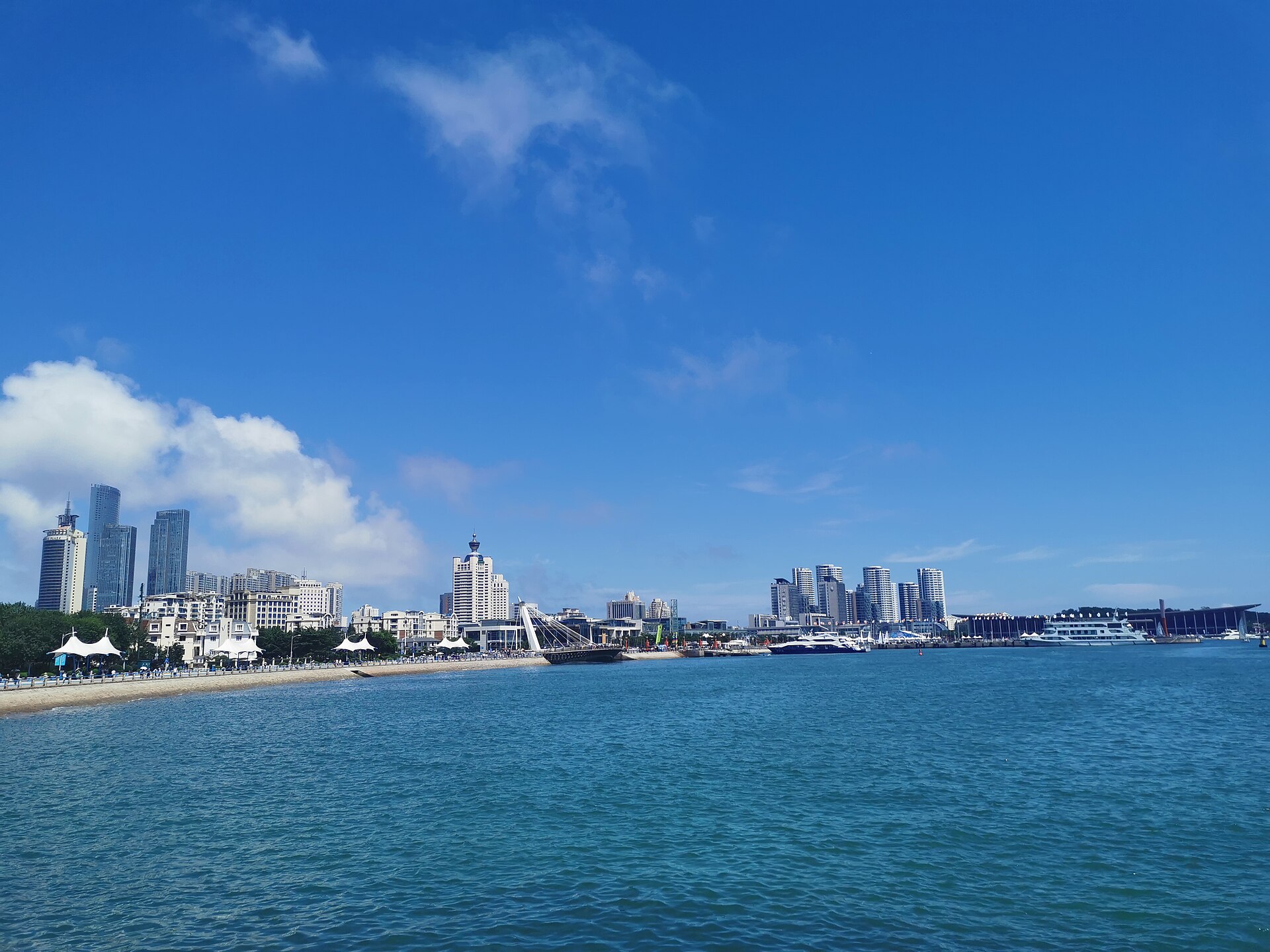 6
6
Qingdao is nicknamed China's "sailing capital" because it hosted the sailing events of the Beijing 2008 Olympics. The Olympic Sailing Center is now a marina on Fushan Bay lined with yachts, with a waterside promenade and a replica Olympic torch for photos. The whole area is free to wander, but the real experience is getting out on the water yourself — operators run trips that take visitors sailing in the bay for around 40 minutes to an hour, the sea breeze in your face and the city seen from the water, a feeling you do not get easily. Some also run sunset yacht trips. Book a sailing slot ahead on Klook, and pick a daytime run when the wind is good or an evening one for the sunset, as you prefer.
Book a sailing trip on Klook → Read more: the Olympic Sailing Center guide — sailing trips, the best times and where to stroll.If you are travelling as a family or with kids, Qingdao has two big aquariums to choose from. The first is Polar Ocean World, on the eastern side by the bay, with polar bears, penguins and walruses, plus a dolphin-and-sea-lion show that has kids wide-eyed. The other is Underwater World, near Zhanqiao Pier in the old town, known for its glass underwater tunnel where sharks and rays swim overhead and an underwater "mermaid" show. Either one takes about 2–3 hours to walk through, and both make a good indoor backup for a rainy or too-windy day when swimming is off. Tickets booked ahead on Klook are usually cheaper than buying at the gate; in summer and on holidays it gets busy, so go early.
Book aquarium tickets on Klook → Read more: Qingdao with kids — aquariums, beaches and what children enjoy.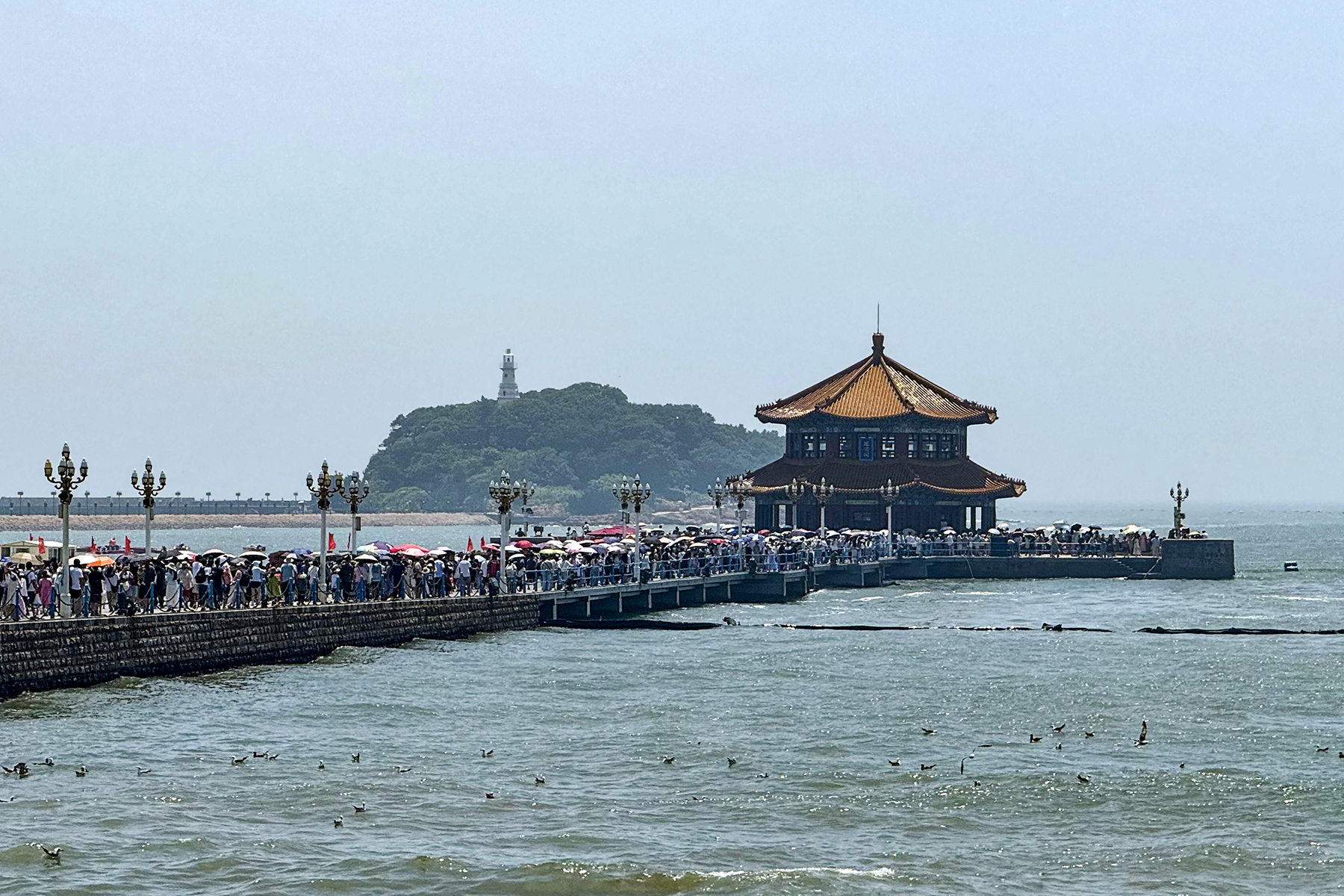 8
8
Zhanqiao Pier is the symbol of Qingdao — it has been on the Tsingtao beer label for over a century. A stone pier around 440 metres long reaches out into the sea, ending at the octagonal Huilan Pavilion with its yellow-tiled roof. Walk to the far end, turn around, and the old town's red roofs stacked up the hillside make the city's classic view; at low tide people climb down to gather shellfish among the rocks. Right beside it is Little Qingdao (Xiao Qingdao), a small rocky island with the white lighthouse that gave the city its name, joined by a short causeway. The whole area is free to walk, next to the old town and Qingdao railway station, and pairs perfectly with an old-town wander. Morning or evening, when the light is soft, is best for photos.
Read more: the Zhanqiao Pier guide — the Huilan Pavilion, Little Qingdao and photo spots.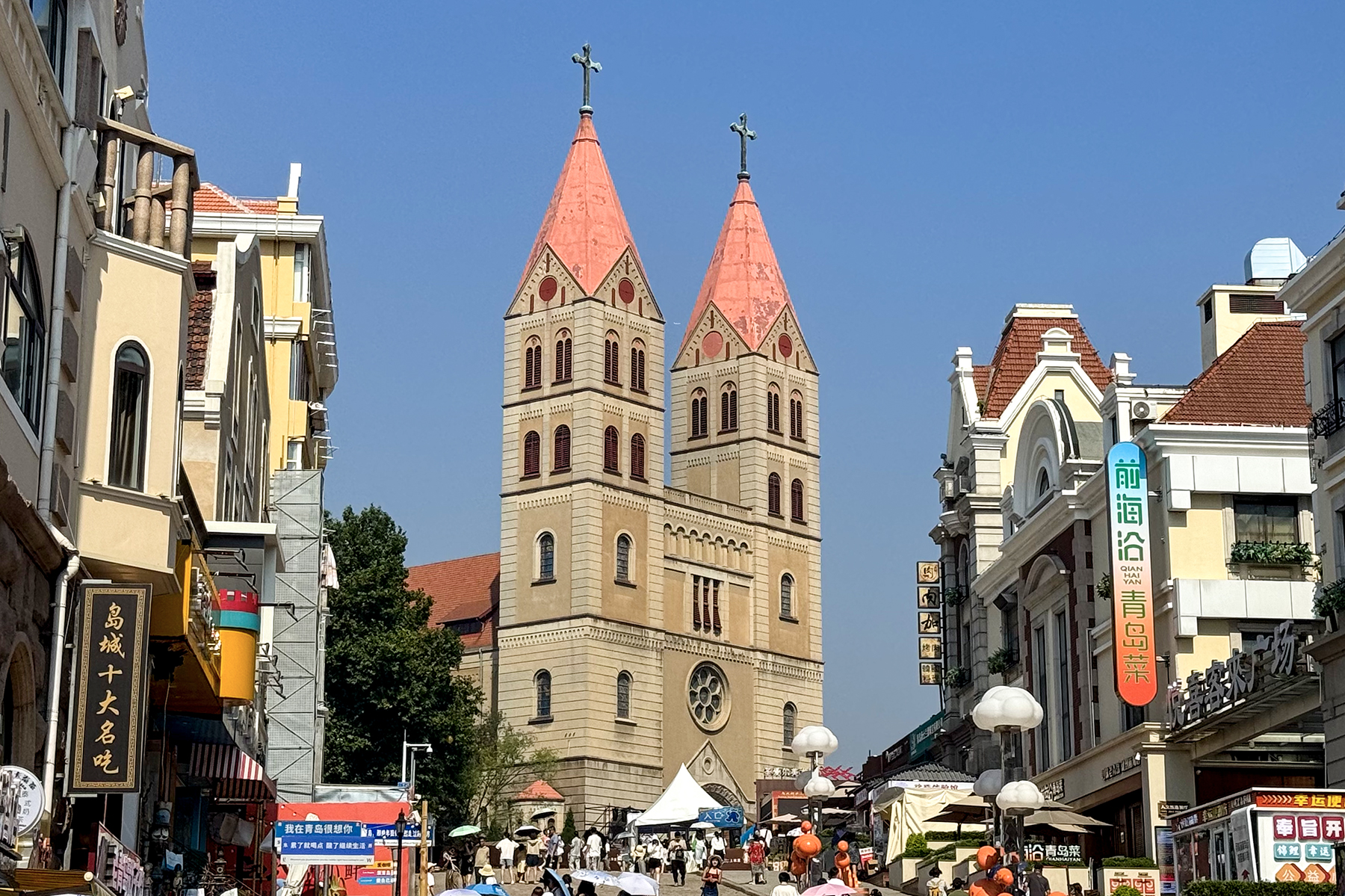 9
9
The heart of Qingdao is the old town on the western side, laid out by the Germans more than a century ago, and you can spend a whole day walking it. Start at St Michael's Cathedral, a twin-towered Romanesque stone church that stands at the top of a cobbled street — a classic photo spot where couples shoot wedding pictures all day. Climb Signal Hill, topped by three rotating red domes, for a 360-degree view of the old town's red roofs running down to the sea, then come back down to the Pichaiyuan snack alley in the Zhongshan area, an old food lane selling Shandong specialities — grilled oysters, Qingdao sausage, dumplings and fresh beer poured into a bag. Eat your way along. The whole district is free to walk (you only pay for food and the Signal Hill tower), and it is full-on European-seaside atmosphere.
Read more: the Qingdao old town guide and Signal Hill — the walking route and the best alley stalls.Qingdao is a port city where eating seafood is a way of life, and the local move is to walk a seafood market, choose your own catch and have a nearby stall cook it for a separate cooking fee (called jiagong). The well-known markets are Nanshan and Tuandao, where prawns, clams, crabs and fish are still alive in basins — pick razor clams, mantis shrimp, swimmer crabs or abalone, then tell the stall whether you want them stir-fried, boiled or steamed. A dish to try is spicy stir-fried clams (la chao geli) with Qingdao's signature fresh beer poured from a tap into a bag. It works out far cheaper than a restaurant; just ask the price per kilo and watch them weigh it so there are no surprises. It is a meal that is filling and fun, and the kind guidebooks rarely send you to.
Read more: the Qingdao seafood guide — what to order, the best markets and how to avoid being overcharged.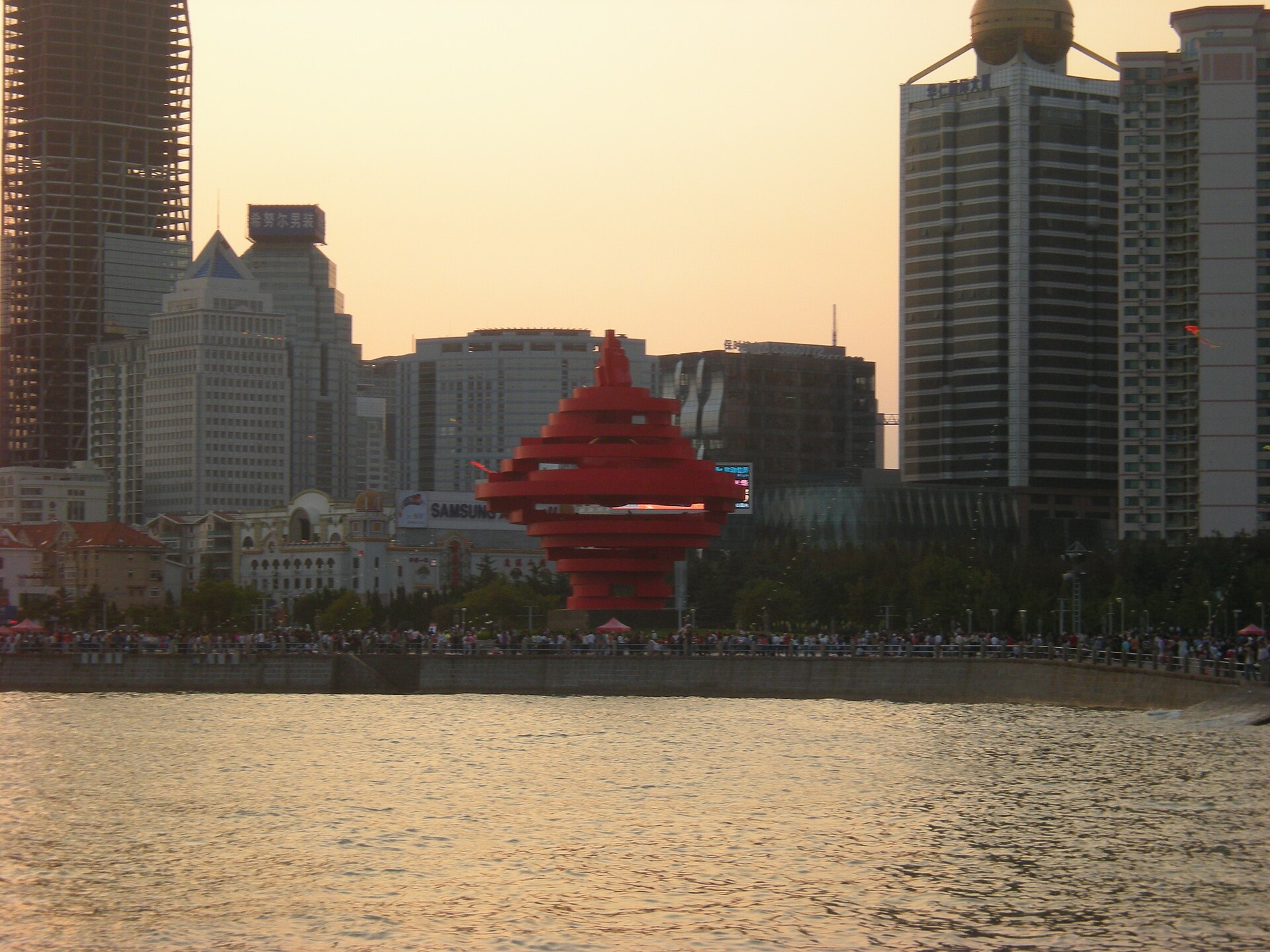 11
11
May Fourth Square is the heart of Qingdao's modern, eastern side. The landmark is a spiralling red steel sculpture called "May Wind", standing tall by Fushan Bay — the photo everyone takes. Around it are fountains, wide lawns and a seafront promenade that runs for several kilometres. From here you can walk east to the Olympic Sailing Center, or west along the shore towards the old town. The sea breeze is cool, and locals come to stroll, jog and fly kites. At night this is the best free spot to watch the light show on the towers around Fushan Bay, so leave a little time in the evening to catch both the sunset and the city lights coming on.
Read more: Qingdao for couples — romantic seaside corners and evening date ideas.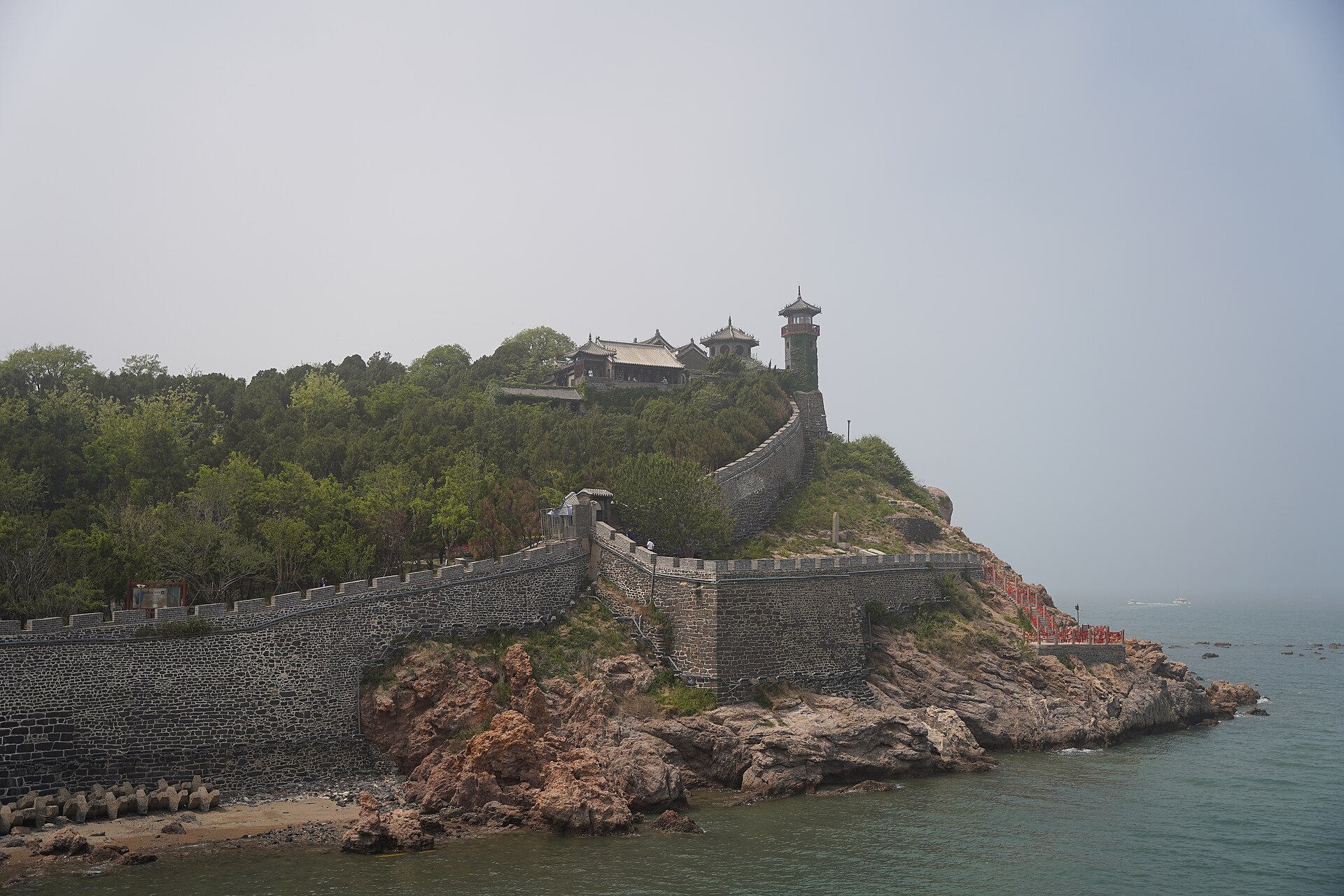 12
12
If you have a spare day and want to get out of the city, Penglai is the classic trip. This seaside town north along the Shandong coast is a place of Chinese legend — said to be where the Eight Immortals crossed the sea, and the fairyland to which the first emperor once sent envoys in search of an elixir of immortality. The highlight is Penglai Pavilion, a cluster of ancient pavilions on a clifftop above the sea, counted among China's four great towers; on the right day you might even see the sea mirage that inspired the legend. Nearby are an old fort and a maritime museum. Penglai is around 2–2.5 hours from Qingdao by high-speed train (get off near Yantai/Penglai and transfer); the easiest way is a one-day tour with return transport on Klook. Allow the whole day for the drive, but you get to see a town of legend you will not find anywhere else.
Book a Penglai tour on Klook → Read more: the Qingdao day trips guide — Penglai, Mount Lao and how to get there.