Paid and free — none of them a miss
From the city's night-time icons to its food and the trips just outside it — with honest price ranges and logistics.
 1
1
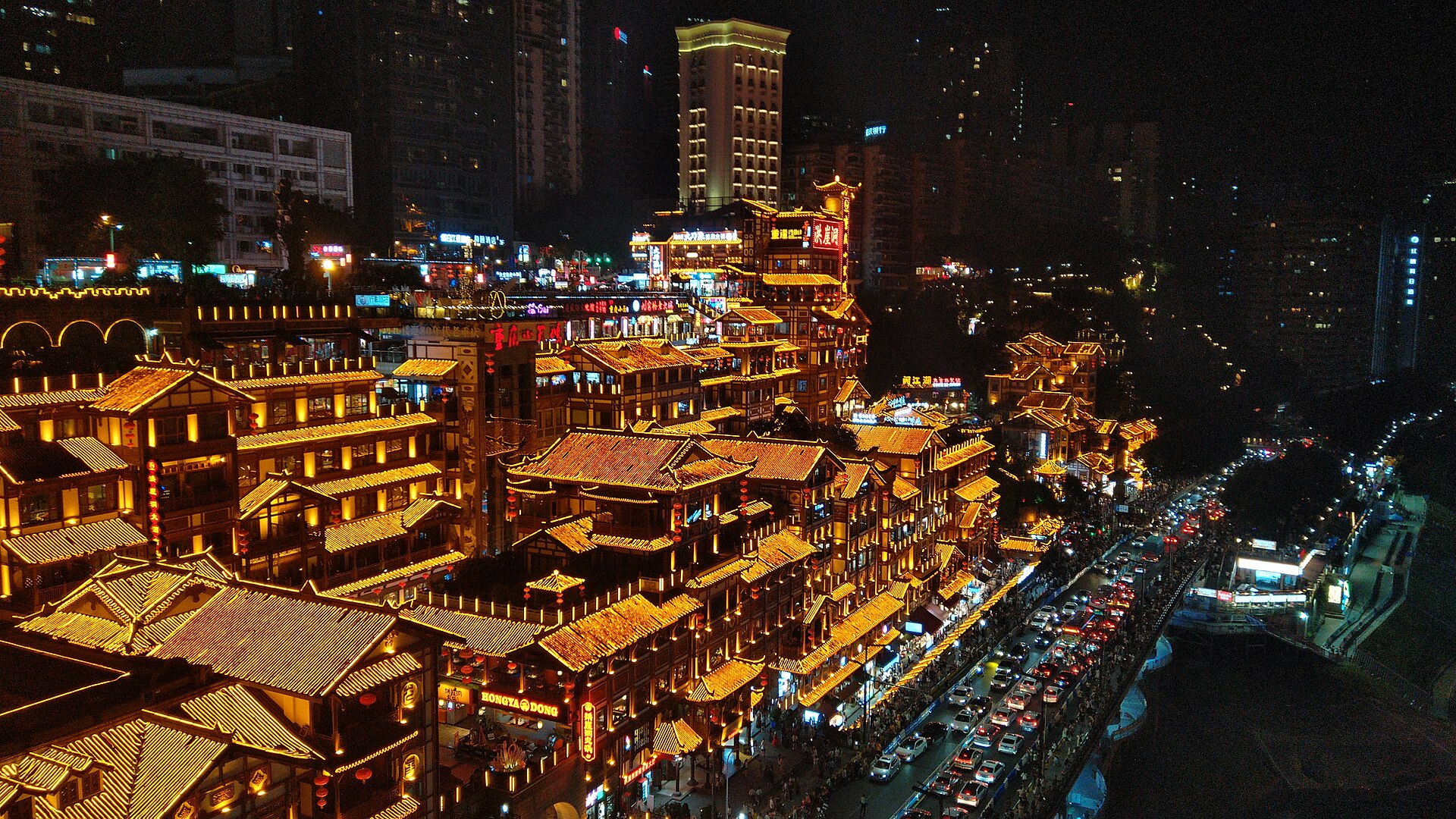
If there is one image everyone pictures when they think of Chongqing, it is Hongyadong after dark. This 11-storey complex of diaojiaolou — traditional timber stilt houses — clings to the cliff above the Jialing River, and when the gold lights all switch on at dusk the whole thing glows like a scene from an animated film (plenty of people compare it to Spirited Away). Inside are restaurants, souvenir shops and viewpoints, and you can walk up and down through several levels. But the real point is the lighting — usually on around 6.30–7 pm. The best photo angle is from the far side on the Qiansimen Bridge. It is extremely crowded on holidays, so come about 30 minutes before the lights to claim a spot. Free all night.
Read more: Our full Hongyadong guide — what time the lights come on, the best photo angles and the way up and down.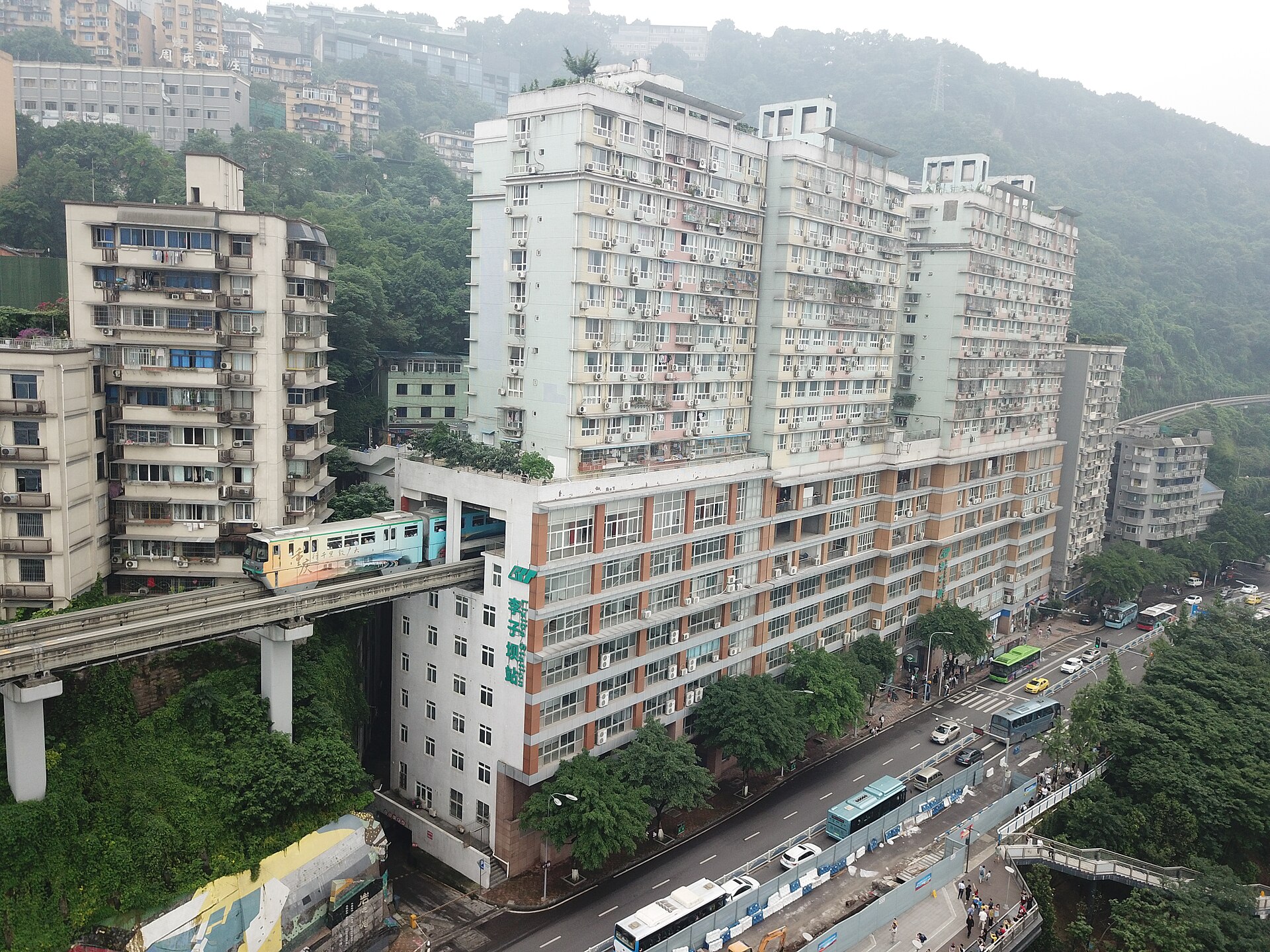 2
2
This is the scene that made Chongqing go viral — monorail Line 2 runs in and out of Liziba Station straight through a 19-storey residential tower, and it is not a trick of the camera. The building was designed so the track passes through floors 6–8, with people living above and below it as normal. It sounds impossible, but it is the product of a city with almost no flat land, where everything has to be stacked on top of everything else. To ride it, you just pay the normal metro fare (~¥2–7) and take Line 2. To photograph the train passing through the building, head down to the free viewing plaza the city built below. Trains come every 5–10 minutes, so have your camera ready.
Read more: The Liziba monorail guide — the best photo spot, the quieter times and how to find the right level.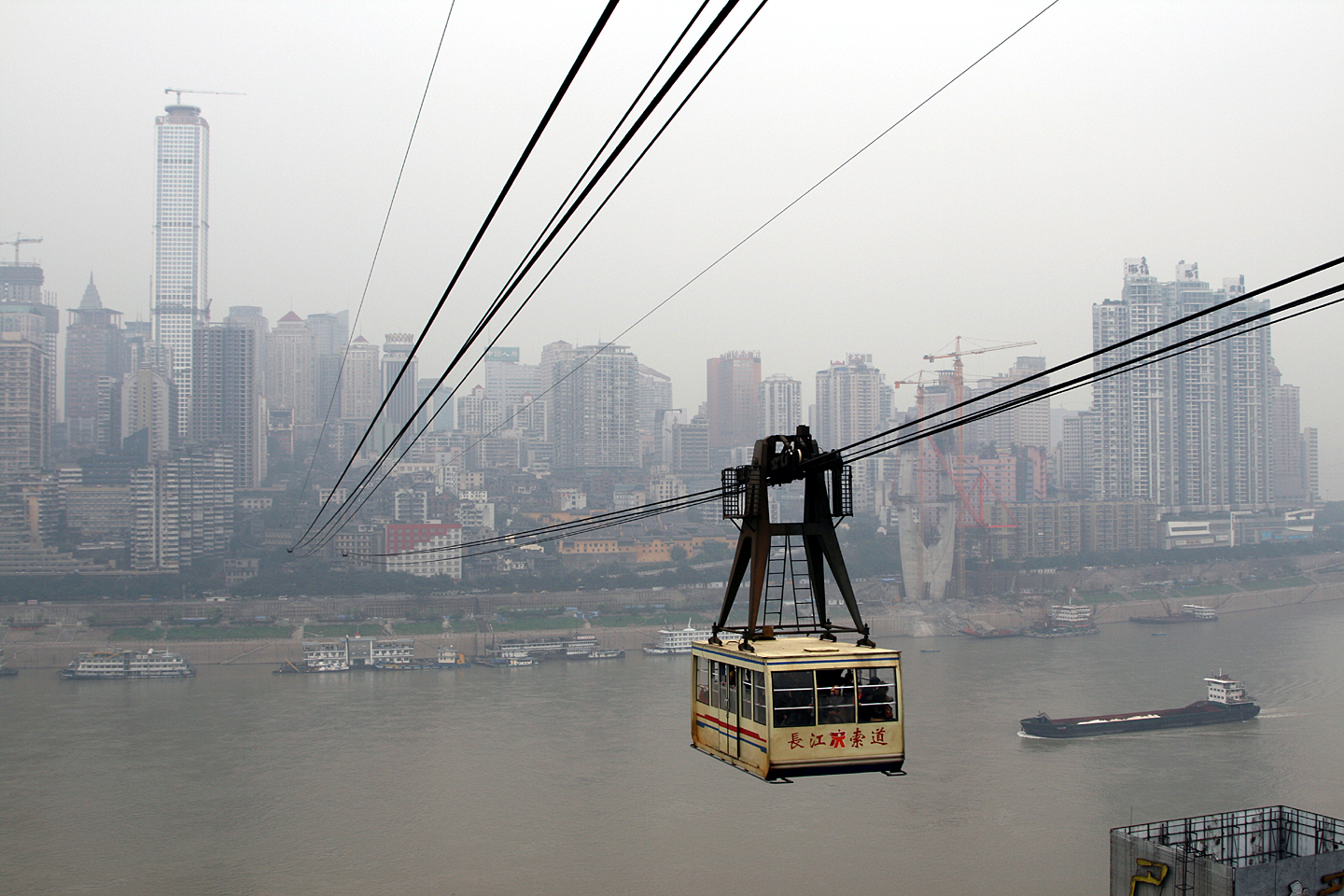 3
3
Other cities have cable cars up mountains; Chongqing has one that crosses a river, used as real transport since 1987. The cabin sets out from the Yuzhong side, floats over the Yangtze to the Nan'an side, and takes only about 4–5 minutes — but in those minutes you get the stacked-skyscraper mountain city and the wide river spread out beneath your feet. It is loveliest from sunset into the evening as the city lights begin to come on, though the evening queues are very long. The local tip is to buy a one-way ticket only — a return means coming out and re-queuing on the far side, which wastes time, so ride across and take the metro back. Go in the afternoon to skip the queue.
Book on Klook → Read more: The Yangtze cableway guide — when the queues are short, the best seat for the view, and how to buy tickets.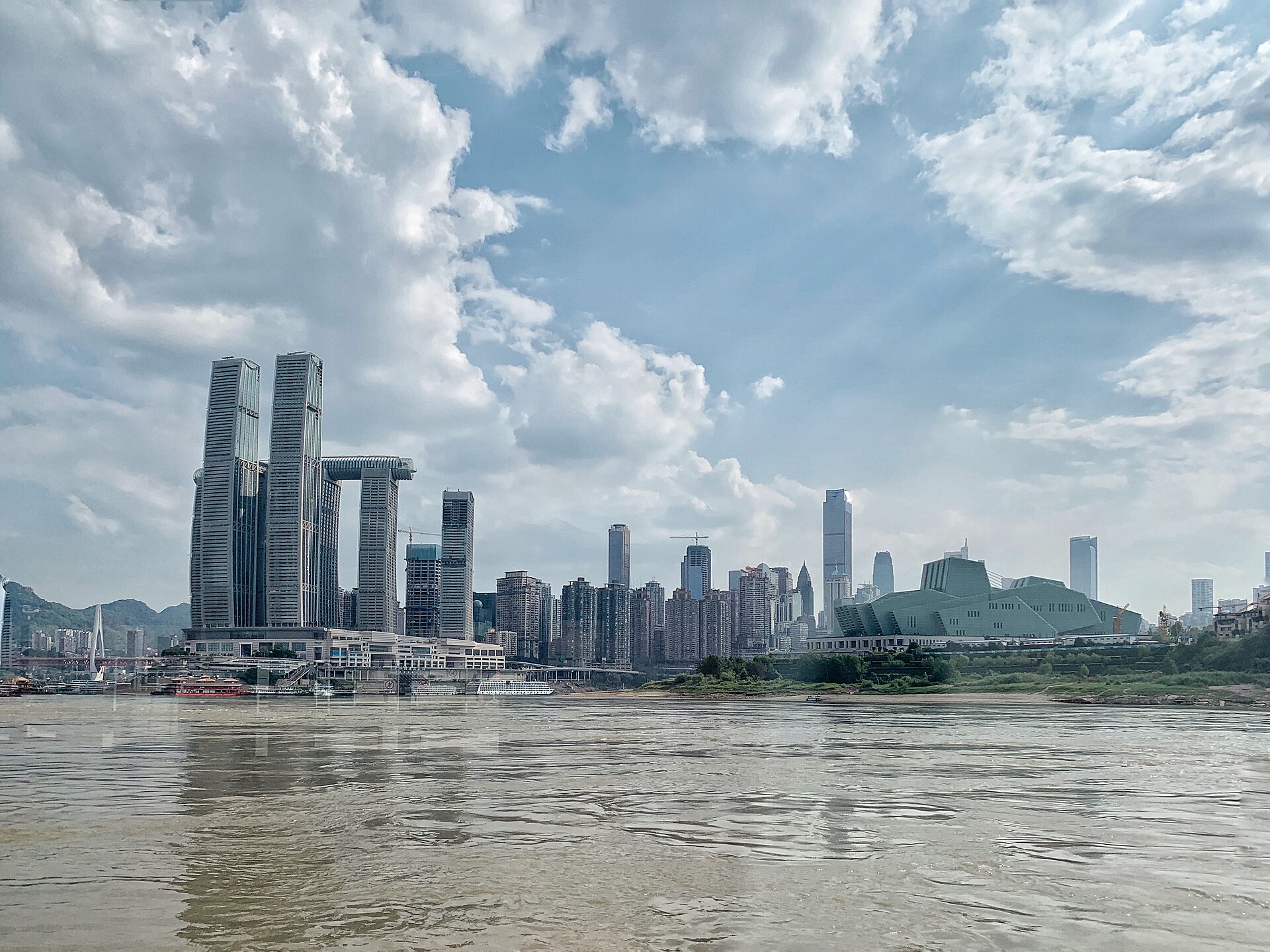 4
4
Chongqing is at its best seen from the middle of the water after dark, and the Two-Rivers cruise puts you exactly there. Boats leave from Chaotianmen Pier — the point where the Yangtze and Jialing rivers meet — or a pier near Hongyadong, and loop for about 45–60 minutes past floodlit river bridges and glowing riverside towers. The highlight is seeing Hongyadong's full gold facade from a mid-river angle you cannot get on land. There is everything from simple boats with open-deck seating to nicer boats with air-conditioned cabins. Evening departures run from around 7.50 to 9.40 pm; seats fill quickly on holidays, so book ahead through Klook.
Book on Klook →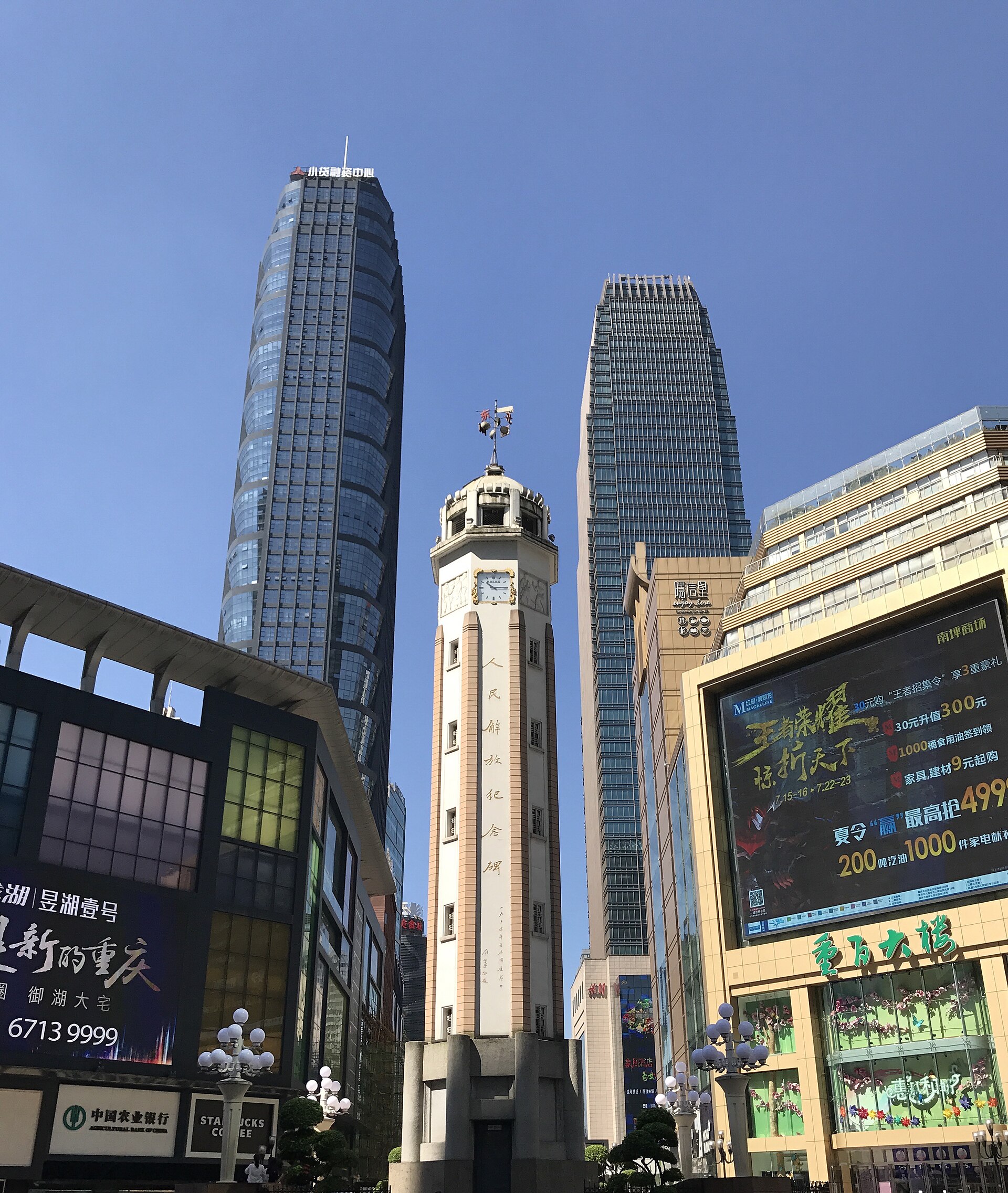 5
5
Jiefangbei — the Liberation Monument — is the centre of Chongqing: a 1940s monument column standing in a pedestrian square ringed by luxury malls, skyscrapers and giant LED screens, busy and dazzling at night like a Times Square in the mountains. But where locals actually go is the Bayi snack street (八一好吃街) right next to it. This narrow lane is packed with every Chongqing snack going — xiaomian (málà noodles), red-oil wontons, skewer hotpot, shaved-ice desserts and a hundred more stalls. Grazing your way along it in the evening gives you the atmosphere and a full stomach in one place. Both the square and the snack street are free.
Read more: The Jiefangbei guide — the Bayi snack street, the best stalls and viewpoints around the square.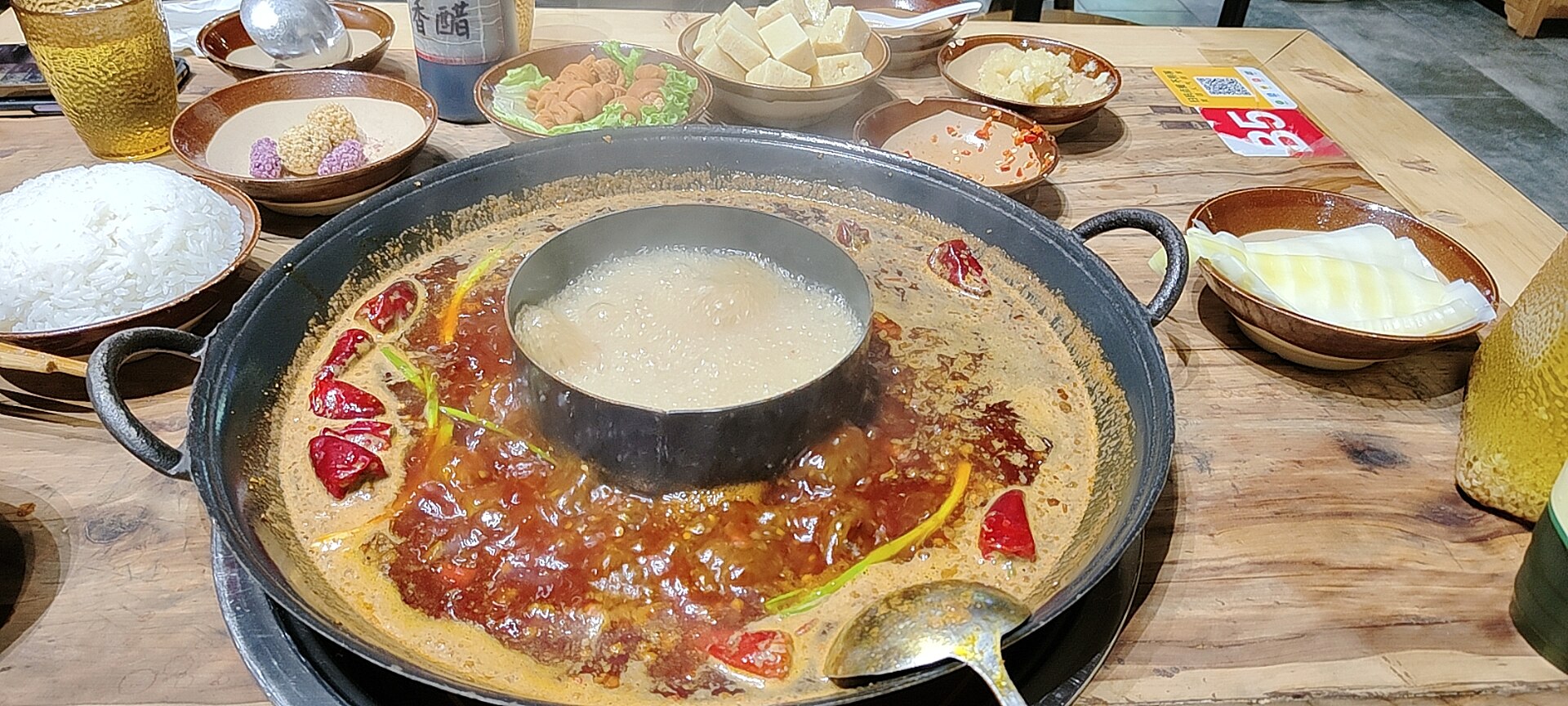 6
6
Come to Chongqing and skip the hotpot, and you miss the heart of the city. Chongqing hotpot is not your usual hotpot — the broth is made from beef tallow with mountains of dried chillies and Sichuan peppercorns (huajiao), giving it that "málà" heat that is both spicy and numbing, fizzing across your whole mouth. Locals eat it all year round, even sweating through it in summer. The must-try ingredients are beef tripe (maodu), prawns, thin-sliced beef and tofu. If you are not a strong chilli eater, order a yuanyang pot split down the middle with a mild white-broth side. Famous spots range from old lane restaurants to riverside-view places, at every price level.
Read more: The Chongqing hotpot guide — what to order, the best restaurants and how to handle the heat.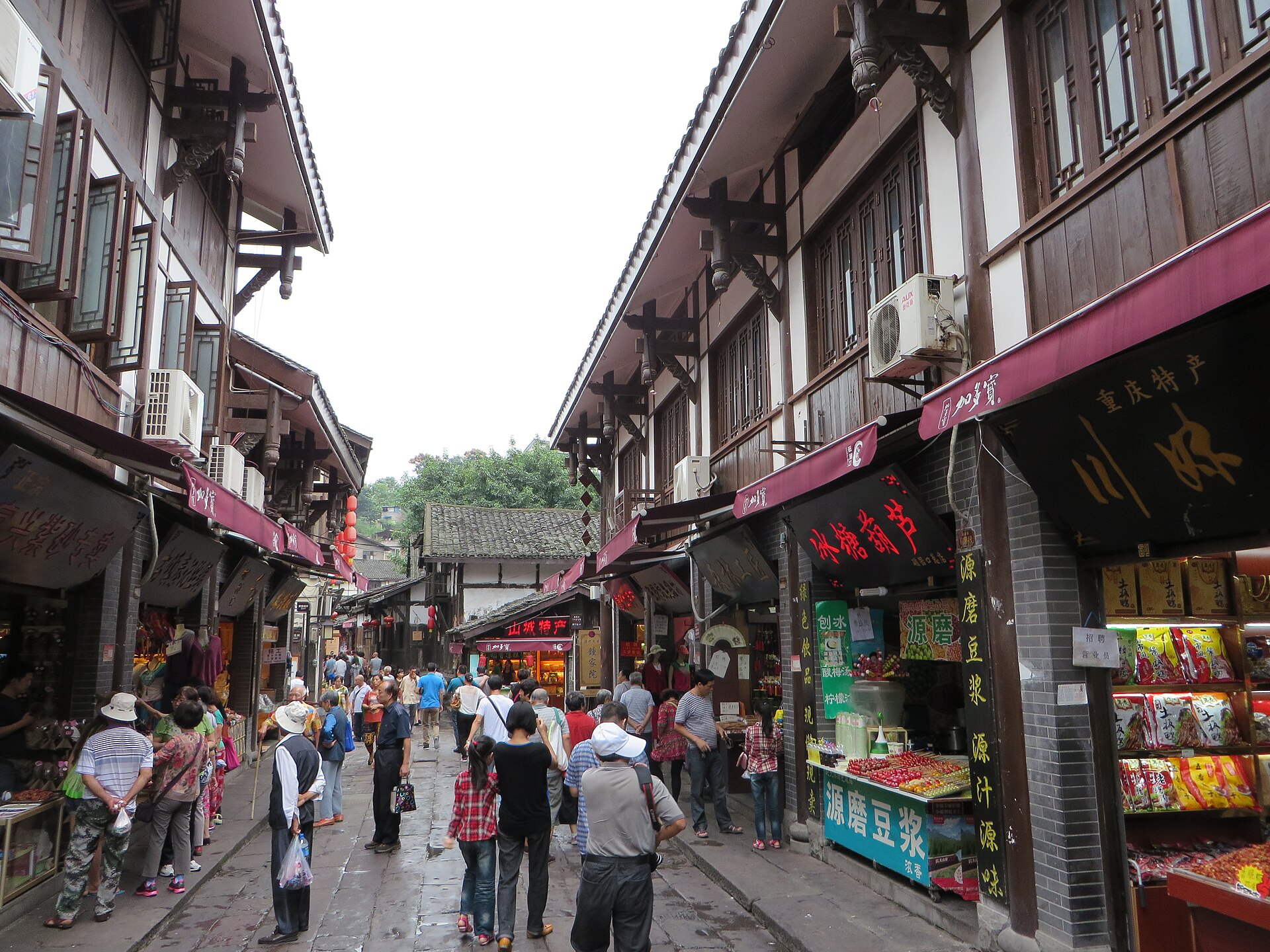 7
7
If you want to see what Chongqing looked like before the skyscrapers, Ciqikou is the answer. This old town on the Jialing River was once a busy porcelain-trading port centuries ago (the name means "porcelain port"), and today it is a winding, cobbled lane climbing the hill, lined with old Bayu-style timber houses full of snack stalls, teahouses, craft shops and souvenirs. The signature treats are mahua (fried dough twists) and flower tea. It gets busy, but the atmosphere is good, and it is easy to spend half a day grazing your way through. Mornings are quieter and better for photos. Free to enter (the Baolunsi temple inside charges a small fee).
Read more: The Ciqikou Ancient Town guide — the food to try, the lanes worth walking and the quieter times.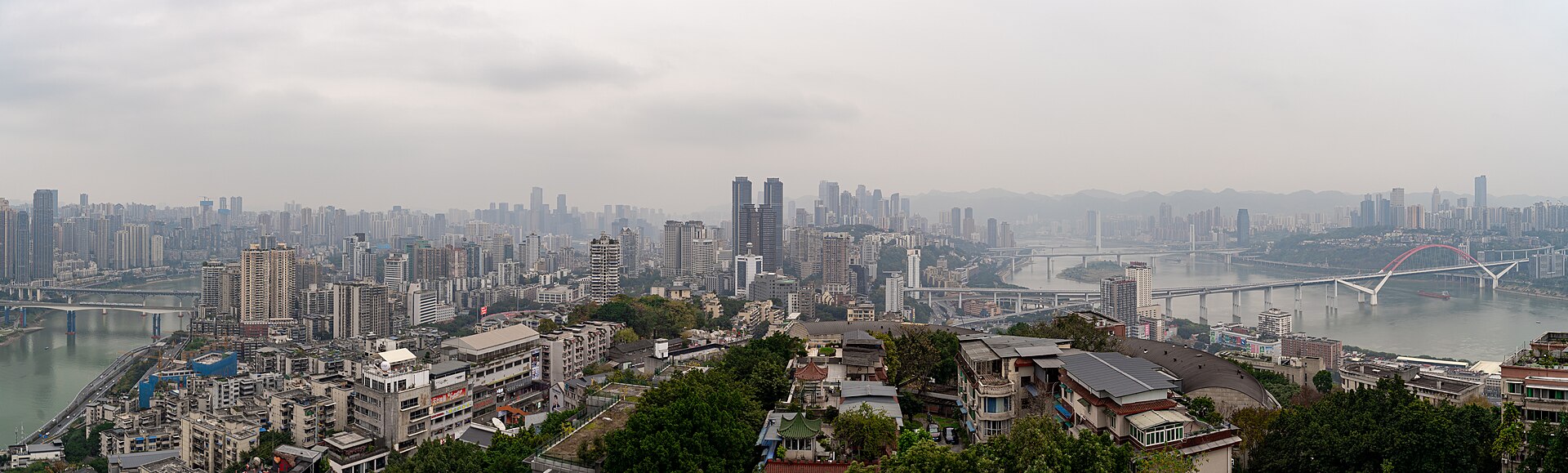 8
8
Eling Park is one of locals' favourite free viewpoints. It sits on the narrowest part of the Yuzhong peninsula, so you can see the river on both sides. The highlight is the twin Liangjiang Pavilion ("Two Rivers Pavilion"), from which you look out over the skyscraper skyline towards Jiefangbei and a long bend of the Yangtze stretching away. The park also has a classic Chinese garden, ponds and shady old trees, and it is far less crowded than Hongyadong. It is a fine place to come at sunset and wait for the city lights — you can watch the city turn from day to night for free. Open into the evening.
Read more: The Eling Park guide — the best viewpoints, the Liangjiang Pavilion and the times the sky is clearest.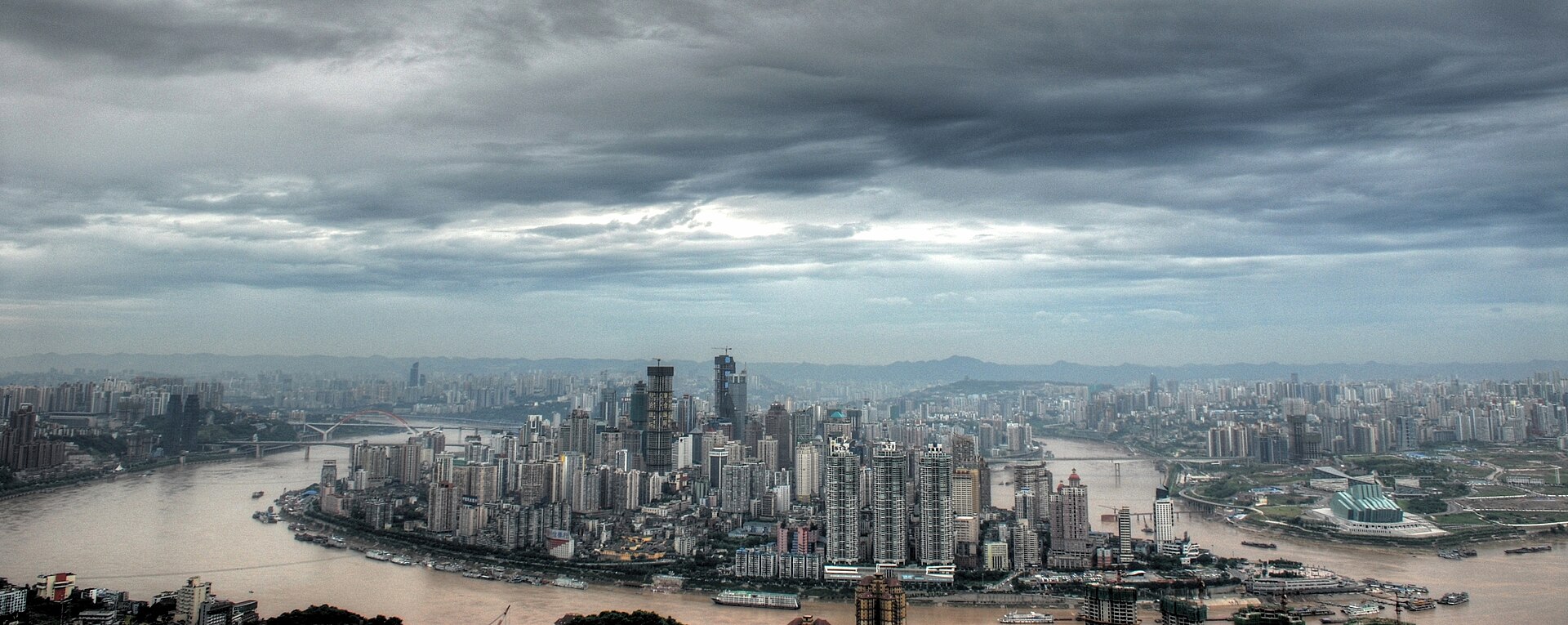 9
9
For a postcard shot of the whole of Chongqing lit up in one frame, head up South Mountain to the "One Tree" observation deck (Yikeshu, named after the city tree, the huangge). The deck sits on the southern mountainside above the river at about 437 metres, facing the Yuzhong peninsula head-on, so the stacked skyscrapers and the two rivers wrapping the city fill an almost 270-degree view. With the whole city lit, it is what many people call the best night view in China. Go up at dusk to catch both the orange sky and the city lights. You can reach it by taxi or bus up the mountain, or as a continuation from the cableway on the Nan'an side.
Read more: The Chongqing attractions overview — the night viewpoints, South Mountain and all the other sights.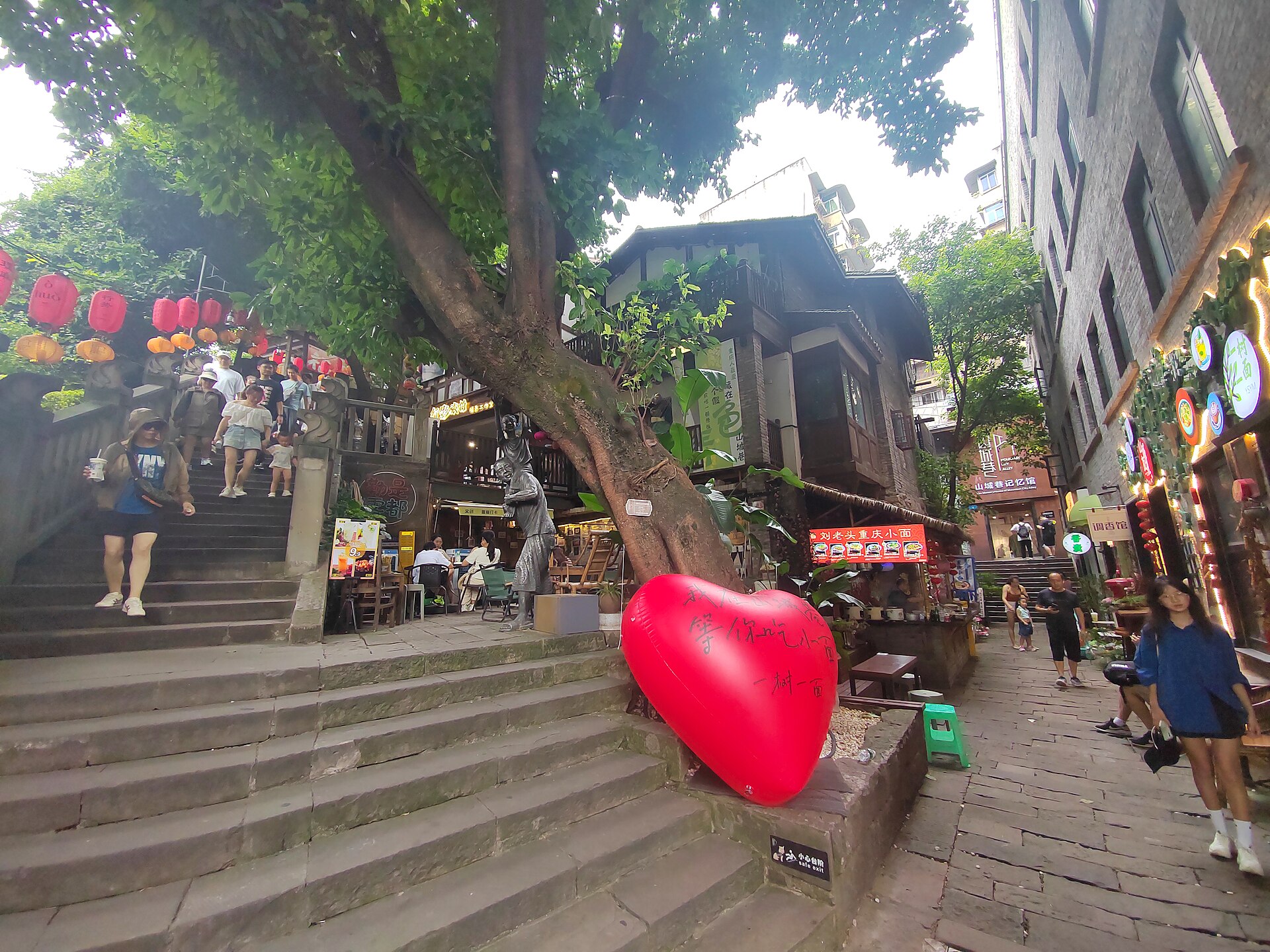 10
10
The "8D mountain city" is not just something you see in aerial photos — walk the Shancheng old alleys (Shancheng Xiang) and you feel it in your legs. This old lane is a winding stone staircase climbing the hillside above the Yangtze in the old quarter of the Yuzhong peninsula, lined with timber and brick houses stacked so that one home's rooftop is the front street of the next. It has been restored with cafés, teahouses and small craft shops tucked in among real homes, and as you climb you keep getting glimpses of the river and the bridges. The atmosphere is genuinely lived-in rather than staged. Free, and best walked in the late afternoon.
Read more: The Chongqing attractions overview — the old alleys, the walkable quarters and the original mountain city.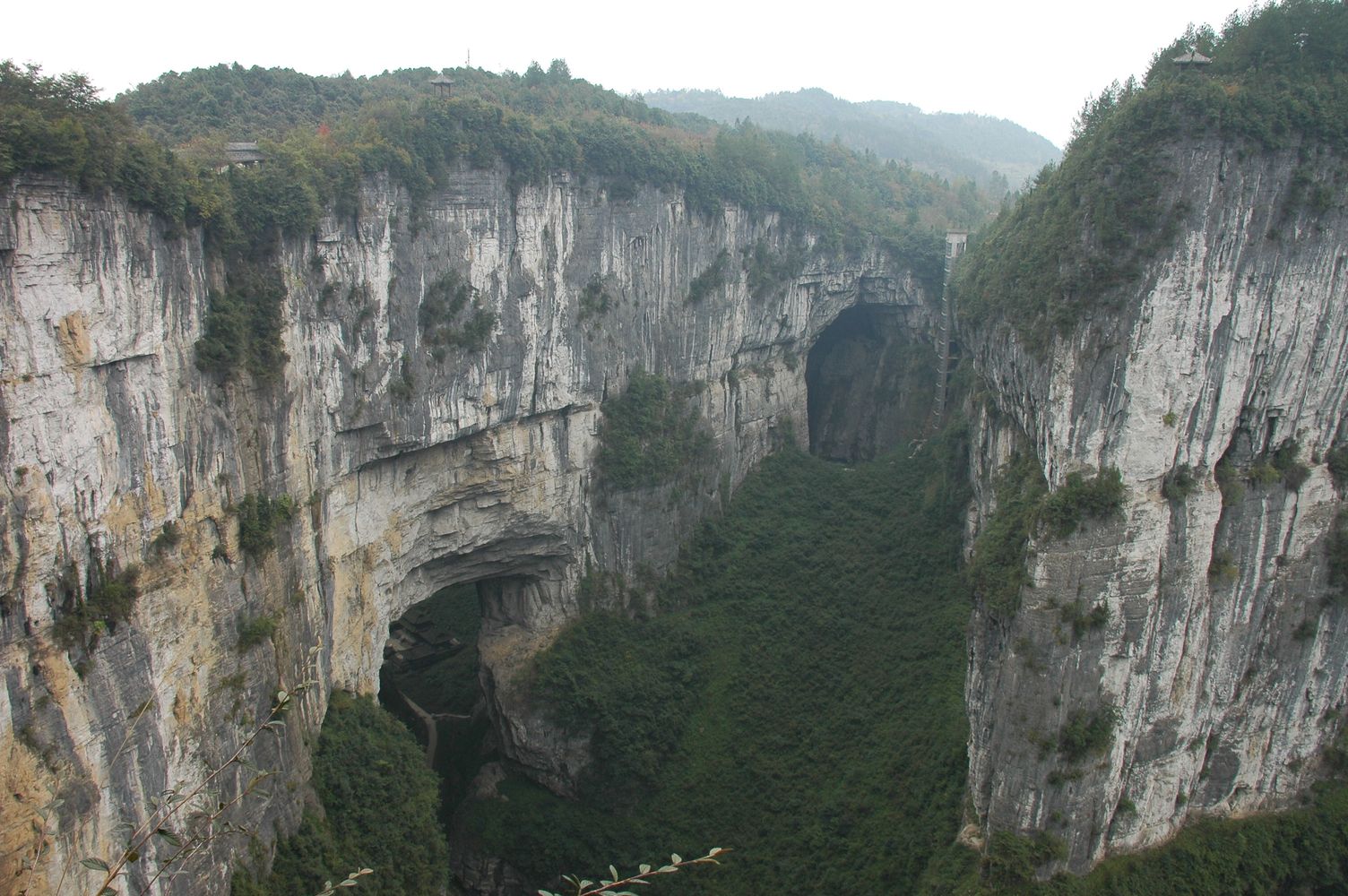 11
11
Once you have done the city, Wulong is the best-value day trip from Chongqing. This karst park is a UNESCO World Heritage Site whose highlight is the "Three Natural Bridges" (Tiansheng Sanqiao) — three giant natural stone arches spanning a deep gorge you can walk right down into, so vast and dramatic they were a film location for Transformers 4 and Curse of the Golden Flower. It has become far easier to reach since the high-speed line opened — about 40 minutes from Chongqing North station to Wulong, then a connecting bus into the park. It makes a full-day trip, and nearby you can add the Longshui Gorge and the old town of Furong if you have time. Book train tickets ahead through Trip.com.
Browse Wulong tours on Klook → Read more: The Wulong Karst guide — the Three Natural Bridges, how to get there and what not to miss.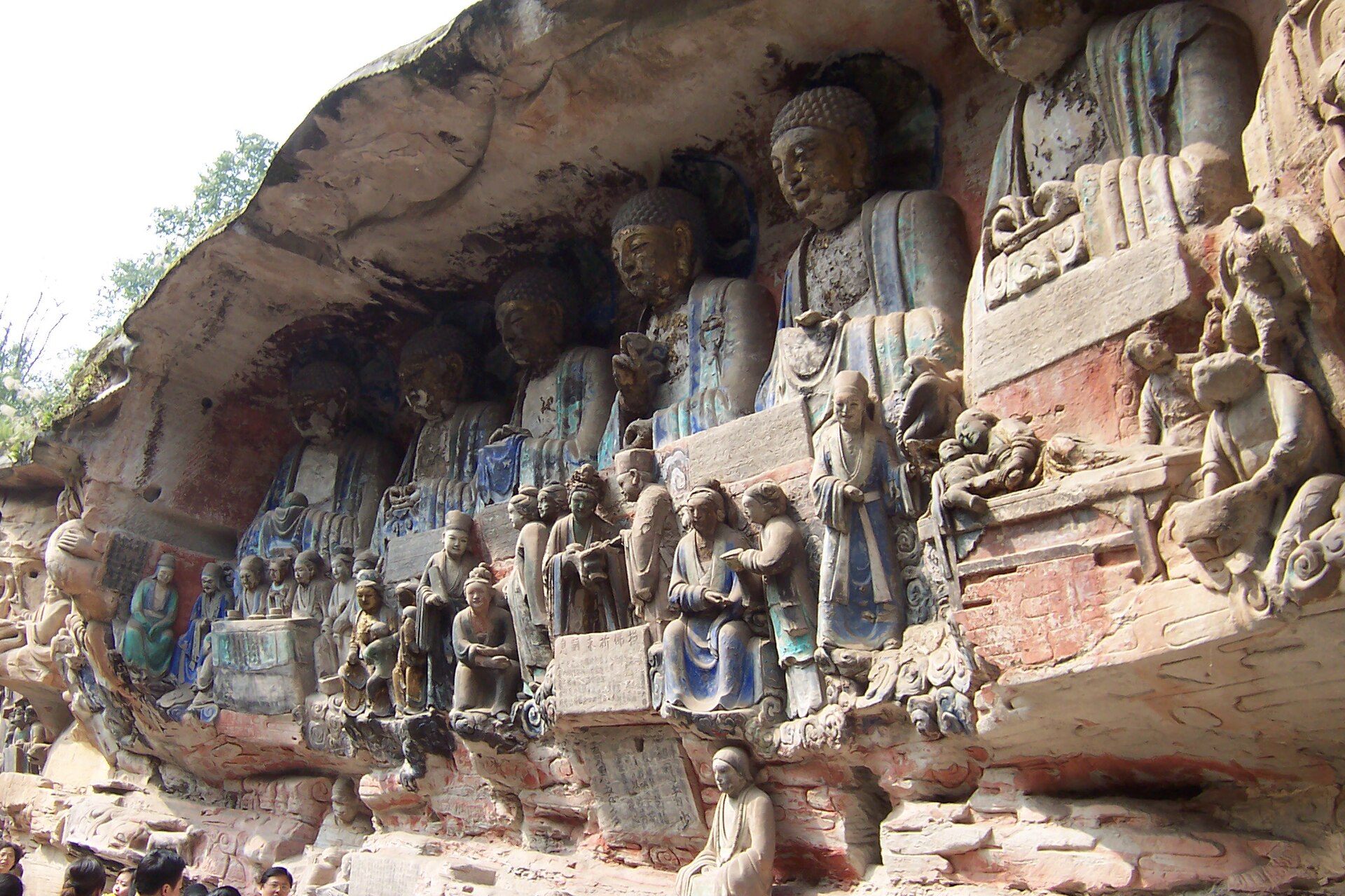 12
12
Two more trips from Chongqing, for the history and nature lovers. The Dazu Rock Carvings are a thousand-year-old set of UNESCO-listed Buddhist stone carvings, among the finest and most complete in China — tens of thousands of figures running along the cliffs, with the reclining Buddha and the Wheel of Life at the Baodingshan cluster as the standouts. Take a high-speed train to Dazu South station, about 30–45 minutes, then a bus; a full-day trip. And if you have several days and want to see the real Yangtze, Chongqing is the main departure point for a "Three Gorges cruise" — sailing east down the Yangtze through the towering gorges, which is a 3–4 day overnight cruise, not a day trip, so plan for the time.
Read more: The day trips from Chongqing guide — Wulong · Dazu · the Three Gorges, with how to get there.