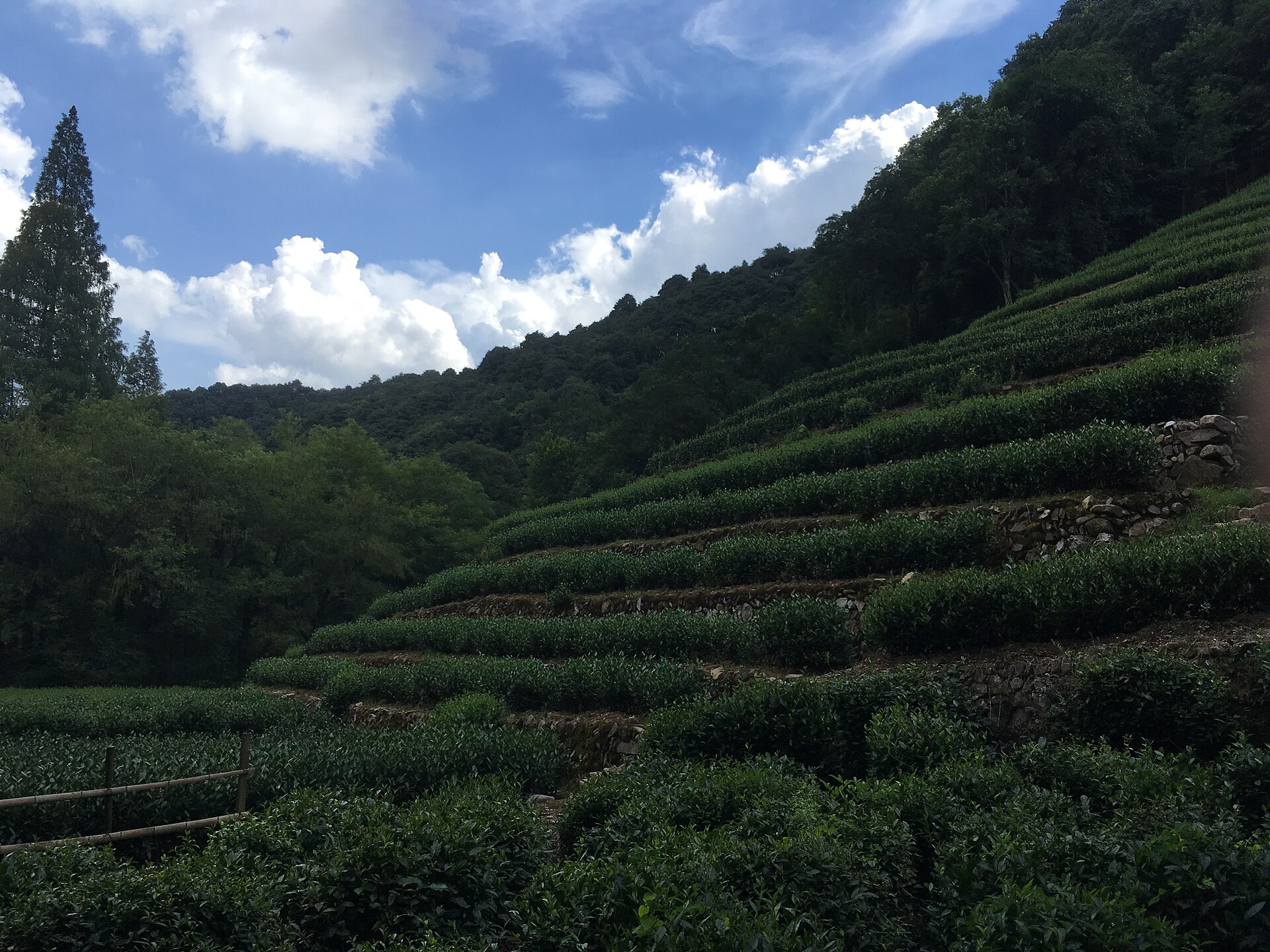
A few kilometres west of West Lake the buildings give way to wooded valleys and hills terraced with tea. A 1,700-year-old temple sits in the shade; the Dragon Well tea fields step down the slopes; and a walking trail ends in a village that still smells of roasting leaves in spring.
Most people come to Hangzhou for West Lake (西湖) and spend their whole visit on the eastern shore. But continue a few kilometres west and the towers and traffic fade out, replaced by wooded valleys, bamboo and hillsides carpeted in tea. This is Lingyin (灵隐) and the West Hills (西山) — the green, quiet side of Hangzhou that feels like the countryside despite still being inside the city limits.
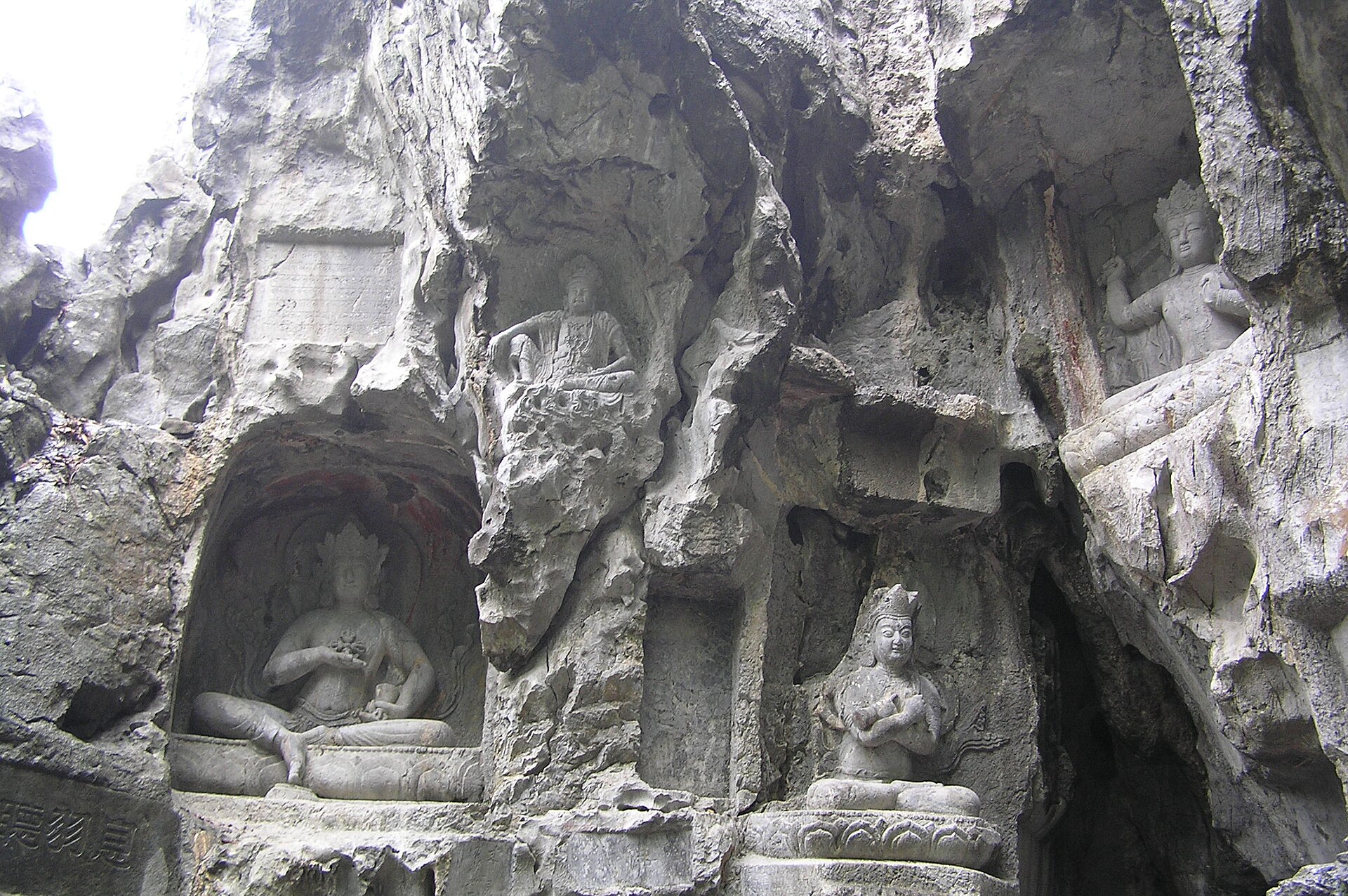
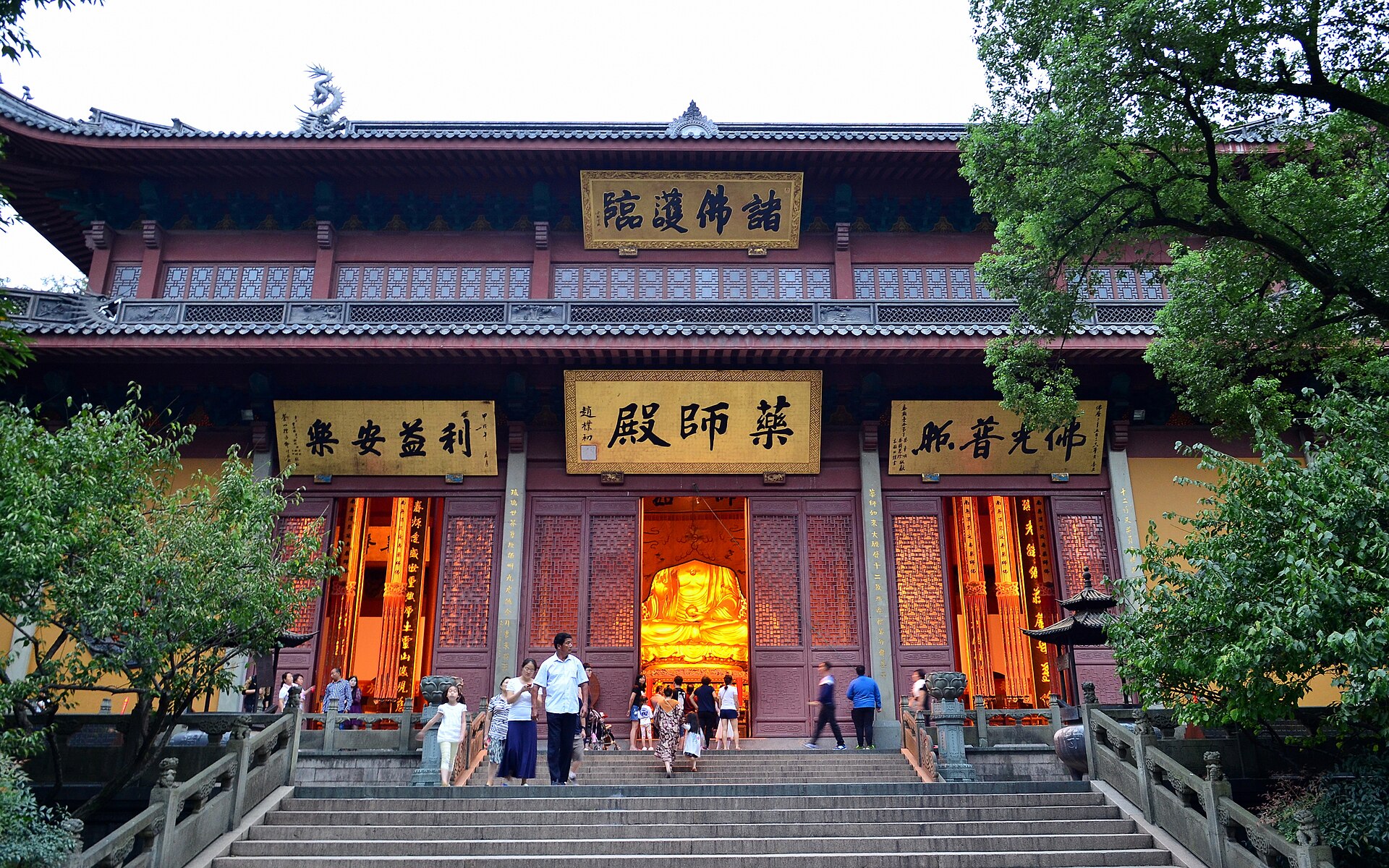
Two things anchor the area. The first is Lingyin Temple (灵隐寺), one of the oldest and most important Buddhist monasteries in China, founded in 326 AD and set against a forested hillside. It pairs with Feilai Feng (飞来峰, "the peak that flew here") — a limestone cliff studded with more than 300 Buddhist figures carved into caves and rock faces. The second is the Longjing (龙井) tea country: the Dragon Well tea fields stepping down the hills in terraces, the tea-growing villages of Longjing and Meijiawu, and the China National Tea Museum, which can absorb a whole afternoon for anyone curious about China's most famous green tea.
The real appeal here is the change of pace. No malls, no neon — just temple bells, the sound of water over stones, and the smell of tea. If you have done West Lake for a full day and the crowds have started to wear, the Lingyin side is the antidote Hangzhou keeps in reserve.
Lingyin is not the shopping or nightlife side of Hangzhou. It is the side where you slow your breathing, walk under trees, and drink tea in a teahouse a single family has run for generations.
What makes this side rewarding is how close nature and culture sit to each other. Step out of the temple gate and you are in a bamboo grove; walk a little further and you reach a clear stream; climb the slope and you are among tea terraces that run out of sight. Here is who the area suits best.
Lingyin is not a temple arranged for photographs — it is a working monastery, with resident monks, worshippers bringing incense, and the smell of it hanging in the air throughout. Walk into the Feilai Feng forest early and it is quiet enough to hear birdsong and running water. The cave carvings, several centuries old, give the strong sense of walking somewhere people have come on pilgrimage, without a break, for well over a thousand years.
Longjing (Dragon Well) is China's most celebrated green tea, and this is where it comes from. Whole hillsides are terraced with tea bushes in neat rows. During the harvest in late March and April you can watch villagers picking the young leaves by hand and pan-roasting the tea in hot woks at the roadside. The family teahouses in Longjing and Meijiawu let you sit over a freshly brewed cup with a view of the fields — an experience the city cannot offer.
The Nine Creeks trail (九溪十八涧, Jiuxi) is a gentle walk through paddy fields, tea terraces and the small streams that converge here. Follow it uphill and you reach a small lagoon, a teahouse and, eventually, Longjing Village. It takes about 3–4 hours including sightseeing and tea stops. The gradient is mild — this is for ordinary walkers, not just hikers — yet it gives the strong feeling of having left the city far behind.
The Lingyin side holds Hangzhou's most peaceful luxury resorts. Amanfayun is built on the foundations of an old village called Fayun, next to Lingyin Temple, with 47 traditional stone courtyard dwellings set among the tea hills. Four Seasons Hangzhou at West Lake sits on the western lakeshore in a classical-garden setting. Both suit travellers who would rather wake up to greenery and quiet than to the sound of the city.
Founded in 326 AD during the Eastern Jin dynasty, Lingyin is one of the oldest and most revered Buddhist monasteries in southern China. The name means "Temple of the Soul's Retreat". A series of great halls climbs the hillside, including a vast main Buddha hall. From 1 December 2025 the Lingyin–Feilai Feng scenic area is free to enter, but entering the temple itself requires a separate temple ticket of around ¥30 (~฿150), and you must reserve in advance through the Alipay/WeChat mini-program. Open approximately 07:30–17:30 (last entry 17:00).
Full detail at the complete Lingyin Temple guide.
The limestone cliff opposite Lingyin Temple — the name translates as "the peak that flew here", from a legend that the mountain arrived from India. Its distinguishing feature is more than 300 Buddhist statues and reliefs carved into the caves and rock faces, some dating to the Five Dynasties and Song periods. The most famous is the broad-bellied, smiling Laughing Buddha. Follow the shaded path along the stream and you pass carvings the whole way — an experience quite different from walking through an ordinary temple.
More at the Feilai Feng guide — rock carvings in the forest.
The Dragon Well tea-growing village, named after the Longjing spring that gives the tea its name. The slopes around it are terraced with tea bushes to the horizon, and it is home to the Eighteen Imperial Tea Trees — which the Qianlong Emperor is said to have singled out for praise. Family teahouses welcome you to sit over fresh tea with a view of the fields; a pot runs roughly ¥30–80 (~฿150–400) depending on grade. The harvest weeks in late March and April are the most beautiful and the most animated.
More at the complete Longjing Tea Village guide.
One of the largest Longjing-producing villages, strung along Meiling Road west of West Lake. The hills around it are almost entirely terraced with tea, and there are more than 160 family-run teahouses, many with reception halls and multilingual explanations. The village is free to enter; tea-picking and tea-roasting activities cost extra. Meijiawu is quieter and more rural than Longjing Village, which draws bigger crowds — a good choice if you want to settle in for a long, unhurried tea session.
A museum devoted specifically to Chinese tea culture. The Longjing branch sits at No.88 Longjing Road, surrounded by tea fields. Free entry. Open 09:00–17:00 (1 May–7 Oct) and 08:30–16:30 (8 Oct–30 Apr), closed Mondays. The exhibits run from the history of tea through cultivation and roasting to the various tea ceremonies, with spaces to taste and buy tea at the source. It is the best place to understand why Longjing carries the reputation it does.
The walking trail Hangzhou locals call "Nine Creeks in Misty Village" (Jiuxi Yancun), after the fog and cooking smoke that once drifted through the valley where its nine streams converge. The path runs through paddy fields, tea terraces and clear streams, finishing at Longjing Village and the tea hills. Allow around 3–4 hours including viewpoints and tea stops. The gradient is gentle and walkable — or do it by bicycle. It is the best way to link the calm of the temple with the tea fields in a single day.
This is the place to eat Longjing shrimp — the dish that stir-fries fresh tea leaves from the surrounding hills with river prawns.
Hangzhou's signature dish, born from this tea country: small river prawns lightly stir-fried with fresh Longjing tea leaves and a little brewed tea. The result is sweet, tender prawn meat carrying a faint, clean tea fragrance unlike anything else. Several restaurants in Longjing and Meijiawu villages make it with leaves picked from their own fields — roughly ¥60–120 (~฿300–600) a plate. Come during the new-tea season (late March–April) and the leaves are at their freshest.
More at Longjing shrimp — the dish the tea country invented.
The heart of eating and drinking out here is sitting over tea in a family teahouse. Many in Longjing and Meijiawu serve fresh Longjing alongside home-style dishes made with tea and seasonal produce — spring bamboo shoots, freshwater fish, and tea-fried shrimp. A pot of tea starts at around ¥30 (~฿150), you can linger as long as you like, and the hot water keeps coming. It is the best way to rest your legs after walking the fields.
The Lingyin side leans toward teahouses rather than coffee. If it rains, or you simply want good coffee in a comfortable indoor setting, the city side of Hangzhou has plenty to choose from — see the Hangzhou café guide. For the full picture of Hangzhou food, see the Hangzhou food guide.
If you want to wake up to greenery, quiet and a temple nearby, this is the answer — but you trade away the easy access to the city that the lakeshore offers.
The strongest argument for basing yourself on the Lingyin / West Hills side is calm and nature. The resorts here sit among tea fields and forest, so you can be inside the temple or out on the tea trail before the day-trippers arrive — an atmosphere the lakefront cannot match. Amanfayun is built on the old Fayun village next to Lingyin Temple, 14 hectares with 47 stone courtyard houses, some more than a century old. Four Seasons Hangzhou at West Lake sits on the western lakeshore in a classical Chinese garden setting, with a livelier kind of luxury.
The one real drawback is getting around. This side has no direct metro and lies some distance from the centre. If your itinerary is built around walking the West Lake shore or shopping every day, basing yourself on the eastern shore (the Hubin area) is more convenient. But if you have come to rest, recharge and have the temple and tea fields as the backdrop to your trip, the Lingyin side does it best.
The key thing to know first: no metro line runs directly to Lingyin Temple. You will arrive by bus, taxi, or on foot from West Lake. Choose based on where you are starting from.
08:00 — Start at Lingyin Temple early (bus route 7 or DiDi; temple ticket pre-booked). Walk the halls climbing the hillside while it is still quiet, before the crowds.
09:15 — Cross to Feilai Feng and follow the streamside path, looking for the carvings set into the rock.
10:30 — A short ride to the China National Tea Museum (Longjing branch, free). Walk the exhibits on tea and try a tasting.
11:30 — Stop at a teahouse in Longjing or Meijiawu for a pot of fresh tea with a view of the fields before heading back into the city.
Follow the half-day route above through the morning, then continue:
12:30 — Lunch in a tea village — order Longjing shrimp alongside home-style tea dishes.
13:30 — Start the Nine Creeks trail (Jiuxi) through tea fields and streams, heading up toward Longjing Village.
15:30 — Visit the Longjing spring and the Eighteen Imperial Tea Trees; have another pot at a roadside teahouse.
17:00 — Head back into the city, or continue to sunset over the nearby West Lake.
The Lingyin side combines with West Lake in a single day — see all of Hangzhou's sights in the Hangzhou attractions guide, or plan the whole trip with the complete Hangzhou city guide.