A region of karst peaks and rivers that is easy to travel alone even without a metro — cheap DiDi rides, ¥1–2 city buses paid by phone, a 24-minute bullet train to Yangshuo, the West Street backpacker town where you can make friends in one evening, cycling the Yulong countryside on your own, and Li River cruise and Longji terraces tours you can simply book a seat on. Guilin is one of the easiest, best-value places in China to travel solo.
If you are planning your first solo trip in China and wondering whether Guilin will be hard to get around without a metro, here is the short answer: Guilin and Yangshuo are a very safe and easy place to travel alone, a tourist region already used to solo travellers. In Guilin city the Two Rivers Four Lakes area and Zhengyang Road stay busy and well lit late, Yangshuo's West Street buzzes with travellers from all over and is very friendly, and violent crime against tourists is rare.
What people worry about most is "no metro, so how do I get around" — but Guilin is genuinely easy to do alone, because DiDi (China's ride-hailing app) is cheap and convenient, with a flagfall of around ¥9–10 (about ฿45–50) and most cross-city rides under ¥30. City buses cost just ¥1–2 with Alipay/WeChat, and key spots like Yangshuo are a 24-minute bullet train away. And the things solo travellers worry about most here — how to eat alone, how not to feel lonely — all have real, workable answers, because the signature dish, Guilin rice noodles, comes in a single bowl, and West Street is packed with hostels where it is easy to meet other travellers.
This guide covers everything a solo traveller in Guilin needs: honest safety advice, getting around without a metro, the things that are genuinely good to do alone, how to eat rice noodles and eat solo without feeling awkward, whether to base in the city or Yangshuo, how to book the Li River cruise and a Longji terraces tour without the hassle, and how to meet people along the way in Yangshuo's backpacker scene.
Safer than you would expect — but there are a few small things worth knowing first, so you do not get caught out.
Guilin and Yangshuo are tourist towns with a very low rate of violent crime and good security. Walking back to your accommodation in the evening through areas like Two Rivers Four Lakes, Zhengyang Road and the central square in Guilin is safe, with people about and good lighting late, while Yangshuo's West Street stays lively past midnight, and many people walk to late-night food on their own. The thing to watch is pickpocketing in dense crowds — markets, boat piers and busy pedestrian streets. Keep your passport and valuables secure and watch your bag in crowds and you are well covered.
Guilin and Yangshuo are destinations where solo women consistently report feeling safe — on transport, in restaurants and after dark in the tourist areas. Yangshuo's West Street is especially friendly, with plenty of solo women travellers around. Street harassment is uncommon. Apply the same basic caution you would in any tourist town — avoiding quiet, dark rural lanes late at night, not getting too drunk, and trusting your instincts — and you can travel with real confidence.
The thing to watch is strangers who push you towards a tour or a shop, or quote a suspiciously cheap boat or car fare and then add charges later — most often around the Li River cruise piers and outside sights. The fix is simple: book the Li River cruise and Longji tours through an app or a trusted hostel, do not agree a price with touts on the street, and call a DiDi, which shows the price clearly before you get in. You can always haggle in markets, where the opening price is usually inflated.
Guilin has no metro — in the city you rely on DiDi/taxi and ¥1–2 buses, and for far-flung sights you take a tour or charter. The most scenic season is Apr–Oct, when it is green and the rivers are full (Apr–May and Sep–Oct are best), while summer Jun–Aug is hot, humid and the rainiest. Winter Dec–Feb is cool at around 5–12°C, often foggy or drizzly, and low water on the Li River can shorten the cruise. Avoid Golden Week (Oct 1–7) and Spring Festival, when accommodation prices spike and it packs out. And the famous misty-karst photos come on overcast, drizzly days, not in blazing sun.
If you are coming to Guilin alone and want both a low price and some company, Guilin Wada Hostel (桂林瓦当青年旅舍) is the budget pick many recommend — a hostel in central Guilin, about a 10-minute walk from the railway station, with a social common area, a bar, a multilingual library and helpful English-speaking staff who can arrange the Li River cruise and a Longji terraces tour. Dorm beds from around ¥70 (~฿350) a night, and it scores 9.0/10 from real reviews. A solid base for a solo traveller who wants to meet people and book tours easily.
Read the Wada Hostel Guilin Review →Ordered by what solo travellers tend to enjoy most and find easiest.
1
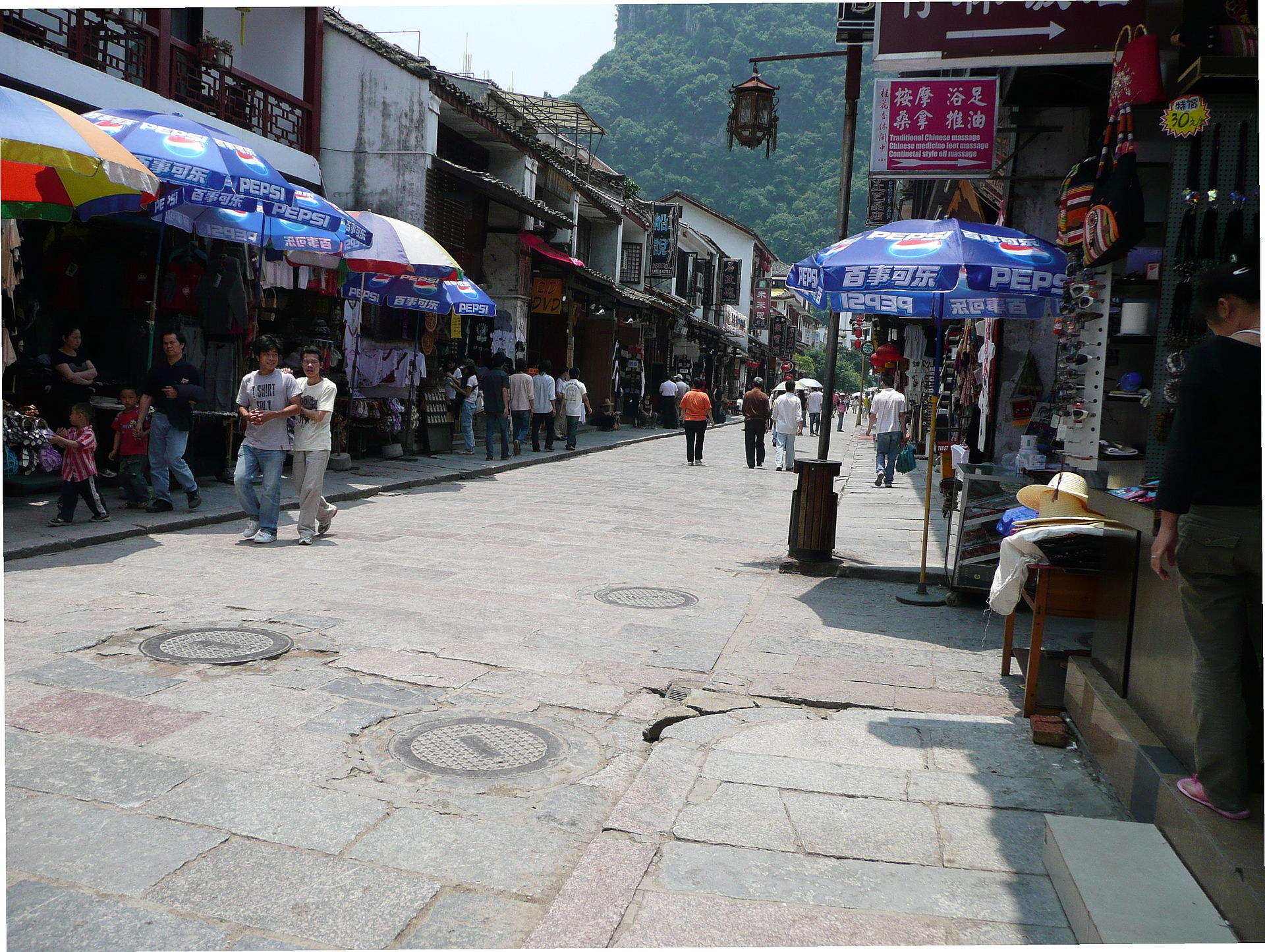
Worried about feeling lonely on a solo trip? In Guilin the most effective fix is to base yourself around West Street (西街) in Yangshuo, a backpacker town that began as a rock-climbing village and is still full of hostels, cafes, bars and travellers from all over. Many hostels have a common area, a bar and run group trips, so it is the easiest place to meet other travellers, with English-speaking staff who help you book tours and rent bikes. Walking the pedestrian street in the evening is busy and safe. It is the ideal base if you want both the karst scenery and a social traveller crowd.

2
The highlight of Yangshuo that is genuinely lovely to do alone is cycling or e-biking the Yulong River (遇龙河) countryside, on quiet lanes past green rice paddies and karst peaks rising straight up. Bikes are very easy to rent from hostels and shops in Yangshuo town, at around ¥20–50 a day. You ride at your own pace, stopping to photograph, rest by the river, or take a bamboo raft for a stretch, exactly as you like. It is an outdoor activity that is easy and safe to do solo — the rural roads are quiet and the views are good the whole way.

3
The image everyone has of Guilin is a Li River cruise (漓江) gliding past rows of karst peaks mirrored in the water. The classic route runs Guilin to Yangshuo over about 4–5 hours, and going solo is no problem at all, because you simply book a seat on the boat in advance, all in one ticket — the logistics are handled, with no need to form a group. Standard boat tickets run around ¥220–450 (~฿1,100–2,250) depending on the boat. You disembark at Yangshuo and carry on or stay the night. It is something you can sit and enjoy quietly on your own, and far easier than arranging the trip yourself.
4
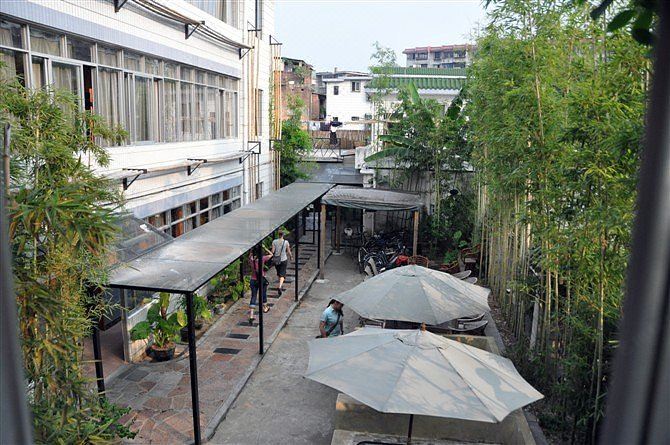
If you want to base in Guilin city but still want a social hostel feel, Guilin Wada Hostel (桂林瓦当青年旅舍) is the budget pick many recommend — a hostel in the city centre, about a 10-minute walk from Guilin Railway Station, with a social common area, a bar and a multilingual library. Its standout is helpful English-speaking staff who arrange the Li River cruise and Longji rice terrace tours for you. Dorm beds from around ¥70 (~฿350) a night, and it scores 9.0/10 from real reviews. A good fit for a solo traveller who wants to keep costs down and have company built in.
5
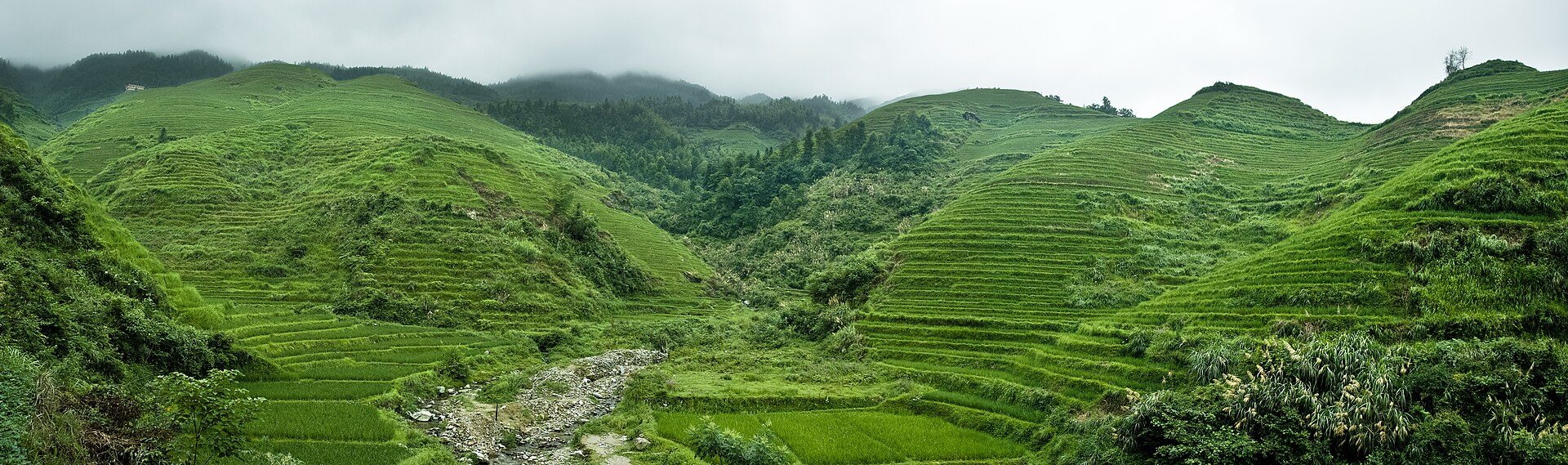
The Longji rice terraces (龙脊梯田), stepping up the hillsides in layers, are one of the most beautiful sights in the region — but they are about 2 hours from Guilin city and fiddly to reach by public transport. For a solo traveller, a group day tour is the easiest and best-value way to go — transport, a guide and a pre-booked seat, with no working out connections yourself. Around mid-Apr to Jun the terraces become mirrors of water after planting, deep green in summer, and gold for the harvest from mid-Sep to early Oct, when they are at their best. A tour also means travel companions for the day.

6
In Guilin city itself, an evening that is lovely even done alone is the Two Rivers Four Lakes night cruise (两江四湖), a ring of water through the centre linking the Li River, the Peach Blossom River and four lakes, both banks lit after dark. The highlight is the Sun and Moon Pagodas, glowing gold in the middle of Shan Lake, and the variety of lit bridges mirrored on the water. It is romantic but quiet and beautiful done solo. Night-cruise tickets run around ¥150–230 (~฿750–1,150), or you can simply walk the lakeside for the view for free.
The city's signature dish is Guilin rice noodles (桂林米粉) — soft rice noodles in a secret marinade, topped with peanuts, pickled radish and crisp pork, served in a single bowl for just around ¥8–15 (~฿40–75). It is the easiest, cheapest meal to have alone, and there is a noodle shop on almost every corner. You usually order at the counter, point to pick your toppings, pay by Alipay and find a table yourself — nobody looks twice at eating alone. It is the way locals eat, both filling and cheap, and perfect for breakfast or a quick meal during the day.
Both Guilin and Yangshuo have cafes that are lovely to sit in alone, especially Yangshuo, with cafes overlooking the mountains and river in town and out in the Yulong countryside. Sitting in a cafe alone here is completely ordinary. Many have Wi-Fi and window seats looking out at the karst peaks, which makes them ideal for resting your legs after a day of cycling or walking, reading, planning the rest of your trip, or just having a coffee with a view. Order one drink and you can stay all afternoon, with nobody rushing you — a pause that suits the laid-back feel of a traveller town.

9
Near Yangshuo is an old Li River village called Xingping (兴坪) with a river bend that is the scene on the 20-yuan note — one of Guilin's classic photo spots, and easy to reach solo by bus or boat. You can wander the old street, walk down to the water to find your angle, or take a short bamboo raft to see the karst peaks up close. It is a half-day trip from Yangshuo that is quieter than West Street and easy to do alone, and locals and other travellers are happy to point you to the 20-yuan viewpoint.
Yangshuo is one of the best rock-climbing towns in China, with hundreds of limestone routes from beginner to expert. If you are travelling solo and want to try something new, there are half-day and full-day beginner courses with a guide and all the kit, and a friendly climbing community. Hostels and climbing shops in town (such as Climbers Inn, where foreign climbers tend to gather) can pair you with climbing partners and set up trips. It is an activity that gives you both a new experience and travel companions — but if you have never climbed, always go with a professional guide.
Guilin has no metro, but getting around solo is easy. The most convenient option is DiDi (China's ride-hailing app, the Uber equivalent), which is very cheap, with a flagfall of around ¥9–10, paid through Alipay/WeChat and showing the price before you get in. City buses cost ¥1–2 with a tap, and many routes pass the central lakes and Elephant Trunk Hill. To reach Yangshuo, take the bullet train from Guilin North in about 24 minutes, then transfer into town, or take a direct bus. The Longji terraces are about 2 hours away, so take a tour. Key tip: always keep your destination saved in Chinese characters to show the driver, because most cannot read English.
If loneliness is the worry, the most effective tools in Guilin are basing yourself around West Street in Yangshuo, which is full of social hostels, bars and travellers from all over, or staying at a hostel with a common area like Wada in central Guilin. Beyond that, joining a group Li River cruise or Longji tour makes it easy to meet travel companions, and trying a climbing course or a group cycle in Yangshuo puts you among a very friendly traveller community. There are plenty of travellers around, and many are happy to chat and team up to sightsee — you just have to say hello first.
In Yangshuo's West Street, English is reasonable because it is used to tourists, and the bigger hotels and hostels speak English — but outside Yangshuo, especially in Guilin city and the rural villages, English is limited. Download a translate app that works offline before you go — Pleco (the popular Chinese dictionary) or Google Translate with the Chinese language pack saved for when you have no signal. The camera-translate feature is a big help for reading menus and signs. For maps, use Amap (高德地图) or Apple Maps, which are more accurate than Google Maps, which does not work inside China.
Google, Instagram and WhatsApp are blocked in China, so prepare a VPN and travel eSIM before you travel (VPN websites are themselves blocked once you are inside China). An eSIM keeps your usual apps working. For payments, link Alipay or WeChat Pay to a foreign card in advance, because cash is barely used — you tap to pay everywhere, from a rice-noodle shop to a city bus to a bike rental to a cruise ticket. This matters a lot when travelling solo, because everything runs on your phone.