10 places worth your time
Ordered by geography — start on the Li River and in Yangshuo, then come back into Guilin city.
 1
1
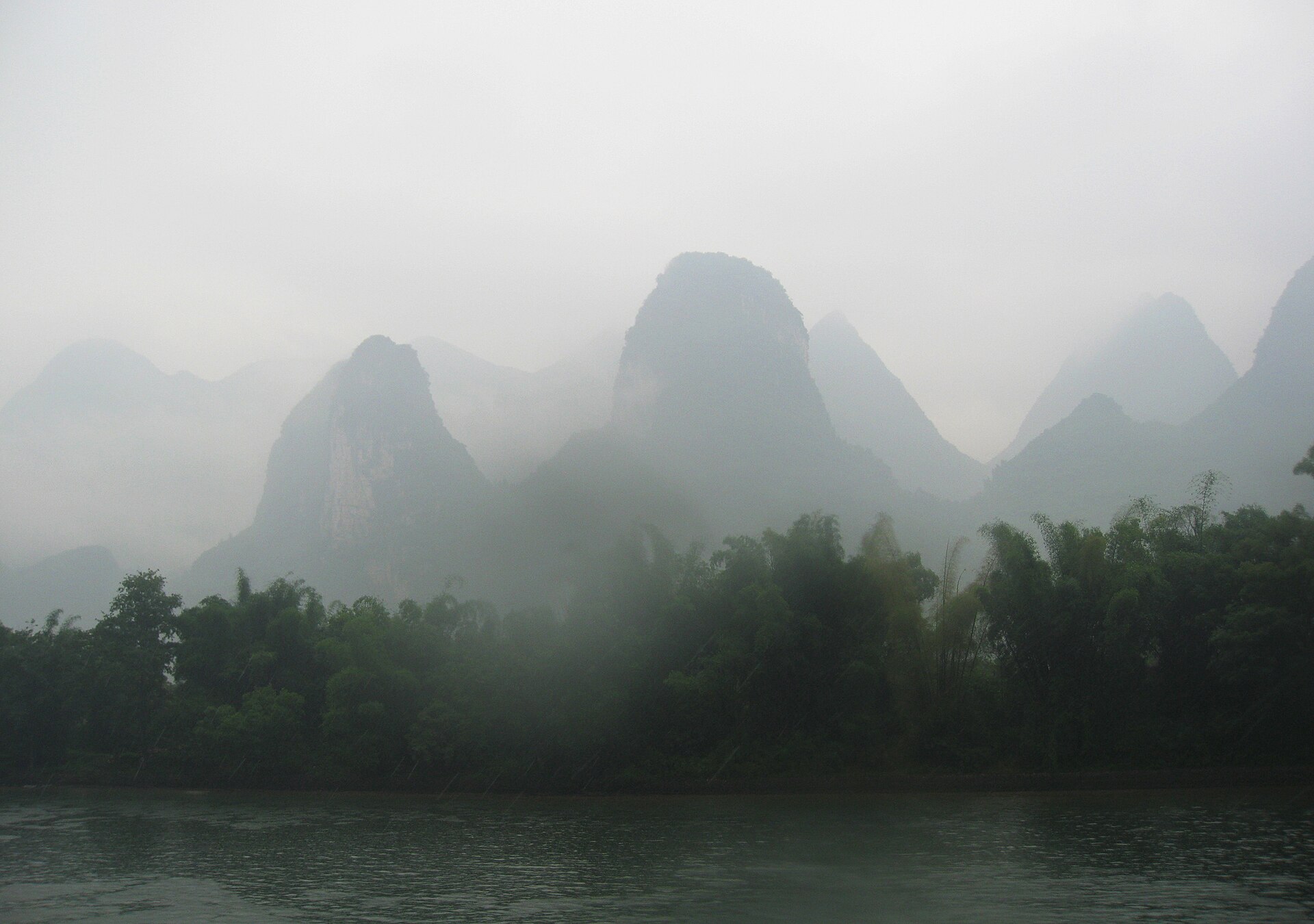
Picture this: you are on the boat's top deck, a cool breeze blowing, and the karst peaks slide past one by one — water buffalo standing in the shallows, a fisherman poling a bamboo raft. This is the Li River cruise from Guilin to Yangshuo, about 83 km over 4–5 hours. The best stretch is near Xingping, the scene printed on the 20-yuan note. The 4-star boats leave from Zhujiang Pier and the 3-star boats from Mopanshan Pier. Be honest with yourself about timing: from April to November tickets go quickly, so book ahead — you can do it on Klook.
 2
2
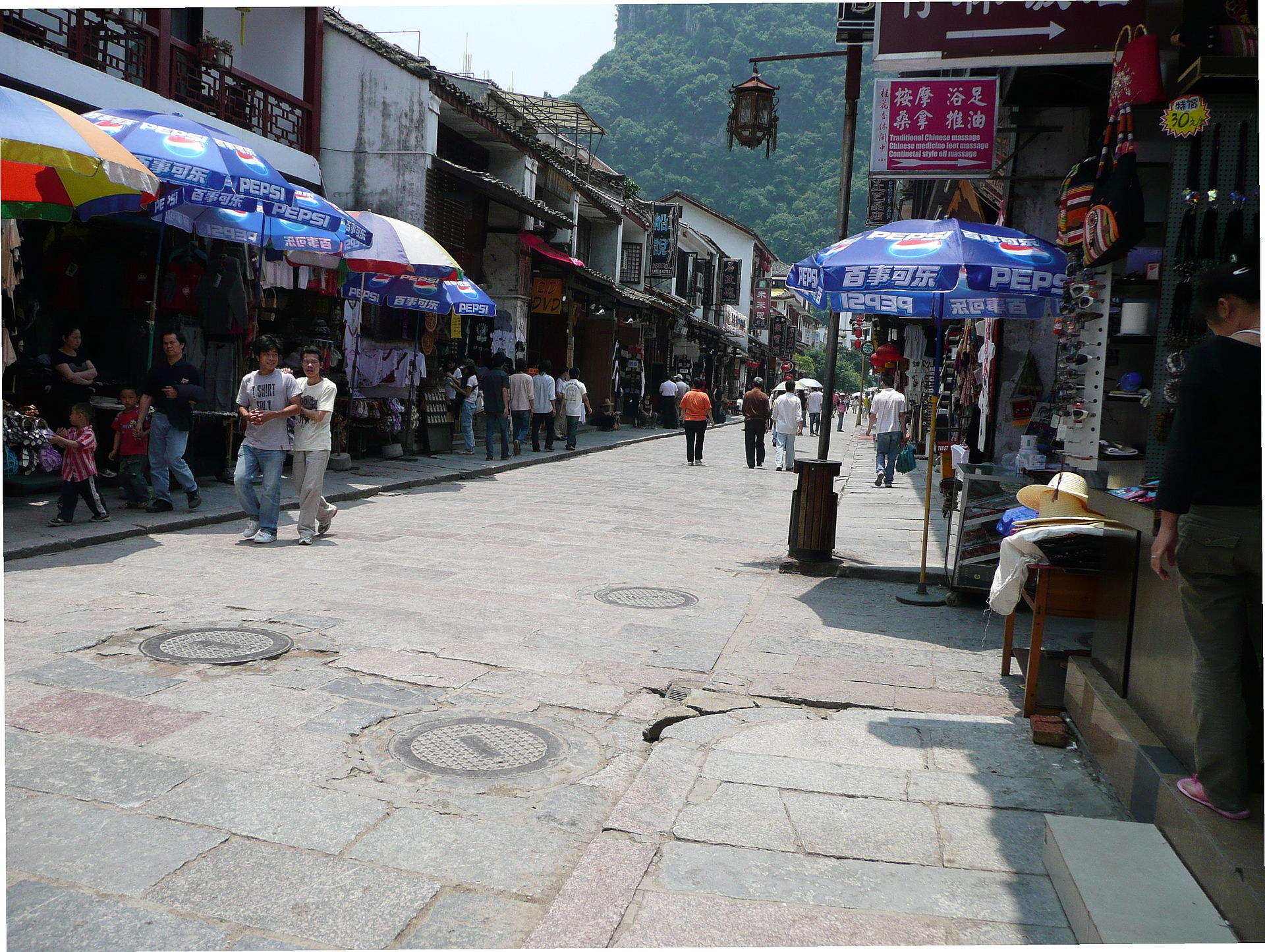
When the boat docks at Yangshuo, the centre of everything is West Street — a cobbled pedestrian lane more than 1,400 years old, selling souvenirs, tea and coffee by day and turning into a strip of bars, live music and neon by night. It is the base travellers use to cycle, raft the Yulong River and catch a show. The one not to miss is the Impression Liu Sanjie (印象·刘三姐) light-and-sound spectacle staged on the Li River itself, directed by Zhang Yimou, using twelve real peaks as the backdrop and more than 600 local performers. It is fair to say West Street is touristy and very lively after dark; if you want quiet, stay in Xingping instead.
 3
3
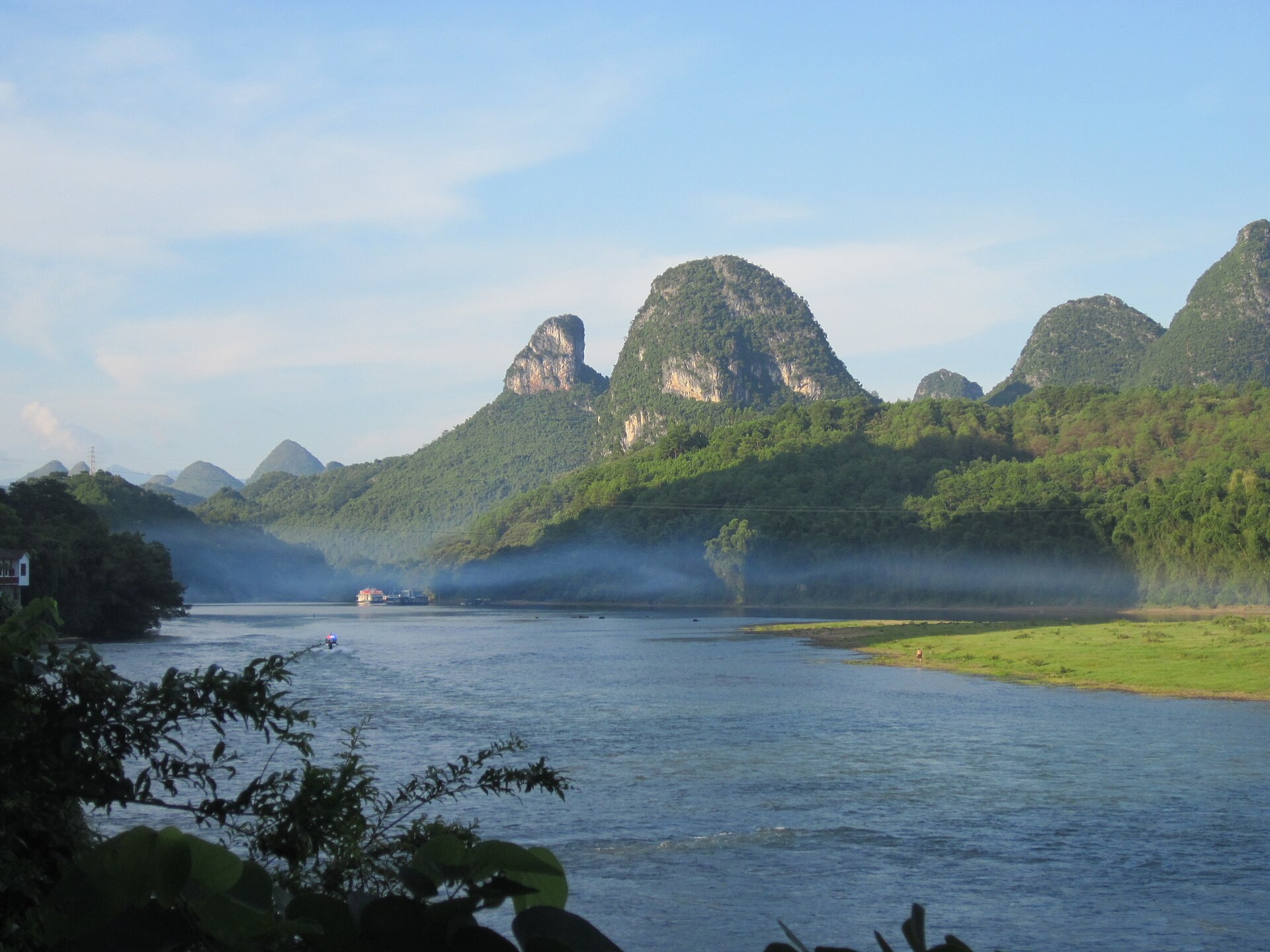
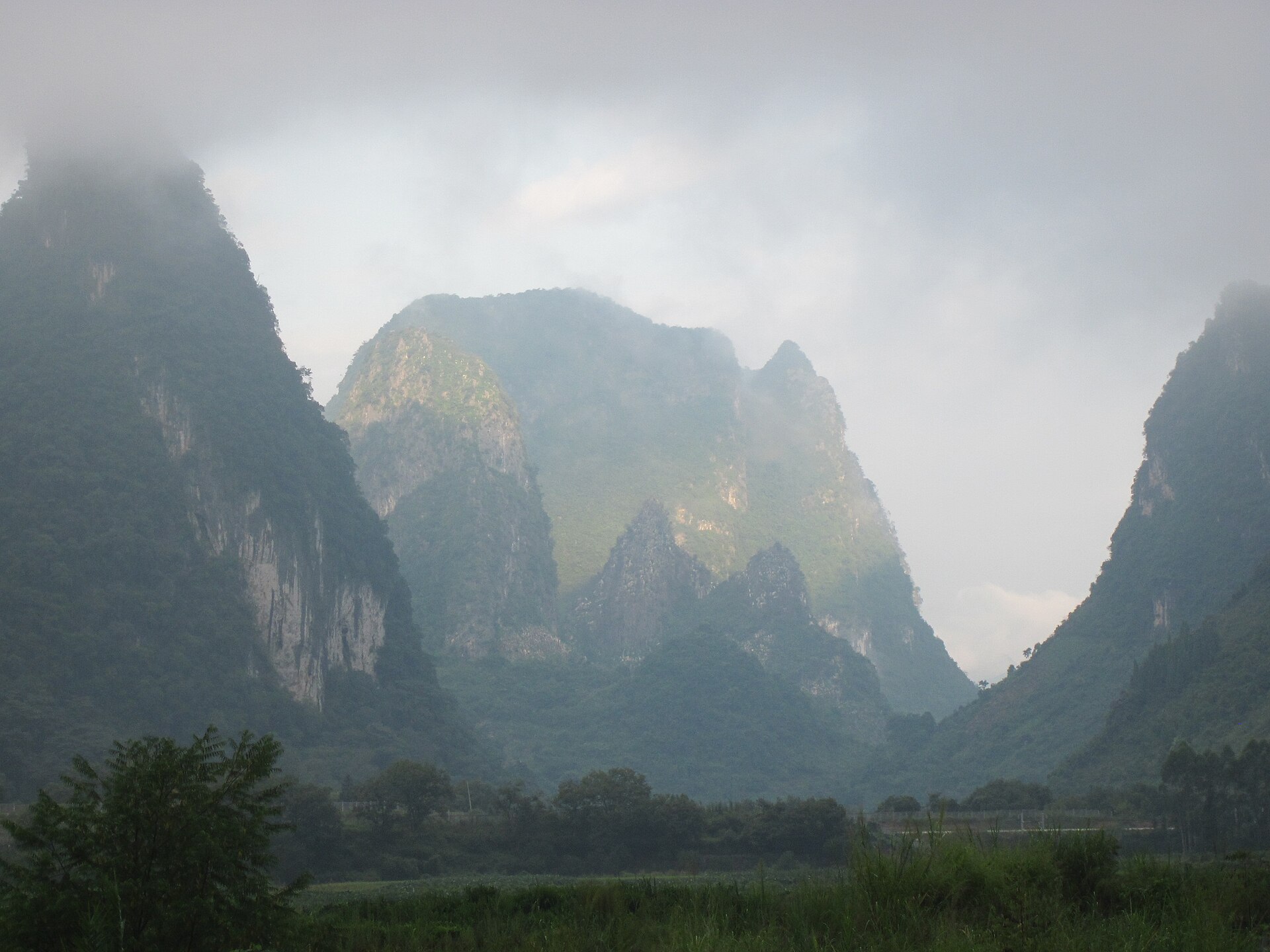
If you want the most familiar Guilin view of all — the peaks lined up along a river bend that sits on the 20-yuan banknote — it is photographed at Xingping, an old town on the Li River about 40 minutes from Yangshuo town. The viewpoint is by the water near the old town, free to enter, about a 500-metre walk from the car park. The Li River cruise passes this exact bend, but to stand and shoot it at your own pace, come to Xingping itself. It is at its best at sunrise or just before sunset, when mist clings to the peaks. The old town also has an old street, small shops, and short bamboo-raft rides toward Nine Horses Mural Hill — and it is far calmer than West Street.
 4
4
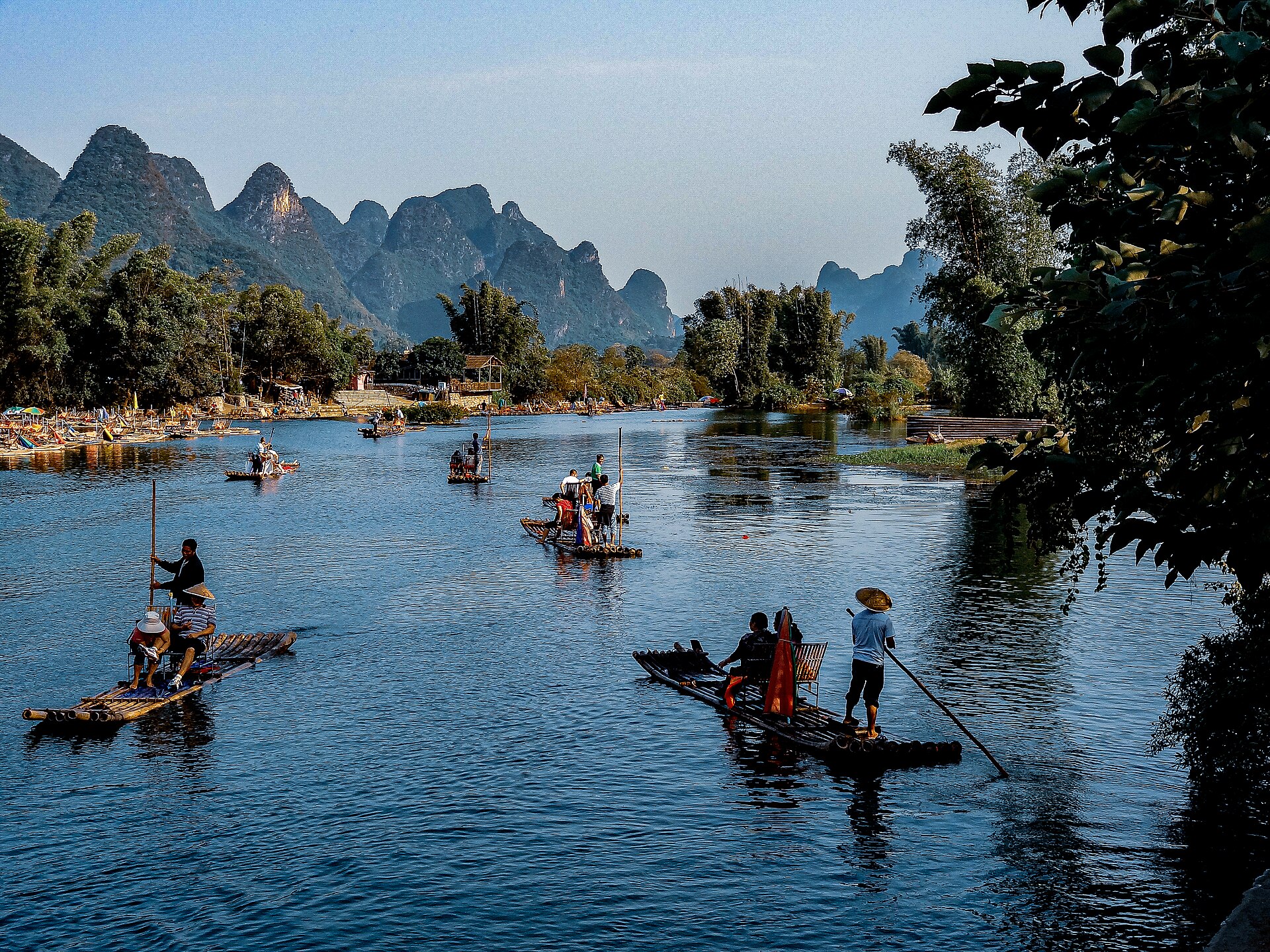
Plenty of people say the best part of Yangshuo is not West Street at all but a bamboo raft on the Yulong River — a small, much quieter tributary of the Li, which is exactly why it is nicknamed the "Little Li River". You drift on a two-person bamboo raft as the poler eases you over a series of low weirs, one gentle drop at a time, between karst peaks and bright-green rice fields. A trip runs anywhere from about 40 minutes to 2 hours depending on the section you choose. Most people rent a bike or e-bike to ride along the river afterwards, past the Yulong Bridge (遇龙桥), a stone arch several centuries old. It is the slowest, prettiest day of the whole trip.
 5
5
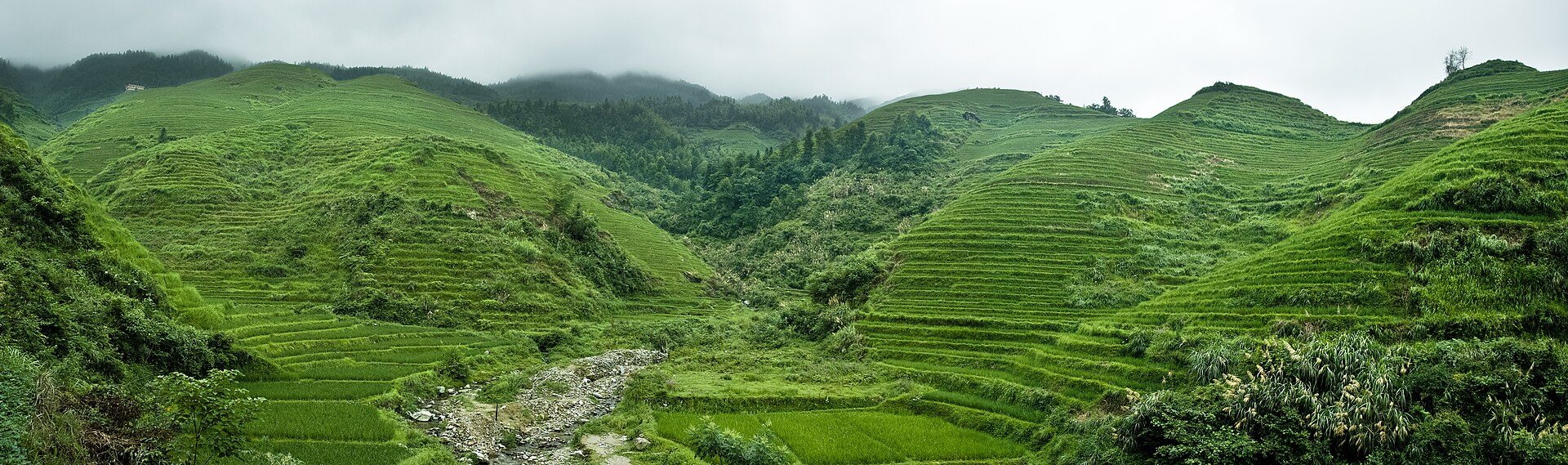
About 90 km north of Guilin, a 2–2.5 hour drive, are the Longji rice terraces (龙胜) — the "Dragon's Backbone". For more than 600 years the Zhuang and Yao peoples have carved rice paddies into these slopes, stacking them into curved tiers that follow the ridgelines like a dragon's scales. There are two main villages: Ping'an (Zhuang) and Dazhai/Jinkeng (Yao), and Dazhai has a cable car up to the viewpoints. The terraces change with the season — April to June they flood and mirror the sky, summer is deep green, and September to early October they turn gold for the harvest. You can also stop at Huangluo, the long-hair village of the Yao women. Stay a night up on the hill to catch sunrise and dodge the day-tour crowds.
 6
6
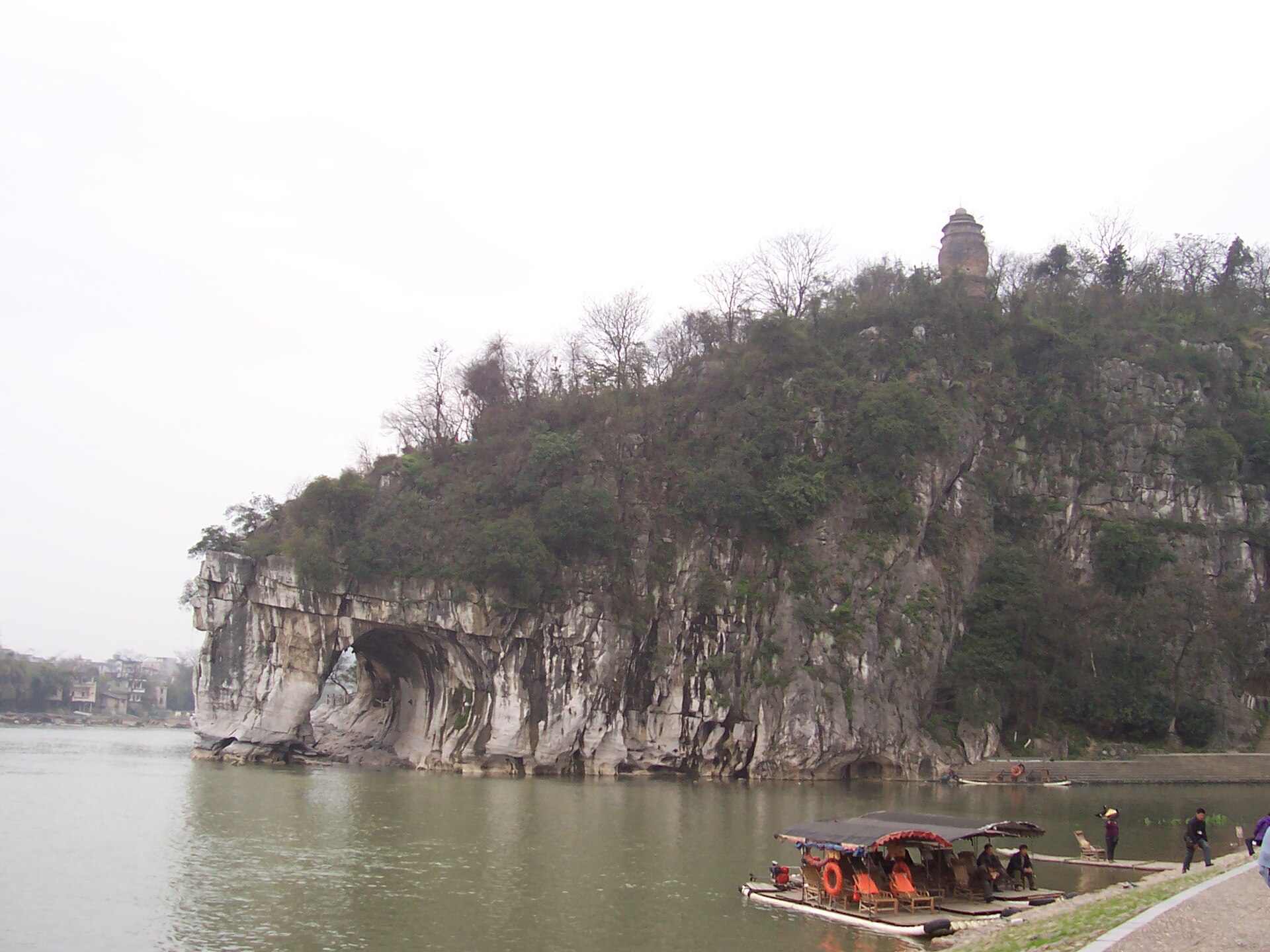
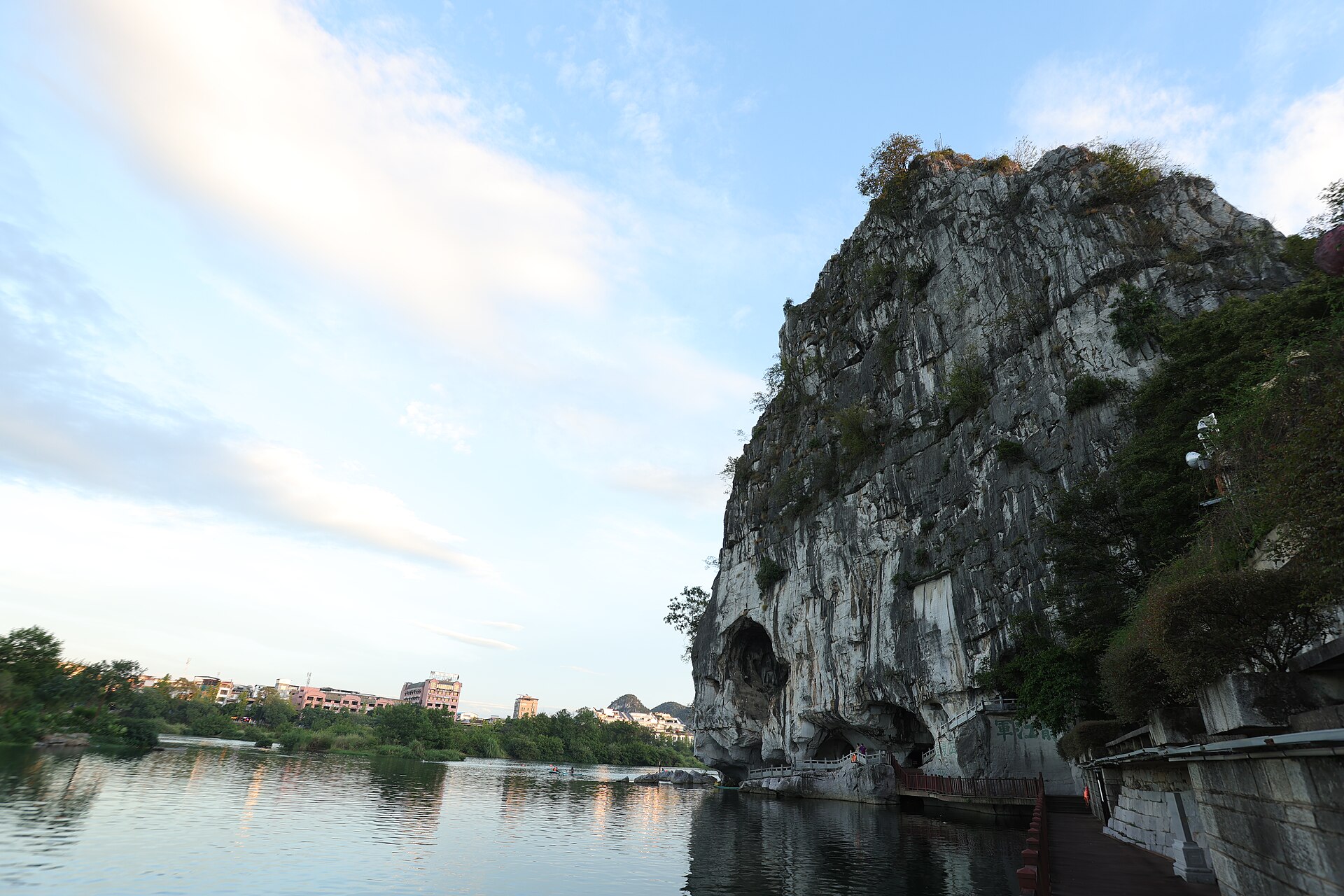
Back in Guilin city, the place that is the city's symbol is Elephant Trunk Hill — a karst hill on the Li River shaped exactly like an elephant lowering its trunk to drink. The arch between the "leg" and the "trunk" is Water-Moon Cave (水月洞), where on a full-moon night the reflection makes it look as if there are two moons. There is an old Ming-dynasty pagoda on the summit, an easy riverside park around the base, and a light show on the hill in the evening. It takes about an hour to visit, and it is the one photo of Guilin everyone wants.
 7
7
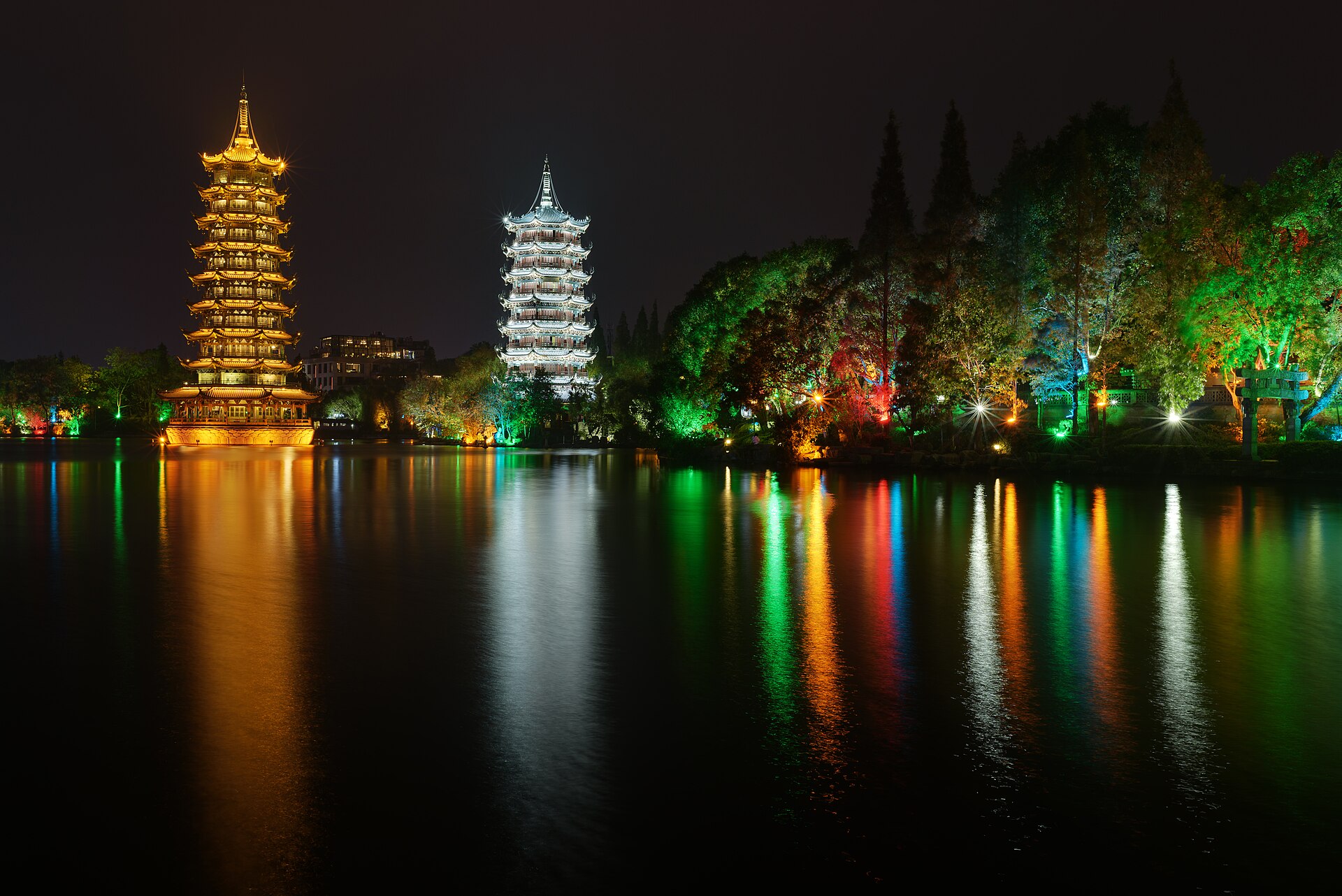
After dark, central Guilin turns into a glowing ring of water — the Two Rivers Four Lakes (两江四湖), linking the Li River and Peach Blossom River with the Shan, Rong, Gui and Mulong lakes into a waterway around the old centre, free to stroll by day and cruised by lit-up boat at night. The star is the Sun and Moon Pagodas (日月双塔) on Shan Lake — the 41-metre Sun Tower clad in copper, and the 35-metre Moon Tower built of glass. At night they light up gold and silver and mirror beautifully in the lake. There are crystal bridges and lakeside gardens around the water too, and dusk is the loveliest moment of all.
 8
8
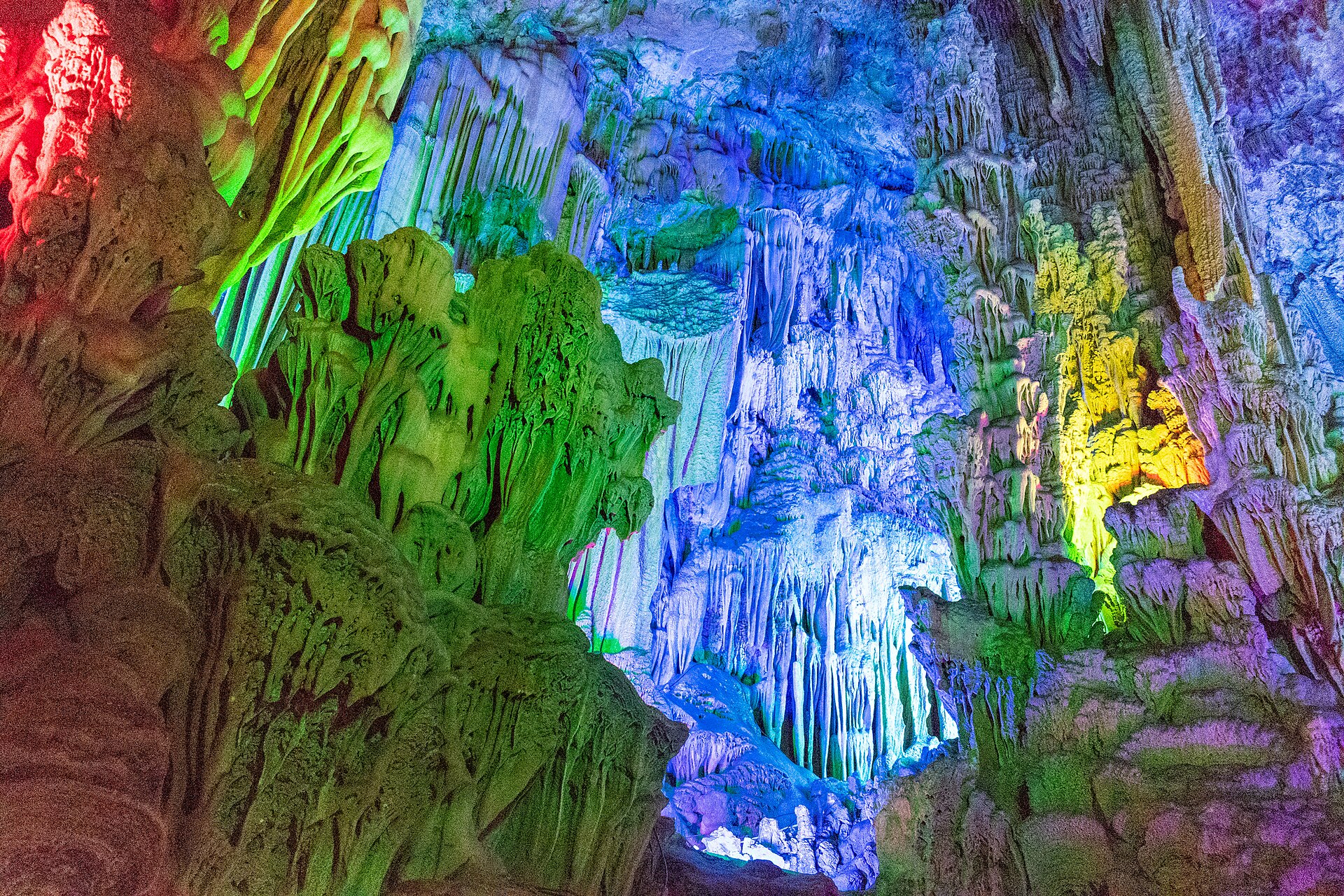
Northwest of the city is a limestone cave that has become an underground light show — Reed Flute Cave, named for the reeds at its mouth that locals once made into flutes. Inside, it runs about 240 metres, packed with stalactites, stalagmites and strangely shaped pillars, all lit in blue, purple, red and green. The highlight is the Crystal Palace (水晶宫) chamber, where a still pool mirrors the rock until it looks like a reflection in glass. The walls also carry more than 70 ancient inscriptions left by travellers centuries ago. It is a guided loop of about an hour.
If you want a big park to wander through at an unhurried pace in Guilin, Seven Star Park is the largest green space in the city, on the east bank of the Li River. It is named for seven peaks arranged like the stars of the Big Dipper. The highlights are Camel Hill (骆驼山), a rock shaped like a kneeling camel where President Clinton once gave a speech; Seven Star Cave (七星岩), an old limestone cave; and Flower Bridge (花桥), an ancient bridge over the stream. There is also a small zoo inside with pandas. It is a relaxed, family-friendly choice in the city. Park entry is about ¥55, with the cave and zoo charged separately.
 10
10
For anyone who wants to climb up and see Guilin from above without leaving the city, two peaks in the centre earn the effort. Solitary Beauty Peak (独秀峰) stands in the middle of the Jingjiang Prince's Mansion (靖江王城), a Ming-dynasty residence older than Beijing's Forbidden City; climb the roughly 300 steps to the top and the city and surrounding peaks open up all around you. Fubo Hill (伏波山) is a single karst hill on the Li River that juts out over the water, with the Returned Pearl Cave, Buddhist rock carvings and lovely riverside views. The two are close together and easy to combine in half a day.
 +
+
Most of Guilin's best sights are out of town — so we have gathered the popular day trips into a separate guide: the Li River cruise to Yangshuo (the must-do); the Longji rice terraces (~2h north); Xingping for the 20-yuan-note view; the Gudong Forest Waterfalls (古东瀑布), a limestone cascade you can climb and swim; Crown Cave (冠岩), a Li River cave with a little train and boat inside; and Huangluo, the long-hair village of the Yao women. Pick by whether you have one spare day or two.