Cantonese food doesn't win on bold flavour — it wins by refusing to hide the real thing. White-cut chicken with no sauce. A steamed fish judged on freshness alone. A soup simmered for hours and treated as everyday medicine. This is the idea that ties the whole city together, and the reason the Chinese say "to eat, go to Guangzhou."
Picture a Cantonese restaurant in Guangzhou and look at how the local tables differ from other Chinese food. Most of the dishes are pale, clear-broth, not red, not slick with oil — chilled chopped chicken, a whole fish steamed under thin soy, a bowl of clear soup whose scent reaches you first. This isn't because Cantonese cooks make bland food. It's the philosophy of Yue cài (粤菜 / 广府菜), the cooking of Guangzhou and the Pearl River Delta, and it runs counter to Sichuan or Hunan, where chilli and spice lead.
The heart of it is one word: "鲜" (xiān) — freshness. Cantonese cooks believe a good enough ingredient doesn't need sauce to cover it; cook it the right way and its natural sweetness comes out on its own. So the techniques lean toward steaming, poaching and slow simmering rather than high-heat stir-frying drowned in sauce. They're particular enough about freshness to judge a dish on "was the fish still alive before it was steamed?" or "how many days was this chicken raised?" — because the city has been a trading port for centuries, with fresh seafood and produce always pouring in. That's how the phrase "to eat, go to Guangzhou" (食在广州) came about, and it still holds true.
This article is the overview that ties it all together. We'll walk through the four ideas that make Cantonese food what it is, then go dish by dish through the ones at its heart — from white-cut chicken to late-night tong sui — with links out to the deep-dive guides we've written for each track. If you want to understand why dim sum, roast meats and Cantonese soups all belong to one story, start here.
Every dish in Guangzhou — dim sum, roast meats or soup — sits on these four ideas.
A good enough ingredient doesn't need covering — the fish must be fresh, the chicken well-raised, the greens picked that day. The goal of cooking is to let the real thing speak, not to bury its original taste under sauce. That's why good Cantonese restaurants keep live fish tanks to pick from.
The core techniques are gentle heat — steaming (清蒸), blanching (白灼) and slow simmering (老火) to protect texture and natural flavour. It isn't that high-heat frying never happens (dry-fried beef ho fun is the famous exception used to test skill), but the overall hand is light.
Cantonese people drink tonic soup before meals almost daily, choosing ingredients by season and by the body's "hot and cold" balance. A good soup is clear but deep from two to four hours of simmering — not from stock powder. It's the kind of care a mother puts into a pot, waiting for a child to come home.
Against all that lightness sits the roast-meat shop (烧腊), hanging rows of roast goose, char siu, crispy pork and soy chicken, skin glossy and crisp. This is Cantonese cooking's other pole, which Guangzhou and Hong Kong do better than anywhere — and the over-rice lunch locals eat every day.
Not a complete must-eat list — these are the dishes that each explain one of the ideas above most clearly.
If you had to pick one dish to explain the whole Cantonese philosophy, it's this. A good free-range bird is gently poached in barely-bubbling water, then plunged into cold water so the skin turns taut and springy and the meat stays pink and juicy right to the bone. It's chopped, served chilled, and dipped in a ginger-scallion sauce (姜葱) finished with hot oil. No red sauce, no spice, nothing to mask it. The whole dish lives or dies on the quality of the bird — if the chicken is good, its clean sweetness arrives on its own. This is the dish locals use to judge a kitchen, because it can't be faked.
Steamed fish is the toughest test a Cantonese chef faces, because there's nowhere to hide a mistake. The fish has to be fresh enough to have been alive not long before steaming, cooked on high heat for an exact time (too long and it dries out, too short and it's raw), then dressed with a special steamed-fish soy, scattered with shredded ginger and scallion and finished with sizzling hot oil. The flesh should fall in clean white petals, with no fishiness — just the sweetness of fresh fish against the soy and ginger. It's always on the table at a Cantonese family feast, and it's proof that a light hand demands more skill than heavy seasoning.
To understand Cantonese people, you have to understand lao huo tang — a soup simmered on a low flame for two to four hours from pork bones, chicken or beef, with Chinese herbs and seasonal ingredients like lotus root, carrot, goji berries, figs or winter melon. People here drink soup before meals almost every day and treat it as tonic medicine following the body's "hot and cold" balance — cooling soups in summer, warming ones in winter. A good soup is clear but deep from the long simmer, never from stock powder. It isn't just food; it's a kind of care passed down through generations.
4
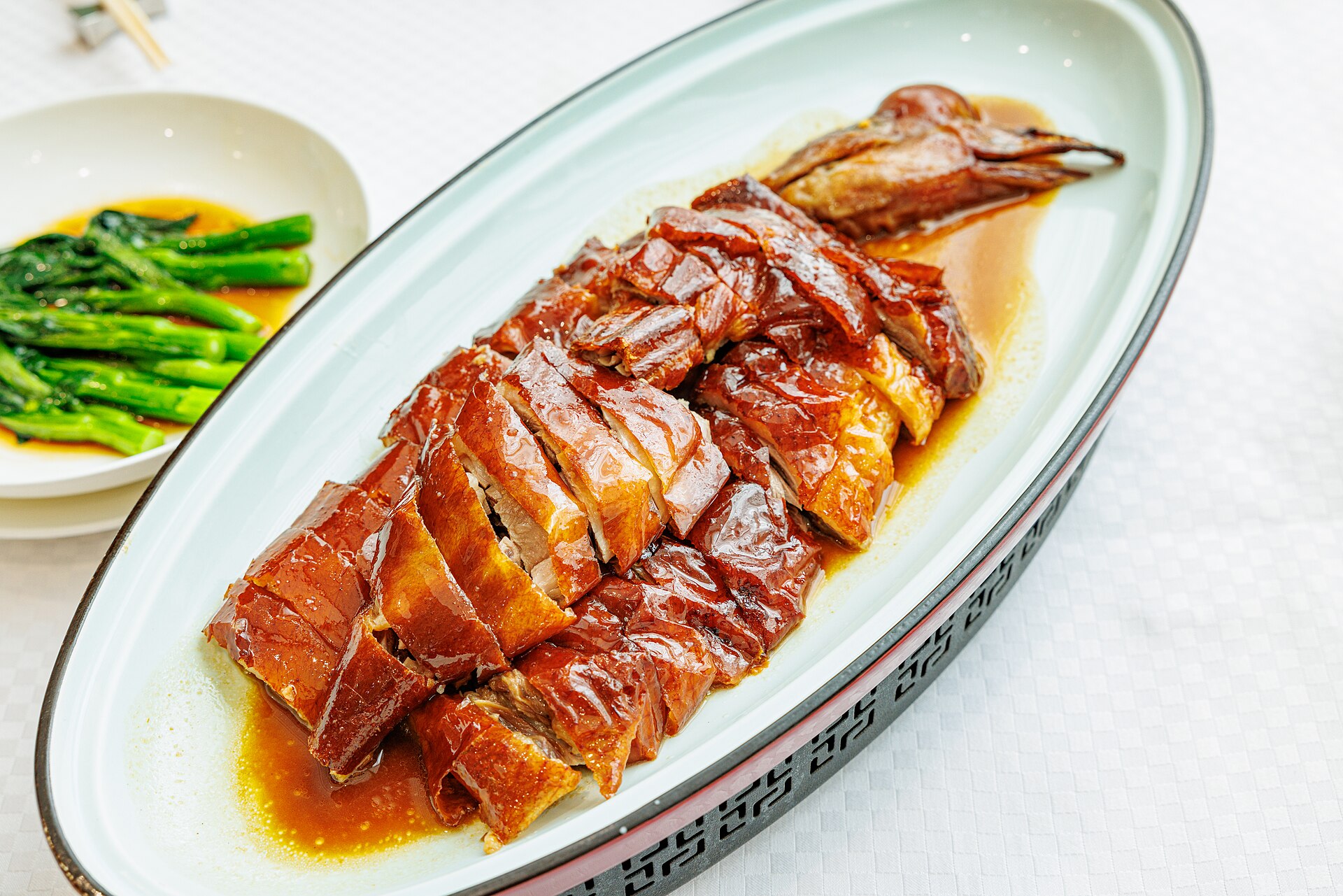
If white-cut chicken and steamed fish are the light hand, the roast-meat shop (烧腊) is the opposite pole that Guangzhou does as well as anyone — roast goose marinated with five-spice and roasted over charcoal until the skin blisters crisp, served with a plum dip that cuts the richness; char siu, a well-marbled cut glazed with honey and roasted until the edges caramelise; crispy pork with skin crackled into tiny squares; and soy chicken in glossy brown lacquer. It all hangs in the window to be sliced over hot rice — the classic everyday lunch locals eat constantly, found on every corner of the city.
Read the full Cantonese roast-meats guide →
5
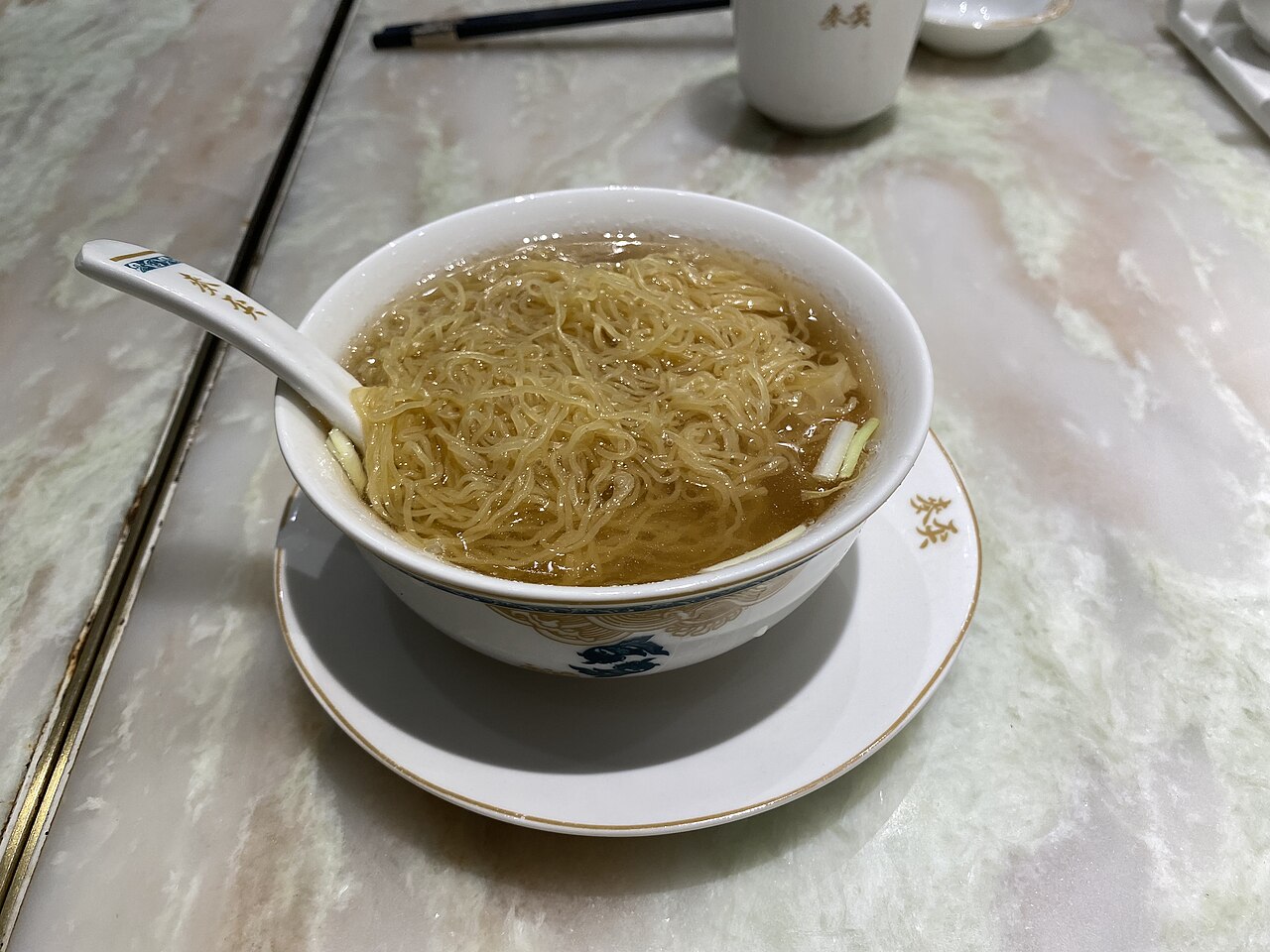
A plain-looking bowl full of the freshness philosophy. The egg noodles at a good shop are still made the old way — "jook-sing" noodles (竹升面), where the dough is pressed again and again under a thick bamboo pole until the strands turn springy, then blanched just shy of soft. They sit on top of whole-shrimp wontons hidden at the bottom of the bowl, in a clear broth simmered from dried shrimp, pork bones and dried fish. The broth must be clear but rounded and deep, never cloudy or MSG-forward. The legendary Wu Cai Ji (吴财记面家) in Liwan has made it for over 70 years and holds a Michelin Bib Gourmand — an everyday bowl for a few yuan that tells you everything about a kitchen.
Read the congee, noodle & rice-roll guide →An evening comfort cooked fresh, one pot at a time. Rice is cooked in a small clay pot over charcoal, topped with cured sausage, chicken, salt fish, spare ribs or frog, the lid on so the rice cooks together with its toppings. The magic is the crust at the bottom, crisped into a golden sheet (锅巴, guo ba) where the rice meets the hot pot. You drizzle the shop's sweet soy over the top and stir it all through; that crackly base is the prize everyone fights over. It takes 15–20 minutes because each pot is cooked to order — but it's worth the wait, and it's a winter favourite for the warmth.
7
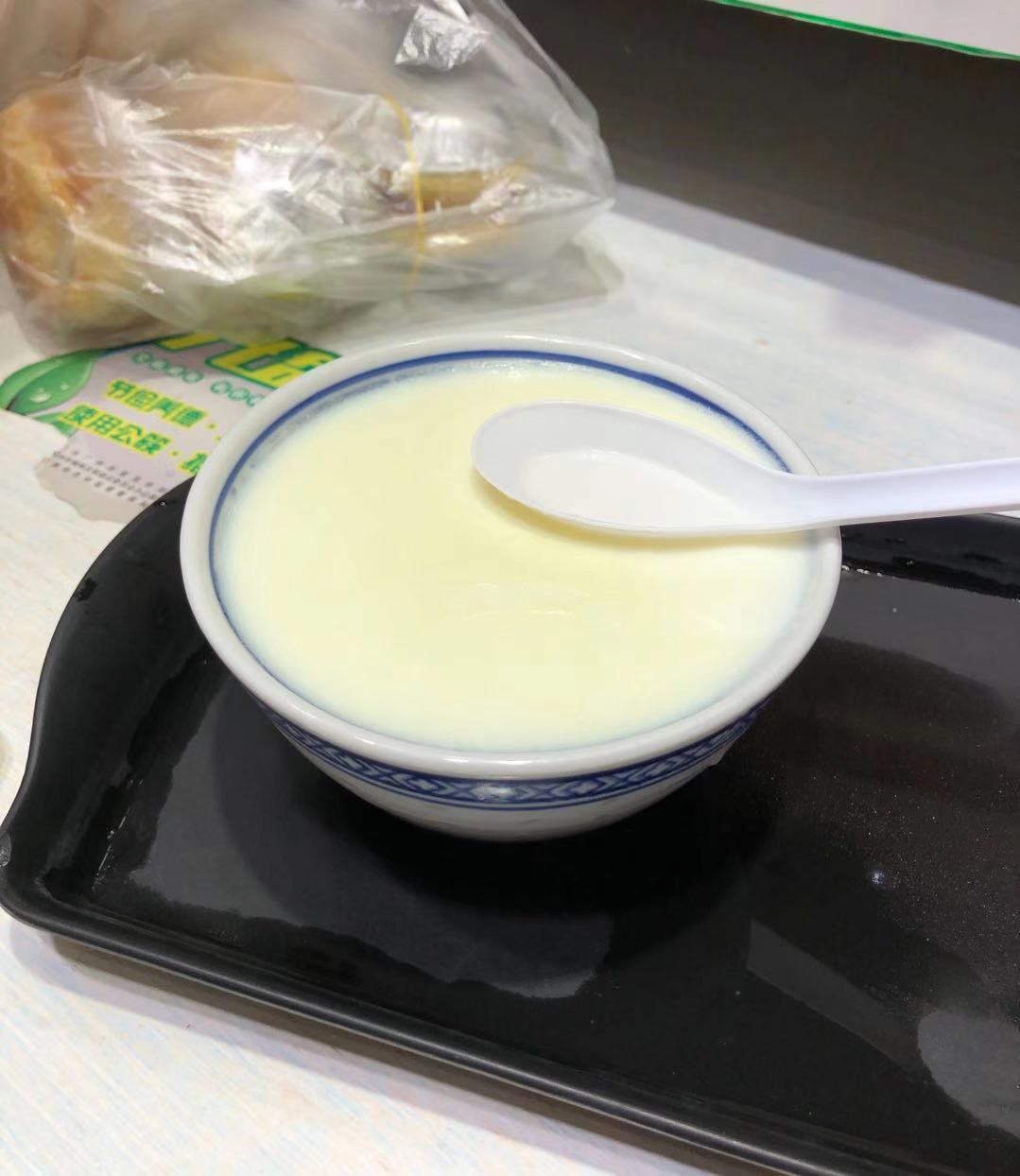
A Cantonese meal ends properly at tong sui (糖水) — "sugar water," warm or cold sweet soups like sago with gingko, red-bean soup, ground black sesame or tofu pudding with milk. The real star is double-skin milk (双皮奶), made from rich buffalo milk steamed until two thin skins form, the body silkier than any pudding, sweet but never sharp. It came from nearby Shunde but has long since become Guangzhou's own. Wenming Road (文明路) is lined with tong sui shops open until 1–2am, where locals come to close out the night after a big meal — refreshing, light, the right way to end the day.
Read the café & tong sui guide →Now you've got the philosophy, here are the deep-dive guides for each track when you're ready to eat.
A good Cantonese meal usually opens with the soup of the day (例汤), sipped warm before anything else, in line with the hot-and-cold idea. Then come the "opening" dishes that lead on freshness — chilled white-cut chicken, blanched greens in oyster sauce — followed by the heavier mains: a whole steamed fish, roast meats in their light sauce, perhaps a stir-fry. It closes with plain rice or claypot rice, and a tong sui dessert.
Every dish lands in the middle of the table to share; rice is ordered separately. Group size: two people pick one chicken or roast-meat dish + one vegetable + soup + rice · four order white-cut chicken + steamed fish + a vegetable + roast meats + soup. Per person: ordinary restaurants ¥80–150 (฿400–750); a bigger meal at an institution like Tao Tao Ju or Pan Xi runs ¥120–250 (฿600–1,250).
A day of eating in Guangzhou has its own rhythm. Mornings are for yum cha (饮茶) — sitting down to tea and ordering dim sum basket by basket, busiest from 9–11am. Midday is roast meats over rice from a 烧腊 shop, or a bowl of wonton noodle: fast and good value. Evenings are the big sit-down meal with the group, ordering fresh dishes, steamed fish and soup. And late nights are for tong sui — Wenming Road runs until 1–2am, where the night winds down. Know this rhythm and planning your meals in Guangzhou gets a lot easier.
Most Cantonese restaurants run on WeChat Pay and Alipay. Street stalls and many older shops won't take foreign credit cards, and some won't take cash at all — so set up Alipay with a Visa/Mastercard linked via its tourist mode before you go. Larger dim sum halls in malls and hotels usually do take foreign cards.
Plenty of alley shops have no English menu — just show staff the dish photos from this article. Institutions like Tao Tao Ju and Dim Dou Dak, and the mall restaurants in Tianhe, tend to have picture or English menus and staff who can point you in the right direction.