This city gives you two things to drink. A bowl of silky double-skin milk in a dessert house that's been open almost a century — and a specialty coffee in a 1920s red-brick villa in Dongshankou. One is the genuine heritage; the other is a new scene, and it's buzzing.
When people talk about drinking in Guangzhou, they usually mean morning tea with dim sum. But the city has two other strands of drinks and sweets that tell its story just as well. The first is far older — the 糖水 dessert houses, the Cantonese sweet soups locals have eaten since childhood. After dinner, you slip into a small shop down a lane, order a bowl of double-skin milk or ginger milk, and pay a handful of yuan.
The second strand only took off in the last few years — the specialty-coffee scene that started in the old villas of Dongshankou and spread across the city. Honestly, a decade ago Guangzhou barely had a good café to its name. Now shops that roast their own beans and take pour-over seriously are springing up everywhere, many of them in heritage buildings beautiful enough to stop you in your tracks.
This guide keeps the two strands clear: the dessert houses are the genuine, original Guangzhou, worth at least one bowl before you leave, while the coffee is the new wave — real, and well worth your time. If you only have a single day, do both — a bowl of dessert soup in the evening and a coffee in an old villa in the afternoon.
Tong sui literally means "sugar water", but it's the family of sweet soups Cantonese people eat in the evening — the genuine heritage, decades older than coffee.
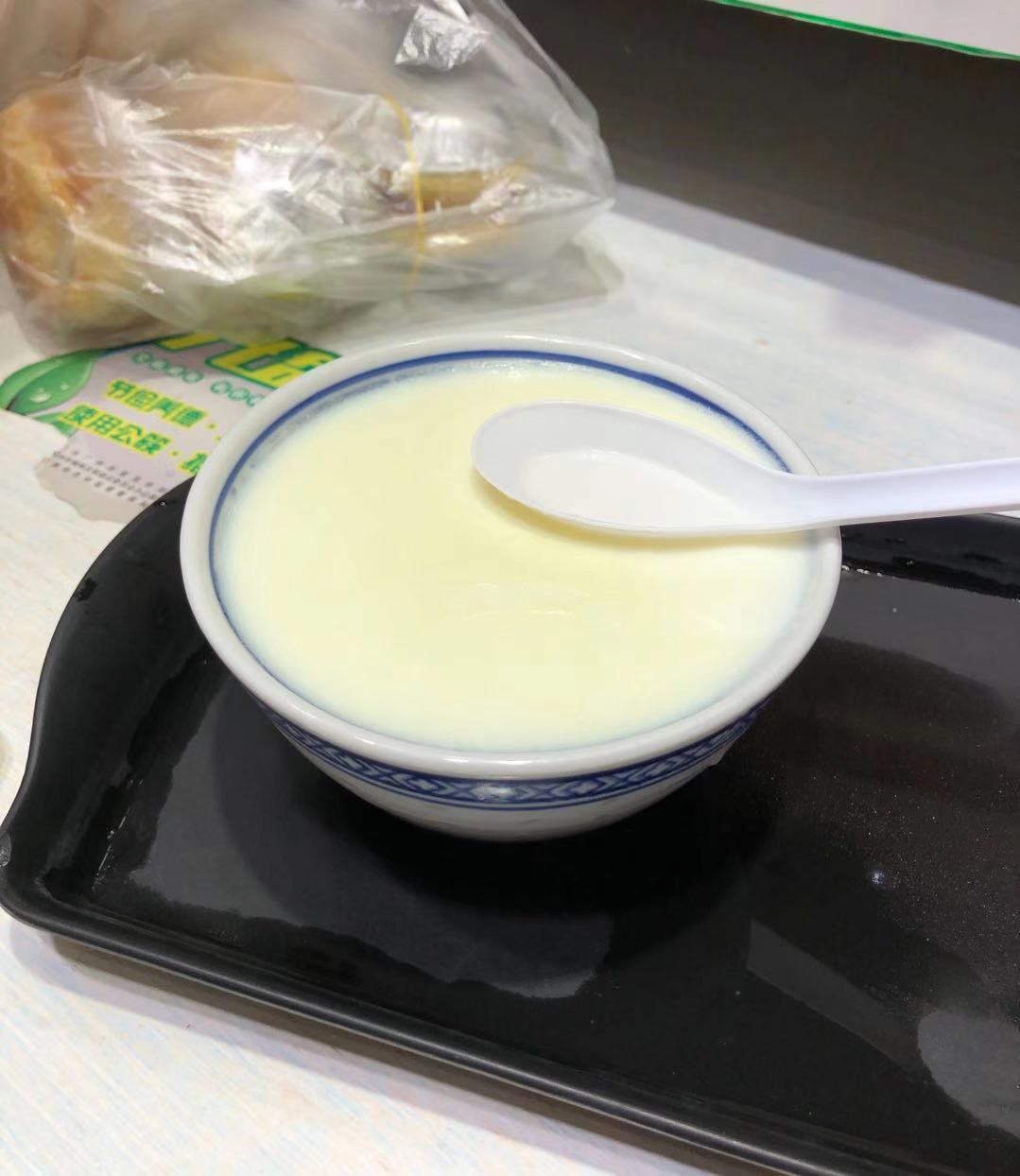
Double-skin milk (双皮奶) — the best-known of all the Cantonese dessert soups, eaten warm or chilled
The most famous dessert soup of all — milk steamed with egg white until two layers of "skin" form, leaving a custard as smooth as panna cotta but only faintly sweet. It originated in Shunde (顺德), Guangdong, in the late Qing dynasty and was traditionally made with water-buffalo milk. Eat it warm in the evening or chilled in summer; some bowls come topped with red beans or osmanthus. If you try only one 糖水 in Guangzhou, start here.
A dessert that works like a small piece of magic — hot milk is hit straight into fresh ginger juice in the bowl, and within a few minutes an enzyme in the ginger sets the milk into a soft pudding on its own, with nothing else added. The texture is close to double-skin milk, but with a warm gingery edge that cuts the richness and a faint heat at the tip of the tongue. Cantonese people eat it when the weather turns cool or their stomach feels off.
Roasted black sesame ground fine and simmered into a thick sweet porridge — jet black, deeply nutty, silky-smooth and slipping down easily. It's one of the most comforting of all the dessert soups, and Chinese tradition holds that black sesame is good for the hair and the body. Some shops serve it alongside a white almond paste (杏仁糊) poured into the same bowl in a black-and-white swirl that locals call the "yin-yang" pairing.
A black jelly made from a blend of Chinese herbs, with a distinctive faint bitterness. Cantonese people eat it to "clear heat" from the body in the logic of traditional medicine. The texture is like grass jelly but firmer, and it's usually drizzled with honey or syrup to make it easier going. That bitter edge isn't for everyone at first bite, but plenty of people grow to love it for how refreshing and un-cloying it is.
The cool, refreshing side of the dessert soups — sago (西米露), little translucent pearls bobbing in coconut or milk, often with fresh mango or, in the deluxe version, durian. Red-bean soup (红豆沙) is adzuki beans simmered down to a thick, gently sweet pour — a true classic. Both are the bread-and-butter of every dessert house, cheap and easy to like, and a good first bowl if you're not yet used to Cantonese desserts.
The warming, belly-settling end of the spectrum — glutinous rice balls (汤圆) filled with black sesame or peanut, floating in warm ginger broth, and sweet-potato soup (番薯糖水), orange sweet potato simmered with brown sugar and ginger until the clear amber liquid turns fragrant and lightly spiced. These are the homely desserts every dessert house keeps on the menu, especially in winter when Guangzhou wants something warm.
The old shops Guangzhou families have eaten at for generations — and the dessert street where the good ones line up.
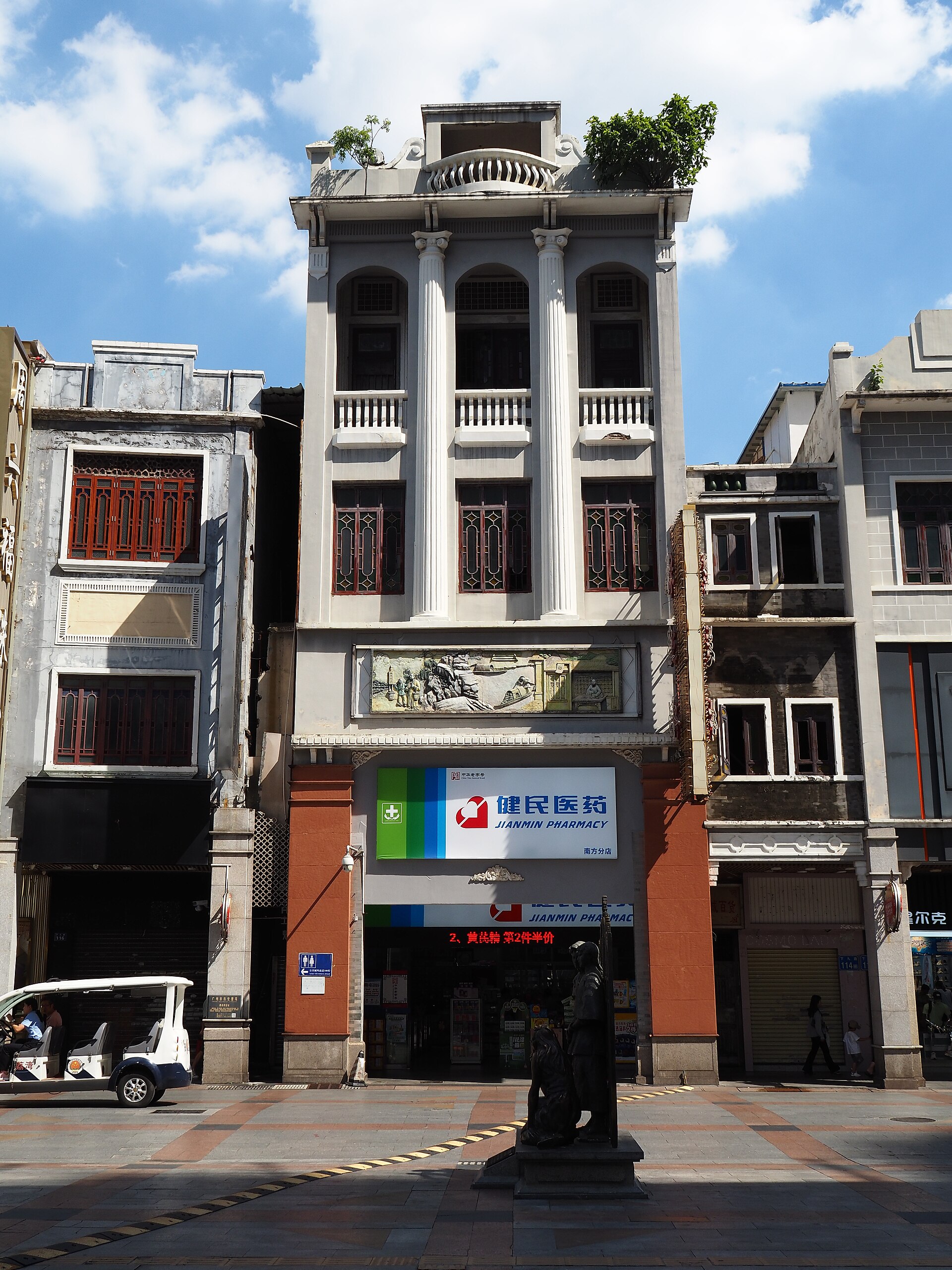
Nanxin is the first name Guangzhou locals reach for when double-skin milk comes up. It has been open since the 1930s on Dishifu Road, an old pedestrian street in the Liwan district, and is famous for making the best double-skin milk and ginger milk in the area. It carries the "Laozihao" designation — a state-recognised time-honoured brand. The room is plain and old-school, ordinary tables and chairs, but the desserts are the real thing, and they've been here nearly a century.
Baihua is an old dessert house, some branches dating back to the 1980s, easy to spot by its bright yellow signboard. The draw is the sheer range — over a hundred desserts on one menu, from double-skin milk and black-sesame paste to the sweet yellow egg custard that many regulars order without thinking. Prices are fair, and it sits on Wenming Road, Yuexiu's famous dessert street.
If you don't know where to start, just come to Wenming Road and walk it. It's an old Cantonese arcade street with dessert houses and veteran eateries lined up one after another. Beyond Baihua there's the Rose Dessert Store (玫瑰甜品店), tiny but always packed, known for its almond curd in syrup and mango sago, and Yeah Yeah Yeah, which serves coconut jelly inside an actual coconut. This street is Guangzhou the way locals actually eat it.
If you genuinely fall for double-skin milk, the city of Shunde (顺德), just south of Guangzhou, is where it was born — about an hour away by train. In Daliang, central Shunde, legendary shops like Renxin (仁信) and Minxin (民信) have been making double-skin milk since the 1930s, richer than elsewhere thanks to fresh local water-buffalo milk. Shunde is also widely regarded as the true capital of Cantonese cuisine — well worth a spare day.
The neighbourhood where 1920s red-brick villas became indie cafés — the birthplace of Guangzhou's specialty-coffee scene.
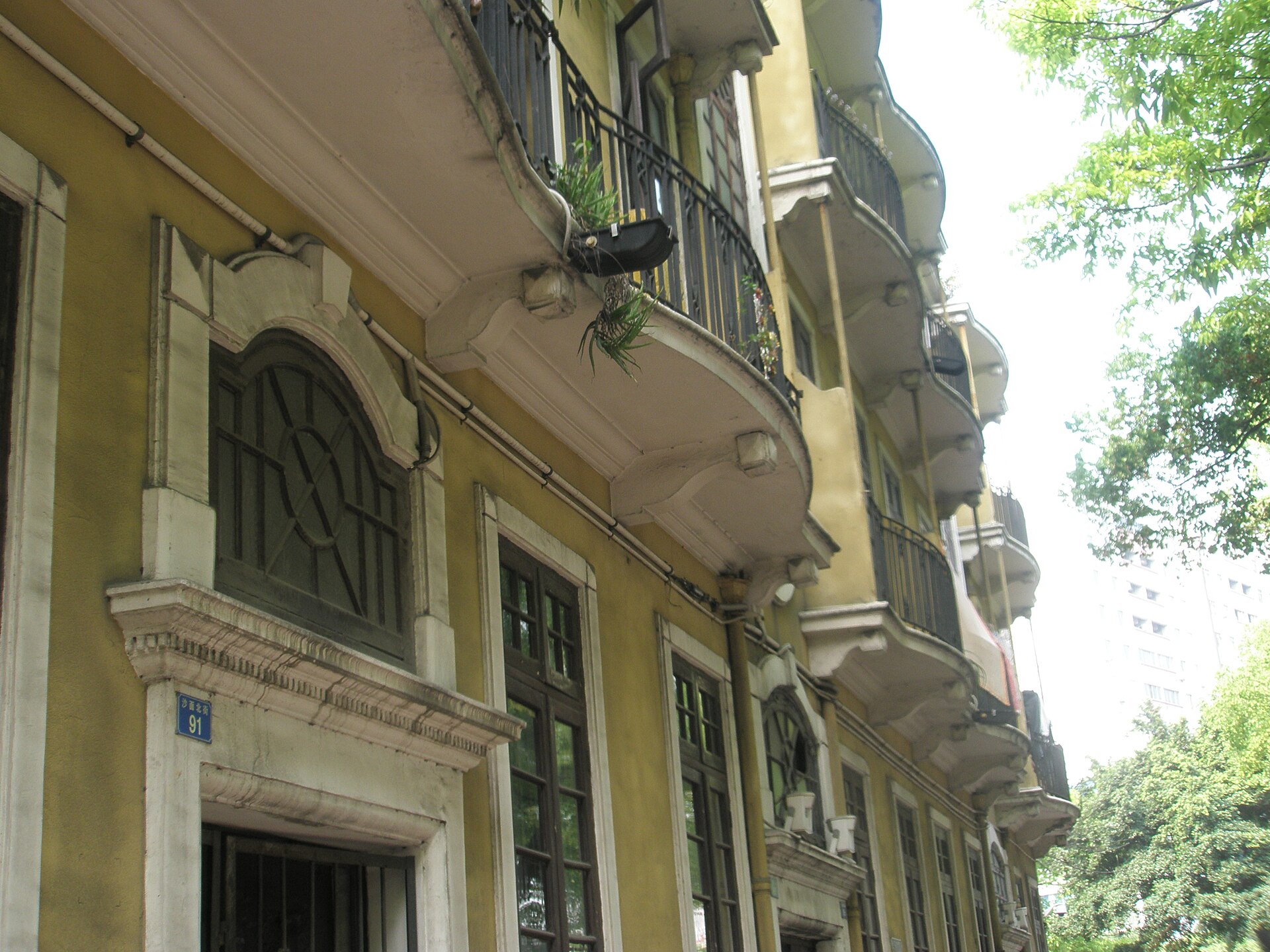
A European-style heritage building in Guangzhou — the same look as the red-brick villas of Dongshankou now turned into cafés
In the first half of the 20th century, Dongshankou (东山口) was an enclave of wealthy overseas-Chinese merchants who came back from studies abroad and built Western-style homes — red-brick villas with French tiles, iron balconies and ornate plaster mouldings, rare examples of pre-war design in southern China. Today the ground floors of those villas hold indie cafés, record stores and design-led fashion shops, and the district has become one of the most photographed corners of China.
What makes Dongshankou special is the atmosphere — quiet alleys, pastel walls, the smell of coffee drifting out of restored villas. The cafés here are gathering spots for designers, young locals and expats. FrontStreet Coffee is the established self-roaster coffee folk point you to — it uses beans from its own farm in Yunnan alongside hand-picked single origins from around the world, set in the Old Dongshan area a short walk from the station.
From old villas to budget chains — Guangzhou has coffee at every level.
The heart of Guangzhou's coffee scene — cafés inside 1920s villas that still keep their French tiles, iron balconies and original plasterwork. Some occupy buildings that were once pawnshops or old institutions, with balconies overlooking the lane and quiet rooms upstairs. You're paying for the setting and the architecture as much as the cup — but the coffee is genuinely good too.
Shops that take the beans and the roast seriously — owners who know origins, varietals and roast curves in detail. FrontStreet Coffee is the name Guangzhou coffee people know well, using beans from its own Yunnan farm alongside dozens of single origins like natural Yirgacheffe, Geisha and Blue Mountain. You'll find this kind of shop in Dongshankou and scattered across other districts — for anyone who wants a proper pour-over and a chat with the barista about beans.
A lot of Guangzhou cafés play with local ingredients in ways you won't find elsewhere. Highway Wang, set in an old pawnshop, makes a sugarcane latte and an osmanthus latte that fold a southern fragrance into the coffee. Some Dongshankou shops do "melon coffee" topped with melon ice cream — a fun half-and-half drink. It's not classic, but it reflects how willing the new scene is to experiment. Order one if you want something you won't get twice.
Over in the new city of Tianhe and Zhujiang New Town, you'll find modern cafés in office towers and upscale malls — sharp design, cool air, good for working or escaping the Guangzhou heat. ELEPHANT GROUNDS has a branch in Taikoo Hui mall in Tianhe (The Garden zone), and Zhujiang New Town has roasters and cafés along Jinsui Road and Xingsheng Road. A world apart from Dongshankou in feel, but the coffee is solid and it's easy to reach.
If you just want a quick coffee before heading out, China's local chains are the cheapest answer. Luckin Coffee is on nearly every street corner — order on the app and grab it, from ¥10 after discounts. Manner is known for a good oat-milk latte at a low price, and M Stand has the sharpest design of the bunch. These cost less than some bowls of dessert soup, and the quality is fine for a morning coffee.
Before the specialty wave, Cantonese people drank their coffee cha-chaan-teng style — at the Hong Kong-style diners that serve black coffee with canned condensed milk, or yuanyang (鸳鸯), a strong, sweet coffee-and-tea blend. It's an older Cantonese coffee culture, not specialty, but delicious in its own right. If you want to understand how people here drank coffee before the new era, order a yuanyang at a cha chaan teng.
Places with a real reputation in the old-villa scene and across the city — not just photo spots.
FrontStreet is one of the most-recommended self-roasting shops among Guangzhou coffee people, open for several years in the Old Dongshan area near Dongshankou. It roasts beans from its own farm in Yunnan alongside dozens of hand-picked single origins — Costa Rica, Guatemala, Mandheling, natural Yirgacheffe, Geisha and Blue Mountain — available as both pour-over and espresso. This is a café for people who are serious about coffee, not just the setting.
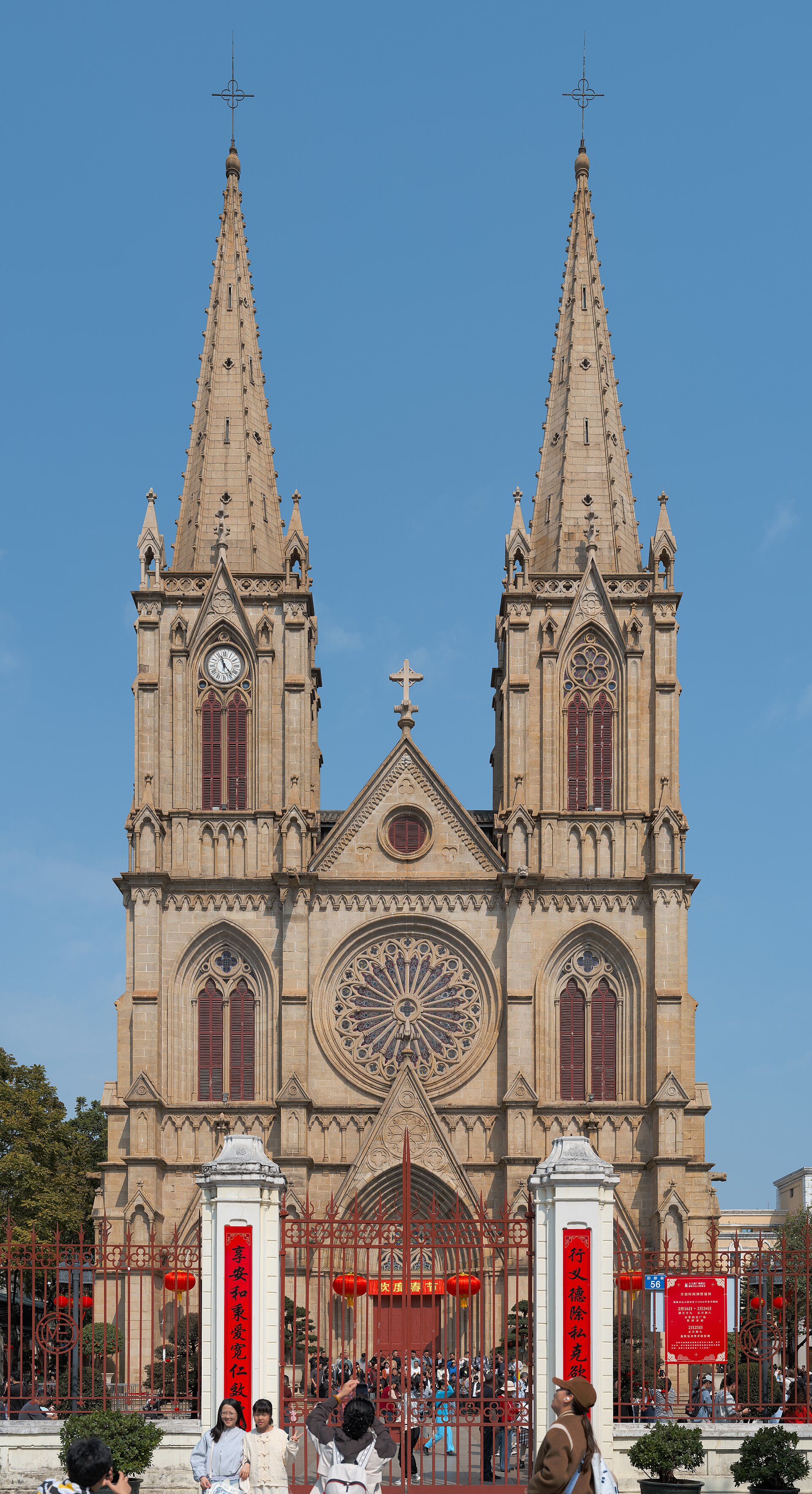
MOTTLE sits right beside the Sacred Heart Cathedral (石室圣心大教堂), Guangzhou's legendary twin-spired Gothic stone church. From the café's outdoor balcony you get a close-up of the cathedral against the sky — a view you can't get anywhere else in the city. Good coffee, relaxed mood, perfect for a stop after walking the cathedral and the old streets around it.
Highway Wang is set in the old Dongping Pawnshop, a café with an orange jeep parked amid lush bamboo and a pretty glasshouse. The draw is its hard-to-find local drinks — a sugarcane latte and an osmanthus latte that fold a southern fragrance into the coffee. It's a place where both the setting and the menu play with what it means to be Cantonese, and have fun doing it.
Xing CAFE is a four-storey Chinese-style café near the Peasant Movement Institute in Yuexiu. Its hook is coffee served from a ceramic pot with a slice of cake, taken on a rooftop terrace looking out over red walls and green traditional Chinese roof tiles. It's a café that blends a Chinese aesthetic with coffee culture in an interesting way — quite different from the European villa cafés of Dongshankou.
If you're over in the new city of Tianhe or shopping at Taikoo Hui, ELEPHANT GROUNDS sits in the mall's The Garden zone — sharp design, easy mood, ideal for escaping the Guangzhou heat and resting between shops. It's a good example of the Tianhe-side café — modern, convenient, a metro ride away — and a complete contrast to the old-villa neighbourhoods.
Sacred Heart Cathedral (石室圣心大教堂) — the café MOTTLE next door looks out on these twin spires from its balcony
The things you can drink and eat in Guangzhou that are hard to get elsewhere — on both the dessert and the coffee side.
If you try only one 糖水, order warm double-skin milk at Nanxin or an old shop on Wenming Road. The custard is smooth and silky, only lightly sweet, fragrant with milk — one spoonful and you understand why this bowl has lasted almost a century. It costs a handful of yuan, and it's the flavour Guangzhou locals have been attached to since childhood.
Coffee that plays with Cantonese ingredients — the sugarcane latte uses fresh cane juice instead of sugar for a cool, natural sweetness, while the osmanthus latte carries the honeyed scent of the little yellow flowers southern Chinese grow up with. Find them at Highway Wang and design-led cafés in Dongshankou. It's a half-and-half drink that captures the experimental spirit of the new scene.
Ginger milk is best eaten while it's still warm — the milk set into a soft pudding with a warm gingery edge that cuts the richness and a faint heat at the tip of the tongue. Cantonese people eat it when the weather is cool or their stomach feels off. Order it at Nanxin or an old Wenming Road shop as a warming way to close out the evening.
Yuanyang (鸳鸯) is black coffee blended with tea and canned condensed milk, the classic drink of the Hong Kong-style cha chaan teng so popular across Cantonese country. It's strong, sweet and rich, with the coffee and tea meeting just right in one glass. This is the older coffee culture that came before the specialty era — if you want to understand how people here used to drink, order one at an old diner.
Guangzhou is an almost entirely cashless city — many old dessert houses and small cafés take only WeChat Pay and Alipay, no foreign cards, and some don't take cash at all. Before you travel, set up Alipay and link a Visa/Mastercard through its international mode (it works for tourists · see our China payments guide).
The best times differ by strand — dessert houses are busiest in the evening, around 8–11pm, when Guangzhou treats sweets as the closing course, while the villa cafés of Dongshankou are best on a weekday afternoon, when light pours through the arched windows and the crowds thin out. Weekends in that district get very busy, especially around the photo hour.
Real dessert houses tend to have menus entirely in Chinese; if you can't read them, use a photo-translation app or just point at the bowl next to you — people here are friendly. And if you need a VPN for general internet use in China, set it up before you travel — see our China internet & VPN guide.
The Liwan district around Shangxiajiu and Dishifu — home turf of veteran dessert houses like Nanxin
Basing yourself in Yuexiu or Tianhe puts you within easy reach of the cafés and dessert houses.