An art-and-temple city or a slow mountain village — two very different side trips from Chiang Mai. Here's how to choose, before you book.
You've got Chiang Mai booked, a couple of spare days, and the urge to push a little deeper into the north — and then you stall, unable to choose between Chiang Rai and Pai. Almost everyone planning a northern trip hits this exact fork, and there isn't one right answer, because these two places deliver genuinely different days out.
Chiang Rai is a real city, Thailand's northernmost province capital, and it's full of art and culture — Wat Rong Khun (the White Temple), Wat Rong Suea Ten (the Blue Temple), the Black House (Baan Dam), tea estates on the hills, and the Golden Triangle, where Thailand meets Laos and Myanmar across the Mekong. The sights are clear and distinct, easy to tick off over 1-2 nights. Pai is a tiny village in the mountains of Mae Hong Son province, known for its slow, easy pace — Pai Canyon, hot springs, Mo Paeng Waterfall, sunset viewpoints, rice-field cafes, an evening walking street and a friendly backpacker scene, reached by minivan over the 762 curves.
Here's the part most people miss: if you have 5-6 days or more, the best answer often isn't "which one" — it's "do both", using Chiang Mai as your base. This guide compares them honestly across every factor, then shows you how to fit both into a single trip.
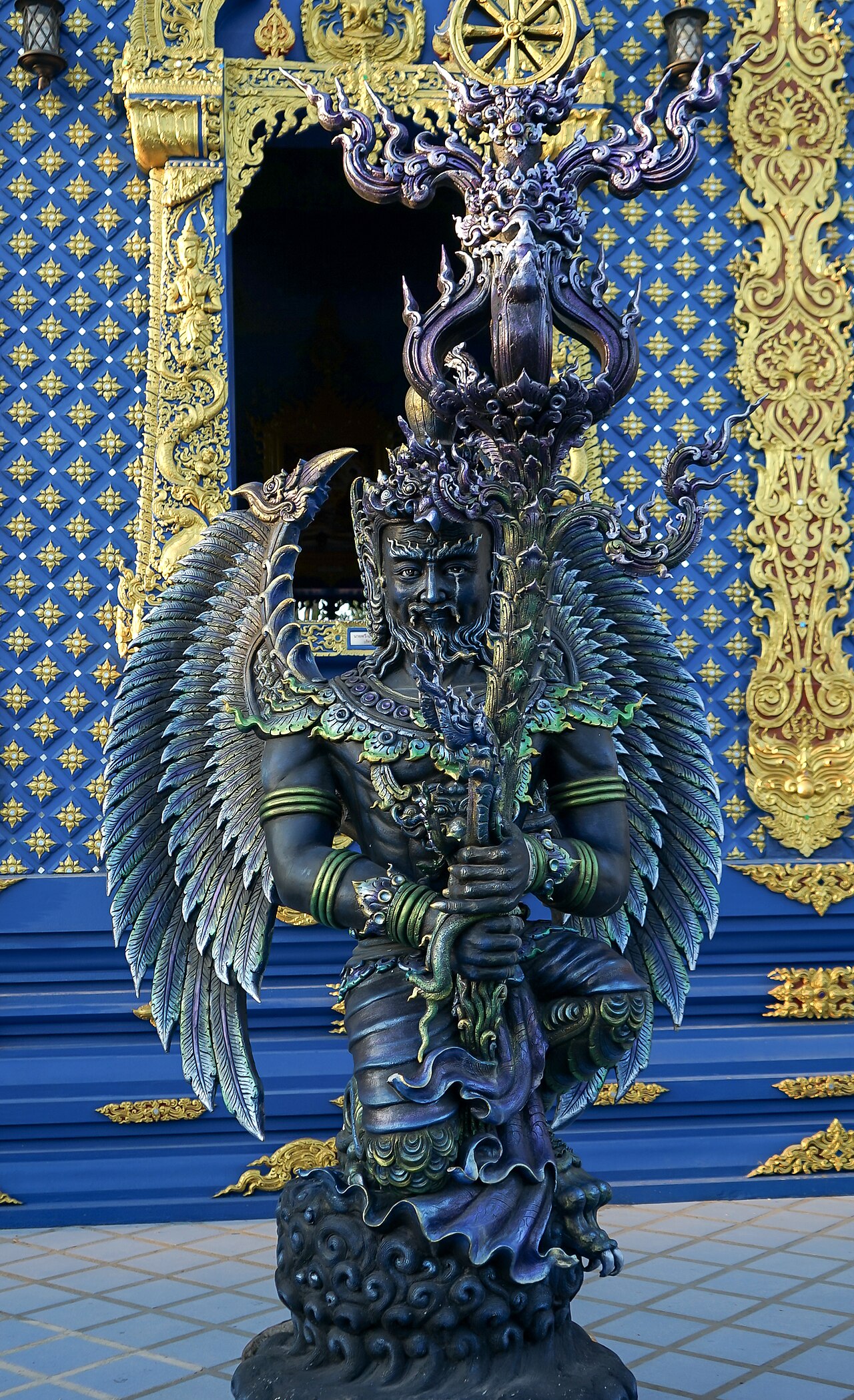
Chiang Rai is Thailand's northernmost province, and local artists have left their mark all over it. The White Temple (Wat Rong Khun), the all-white, mirror-studded work of artist Chalermchai Kositpipat, is the one the whole world comes to see. Wat Rong Suea Ten (the Blue Temple) is its sapphire counterpart, and the Black House (Baan Dam), the late Thawan Duchanee's dark museum-compound, makes a striking contrast. Up on the hills, the Choui Fong and Singha Park tea estates roll away in green terraces.
Further north sits the Golden Triangle, the point where the Mekong forms the border of Thailand, Laos and Myanmar, with the frontier town of Mae Sai at the very top. Chiang Rai's appeal is that it's a real, still-quiet city with concrete sights you can actually finish — and it's the easiest of the northern trips to reach from Chiang Mai, about 3 hours by bus or van, or a direct flight into Mae Fah Luang airport.
These three are the main reason people come to Chiang Rai. Read our full attractions guide for opening hours, entry fees, how to get there and the best times to avoid the crowds before you plan your trip.
All Chiang Rai attractions →If Chiang Rai is your side trip, start with our first-timer guide and ready-made 2-day itinerary. You'll know which day to do what, how to get around, and which area is most convenient to base yourself.
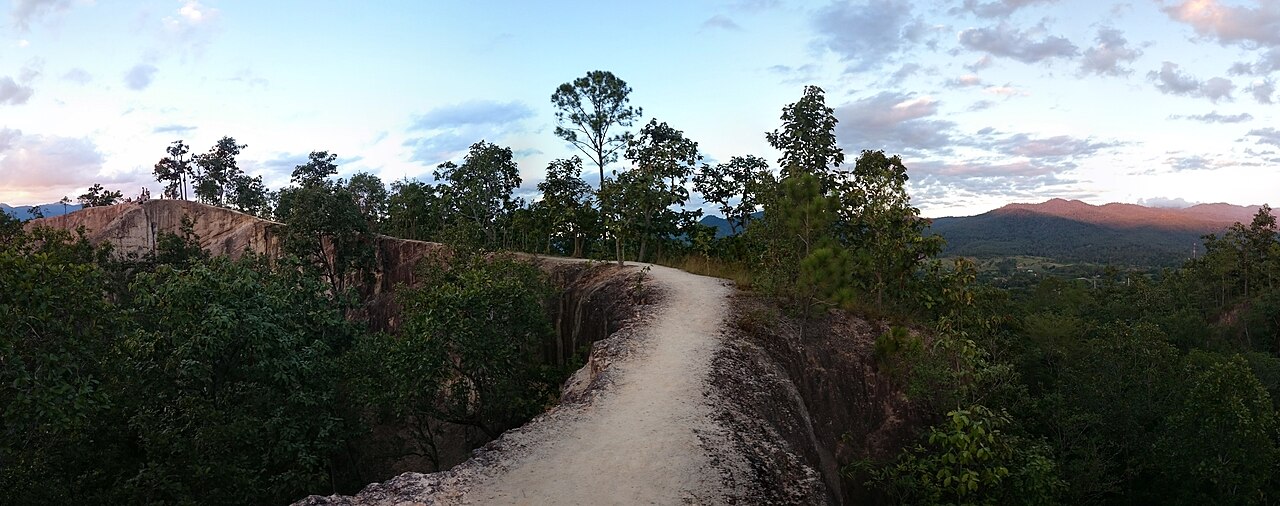
See the 2-day plan →Pai is a small village in a valley in Mae Hong Son province that became a magnet for travellers wanting to escape the rush. Pai Canyon is a set of narrow earthen ridges you can walk at sunset, the Tha Pai hot springs are there to soak away the road, Mo Paeng Waterfall runs cool, and Wat Phra That Mae Yen looks down over the whole Pai valley. Up on the hills, Santichon village is a Yunnanese-Chinese community with tea and a viewpoint.
But Pai's real draw isn't a sight, it's the change of tempo — late mornings, a coffee in a rice-field cafe, a scooter to ride wherever, and an evening walking street full of live music, food and travellers from all over. Pai is a backpacker town where it's easy to fall in with new people, ideal if you want to drift without a fixed plan. The trade-off is the minivan from Chiang Mai, which runs the 1095 highway and its 762-plus curves in about 3 hours — a lot of people get carsick, so bring tablets.
The heart of Pai is in this set of sights. Read our full attractions guide for hours, fees, how to get around, and the best time of day to see each one at its best.
All Pai attractions →If Pai is your side trip, start with our first-timer guide and ready-made 2-day itinerary — including advice on whether to base yourself in Pai town or out among the rice fields.
See the 2-day plan →| Factor | Chiang Rai | Pai |
|---|---|---|
| Vibe | Northernmost art city — culture, temples, tea; quiet | Boho mountain village — slow, easy, backpacker |
| Headline sights | White Temple · Blue Temple · Black House · Golden Triangle | Pai Canyon · hot springs · waterfalls · walking street |
| The focus | Distinct sights, art and culture — ticking off icons | Atmosphere and nature — lingering rather than checklists |
| From Chiang Mai | Bus/van ~3 hrs on straight roads, or fly — the easiest trip | Minivan ~3 hrs over the 762 curves — carsickness likely, bring tablets |
| Getting around | Real city, sights spread out; rent/charter a car, songthaew; no train | Tiny — walkable, most rent a scooter; no train |
| Who it suits | Culture, temples, art lovers; short on time wanting sights | Slow travel, nature, mountains, backpackers, no rush |
| How long | 1-2 nights covers the main sights | At least 2 nights to really feel Pai |
| Weather | Northern, cool and best Nov-Feb · avoid burning season Mar-Apr | Northern, colder with morning mist · avoid burning season Mar-Apr |
This is what many travellers in the north eventually work out: you don't have to choose. The catch is that the two sit in different directions from Chiang Mai — Chiang Rai to the north-east, and Pai to the north-west on the Mae Hong Son loop (Pai-Mae Hong Son-Mae Sariang). They don't connect directly. The tidiest approach is to use Chiang Mai as a base and split the trip into two legs.
If you have 5-6 days or more, doing both is the most complete northern trip there is — Chiang Rai's culture and Pai's mountain nature in one run. For inter-city transport see our getting around Thailand guide, and plan your timing with best time to visit Thailand.