Chiang Rai has no train and no metro, and its best sights are spread far apart — the city, the Kok riverside and the hills all sit in different directions. Here is who each area suits, how much road time it costs, and which base fits your kind of trip.
Picture this: you book a great-value hotel, then discover it's far from everything — every trip to the White Temple, every Night Bazaar dinner, every look at the colour-changing Clock Tower means calling a ride. Chiang Rai isn't like Bangkok or Chiang Mai: it has no train reaching it (Thailand's northern railway line ends at Chiang Mai) and no BTS, MRT or metro in the city at all, so getting around runs on songthaews, tuk-tuks and Grab. On top of that, the things people come for are spread far apart — the city in one place, and Doi Tung, Doi Mae Salong, Phu Chi Fa and the Golden Triangle out of town in different directions, some an hour or more by road.
That is why choosing your area here matters more than you'd think — it's not just "near or far," it's "where will I actually spend my time" and "do I have my own car." We split the trip into four main areas, each with its own character, price level and pace. Work out what your trip is really about, pick the right base now, and the whole thing runs smoother.
Just starting to plan? Read our Chiang Rai first-timer guide or how to get around Chiang Rai first. But if you want the straight answer on where to sleep — read on.
For most first-time visitors, the plan that works best is to stay in the city centre around the Clock Tower and the Night Bazaar for the whole trip — wake up and walk to Wat Phra Kaew, sit with a hill-coffee, then in the evening graze the Night Bazaar and catch the Clock Tower changing colour in minutes. It's close to the bus station with restaurants everywhere, an easy base when you don't know the city yet and don't have a car. Then day-trip out to the headline sights — the White Temple (Wat Rong Khun), the Blue Temple (Wat Rong Suea Ten), Singha Park, the Golden Triangle and Doi Tung — by renting a car or joining a tour, and come back to your central hotel. You get the convenience at night and nature by day in one trip.
If you have a car and want a quiet night, swap to a Kok riverside or hill resort for one night near the end — see options for every area in Top 10 Chiang Rai Hotels.
See all Chiang Rai hotels →Choose the one that fits your trip — see real hotels for every area in the Top 10 Chiang Rai Hotels.
Area 1
Suits: everyone arriving in Chiang Rai for the first time — anyone who wants to wake up and walk straight to Wat Phra Kaew, the cafes and the Night Bazaar. This is the heart of the city around the golden Clock Tower (it changes colour with music in the evening), gathering the Night Bazaar (food court and craft stalls), the weekend Walking Streets and the khao soi shops in one spot. The big win is that almost everything is within walking distance; the out-of-town sights you reach by car or tour, then come back to sleep.
Suits: people who want to relax more than sightsee, and want a quiet spot by the water — the Kok River runs along the north of the city, and the riverside resorts and hotels here have river and garden views, a pool, and an easy, slow pace. It's good for couples or families with a car. The trade-off is the distance from the centre: every Night Bazaar dinner or city walk means driving in or calling a Grab, and on some evenings the Grab wait can be long.
Area 3
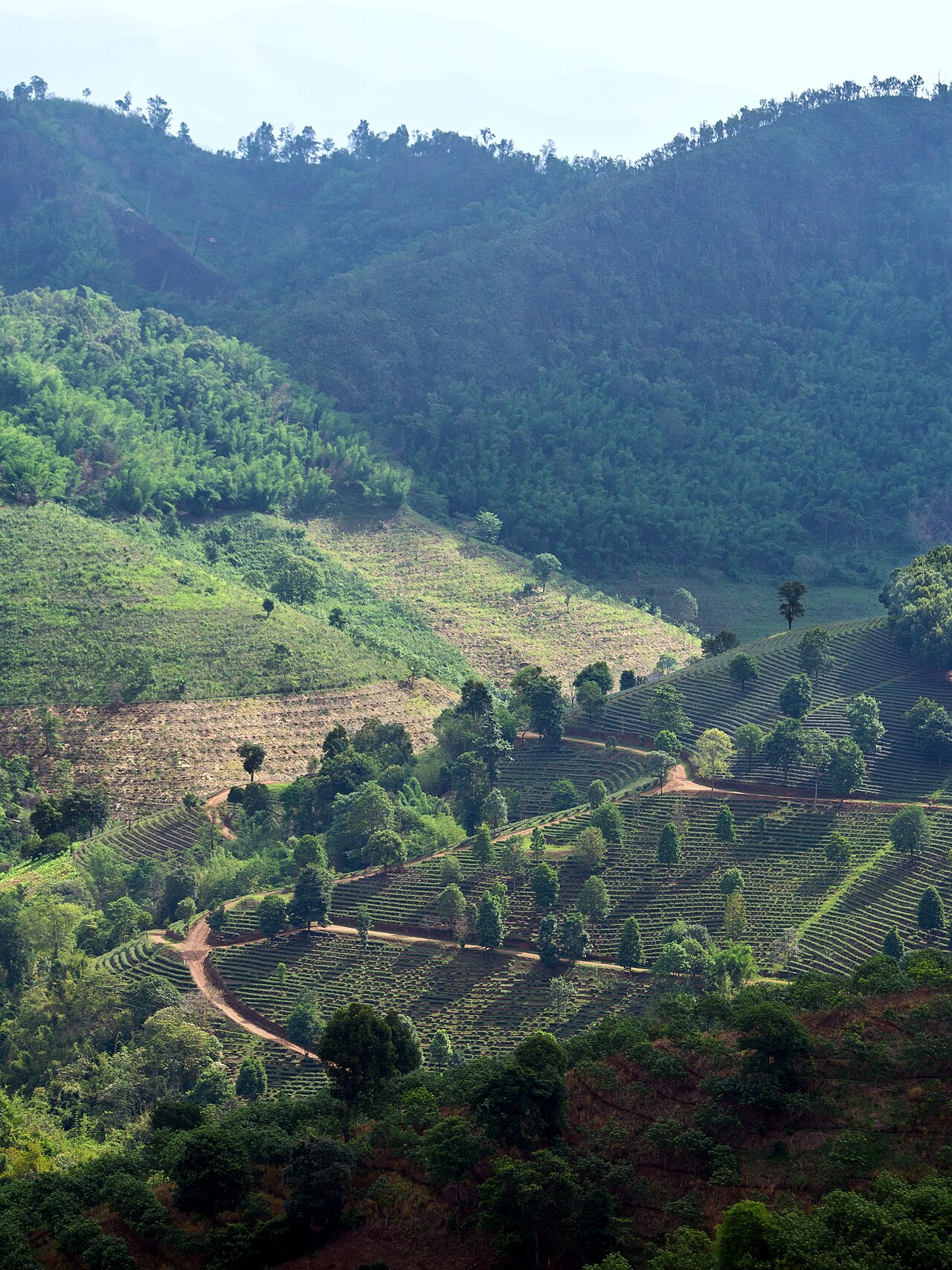
Suits: people here mainly for nature, tea and mountain views — the hills and tea areas (around Mae Salong and the Choui Fong tea fields, Singha Park and the lower slopes) have resorts looking out over peaks and tea terraces, with cooler air than town and morning mist over the ridges. It works for one or two nights if soaking up the scenery is the point. The trade-off is the distance and the steep, winding mountain roads, so you need your own car or a tour — it isn't practical without one.
Suits: backpackers and travellers chasing value and an easy onward connection — Terminal 1 (the old central station) sits right by the Night Bazaar, a short walk from the night food, while Terminal 2 is a little out of town for long-distance routes. Rooms here are mostly guesthouses and small hotels at easy prices, handy for early buses and vans over to Chiang Mai or up to the hills. The trade-off is that a few corners get busy and aren't quiet — but you can walk into the centre.
Chiang Rai is already cheaper than the islands or Bangkok. On a tight budget, the area near the bus station and the lanes around the Night Bazaar have guesthouses and small hotels from around ฿400–900/night, within walking distance of the night food and easy for onward buses. Midscale hotels in the centre run about ฿900–2,000/night, still good value. See every price level in Top 10 Chiang Rai Hotels.
For a resort feel with nature views, the Kok riverside and the hill and tea-country resorts start around ฿1,800–5,000+/night — quiet, with a pool and mountain views, but you need a car to reach town. Plan the whole trip's budget in our Chiang Rai trip budget guide.
You can't visit Chiang Rai without its northern food — our northern Thai food guide covers everything from khao soi, nam ngiao and sai ua to the Tai Yai (Shan) and Yunnanese-Chinese dishes of Mae Salong that are hard to find elsewhere. Then the full Chiang Rai food guide walks you through every dish worth trying, and in the evening don't miss the Night Bazaar and Walking Streets right in the centre — plus the hill-coffee cafes, a local signature.