11 places worth your time
Ordered from the city centre out to the mountains — not just check-in spots, but the places that actually tell Chiang Mai's story.
 1
1
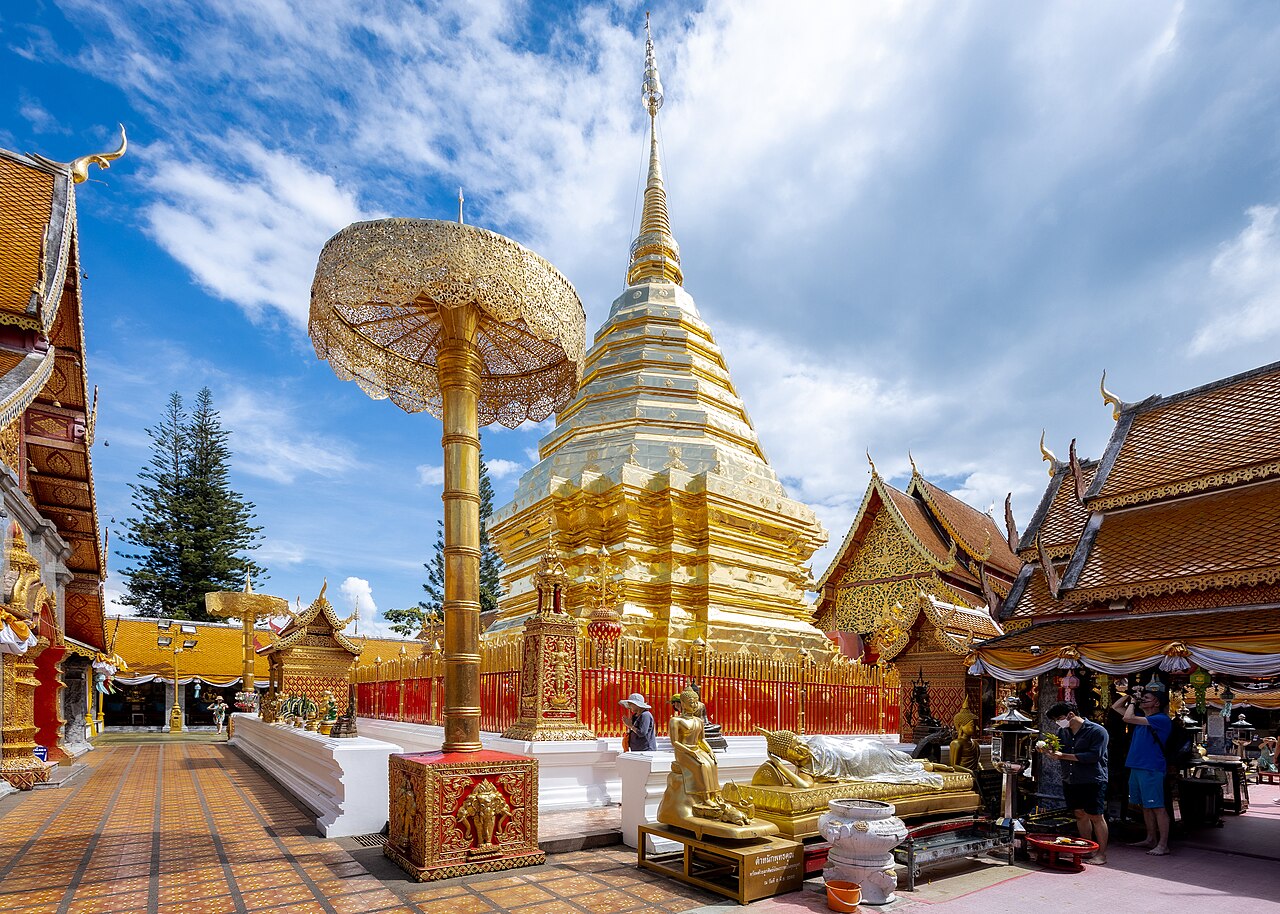
Picture this: you climb a long Naga staircase of 306 steps with serpent balustrades running down each side, and at the top a golden Lanna chedi glows in the middle of a marble terrace, with rows of bells to ring and a balcony that looks out over all of Chiang Mai. Wat Phra That Doi Suthep sits about 1,073 m up the mountain, roughly 15 km from town, and comes with the legend of a white elephant that climbed here and lay down on this spot. If you would rather not take the stairs, there is a tram. Dress respectfully — cover your shoulders and knees, and take your shoes off before the chedi terrace.
 2
2
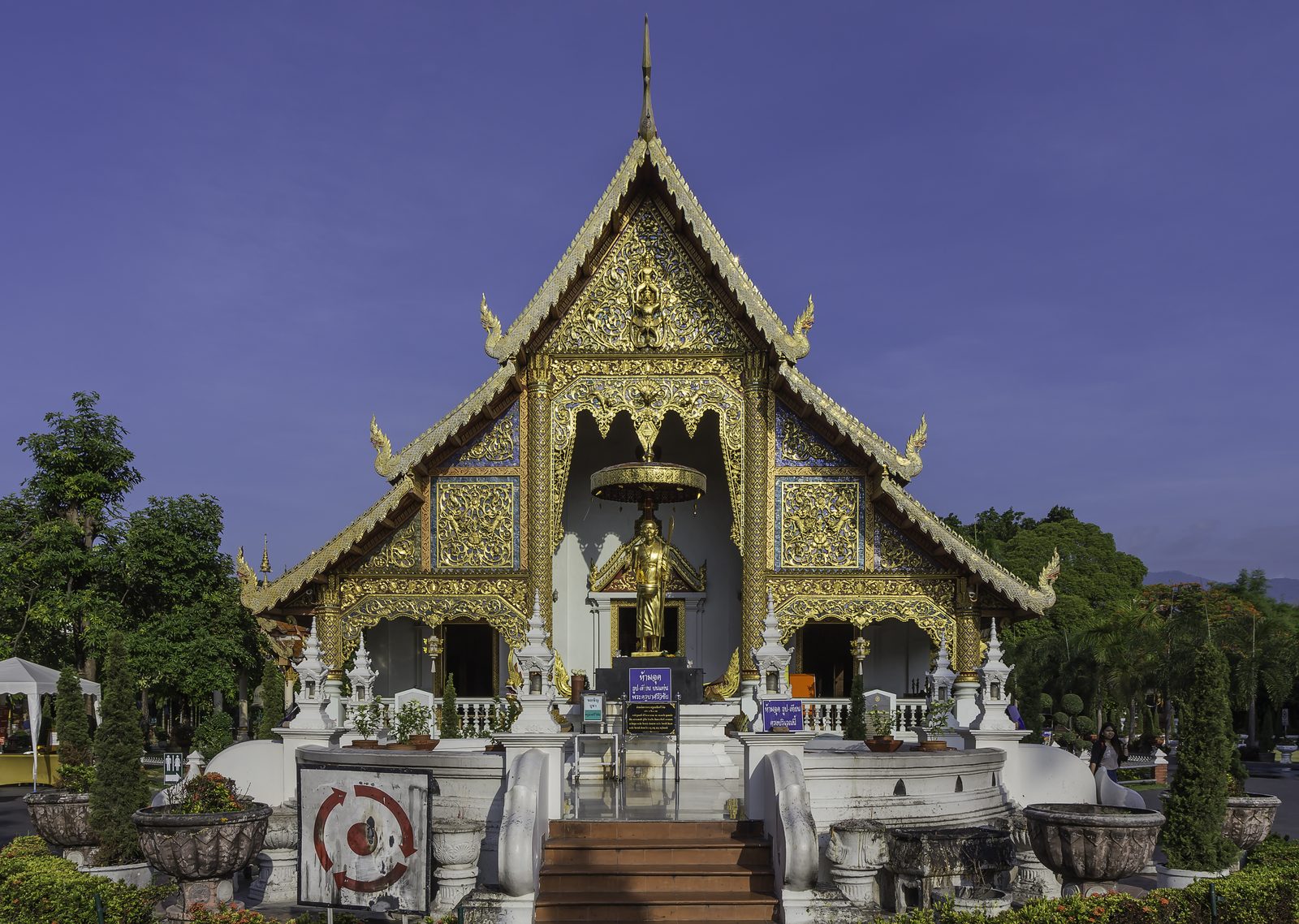
If you only have time for one Old City temple, many people pick Wat Phra Singh — one of the most revered temples in Chiang Mai, at the end of Ratchadamnoen Road inside the moat and easy to reach on foot. The highlight is the Phra Singh Buddha and the Wihan Lai Kham, whose inner walls carry beautiful murals and gold-stencilled patterns, under a fully gilded carved-wood gable with long Naga balustrades. During Songkran this is the centre of the action, where people bathe the Buddha images and the processions form up — the liveliest spot in town.
 3
3
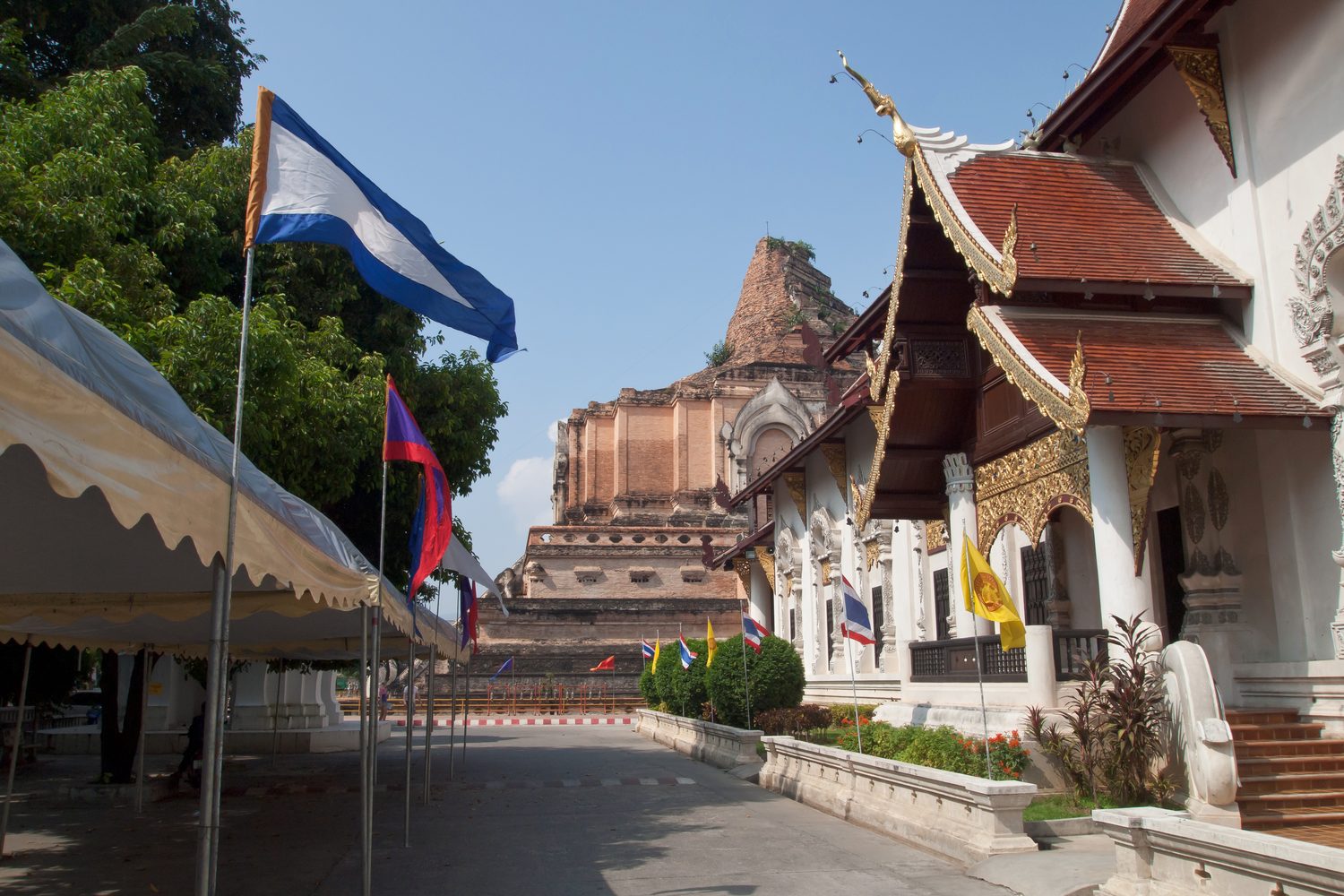
Walk into Wat Chedi Luang and the age of the place hits you straight away, because at the centre stands a colossal brick chedi that once rose around 80 m in the 14th century, before part of it came down in a major earthquake in 1545. What remains is still huge and striking. The grounds also hold the city pillar (Lak Muang) that locals revere, and a monk chat corner where monks and novices sit and talk with visitors in English, very relaxed. The temple is in the middle of the Old City near Wat Phra Singh, so the two pair up on the same walk.
 4
4
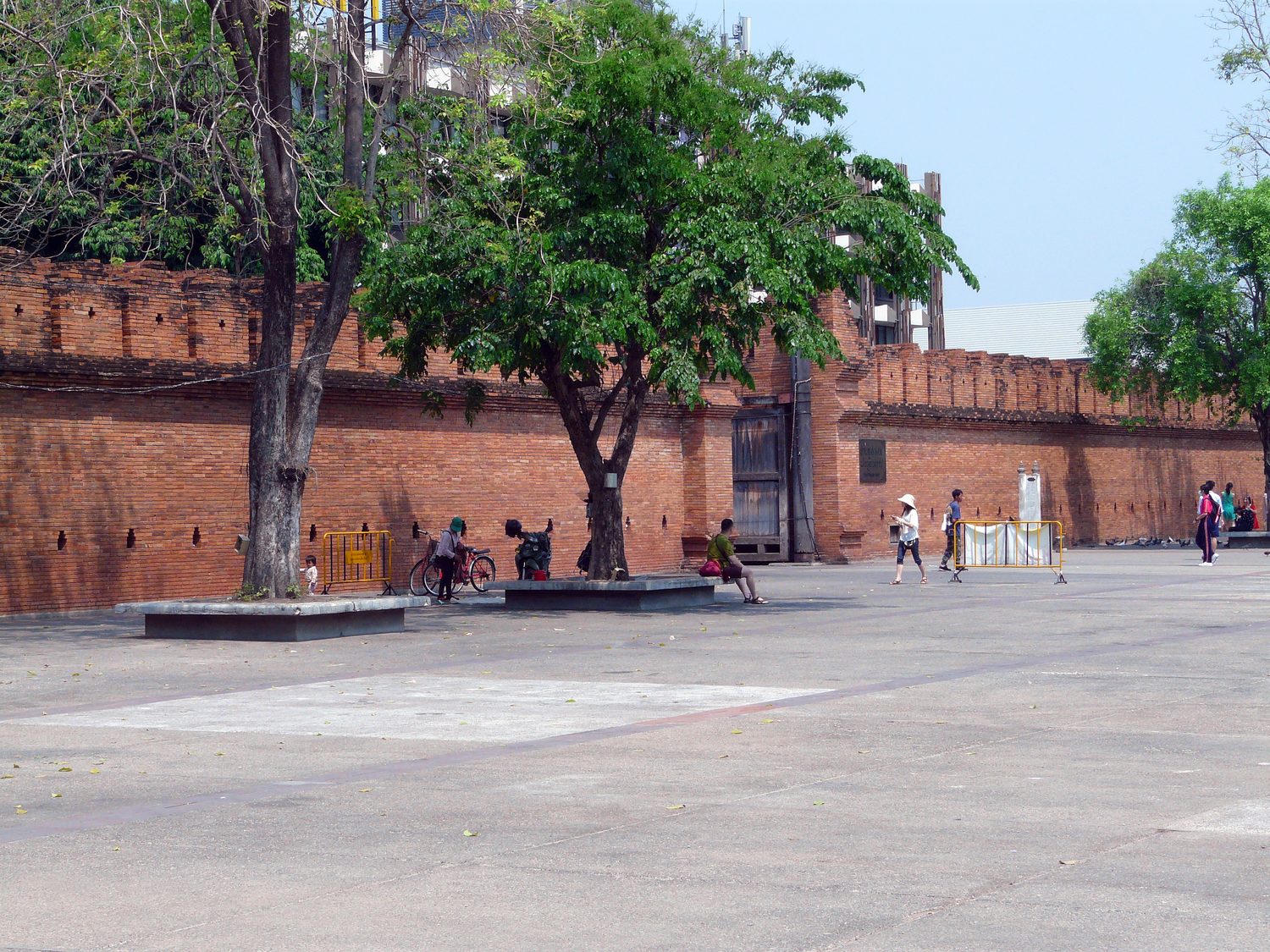
The thing Chiang Mai has that Bangkok does not is an Old City you can explore all day on foot. It is a square wrapped in a moat and remnants of brick wall, with Tha Pae Gate as the main eastern gate and the easiest place to meet. Inside, old temples are scattered throughout — Wat Phra Singh, Wat Chedi Luang, Wat Phan Tao (with a hall built entirely of teak) and Wat Chiang Man, the city's oldest. It takes only a few minutes to walk from one to the next, with small cafes and guesthouses in between. Half a day is enough to see several of the important ones.
 5
5
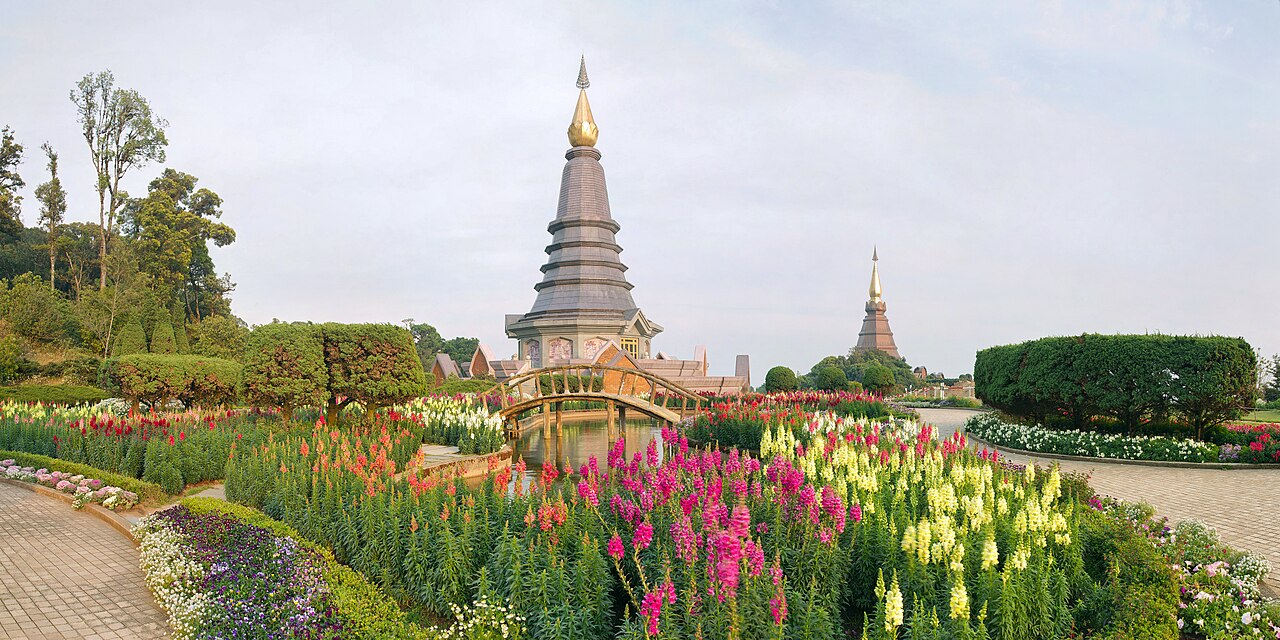
If you want to escape the heat completely, Doi Inthanon is the answer — the highest peak in Thailand at 2,565 m, about 60 km southwest of town. Up there you will find the twin royal pagodas (the King's and Queen's), surrounded by flower gardens that look good all year, the Ang Ka cloud-forest boardwalk where the trees are draped in moss, the powerful Wachirathan waterfall, and Karen villages with rice terraces at Mae Klang Luang. The cold here is real — some dawns drop to around 0 to 10 degrees. The sights are spread far apart, so many people take a one-day tour to cover them all. November to February is best.
 6
6
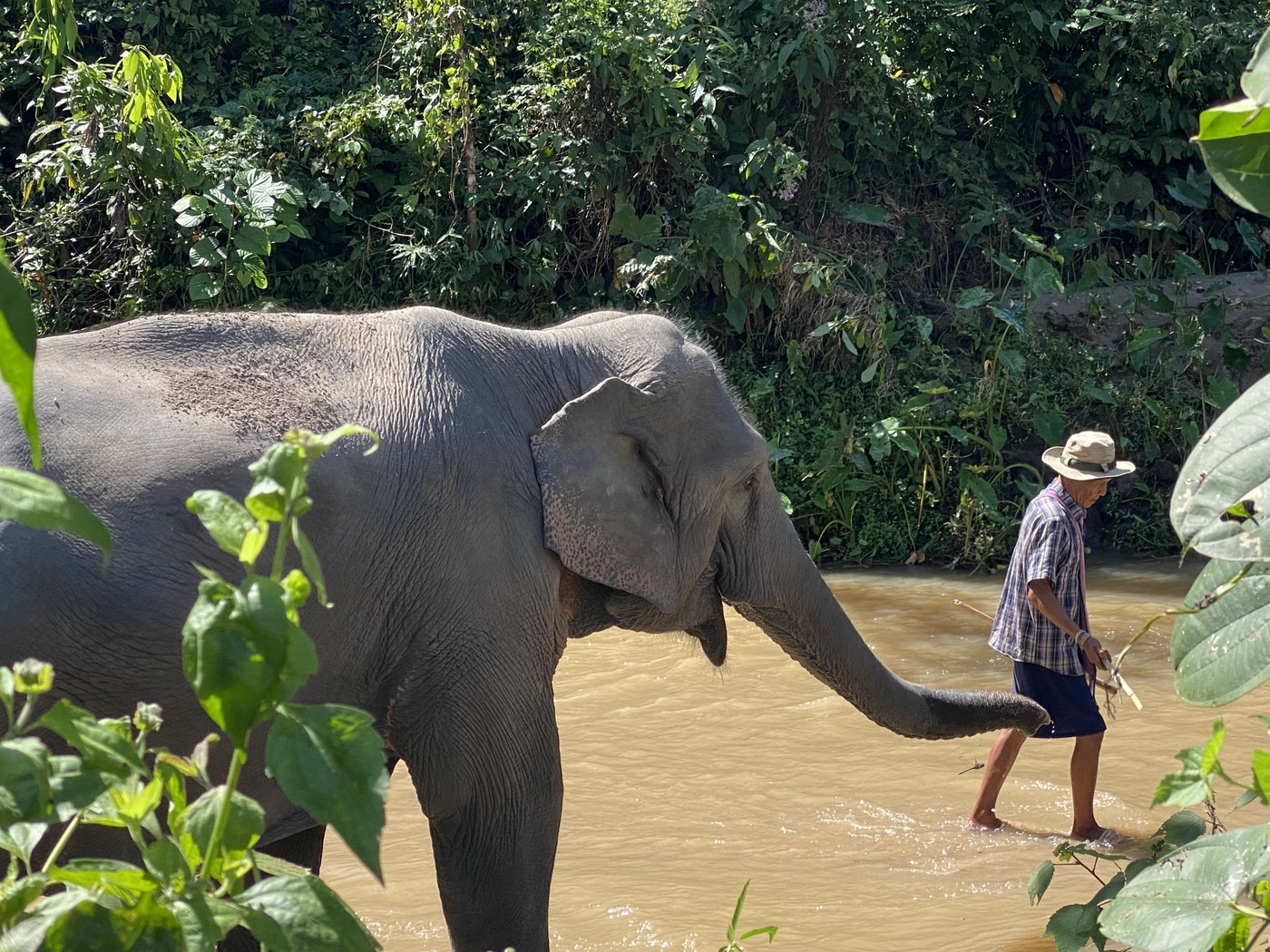
Chiang Mai is the easiest place in Thailand to find genuinely ethical elephant care — but you have to choose well. The rule is no riding, no shows and no bullhook. A good camp lets you observe, feed and walk alongside elephants rescued from hard labour, and bathe them in the river. Most sit in the Mae Taeng and Mae Wang valleys, about 1 to 1.5 hours from town, with half-day and full-day options. Wear clothes you do not mind getting wet. Be honest with yourself and check each camp's reviews and policy before booking, because plenty of places still use the word "sanctuary" while quietly offering rides.
 7
7
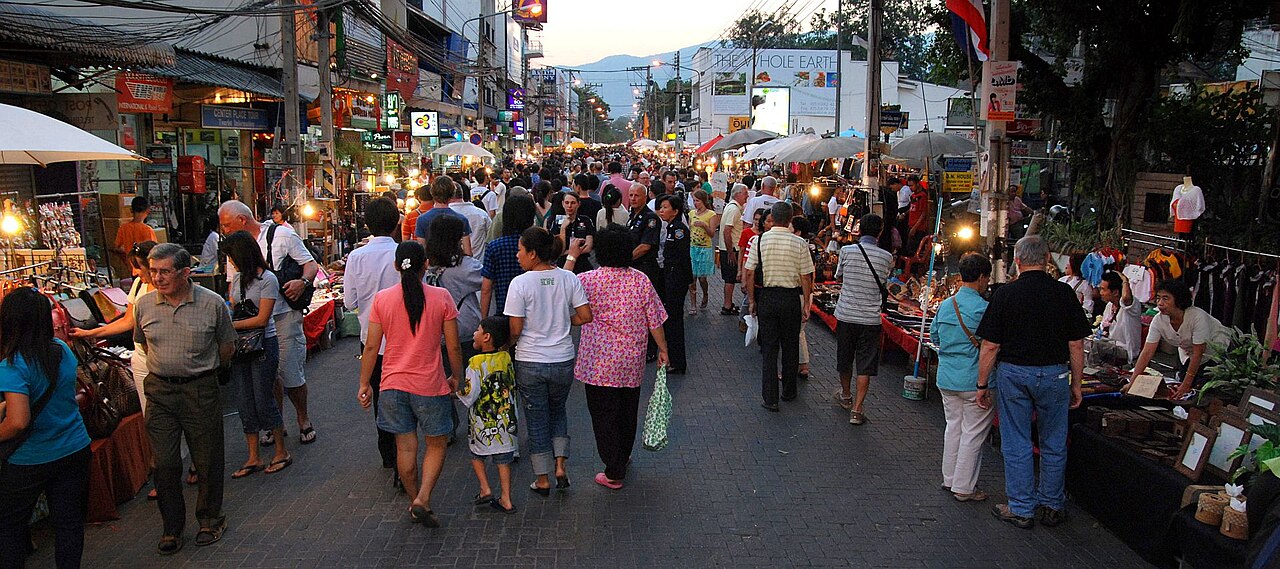
Every Sunday evening, Ratchadamnoen Road in the Old City closes to traffic and turns into a market that runs all the way from Tha Pae Gate to Wat Phra Singh. Both sides fill with Lanna crafts, clothes, handmade goods, paintings and northern food on sticks, with buskers and foot-massage stalls to rest at along the way. Honestly, it gets very crowded, especially early evening, so arriving around 16:00–17:00 makes for an easier walk. If you are in town on a Saturday instead, there is also the Wua Lai Walking Street, the silver district's market.
 8
8
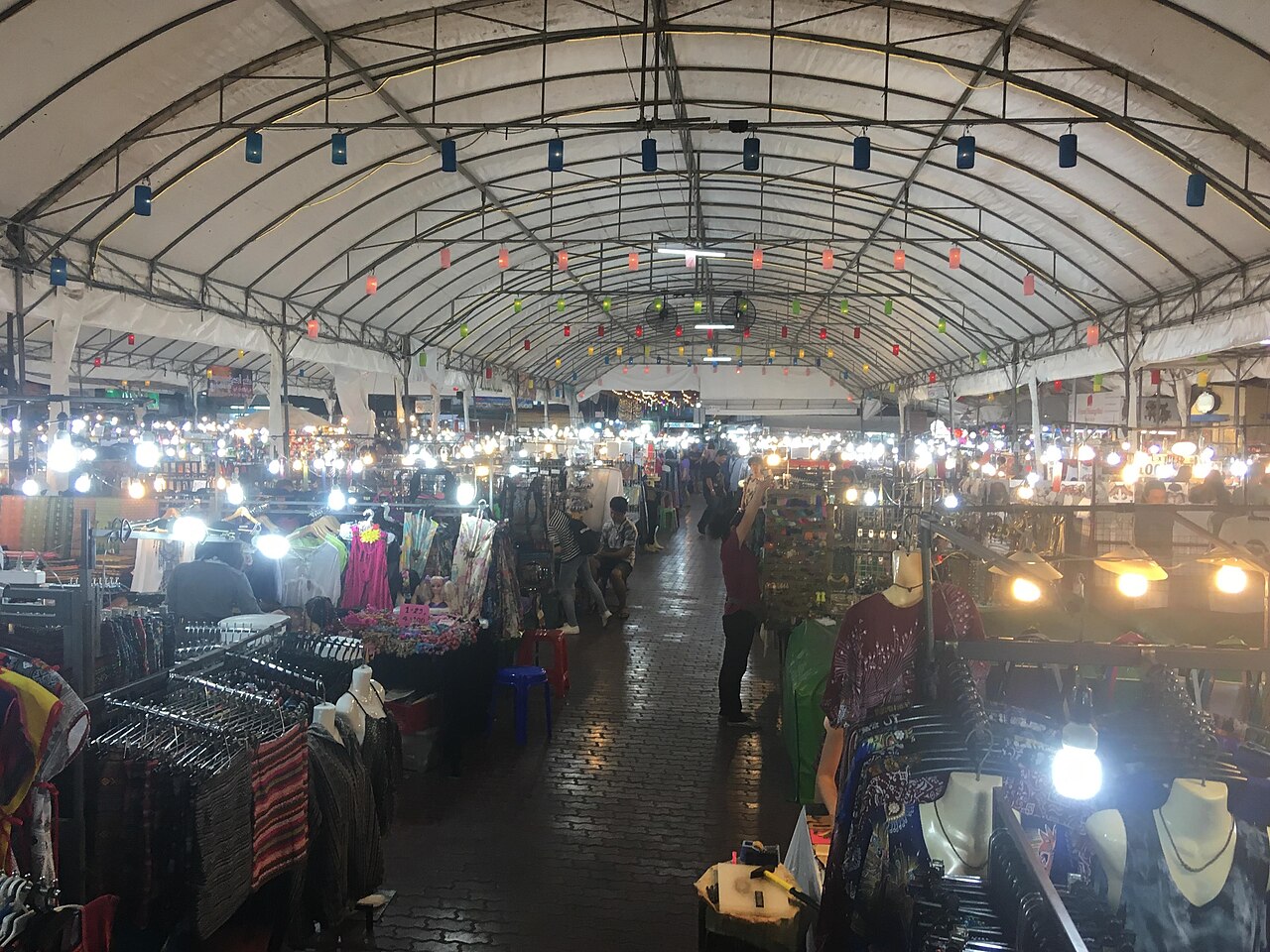
If you are in Chiang Mai on a day that is not the weekend, the market that opens every night is the Night Bazaar on Chang Klan Road, on the eastern side of the Old City near the river. It sells handicrafts, woven textiles, souvenirs, paintings and knock-offs, with big food courts like Anusarn and Kalare to sit and eat in, plus pockets of live music and massage shops. Honestly, it is fairly touristy and you will need to haggle a little, but the atmosphere is lively and it makes for an easy after-dinner stroll. Open nightly, around 18:00–24:00.
 9
9
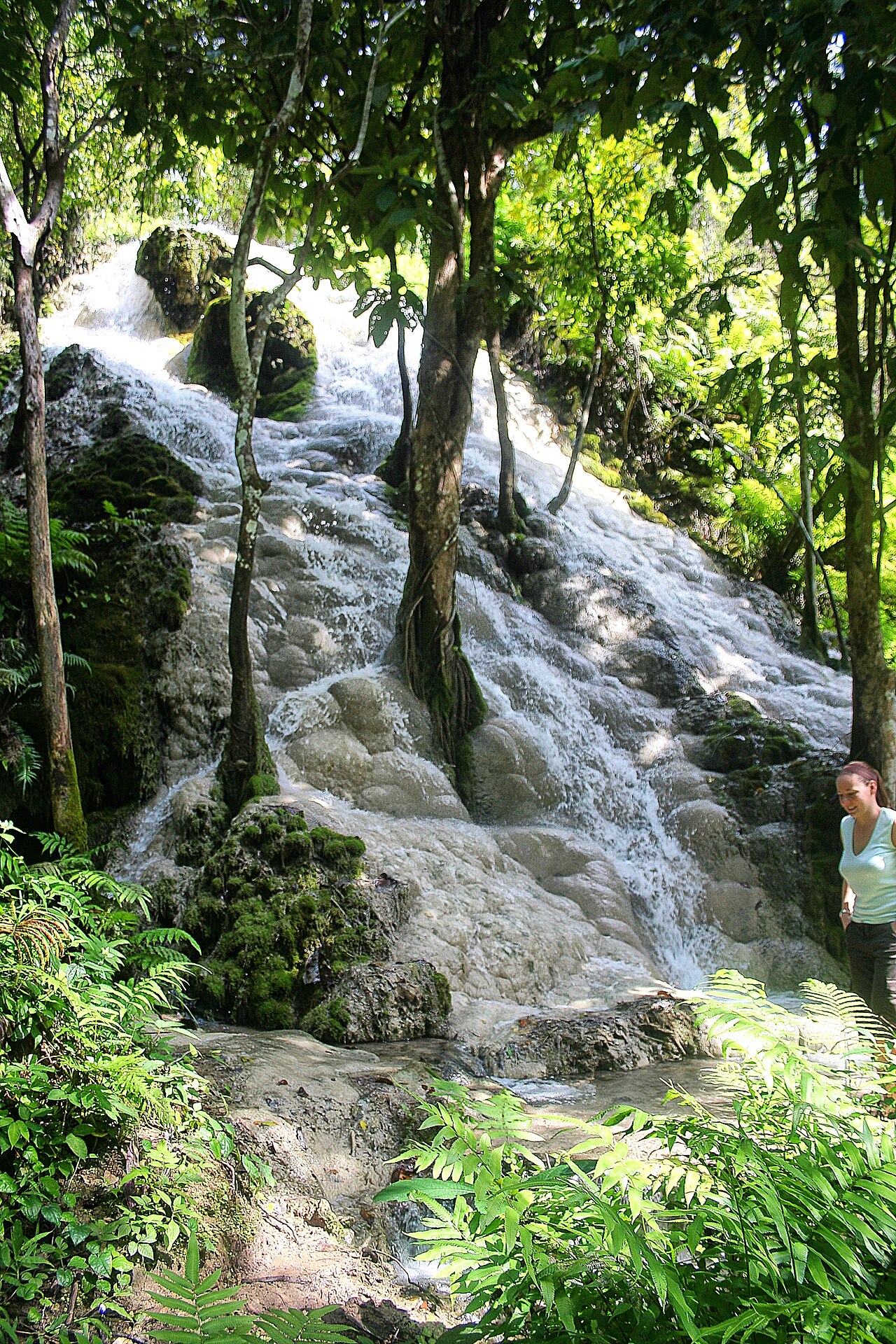
Bua Tong is odd in the best way: you can actually walk up the waterfall barefoot, because the limestone surface is coated in mineral deposits that make it grippy rather than slippery, with ropes to hold at intervals — kids scramble up it happily. The falls sit in Si Lanna National Park, about 60 km north of town, with a cold mineral spring bubbling up from the ground nearby. Entry is free, there is no public transport to the gate, so you will need to drive or take a tour. The cool, dry season is best, when the water is at a good level and the rock is easy to walk. Bring shoes you can get wet.
After a full day of temples, switch the mood in the evening and head to Nimman (Nimmanhaemin), on the west side of town near Chiang Mai University — a district packed with cafes roasting their own coffee, design-led restaurants, craft homeware shops and small bars where younger locals like to hang out. There is the One Nimman complex that gathers cute shops in one spot, and small lanes (Nimman Soi 1, 3, 17) that are pleasant to wander. It is the place to see another side of Chiang Mai that is not temples. Late afternoon into the evening, with a coffee in hand, is the way to do it.
About 20 km south of town, an old earth quarry has been dug out and flooded into a clear lake ringed by steep earthen cliffs, and everyone calls it the Chiang Mai Grand Canyon. These days it splits into two zones — a water-park side with floating obstacles, slides and cliff-jump points, and a waterside cafe side that is more about lounging and photos. It is a good call for a day when you want to cool off in the water without going far. Honestly, only jump in the marked zone where there are lifeguards, and do not jump anywhere that is off-limits. Late morning into the afternoon, with good sun, gives the clearest water.