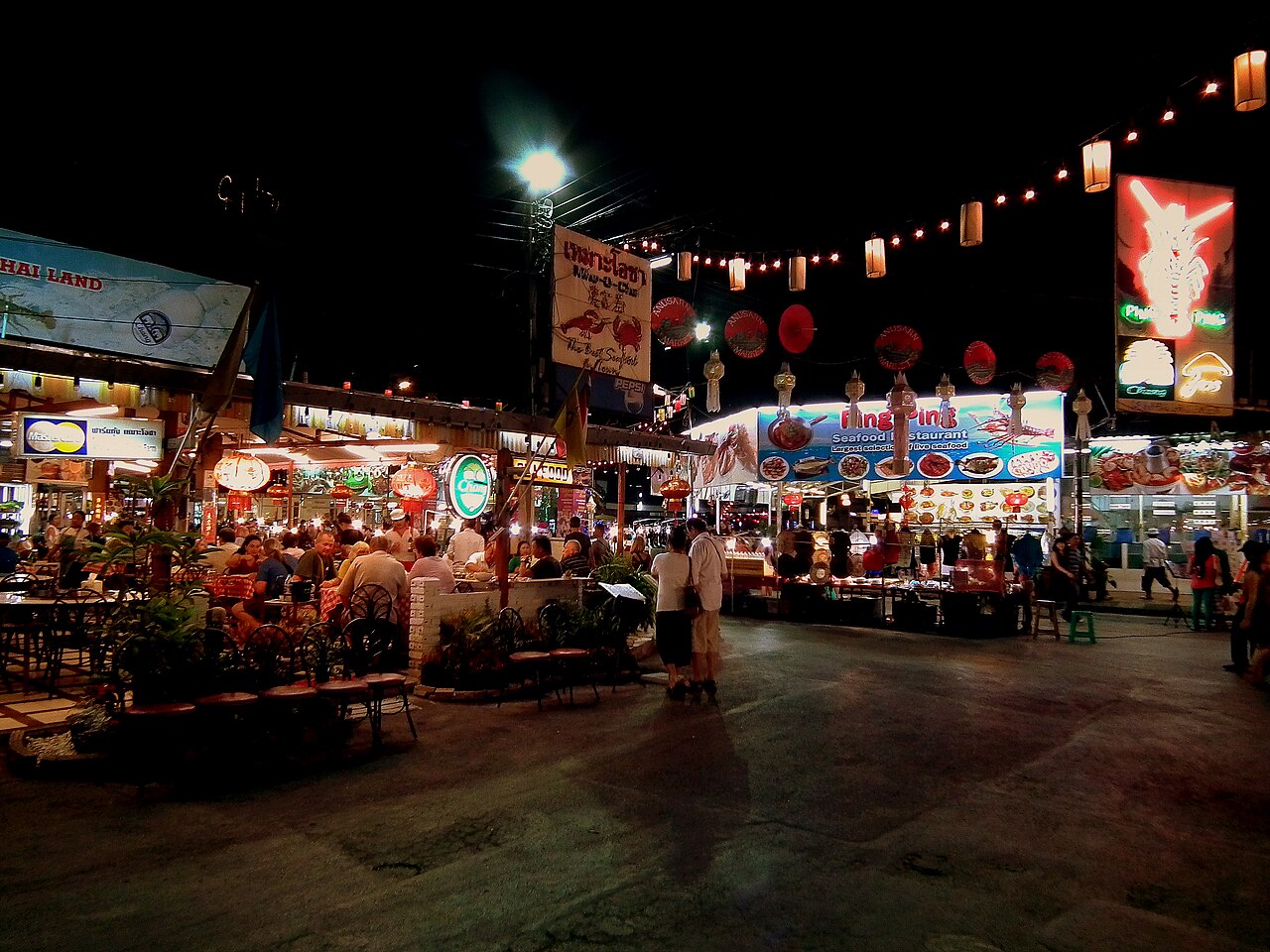
Lanna handicrafts, woven textiles, saa paper lanterns, the Anusarn and Kalare food courts and live music — a city-centre night market you can walk any evening, no need to wait for the weekend.
Picture this: it's half past seven, you walk out of the Old City, cross over toward Chang Klan Road, and the whole street starts to light up. Stalls of bright cotton textiles, rows of hanging saa paper lanterns, local artists' paintings propped against the wall, the smell of grilled sai ua sausage and khao soi drifting over from the food court, and live music carrying from a bar across the road.
This is the Chiang Mai Night Bazaar — a market that has been part of the city for decades, set along Chang Klan Road on the east side of the moated Old City, near the Ping River. What sets it apart from the Walking Streets is simple: it is open every night, all week, from roughly 6 pm until around midnight. You don't have to plan your trip around a Saturday or Sunday the way you do for the Walking Streets — come any evening and there's a market to walk.
What's for sale ranges from Lanna handicrafts, woven textiles, silverware, lanterns and paintings through to clothing and knock-off branded goods, plus two large food zones — Anusarn and Kalare — that pull northern Thai food, grilled seafood and desserts into one place. To be straight with you: this is a thoroughly tourist-focused market, and some prices are set high to leave room for haggling. But if you want all your gifts in one easy, walkable place, the Night Bazaar still earns its evening.
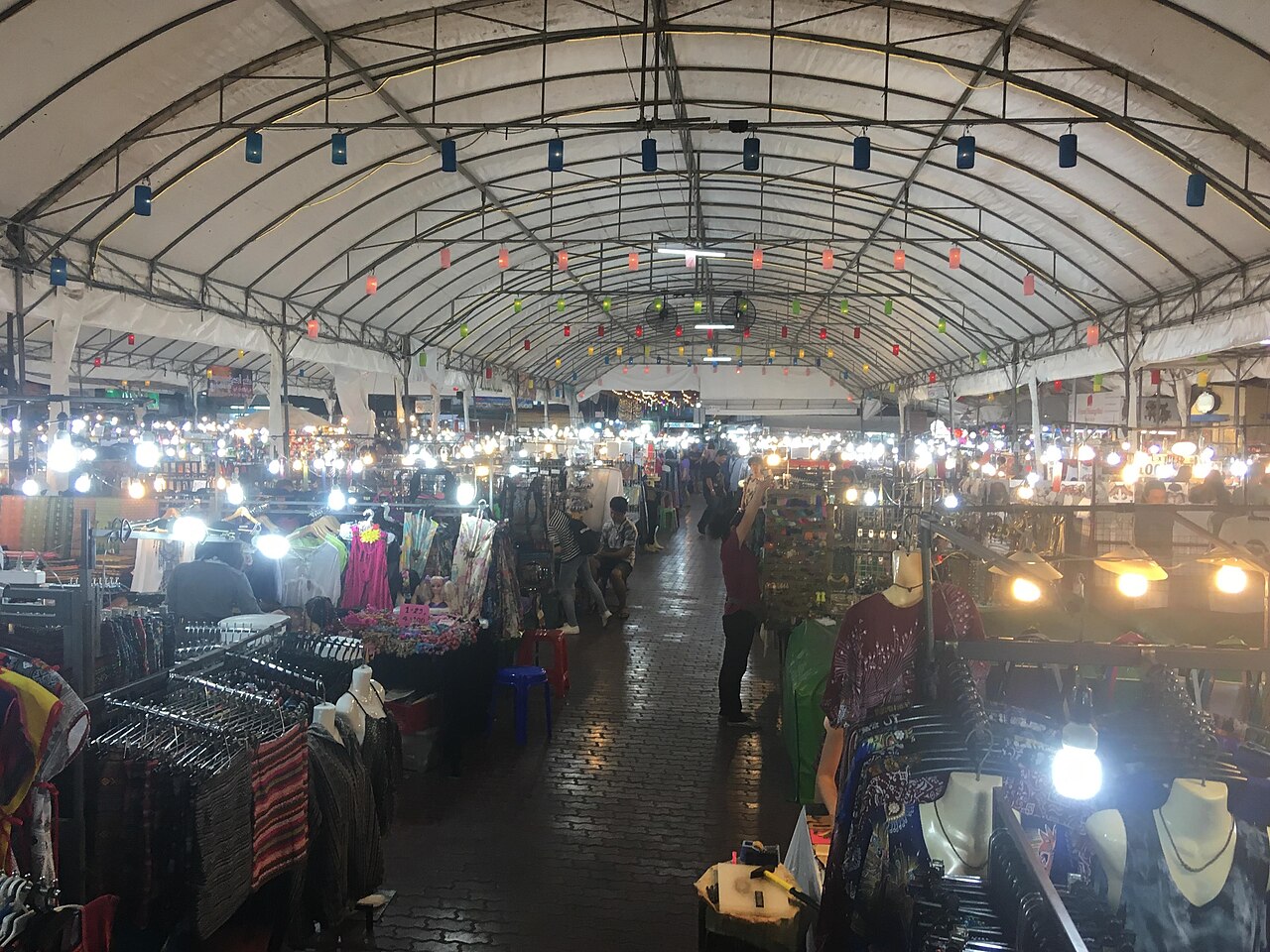
The market stretches the length of Chang Klan Road and the side sois — each zone has its own goods and mood.
The main covered market building on Chang Klan Road gathers handicraft stalls, textiles, silverware, bags and homeware across several levels. The roof means you can keep shopping even if it rains — a sensible place to start before fanning out to the other zones.
The popular eating-and-drinking zone toward the south end, with an open-air food court, grilled-seafood and northern Thai restaurants, bars, and a row of foot-massage shops. Some nights bring live music and performances. A good spot for a long sit-down once your legs have had enough of the stalls.
A food-court-style courtyard with a central stage — order from several stalls and share communal tables. Many evenings there's a band or a traditional performance on stage. The atmosphere is lively and it works well for families and groups.
The small stalls lining the pavement on both sides sell cotton cloth, hill-tribe style clothing, saa paper lanterns, scented soaps, postcards and paintings by local artists. This is where bargaining pays off and where you tend to find the affordable, characterful pieces.
If your visit lands on a Saturday or Sunday, set aside time for the Walking Street in the Old City too. The goods lean more toward craft and local street food, and the mood is a different one from the Night Bazaar — you can comfortably do both on the same trip.
The things genuinely worth buying at the Night Bazaar are the local ones — cotton and woven textiles, saa paper lanterns, silverware, soaps and scents, hill-tribe style clothing, and paintings and postcards from artists working right at their stalls. These are what keep the place charming even though it's tourist-focused.
The branded goods you'll see stacked up are almost all knock-offs. Fine to buy for everyday use, but don't expect the real thing. Do a full lap before buying, because similar items turn up at many stalls and both price and quality can vary quite a bit.
At the Night Bazaar, haggling is normal, especially at stalls with no marked price. Open with a smile, offer around 60–70% of the quoted price, then ease toward a number you both accept. Buying several pieces from one stall usually gets you a better rate.
Worth knowing: food-court prices and shops with clearly displayed tags are generally fixed. Keep it relaxed — if a price won't come down, move to the next stall, no hard feelings. Bargaining here is meant to be a friendly back-and-forth, not a battle.
When hunger hits, head for these two zones. Anusarn Market at the southern end has an open-air food court, grilled seafood, and northern Thai dishes like khao soi, sai ua sausage and gaeng hang lay curry, plus bars. Kalare Night Bazaar is a food court built around a central stage where you can order across several stalls and share a table. Dishes run roughly ฿60–200 depending on the stall and what you order.
Both zones often have live music or a traditional performance, so they're a good place to sit with a cold drink and watch the market go by before heading back to shop — or to end the night with a foot massage at one of the Anusarn shops. After an evening on your feet, that timing tends to work out perfectly.
The Night Bazaar is right in the city centre and an easy walk from the Old City. Chiang Mai has no urban rail — getting around means red trucks, Grab and walking.
The Chang Klan area and the Ping riverside have plenty of hotels — step out of the door and you're at the market.