Home Chiang Mai Thailand Chiang Mai Hotels About
Home  ›  Asia  ›  Thailand  ›  Chiang Mai  ›  Bua Tong Sticky Waterfall
Chiang Mai · Attraction Guide

Bua Tong Sticky Waterfall
The limestone falls you climb barefoot, north of Chiang Mai

A waterfall famous for being grippy rather than slippery — the mineral-crusted rock holds your feet, so you walk straight up the cascade tier by tier. Entry is free, it sits in quiet forest, and it is about an hour and a half from the city.

What it is

Why Bua Tong is a waterfall you climb up

Picture this: you are standing at the foot of a pale, cream-white cascade that steps down through the trees, and the person ahead of you is walking barefoot straight up it, easily, as if climbing a staircase — no slipping, no rope, nothing. That is what sets Bua Tong apart from every other waterfall around Chiang Mai. It is one of the few falls anywhere you can genuinely climb, and it happens entirely by nature.

The secret is in the rock. The water flowing over Bua Tong is high in dissolved calcium carbonate, and over thousands of years it has coated the limestone in a rough, porous travertine crust that grips hard. Bare feet stick to it instead of sliding, and because of that same mineral the rock does not grow the slick green algae you find on ordinary falls. Locals simply call it the "Sticky Waterfall."

Bua Tong sits inside Si Lanna National Park in Mae Taeng District, about 60 kilometres north of Chiang Mai city. Just above it is the Nam Phu Chet Si spring, the source that wells up from underground, so clear and cold you can watch mineral bubbles rise from the bottom. All of it is free to visit — this is somewhere Chiang Mai families come to picnic on a day off, more than a stop on the tour trail.
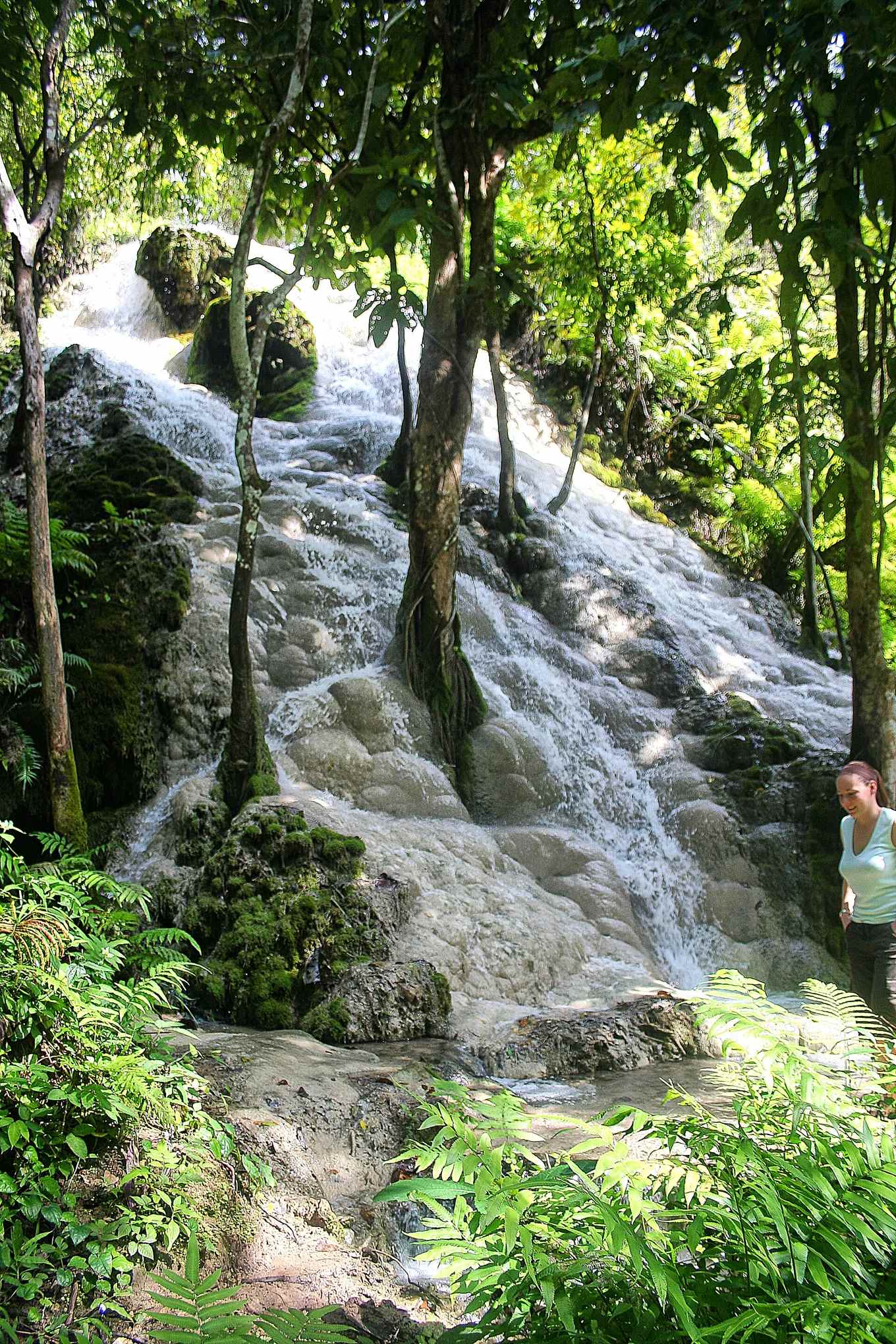
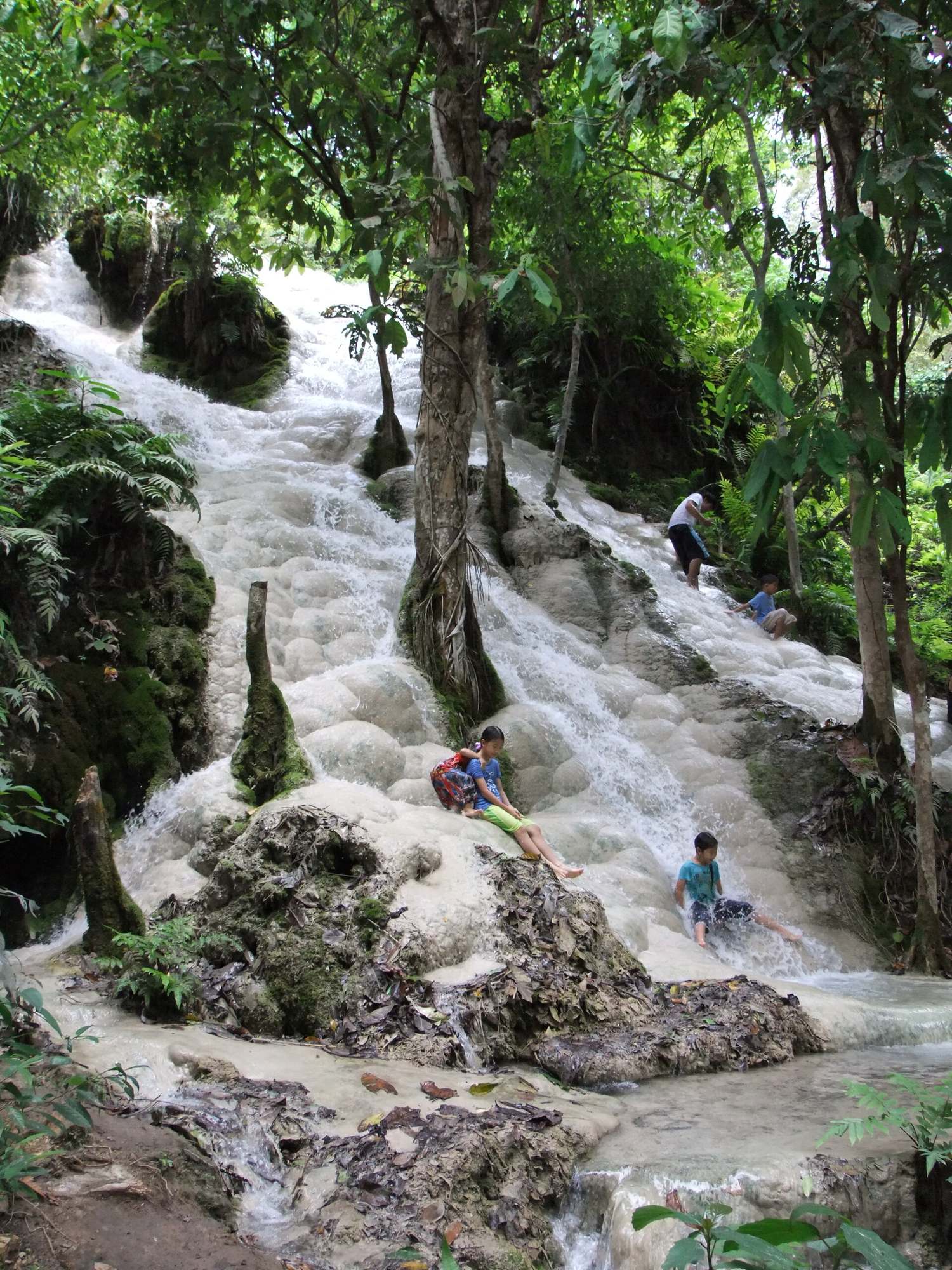
Bua Tong Sticky Waterfall, Chiang Mai — white water stepping down a mineral-crusted limestone cascade through the green forest of Si Lanna National Park
Bua Tong — the pale, mineral-crusted limestone surface that grips your feet, so you can climb it barefoot
🎫
Entry
Free
Free parking · donation boxes on site
🕗
Opening hours
08:00–17:00
Daily · year-round
📍
Location
Mae Taeng
Si Lanna National Park · ~60 km north
🚗
Travel time
~1.5 hours
Own vehicle / charter · no direct public transport
🦶
The draw
Climb it barefoot
Mineral-crusted rock grips, does not slip
🌤️
Best time
Nov–Feb
Cool, dry, clear water, easier climbing
What's here

5 things to know before you climb Bua Tong

From the easiest tier to the spring that feeds it — what to know so you have fun and stay safe.

How to climb it safely: step on the rough, pale rock with a thin film of water for the best grip · avoid green algae and wet leaves · go one step at a time and use the ropes and rails on steeper parts · hand your valuables and camera to someone who is not climbing, since you want both hands free to balance. To have it all arranged for you, browse Bua Tong tours on Klook →
Visiting tips

When to go, what to bring — and where to go next

🌤️ When to go

Bua Tong is open all year, but the sweet spot is the cool, dry season from about November to February — comfortable temperatures, clear water and gentle sun, the best conditions for climbing. In the rainy season (June to October) the flow is stronger and murkier and some patches grow more algae, so you climb more carefully — still doable, but go slowly and avoid days right after heavy rain.

On timing: a weekday or an early start is much quieter. Weekends bring Chiang Mai families out to picnic, and late morning to early afternoon is busiest. Come in the late afternoon and the sun softens, the crowds thin and people start heading home.

🎒 Packing for the climb

You can climb barefoot because the rock grips, but if you would rather not bruise your soles or feel nervous on the algae patches, bring water shoes with a grippy rubber sole (flip-flops are a poor choice — they slip off mid-climb). Wear clothes you do not mind soaking, and pack a change of clothes, a towel and a waterproof pouch for your phone.

Do not forget drinking water, insect repellent and sunscreen, since this is forest. Leave valuables, cameras and wallets with someone not climbing, or keep them in a waterproof bag strapped close to you — while you climb, both hands need to be free to grip the rock and balance.

Visitors walking barefoot up the pale limestone face of Bua Tong Sticky Waterfall in Chiang Mai, surrounded by green forest
People really do walk barefoot up Bua Tong — the mineral-crusted surface gives that much grip

🐘 Combine it with Mae Taeng

Bua Tong sits in the same belt of nature north of Chiang Mai as several other sights, so many people build a single day trip around it: a no-riding, ethical elephant sanctuary in the Mae Taeng valley in the morning to watch and feed the elephants, then the waterfall in the afternoon. The two fit neatly into one day.

Another popular route continues north toward Chiang Dao, stopping at Chiang Dao Cave or the peak of Doi Luang Chiang Dao, since they sit along the same Highway 107. With your own vehicle you can link these stops smoothly — set off early and you can see it all without rushing.

Getting there

How to reach Bua Tong

There is no direct public transport to Bua Tong, so every option relies on your own vehicle or some kind of charter — the main route is Highway 107 toward Chiang Dao, then a turn into Si Lanna National Park.

🚗
Drive / rent a car
~1.5 hrs from the city
Up Highway 107, turn off toward Mae Taeng following the Bua Tong signs; free car park, and the most flexible on timing
🛵
Scooter
Rental about ฿200–300/day
Fun and nimble, but it is a long ride with mountain bends — best for confident riders in good weather
🚐
Chartered songthaew / tour
A driver takes you both ways
Charter a red songthaew or join a tour that pairs the falls with an elephant sanctuary — easiest, no driving; agree the price first
Planning your time: leave the city in the morning, stop at a Mae Taeng elephant sanctuary mid-morning, then climb Bua Tong in the afternoon when the sun is softer and crowds thin, and finish with som tam and grilled chicken at the entrance before driving back. It all sits along the same Highway 107 — an easy single-day trip with time to spare.
Nearby

Pair Bua Tong with more of Chiang Mai

Both the nature to the north and the classic day trips — pick what fits the days you have.

Frequently asked

FAQ · Bua Tong practical

Is Bua Tong Sticky Waterfall free to enter?
Yes. There is no entrance fee and parking is free, as the site is looked after by Si Lanna National Park. It is open roughly 08:00–17:00 daily. There are food stalls and toilets at the entrance, and donation boxes if you would like to contribute to its upkeep.
Why can you climb Bua Tong waterfall without slipping?
The rock is limestone coated over thousands of years by water carrying dissolved calcium carbonate, which builds up a rough, porous travertine crust. That surface has a lot of grip, so bare feet stick to it instead of sliding, and there is none of the slippery algae you find on ordinary waterfalls. You can walk straight up the flow barefoot — but watch for patches of green algae or wet leaves, which are still slick.
How do you get to Bua Tong waterfall, and how far is it from Chiang Mai?
Bua Tong is in Mae Taeng District, about 60 kilometres north of Chiang Mai city, roughly a 1.5-hour drive up Highway 107 toward Chiang Dao and then into Si Lanna National Park. There is no public transport directly to the falls, so you need your own vehicle, a rental car or scooter, a chartered red songthaew, or a tour — most tours pair the waterfall with an elephant sanctuary or Chiang Dao Cave.
When is the best time to visit Bua Tong waterfall?
It is open year-round, but the best stretch is the cool, dry season from about November to February — pleasant temperatures and clearer water. In the rainy season the flow is stronger and murkier and you need to climb more carefully. Go on a weekday or early in the day, since weekends draw local families, and the late afternoon is calmer once the crowds thin and the light softens.
What should you bring to Bua Tong waterfall?
You can climb barefoot because the rock grips, but if you would rather protect your soles or feel unsure on the algae patches, bring water shoes with a grippy rubber sole. Wear clothes you do not mind getting wet, pack a change of clothes, drinking water and insect repellent, and hand valuables to someone who is not climbing — you want both hands free to balance.
Klook · Chiang Mai tours & activities

Bua Tong and Mae Taeng elephant tours — transport included, no driving

There is no direct public transport to Bua Tong, so if you would rather not rent a vehicle, a single-day tour pairing the falls with an elephant sanctuary or Chiang Dao Cave handles the hotel pickup and a guide. Book ahead through Klook.

Browse Chiang Mai activities on Klook →
Wherebest is an affiliate partner of Klook — we may earn a commission when you book through our links, at no extra cost to you.