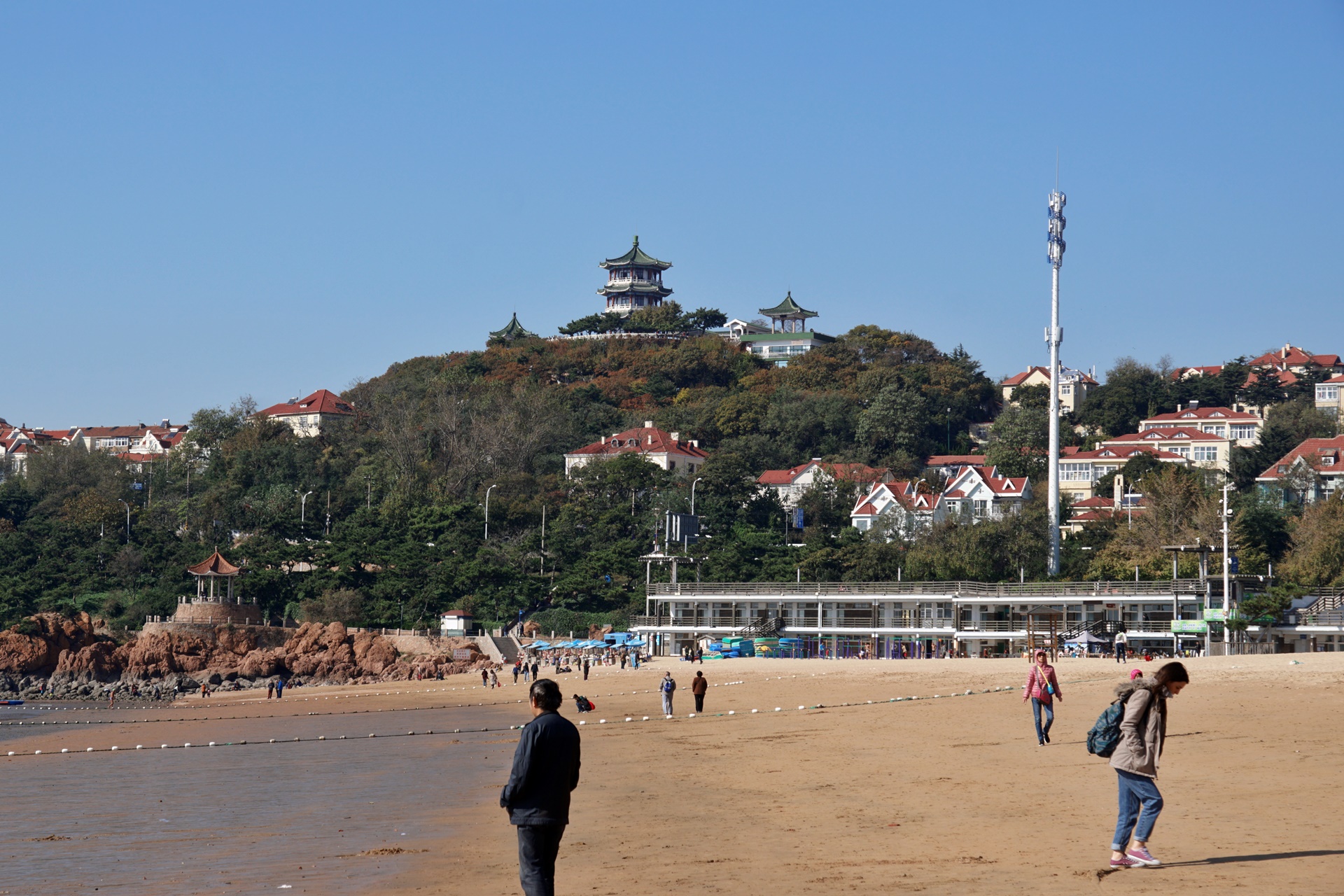
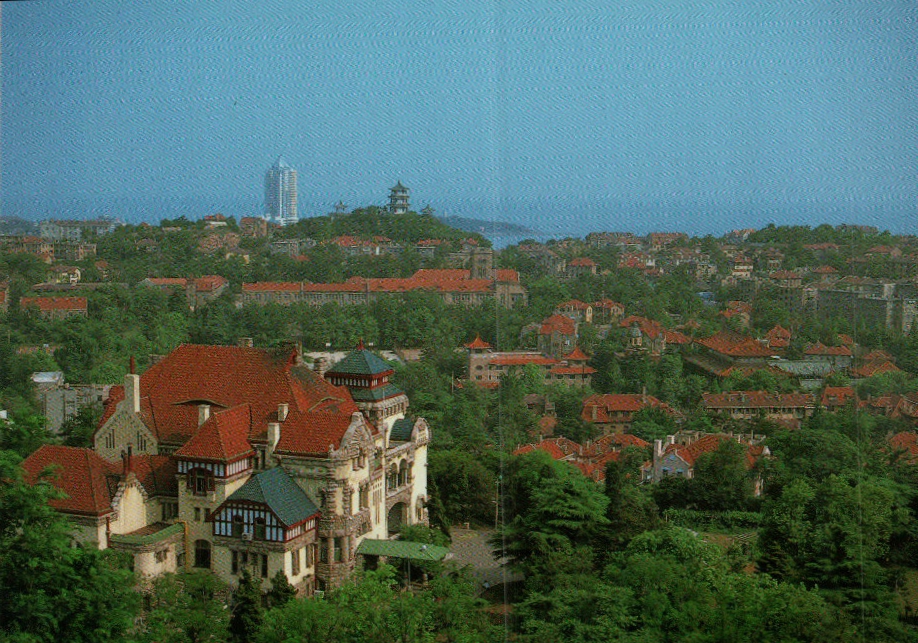
If the old town is the busy, crowded face of Qingdao, Badaguan is the other side — quiet and refined: tree-lined streets named after China's frontier passes, more than 200 European villas, a stone castle by the sea, and a bay where the breeze blows all day.
Plenty of people come to Qingdao and pour all their time into the old town and Zhongshan Road, never realising that just a few bus stops east lies an area with a completely different mood. If you want Qingdao at its quietest and most refined, head to Badaguan (八大关) and Huiquan Bay (汇泉湾) — a seaside-villa quarter in the Shinan (市南区) district that runs from tree-lined streets down to the sand and the curve of the bay. This is the side of Qingdao for walking slowly, breathing slowly and taking beautiful photos.
The area has two parts. The first is Badaguan, the "Eight Great Passes", where each street is named after a famous Chinese frontier pass or fortress (Shanhaiguan, Jiayuguan, Ningwuguan). Scattered across it are more than 200 historic European villas of many nationalities, earning it the nickname "the museum of world architecture". What people love is that each street is planted with a different species of tree, so they take turns being beautiful through the year. At the seaward end of Badaguan is Huashi Villa (花石楼), a stone castle people call the "Chiang Kai-shek villa". The second part is Huiquan Bay and the No.1 Bathing Beach (第一海水浴场), the most famous in-city beach in Qingdao.
Picture this — an area where you stroll under the shade of the trees photographing old villas in the morning, sit by the sand in the late morning, drop in at a stone castle for photos by the waves in the afternoon, then walk the bay at dusk watching the sun on the water. Badaguan–Huiquan does all of it within easy walking distance. That's why we love steering couples, photographers and anyone who wants a relaxed seaside break here — sea air without elbowing through the crowds.
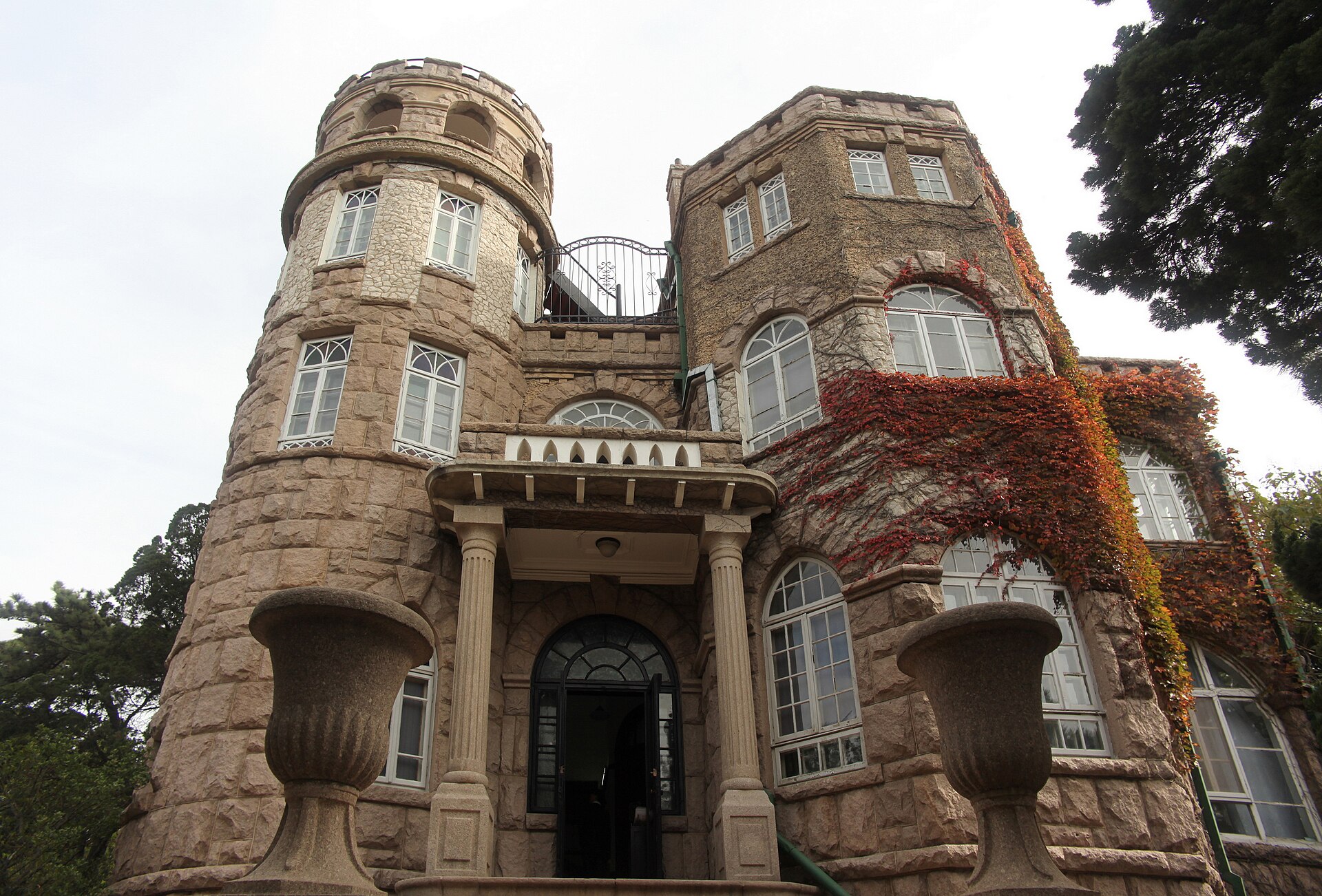
Badaguan–Huiquan feels like the old holiday quarter of a privileged class — quiet streets under the shade of the trees, stone villas in every style, and the sea at the end of the road. It is Qingdao at its slowest and most classic.
The charm here is that it gathers calm, history and the sea into one place. In the morning you walk Badaguan's streets under the trees, photographing old villas; mid-morning you stroll down to Huashi Villa by the sea; in the afternoon you head to the No.1 Bathing Beach for a paddle in the shallows; and at dusk you walk the curve of Huiquan Bay as the light spreads across the water. All of it is within easy walking distance, and the old town is just a few stops away on Metro Line 3.
This is the area for two — quiet, leafy streets, a stone castle by the sea, a beach you can walk hand in hand along, and bayfront hotels and cafés where you can gaze at the sea all afternoon. It's the corner that makes Qingdao feel more romantic than the busy old town. For more ideas across the city, read the best things to do in Qingdao.
Badaguan is one of the best photo backdrops in Qingdao — stone villas in every style, cobbled streets, big old trees, and the Huashi Villa castle by the waves. It's no surprise you'll see couples shooting their wedding photos here almost every day. Late October to November, when the leaves change, is especially pretty; come early for soft light and fewer people.
Huiquan Bay and the No.1 Bathing Beach are made for unhurried seafront walks. The shoreline path runs on and on; you can walk from Badaguan past the beach toward Lu Xun Park (鲁迅公园) and Little Qingdao islet (小青岛) with ease. It suits a gentle morning walk or sitting out for the sunset in the evening.
If you want to wake up to the sea without sitting in the middle of the bustle, the bayfront here has five-star hotels like The St. Regis and the InterContinental. The bay views are lovely and you can walk to the beach and Badaguan — good value on both location and the feeling of a proper rest. Compare the luxury options at the 6 best luxury hotels in Qingdao.
Badaguan is the landmark everyone comes to walk — once a holiday quarter for foreigners and the well-to-do, where each street is named after a Chinese frontier pass or fortress (山海关 Shanhaiguan, 嘉峪关 Jiayuguan). It holds more than 200 historic European-style villas in Gothic, Romanesque, Russian and Japanese styles, earning it the nickname "the exhibition of world architecture". What makes it special is that each street is planted with a different species of tree — one street of peach blossom, another of ginkgo turning golden in autumn. Walking and taking photos in the area is free (most villas are still residences or offices, viewable only from outside). Read more: the full Badaguan guide.
At the seaward end of Badaguan is Huashi Villa, a stone castle built in 1932 from granite and cobblestone, mixing Gothic and Roman touches, with a round tower you can climb for a panoramic sea view. It's popularly called the "Chiang Kai-shek villa" because it was once used to host important guests. Today you can go inside and climb the tower; entry is around ¥8.5 (about ฿45) and it opens roughly 7:30–18:30 (varies by season). The stone terrace outside by the sea is free to photograph and is a hugely popular wedding-photo spot. Be honest with yourself: weekends get very crowded, so come early for an easier time (check the opening hours and price before you go).
Just down from Badaguan is Huiquan Bay, a curve of coast cradling the No.1 Bathing Beach, the most famous and most popular in-city beach in Qingdao since the German colonial era. Soft sand, a gently shelving shore, with changing cabins and lifeguards in the swimming season (roughly June to August). It's free to enter and you can swim. Be honest with yourself, though: in summer it's packed and the water is not the clear water of a southern island. If you want quiet, come early or outside the swimming season — you can stroll and photograph the shore all year round. See the city's other beaches: Qingdao beaches and where to swim.
On the inland edge of the area is Zhongshan Park (中山公园), a large park famous for its cherry blossom in April and the city's green lung. Keep walking the seafront west from the No.1 Bathing Beach and you reach Lu Xun Park (鲁迅公园), with pretty red rocks by the sea, and Little Qingdao islet (小青岛), a small island with a white lighthouse. The whole stretch connects on foot and is one of the loveliest coastal walks in the city.
Once you've done Badaguan–Huiquan, you can easily pair it with the rest of Qingdao the next day — walk and photograph the cathedral and old lanes of Qingdao's old town, or get an overview of everything to see at the best things to do in Qingdao. With two days, plan along our 2-day Qingdao itinerary.
Badaguan–Huiquan isn't a street-food district like the old town, but its strengths are bayfront seafood, cafés in old houses, and relaxed spots with a sea view — better for a leisurely meal than a quick one.
Qingdao is a sea town, and the local dish you can't miss is stir-fried clams (辣炒蛤蜊) with a fresh Tsingtao beer. Around Huiquan and the streets near the beach there are several seafood restaurants — order clams, prawns, swimming crab, and fish in season. A meal runs anywhere from ¥80–300 (about ฿400–1,500), depending on whether you order a single dish or a full table. The trick is to ask the price per gram clearly before ordering fresh seafood. Read about the local dishes: Qingdao spicy clams and Qingdao seafood.
One of Badaguan's charms is the cafés hidden inside old stone villas, many with a terrace or garden where you can sip coffee under the shade of the trees, while the Huiquan bayfront has cafés and relaxed spots with a sea view. Coffee usually runs ¥25–45 (about ฿125–225) a cup. It suits an afternoon break after walking and shooting photos, or a morning before you head to the beach — a coffee with a setting better than the price.
Qingdao is the home of Tsingtao beer, so a fresh draught here is a must. Many seafood restaurants and seafront bars keep draught beer on tap to drink with clams and prawns — a cool evening by the sea with a fresh beer is the lasting image of this city. To go deeper into Tsingtao beer and where to try it, read the Qingdao beer guide · for the best places to eat across the city: the Qingdao food guide.
This area is a quiet, scenic base for couples and anyone who wants a seaside rest — close to the beach and Badaguan, with Metro Line 3 into the old town.
The upside of staying in Badaguan–Huiquan is that you wake up close to the sea, the beach and the tree-lined streets all at once. It suits anyone who wants a calm, refined feel over the bustle of the old town. Getting into town is easy on Metro Line 3 (alight at Zhongshan Park or Huiquan Square) plus the coastal buses. If you can't decide which area to pick, or want to compare options across the city first, read the 10 highest-rated hotels in Qingdao.
The standout options here are bayfront luxury hotels — The St. Regis Qingdao and the InterContinental Qingdao on the east side of the bay, with lovely sea views and a walk to the beach, ideal for couples or anyone who wants a quiet, upmarket stay. If your budget is more mid-range, the Shinan district near Zhongshan Park and the No.1 Bathing Beach has plenty of hotels and boutique stays at various levels, all within reach of Badaguan and the sea.
The area runs along the south coast in the Shinan district, with Metro Line 3 as the spine — alight near Zhongshan Park or Huiquan, then walk in or take a short coastal bus. Walking around each spot is easy.
09:00 — Take Metro Line 3 to Zhongshan Park, walk into Badaguan and photograph the old villas and tree-lined streets.
10:30 — Walk to Huashi Villa by the sea, climb the tower for a bay view and shoot photos by the waves.
12:00 — Lunch of seafood, or a café in one of the old villas in the area.
13:30 — Walk down to the No.1 Bathing Beach on Huiquan Bay for sea breeze and a stroll along the shore before heading back.
Morning–noon — Follow the half-day plan above (Badaguan + Huashi Villa + lunch).
Afternoon — Paddle at the No.1 Bathing Beach (in summer), or keep walking the seafront toward Lu Xun Park and Little Qingdao islet for the red rocks and the white lighthouse.
Evening — Come back for a bayfront café or a walk along the shore as the sun spreads across the water.
Night — Dinner of seafood with a fresh Tsingtao beer; order the stir-fried spicy clams to close out the day Qingdao-style.
For a fuller multi-day Qingdao plan, see the 2-day Qingdao itinerary and the full Qingdao guide · to compare with the old town, see Qingdao old town.