Home Shanghai China Shanghai Hotels About
Home  ›  China  ›  Shanghai  ›  Attractions  ›  Former French Concession
Shanghai · Former French Concession

Shanghai's Former French Concession
Plane trees, Art Deco and the café you will never want to leave

The neighbourhood Shanghai kept best — colonial-era plane-tree boulevards, living shikumen lanes, hundreds of independent cafés, and a pace that makes you want to stay one more hour.

The neighbourhood

What the Former French Concession is — and why it matters

If you want to understand what Shanghai looked like before the glass towers arrived, this is where to come. The Former French Concession was administered by France from 1849 until 1943 — nearly a century of direct foreign governance that left a physical imprint that no amount of subsequent development has managed to erase. The streets are lined with London plane trees planted deliberately by French administrators, their bark peeling in angular grey-and-cream patches overhead. The buildings are a mix of Art Deco and Baroque that you simply do not find in the rest of the city. And running through it all are the shikumen (石库门) — stone-gate lane-houses that are Shanghai's own architectural form, a fusion of Chinese courtyard house and European terrace that exists nowhere else on earth.

Today the neighbourhood straddles the Xuhui and Huangpu districts. Huaihai Road forms the northern spine; Fuxing Road cuts east–west through the heart of it. This is not a tourist zone with a fence around it — it is a working residential neighbourhood where people live, go to their local barber, walk their dogs, and also happen to have some of the best independent cafés in Asia a few steps from their front door.

The honest reason most visitors end up loving this area above all others in Shanghai: it slows you down. The streets are not very wide. The trees block the sky. The buildings are not very tall. The result is a scale that feels human rather than monumental, and a pace that invites lingering rather than rushing.
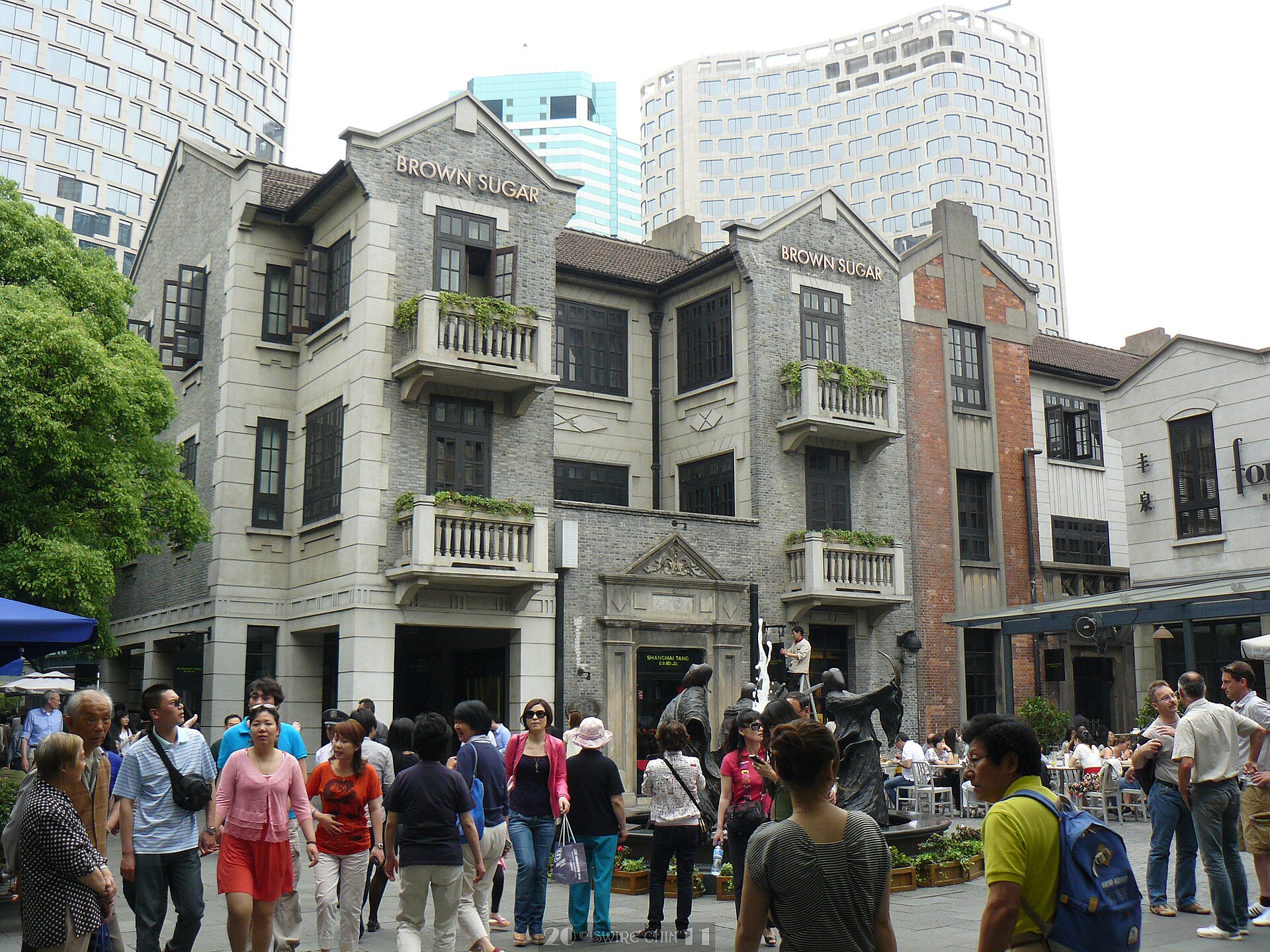
Tianzifang shikumen lanes in Shanghai's Former French Concession — narrow alleys with craft shops and cafés
Tianzifang — the living shikumen heart of the Former French Concession, where residents still occupy the upper floors above the galleries below
📅
Founded
1849
French settlement in Shanghai
🗺️
Location
Xuhui – Huangpu districts
South-west of central Shanghai
🌳
Signature feature
Plane-tree canopy
French-planted along every major street
🏛️
Architecture
Art Deco + shikumen
Chinese-European hybrid, 1920s–1940s
Café density
Hundreds of independents
Shanghai has more coffee shops than any city on earth
🚇
Central metro stop
South Shaanxi Rd — Lines 1/10/12
Walk in any direction from here
What the area feels like

The atmosphere — slow, layered and easy to stay in

This neighbourhood does not have a single headline attraction. What it has is a quality of light, a particular pace and the feeling that every turn offers something worth pausing for.

The Former French Concession is different from the rest of Shanghai in one basic way: the scale. The streets are narrower. The buildings are lower. The trees are taller and denser than anywhere else in the city. The effect, especially on a weekday morning, is a kind of hush that you do not expect to find in a metropolis of 25 million people.

What to see and do

The key sights — what to walk to and why

🏮 Tianzifang (田子坊)

The most visited single point in the Former French Concession — a maze of 1920s shikumen lane-houses on and around Taikang Road, converted gradually (and without a masterplan) into a warren of craft studios, independent cafés, design boutiques and galleries. Free to enter. The lanes are open at all hours, though shops open around 10 am. A weekday morning is a completely different experience from a weekend afternoon: quieter, slower, genuinely atmospheric. Go in through the Taikang Road entrance and immediately turn into the side-lanes rather than following the main corridor.

Full guide: Tianzifang — everything you need before you go

🏛️ Wukang Mansion and Wukang Road (武康大楼)

Wukang Mansion — designed in 1924 by the Hungarian architect László Hudec — is one of the most photographed buildings in Shanghai. The Art Deco structure curves to a pointed prow at the junction of Wukang Road and Huaihai Road, its warm-brown brick facade and stacked curved balconies making it an almost absurdly photogenic landmark. Go early in the morning or at golden hour in autumn when the plane-tree leaves turn amber. Wukang Road itself, stretching south from the mansion, is lined with more old buildings, small cafés and the kind of bougainvillea-draped walls that make it impossible to walk quickly.

🌿 Fuxing Park (复兴公园)

Shanghai's only French-designed formal garden, laid out in 1909 with a symmetrical axis, lawns and tall plane trees. What makes Fuxing Park worth your time is not the park itself (perfectly pleasant, nothing exceptional) but what happens in it: every morning, particularly early, Shanghainese residents come to do ballroom dancing on the central plaza. Couples waltz in the open air, watched by nobody in particular. It is one of those things that is hard to describe and easy to be moved by. The park is surrounded by handsome old residential buildings and is about a ten-minute walk from Wukang Mansion.

✨ Xintiandi (新天地)

Xintiandi shares the same shikumen bones as Tianzifang but was redeveloped from scratch in the early 2000s into a polished upscale dining and shopping precinct. The architecture is beautifully restored; the atmosphere is corporate and expensive. Dinner here starts at ¥150–200+ (~฿750+) per person. Nobody lives above the shops. It is less "neighbourhood" and more "boutique outdoor mall with historic aesthetics" — which is not necessarily a criticism, just a description. The best reason to visit Xintiandi: a good dinner, well-preserved architecture, and a walk that shows you what the concession-era buildings looked like when someone spent serious money on them.

🌸 Anfu Road and Wuyuan Road (安福路 · 五原路)

Two quieter residential streets that most visitors miss. Anfu Road is lined with plane trees and populated with independent boutiques, bookshops and cafés that cater more to neighbourhood residents than tourists. Wuyuan Road is even calmer — possibly the most European-feeling street in Shanghai, with old stone facades, creeping vines and residents sitting on stoops in the afternoon. Walking both roads back-to-back takes about thirty to forty minutes and is one of the better things you can do in this city.

🏠 Historic residences

The neighbourhood was home to significant figures in early Republican Chinese history. The former residence of Sun Yat-sen (孙中山故居) on Xiangshan Road is open as a museum (daily except Monday, ~¥20 entry). Zhou Enlai's former residence on Sinan Road is also accessible. If Republican-era Chinese history interests you, the area rewards detailed exploration — there are plaques and preserved buildings scattered throughout that most visitors walk past without noticing.

Shanghai's Former French Concession — tree-lined streets and Art Deco buildings in the historic neighbourhood
The characteristic tree-lined streets of the Former French Concession — the plane-tree canopy planted by French administrators still defines the neighbourhood's look and feel
Food and drink

Cafés and local food — nowhere in China does this better

Shanghai has more coffee shops than any city on earth. A large share of the most interesting ones are right here.

☕ The café culture of the Former French Concession

Walk along Anfu Road, Wukang Road or any of the side streets and count the independent cafés within a single block. You will lose count before you reach the corner. These are not chains: they are small, owner-operated places in converted lane-houses, with courtyard seating, balcony tables or window seats looking onto the street. Coffee runs approximately ¥35–65 (~฿175–325). The cafés range from serious specialty operations using imported single-origin beans to old-school Shanghai coffee houses that have been here since the 1990s.

What makes them worth your time is not just the coffee but the architecture. Sitting in a tianjing courtyard with the sky framed by the walls of a shikumen house above you, or on a narrow balcony looking down at a plane-tree boulevard, is a different experience from sitting in any other café in any other city. Spend an hour with no agenda and it will be one of the better hours of your trip.

For a deeper guide: Shanghai café guide — the city with more coffee shops than anywhere

🥟 Local food and Shanghainese cuisine

The neighbourhood has restaurants at every price point. For a genuine taste of Shanghai cuisine, look for places serving benbang cai (本帮菜) — the sweet-savoury cooking style native to the city. Dishes worth ordering: hongshaorou (red-braised pork belly slow-cooked in soy and sugar), sweet-and-sour fish, and sixi kaofu (braised gluten with fungus). Neighbourhood restaurants typically run ¥60–100 (~฿300–500) per person; the more prominent restaurants charge ¥200+ (~฿1,000+).

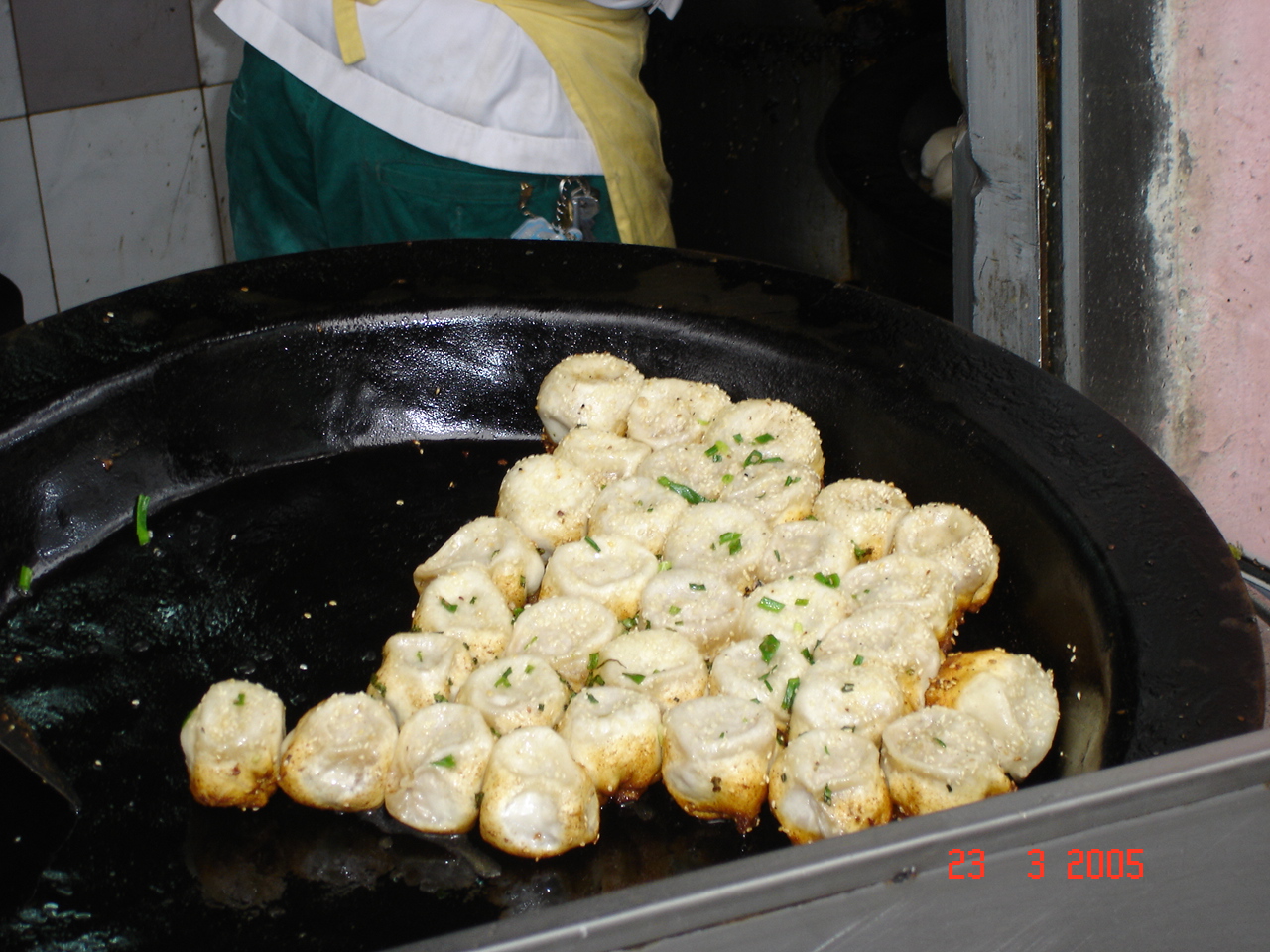
For breakfast and street snacks, shengjian bao (pan-fried pork dumplings, crispy on the bottom and juicy on top) are sold at street-side stalls throughout the area in the morning — arguably the best breakfast food in Shanghai, and typically under ¥20 (~฿100) for a portion of four.

Full guides: Shanghai food guide · Benbang cuisine — the food Shanghai calls home

Shengjian bao — Shanghai's pan-fried pork dumplings, crispy base, soft top, essential street food
Shengjian bao — Shanghai's own pan-fried dumplings, sold from street-side stalls throughout the Former French Concession every morning
Where to stay

Staying in the French Concession — what it gives you and what it costs

The right base for travellers who want to step out of the hotel and immediately be somewhere worth walking.

The case for staying here is straightforward: the neighbourhood itself is the experience, and being based in it means you can walk out at 7 am before the day warms up and have it largely to yourself. No taxi, no metro, no planning — just the street.

The honest limitation: the Bund and Pudong are a metro ride away (fifteen to twenty minutes), so if your itinerary is heavily focused on those areas, a more central Puxi hotel might make more logistical sense. But for a stay that balances access to the main sights with genuine neighbourhood character, this area delivers consistently.

Or read the individual hotel reviews for properties in the area:

Getting there

How to reach the Former French Concession

Multiple metro lines run through the neighbourhood. Choose your station based on where you want to start walking — all of them put you within a few minutes of the main sights.

🚇
South Shaanxi Rd (陕西南路)
Lines 1 / 10 / 12
Most central — walk to Huaihai Road, Fuxing Park or Tianzifang from here
🚇
Changshu Road (常熟路)
Lines 1 / 7
Western end — good starting point for Anfu Road and Wuyuan Road
🚇
Jiashan Road (嘉善路)
Line 9
Closest to Tianzifang — about 8 minutes on foot to the main entrance
🚇
Shanghai Library (上海图书馆)
Line 10
Good for Wukang Road and the western stretch of the neighbourhood
🚇
Xintiandi (新天地)
Lines 10 / 13
Drops you at Xintiandi directly — about 15 minutes' walk to Tianzifang
🚕
Taxi / DiDi
Tell the driver the street name
Useful in rain — use Amap to navigate to the right drop-off point
Walking tip: The neighbourhood is entirely on foot once you arrive — no transport needed between sights. Getting off at any of the above stations and simply walking in an interesting direction is a perfectly valid strategy. See the full Shanghai metro guide for routes from other parts of the city.
How to spend your time

A half-day walk and a full-day route — threading it all together

Half day (~3–4 hours)

8.30 am — Start at Wukang Mansion (Metro Shanghai Library, Line 10). The morning light on the Art Deco facade and the empty street give you the best photography of the day.
9.15 am — Walk south along Wukang Road. Stop at a café on Anfu Road for a coffee (¥40–55). Sit outside if the weather allows.
10.00 am — Walk east through Fuxing Park, arriving before the tourist groups. Watch the morning ballroom dancing if you time it right.
10.45 am — Make your way to Tianzifang. Enter from the Taikang Road end and immediately go into the side-lanes (248 or 274) rather than the main corridor.
12.00 pm — Lunch near Tianzifang. Try the local Shanghainese restaurants on the surrounding streets for shengjian bao or a proper benbang meal.

Full day (adding Xintiandi in the afternoon)

Follow the half-day route above, then continue:
1.30 pm — A slow walk along Huaihai Road heading east, window-shopping and watching the neighbourhood.
2.30 pm — Arrive at Xintiandi. Walk through the restored shikumen blocks. Have a coffee or browse the shops — this is where to spend money on quality rather than craft.
4.00 pm — Free time: return to a café you liked in the morning, or explore a street you did not get to.
6.30 pm — Dinner in Xintiandi (book in advance for the better restaurants) or head back to Anfu Road for something more casual at half the price.

This neighbourhood connects naturally to the rest of Shanghai — for the full picture, see Shanghai's top attractions and the complete Shanghai city guide.

Frequently asked

FAQ · Former French Concession practical

Where exactly is the Former French Concession in Shanghai?
It sits in the south-western part of central Shanghai, spanning the Xuhui and Huangpu districts. Huaihai Road marks the northern boundary; Fuxing Road cuts through the heart of it. The most central metro access is South Shaanxi Road (Lines 1, 10 and 12), which puts you in the middle of the neighbourhood with easy walking access in every direction.
How long does it take to walk the Former French Concession?
A focused route covering Wukang Mansion, Fuxing Park, Anfu Road and Tianzifang takes three to four hours. Allow a half-day if you want to sit in a café and not rush. Add Xintiandi and it is a comfortable full day. Everything is on foot — you will not need the metro between sights.
Is the Former French Concession a good place to stay in Shanghai?
For the right traveller — yes, genuinely. The area has a strong hotel line-up from the Langham Xintiandi and Andaz Xintiandi (five-star) down to the historic Okura Garden Hotel. The main honest caveat: the Bund and Pudong are a metro ride away. If those are your main focus, a more central location may suit you better.
How do I get to the Former French Concession by metro?
South Shaanxi Road (Lines 1, 10, 12) is the most central option. Changshu Road (Lines 1, 7) covers the western end. Jiashan Road (Line 9) is closest to Tianzifang. Shanghai Library (Line 10) is good for Wukang Road. See the Shanghai metro guide for detailed routing from other areas.
What is the best time of day to visit the Former French Concession?
Before 10 am on a weekday gives you the neighbourhood at its best — quiet streets, soft morning light through the plane trees, and the cafés just opening. Wukang Mansion at sunset in autumn (September–November) is spectacular when the leaves turn. Weekend afternoons, particularly around Tianzifang, are noticeably busier — go earlier or head into the quieter residential streets instead.
Klook · Shanghai activities

Former French Concession walking tours — shikumen, Art Deco and neighbourhood history

Explore the French Concession with a local guide who knows every turning — the stories behind the Art Deco facades, the history of the shikumen houses and why this particular neighbourhood survived the 20th century when so much of Shanghai did not. Book in advance through Klook.

Browse Shanghai activities on Klook →
Wherebest is an affiliate partner of Klook — we may earn a commission when you book through our links, at no extra cost to you.