Home Shanghai China Shanghai Hotels About
Home  ›  China  ›  Shanghai  ›  Benbang Cuisine
Shanghai Food Guide · 2026

Benbang cuisine (本帮菜)
the taste Shanghai calls home

Rich oil, red sauce, a sweetness that deepens with every hour in the pot. Benbang is the indigenous cooking of Shanghai — not the dumpling-and-noodle shorthand, but the slow-braised, clay-pot tradition that locals have been eating for three hundred years.

The tradition

What Benbang means — and why it matters

There are eight great regional cuisines in China, and Benbang is the one that rarely gets the spotlight it deserves. Benbang (本帮菜, běnbāng cài) translates literally as "home-style cooking" and is the indigenous culinary tradition of native Shanghainese — the food that existed before the foreign concessions, before the Art Deco skyline, before the city became a synonym for modernity.

Its character is captured in four Chinese characters: 濃油赤醬 (nóng yóu chì jiàng) — thick oil, red sauce. Soy sauce and rock sugar are slow-cooked together until they form a deep, glossy, almost lacquer-like glaze that coats everything it touches. The flavour lands sweet first, then savory, with an umami underpinning that takes hours to develop. This is not the light, restrained cooking of Cantonese cuisine, nor the fire of Sichuan. It is heavy, intentional and deeply satisfying.

Benbang grew out of working-class kitchens in the Old City — the neighbourhood clustered around what is now Yu Garden — in the Ming and Qing dynasties. Dock workers, market traders and craftsmen needed food that was filling, affordable and could be slow-cooked while they worked. Pork belly from the market. Eel from the river. Wheat gluten braised in soy. These humble origins are still visible in the food: Benbang restaurants remain, at their best, neighbourhood places where the cooking is honest and the clay pots are the same ones they always were.

The essential nine

Benbang dishes worth knowing by name

Ordered by their centrality to the Benbang tradition — dishes that tell you something true about this kitchen.
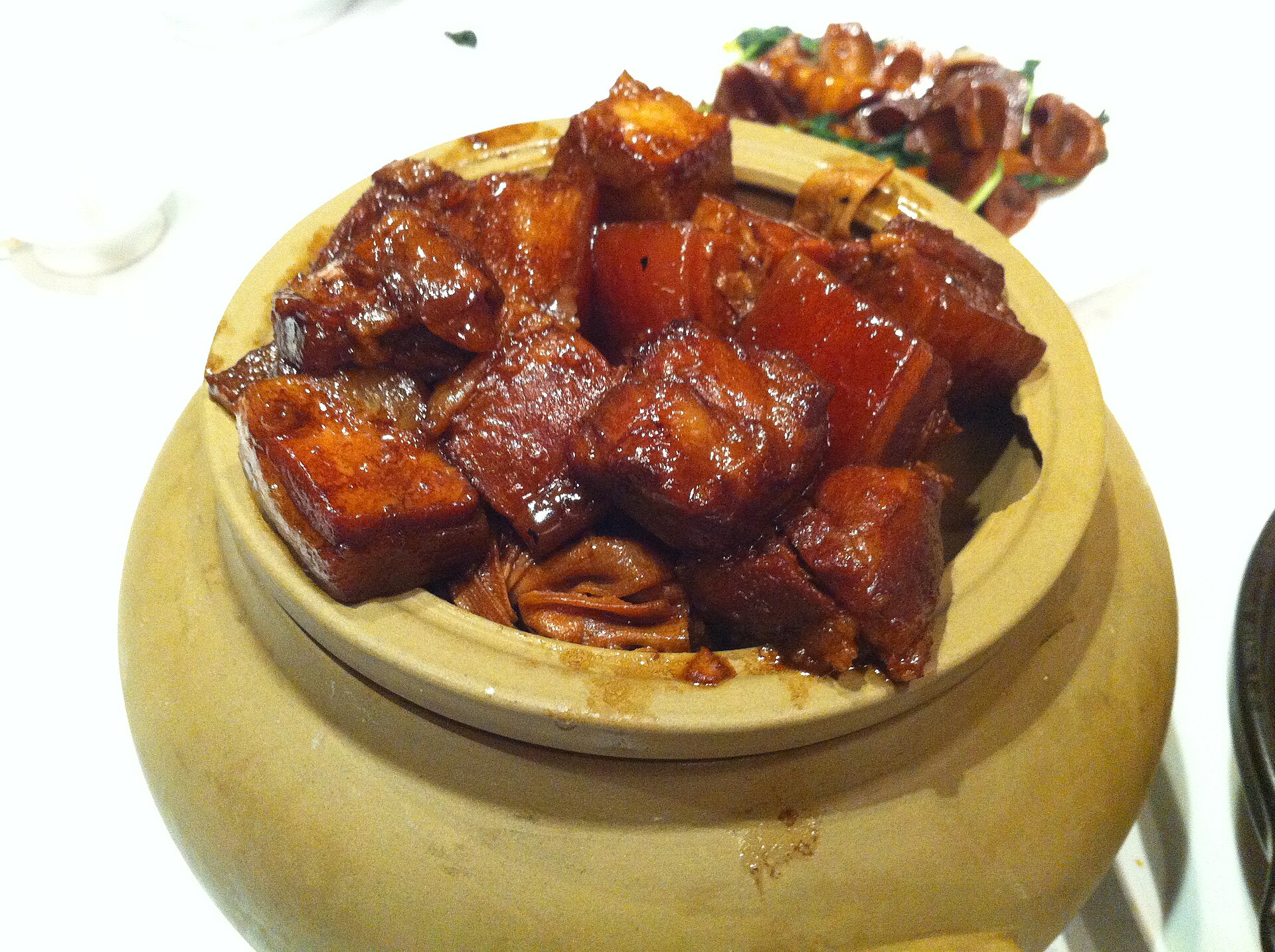
Hongshao rou — red-braised pork belly in a clay pot, deep mahogany glaze, fat rendered to trembling silk 1
Hongshao Rou (红烧肉)
Red-Braised Pork Belly · the dish that defines Benbang cooking

Pork belly braised for four hours in dark soy sauce, rock sugar, Shaoxing rice wine and aromatics until the fat has rendered to near-transparent silk and the skin quivers at a touch. The glaze is a deep mahogany that stains the white rice beneath it. The flavor is what Shanghainese people mean when they say "home cooking" — rich, round, sweet in the way that only hours of caramelisation can produce, never cloying. Old Jesse on Tianping Road has been making this in the same clay pots since 1990, and the recipe has not changed.
Where: Old Jesse (老吉士 · 41 Tianping Rd, Xuhui · book ahead) · Fu 1015 (1015 Yuyuan Rd · Michelin one star)
Price: ¥68–128 / portion · serves 2–3 as part of a shared meal
Order with: plain stir-fried greens and a bowl of white rice — the sauce is the point
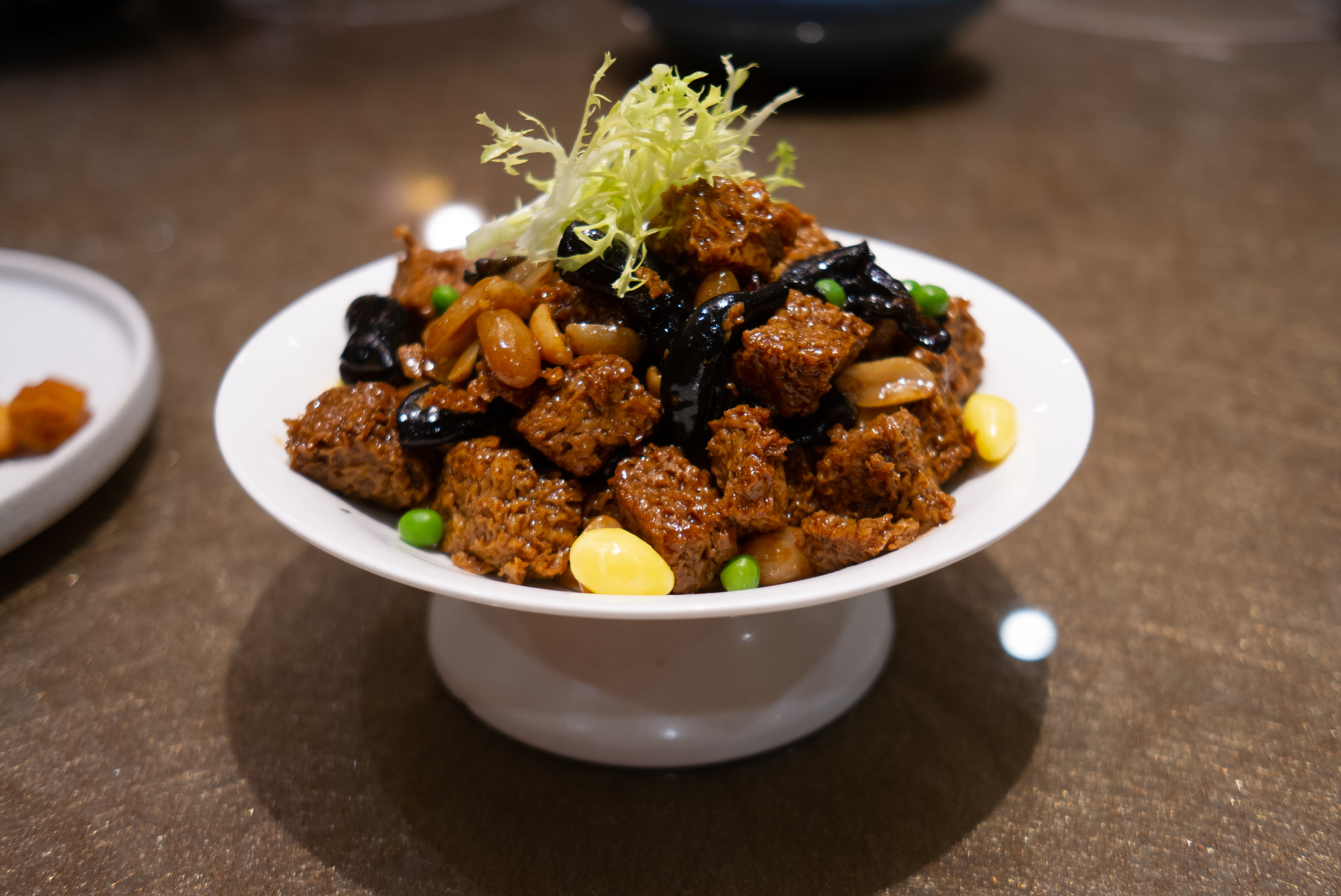
Si xi kaofu — four-joy wheat gluten, braised porous gluten cubes with wood-ear mushrooms, peanuts and lily buds in soy sauce 2
Si Xi Kaofu (四喜烤麸)
Four-Joy Wheat Gluten · the cold dish that tells you the cook is serious

Nothing looks less impressive on paper — porous wheat gluten cubes braised in soy and sugar — but si xi kaofu is the dish that separates a real Benbang table from a tourist-friendly imitation. The gluten soaks up the braising liquid the way a sponge soaks up water: every cube is saturated with sweet-savory depth. Mixed with wood-ear mushrooms, peanuts, dried lily buds and edamame (the "four joys" of the name), then served cold as an opening appetiser. A dish of this and the meal is already worthwhile.

Where: Old Jesse · Shanghai Old Restaurant · Fu 1015 · most classic Benbang restaurants
Price: ¥28–55 / cold plate
When to order: First round, cold dishes. It arrives before the hot food and sits on the table throughout.
🍗3
Zuiji (醉鸡)
Shaoxing Drunken Chicken · served cold, deeply fragrant

The chicken is poached or steamed first, then submerged in a marinade of Shaoxing rice wine, stock and salt and left for at least a day — often several. What comes back is cold, sliced and faintly trembling: a pale gold from the Shaoxing, with an aroma that sits somewhere between wine, flowers and something entirely itself. The flavour is gentle, the wine present but never sharp. This is not a dramatic dish. It is the kind of thing you eat and then keep reaching for without quite meaning to. A fixture on every traditional Benbang cold-dish round.

Where: Fu 1015 · Old Jesse · most classic Benbang restaurants
Price: ¥45–88 / cold-dish plate
Tip: Order first round with the cold dishes — it needs no reheating and only gets better as you eat
🐟4
Xun Yu (熏鱼)
Shanghai Smoked Fish · not smoked at all, and all the better for it

The name is misleading: no smoking involved. Carp or herring is marinated, deep-fried until completely crisp, then plunged while still hot into a warm bath of soy sauce, sugar, Shaoxing wine and five-spice. As it cools, the sauce sets around the fish in a dark, lacquered coating — the outside shatters, the inside stays just yielding. Served cold as a cold appetiser. This has been sold by weight at Shanghai morning markets for centuries, and it is one of those things that visitors initially overlook and then can't stop ordering. The sweetness is forward and unashamed, the fish clean underneath.

Where: Hai Jinzi (240 Jinxian Rd, near Shaanxi South Rd) · most classic Benbang restaurants · Jing'an morning wet markets
Price: ¥28–55 / cold plate
🍲5
Yan Du Xian (腌笃鲜)
Salt Pork, Fresh Pork & Bamboo Shoot Soup · spring only at its best

The name is almost a recipe: 腌 (salt-cured pork) + 笃 (simmer slowly) + 鲜 (fresh pork or bones). Two kinds of pork — one cured for weeks, one fresh — simmer together for two to three hours with spring bamboo shoots until the broth turns milky-white and deeply savoury. The cured pork seasons the broth; the fresh pork provides the body; the bamboo shoots bring a sweetness and a slight crunch that cuts through the richness. It's the most quietly beautiful soup in the Benbang repertoire — nothing to look at in the bowl, nothing you will forget at the table.

Where: Old Jesse · Lan Xin (251 Fumin Rd, Xuhui) · most Benbang restaurants
Price: ¥48–88 / pot (serves 2–3)
Season: Spring bamboo shoots (March–May) make the definitive version. Available year-round with dried or winter bamboo.
🐍6
Xiang You Shan Hu (响油鳝糊)
Eel with Sizzling Hot Oil · eat immediately, no exceptions

This is the dish with the theatrics. Freshwater eel — a Jiangnan river staple — is stir-fried in dark soy, sugar and ginger until glossy and deeply flavoured, then plated hot. The waiter arrives with the dish and, while you watch, the chef ladles a spoonful of smoking-hot rendered lard directly onto the centre of the plate. It hits the soy and ginger with a violent sizzle — 响 (xiǎng) means resonant sound — sending up a cloud of fragrant smoke. The eel is soft, yielding and sweet in the way only freshwater fish can be. You eat it now. Cold eel is a different meal entirely.

Where: Shanghai Old Restaurant (242 Fuyou Rd, near Yu Garden) · Fu 1015 · Old Jesse
Price: ¥88–138 / portion
Rule: Eat immediately after the oil is poured. Do not wait.
🌿7
Caotou Quanzi (草头圈子)
Braised Pork Intestine with Clover Greens · the dish that tests commitment

If you order this without hesitation, you have understood Benbang. Quanzi (圈子) is large intestine — cleaned thoroughly, slow-braised in soy and sugar and aromatics until it is tender and completely without off-flavour, then stir-fried with caotou (草头), a type of clover shoot native to the Jiangnan region with a faint herbaceous sweetness. The intestine is silky-yielding, the clover is bright and cuts the richness. This is working-class Shanghai cooking at its most direct: the part of the animal most people ignore, transformed by patience and skill into something genuinely extraordinary.

Where: Shanghai Old Restaurant (242 Fuyou Rd) · classic Benbang restaurants in Old City
Price: ¥68–118 / portion
Season: Caotou clover shoots are at their best March–May
🦐8
You Bao Xia (油爆虾)
Oil-Exploded River Shrimp · shell-on, sweet, crunch-and-swallow

Small freshwater shrimp from the lakes of the Jiangnan delta — dropped whole into very hot oil until the shells crackle and turn crisp, then tossed in a glaze of rock sugar and dark soy until each shrimp is lacquered and glistening. You eat them shell and all: the shell shatters into something fragile and sweet, the shrimp inside is clean and fresh. This is a dish that families in Shanghai ate every summer weekend, the shrimps piled in the centre of the table, everyone reaching across each other. June to August brings the best fresh river shrimp of the year.

Where: Fu 1015 · Old Jesse · riverside Benbang restaurants along the Jiangnan waterways
Price: ¥55–98 / portion
Season: Best June–September for fresh river shrimp
🐠9
Hongshao Huashui (红烧划水)
Red-Braised Carp Tail · the cook's true test

Huashui (划水) means "paddling through water" — it's the tail section of the carp, the piece most cooks elsewhere discard. In Benbang kitchens, it is braised in the same dark soy and sugar as the pork belly, until the skin is gelatinous and the flesh falls freely from the fine bones. There is something quietly elegant about a tradition that takes the overlooked cut and makes it the one locals use to judge a kitchen: if the tail is right — soft, glossy, flavoured all the way through — the restaurant is cooking honestly. If it's overcooked or underseasoned, you know. Order this and see for yourself.

Where: Shanghai Old Restaurant (242 Fuyou Rd) · Lan Xin (251 Fumin Rd) · Old Jesse
Price: ¥68–118 / portion
Tip: Eat with white rice — the braising liquid over plain rice is itself a complete thing
The table

How a Benbang meal actually unfolds

The order of things

A traditional Benbang meal opens with cold dishes (冷菜, lěng cài) — si xi kaofu, xun yu and zuiji arrive together and sit on the table before any hot food is ordered. They're there when you sit down, there to pick at while the hot dishes come, still there when the meal ends. This sequence is not incidental: the cold dishes set the register of the meal, the soy-and-sugar palette you'll be eating within for the next hour.

Hot dishes arrive in no strict order — you call for them as you go. Hongshao rou comes in its clay pot and stays warm. Yan du xian comes as a communal soup. Xiang you shan hu arrives sizzling and must be eaten immediately. Everything is placed in the centre of the table; everything is shared. Rice is ordered separately.

Group sizes: Four people can order 4–5 dishes comfortably. Two people: 2–3 dishes plus a soup. Price per head: neighbourhood Benbang ¥80–150; mid-range like Old Jesse ¥150–300; fine-dining like Fu 1015 ¥300–600.

A word on payment

Most mid-range Benbang restaurants accept WeChat Pay and Alipay primarily. Some take cash in yuan. Few outside the top tier accept foreign credit cards. Download Alipay before arriving and link a Visa or Mastercard through its international mode — this works for visitors and covers almost every situation. Fu 1015 and Shanghai Old Restaurant accept foreign cards. Smaller neighbourhood spots often don't.

Many older Benbang restaurants in the Old City area have no English menu. Pointing works. Showing a Chinese name on your phone works better. The characters 本帮菜 on a sign outside tell you the kitchen is cooking the real thing.

Restaurants

Where to go — every budget

Places that Shanghainese people have been recommending to each other for decades. None are invented.

1
Old Jesse (老吉士酒家)
The classic mid-range Benbang dinner · Xuhui · open since 1990

Ask anyone in Shanghai who takes Benbang seriously where to eat, and Old Jesse comes up first. The room is small, the decor unremarkable, the menu a thorough document of the cuisine. The hongshao rou is slow-braised to a trembling, deeply glossy finish. The braised fish head blanketed in spring onion is a signature. The lion's head meatballs arrive in the same clay pots as opening day. Book 2–3 days ahead for weekend evenings; weekday lunches sometimes accept walk-ins.

Address: 41 Tianping Rd, Xuhui · MRT Line 1, Hengshan Rd station
Hours: 11 am–2 pm / 5–10 pm · Price: ¥150–300/person · Reservations strongly recommended
2
Shanghai Old Restaurant (上海老饭店)
Founded 1875 · near Yu Garden · the oldest Benbang restaurant still operating

The restaurant that has been cooking Benbang food the longest — open since 1875, located in the Old City near Yu Garden, in the neighbourhood where Benbang was born. The xiang you shan hu and caotou quanzi here are considered benchmark versions that other kitchens measure themselves against. Multiple floors with private rooms for larger groups; an English-pictorial menu makes ordering accessible. A more historical and less intimate experience than Old Jesse, but the pedigree is irreplaceable.

Address: 242 Fuyou Rd, Huangpu · MRT Line 10, Yu Garden station
Hours: 11 am–2 pm / 5–9 pm · Price: ¥100–200/person · Foreign credit cards accepted
3
Fu 1015 (福一零一五)
Michelin one star · 1015 Yuyuan Rd · Benbang in a 1920s colonial villa

Benbang at fine-dining scale, without losing the tradition. A colonial villa on Yuyuan Road, ten private dining rooms, velvet chairs and candlelight — but the food is the same canon: hongshao rou, zuiji, eel, crab roe preparations. The cooking is technically exceptional and the ingredients are sourced with care. At ¥300–600 per person, this is the occasion-dinner version of a cuisine that started in a dock worker's kitchen, and somehow the contrast makes it more interesting. Reservations always required.

Address: 1015 Yuyuan Rd, Changning · MRT Lines 2/11, Jiangsu Rd station
Hours: 11 am–2 pm / 5:30–9:30 pm · Price: ¥300–600/person · Reservations essential
4
Lan Xin (兰心餐厅)
Neighbourhood Benbang · Former French Concession · honest and unhurried

If the budget is tight but the appetite for real Benbang is not, Lan Xin is the answer. A small, plainly decorated room in a Xuhui side street, a short menu of well-executed classics and a price point roughly half that of Old Jesse. The kind of place where locals eat on a Tuesday evening without ceremony. The dishes that are there are made with care; the dishes that aren't on the menu simply aren't made. A reliable constant in a neighbourhood full of trend-chasing restaurants.

Address: 251 Fumin Rd, Xuhui · MRT Line 1, Changshu Rd station
Hours: 11 am–2 pm / 5–9 pm · Price: ¥80–150/person
Frequently asked

FAQ · Before your first Benbang meal

What is Benbang cuisine and how does it differ from other Chinese regional food?
Benbang (本帮菜) literally means "home-style cooking" and is the indigenous cooking tradition of native Shanghainese. Its defining characteristic is 濃油赤醬 (thick oil, red sauce) — soy sauce and rock sugar slow-cooked into a deep, glossy glaze. Unlike Sichuan (spicy and numbing) or Cantonese (clean, minimal seasoning), Benbang runs decidedly sweet-savory, favours long braises over the wok, and gravitates toward pork belly, freshwater eel, river shrimp and crab.
Where are the best Benbang restaurants in Shanghai?
By budget: Budget–mid: Lan Xin (251 Fumin Rd, Xuhui, ¥80–150/person) and Shanghai Old Restaurant (242 Fuyou Rd, near Yu Garden, ¥100–200/person). Mid-range: Old Jesse (41 Tianping Rd, Xuhui, ¥150–300/person). Fine dining: Fu 1015 (1015 Yuyuan Rd, Changning, Michelin one star, ¥300–600/person). Book ahead for Old Jesse and Fu 1015.
How does a traditional Benbang meal unfold?
Cold dishes (冷菜) come first — si xi kaofu, xun yu and zuiji are on the table before anyone orders hot food. Hot dishes follow and are shared family-style in the centre of the table. White rice is ordered separately. For a group of four, plan 4–5 dishes. Budget ¥80–150 per person at a neighbourhood restaurant, ¥150–300 at mid-range, ¥300–600 at a fine-dining establishment.
What does "sizzling hot oil" mean for xiang you shan hu (响油鳝糊)?
Freshwater eel is stir-fried in dark soy, sugar and ginger, then plated. At the table, the chef pours a ladle of smoking-hot lard onto the centre of the dish — the oil hits the soy and ginger with an audible crack and sizzle (响, xiǎng, means "resonant sound") and a burst of fragrant steam. Eat immediately. Cold eel tastes different and the whole spectacle becomes a memory rather than a meal.
What is the difference between Benbang and Haipai cuisine?
Benbang (本帮) is the indigenous working-class cooking of native Shanghainese: rich, slow-braised, rooted in the Old City before the concessions. Haipai (海派) is the hybrid cuisine that emerged from a century of foreign concession culture — Shanghai borscht, pan-fried pork chops with ketchup, Art Deco café culture. Both traditions live in the same city, sometimes in the same restaurant. A Benbang restaurant may also serve Haipai dishes; they are not mutually exclusive.
Can I find good Benbang food on a tight budget?
Absolutely. The characters 本帮菜 on a restaurant sign indicate the kitchen is cooking the real thing. Lanes around Yu Garden (the Old City) and the Xuhui side streets both have small Benbang spots at ¥40–80 per person. Lan Xin at 251 Fumin Rd is a reliable, well-regarded option at ¥80–150 per person for genuinely cooked classics — not tourist-simplified versions.
Klook · Food Tours

Shanghai Food Tours — eat the right things with someone who knows

Guided food walks with local experts: Benbang restaurants in the back streets, morning market breakfast, Old City snacks and the story behind the sauce. No language barrier. No guessing which place is worth the queue.

Browse Shanghai Food Tours on Klook →
Wherebest is an affiliate partner of Klook — we may earn a commission when you book through our links, at no extra cost to you.