Home Shanghai China Shanghai Hotels About
Home  ›  China  ›  Shanghai  ›  Attractions  ›  Tianzifang
Shanghai · French Concession

Tianzifang (田子坊)
Getting lost in Shanghai's most alive shikumen lanes

A tangle of 1920s stone-gate lane-houses in the old French Concession — free to enter, impossible to map in a single visit, and full of craft studios, independent cafés and design shops tucked behind heavy wooden doors.

What it is

Tianzifang — Shanghai's most lived-in arts quarter

You turn into what looks like an ordinary lane off Taikang Road and within thirty seconds the city rearranges itself. A ceramic studio occupies what was once a family kitchen. A specialty coffee bar has colonised a ground-floor room barely larger than a wardrobe. Three lanes down, a woman hangs laundry from a second-floor balcony above a design boutique, completely indifferent to the tourists below. That layering — working neighbourhood on top, creative quarter at street level — is what makes Tianzifang unlike anything else in Shanghai.

Tianzifang sits on and around Taikang Road (泰康路) in the Huangpu District, in the area of Shanghai that was once the French Concession. The buildings are shikumen (石库门) — literally "stone-gate houses" — a residential form unique to Shanghai that fuses southern Chinese courtyard-house traditions with European terraced-house proportions. The characteristic heavy stone doorframes, wooden double doors and narrow internal courtyards were built from the 1920s through the 1930s for middle-class Shanghai families. Most of the neighbourhood was still functioning as ordinary housing until artist Huang Yongyu rented a studio here in the late 1990s, and other artists followed. The conversion from residential lanes to arts enclave happened gradually and without a master plan, which is why it still feels like a neighbourhood rather than a theme park.

Entry is free. There are no gates, no tickets and no set hours for the lanes themselves. Shops open around 10 am and bars stay open into the evening. The only honest caveat: the alleys are genuinely narrow, and on a weekend afternoon the crowds are real. A weekday morning visit is a completely different experience.
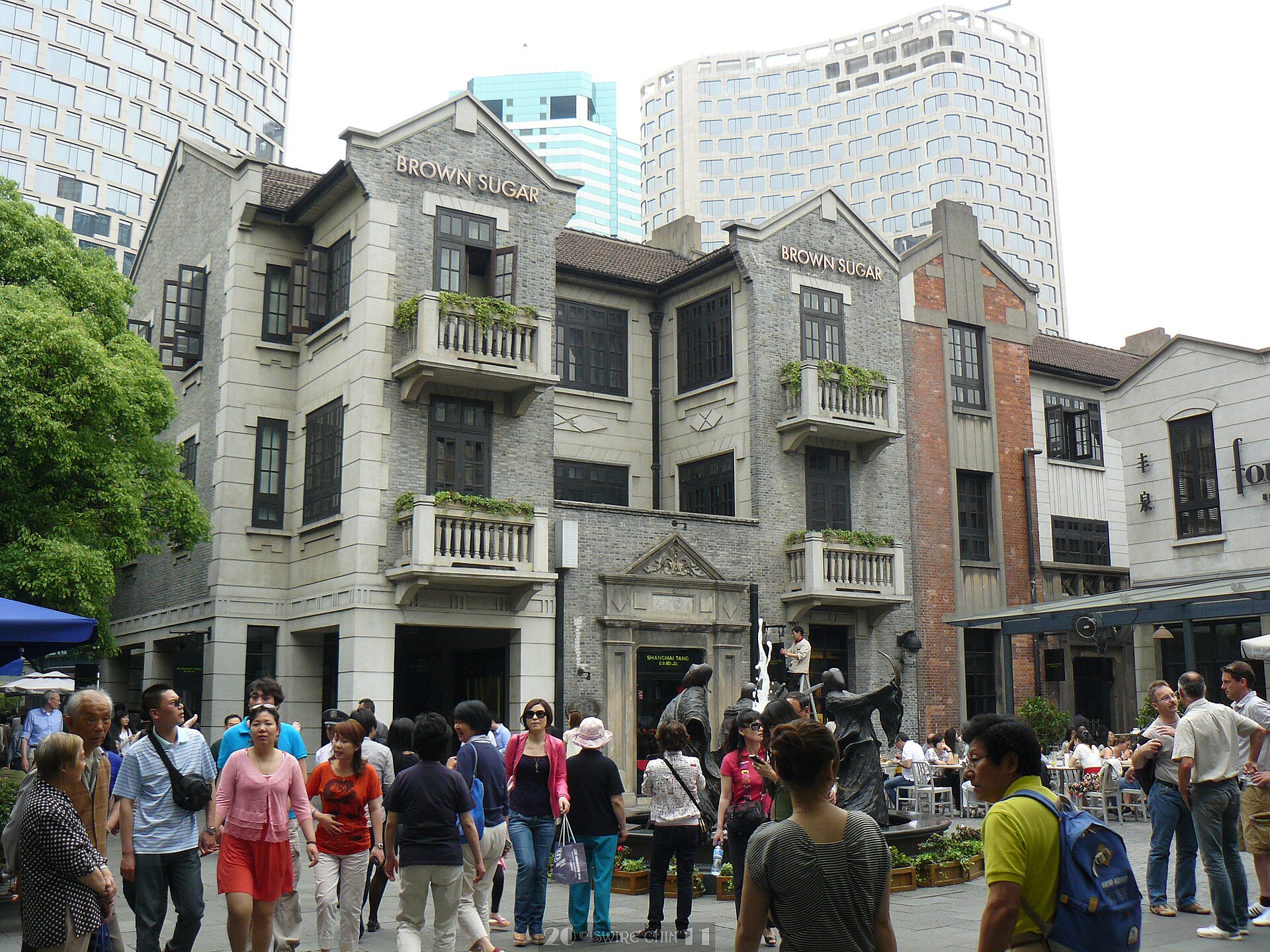

Tianzifang, Shanghai — narrow shikumen lanes with craft shops and cafés in the French Concession
Tianzifang's lanes — residents still live upstairs while galleries and cafés occupy the ground floors below
🎫
Entry
Free
No tickets, no gates, lanes always open
🕙
Shops open
~10 am – 10 pm
Bars and cafés stay open evenings
🚇
Metro
Dapuqiao, Line 9
Exit 1 · 5-minute walk
🏠
Architecture
Shikumen, 1920s–1930s
Shanghai-specific Chinese-European lane houses
Coffee
~¥35–55 (~฿175–275)
Dozens of independent cafés
📍
Location
Taikang Road, Huangpu District
Heart of the former French Concession
The architecture

What makes a shikumen — and why it matters here

A building type that exists nowhere else on earth, and Tianzifang is the best place in Shanghai to experience it still breathing.

Honest comparison

Tianzifang vs Xintiandi — which one is right for you

Both are in the former French Concession, both are built from shikumen lane-houses, and both are within twenty minutes of each other on foot. That is where the similarities end.

🏮 Tianzifang — organic, indie, lived-in

Narrow lanes, small independent shops, prices that do not require a second mortgage. Coffee runs ¥35–55 (~฿175–275); craft souvenirs from ¥30 (~฿150). The lanes are tight, which means genuinely crowded on weekend afternoons and genuinely peaceful on weekday mornings. Residents still live upstairs. The atmosphere is bohemian in the old sense: people here are actually making things and selling them. Best for: browsing handmade craft, café-hopping, photography and getting a sense of old Shanghai neighbourhood life.

✨ Xintiandi — polished, upscale, architectural

A developer-managed restoration from the early 2000s: the shikumen buildings are beautifully preserved, the streets are wide and clean, and the shops and restaurants are international brands and upscale dining. Dinner starts at ¥150–200+ (~฿750+) per person. Nobody lives here — it is a pure commercial district that happens to look historic. Best for: a well-judged dinner, a stroll through impeccably maintained architecture, or drinks somewhere that takes reservations.

If you have time, visit both — a morning in Tianzifang and an evening in Xintiandi is a genuinely good day. If you have to choose just one: Tianzifang for the feeling of something real, Xintiandi for the feeling of something curated.

Shanghai's French Concession — tree-lined streets and historic architecture in the former international settlement
The French Concession streets surrounding Tianzifang — plane trees, old stonework, and a neighbourhood that survived the 20th century largely intact
When to go

Timing your visit — avoiding the bottleneck

Tianzifang is one of the most visited spots in Shanghai, and the lanes are genuinely narrow — when it is busy, it is very busy. Knowing when to arrive makes a substantial difference.

🌅
Best
Weekday before 10.30 am
Quiet lanes, morning light, some shops just opening
☀️
Good
Weekday afternoon
All shops open, manageable crowds
⚠️
Avoid
Weekend afternoons
The lanes become genuinely hard to walk
Weekend tip: If a weekend is your only option, enter from the Taikang Road end and walk deeper into the side-lanes immediately — Lane 248 and 274 are noticeably quieter than the main lane even on busy days. The worst crowds concentrate at the first fifty metres of Lane 210.
What to do

Shopping, coffee and the best photography in the French Concession

🛍️ Shopping — craft and independent design

What you find in Tianzifang is categorically different from anything in the Nanjing Road shopping strip or the malls. The shops here are mostly independent: handmade jewellery, studio ceramics, art prints, vintage Shanghai posters and postcards, independent fashion labels and the kind of decorative objects that do not exist anywhere else. Prices range from around ¥30 (~฿150) for small souvenirs to ¥500+ (~฿2,500) for original studio work or quality craft pieces.

A note on bargaining: shops with clearly marked price tags are generally fixed price. A smaller number of vendors in the deeper lanes are open to negotiation — but starting a hard bargain in a one-person craft studio feels wrong, and usually is.

☕ Cafés — the real reason many people come back

Tianzifang has dozens of independent cafés, ranging from serious specialty coffee operations using imported single-origin beans to old-school Chinese tea houses that have been there since before the artists arrived. A coffee runs approximately ¥35–55 (~฿175–275). Most seating is small tables in the lane itself or on narrow balconies — which is exactly the point. Find a window seat looking onto the alley and spend an hour watching the neighbourhood go about its day.

For a deeper look at Shanghai's extraordinary café culture, see the Shanghai café guide.

📸 Photography — layers, light and texture

Tianzifang rewards photographers precisely because every frame has depth: old brick walls behind, carved stone doorframes in the middle distance, lanterns strung overhead, a painted shop sign in the foreground. The light in the narrow lanes is at its best in the morning, when it falls in diagonal shafts between the buildings.

Before 10 am on a weekday is the golden window for photography — the lanes are empty enough that you can frame a shot without strangers walking through it. By 10.30 am the first tour groups arrive. By midday on a weekend the lanes are wall-to-wall people, which has its own photographic possibilities but requires a different approach.

Getting there

How to reach Tianzifang

Metro is the straightforward option from anywhere in central Shanghai — Line 9 deposits you at the doorstep.

🚇
Metro Line 9
Dapuqiao station (打浦桥)
Exit 1, follow signs for Taikang Road — about 5 minutes on foot to the main entrance
🚇
Metro Lines 1 / 9
South Shaanxi Road (陕西南路)
A 12-minute walk through the French Concession — a good option if you are coming from Xintiandi or Jing'an
🚕
Taxi / DiDi
Tell the driver "Taikang Road (泰康路)"
Convenient in rain — but traffic in this area can be slow during peak hours
Combining sights: Tianzifang sits at the heart of the French Concession. Huaihai Road is five minutes on foot to the north; Xintiandi is about fifteen minutes east. A half-day in this neighbourhood — Tianzifang in the morning, lunch on Huaihai Road, Xintiandi in the afternoon — is one of the better ways to spend time in Shanghai without rushing.
Practical notes

Before you go — what to know

💳 Paying — mobile-first

The majority of Tianzifang shops accept only Alipay or WeChat Pay. Credit card acceptance is rare; cash is accepted at some vendors but increasingly uncommon. International visitors can now link a foreign Visa or Mastercard to Alipay International through the app — it is worth setting up before your trip rather than on arrival. A small amount of cash (¥200–300) is useful backup for the handful of vendors who prefer it.

🗺️ Getting lost is the point

Tianzifang's lanes branch and reconnect in a way that resists easy mapping. There is no single "correct" route, and trying to walk every lane systematically in one visit is not realistic. The better approach is to give yourself an hour and a half with no agenda, turn whichever way looks interesting, and see what comes up. You will find the same lane from two different directions and realise you have been walking in a loose spiral the whole time. That is the experience.

🌧️ Weather and seasons

Tianzifang is largely outdoors. Heavy rain makes walking the lanes uncomfortable, though the narrow alleys provide some shelter from light drizzle. The best seasons in Shanghai are spring (March–May) and autumn (September–November), when temperatures are mild and the sky tends to be clear. Shanghai's plum-rain season (June–July) brings persistent drizzle — pack an umbrella if you visit then. Summer (August) is hot and humid.

Where to stay

Hotels near Tianzifang in the French Concession

From heritage boutique hotels to five-star options — the Xintiandi and Huaihai area puts you within walking distance of the lanes.

Frequently asked

FAQ · Tianzifang practical

Is Tianzifang free to enter?
Yes, entirely. Tianzifang is a public neighbourhood and the lanes are open to walk at any time, at no charge. Any money you spend is optional — on coffee, food, or something from one of the craft shops inside.
What are Tianzifang's opening hours?
The lanes are always accessible. Most shops open around 10 am; cafés and bars stay open into the evening, some until around 10 pm. The best time to visit is a weekday before 10.30 am — quiet, good light for photography, and the neighbourhood feels like itself rather than a tourist attraction.
Which metro line goes to Tianzifang?
Take Metro Line 9 to Dapuqiao station (打浦桥). Use Exit 1 and follow signs for Taikang Road — about five minutes on foot to the main entrance. Coming from Xintiandi or Jing'an? South Shaanxi Road station (Lines 1 and 9) is a pleasant twelve-minute walk through the French Concession streets.
What is the difference between Tianzifang and Xintiandi — which should I visit?
Tianzifang is an organic neighbourhood that evolved around artists and still has residents living above the shops. It is indie, slightly cramped and full of craft. Xintiandi is a developer-restored shikumen precinct that has been converted into upscale dining and shopping — beautiful architecture, high prices, no actual residents. For craft browsing and café culture, Tianzifang. For a good dinner and polished architecture, Xintiandi. If you can, do both on the same half-day — they are fifteen minutes apart on foot.
How do I pay at Tianzifang — do shops accept credit cards?
Most shops accept only Alipay or WeChat Pay. Credit card acceptance is limited. International visitors can link a foreign card to Alipay International through the app — it is worth setting up before you arrive. Carry a small amount of cash (¥200–300) as a backup; a few vendors prefer it.
Klook · Shanghai activities

French Concession walking tours — Tianzifang, shikumen history and beyond

Explore the French Concession with a local guide who knows every lane — the stories behind the stone doorframes, the history of the shikumen houses, and the neighbourhood that survived the 20th century remarkably intact. Book in advance through Klook.

Browse Shanghai activities on Klook →
Wherebest is an affiliate partner of Klook — we may earn a commission when you book through our links, at no extra cost to you.