Home Shanghai China Shanghai Hotels About
Home  ›  China  ›  Shanghai  ›  Café Guide
☕ Shanghai Café Guide · 2026

Shanghai — the world's café capital

More than 9,100 cafés in a single city. Plane trees arching over Art Deco lanes. Third-wave roasters tucked into century-old alleyways. And a coffee culture that doesn't look like anywhere else on earth.

Why Shanghai

The city that took coffee seriously

Imagine a street where London plane trees sixty feet tall form a continuous canopy, their dappled light falling across tiled doorsteps and the curved facades of 1920s apartment buildings. A street where the ground-floor of what was once a French diplomat's residence now holds a counter-sized specialty café, and the barista behind it is pulling a single-origin Yunnan pour-over with the focused attention of a surgeon. That street is Wukang Road in the Former French Concession. It exists, and it is as good as it sounds.

The numbers that frame Shanghai's coffee scene were confirmed in 2024: the city has more than 9,100 cafés — more than London, New York and Tokyo combined. In certain blocks of the French Concession, you will find fifty cafés on a single street. That figure sounds invented until you walk it and start counting.

What separates Shanghai from other high-density coffee cities is that quantity does not come at the expense of quality. European café culture put down roots here during the concession era of the early 20th century. The young Chinese urbanites who took over the scene in the 2010s brought genuine curiosity about beans, brewing craft, and the question of what coffee could be when you applied Chinese ingredients to it. The answer — called C-Coffee — is one of the most interesting things happening in coffee anywhere in the world right now.

The heart of the scene

The Former French Concession — where it all lives

Four streets. Fifteen minutes on foot. The densest concentration of genuinely good cafés outside Japan.
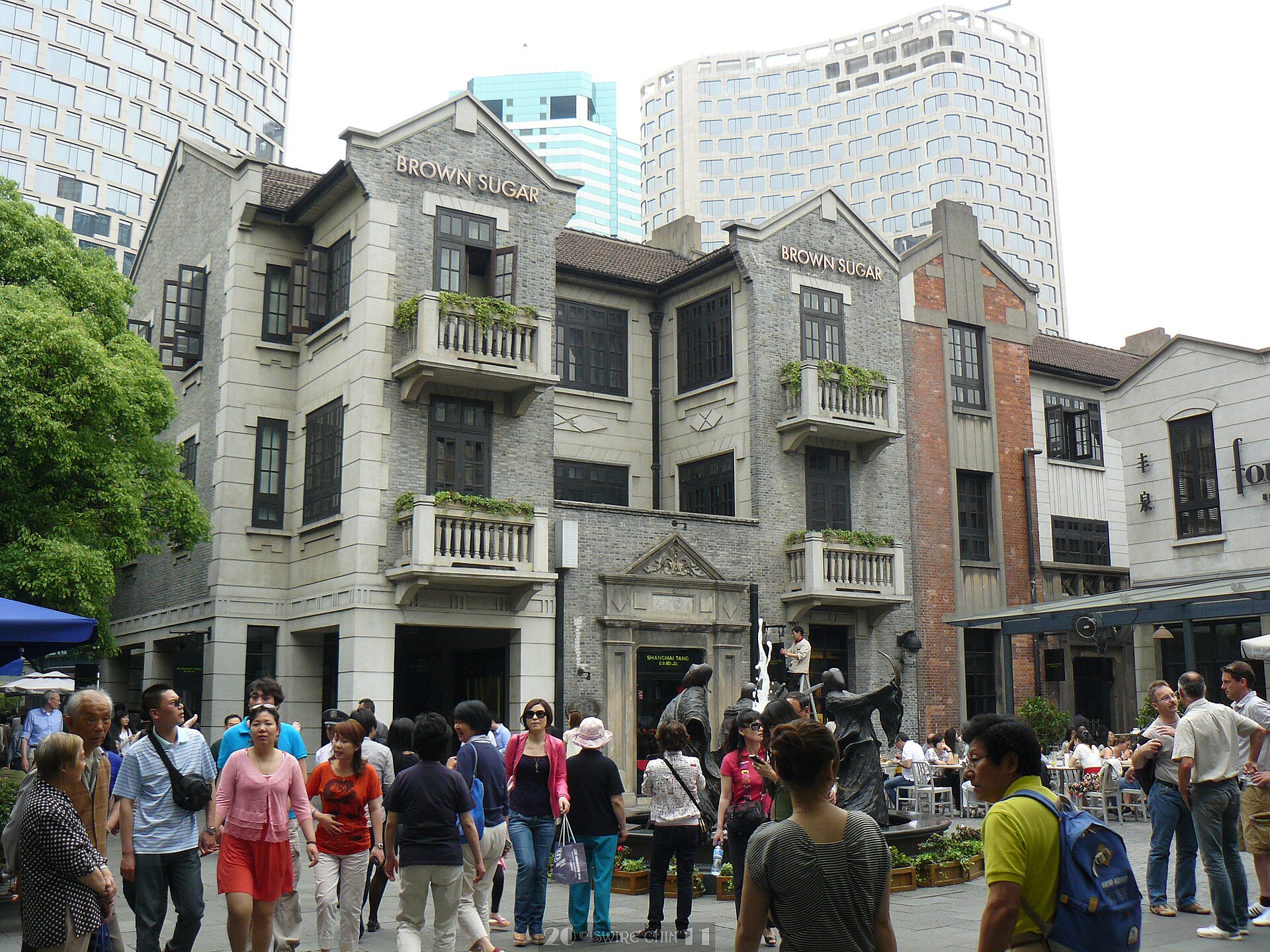
Tianzifang alleyways in the Former French Concession, Shanghai — old shikumen lane houses and narrow passages lined with cafés and studios

The Former French Concession stretches westward from the Huangpu River across several square kilometres of tree-lined streets and preserved lane-house neighbourhoods (lilong). Within it, the cluster that matters most for cafés is the rectangle formed by Wukang Road – Anfu Road – Wuyuan Road – Yongkang Road — four streets that each have a distinct personality but sit within easy walking distance of one another.

Wukang Road is the most photographed: a gently curving boulevard where the famous Wukang Mansion (a 1924 Art Deco apartment building) anchors the south end and plane trees make a tunnel of the entire length. Anfu Road runs parallel, a touch quieter, popular with locals as a go-to regular café. Yongkang Road is the most concentrated: a short street where four or five independents sit within metres of each other, tables spilling onto the pavement in good weather.
Getting there: MRT Line 10, Jiaotong University station, or Line 1, Changshu Road station. Both put you within a 10-minute walk of Yongkang Road. The four streets are walkable between each other — no taxi needed.
Six kinds of café

Know what you're walking into

Shanghai's café scene has distinct categories. Understanding them before you go means choosing the right one for the day.

1
Specialty / Third-Wave Roasters
Independent · Single origin · Pour-over

The beating heart of Shanghai's coffee identity. Owner-operators who think about farm provenance, varietal and roast profile the way a sommelier thinks about vintage. Some are pour-over only; some roast in-house. Seesaw Coffee is the most recognised name in this tier — ethically sourced, seasonally rotating menus. Blacksheep Espresso is known for its SOE milk coffee. Rumors Coffee, near the Wukang Building, brought Japanese hand-brew technique to the city as far back as 2010, before the scene had a name.

Atmosphere: Craft-focused · quiet · good for staying a while
Price: ¥35–55 (~£3.80–6) / cup
Order: Pour-over · single-origin espresso · cold brew
🌸2
C-Coffee — Chinese Innovation
Jasmine Latte · Osmanthus Cold Brew · Longjing Tea Espresso

Shanghai's original contribution to global coffee culture. C-Coffee takes traditional Chinese tea or flower ingredients — jasmine, osmanthus, Longjing green tea, oolong — and builds them into espresso drinks. The result is not a novelty; it is a coherent flavour system. A Jasmine Latte smells like a tea house and tastes like both drinks simultaneously. An Osmanthus Cold Brew carries a natural sweetness that no sugar can replicate. O.P.S. Café on Taiyuan Road runs an entirely signature-drinks menu built on this logic.

Where: Most independent specialty cafés · O.P.S. Café, Taiyuan Road
Price: ¥38–65 (~£4.10–7)
Tip: Ask what the seasonal menu is — it changes every two to three months
3
Manner Coffee & Local Chains
Manner · Luckin · M Stand · Peet's China

Shanghai is where Manner Coffee started — from a single counter-sized kiosk in the French Concession that sold oat milk lattes for ¥15. Now it has hundreds of branches citywide and is the daily coffee of choice for a large portion of Shanghai's working population. The quality is genuinely good for the price. M Stand has stronger design credentials. Luckin Coffee is the cheapest option. None of these are a compromise — if you want a reliable ¥15 flat white before catching the metro, they deliver.

Price: ¥10–22 (~£1.10–2.40) / cup
Good for: Morning coffee on the go · next to any metro station
Note: Order via the app — always cheaper than walk-in
🏛️4
Heritage & Bund Cafés
Art Deco buildings · river views · the 1930s in the room

Some of Shanghai's cafés occupy buildings that have never stopped being exceptional — marble floors laid in the 1920s, panelled walls that were fashionable when the Bund was the financial centre of Asia, windows that frame the Pudong skyline as if framed by a set designer. % Arabica opened a Bund branch with river-facing seating. The coffee at these places is not a concession to the setting; you are simply paying for the architecture as well as the cup. Worth it once, on a clear afternoon.

Examples: % Arabica The Bund · heritage hotel lobbies
Price: ¥55–90 (~£6–10) / cup
Best time: Late afternoon as the Pudong towers catch the light
🏮5
Lilong Alley Cafés
Old lane houses · tiny rooms · discovered on foot

Lilong are the traditional residential lane-house districts of Shanghai — narrow alleys lined with two- and three-storey brick terraces, preserved pockets surviving among the glass towers. In these alleys, some of the most authentic cafés in the city operate without Instagram hooks or barista spotlights. A good espresso, good music, a few wooden stools. If you walk off Anfu Road into any promising-looking side lane and find a handwritten sign or a chalk menu, step inside. This is the genre that makes Shanghai impossible to replicate anywhere else.

Where: Side lanes off Anfu Road · Jing'an lanes near Changshu Road
Price: ¥28–48 (~£3–5.20) / cup
How to find them: Walk and look — no map covers these
🎨6
Concept & Design-Forward Cafés
Gallery hybrids · architectural interiors · Jing'an cluster

Shanghai supports a full tier of cafés designed with the same seriousness as a contemporary gallery — spaces where natural light, material and proportion are integral, not incidental. Jing'an has the highest density of these. Seesaw's Jing'an flagship is among the most praised: roomy, architecturally considered, and the coffee matches the room. These are the spaces where you'll see half the tables with open laptops and the other half with cameras pointed at latte art — both groups are there for genuine reasons.

Examples: Seesaw Coffee Jing'an · M Stand · Xintiandi area cafés
Price: ¥38–65 (~£4.10–7) / cup
Tip: Weekday afternoons for the best chance of a good seat
Area by area

Where to go and what to expect

Four neighbourhoods — each with a different pace, price and character.

Wukang Road & Anfu Road
Former French Concession · MRT Line 10, Jiaotong University / Line 1, Changshu Road

The most beautiful café street in Shanghai and arguably in Asia. The plane-tree canopy is unbroken; Wukang Mansion anchors the south end like a silent curator. % Arabica is here, in a former Art Deco building with wooden floors and a calm counter. Rumors Coffee has operated beside the Wukang Building since 2010, hand-brewing with Japanese precision before anyone called it third-wave. Anfu Road, one block north, is the local's version of the same scene — slightly quieter, with cafés used as working offices by regulars.

Getting there: Line 10 Jiaotong Univ., 8-min walk north · Price: ¥35–60 / cup · Best: Weekday mornings, 9–12 am
Yongkang Road
Former French Concession · near Changshu Road, Line 1

A short street of perhaps 200 metres that somehow concentrates four or five serious independent cafés within walking seconds of each other. On a warm weekday morning, tables fill the pavement, the light falls between the buildings at a perfect angle, and the whole scene feels like a Parisian side street — if Paris had this many interesting coffees. On weekend afternoons, expect queues at the better-known spots. Come early on a weekday if you want your choice of seat.

Getting there: Line 1, Changshu Road · Price: ¥30–55 / cup · Best: Weekday, 8–11 am
Jing'an District
静安 · MRT Lines 2 & 7, Jing'an Temple · Line 2, Nanjing West Road

Jing'an is where new cafés open fastest and design ambition is highest. Seesaw's flagship here is spacious in a way that French Concession cafés rarely are — good for a two-hour stay. The neighbourhood also contains the dense local market culture of the morning, so a weekday breakfast of scallion pancake followed by a specialty latte is entirely achievable within a ten-minute radius. A solid base for café-hopping if you want variety without the weekend crowds of Wukang.

Getting there: Lines 2/7, Jing'an Temple · Price: ¥35–60 / cup · Best: All day
The Bund & North Bund
外滩 · MRT Lines 2 & 10, East Nanjing Road

More expensive, more tourist-facing, but occasionally transcendent. The Bund's Art Deco buildings were some of the grandest in early 20th-century Asia, and several now house cafés where the room is part of the product. % Arabica's Bund branch has river-facing seats with Pudong towers directly opposite. North Bund is the newer development — heritage buildings with fewer crowds, worth exploring if the main Bund feels overrun. The best time at both: late afternoon, when the light hits the water.

Getting there: Lines 2/10, East Nanjing Road · Price: ¥55–90 / cup · Best: Late afternoon
The cafés worth knowing

Names the coffee world actually talks about

Reputation earned through coffee, not marketing — the places Shanghai's own café regulars point to first.

1
% Arabica (Wukang Road & The Bund)
Kyoto-origin specialty chain · Art Deco settings · both branches worth visiting

% Arabica came to Shanghai from Kyoto via Hong Kong and found a natural home in the French Concession's architectural fabric. The Wukang Road branch sits inside a former Art Deco building: pale wood counter, restrained design, baristas in black who treat the pour-over as a performance worth watching. The Bund branch adds river views to the equation. Flat white and pour-over are the benchmarks; both are executed to a standard that justifies the price and the mild queue that forms on weekend mornings.

Branches: Wukang Road (near Wukang Mansion) · The Bund (heritage building, river view)
Price: Flat white ¥42–52 · Pour-over ¥48–65 · Payment: WeChat Pay · Visa/Mastercard accepted
2
Seesaw Coffee
Shanghai's specialty pioneer · ethically sourced · Jing'an flagship is the one to visit

Seesaw is the café that convinced a generation of Shanghai coffee drinkers to care about where the bean came from. It has scaled to multiple branches without losing the things that made it matter: ethically traced sourcing, a seasonal menu that actually changes, and brewing that is consistent across every visit. The Jing'an branch is the most architecturally resolved — large, light-filled, designed for long stays. If you're spending a morning working, this is where to do it.

Branches: Jing'an · K11 · West Bund · others citywide
Price: Latte ¥38–48 · Specialty brew ¥45–60 · Payment: WeChat Pay · Alipay · Cards accepted
3
Rumors Coffee
Since 2010 · Japanese hand-brew · beside the Wukang Building · French Concession

Rumors is one of those cafés that was good before goodness became fashionable in a neighbourhood. Open since 2010 — when Shanghai's specialty scene was still finding its footing — it has been hand-brewing in the Japanese tradition beside the Wukang Building ever since, without pivoting to whatever the current trend is. Small, quiet, unhurried. The pour-over takes time and deserves it. No Instagram hook, no neon sign. If you want to understand what the French Concession café scene was before it became a destination, this is the right place.

Location: Near Wukang Building · Former French Concession
Price: Pour-over ¥45–60 · Atmosphere: Quiet — good for reading, thinking, staying a while
4
Manner Coffee
Born in Shanghai · excellent value · hundreds of branches citywide

Manner began as a kiosk — literally the size of a phone booth — in the French Concession, selling oat milk lattes at ¥15 to people who needed a good coffee before work. The price has nudged up slightly; the quality has held. It is now the city's daily-driver coffee for tens of thousands of Shanghainese, and the reason is simple: it is consistently good in a way that far more expensive cafés sometimes are not. Order on the app ahead of time, pick up at the counter, and do not be surprised that it's better than the ¥50 latte you had yesterday.

Branches: Everywhere · most metro stations have one nearby
Price: Latte ¥15–22 (~£1.60–2.40) · Payment: WeChat Pay · Alipay · app ordering preferred
5
O.P.S. Café
Signature drinks only — no Americano on the menu · Taiyuan Road · French Concession

O.P.S. is the logical endpoint of C-Coffee experimentation: a menu that has dispensed with standard drinks entirely. No Americano, no standard latte — only house-designed signature drinks built from espresso and a rotating cast of Chinese and seasonal ingredients. The result is occasionally bewildering for a first-time visitor expecting a familiar drink, and consistently interesting. It is the best single place to understand where Shanghai's coffee innovation has arrived at. The Three and One Half (3½) branch on the same street is worth a look too.

Location: Taiyuan Road · Former French Concession
Price: Signature drink ¥45–65 (~£4.90–7) · Note: Check WeChat for current opening hours
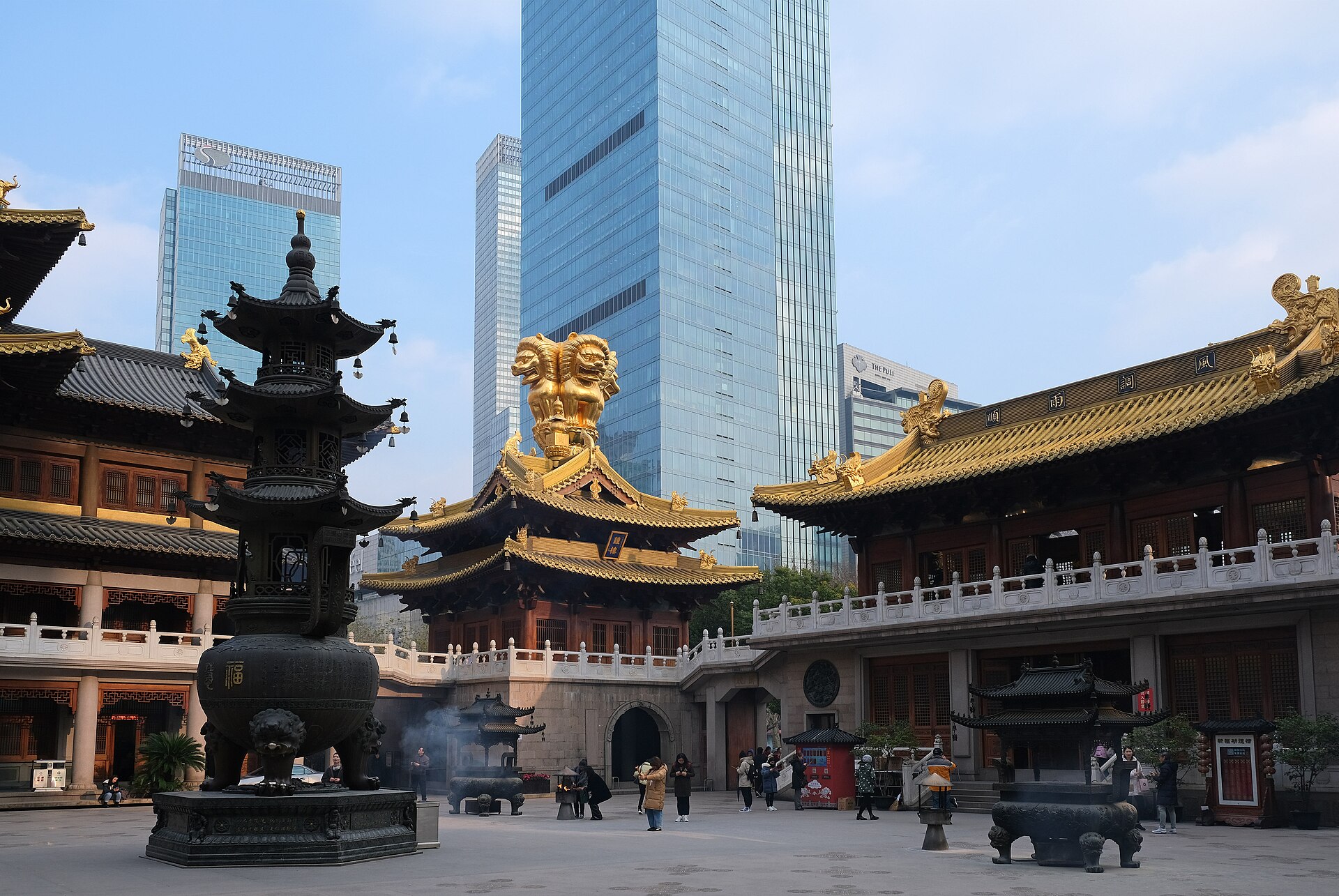
Jing'an Temple, Shanghai — the neighbourhood around it holds the city's densest cluster of design-forward cafés

Jing'an — the neighbourhood around this temple holds Shanghai's most design-forward café cluster, with more seating room than the French Concession

What to order

Drinks you can only get here

Beyond the standard espresso menu — the things that make Shanghai's café scene worth the journey.

🌸1
Jasmine Latte
茉莉花拿铁 · espresso with jasmine-infused steamed milk

The most accessible C-Coffee drink. Steamed milk infused overnight with jasmine flowers — not jasmine syrup, not jasmine essence — then prepared like a standard latte. The result smells like a tea house and tastes like a well-made coffee with a floral dimension that is genuinely present rather than perfumed. The coffee flavour stays clear. This is the entry point if you have never drunk a C-Coffee before, and it is hard to dislike.

Where: Most specialty independents in the French Concession
Price: ¥38–52 (~£4.10–5.60)
🍵2
Longjing Tea Latte
龙井拿铁 · Dragon Well green tea meets espresso

Longjing — Dragon Well tea — is the most celebrated green tea in China, grown in the hills above Hangzhou, an hour from Shanghai by high-speed train. When it meets espresso and steamed milk, the result carries the nutty, slightly vegetal freshness of the tea against the depth of the coffee. Some cafés serve it as a cold brew — Longjing-steeped water over ice with a shot floated on top. Both versions are excellent and both are uniquely Shanghai in the way they combine the city's European and Chinese inheritances in a single glass.

Where: Seesaw Coffee · most specialty cafés
Price: ¥42–58 (~£4.60–6.30)
🌼3
Osmanthus Cold Brew
桂花冷萃 · the flower Shanghai recognises from childhood

Osmanthus — the small yellow flower called guìhuā in Chinese — has a scent and flavour that is immediately familiar to anyone who grew up in central or eastern China: mellow, gently sweet, faintly apricot-like. As a cold brew base, it lends a natural sweetness that needs no added sugar and a perfume that lingers beautifully with good coffee. If you visit in September through November, when osmanthus trees bloom across the city, some cafés add fresh flowers to the glass. This is the seasonal drink to seek out.

Season: Available year-round, at its best Sept–Nov when fresh flowers bloom
Price: ¥40–58 (~£4.30–6.30)
🥐4
Coffee + Shanghai Pastry
French technique · Chinese filling · the city's history in a bite

Several French Concession cafés serve pastries that are themselves a small history lesson: croissants laminated in the French style, filled with red bean or black sesame paste; a Shanghai French Toast (bread fried in the Hong Kong style, with a Shanghainese sweetness); or pineapple bun variants sold alongside the coffee. The best pairings are deliberate — a properly bitter black coffee with something sweetened by red bean, or a jasmine latte with a plain butter croissant. Prices ¥25–45 per piece.

Where: Bakery-café hybrids throughout the French Concession
Price: ¥25–45 (~£2.70–4.90) / piece
Before you go

Practical things worth knowing

Shanghai's payment infrastructure is among the most cashless in the world. Many small cafés — particularly the independents in French Concession alleyways — accept WeChat Pay and Alipay only, and some do not take cash at all. Set up Alipay before you travel and link a foreign Visa or Mastercard through its international mode (this works reliably for visitors as of 2025). Read the full China payments guide here.

The best window for café-walking in the French Concession is weekday mornings between 8 and 11 am. The light through the plane trees is remarkable; the cafés are not yet crowded; breakfast pastries are still available. Weekend afternoons — especially Saturdays — see Wukang Road and Yongkang Road at their busiest. If you want a specific table at a specific café, weekdays are always the better call.

If you need a VPN for general internet use during your stay — which many visitors do — set it up before you arrive in China, as most VPN apps cannot be downloaded once you're inside the country. See our China internet and VPN guide for current options.

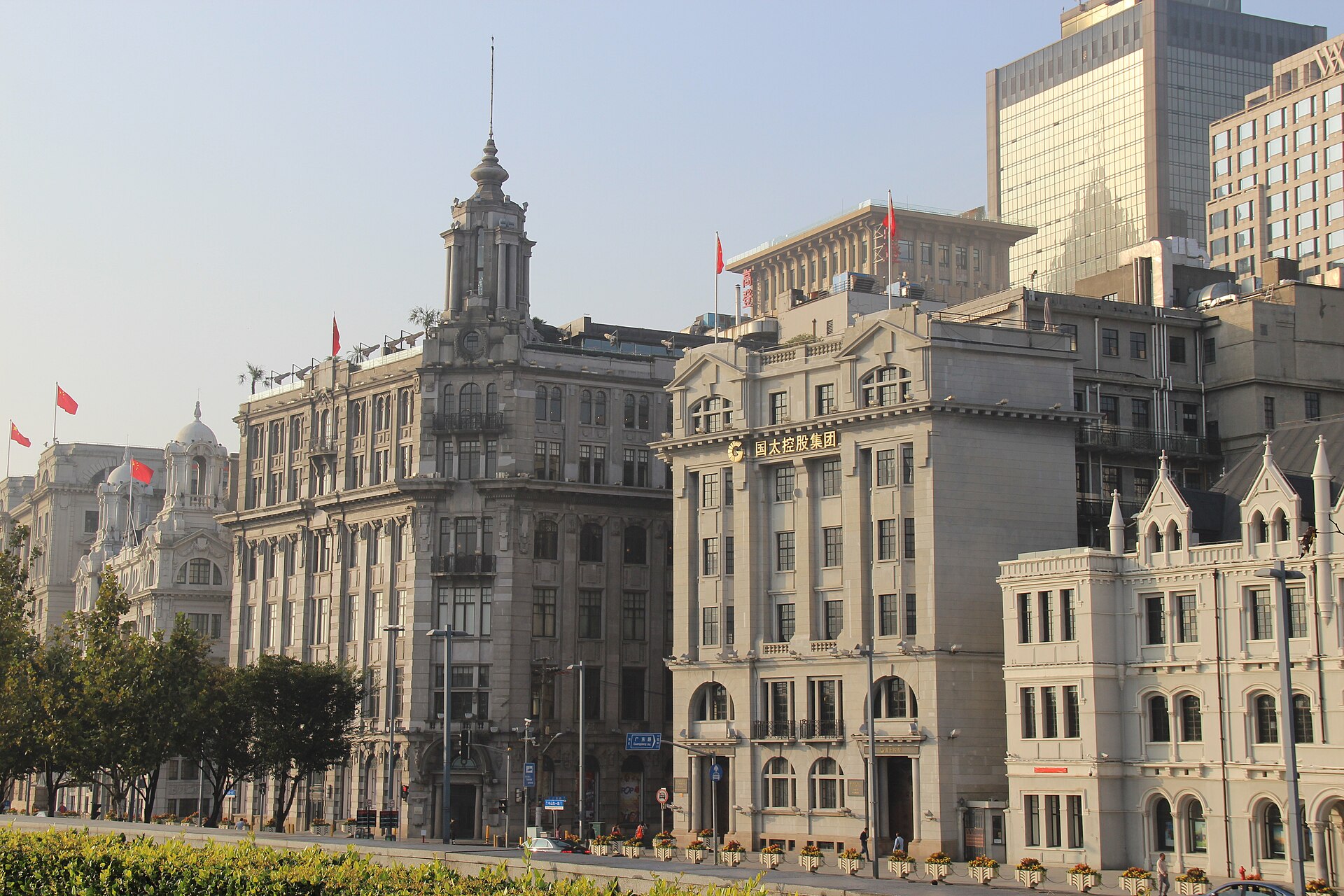
The Bund, Shanghai — Art Deco buildings lining the Huangpu riverfront, with Pudong's towers reflected across the water

The Bund — the Art Deco facades that face Pudong across the Huangpu; several now house cafés where the architecture is as much the point as the coffee

Stay near the café scene

Hotels within walking distance of Wukang and Jing'an

The French Concession and Jing'an put you 10 minutes or less from the streets in this guide. Design hotels that belong to the neighbourhood.

Frequently asked

FAQ · Before you start walking

How much does coffee cost in Shanghai?
Shanghai covers every price point. Manner Coffee or Luckin start at ¥10–18 (~£1.10–1.90) for a standard latte. Independent specialty cafés in the French Concession charge ¥35–55. Premium names like % Arabica or Seesaw sit at ¥40–60. Bund cafés or hotel lobbies can reach ¥70–120. The quality at the ¥35–55 specialty tier is genuinely world-class — comparable to Tokyo or Berlin.
Which neighbourhood has the best cafés in Shanghai?
The Former French Concession is the consensus answer — particularly Wukang Road, Anfu Road and Yongkang Road, all reachable on foot within 10–15 minutes of each other. Yongkang Road packs five or six outstanding independents into a single short street. Wukang Road has the best setting: a plane-tree boulevard of Art Deco buildings. Jing'an is the strong second choice for design-forward spaces with more seating.
What is C-Coffee and is it worth trying?
C-Coffee is Shanghai's original contribution to global coffee culture: espresso combined with traditional Chinese flower or tea ingredients — jasmine, osmanthus, Longjing green tea, oolong. Examples include Jasmine Latte, Osmanthus Cold Brew and Longjing Tea Latte. The flavours are genuinely new — nothing quite like them exists in Western coffee culture. This style originated in Shanghai and is now spreading across China. Try at least one while you're here.
Do Shanghai cafés accept credit cards?
Most accept WeChat Pay and Alipay as primary payment. Small independents in the French Concession alleys may accept WeChat Pay only. % Arabica and Seesaw generally take Visa and Mastercard. Set up Alipay before you arrive and link a foreign card through the international mode — this works reliably for visitors and covers you across the city. Read the full China payments guide for setup instructions.
What is the best time of day to walk the French Concession café streets?
Weekday mornings between 8 and 11 am are when the French Concession is at its best: the plane-tree light is extraordinary, cafés are uncrowded, and you have real choice of table. Weekend afternoons — particularly Saturday from noon onward — are when Wukang Road and Yongkang Road get genuinely busy, with queues at the most popular spots. For a composed, unhurried morning of café-hopping, weekdays are significantly better.
Why does Shanghai have more cafés than any other city?
Shanghai recorded more than 9,100 cafés as of 2024 — more than London, New York or Tokyo. The reasons are layered: European café culture took root during the concession era; Chinese coffee consumption has grown roughly 150% over the past decade, driven by millennial and Gen Z consumers; small lane-front premises in the French Concession offer affordable rent for independent operators; and Shanghai's cosmopolitan identity rewards novelty and product curiosity in ways that scale quickly into a genuine scene.
Klook · Shanghai Tours

French Concession Walking Tours — with someone who knows which lane to turn down

Guided walks through the French Concession with local experts: the Art Deco streets, the lilong alleyways, the café stops that don't appear in tourist brochures. No language barrier. No guessing.

Browse Shanghai Walking Tours on Klook →
Wherebest is an affiliate partner of Klook — we may earn a commission when you book through our links, at no extra cost to you.