Home Shanghai China Shanghai Hotels About
Home  ›  China  ›  Shanghai  ›  Getting Around
🚇 Shanghai Transport Guide · 2026

Getting Around Shanghai
Metro, DiDi, Ferries & More

One of the world's largest metro systems, English signs throughout, fares from ¥3 — getting across this city of 24 million is genuinely straightforward once you know the system. Here is everything that matters.

Before you go

A city built to move people

Shanghai solved its own transit problem on a vast scale. The metro now runs more than 20 lines and over 500 stations — a network so comprehensive that you can reach virtually every tourist destination, hotel cluster, and neighbourhood without a taxi. Fares are distance-based: short hops cost ¥3–4, most central rides land at ¥4–5, and even the long run out to Pudong International Airport tops out at ¥9.

Two things to know before you step on: First, every entrance has a bag X-ray security check — not just at rush hour, always. Budget an extra few minutes at each entry. Second, last trains run before 23:00 and the exact time varies by line and direction. Heading out for a late dinner or show? Verify the last train on your return line, or plan to use DiDi.

The single most useful thing you can do before leaving home: set up Alipay and link a Visa or Mastercard through its international mode. That one app covers the metro, taxis, DiDi, restaurants, and most shops. Details in the Alipay & WeChat Pay guide.

The main event

The Metro — fast, cheap, bilingual

Your first choice for virtually every journey. Clean trains, English signage throughout, and reliable headways of 3–6 minutes during the day.

Hours are roughly 05:30–23:00, though this varies by line and terminus. The system runs on distance-based fares: most rides within the inner city cost ¥4–5, Pudong Airport to the city centre is ¥9. Single-journey tokens, Alipay QR, WeChat Pay, and the rechargeable Shanghai Public Transport Card all work at the gates.
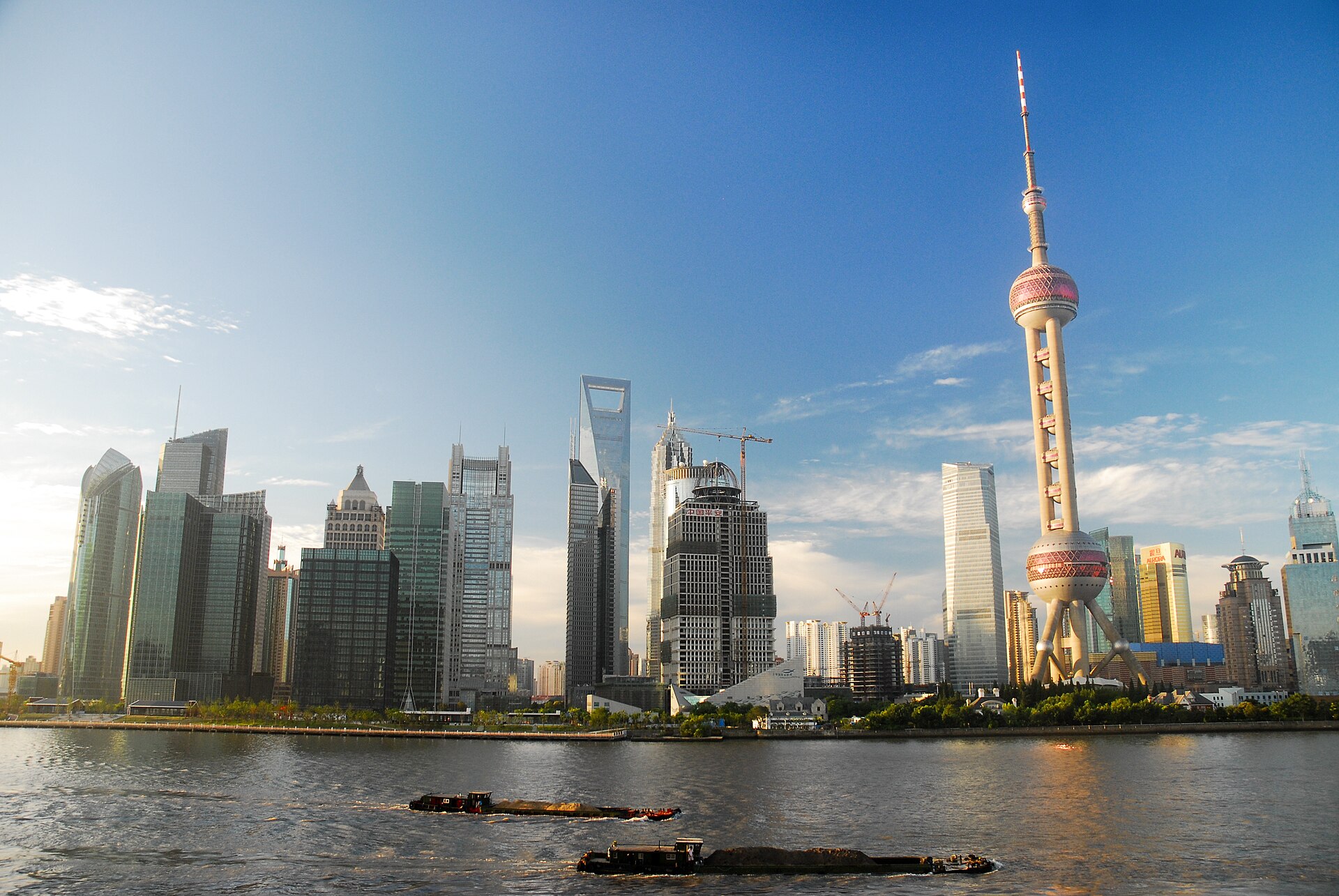
Pudong skyline, Shanghai — Shanghai Tower, SWFC and Oriental Pearl Tower seen from the Bund waterfront
Line 2 deposits you at Lujiazui station, a three-minute walk from the base of Shanghai Tower and the SWFC observation deck.
Key lines

Routes visitors use most

Line Route Key stops
Line 2 (the spine) Hongqiao Airport ↔ Pudong Airport (PVG) Hongqiao Hub · People's Square · Nanjing East Rd · Lujiazui · PVG
Line 1 SW suburbs ↔ north People's Square · Huangpi South Rd · Shaanxi South Rd · Hengshan Rd
Line 10 Inner ring Yu Garden · Xintiandi · People's Square · Jing'an Temple
Line 7 NW suburbs ↔ Pudong Jing'an Temple · Changshu Rd · Lujiazui
Line 9 Songjiang ↔ east Dapuqiao (Tianzifang) · Lujiazui
Line 16 South Shanghai ↔ Disney Shanghai Disney Resort (change from Line 2 at Longyang Rd)
Hongqiao Hub tip: Hongqiao is an integrated transport complex — the domestic airport, two high-speed rail stations, and Metro Lines 2 and 10 all under one roof. If you plan a day trip to Suzhou or Hangzhou, you can board the train directly from here without re-entering the city. See the China high-speed rail guide for tickets and timing.
Paying for the metro

Four ways to pay — pick what suits you

📱
Alipay QR

Easiest for visitors. Open Alipay, tap Metro or Public Transport, scan at the gate. No token, no card. Set this up at home.

💬
WeChat Pay

Same concept via a WeChat mini-program. Open WeChat, find the Shanghai Metro mini-program, scan at the gate. Works on all lines.

🎫
Single-journey token

Buy from machines inside every station. Machines have English menus and take coins, notes, and sometimes QR payment. Good fallback if Alipay isn't set up yet.

💳
Transport Card

The Shanghai Public Transport Card (交通卡) is rechargeable and works on metro, buses, and ferries. Buy and top up at station service windows.

Honest summary: Alipay is worth setting up even if the metro is your only reason, because it also handles taxis, DiDi, restaurants, and nearly every shop in the city. Read the step-by-step setup in the Alipay & WeChat Pay guide before you travel.

Other options

Taxis, DiDi, Buses and the River Ferry

🚕
Metered Taxis
出租车 · always on the meter

Shanghai's taxis are metered and the flag-fall is around ¥14–16 for the first 3 km, then roughly ¥2.5 per km after that. A late-night surcharge of around 30% applies from 23:00 to 05:00. Traffic delays add up — during peak hour, DiDi often works out faster and cheaper because the app routes more efficiently.

The one practical tip that makes taxis actually work: have your destination written in Chinese characters. Most drivers speak little or no English. A hotel business card, or a Google Translate screenshot of the address in Chinese, sorts this every time.

Sample fares: The Bund → Jing'an Temple ~¥20–25 · Pudong Airport → city centre ~¥160–200
Payment: Cash · Alipay · WeChat Pay (varies by car)
Note: No surge pricing — the meter is the meter
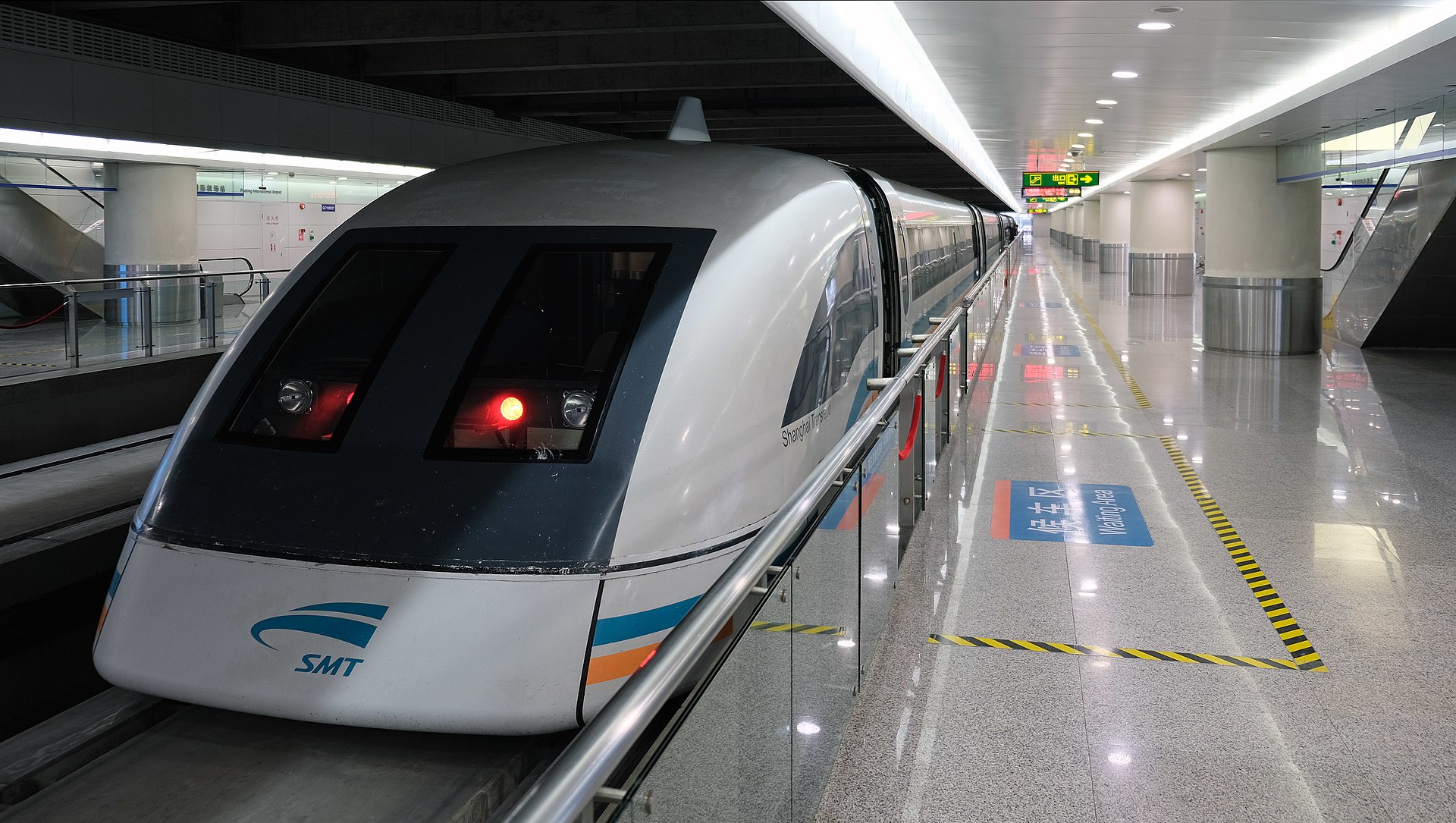
Shanghai Maglev train — 431 km/h magnetic levitation service connecting Pudong Airport to Longyang Road station in 8 minutes DiDi + Maglev
DiDi — China's ride-hail
滴滴出行 · English app, Alipay payment

DiDi is the dominant ride-hail app in China, with an English-language interface. Type your destination in English or Chinese; the app locates it and shows you a fare estimate before you confirm. Payment links directly to Alipay. DiDi is the right call when the metro has closed for the night, when you have luggage, or when you are travelling to somewhere that requires multiple line changes.

The photo on this card shows the Maglev train — a separate, spectacular option for the Pudong Airport run. It covers the 30 km to Longyang Road in 8 minutes at up to 431 km/h, fare ¥50 (¥40 with a boarding pass). You then connect to Line 2 at Longyang to reach the city centre. It is not the most practical airport transfer, but it is an experience worth having at least once.

DiDi: Download the app and link Alipay before travelling
Maglev: ¥50/person (¥40 with boarding pass) · Runs ~07:00–21:40
Airport alternatives: Line 2 ~60 min ¥9 · Taxi ~¥170–200
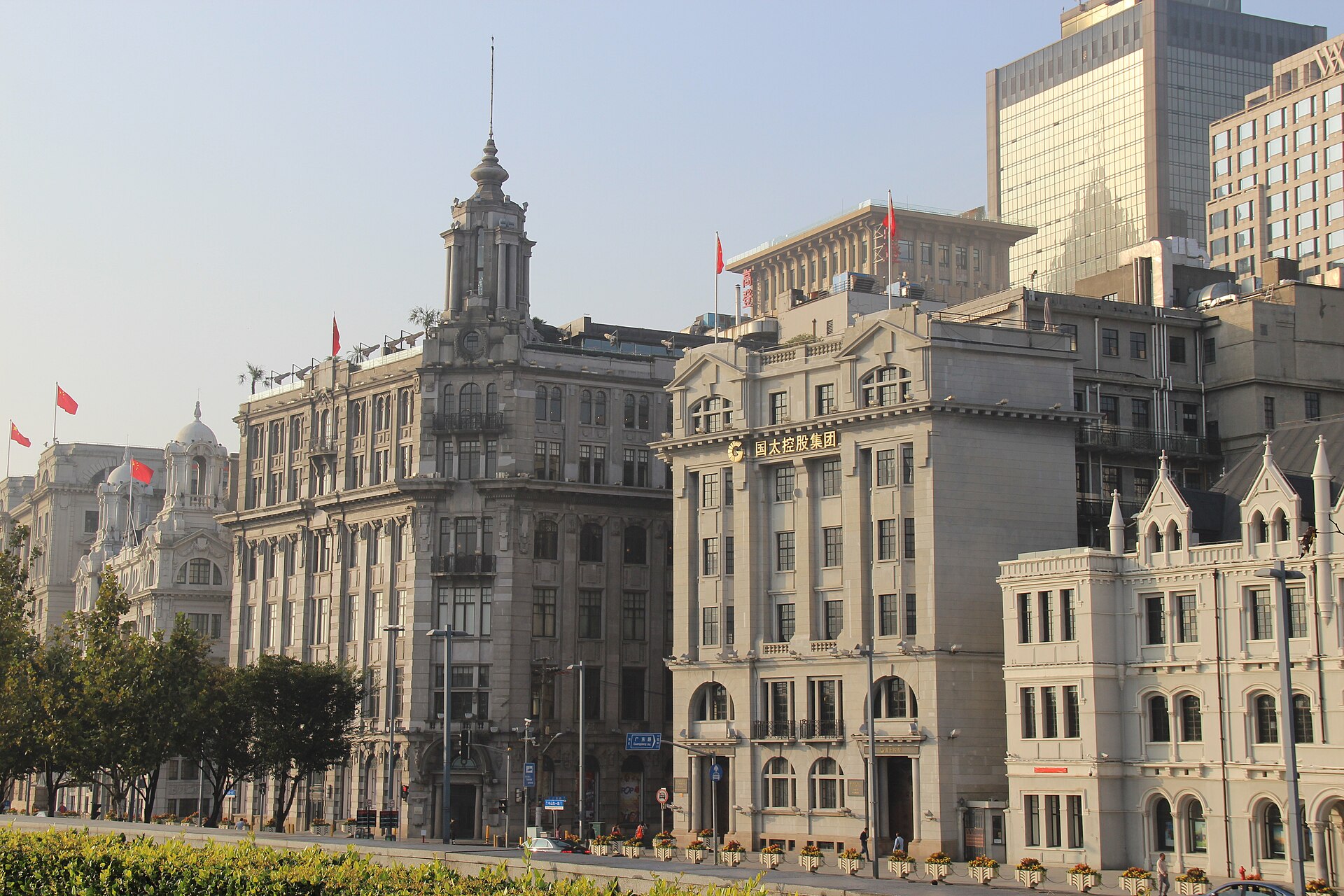
The Bund, Shanghai — 1920s and 1930s colonial buildings lining the Huangpu River waterfront, viewed from the Pudong side River Ferry
Huangpu River Ferry
轮渡 · ¥2 and the best view in the city

The commuter ferry is actual public transport that Shanghai residents use to cross the Huangpu River every day. It costs ¥2 per trip and runs roughly every 10–15 minutes. The most useful crossing for visitors runs between Jinling East Road pier (a short walk from The Bund) and Dongchang Road pier in Pudong.

During those ten minutes on the water, you get a panoramic, water-level view of both The Bund and the Pudong skyline simultaneously — the perspective that no riverside promenade can give you. For two yuan, it is one of the best things in the city.

Fare: ¥2 per trip · pay with Transport Card or Alipay
Main pier: Jinling East Road (Bund side) ↔ Dongchang Road (Pudong)
Hours: ~06:00–22:30 depending on pier · this is not a tourist cruise
🚌
Public Buses
公交车 · comprehensive but Chinese-only

Shanghai's bus network covers hundreds of routes, reaching corners of the city the metro does not. Fare is typically ¥2 per journey, payable by Transport Card, cash (exact change into the box), or Alipay on some routes.

Honest note: bus stop signs and route numbers are almost entirely in Chinese, and there are no English-language timetables. For most visitors, the metro is a much easier first choice. Buses make sense for specific neighbourhoods not on the metro, and work well when combined with Amap (Gaode), which has accurate Shanghai bus data in its transit directions.

Fare: typically ¥2 per trip
Payment: Transport Card · exact cash · Alipay on some routes
Navigation: Use Amap (Gaode) for bus route planning
Navigation

Which map app actually works in Shanghai

This matters more than people expect. Google Maps' public transit data for mainland China is unreliable — even with a VPN, route guidance for the metro and buses is frequently wrong or simply absent. Two apps give accurate, real-time transit directions without any workaround:

🗺️
Amap (Gaode / 高德地图)
The app most Chinese residents use

Amap has accurate, live data for every metro line, bus route, and intercity train in China. You can search destinations in English; the transit planner gives you step-by-step directions including which exit to use. Download it from the App Store or Play Store before you arrive — no VPN required to use it.

Tip: Download before departure. Some app stores in China require a VPN to access.
🍎
Apple Maps
iPhone users already have this

Apple Maps in China uses Amap's data as its backend, which means its transit directions for the Shanghai metro are accurate. If you have an iPhone, this is the path of least resistance — no extra app needed, no VPN, and it integrates with your existing Maps workflow.

Android note: Google Maps transit doesn't work well in China — install Amap instead.

If you want LINE, Instagram, Gmail or full Google Maps while in China, you will need a VPN installed and tested before you fly — most VPN websites are blocked once you are inside the country. See the full breakdown at the China internet, VPN and eSIM guide.

Shanghai city skyline at dusk — towers reflected in the Huangpu River
Planning a late evening out? Check the last train time for your return line before you leave the hotel — DiDi covers the gap when the metro closes.
One thing to do first

Set up Alipay Metro QR before you board your flight

If there is one preparation that makes a difference, it is this: open Alipay, link your Visa or Mastercard through the international mode, and locate the Metro QR feature in the app before you leave home. When you land at Pudong Airport and walk up to the metro gate, you will tap the phone and walk straight through — no queuing at a token machine, no hunting for the right screen while tired and jet-lagged.

One more practical note: avoid peak hours if you can — 08:00–09:00 and 17:00–19:00 on the main inner-city lines (especially Lines 1, 2 and 10) are genuinely crowded. If you are arriving from the airport or heading there, shifting your journey outside these windows makes the whole experience easier.

Airport routes at a glance: Pudong Airport (PVG) is far from the centre — Line 2 takes about 60 minutes and costs ¥9; the Maglev gets you to Longyang Road in 8 minutes (¥50, then change to Line 2). Hongqiao (SHA) is much closer: Lines 2 or 10 reach the city centre in 30–40 minutes. Full details and taxi fare comparisons in the Shanghai airport transfer guide.
Common questions

FAQ · Getting around Shanghai

What are the Shanghai metro hours?
Most lines run from around 05:30 to 23:00, but last trains on individual lines can leave terminus stations well before 23:00. Hours vary by line and direction. Check the timetable posted at each station or in the Alipay Metro mini-program before a late night out.
How do I pay for the Shanghai metro?
Four options: (1) Alipay QR — open the app, tap Metro, scan at the gate; fastest for tourists. (2) WeChat Pay — same process. (3) Single-journey token from machines in each station; English menus, takes notes and coins. (4) Shanghai Public Transport Card, rechargeable and also valid on buses and ferries. Full setup instructions in the Alipay & WeChat Pay guide.
Do I have to X-ray my bag every time I enter a metro station?
Yes. Every Shanghai metro station has a security checkpoint at the entrance. All bags go through an X-ray machine and you walk through a metal detector. Budget an extra 1–3 minutes at each station entry, especially during rush hour when queues form.
Does DiDi work in English? Do I need to speak Chinese?
DiDi has an English interface. You can type a destination in English and the app will locate it. Payment links directly to Alipay. You do not need to speak Chinese to use it, though having your destination written in Chinese characters can help if a driver calls to confirm.
Can I use Google Maps in Shanghai?
Google Maps can display a basic map (with a VPN) but its transit data for mainland China is unreliable or absent. Use Amap (Gaode / 高德地图) or Apple Maps instead — both use accurate, real-time data for the metro and buses, and neither requires a VPN.
How does the Huangpu River ferry work, and what does it cost?
The commuter ferry (渡轮) costs ¥2 per trip and runs roughly every 10–15 minutes. The most useful crossing for visitors is from Jinling East Road pier (near The Bund) to Dongchang Road in Pudong. Pay with your Shanghai Transport Card or Alipay. The 10-minute crossing gives you a panoramic water-level view of The Bund and Pudong skyline that you simply cannot get from the riverbank.