A small island just north of Koh Phangan and Koh Samui, known as Thailand's diving capital — one of the cheapest and most popular places on earth to get scuba-certified, with the iconic triple-sandbar islet of Koh Nang Yuan, Sairee Beach and clear snorkelling bays. Smaller and cheaper than Samui. This guide is built from verified facts and real visitor accounts to get you ready for your first Koh Tao trip before you board the boat.
Koh Tao is a small island in the Gulf of Thailand, in Surat Thani province, sitting just north of Koh Phangan (about 1 to 1.5 hours by ferry) and Koh Samui. Most people know it as Thailand's diving capital — one of the cheapest and most popular places in the world to take a scuba course (PADI/SSI Open Water), plus freediving and snorkelling. It's smaller, more laid-back and cheaper than Samui or Koh Phangan, with a young backpacker and dive-school culture.
You arrive by boat only — Koh Tao has no airport, so you cross by ferry from Chumphon (the mainland, fastest from Bangkok), Koh Samui, Koh Phangan or Surat Thani. The main pier is Mae Haad. Good sea in the dry months — roughly March to September brings calm clear water, good underwater visibility and easy diving. A real dive island — on a single trip you can take a dive course, snorkel at Koh Nang Yuan, stay on Sairee Beach, climb the John-Suwan viewpoint and take a short jungle walk. See the full overview at the complete Koh Tao guide →
It depends on whether you're diving or just relaxing. If you're here to chill and snorkel, three to four days is the sweet spot — beach time, a boat trip to Koh Nang Yuan, snorkelling around the bays and a viewpoint. If you're taking an Open Water dive course, allow four to six days, because the course runs about 2 to 3.5 days, plus time to settle in and dive more — and leave margin for the ferry both ways, since every trip in and out is by boat.
Day 1: Ferry in to Mae Haad, check into your chosen area, swim at Sairee, sunset. Day 2: A boat trip to Koh Nang Yuan to snorkel around the islets and climb the viewpoint. Day 3: Snorkel at Tanote or Aow Leuk, or climb the John-Suwan viewpoint. Day 4: Cafes, a stroll around Mae Haad and Sairee, then the afternoon ferry back.
An Open Water course runs about 2 to 3.5 days (theory, pool work and several open-water dives). Add the first day to settle in after the ferry, and keep one or two days at the end for fun dives or rest. Don't fly straight after diving — you need to wait at least 18 to 24 hours before a flight, so build that into your departure plan too.
Things to do: attractions · beaches · diving & snorkelling · what to eat
Koh Tao is an island with no airport, reached only by boat — there is no train and no metro on the island. The trip is really "get to a pier, then cross to Mae Haad (the main pier)". There are a few routes: via Chumphon (the fastest from Bangkok), via Koh Samui, or from Koh Phangan. The main ferry operators are Lomprayah, Seatran Discovery and Songserm.
The most popular and fastest route from Bangkok is via Chumphon — take an overnight train or a bus to Chumphon, then a ferry from the Chumphon pier across to Koh Tao in about 1.5 to 3 hours (depending on a high-speed or standard boat). Many operators sell a combined "train/bus + ferry" ticket all the way from Bangkok to the island. The cheapest, most direct option for travellers coming from Bangkok.
If you're flying, land at Samui Airport (USM) and take a ferry up to Koh Tao (via Phangan), or if you're already on Koh Phangan there's a direct boat from Phangan to Koh Tao in about 1 to 1.5 hours. Best for island-hopping the Gulf as one trip. Flights into Samui cost more than flying to Surat Thani or coming via Chumphon. More on getting in from the neighbouring island at the Koh Phangan guide →
The most important choice on Koh Tao is which area you book, because each corner of the island has a different feel and the steep hills make moving around tiring. Pick one area and stay put. Full beach-by-beach guide at the Koh Tao beaches guide →, or see real places to stay at where to stay on Koh Tao →
The long beach on the west coast and the heart of the island, with the most accommodation, dive schools, restaurants, bars and nightlife, plus good sunsets. You can walk the beachfront day and night. It's the liveliest and most social spot on Koh Tao. ⚠️ Some stretches are loud in the early evening. For the social crowd and people learning to dive.
The pier and small town of the island, with dive shops, convenience stores, ATMs, banks and every ferry landing here. It's the most convenient base, close to everything, and an easy walk to Sairee. Good for people taking the ferry in and out and who want to be by the connection point. A touch quieter than Sairee.
A bay in the south, quieter and calmer than Sairee, with dive schools and accommodation around the bay and a shallow, calm sea. Good for people who want to dive but not stay in the middle of the nightlife, and it's close to the John-Suwan viewpoint over the twin bays. ⚠️ The access road is steep in places, and you'll ride to reach Sairee.
A bay on the east coast known for snorkelling, with a giant granite boulder out in the bay to jump from and clear water full of coral and fish right off the beach. Quiet and well away from the bustle, good for escaping the crowds and easy snorkelling. ⚠️ It's far and the access road is steep — most people take a songthaew or a boat rather than ride up themselves.
March to September is the prime window for this Gulf island: a calm clear sea, good underwater visibility and easy ferries, with good diving. Whale-shark chances run around March to May and September to October (variable, never guaranteed). April and May are very hot. Full Thailand-wide picture at when to visit Thailand →
October to December is the northeast monsoon: rain, a rough sea, and ferries that can be cancelled, with lower underwater visibility when it's roughest. The upsides are fewer crowds and cheaper rooms. Important: diving often still runs all year, because many dive sites are still workable — but the sea and the ferries decide which days you can get out. See the best time to visit Koh Tao →
Koh Tao is small, and Sairee to Mae Haad is an easy walk, so a lot of people just walk. For the far bays you use a songthaew / taxi, which is fairly pricey and fixed-rate, while remote bays like Nang Yuan, Tanote and Aow Leuk are reached more easily and safely by longtail / water taxi than by riding up the steep hills. Grab is essentially unavailable on the island.
A rented scooter gives you the most freedom, but it comes with a bigger warning than on most islands — Koh Tao's roads are steep, rough and partly dirt in places, especially the tracks up to the viewpoints, to Tanote and to Chalok, and they're notorious for tourist accidents. Rental-damage scams are also common. Rent only if you're genuinely experienced, photograph or film the bike from every angle before you take it, rent from a reputable shop with good reviews, keep your passport, and always wear a helmet.
Koh Tao has many sides, but for a first visit these are the core — the things that best explain why the island is worth the trip. Full details at Koh Tao attractions →
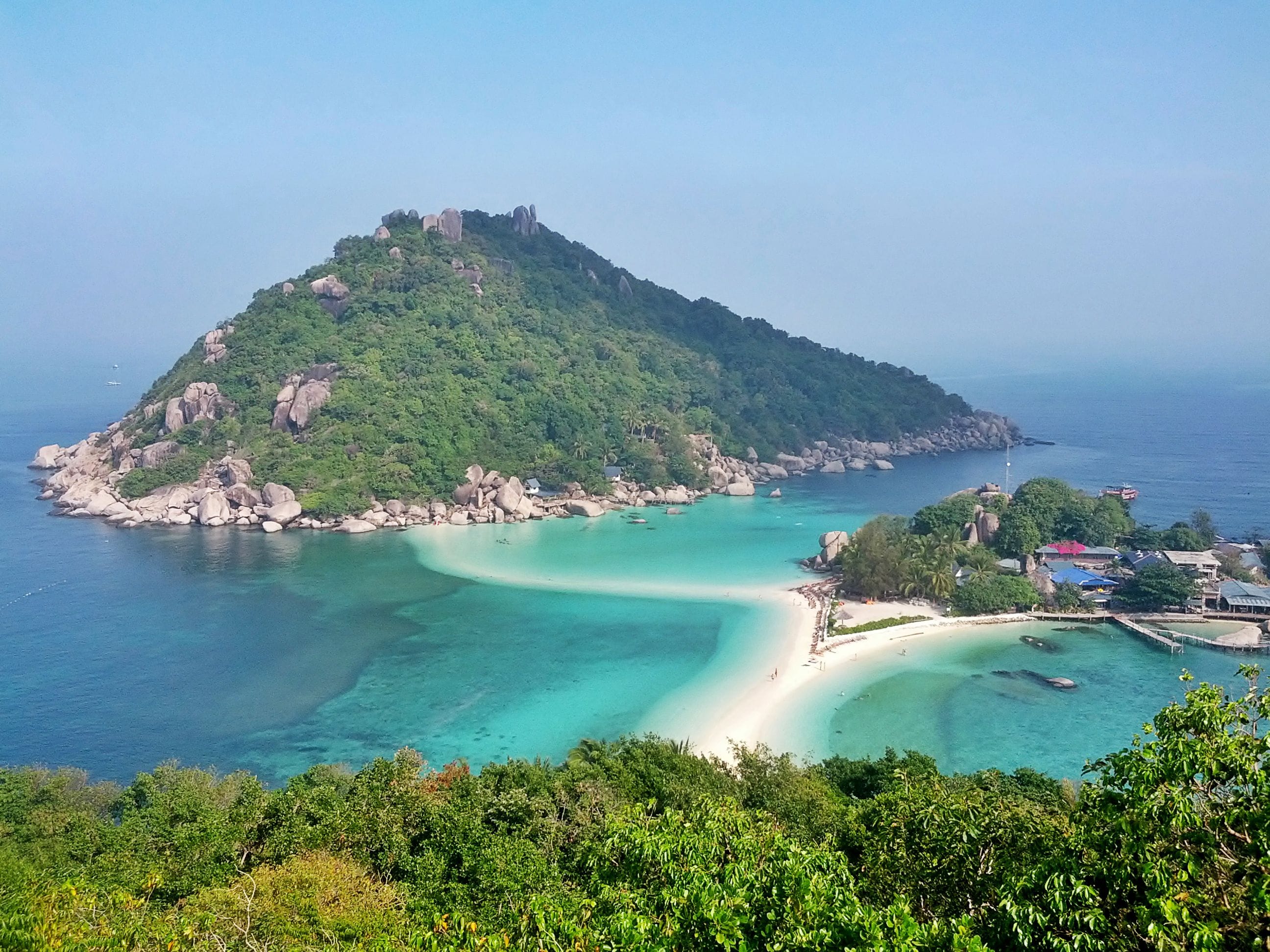
Koh Nang Yuan is three small islets joined by a triple sandbar, the signature image of Koh Tao. Climb the viewpoint to see the whole sandbar, with clear water for snorkelling, off the northwest coast as a half-day boat trip. ⚠️ There's a small island entry fee, and no plastic bottles are allowed on the islet.
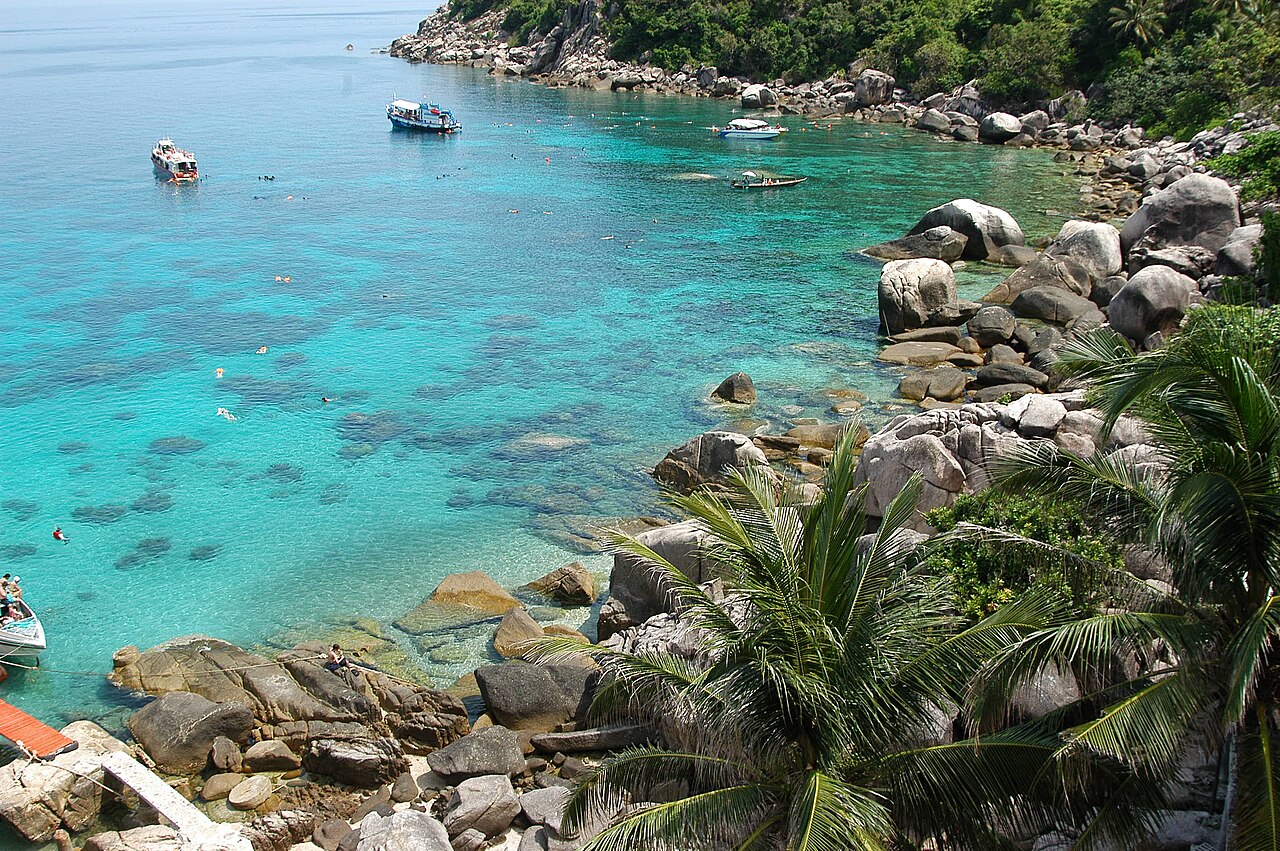
This is the headline act on Koh Tao. The top dive sites are Sail Rock (between Tao and Phangan), Chumphon Pinnacle (whale sharks in season), Japanese Gardens and Twins at Koh Nang Yuan, while Shark Bay (Hin Ngam) has blacktip reef sharks you can snorkel over. Open Water courses are cheap here. ⚠️ Choose a dive school by safety and reviews, not just the lowest price.
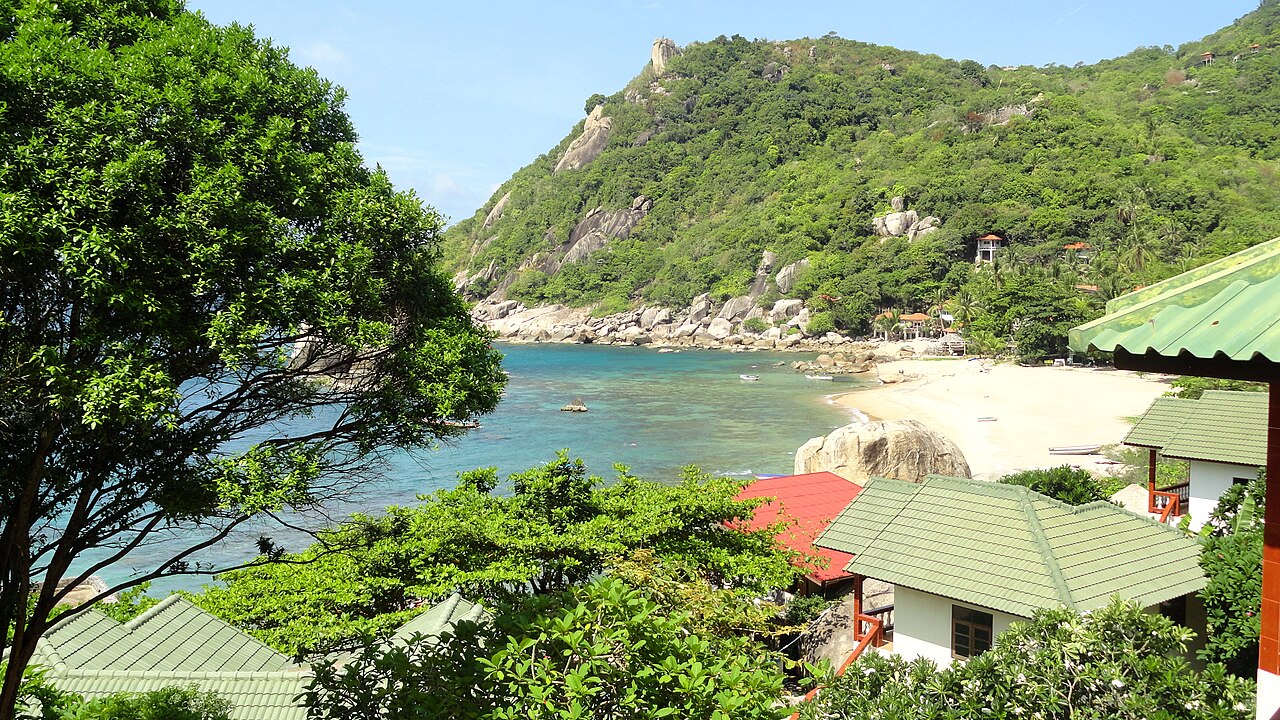
Beyond Sairee, the main beach, Koh Tao has several small, clear bays for snorkelling. Tanote in the east has a giant boulder to jump from; Aow Leuk and Freedom Beach are white-sand coves with shallow water, good for snorkelling straight off the beach. Pick the bay that matches your style and spend real time there.
The John-Suwan viewpoint in the south is a short climb up to a fine view over the twin bays of Chalok and Aow Thian on either side, one of the island's best photo spots. There are also the Koh Nang Yuan viewpoint, the Mango Bay viewpoint and the Love Koh Tao sign. ⚠️ The path is rock and tree roots — wear grippy footwear.
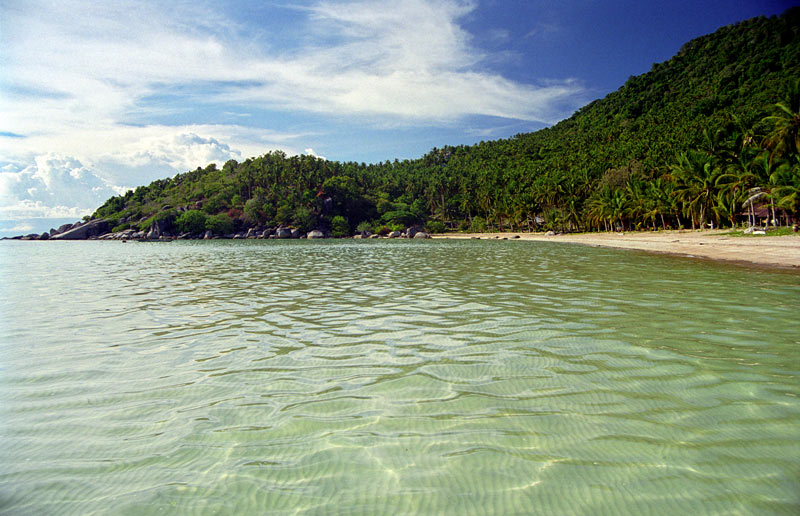
Koh Tao is Thailand's diving capital and one of the cheapest, most popular places in the world to take an Open Water course (PADI/SSI). The course runs about 2 to 3.5 days, and there are a lot of dive schools on the island. The top dive sites are Sail Rock, Chumphon Pinnacle (whale sharks in season), Japanese Gardens and Twins (Koh Nang Yuan), White Rock and Hin Wong. If you don't scuba, you can easily snorkel at Koh Nang Yuan, Tanote and Shark Bay (Hin Ngam, with its blacktip reef sharks).
Koh Tao is a seaside island, so the standout is fresh seafood, alongside Thai cooked-to-order food, beach restaurants and an unusually large cafe scene driven by the backpacker and dive crowd. Full guide at the Koh Tao food guide →

The Sairee beachfront has a long line of restaurants and bars — fresh seafood grilled, steamed or in curry, eaten while the sun goes down, with an easy feel. It's priced by weight and size, so check the price before you order, and the beach spots tend to cost more than places in Mae Haad town. See the food guide →
Because Koh Tao is full of divers and backpackers, Sairee and Mae Haad have plenty of cafes and brunch spots — coffee, smoothie bowls, a big breakfast before a dive, and laptop-friendly spots with a sea view, made for a long sit after diving. See Koh Tao cafes →
Mae Haad town has local cooked-to-order spots — pad thai, tom yum and rice-and-curry — far friendlier on the wallet than the Sairee beachfront. Best for budget travellers who want to eat like a local, and there are convenience stores to stock up before heading to the far bays. See the food guide →
Koh Tao's nightlife centres on Sairee, with beach bars, fire shows and easy live music in a relaxed, backpacker feel — not as big as the Phangan full moon, but fun. Chalok Baan Kao and Tanote are much quieter. Pick the area for the energy you want. ⚠️ Don't drink and ride.
Koh Tao works for a range of budgets and has a reputation for being cheap — from cheap huts and hostels at Sairee and Chalok Baan Kao to view resorts up the hills. The big-ticket items are getting there (the ferry plus a train, bus or flight) and the dive course if you're here to learn. See real places to stay at every budget at where to stay on Koh Tao →
| Level | Accommodation/night | Food/day | Approx. total/day |
|---|---|---|---|
| Budget | about ฿350–800 hut or hostel (Sairee / Chalok Baan Kao) | about ฿300–600 | about ฿800–1,600 |
| Mid-range | about ฿1,200–3,000 mid resort (Sairee / Tanote) | about ฿600–1,200 | about ฿2,200–5,000 |
| Comfort | about ฿3,500–10,000+ view or bayfront resort | about ฿1,000–2,500+ | about ฿5,000–14,000+ |
The big items to budget for: getting to the island (train / bus / flight plus the ferry), the ferry fare (per person), an Open Water dive course or fun dives, the Koh Nang Yuan boat trip and snorkelling, scooter rental (mind the steep, dirt roads), and seafood. All prices can change — check the latest before you go. See where to stay on Koh Tao → · find the right island →
Koh Tao has no airport, so every trip in and out is by boat, and it's further offshore than Phangan or Samui. The common mistake is not allowing enough time for the ferry plus an onward bus or flight. On departure days, build in time for the ferry to Chumphon or Samui and the trip to the station or airport. In the monsoon there are fewer crossings and some are cancelled, so leave even more margin.
Koh Tao revolves around diving. If you do neither scuba nor snorkelling, there's far less to do than on Samui or Koh Phangan — there are beaches, viewpoints, cafes and seafood, but that's most of it. If you want more varied beaches or bigger nightlife, Phangan or Samui may suit you better, so set expectations before you book.
Koh Tao has steep, rough, partly dirt roads, and inexperienced riders crash often, on top of common rental-damage scams. Photograph the bike before you take it, rent from a shop with good reviews, and wear a helmet. If you're not used to roads like this, walk, take a songthaew, or take a boat to the far bays instead — it's much safer.
There are ATMs on the island, but they cluster at Mae Haad and Sairee and charge high fees. Small shops, seafood spots and the songthaew take cash only — withdraw enough, and sort out a SIM or eSIM in advance, since the signal and power are patchy in places, especially the far bays and during power dips. See Thailand SIM / eSIM guide →
If you're learning or diving, you must wait at least 18 to 24 hours before a flight for safety (to avoid decompression sickness). Plan your last dive so it doesn't bump up against your flight home, and leave time for the ferry off the island too. This is a common first-timer slip from cramming dives into the last day.
Koh Tao is in the tropics and the sun is strong — you can burn even on a cloudy day, and people often burn their backs from long, face-down snorkelling. Pack sunscreen, a hat and sunglasses, drink plenty of water, and for water activities (Nang Yuan / Tanote) use reef-safe sunscreen and don't stand on the coral. Rest in the shade around midday.