Reaching Koh Tao — 4 ways compared
Koh Tao has no train and no airport on the island — every route is about reaching a ferry departure point first and then crossing to Mae Haad. Read this before you book.
The most popular and best-value route from Bangkok is to reach the Chumphon mainland first, because Chumphon is the closest ferry point to Koh Tao, so the crossing is shorter than from Samui or Surat Thani. There are two popular ways to reach Chumphon: (1) take an overnight sleeper train from Bangkok to Chumphon station, sleeping aboard and arriving in the morning, or (2) take an overnight bus from Mo Chit 2. Both are usually bought as a combined ticket — the train or bus + a transfer + the ferry — on one booking through to Mae Haad: a shuttle takes you from the station to the Chumphon pier, then a Lomprayah (catamaran), Seatran Discovery or Songserm ferry crosses over, sailing about 1.5–3 hours depending on the boat (a catamaran is faster than a slow boat). It suits anyone watching their budget who'd rather not pay for a flight and is happy with one night aboard a train or bus.
If you have the budget and don't want a long train or bus journey, fly direct from Bangkok into Samui Airport (USM), about an hour, then take a short road transfer to a pier on Samui's north coast and a fast Lomprayah or Seatran Discovery ferry north to Mae Haad on Koh Tao, usually calling at Koh Phangan on the way, a crossing of about 1.5–2 hours. This cuts out the long road journey, though the ferry is longer than from Chumphon because Samui lies south of Koh Tao. The trade-off is that flights into Samui cost more than elsewhere (it's a private airport with limited flights). Booking a combined ferry ticket from the airport — Lomprayah and Seatran both have desks handling the onward leg — is easier than arranging the transfer and boat yourself.
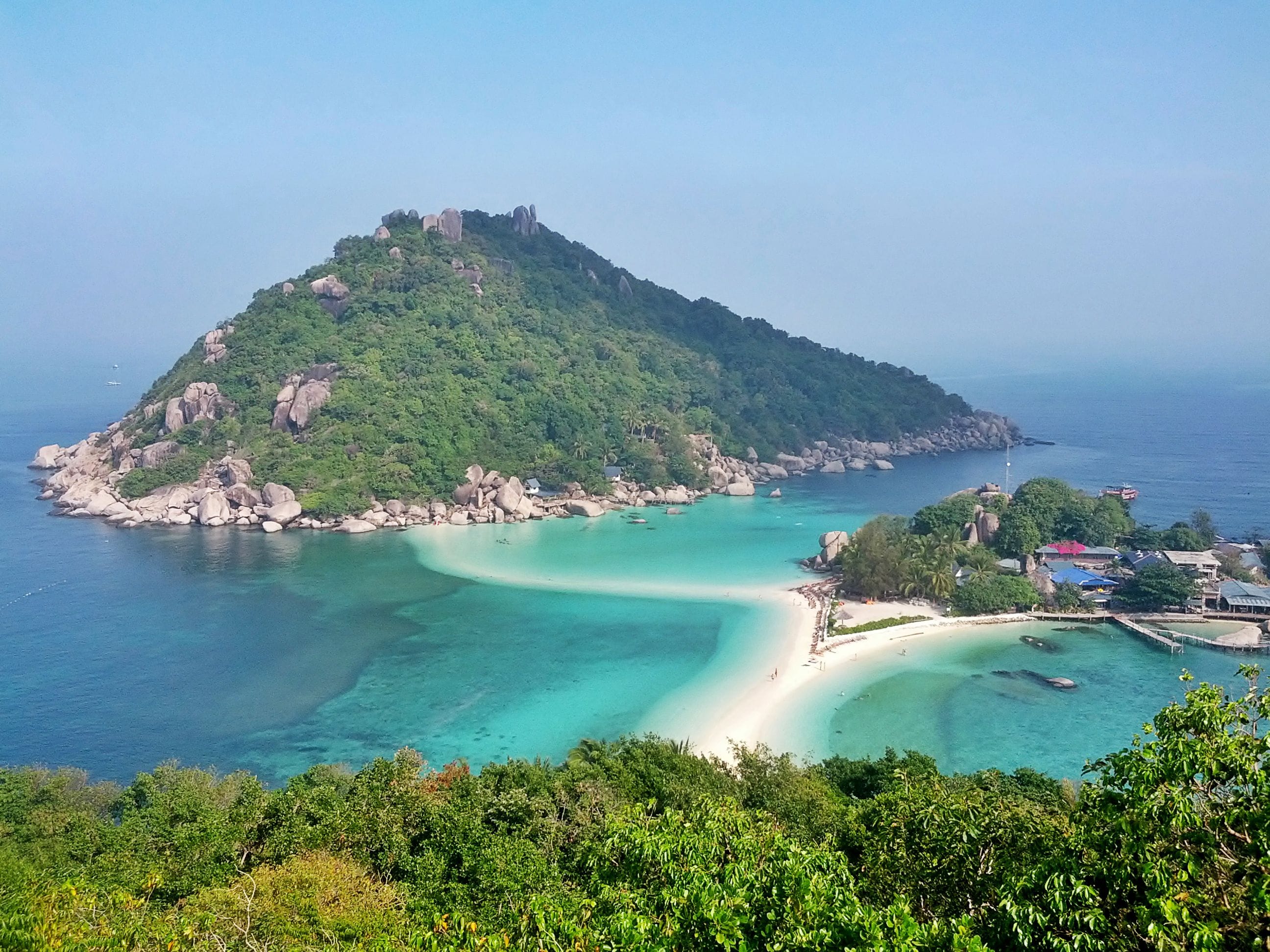
If you're already on Koh Phangan and want to continue to dive on Koh Tao, it's easy, because Koh Tao sits just north of it and the two are close. Fast Lomprayah and Seatran ferries run north to Mae Haad every day, a crossing of about 1–1.5 hours, costing roughly ฿400–700 depending on the operator and time. This leg is popular as part of an island-hop (Samui → Koh Phangan → Koh Tao), as the same ferry lines connect all three islands and you can book the legs through. It's ideal if you want to combine Koh Phangan's downtime or party with Koh Tao's diving in a single trip.
Another option is to reach the Surat Thani mainland and then continue by bus + ferry to Koh Tao. There are several ways to get to Surat Thani: fly low-cost into Surat Thani Airport (URT), take an overnight sleeper train to the Surat Thani station (Phunphin), or take an overnight bus from Mo Chit 2. From there you add a combined bus + ferry ticket through to Koh Tao; the ferry to Koh Tao usually leaves from Donsak pier or routes via Koh Phangan. Counting the bus + ferry once you reach Surat Thani, allow roughly 3–5 hours, which is noticeably longer than via Chumphon, since Surat is further south and the crossing is longer. This route suits you if you're already heading via Surat Thani or continuing from elsewhere in the province. Coming straight from Bangkok, Chumphon is faster and better value.