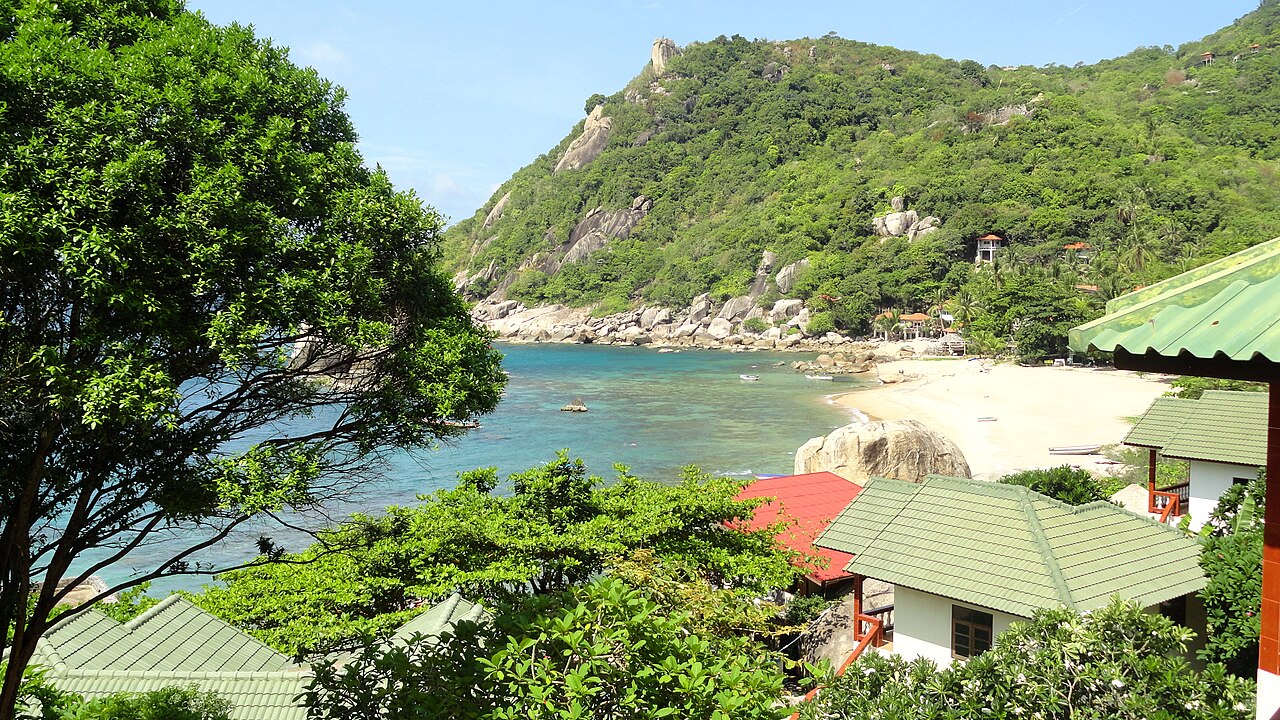
Koh Tao has no airport, no trains and no public buses — but it's a small island where Sairee and Mae Haad are an easy walk apart. To cross to the other side, shared songthaews are the practical option; a scooter is freedom but the steep, rough, partly-dirt roads are genuinely dangerous; and the easy way to Koh Nang Yuan and the hidden bays is a longtail. Here's the honest rundown of what to use when — and where to take real care.
Let's be clear from the first line: Koh Tao has no airport, no trains and no scheduled public buses. You reach the island by ferry only — from Chumphon (the mainland), Koh Samui, Koh Phangan or Surat Thani (full routes in our getting to Koh Tao guide). Almost every boat docks at Mae Haad pier, which is both the island's harbour and its main town — step off the ferry and the songthaews and dive-school pickups to the areas are waiting right there.
The good news, unlike many islands, is that Koh Tao is small and the main areas are walkable. Sairee Beach (the long west-coast strip of hotels, restaurants, dive schools and bars) and Mae Haad (the pier and town) sit right next to each other and are an easy walk apart, so most of a Koh Tao trip happens on foot. The rest of the cast is short. Shared songthaews are the main way to cross to the other side — to Chalok Baan Kao or up to a viewpoint. A rented scooter or quad is the most freedom, but it comes with a conversation about risk we'll have plainly. And longtail boats and water-taxis are the answer for Koh Nang Yuan and the hidden bays the road barely reaches.
One thing worth knowing before you book a room: Koh Tao is a hilly island with a high centre, and the cross-island roads are steep, rough and partly unpaved. Sairee and Mae Haad are on the flatter, walkable west coast; Chalok Baan Kao is at the southern tip; Tanote and Aow Leuk are on the east coast behind the hills. Crossing by songthaew is real money — a few hundred baht each way. This guide walks through every way to move around, with rough prices and when each one makes sense — then helps you place your base correctly from day one.
Within Sairee–Mae Haad, walking is the easiest and free; to cross the island there are shared songthaews — but agree every fare before you board.
If you're not renting wheels, your Koh Tao days will revolve around these two. Walking genuinely works and is the best way around the Sairee–Mae Haad area, where nearly everything clusters. A songthaew (สองแถว — converted pickup truck with bench seats), usually a shared ride, is the workhorse when you need to cross to somewhere the walk won't reach — in exchange for higher fares the steeper and farther you go.
The good news about Koh Tao is that it's small. Sairee Beach and Mae Haad sit next to each other and are an easy walk apart along the beachfront and town roads. Restaurants, cafés, bars, dive schools, convenience stores and the pier are nearly all within strolling distance of the two areas. Stay around Sairee or Mae Haad and dinner-plus-wander needs no wheels at all, the whole trip.
The limit is clear: the roads to the other side — Chalok Baan Kao or Tanote — are steep, have no pavement and are too far to walk. Use a songthaew or a boat for those. Carry a torch or phone light for walking at night, as many stretches are poorly lit and the ground is uneven.
When you need to cross to somewhere you can't walk, the songthaew is the workhorse. Most run as shared pickups, waiting at Mae Haad pier when the ferries come in and dropping passengers around the island. Short runs like Mae Haad–Sairee start around ฿100–150 per person, while crossing to Chalok Baan Kao, Tanote or up to a viewpoint climbs to roughly ฿200–300 per person because the roads are steep and long. With few passengers, or to charter the whole truck, it rises into the several hundreds.
The honest part: there are no marked stops, no timetable, and at quiet areas you may wait a while or have to call one through your hotel — and after dark prices rise. The rule is to agree the fare before you board, every time, and confirm whether it's per person or per vehicle. Good trick: ask your hotel what the fair price should be for each run before you set out.
Koh Tao is still an island where cash rules the roads. Songthaews take cash only, paid as you hop off. The local ritual that matters most is agreeing the fare before you board — make it a habit and the whole trip stays drama-free. One more thing to know: ATMs cluster around Mae Haad and Sairee, they charge steep fees, and the east coast and Chalok have few (and they sometimes run dry), so withdraw enough cash while you're still around Mae Haad.
Carry ฿20/50/100 notes for songthaews. ATMs are mainly around Mae Haad and Sairee and charge high fees — withdraw extra before crossing to the east coast, where machines are scarce.
The single most important rule on the island: settle the price before you get in, per person or per vehicle, for shared songthaews and charters alike. Unsure? Ask again.
If you're learning or diving, almost every dive school runs transfers between your hotel and the shop or pier — often free or bundled into the package. Ask before you call a ride.
Rides and transfers via your hotel come at steadier prices than pier quotes — or pre-book a transfer or boat on Klook before you arrive.
One trick serves you the whole trip: ask your hotel for the fair going rate before you negotiate with a driver, since they know the right price for each route better than anyone. If a quote comes in far above it, you'll know instantly to find another driver or switch modes. For data to load maps and message your hotel, see our Thailand eSIM guide.
The most flexible way around the island. A basic scooter rents for about ฿200–350 a day (weekly rates drop); quads/ATVs cost more. It opens up viewpoints, quiet bays and corners no songthaew reaches. But read the next paragraph before you decide, because on Koh Tao this matters more than anywhere.
Here's the full, plain truth: Koh Tao's roads are steep, rough and partly unpaved — dirt or broken concrete — especially the climbs to the viewpoints, the track to Tanote and the descent into Chalok, which are steep and slick enough to be where most tourist accidents on the island happen, with injuries and gravel grazes (the so-called "Koh Tao tattoo") every year. Ride only if you're already confident and hold a valid motorcycle licence — foreign visitors need an International Driving Permit that covers motorcycles, or insurance usually refuses a claim. Wear a helmet every time. If a steep hill or a dirt track scares you, don't force it — park and take a songthaew, or go by boat instead.
Some places on Koh Tao are far easier and safer by boat than by road. Koh Nang Yuan (three little islets joined by a triple sandbar) sits off the northwest coast and is reachable only by boat — a longtail or water-taxi from Mae Haad or Sairee, a roughly 15–20 minute ride (there's a small island entry fee and no plastic bottles are allowed ashore). For the eastern bays like Tanote and Aow Leuk, a boat is often easier than riding a scooter down the hills yourself.
The honest part: in the Oct–Dec monsoon the sea gets rough and boats may not run or may reschedule — check before you plan, and agree the fare and a pickup time every time. The other popular option is a round-island snorkelling trip that stops at Koh Nang Yuan and several dive spots in one go — pre-book on Klook. See every dive site in our Koh Tao diving & snorkelling guide.
Want to see several bays and snorkel spots in a day without risking the hill roads? A round-island snorkelling trip is the answer. Half- and full-day runs usually stop at Koh Nang Yuan, Mango Bay, Hin Wong and Shark Bay and several snorkelling spots, with gear provided. Prices are per person and vary by trip and what's included. Book through your hotel, a tour shop on Sairee, or online in advance.
The upside is that the boatmen know the waters all around the island, you see several bays in one sweep, and it's far safer than learning to ride a scooter up and down the hills yourself. Split between a group, it isn't as pricey as it sounds. Plan your boat day around our Koh Tao attractions guide.
Koh Tao is the diving capital, and the handy part is that almost every dive school runs transfers between your hotel and the shop or pier — usually free or built into a course or trip. If you're here to take an Open Water course or to dive, you'll barely need to think about getting around: accommodation, dive shops and the boat departures all cluster around Sairee–Mae Haad anyway.
Tip: when you choose a dive school, ask about transfers and which areas they recommend staying in. Many have on-site accommodation or deals with nearby places, so the whole trip stays within a walk. See how to pick a school and course in our Koh Tao diving & snorkelling guide.
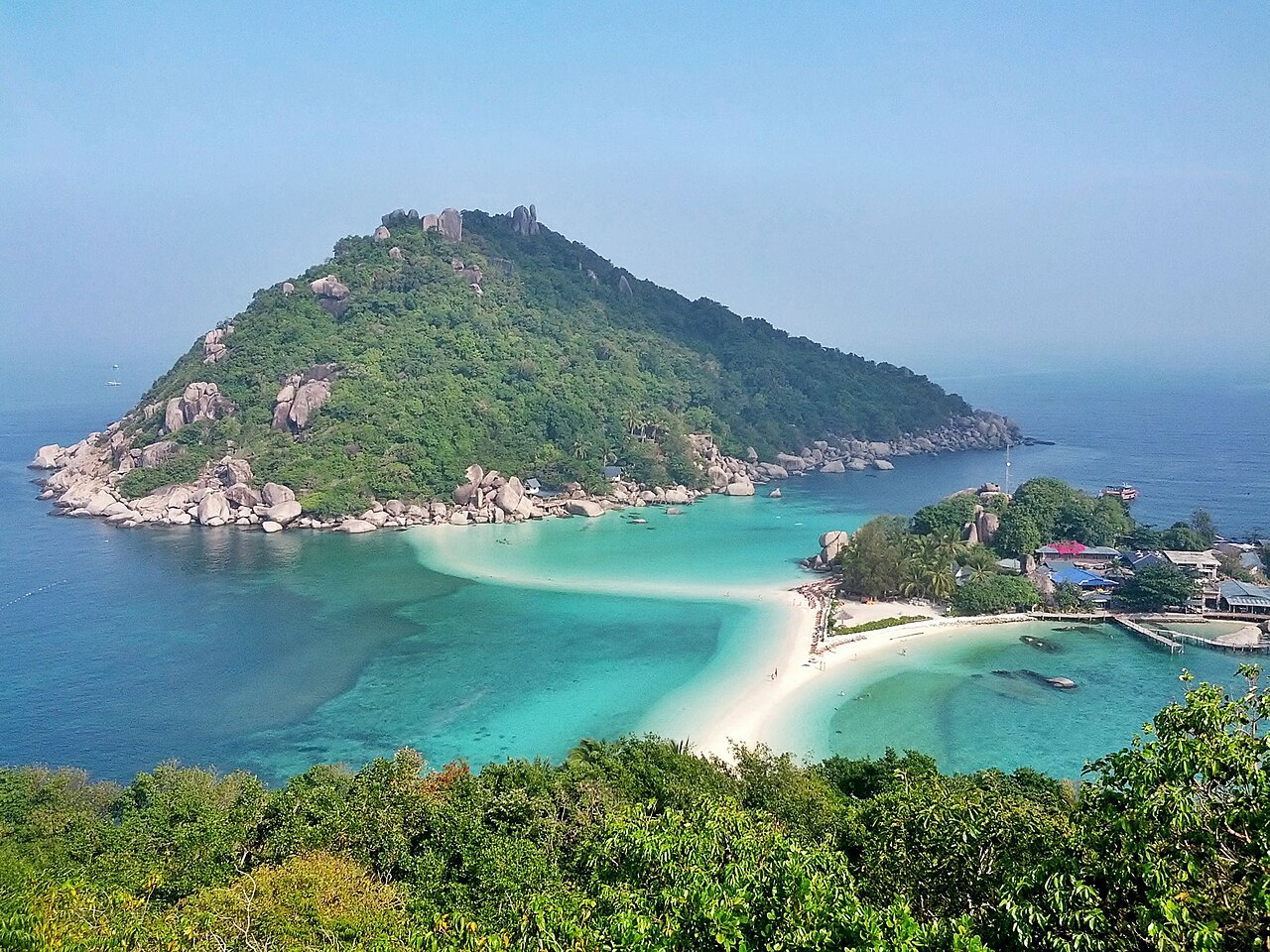
Everything starts at Mae Haad pier; Sairee is next door and walkable, but Chalok and the east coast mean crossing hills, and the fares aren't small.
If you remember one thing from this page, make it this: your hotel's location decides whether the trip is an easy walk or a string of fares. Koh Tao is small, but the centre is a high ridge, so crossing by songthaew is a few hundred baht each way — more for the east coast you have to climb to. Stay around Sairee–Mae Haad and most of the trip is on foot. Here are the rough distances from Mae Haad, with prices to budget (figures are approximate).
| Popular run (from Mae Haad) | Distance · how to go | Rough cost |
|---|---|---|
| Mae Haad → Sairee Beach | ~1.5–2 km · 15–20 min walk | walk free · songthaew ~฿100–150 per person |
| Mae Haad → Chalok Baan Kao (south) | ~3–4 km · over the hill | songthaew ~฿150–250 pp · charter ~฿300–500 |
| Mae Haad → Tanote Bay (east) | ~4–5 km · steep road / boat | songthaew ~฿200–300 pp · boat or charter negotiable |
| Mae Haad → John-Suwan viewpoint (south) | ~4 km + uphill walk | songthaew ~฿200–300 + small viewpoint fee |
| Mae Haad / Sairee → Koh Nang Yuan (boat) | ~15–20 min by sea | longtail negotiable + small island entry fee |
| Round-island snorkelling (boat trip) | half / full day | per person, varies by trip and inclusions |
Navigation is the easy part: Google Maps works normally on Koh Tao and is accurate enough for walking, self-driving and showing drivers where you're headed. The one thing no app can do is plot a songthaew — their routes don't exist in any app. The method is analogue: wait at Mae Haad pier or ask your hotel to call one, then name your destination area to the driver. And always check how steep and rough your destination road is before deciding whether to ride a scooter, take a songthaew, or go by boat.
Stay around Sairee–Mae Haad → handle daily life on foot by walking → for far crossings take a songthaew or a dive-school pickup → reach Koh Nang Yuan and the hidden bays by longtail or boat trip. This removes the hill-road risk entirely and keeps the budget predictable — and it suits almost everyone, because the island's main draws are already in the walkable area.
A scooter unlocks viewpoints, quiet bays and corners no songthaew reaches — but only for confident riders with the right licence. Keep it to the flatter roads near your base and Sairee; for the steep climbs to the viewpoints or down to Tanote and Chalok, switch to a songthaew or boat if you're unsure. Don't force a dirt or gravel track, and don't forget to photograph the bike all over to guard against a damage scam.
If this whole page had to shrink to two points: one — base yourself around Sairee–Mae Haad unless you specifically want the quietest spot. The island's main draws are in these two walkable areas, so stay here and most of the trip is on foot — fares shrink to the days you genuinely cross the island or take a boat.
Two — safety comes first, always: if you ride a scooter, carry the licence and wear the helmet, skip steep and dirt roads you're unsure of, and photograph and film the bike all over before you take it to guard against a damage scam — and never leave your actual passport as a deposit. This isn't only about money; it's about your safety and your documents. For everything else, agree the fare before boarding and keep your hotel's going rate as a benchmark.