You have one weekend and you want both sides of Kanchanaburi — the war history and the bridge on Day 1, Erawan Waterfall on Day 2, with one night in a riverside raft house in between. This plan maps the route and the timing so two days covers both at a fair pace.
Kanchanaburi has two very different sides. One is its war history at the heart of town — the Allied war cemetery, the Bridge over the River Kwai and the Death Railway, places to walk quietly and with respect. The other is the River Kwai and Erawan Waterfall, out beyond town. So this plan gives Day 1 to the historic core in town and all of Day 2 to Erawan, because Erawan is about 65 km away and closes its upper tiers to climbers in the afternoon; a half-day visit is never worth the journey.
There are three clear reasons to stay overnight rather than do it as a day trip — you get to see the River Kwai at night from a raft house, you can reach Erawan early when the water is clear and the crowds are thin, and most importantly you do not have to rush the war-history route, which deserves a slow, considered visit. If you genuinely only have one day, you have to choose between Erawan or the war history. See the day trip from Bangkok guide.
The one thing that makes this trip different: sleeping in a River Kwai raft house — Kanchanaburi's signature floating room, from budget rafts to comfortable raft resorts. Book a riverside spot near the bridge or the Mae Nam Khwae strip and you'll be in easy reach of restaurants and tour shops. See the where-to-stay guide or the Kanchanaburi hotels roundup.
Handle these three in advance and the trip runs smoothly from the moment you leave Bangkok.
If you want to ride the Death Railway on the Kanchanaburi–Tham Krasae stretch on Day 1, check the State Railway timetable in advance — there are only about 2–3 services a day. Time the bridge and cemetery around your train. See the Death Railway guide and how to get to Kanchanaburi.
The signature stay is a River Kwai raft house. In the cool season (Nov–Feb) and on long weekends rafts fill fast and prices rise, so book ahead and pick a riverside spot near the bridge. See real options in the Kanchanaburi hotels roundup.
Day 2 is Erawan Waterfall. Start early — the park opens at 08:00 and closes the upper tiers to climbers from around 3:30–4:00 pm. Bring water shoes, swimwear, drinking water and cash for the entry fee. See the Erawan Waterfall guide.
The Allied war cemetery and the Railway Centre in the morning, with respect · the Bridge over the River Kwai in the middle of the day · the Death Railway to Tham Krasae · a river-fish dinner on a raft to close.
Begin the day quietly — the Kanchanaburi War Cemetery, Don Rak, in the town centre. It is an immaculately kept Commonwealth war cemetery holding around 6,982 graves of Allied prisoners of war who died building the Thailand–Burma Railway in the Second World War. Walk through it quietly, read the names, and pay your respects. Allow around 30–45 minutes.
Directly opposite the cemetery is the Thailand–Burma Railway Centre, a museum that tells the story of the line in clear, honest detail — the Allied POWs and the conscripted Asian labourers, and the tens of thousands of lives lost. Visiting it before the bridge helps you understand what you are about to see.
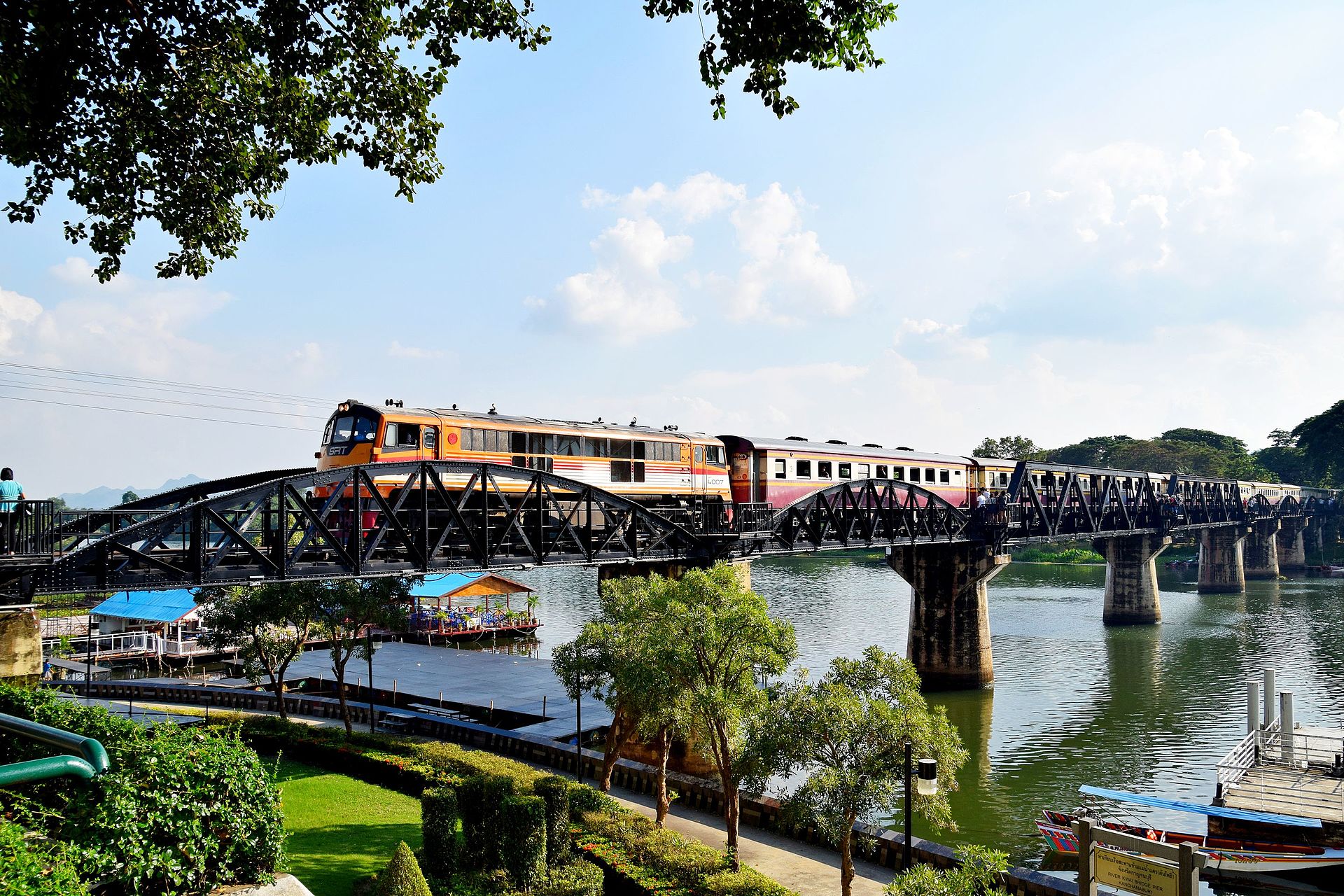
Have lunch in town or by the river, then head to the Bridge over the River Kwai, the well-known black iron railway bridge — the curved spans are original and the angular ones are post-war repairs. You can walk across it (with refuge bays to stand in when a train passes), and the local train still crosses it. It is free to walk; spend 30–45 minutes here — remembering throughout that this bridge was built by the forced labour of POWs and conscripted workers.
The highlight of the afternoon is riding the Death Railway on the Kanchanaburi / River Kwai Bridge → Tham Krasae stretch — the track that clings to the cliff on the Tham Krasae (Wampo) wooden viaduct above the river, one of Thailand's most scenic and most moving rail journeys. The river-and-cliff curve at Tham Krasae is where people get off to photograph it; you can visit the small cave shrine beside the track before catching a later service back. (Check the timetable carefully — there are only a few services.)
Close Day 1 with what Kanchanaburi does best — a river-fish dinner on a floating raft restaurant. The freshwater fish of the River Kwai (yi-sok, snakehead, giant gourami) grilled, fried or in tom yum, eaten on a raft over the water with the river and the hills in the evening light. This atmosphere is exactly why people stay over. Choose your fish by size and check the price first. See restaurants and how to choose in the river-fish raft dining guide.
Afterwards, if you still have energy, walk it off at the night market by the riverside / near the bus terminal, or along Mae Nam Khwae Road with its snacks, sweets and laid-back riverside spots — an easy way to end the first day. See what to eat in the night market and street food guide.
Start early to beat the heat and the crowds · climb the tiers from 1 to 7 · swim in the turquoise pools · head back via Prasat Muang Sing or a riverside café.
Today has a single goal — Erawan Waterfall, the seven-tiered falls in Erawan National Park about 65 km from town. Check out of the raft early and aim to arrive as the park opens at 08:00. Climb from tier 1 upward: the lower tiers are easy walking, the upper ones steeper and more slippery, and each level has an emerald-green pool to swim in (with little fish that nibble your feet). Bring water shoes and swimwear and just go in.
The key rule to know is that rangers begin closing the upper tiers to climbers from around 3:30–4:00 pm for cleaning and safety, so the earlier you arrive the more time you have to climb the whole way. The falls are fullest and greenest in the rainy season (June–October), but the upper trails are slippery then and there are leeches in the forest; in the hot season (March–May) the cool pools are a welcome relief from the heat.
Come down from the falls, have lunch near the park, then make your way back towards town. On the way you can fit in one last stop — if you like ancient history, call in at Prasat Muang Sing, the westernmost Khmer (Angkor-style) temple ruins in Thailand, about 43 km west of town on the Kwai Noi river. The 12th–13th-century laterite sanctuaries sit in a calm riverside setting — a much older counterpoint to the war sites.
Or, if you'd rather just unwind, stop at a riverside café on the way back, sipping coffee over the river or the rice fields before the drive back to Bangkok. See spots in the Kanchanaburi cafés guide.
Late afternoon to early evening is the time to head back — take a minivan or bus from town to Bangkok (~2–2.5 hr), or, if you drove, you've more flexibility on timing. These two days cover both the war history and Erawan without rushing too much.
But if Kanchanaburi has got under your skin and you have more time, add a day further afield — Huai Mae Khamin waterfall at Srinakarin Dam, Hellfire Pass (Konyu Cutting), which is another memorial site, or Sangkhla Buri with its Mon Bridge. See options in the Kanchanaburi day trips guide and everything to see in the Kanchanaburi attractions guide.
These two days are already full, but if you're an early riser with your own car, here is what you can slot in.
If you have a car and start very early, visit Hellfire Pass (Konyu Cutting) to the north-west — the rock cutting dug by hand by POWs, now a memorial and walking trail with an interpretive museum. Free (donation), and walked with respect. See the Hellfire Pass guide.
If you'd rather not go as far as Erawan, or you want to add another waterfall — Sai Yok Noi / Yai to the west, or Huai Mae Khamin at Srinakarin Dam (reached by boat) — both are beautiful and quieter. See trips around town in the Kanchanaburi day trips guide.
During the day, hunt down more local food — the river fish in many forms, Mon and Karen flavours from the western communities, and local sweets. See the must-eats and where to find them in the Kanchanaburi food guide.
For this plan, a River Kwai raft house is the one to choose — floating rooms with river views, from budget rafts to resorts. Another option is Mae Nam Khwae Road near the bridge (guesthouses, bars, tour shops), or the town centre near the station. See how to choose in the where-to-stay guide or browse real options in the Kanchanaburi hotels roundup.
From Bangkok there are several ways — the Death Railway from Thonburi station (both transport and a sight), a minivan or bus from Mo Chit / Sai Tai Mai (~2–2.5 hr), or a private car, which is the most flexible for Erawan. In town you use songthaews, a rented motorbike, a bicycle, the local train and river boats. ⚠️ Kanchanaburi has no BTS / MRT / metro (it's a provincial river town) — but it does have the scenic Death Railway you can ride. See how to get to Kanchanaburi + getting around town.
In town, at the bridge and at most raft houses the signal is good, but some spots in the forest / Erawan National Park or on the road to Sangkhla Buri are weak — keep an offline map handy. Coming from abroad, see your eSIM / Thai SIM options in the Thailand eSIM & SIM guide.
| Category | Budget | Mid-range | Comfortable |
|---|---|---|---|
| Stay (1 night) | ฿300–600 (guesthouse / budget raft) |
฿600–1,200 (raft house / small resort) |
฿1,500–3,500+ (raft resort / riverside) |
| Food (3 meals, incl. river fish) | ฿200–350 (market / local spots) |
฿300–600 (+ one river-fish raft dinner) |
฿600–1,200 (raft restaurants + cafés) |
| Transport (to town + local) | ฿200–400 (train/minivan + songthaew) |
฿500–900 (minivan + bike hire/tour) |
฿1,200–2,500 (private car charter) |
| Admission (full 2-day trip) | ฿150 (Erawan ฿300 over 2 days + free cemetery/bridge) |
฿450–600 (+ museums + Prasat Muang Sing) |
฿600–800 (+ Death Railway ride + extra tours) |
| Total for 2 days (est.) | ฿1,700–2,900 | ฿3,800–6,600 | ฿7,800–16,000+ |
Stay counted as 1 night · Prices are estimates and vary by season / weekends · Transport cost varies widely by method (train/minivan vs private car to Erawan) · Foreigner admission rates shown — Thai nationals pay less; check before you go.