Day one, walk the beach and the prettiest railway station in Thailand, then finish at the Night Market. Day two, go early for the sunbeam inside Phraya Nakhon Cave — or sip wine at a hillside vineyard and climb Khao Takiab. Day three, a teak palace by the sea — three days is exactly enough to see every side of Bangkok's favourite weekend escape.
Plenty of visitors come to Hua Hin and never leave the resort sun-lounger — and that is a perfectly good holiday. But give it three days and you find the town is far more than its beach: there is a cream-and-red wooden railway station nearly a century old, the loveliest in the country; a cave deep in the hills where a shaft of sunlight falls onto a wooden pavilion; a vineyard making wine on the slopes inland; and a teak seaside palace built for King Rama VI.
This plan is built for a first visit to Hua Hin. Each day has one clear theme: a beach-and-town day, a day out to nature or the vineyard, and a history day before you head home. The big plus of Hua Hin is that it is easy to reach without a flight — by train, minivan or car from Bangkok. There is no BTS or MRT in town, but a green songthaew, Grab or a rented scooter gets you around fine.
Have less time? See the 2-day plan (the classic Bangkok weekend). Want the lay of the land first? Start with the first-timer guide.
A long town beach · a wooden station nearly a century old · a seafood Night Market after dark — the day you soak up Hua Hin's charm on foot.
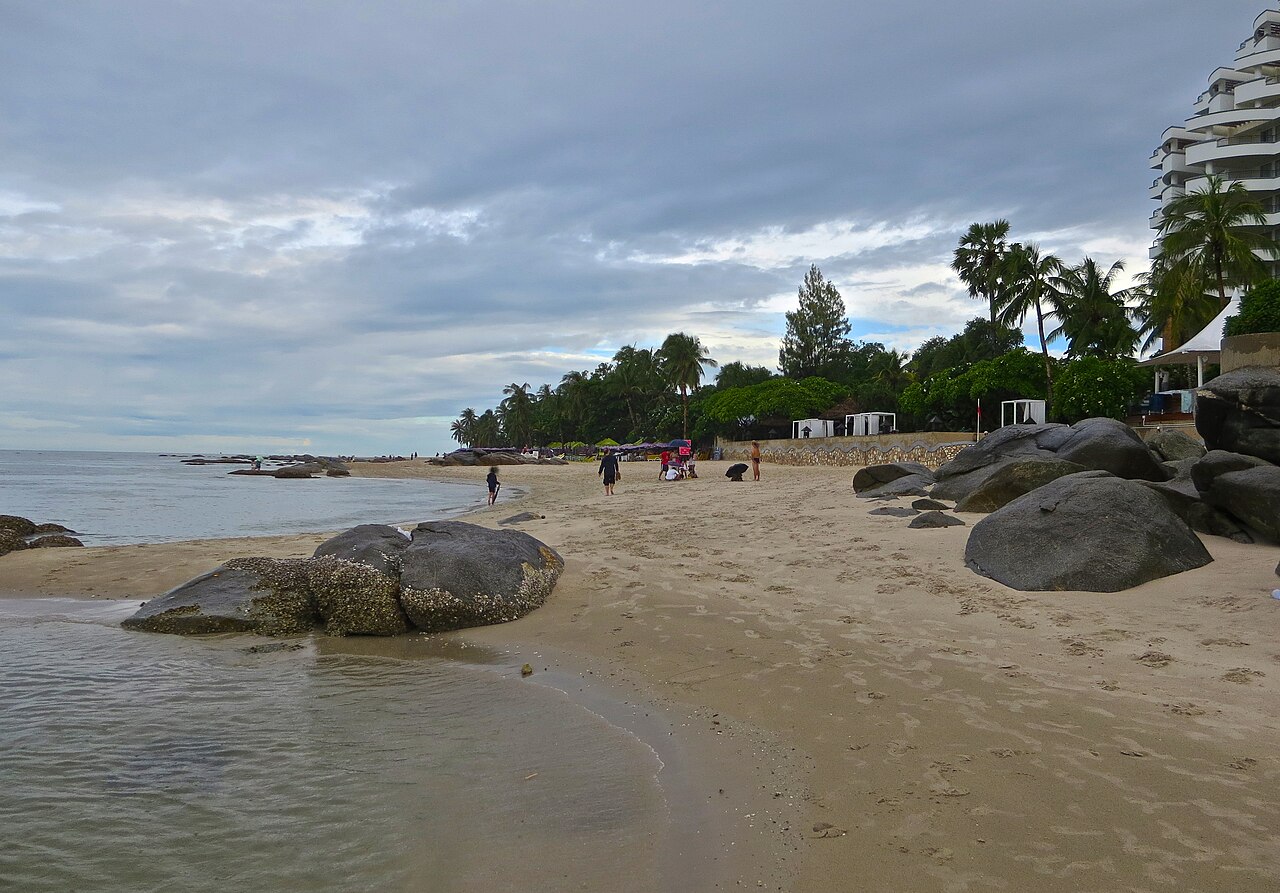
Start the first morning gently on Hua Hin Beach — the long town beach that runs from the fishing pier south toward Khao Takiab. The sand is soft enough to walk barefoot, the sea stays warm year-round, and the morning sun is gentle. Because this is the east-facing Gulf coast, you also get a fine sunrise. One Hua Hin signature is riding a horse along the sand — fun and very photogenic, but agree the price first and pick an operator that clearly looks after its animals well.
The beach is free, with restaurants and bars along the front for a coffee and a sea view. To work out when the water is clearest and when jellyfish turn up, read our Hua Hin Beach guide first.
When the afternoon sun is at its harshest, head into town to see Hua Hin Railway Station — the prettiest station in Thailand, a cream-and-red wooden building in a Victorian-Thai style dating to the 1920s. The highlight is the Phra Mongkut Klao royal waiting room (built for Rama VI), set in the station grounds. It is free to visit, a favourite photo spot, and still a working SRT station — if you plan to arrive by train, see our getting to Hua Hin guide.
Nearby is Plearn Wan, a retro village of old-style sweet shops, vintage toys and photo studios — easy strolling and photos before you head back to the hotel for a short rest.
Close day one with dinner where locals eat — the Hua Hin Night Market (Chatsila, on Dechanuchit Road), a central walking street packed with grilled seafood, prawns, grilled squid, shellfish, sweets and souvenirs. Graze as you go; prices vary by stall, and for seafood you should confirm the price per kilo before you order. The mood is the lively, genuine Thai night-market kind.
For which markets open on which nights and what to eat, see our Hua Hin night markets guide · or for the pier seafood scene specifically, the Hua Hin seafood guide.
A sunbeam onto a pavilion inside a cave · limestone peaks by the sea · or the relaxed version at a hillside vineyard — the day you head out into the country around Hua Hin.
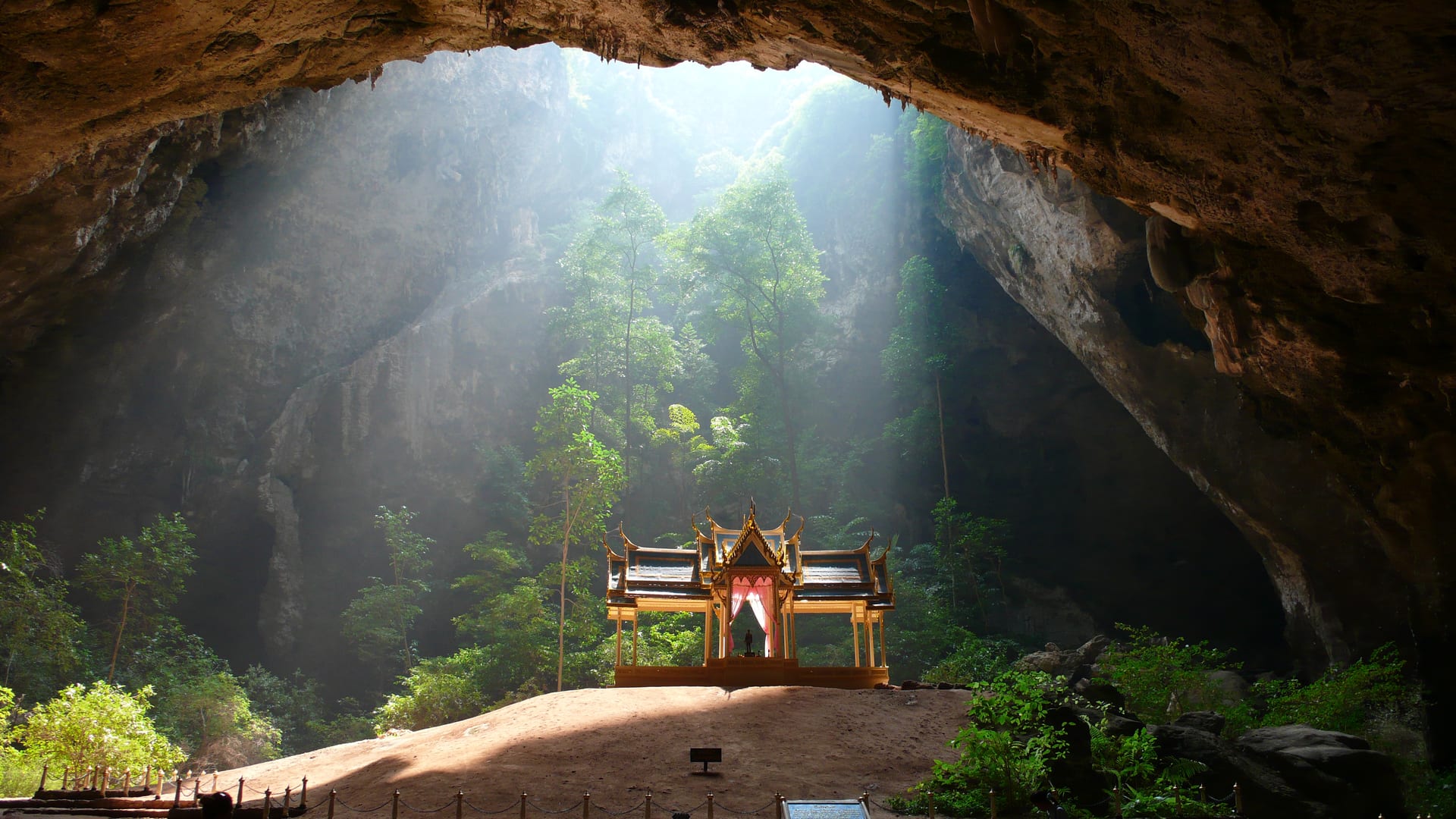
Today you need an early start. Phraya Nakhon Cave sits inside Khao Sam Roi Yot National Park, about an hour south of Hua Hin (in Prachuap Khiri Khan province). The highlight is the Khuha Kharuehat pavilion, a wooden royal pavilion inside the cave onto which a shaft of light falls through an opening in the cave roof — the iconic shot. The light is best around 10:00–11:30 in November–March; arrive too late and the beam moves off the pavilion.
From the car park you have two ways in: take a small boat across to Laem Sala beach, or walk over the headland (about 30 minutes), then climb a fairly steep path up to the cave. Wear trainers, bring water, and watch the monkeys along the way — don't wave food bags around. Read the full how-to in our Phraya Nakhon Cave & Khao Sam Roi Yot guide.
Come down from the cave around midday, grab lunch near the park, then on the way back stop at Bueng Bua inside the park — a broad lotus marsh with a raised boardwalk and plenty of waterbirds, easy to walk and no climbing. Heading back into Hua Hin you pass Pranburi, with its quieter beaches and mangrove forest — a good place to stop for photos or a coffee by the sea before returning to the hotel to freshen up.
Shift the second evening over toward Khao Takiab. If it falls on a Friday to Sunday, head to Cicada Market — an arts-and-crafts market with live music, a performance stage and a good food zone. Next to it is Tamarind Market, an easy walk on. If you visit midweek when Cicada is closed, pick fresh seafood by the sea around Khao Takiab or along Naret Damri Road instead.
Maruekhathaiyawan Palace on the shore · Cicada Market or souvenirs · a slow beach morning before you go — an unhurried last day.
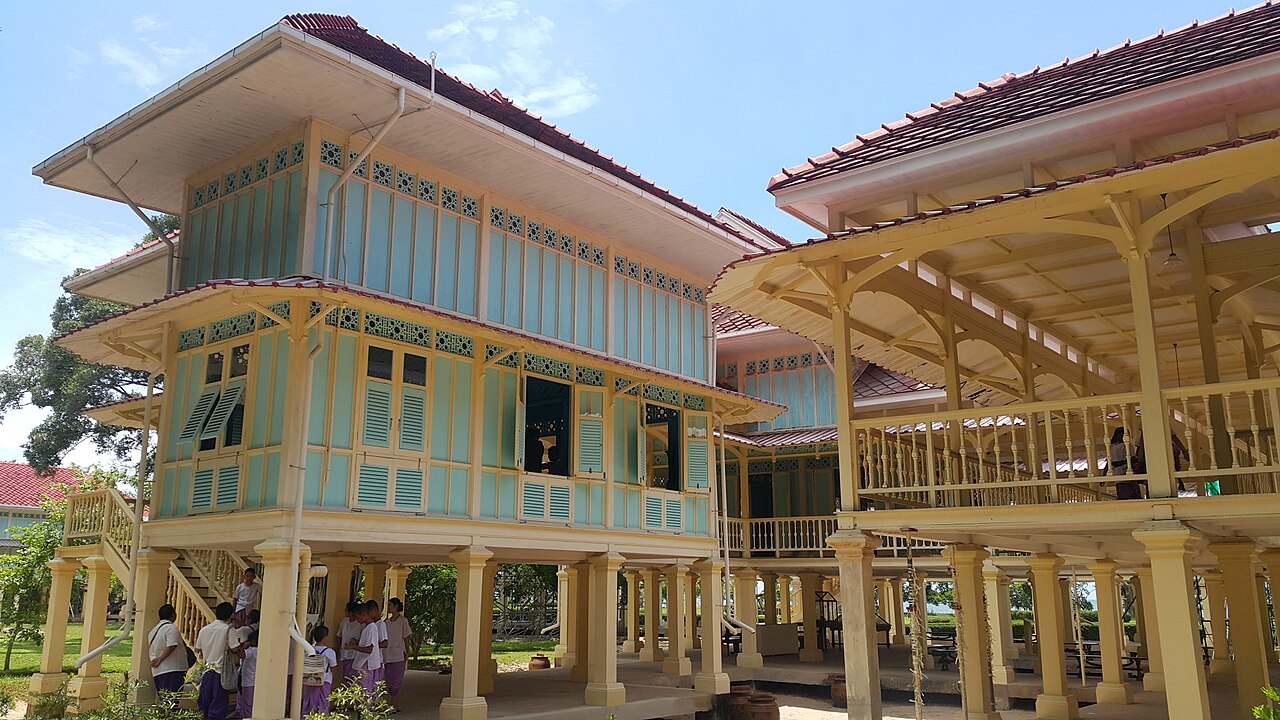
On the last morning, head a little north toward Cha-am — Maruekhathaiyawan Palace sits between Cha-am and Hua Hin (in Phetchaburi province), a teak palace raised on stilts by the sea, built for King Rama VI around 1923–24 and known as the "palace of love and hope". Long wooden corridors catch the sea breeze; it is lovely to wander and very photogenic. Go early to beat both the heat and the crowds.
There is a modest dress code — shoulders and knees covered (if you arrive unprepared, sarongs are usually available to rent at the entrance). Read how to visit and how to get there from Hua Hin in our Maruekhathaiyawan Palace guide · since it is in Phetchaburi, it slots neatly into our Hua Hin day trips too.
Back in town around midday, mop up whatever you have not done yet — if you never got a proper beach session, head down to Hua Hin Beach once more, or make the most of the hotel pool before check-out. Swing by Chatchai Market (the central morning market) for pa-tong-go and sangkhaya (Thai dough sticks with custard dip), fruit and souvenirs to take home before the journey back to Bangkok. If the timing lines up, a final seafood lunch by the sea is a fine send-off.
If you are in no rush, your last night calls for a big seafood dinner — grilled prawns, grilled squid, crab in curry powder at the seafront restaurants around the fishing pier and Naret Damri Road, or a return to the Night Market for whatever you missed on day one. For recommended spots and what to try, see our Hua Hin food guide · and if you want a café to catch the sea breeze before you go, swing by one in our Hua Hin café guide.
For a first trip, pick central town / the central beach — walkable to the Night Market, the beach and the railway station, with no car needed. For quiet and a big resort, choose the north beach near Cha-am or the Khao Takiab side to the south (calmer beach, sea views). For real peace and nature, Pranburi is lovely but you will want a car. See the where to stay guide or the 10 best hotels.
Hua Hin has no BTS, MRT or metro — but it does have the Southern Line train, and the station is a sight. Around town use a green songthaew (cheap by day, charter at night), motorbike taxis, tuk-tuks (agree the fare first), Grab (limited supply, can surge) or a rented scooter (bring a licence, wear a helmet). Far sights like the cave, the vineyard and the palace are easiest with a car. See the getting around guide.
A local SIM is easy to buy in Thailand, or if you are coming from abroad an eSIM is the simplest — it works the moment you land. See packages and setup in our Thailand eSIM / SIM guide. The best window is November–February (cool and dry); for the month-by-month picture see best time to visit, and compare Gulf vs Andaman in the Thailand islands guide.
| Item | Budget | Mid-range | Comfort |
|---|---|---|---|
| Stay (per night) | ฿500–900 (guesthouse / in town) |
฿1,000–2,200 (3–4 star hotel) |
฿2,800–6,000+ (beachfront resort) |
| 3 meals | ฿250–450 (markets / local) |
฿500–900 (seafood / sit-down) |
฿1,000–2,000 (seafront / buffet) |
| Local transport | ฿100–250 (songthaew / scooter) |
฿250–600 (Grab / scooter hire) |
฿600–1,500 (car hire / charter) |
| Entry + activities | Free–฿100 (beach + station + palace) |
฿100–500 (park / vineyard / cave tour) |
฿500–1,200 (water park / tours) |
| Daily total (approx.) | ฿850–1,700 | ฿1,850–4,200 | ฿4,900–10,700+ |
Prices are approximate and vary by season and holidays · in peak season (Nov–Feb) and on long weekends, rooms cost more, so book ahead · totals exclude getting to and from Bangkok (train roughly ฿94–980 by class · minivan roughly ฿180–250).