Khao Takiab is the rocky headland at the south end of Hua Hin beach — the one everyone calls Monkey Mountain. On top sit Wat Khao Takiab, a tall golden standing Buddha facing the sea, and a sweeping view over Hua Hin bay. At its foot is a quiet beach and a row of seafood restaurants. Climb the stairs or ride up; it is free, with a donation box.
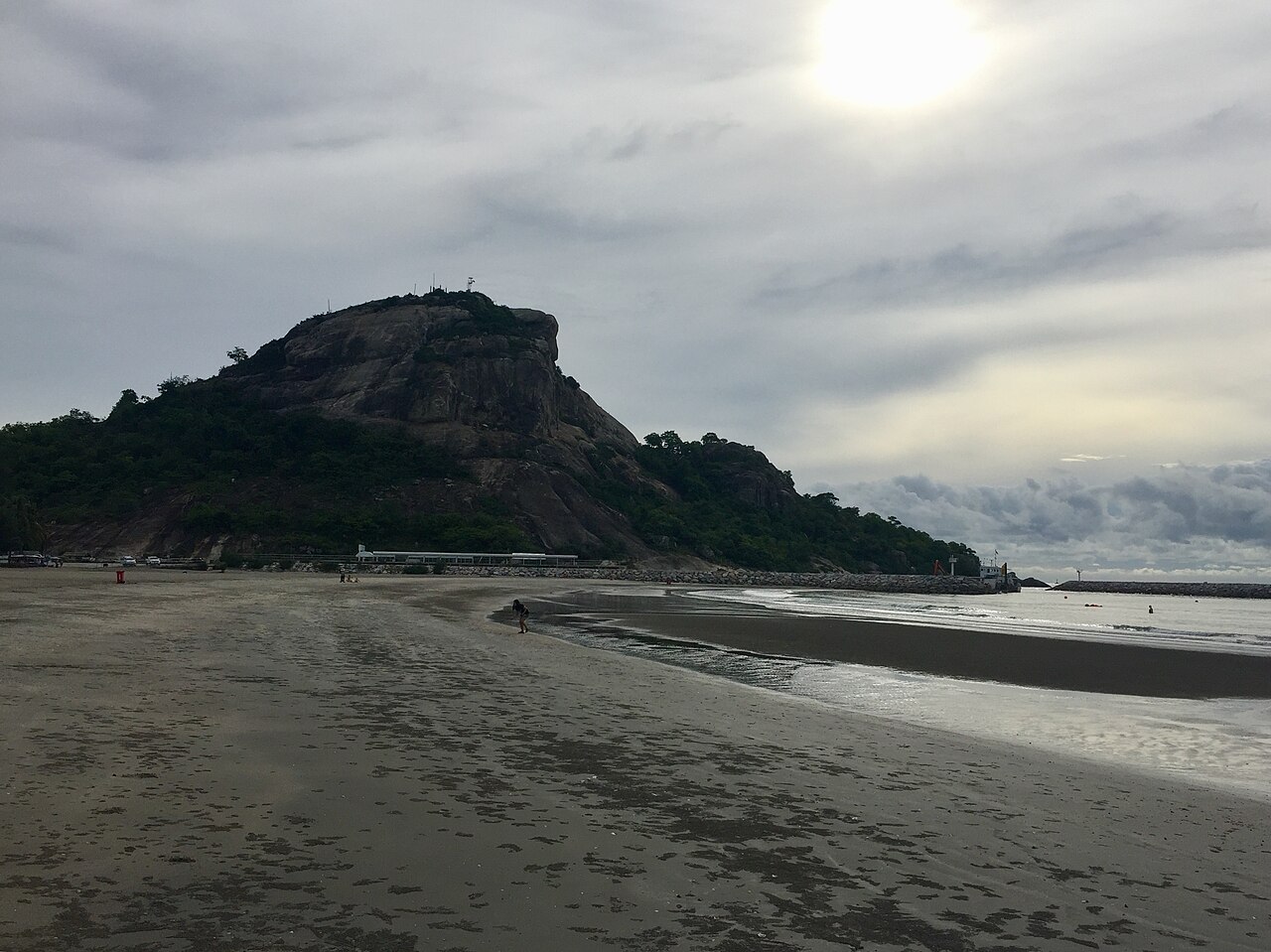
Look south along Hua Hin beach to the far end and you will see a big block of rock rising straight out of the sea — that is Khao Takiab, a headland about 272 metres high that juts into the Gulf of Thailand at the southern tip of the beach, about 7 km down the coast from town. Locals and visitors call it Monkey Mountain, because a colony of macaques lives around the hill. The name Khao Takiab means "Chopstick Hill".
On the summit sits Wat Khao Takiab, with a tall golden standing Buddha facing the sea as its centrepiece, alongside a chedi, a brightly coloured Chinese shrine and brass bells. From the edge of the temple courtyard you look out over the whole sweep of Hua Hin bay. At the foot of the hill on the sea side is Khao Takiab beach, quieter than the town beach, with a row of seafood restaurants where you sit with a view of the hill and the water. It is all in one spot you can cover comfortably in half a day.
Wondering why Khao Takiab is on almost everyone's list in Hua Hin? Because you get several things in one place — a temple to visit, a sea view, the monkeys, and seafood for lunch — and it sits just a short songthaew ride from town. That is why we suggest pairing it with a beach day in Hua Hin or a stop before you head back into town.
This is not a place to rush — climb up to the temple, sit with the view over Hua Hin bay, watch the monkeys with one eye on your bag, then finish with seafood by the beach.
The appeal of Khao Takiab is that it mixes several moods on a single hill — the summit is a quiet temple courtyard with the tall standing Buddha and a brightly coloured Chinese shrine, looking out over the sea and the town. On the stairs along the way, macaques scamper about (fun, but keep hold of what is in your hands). Back at the foot is a quiet beach and a row of seafood restaurants to settle into. It all connects in one place you can do on foot.
If you want both a temple visit and a sea view without going far, this is the answer. Climb up to the standing Buddha, look around the Chinese shrine, then stand in the breeze over Hua Hin bay from above. It pairs neatly with a day at Hua Hin beach. See everything to do in town at the Hua Hin attractions guide.
At the foot of Khao Takiab is a row of seafood restaurants by the beach where you eat with a view of the hill and the water. Many people climb the hill in the morning and come down for lunch right after. Order seafood by checking the price per kilo and agreeing it clearly first, just as you would anywhere else in Hua Hin. Read how to order well and which places stand out in the Hua Hin seafood guide.
Children usually love watching the monkeys around the hill, but the macaques here are used to people and snatch things fast. With small children, keep hold of their hands, zip snacks and water bottles into your bag, do not walk around with a visible bag, and do not let kids hold out food to the monkeys. Follow that and it is a fun, safe outing — the kind of thing a child remembers for a long time.
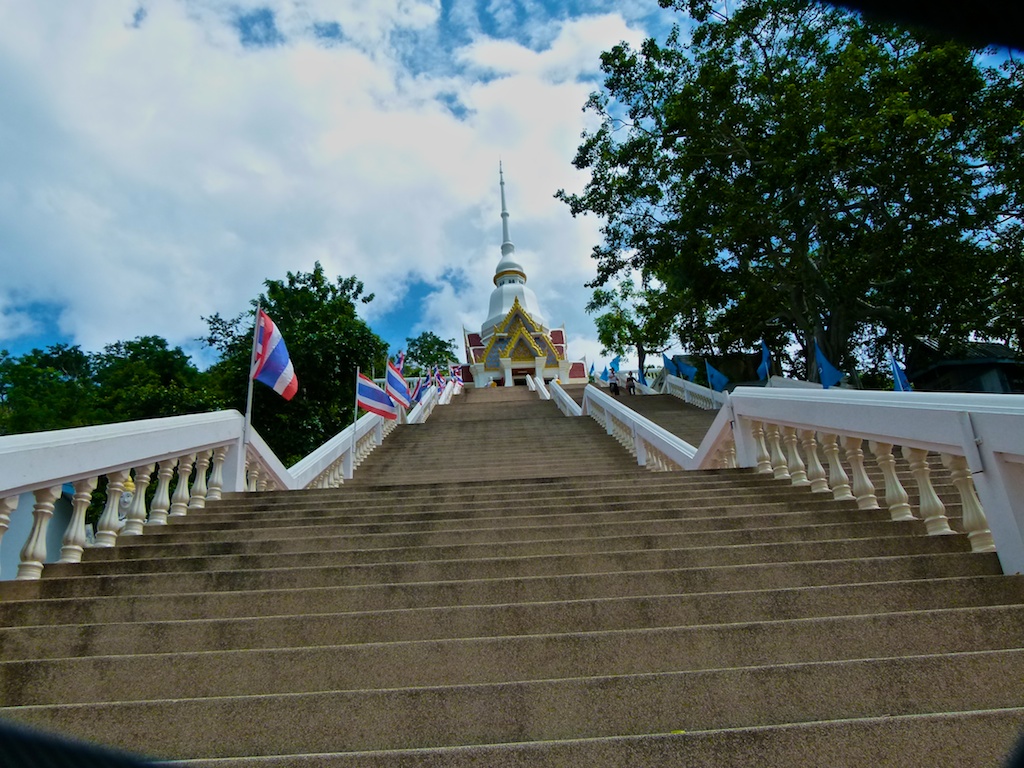
The stairs up have handrails on both sides and rows of flags, and it is a short climb to the temple courtyard. The standout shot is the standing Buddha with the sea behind it, plus the view over the bay from the courtyard edge. Early morning or late afternoon brings softer light for photos and a cooler climb. If you would rather not take the stairs, a songthaew or motorbike can take you up the road.
The heart of it is Wat Khao Takiab on the summit, with a tall golden standing Buddha, about 20 metres high, facing the sea toward Hua Hin town — the main spot to pay respects and take photos. Around the courtyard there are also a white chedi, brass bells, and temple buildings in bright blue, gold and red. Entry is free, with a donation box if you wish to give. As it is a temple, dress modestly with shoulders and knees covered, and take off your shoes when entering a worship hall.
From the edge of the courtyard on top you look out over Hua Hin bay stretching north — the line of the beach, the town, and fishing boats in the bay. On a clear day you can see as far as Cha-am beach. It is one of the best places to take in the whole of Hua Hin from above. Early morning or late afternoon, when the sun is gentler, is the most comfortable time to stand in the breeze and shoot — at midday the open courtyard can get hot, so bring a hat and water up with you.
The name Monkey Mountain comes from the colony of macaques that live around the hill and along the stairs. The monkeys here are very used to people and will snatch a bag of food, a water bottle, sunglasses or any small item in your hand before you can react. To stay trouble-free: keep food and water bottles zipped away in your bag, never walk around holding a visible bag, do not feed them, and do not tease or stare at them. With small children, keep hold of their hands the whole time. Follow that and most people walk up with no trouble at all.
The way up has a concrete staircase with handrails on both sides, lined with Thai flags, and it is a short climb to the temple courtyard. Along the route and around the hill there are things to enjoy — small Chinese shrines and various statues by the path. If the stairs are too much, or you come at the hottest part of the day, a songthaew, tuk-tuk or motorbike can take you up the road. Wear comfortable shoes, as some sections get slippery after rain.
The sea side at the foot of the hill is Khao Takiab beach, quieter and less crowded than the town beach in Hua Hin, good for sitting in the breeze after coming down from the top. Along the shore is a row of seafood restaurants where you eat with a view of the hill and the water. Many people climb in the morning and come down for lunch right after. Order seafood by checking the price per kilo and agreeing it first. Read how to order and which places stand out in the Hua Hin seafood guide.
Beyond the standing Buddha and the bay view, Khao Takiab also has a colourful Chinese shrine, a chedi and a second small hill nearby to walk on to.
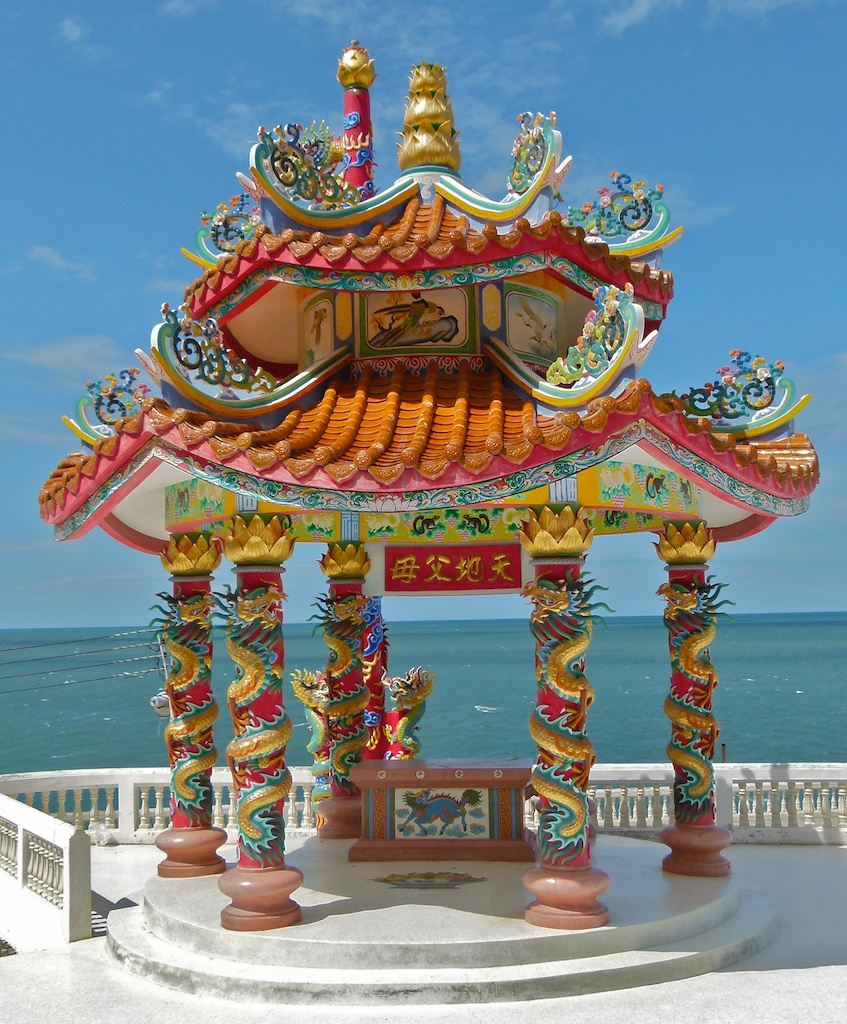
Around the temple courtyard is a Chinese shrine with a curved roof topped by dragons and pillars wrapped in gold, red and green dragon carving, set right on the edge of the hill with the sea as its backdrop. It is a favourite photo corner because the colours stand out against the sky and the water, and it reflects the long-standing Thai-Chinese community in Hua Hin. You can see it in one loop together with the standing Buddha and the chedi on top.
Near Khao Takiab is Khao Krailat, another low hill that also has a temple and statues. Some people walk the two together on the same trip. If you have time left in the day and still feel like walking, you can add it on, but Khao Takiab on its own is enough for a half-day stop. Plan your whole day in town at the Hua Hin attractions guide and see trips out of town at the Hua Hin day trips guide.
It is an easy stop to prepare for, but a few things are worth knowing — the monkeys, the sun, and how to dress.
Khao Takiab is open through the day and is free to enter, with just a donation box if you wish to give. The time we suggest is early morning or late afternoon, because the courtyard on top is open to the sky and midday sun is strong — bring a hat, sunglasses and water. As for dress, keep it modest with shoulders and knees covered, since it is a temple, and take off your shoes when entering a worship hall.
The thing to watch most is the monkeys — zip food and water bottles into your bag, do not walk around with a visible bag, and do not feed or tease them. Wear comfortable shoes, as the stairs and some sections get slippery after rain. If the stairs are too much, you can ride up. All of that makes Khao Takiab an easy place for almost anyone to visit.
Khao Takiab is about 7 km south of Hua Hin town, and it is easy enough to reach — most people use the green songthaew or a scooter. Within Hua Hin town itself there is no BTS or MRT skytrain like Bangkok, but the green songthaews and scooters get you around fine.
09:00 — Arrive at the foot of Khao Takiab and climb the stairs (or ride up) while the sun is still soft
09:30 — Pay respects at the tall standing Buddha, look around the Chinese shrine and the chedi, and photograph the view over Hua Hin bay from the courtyard edge
10:30 — Head down, watching the monkeys on the way (keep what's in your hands zipped away), and stroll Khao Takiab beach for the breeze
11:30 — Lunch of seafood at a restaurant by the beach at the foot — check the price per kilo before ordering
12:30 — Head back into town or on to another stop in Hua Hin
Khao Takiab is a half-day on its own, and it pairs well with other stops — for example, the hill in the morning, then Hua Hin beach and the Hua Hin Railway Station in the afternoon, and a market in town for the evening. If you have more time, head out of town to another spot. See all the options at the Hua Hin attractions guide and day trips at the Hua Hin day trips guide. Plan a stay near the beach at the top 10 hotels in Hua Hin.