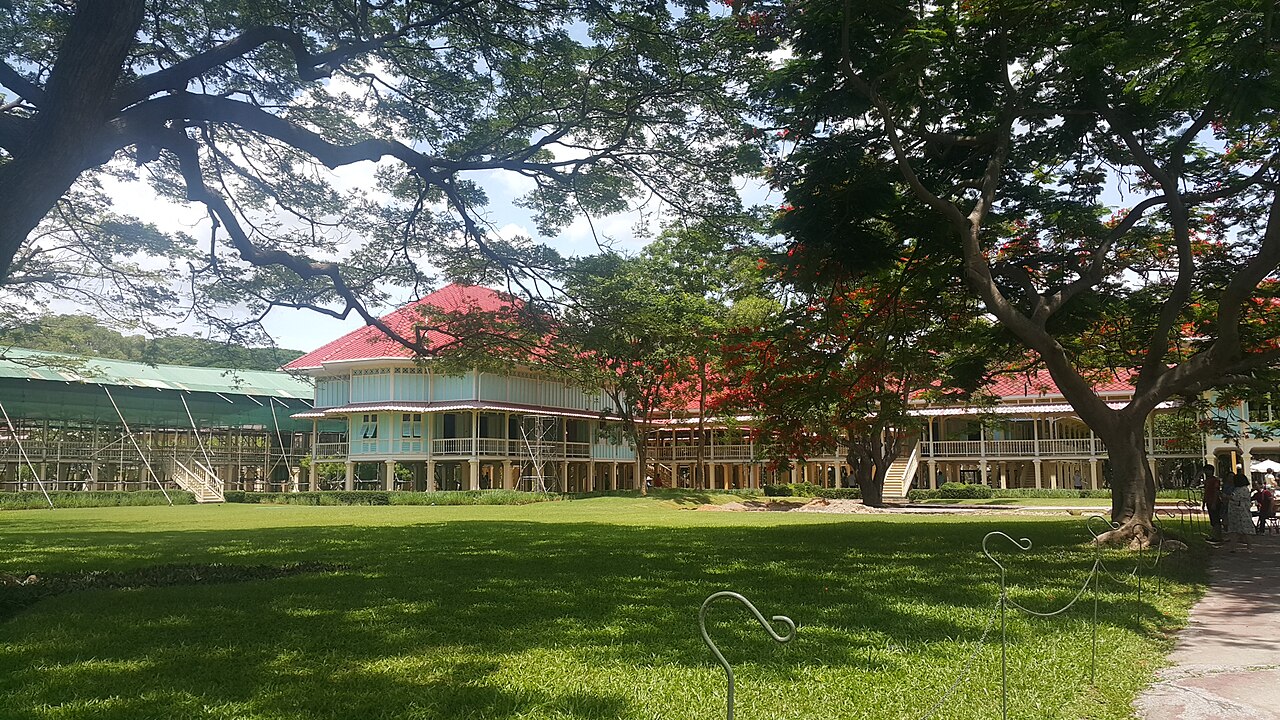
The golden-teak summer palace raised on stilts by the sea, built for King Vajiravudh (Rama VI), between Cha-am and Hua Hin in Phetchaburi province — a cluster of pale-teak pavilions linked by long, breezy open corridors, quiet, shaded and beautiful in a way you won't find elsewhere. Just a 20 to 30-minute drive north of Hua Hin.
Let us be honest: if you have half a day out of central Hua Hin, Mrigadayavan Palace (Maruekhathaiyawan Palace) is the place we'd send you first. It is a golden-teak seaside palace built for King Vajiravudh, King Rama VI, in 1923–1924 as his summer residence in the later years of his reign. It stands in the grounds of Camp Rama VI in Cha-am, Phetchaburi province, sitting right on the shore between Cha-am and Hua Hin.
What makes it special is that the whole palace is built of golden teak, raised high on concrete pillars to let the sea breeze pass underneath and keep the damp out. Its roughly 16 pavilions are linked by long wooden corridors you can walk right through, designed by the Italian architect Ercole Manfredi to King Rama VI's own brief. Step inside and you feel at once why it stays so open and cool even though it sits right by the sea.
Ever had this happen — a historic site that looks lovely but is hot and tiring to walk? Mrigadayavan is the opposite, because it is a shaded seaside palace that is easy and quiet to wander. You stroll the teak rooms, stand at the end of a corridor to catch the sea breeze, then carry on along the beach in front. People call it the 'palace of love and hope', and once you see it in person, the name makes sense.
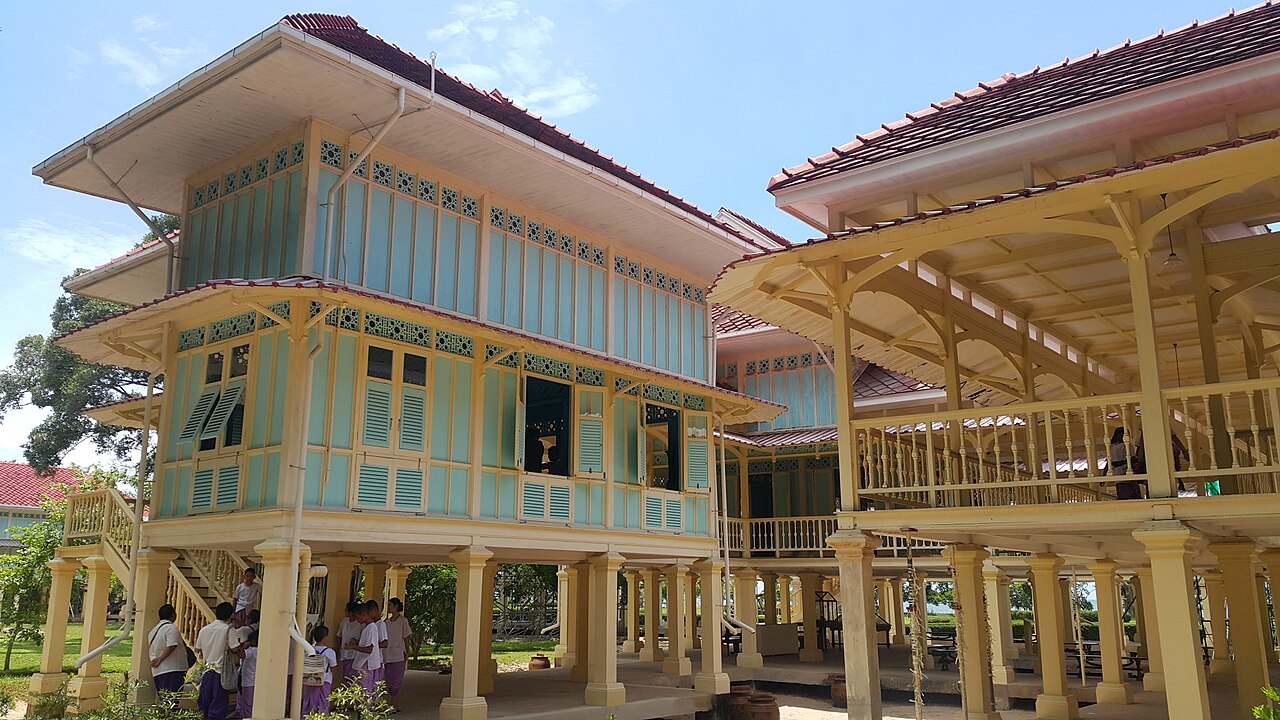
This is one of the easiest cultural sights in Hua Hin to walk — stroll the golden-teak rooms, stand at the end of a corridor for the sea breeze, then carry on to the beach in front.
The appeal of Mrigadayavan is that it is not a grand stone palace meant to overawe — it is warm, wooden and shaded. As you step onto the teak floors they creak softly underfoot, the sea breeze drifts in through the shutters, and light falls through the fretwork in pretty shapes on the boards. It is far quieter than the sights in town, so you can walk slowly, take your photos and soak up the mood. Who it suits is below.
If you love the past and old woodwork, this is one of Thailand's most complete teak palaces — every pavilion is stilted golden teak linked by corridors, and you can wander for hours without tiring of it. Pair the trip with the Hua Hin Railway Station, another building from the Rama VI era. See every Hua Hin sight at the Hua Hin attractions guide.
Mrigadayavan is one of Hua Hin's best-known photo spots — pale golden teak against the sky, long corridors that frame the shot, and soft morning light. Go early for the best light and the fewest people. Dress modestly, covering shoulders and knees, since it is a royal site.
Because it is stilted timber with shaded corridors, it is easy to walk and mostly out of the sun, which suits families and anyone who doesn't want a tiring day. An hour or two covers it, and you can carry on to the beach in front or to the Monsoon Valley Vineyard on the same route.
Mrigadayavan is on the Cha-am side, so it fits a day-trip heading north from Hua Hin — the palace, Cha-am beach, then the vineyard, all in one day. Plan the whole route at the Hua Hin day-trips guide. As it sits in Phetchaburi, read more about the province at the Phetchaburi guide.
The heart of the palace is a cluster of about 16 golden-teak pavilions, raised high on concrete pillars and linked by long wooden corridors, divided into the king's quarters, the inner residence and the audience areas. Floors and walls are all teak, with shutters and louvres designed to let the sea breeze pass through all day. The century-old timber means you should walk gently and remove your shoes in some areas — follow the marked route and an hour or two covers the whole thing.
What most people remember is the long, airy wooden corridors that link the pavilions — you can walk the whole palace without stepping into the sun, and they lead out to a pavilion and wooden bridge reaching toward the sea. That is the best spot to stand in the breeze and take your photos. Morning light is soft and the crowds are thin, so leave time to stand still for a moment at the end of a corridor, listening to the waves and the sea wind — it is the moment that explains why people call this the 'palace of love and hope'.
In front of the palace is a quiet beach you can carry on to after your visit, with shaded mature gardens around the pavilions. When the flame trees are in bloom their orange-red flowers make a lovely contrast with the teak. The whole feel is quiet and unhurried, ideal for a slow walk, photos and a rest. If you want a longer stretch of sand, Hua Hin beach in town is not far south.
Admission to the palace grounds is around ฿90 for adults, with lower rates for university and school students, while young children, monks and seniors usually enter free. To go up to the upper floor of the teak pavilions, there is an extra fee of about ฿316 per person — all of these prices can change, so check the current rate at the ticket desk before you go in. There is a spot to borrow or rent sarongs and wraps at the entrance if you are not covered enough.
A century-old teak palace that only opens on certain days — a little preparation lets you enjoy it fully and avoid a wasted trip.
The most important thing is that Mrigadayavan is not open every day. It is generally open Friday to Sunday, around 9am to 4pm. Thursdays are usually reserved for school and university groups who book ahead, and it is closed Monday to Wednesday. The schedule can change for holidays or special events, so check the current opening days and hours before you travel, and go in the morning for softer light and fewer people than the afternoon.
As a royal site, dress modestly, covering shoulders and knees. Women should avoid sleeveless tops and short shorts, and men should avoid shorts above the knee. If you are not covered enough, there are sarongs and wraps to borrow or rent at the entrance. Because you walk on the wooden buildings, some areas ask you to remove your shoes, so slip-off shoes are much easier — and tread gently to help protect the old teak.
Allow about 1 to 2 hours to walk the full set of pavilions and take your photos. Since the palace is on the Cha-am side, it pairs neatly with a day-trip heading north — the palace, Cha-am beach, then the Monsoon Valley Vineyard, or back into Hua Hin town. Plan the whole route at the Hua Hin day-trips guide. The best time to visit is the cool, dry season (Nov–Feb) — see the detail at the best time to visit Hua Hin guide.
The palace sits between Cha-am and Hua Hin, so you have two bases — the Cha-am / north-beach side, quiet and closest to the palace, or central Hua Hin, where everything is walkable.
The upside of this location is that Mrigadayavan sits right in the middle, so either side is a short drive. If you want a quiet beachfront resort closest to the palace, the Cha-am / north Hua Hin beach side is the answer — plenty of seafront resorts, a calm mood, and ideal for a proper rest, though you'll drive into Hua Hin town for late-night food or markets.
If you'd rather have the convenience of walking to the night market, the beach and the train station, stay in central Hua Hin and drive or Grab up to Mrigadayavan in about 20 to 30 minutes on the day you visit. We don't single out specific hotels on this page, but we've gathered the options with genuinely strong review scores to compare at the link below. See the full picture of every area before you book at the Hua Hin where-to-stay guide.
Mrigadayavan sits in the grounds of Camp Rama VI on the Cha-am side, about 12 to 20 km north of central Hua Hin, roughly a 20 to 30-minute drive. There is no public transport that goes right to the palace gate, so the easiest way is to drive yourself, take a taxi, or call a Grab — Hua Hin has no BTS, MRT or skytrain like Bangkok, so getting around is mostly by car.
8:30 — Leave Hua Hin heading north, driving or Grabbing about 20 to 30 minutes to Mrigadayavan (check it's open, Fri–Sun)
9:00 — Buy your ticket and walk the teak pavilions and long corridors in the soft morning light
10:30 — Stand at the end of a corridor for the sea breeze, take photos, then stroll the beach in front
11:30 — Head back into Hua Hin town, or carry on to the Monsoon Valley Vineyard on the same route
Because the palace is on the Cha-am side, it strings into a fine day-trip heading north:
Morning — See Mrigadayavan in the early light, before the crowds
Midday — Walk the beach on the Cha-am side and have a seafood lunch by the water
Afternoon — Carry on to the Monsoon Valley Vineyard for a tasting and the hill views
Evening — Head back into Hua Hin town for the night market
See the full set of day-trips around Hua Hin at the day-trips guide, and plan the whole trip at the Hua Hin 2-day itinerary.