12 things to eat before you leave Hua Hin
Ranked by how Hua Hin they are — the dishes that capture this Gulf-coast town and its old markets.
 1
1
This is the most Hua Hin thing you can do — several seafood restaurants on Naret Damri Road are built as timber decks reaching out over the water by the fishing pier, where you eat under the lights to the sound of the waves. Order grilled river prawns, steamed fish with lime, steamed blue crab, blanched shellfish and grilled squid, full of bright Thai-seafood flavour, and you can pick it live first. Most charge by weight, and yes — it costs more than the market stalls, but the setting and the freshness are worth it for a special meal. The well-reviewed names like Chaolay and Ketsarin are both on this strip.
 2
2
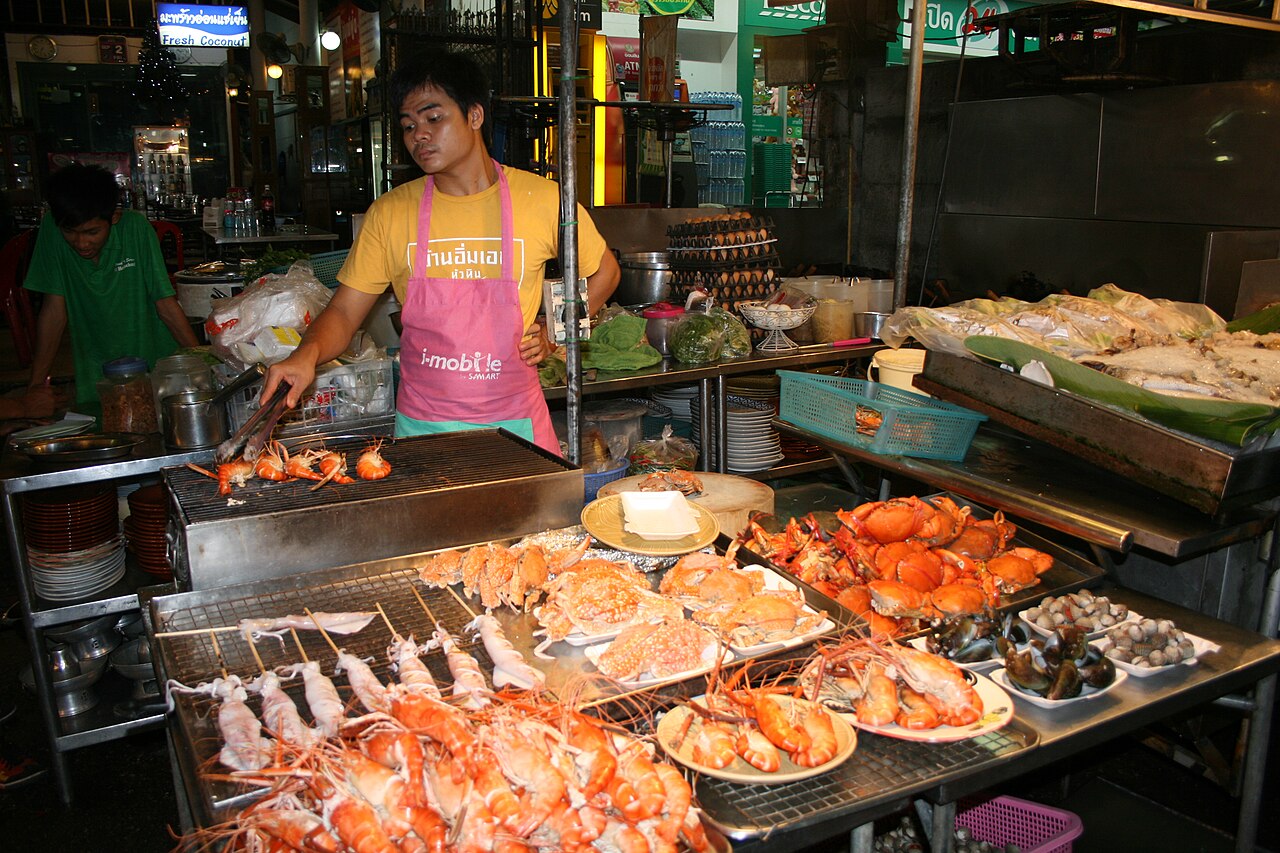
The Hua Hin Night Market — also called Chatsila — on Dechanuchit Road is the town's most famous evening walking street, open every night and a short walk from the railway station. Its heart is the grilled-seafood stalls cooking to order — big river prawns, blue crab, mantis shrimp, squid and scallops grilled over charcoal or steamed in front of you. You pick your pieces and they're weighed by the kilo, more affordable than the pier restaurants. The streets around are lined with snacks, pad thai, sweets and souvenirs, busiest in the early evening. Stick to stalls that show prices and have a crowd.
 3
3
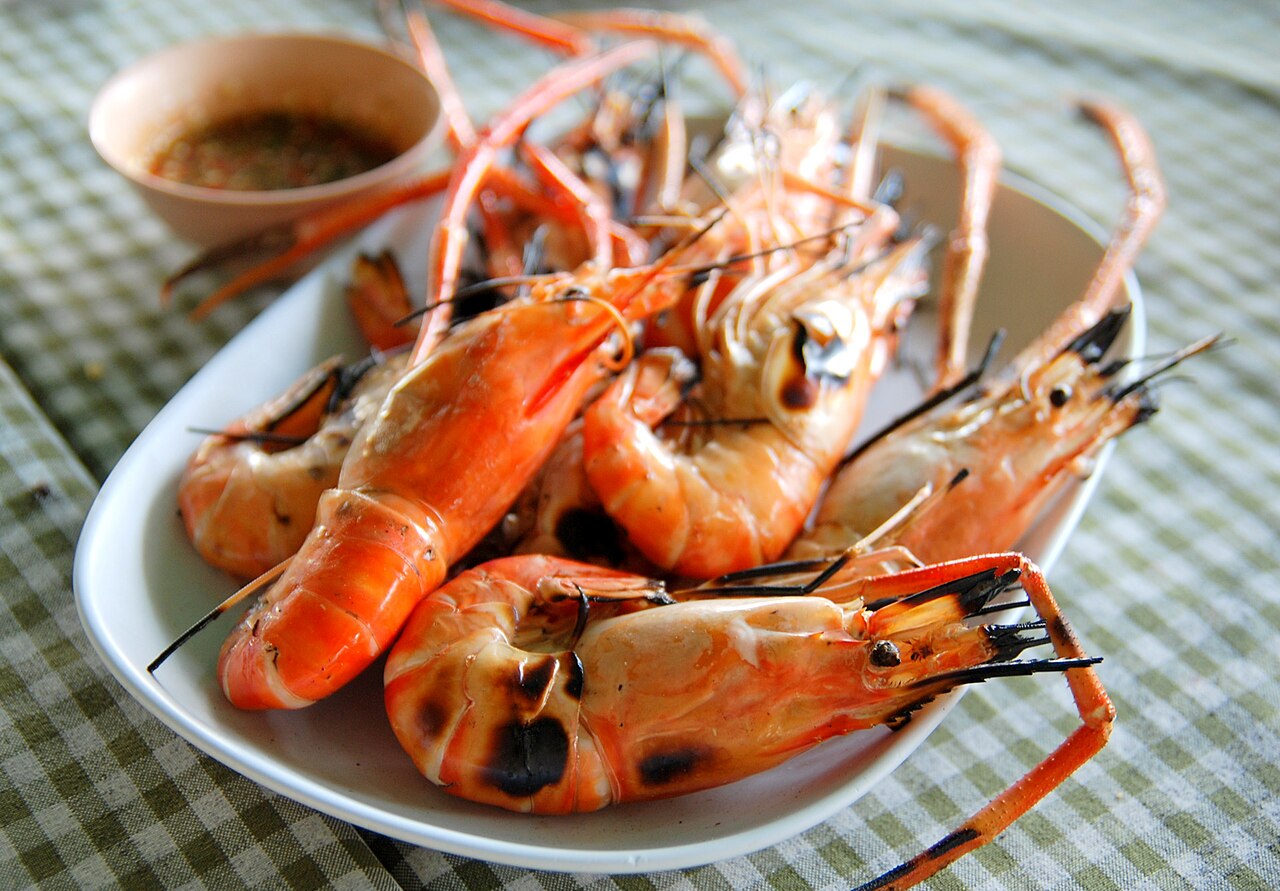
If one dish says Hua Hin eats well, it's big charcoal-grilled river prawns — grilled in the shell until fragrant, split open to reveal the rich head fat, and dipped in the essential bright, spicy seafood sauce (nam jim seafood). Its partner is salt-crusted grilled sea bass (pla phao), stuffed with lemongrass and pandan and grilled until the skin is crisp and the flesh is juicy, eaten with the same sauce or made into steamed fish with lime. You'll find these both at the pier restaurants and in the night market — honest, simple flavour you never tire of. Come with a group and order to share to make it count.
A real Hua Hin breakfast is pa-tong-go — crisp fried dough — dipped in sangkhaya custard, with old-style coffee or coffee with condensed milk. The spot locals head to is around Jek Pia (Jek Piek) coffee shop at the corner of Naebkehardt and Dechanuchit Roads, open from around 6am and a hub for pork congee, fish rice soup and noodles, with a pa-tong-go cart across the street to buy and dip in the custard. Order a glass of condensed-milk coffee and eat your fried dough watching the town wake up — it's the best way to start a Hua Hin day.
When the seafood is really fresh, it doesn't need much — steamed blue crab (pu ma), hot and sweet, picked apart and dipped in seafood sauce, even richer if it has roe; blanched cockles (hoy kraeng) cooked just right with the blood still red; baked mussels with herbs, fragrant with holy basil; and scallops grilled in butter. It's the spread you order alongside the grills in a seafood meal, available both at the pier and in the night market. Pick it fresh, steam or blanch it just until done, and let the bright seafood sauce do its job. Pure Gulf-of-Thailand flavour.
A seafood town naturally has good fish rice soup (khao tom pla) — a clear, hot broth with fresh sea bass or sea fish, scattered with celery and shredded ginger, gentle and easy on the stomach, eaten both at dawn and late after a night out. Its partner is pork congee (jok), smooth and silky with a soft-boiled egg, liver and crisp pa-tong-go on top. The Jek Pia area and the morning markets have congee and rice-soup stalls open very early. It's the light bowl locals actually eat before or after a heavy meal — a few tens of baht, and warm and filling.
Hua Hin sits at the top of the south, so fiery southern Thai food is easy to find — gaeng tai pla, a deep, hot fish-innards curry eaten with fresh vegetables; stir-fried sator beans with shrimp paste and fresh prawns, rich with shrimp-paste flavour; khua kling moo, dry minced pork fried with a fierce curry paste; Hat Yai fried chicken, crisp outside and tender within with fried shallots; and khao yam, a southern rice salad for a lighter day. Rice-and-curry shops are spread through town, especially around the markets and working neighbourhoods, friendly on the wallet and genuinely spicy. If you can take the heat you'll love it — just tell the shop how hot you want it.
Chatchai Market is the old fresh market in the town centre where locals actually shop, and the food side opens very early, before dawn — stalls of congee, rice soup, pa-tong-go and khanom jeen, freshly made Thai sweets like khanom krok, khanom tuay and sangkhaya, plus seasonal fruit and dry goods and souvenirs. It's an easy place to graze a local breakfast, and the market's old arched roof makes for a nice photo. It's a better window onto the town's real daily life than the night market is after dark.
Cicada Market near Khao Takiab is the arty evening walking market — open Friday to Sunday nights only, with crafts, art, live music and a food zone that runs from Thai street food to international dishes: pad thai, khanom krok, grills, sweets and creative drinks. The mood is more relaxed than the in-town markets, good for an after-dinner wander, and the Tamarind Market sits right beside it to carry on. Come with family or as a couple and you can browse the stalls and graze your way through the evening.
About 40–45 minutes inland is Monsoon Valley Vineyard (Hua Hin Hills), one of Thailand's largest tropical-latitude wine estates, with lovely views over the rolling vines and hills. Here The Sala Wine Bar & Bistro, a pavilion-style restaurant, does farm-to-table cooking using vegetables from the estate's own gardens, paired with wine-tasting flights of the vineyard's labels. Having lunch among the vines or a glass at sunset is a completely different experience from the seafood by the sea. There's no public transport to it, so you'll need a car, a hire car or a tour, and the cool season (Nov–Feb) is the most comfortable time to sit out.
End a meal with the Thai sweets you'll find all over town — bua loy, rice-flour dumplings in warm coconut milk with a sweet egg; coconut ice cream topped with peanuts, lod chong and sticky rice; khanom krok, coconut-fragrant little pancakes crisp at the edge and soft in the middle, made fresh in the morning market; khanom tuay, pumpkin sangkhaya and tap tim krop; and seasonal fruit like nam dok mai mango, pineapple and fragrant young coconut. Chatchai Market in the morning and the Night Market in the evening both have plenty of sweet stalls. A few tens of baht each, these are simple, home-style sweets, refreshing in the Gulf-coast heat.
Beyond the morning old-style coffee, Hua Hin has plenty of specialty cafés too — beachfront cafés where you sip coffee looking over Hua Hin bay, hillside cafés around Khao Takiab with views of the hills and the sea, and the café at the Monsoon Valley vineyard where you can drink coffee among the vines. Some do brunch and freshly baked pastries as well. To be straight with you, the view cafés are priced like a tourist town, but the setting is worth a long afternoon. If you just want cheap, honest coffee, the old-style coffee shops in town still do it better.