Ordered from nearest — out to see the real thing
Sorted from closest to furthest, with an honest note on which is half a day, a full day, or a trip that needs a car to reach.
If you only get out of town for half a day, make it Pranburi — a district about 30 km south of Hua Hin that feels far quieter and more natural. The Pak Nam Pran beach is long and calm, with sea pines lining the sand — just the place for an unhurried afternoon away from the crowds.
The highlight is Pranburi Forest Park, where a roughly 1 km timber boardwalk threads through the mangroves and you can get a close look at the stilt roots, fiddler crabs and birds; it's free, with parking. Nearby is the Sirinart Rajini Mangrove Forest, Thailand's first learning centre dedicated to restoring mangrove from old shrimp farms, open 8.30 am–4.00 pm. Pranburi is also the gateway to Sam Roi Yot, so if you start early you can pair it with Phraya Nakhon Cave in one day.
Fancy a change of beach for a day? Cha-am sits about 25 km north of Hua Hin, a 25–30 minute drive up Phetkasem Road, and it's Hua Hin's twin seaside town just over the line in Phetchaburi province. It's relaxed and family-minded — a long, soft beach with deckchairs and umbrellas, a row of beachfront seafood restaurants, and prices a notch friendlier than Hua Hin.
Cha-am suits an easy day you don't need to plan much for — eat seafood by the sea, hire a rubber ring, or ride a bicycle or pony along the front, then drive back to Hua Hin in the evening. This side is also home to Maruekhathaiyawan Palace and several European-themed parks (see the entries below), so it's easy to combine in a day. For more on the area, read our Phetchaburi travel guide.
 3
3
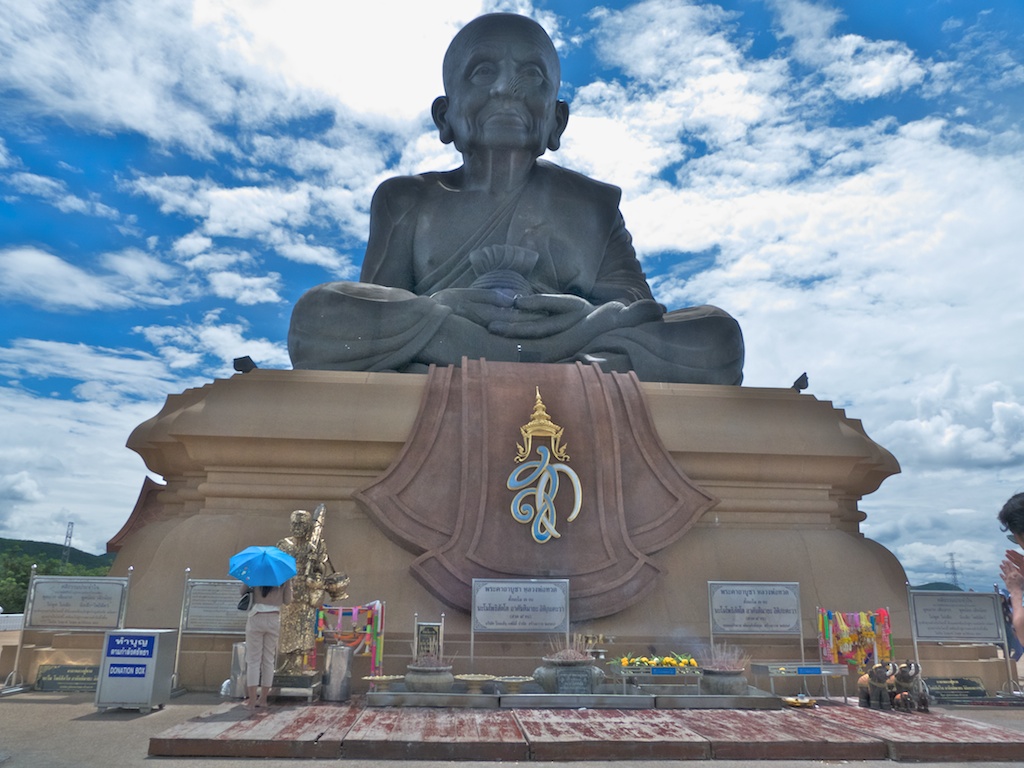
Wat Huay Mongkol sits west of Hua Hin, about 15 km from town, a ~30-minute drive. The highlight is the largest statue of Luang Phor Thuad in the world — about 12 metres tall and 10 metres wide, seated in meditation on a mound. He's revered across Thailand, and people come to ask for safe travels and good fortune.
Two large carved wooden elephants flank the statue, and there's a belief that walking under their bellies brings luck. Around the temple are stalls selling souvenirs, amulets and food. Entry is free with no ticket — a donation is welcome. To be honest, this is a quick visit, about an hour is plenty, so it works well as a stop on the way to or from Kaeng Krachan, or paired with other places on the western side.
Tucked between Cha-am and Hua Hin is one of Thailand's loveliest old palaces — Maruekhathaiyawan (Mrigadayavan) Palace, known as the "palace of love and hope," a golden-teak palace raised on stilts by the sea that King Rama VI had built as a summer residence. It lies just over the line in Phetchaburi, about 20 minutes' drive north of Hua Hin.
Its charm is in the long timber verandahs that catch the sea breeze, the pale louvred windows, and the airy covered walkways linking the halls — a delight to wander and photograph. Be aware there's a dress code: you'll need to cover shoulders and knees (a sarong can be borrowed or hired on site). Go in the morning for soft light and fewer people. Read the full details in our Maruekhathaiyawan Palace guide.
 5
5
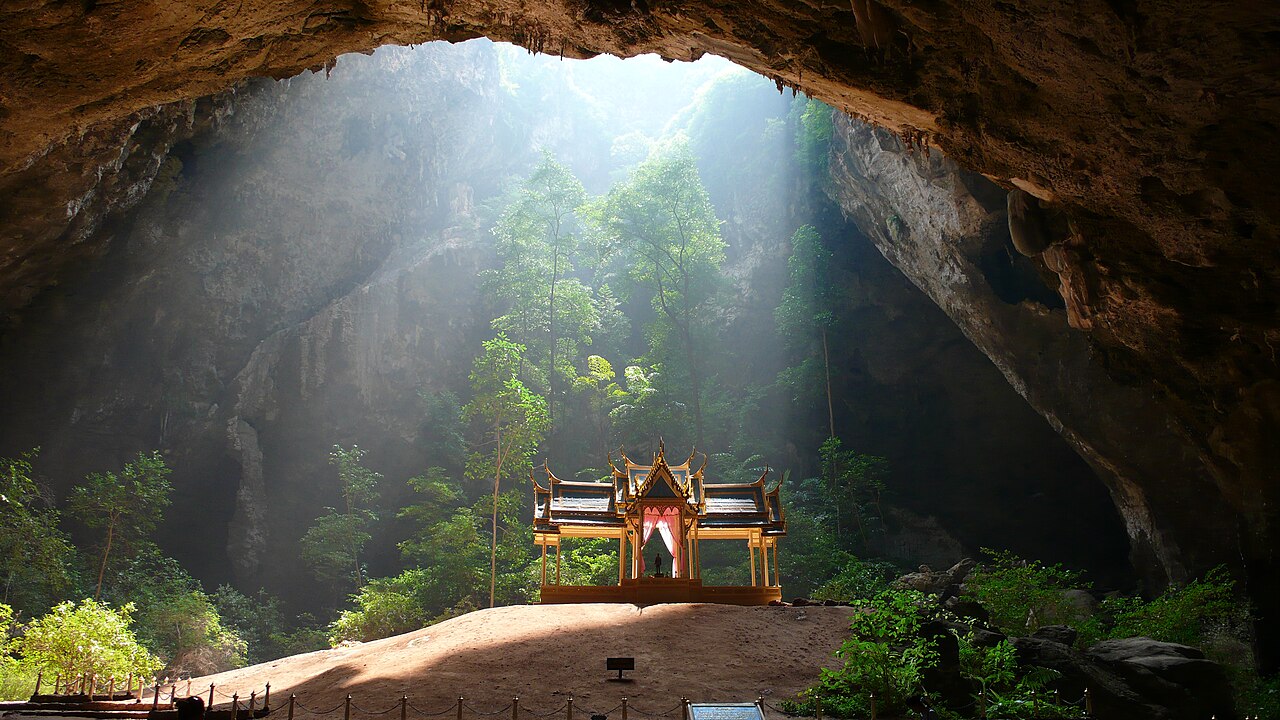
A nature trip you shouldn't miss from Hua Hin — Phraya Nakhon Cave sits in Khao Sam Roi Yot National Park in Prachuap Khiri Khan, about 40–60 minutes' drive south to the village of Ban Bang Pu. The iconic sight is the Khuha Kharuehat royal pavilion, a wooden pavilion with a Thai-style roof standing inside the cave, lit by a morning sunbeam that pours through an opening in the cave roof and lands right on it — the shot everyone comes to take.
Getting to the cave takes a little effort: from Ban Bang Pu you either take a fishing boat across to Laem Sala beach or walk over the headland for about 20–30 minutes, then climb a fairly steep path up to the cave mouth. Honestly, it's steep and hot, so go early — both to catch the light inside (~10.00–10.30 am) and to avoid the midday sun — and wear grippy shoes. Around it are Laem Sala beach, a lotus marsh and the park's limestone peaks. Read it all in our Phraya Nakhon Cave & Sam Roi Yot guide.
Travelling with kids and want somewhere fun to photograph? The Cha-am–Hua Hin stretch has a string of European-themed parks — Santorini Park, an amusement-park-and-shopping complex themed on the Greek island of Santorini, with white domed buildings, a Ferris wheel, rides and shops; Swiss Sheep Farm, where children can feed sheep, goats, horses and alpacas; and The Venezia, a Venice-themed spot with a canal where you can ride a gondola for photos.
Honestly, these are all photo-and-rides parks rather than the real European thing, but with a family or small children they're an easy, photogenic afternoon out. All three are in the Cha-am area, about 25–30 minutes' drive from Hua Hin, so you can combine them in one day.
For a day of history and good food, drive north to Phetchaburi town — Phra Nakhon Khiri, or Khao Wang, is a hilltop palace from the reign of King Rama IV in the middle of town, about an hour's drive from Hua Hin. On the hill are royal halls, stupas and wide views over Phetchaburi.
You can get up two ways — walking the steep path, or taking the funicular (cable car), with a round-trip ticket around ฿30–50; riding up and walking down is much easier on the legs. After Khao Wang, wander Phetchaburi's old town and taste its famous mor kaeng custard, Thai sweets and local dishes. Honestly, Phetchaburi is a town where the food is good and the history runs deep — easily a full day. Read on in our Phetchaburi travel guide.
 8
8
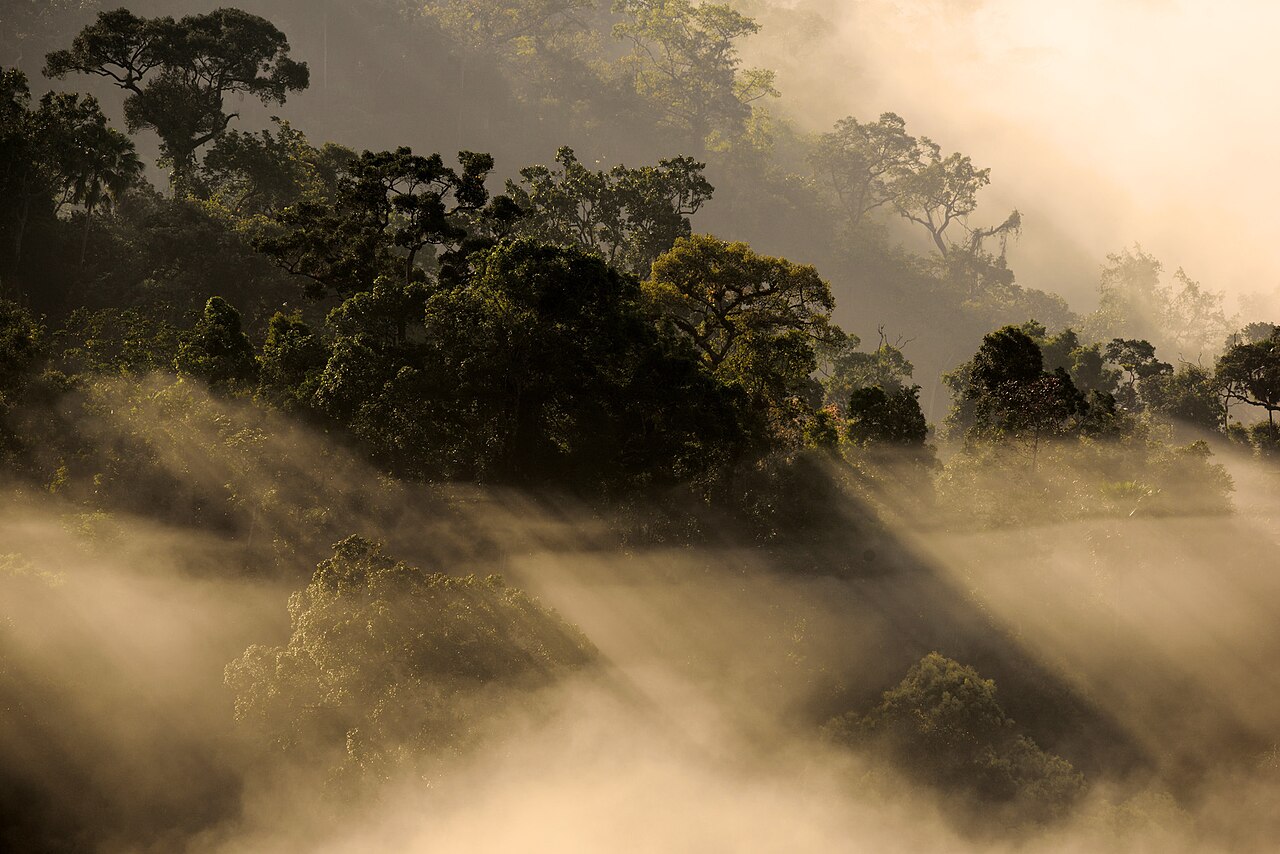
If you want to swap the beach for deep jungle for a day — the Pa La-U Waterfall sits in Kaeng Krachan National Park, Thailand's largest forest, about 60 km west of Hua Hin. The waterfall tumbles in tiers through rainforest, the water cool and clear enough to swim in, and the road in passes through green hills that some mornings wear a sea of mist.
Honestly, this trip needs a car or a chartered ride — there's no public transport, and the small road is winding; it's about 1.5–2 hours' drive. If you don't drive, a chartered taxi round trip runs roughly ฿1,700–1,800. The road runs close to the Myanmar border, so you'll pass checkpoints; bring your passport or ID. Allow a full day and start early. The flow is at its best in the late-rains-to-cool season (Oct–Jan); in the dry season it can drop.