Bangkok runs on three seasons — hot, rainy, and a "cool" season that is really just comfortably warm. Each one has a genuine upside and a catch worth knowing before you book, from April's relentless heat to afternoon monsoon downpours and the Loy Krathong lanterns drifting down the Chao Phraya. Here is the whole year, told straight.
Bangkok's cool season is not actually cool, but it is the kindest the city ever gets to people on foot. Rain all but stops, humidity drops, mornings sit around 22–24°C and sunny afternoons around 31–33°C — you can walk the Grand Palace, Wat Pho and Wat Arun circuit all day without melting. The festival calendar stacks up too: Loy Krathong on the river in November, then Chinese New Year in Yaowarat around January or February. The honest trade-off: this is high season. Crowds build, hotel prices are the highest of the year, and they spike hard between Christmas and New Year, so book earlier than you normally would.
If that window doesn't work, the early rainy season (June–August) is better than its reputation — most rain falls as a single hard late-afternoon or evening downpour, mornings are usually fine, and hotel rates drop noticeably. The months that need real thought are April (the hottest of the year at around 35–36°C — unless you are coming for Songkran, in which case it is the party of the year) and September–October, the wettest stretch. One more thing worth knowing: PM2.5 haze appears on some days from December to February — check an AQI app in the morning and shuffle your plans indoors when it spikes.
Three real seasons (we split the rainy one in two, because the two halves are genuinely different) — told straight, no sugar-coating.
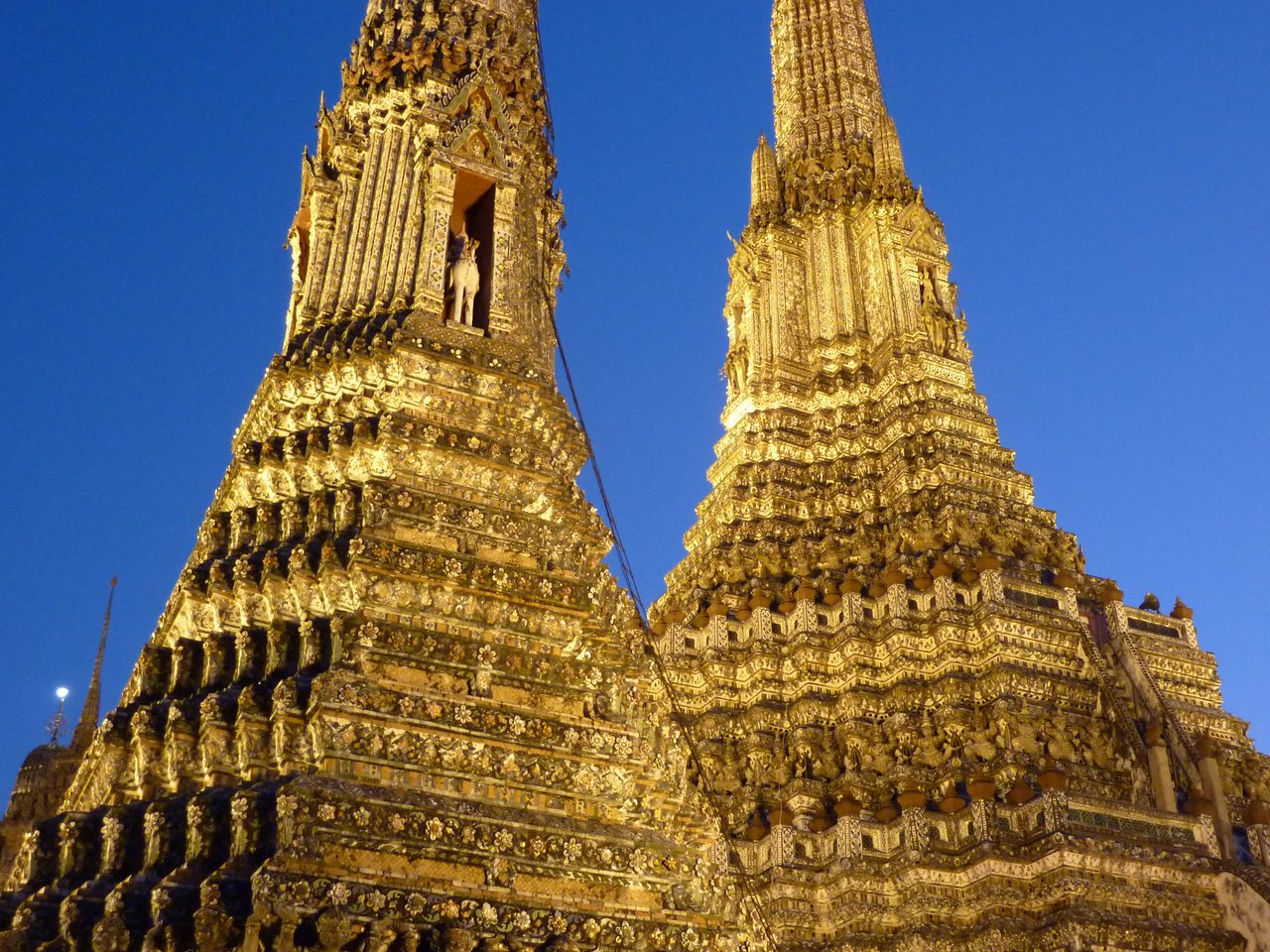
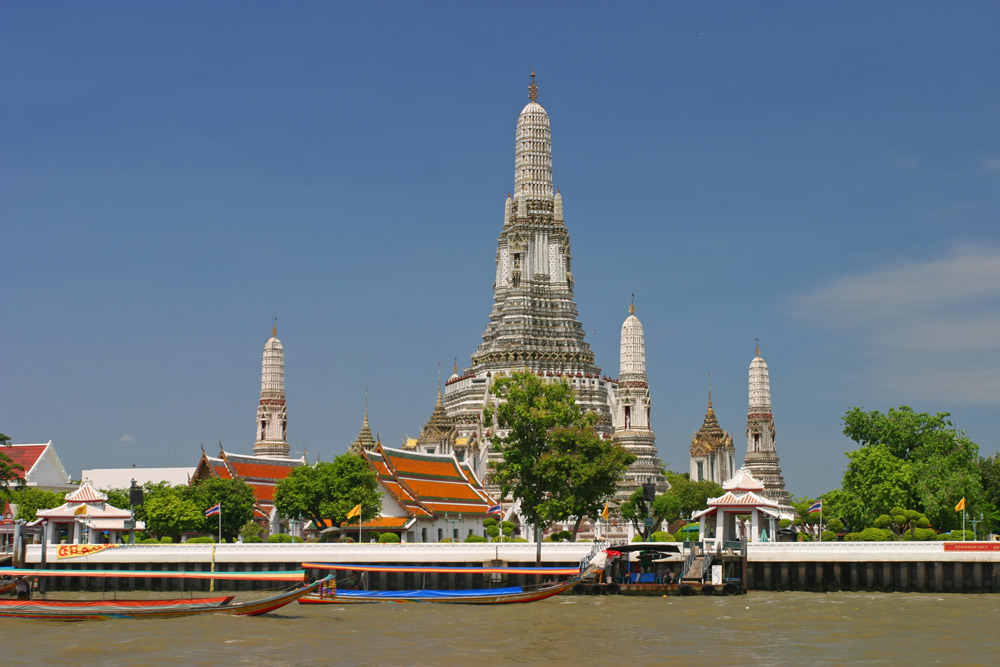
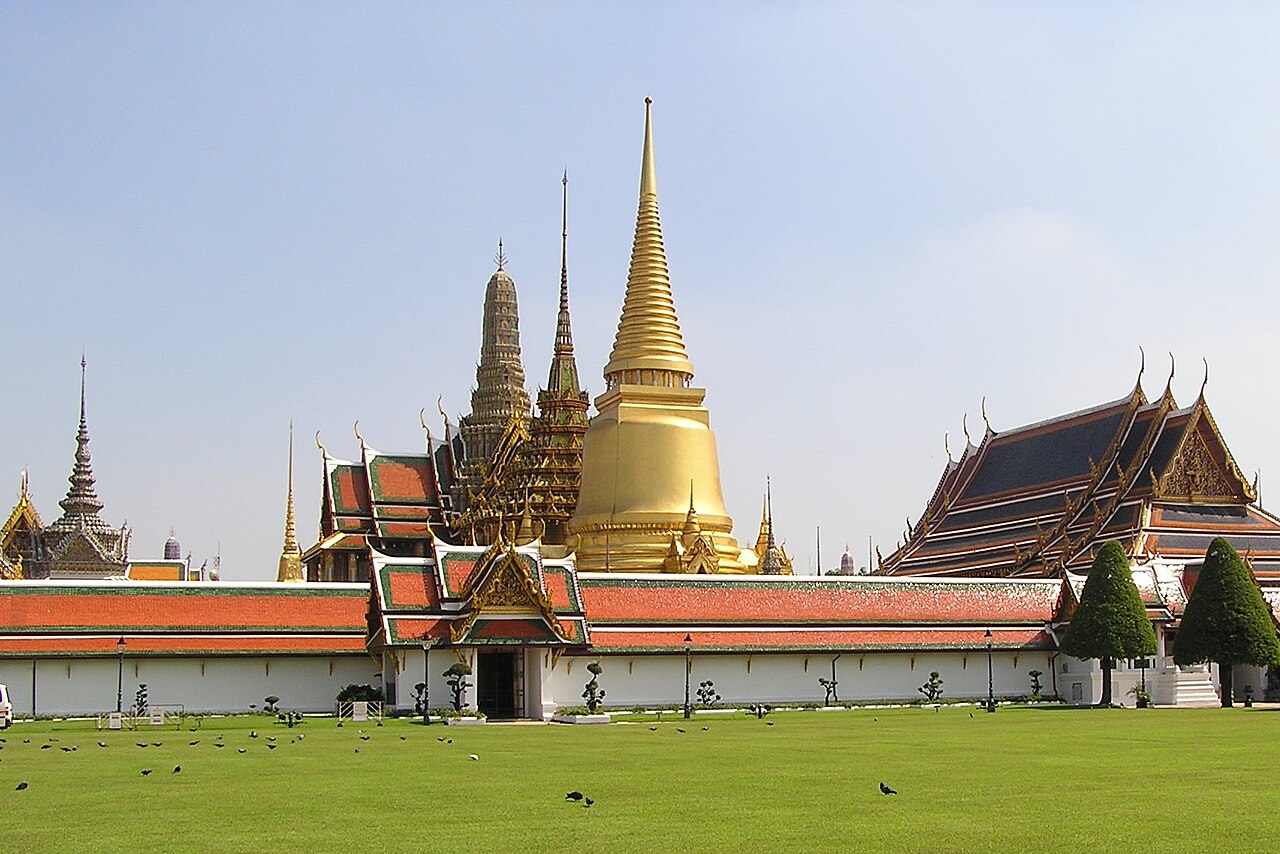
Wat Arun · Cool season
The best
This is the answer to the question in the title. The rain switches off almost completely, humidity drops enough to feel, the sun is out most days, and mornings and evenings sit at a gentle 22–25°C — some years a proper cool breeze rolls in and the whole city celebrates. You can do the Grand Palace, Wat Pho and a boat over to Wat Arun in a single day without running out of steam.
The festivals stack up in this window too: Loy Krathong around mid-to-late November, when the Chao Phraya is at its most beautiful, then the New Year countdowns, then Chinese New Year in Yaowarat around January or February. The plain trade-off: this is high season for the whole city. Expect crowds, the year's highest room rates, and a hard price peak from late December into early January.
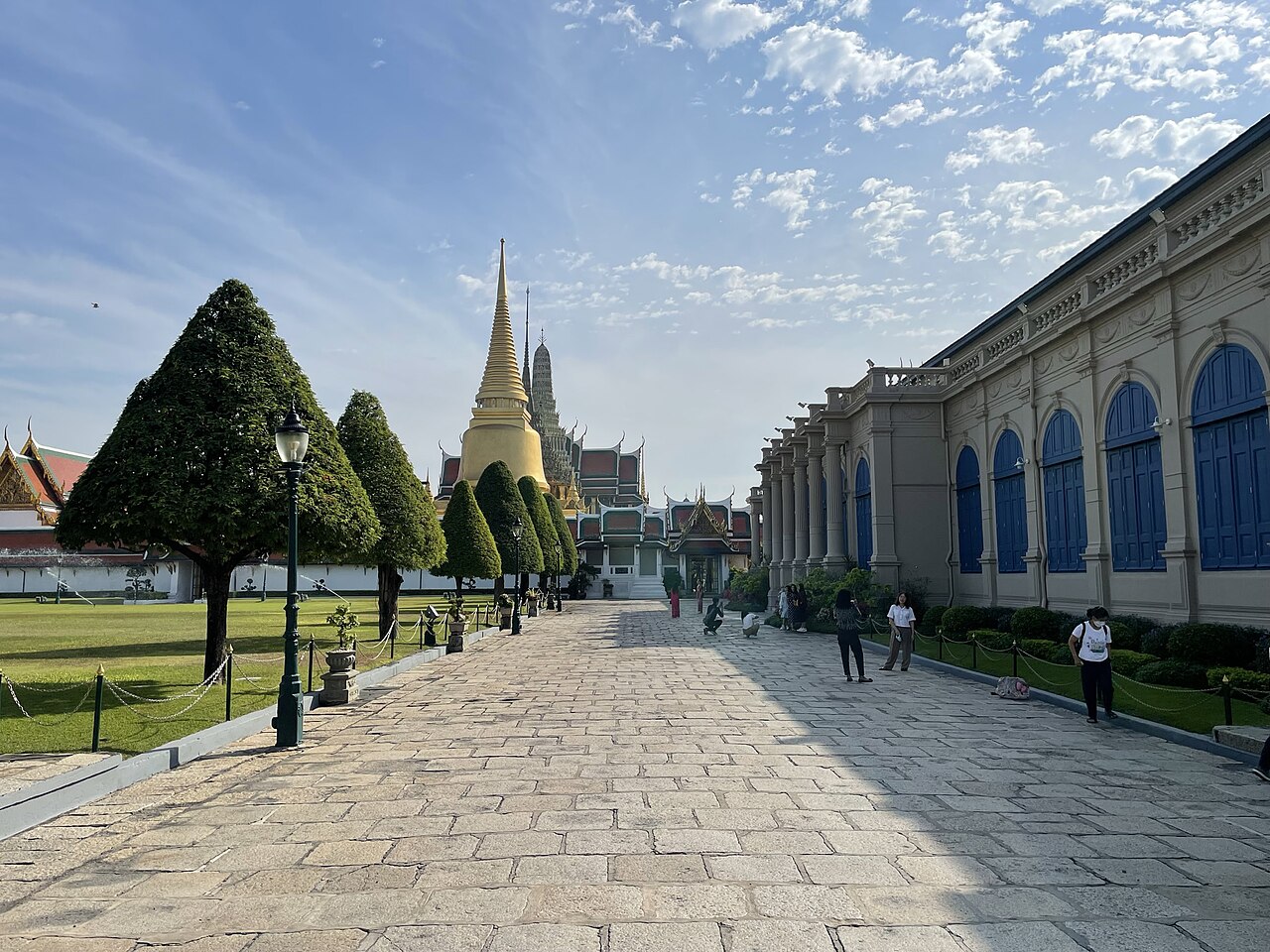
Grand Palace · Hot season
Seriously hot
Bangkok's hot season does not hold back. April is the peak: daytime temperatures around 35–36°C, and on humid days the heat index pushes past 40. The wide stone courtyards of the Grand Palace at midday are a genuine endurance test. The survival formula: start early (most temples open around 8:00–8:30), retreat somewhere air-conditioned through the middle of the day, and come back out after 4 pm. Let the BTS, MRT and river boats do the moving for you.
Mid-April brings Songkran (13–15) — if you are coming to join the water fights on Khao San Road or Silom, this is the most fun festival of the year. If you are not, know that many local shops close for the long holiday, several streets become water-fight zones, and staying dry anywhere central is wishful thinking.
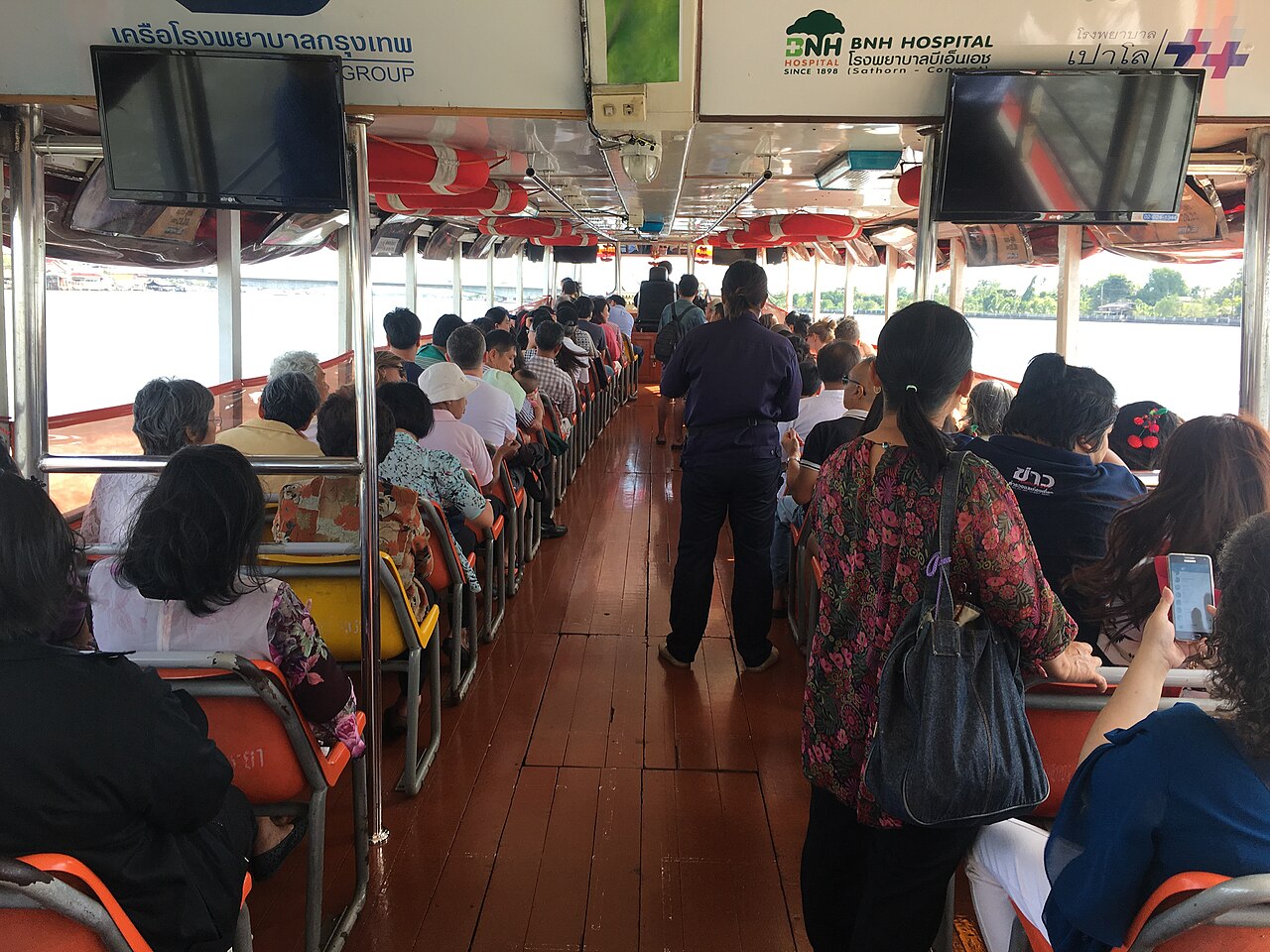
Chao Phraya River · Rainy season
Better than you think
The biggest misconception about Bangkok's rainy season is that it rains all day. It mostly does not — the rain usually arrives as one hard storm in the late afternoon or evening, dumps for about an hour, then stops. Mornings through early afternoon are generally fine for sightseeing. Put your outdoor plans in the first half of the day and keep malls, museums and cafes as the afternoon fallback.
This is the low season, and it shows in the prices: hotel rates drop clearly, the big temples thin out, and you can photograph them without waiting for a gap in the crowd. The truest trade-off is traffic — rain turns Bangkok's roads to glue. Skip taxis on wet evenings and take the BTS, MRT or a Chao Phraya express boat (orange flag, about ฿16) instead.
September is Bangkok's wettest month. The storms come more often, hit harder, and some days bring more than one round. After a heavy downpour, low-lying streets can flood for an hour or two while the drains catch up, and traffic reaches numbers your map app will refuse to believe. The flip side: hotels are usually at their cheapest of the entire year, including the riverside ones.
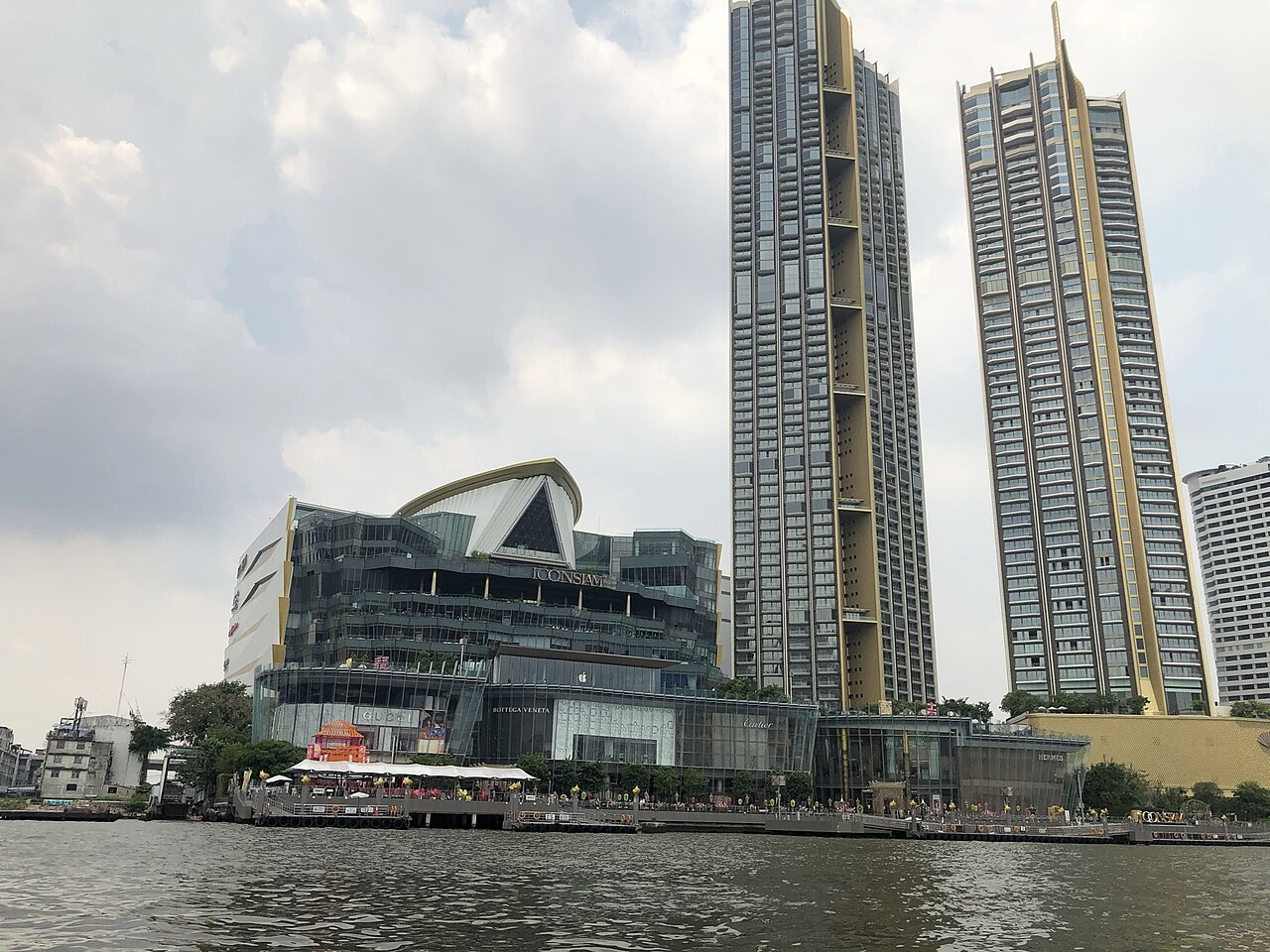
If you come now, stay next to a BTS or MRT station, keep your plans loose, and lean on the city's indoor depth — riverside malls like ICONSIAM (free shuttle boat from Sathorn pier, by BTS Saphan Taksin), museums, and an endless supply of cafes. By late October the rain starts winding down, and in early November the sky flips clear like someone hit a switch.
Temperature, rainfall and crowd levels — one table for easy comparison (figures are approximate, from climate averages).
| Month | Temperature | Rain | Crowds | Notes |
|---|---|---|---|---|
| January | 22–33°C | Very low | High (peak season) | Mild and sunny · PM2.5 on some days |
| February | 24–34°C | Very low | High | Chinese New Year in Yaowarat (some years Jan) · warming up |
| March | 25–35°C | Low | Moderate | Properly hot now · fierce midday sun |
| April | 26–36°C | Low | High (Songkran) | Hottest month · Songkran 13–15, the whole city gets soaked |
| May | 26–35°C | Moderate | Moderate | Still hot · rains arriving late in the month |
| June | 26–34°C | Moderate | Moderate | Afternoon bursts · low season begins, prices easing |
| July | 25–33°C | Moderate | Low | Short, hard evening rain · mornings still good |
| August | 25–33°C | Heavy | Low | Rain more frequent · umbrella every day |
| September | 25–33°C | Heaviest | Low | Wettest month · street flooding possible · cheapest hotels |
| October | 25–33°C | Heavy | Moderate | Still wet · easing late in the month |
| November | 24–33°C | Low | High | Skies clear · high season begins · Loy Krathong |
| December | 22–32°C | Very low | High | Driest and gentlest · prices peak late in the month |
Two questions that can decide your whole Bangkok trip — answered straight, both of them.
Wat Phra Kaew · Cool-season morning
Golden months
The Grand Palace, Wat Pho and Wat Arun are almost entirely outdoor walking, across stone courtyards that bounce the sun straight back at you. In the cool season the air is kind enough to do the full circuit — take the MRT to Sanam Chai or an express boat to Tha Tien pier, walk to Wat Pho, then hop the cross-river ferry (about ฿5) over to Wat Arun in a few minutes.
Arrive when the gates open (the Grand Palace around 8:30) and you get the soft morning light, air that has not heated up yet, and a head start on the tour groups that roll in later. Entry to the Grand Palace is ฿500 for foreign visitors. Dress modestly — shoulders and knees covered — in every season.
Bangkok · Low season
Best value
The rainy-season low months are when room rates drop hardest. Many hotels — riverside ones included — run rates clearly below high season, often around 20–40% less. Lines at the big temples shrink, and restaurants that normally need a wait become walk-ins.
The trade-off is the afternoon-to-evening rain, heaviest in September and October. If you can work around the storm schedule and keep plans flexible, this is the calmest, best-value version of Bangkok all year. Prices move constantly — always check before you book.
None of them are reasons to cancel — but all three can reshape a trip if they catch you by surprise.
During Songkran the whole city becomes a water fight. Khao San Road, Silom and several other zones close to traffic and stay soaked from morning to night — step outside and you are a target, cheerfully. Many local shops and family restaurants close for the long holiday as Bangkokians head home upcountry, traffic patterns change, and it all lands in the hottest week of the year. If you are coming to play, it is the best party on the calendar. If you wanted a dry sightseeing trip, shift to late April or another month and you will be much happier.
Rain in these weeks comes often and hard. After a major storm, some streets hold water for an hour or two while the drains catch up, evening traffic seizes, and airport runs need generous padding. What you get in exchange is the year's cheapest hotels and the thinnest crowds. If you come now: stay by a BTS/MRT station, plan loosely — outdoors in the morning, indoors after mid-afternoon — and the trip flows better than you would expect.
The weather is at its annual best, and so are the prices — riverside and downtown hotels fill months ahead for the countdown nights, and rates spike across the city. The other thing to know about this time of year is PM2.5: from December to February, still air sometimes lets fine dust build until the sky turns dull. It is not every day and varies year to year. Check an AQI app each morning, move plans indoors on bad days, and keep an N95 mask in your bag for peace of mind.
Three big dates that turn an ordinary Bangkok trip into the one you keep talking about.
On Loy Krathong night, thousands of candle-lit krathong floats drift down the Chao Phraya and the riverside temples glow until late — it is the prettiest the river looks all year. Popular spots include the riverside parks, the big piers, the restored Khlong Ong Ang canal, and the organised events at ICONSIAM and Asiatique. Crowds surge in the early evening, so allow extra travel time — and going home late is far easier by BTS/MRT than hunting for a car. It lands right as the cool season begins, which makes the whole evening even better.
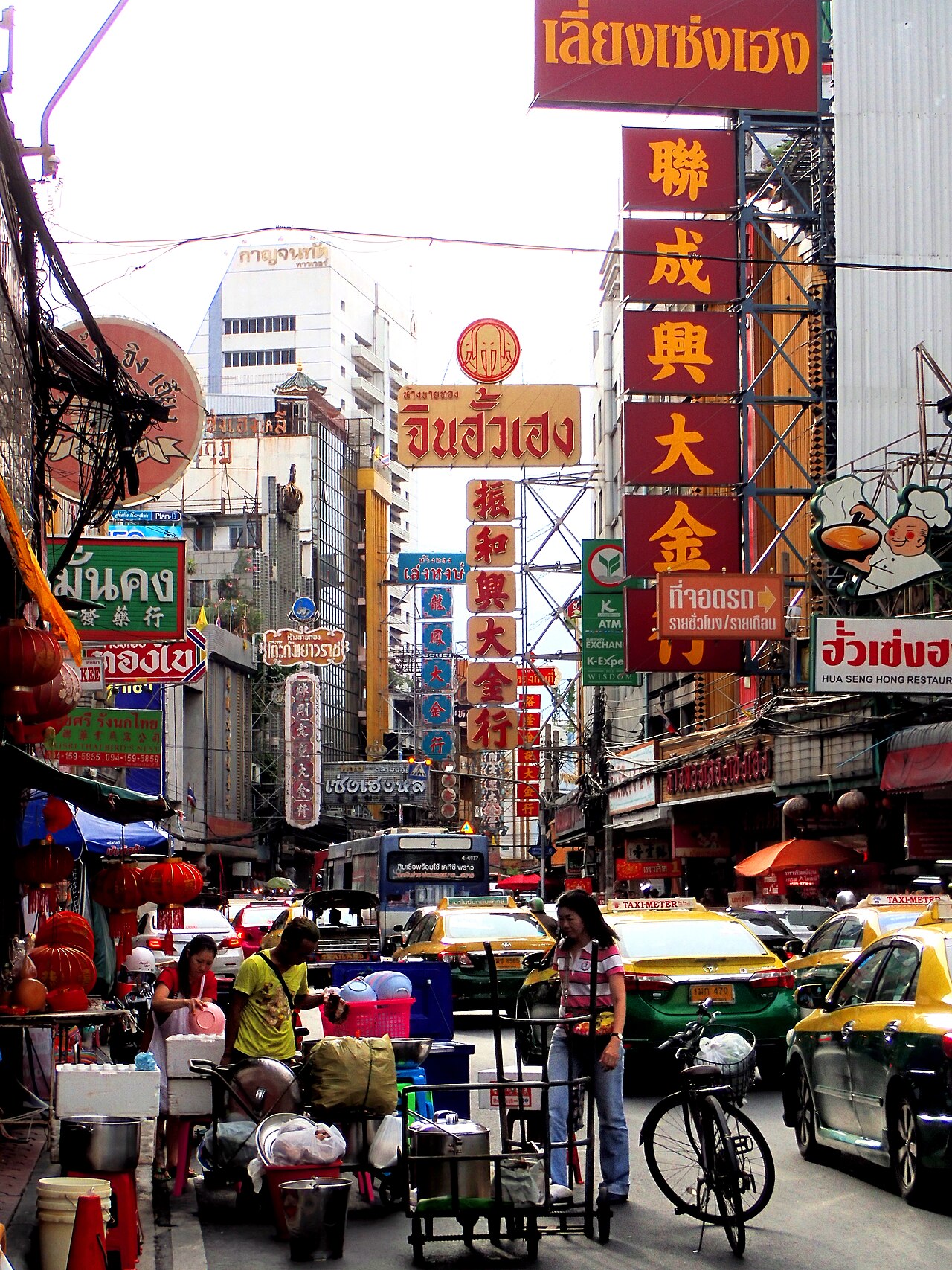
For Chinese New Year, Yaowarat Road closes to cars and becomes one long festival — lion and dragon dances, red lanterns the whole length of the street, and food in every direction. Take the MRT to Wat Mangkon and you surface in the middle of it. The main evenings get very crowded; if you would rather not shuffle shoulder-to-shoulder, go in the afternoon or on the quieter side days. Some famous restaurants take holidays over the festival, so check ahead if you have a specific one on your list.
If you are coming to play, Bangkok throws one of the biggest Songkran celebrations in the country. Khao San Road is the legend, Silom turns into a water-fight corridor several hundred metres long, and malls and event spaces run music festivals on top. Bring a waterproof phone pouch and spare dry clothes, and book a room near your chosen battleground early — places close to the action fill fast and prices climb for the holiday.
Bangkok packs light all year — only a few items change with the season.
Whatever month you arrive — rain, heat or haze — this city always has something running.