Home Xiamen China Food Guide About
Home  ›  Asia  ›  China  ›  Xiamen  ›  Breakfast Guide
🇨🇳 Xiamen Breakfast Guide · 2026

Breakfast in Xiamen
from sweet peanut soup to hot shacha noodles

Before the island wakes and the first Gulangyu ferry sails, locals are queueing for hot peanut soup at the Bashi market and watching oyster omelettes sizzle on griddles that have been hot for decades — a morning meal under ¥30 that tells you more about Minnan cooking than any hotel buffet.

Why get up early

Breakfast is real life in the old town

Here's the thing: if you sleep in, eat the hotel buffet and head straight to Gulangyu island, you miss the best meal of the day in Xiamen. The real morning is in the lanes of the old town and at the Bashi market (八市), where locals stand and slurp peanut soup and wait for an oyster omelette to come off the griddle — not in a hotel dining room.

Xiamen is a seaside city, and its breakfast carries several bloodlines at once — Minnan (闽南), Taiwanese and Southeast Asian. The flavour is light, fresh and gently sweet-savoury, from a bowl of peanut soup (花生汤) so silky the peanuts melt, to mianxian paste (面线糊), hair-thin noodles in a thick broth, to shacha noodles (沙茶面) in a satay-nut broth that locals eat from morning to night. Around those sit oyster omelettes with crisp edges and a soft middle, youtiao with soy milk that anyone can love, and a local specialty you'll need some nerve for — tu sun dong (土笋冻), sea-worm jelly. The whole spread runs ¥25–45 (~฿125–225) per person.

This page walks you through Xiamen's breakfast one dish at a time, plainly — what's worth trying, what takes nerve, how to eat it, where to find it, what time to go and what to bring.

The legendary bowl

花生汤 — peanut soup, a Xiamen childhood in a bowl

If you only have room for one thing in the morning, make it this — ¥5–12 (~฿25–60), silky-sweet and warming, the legendary bowl at Huang Ze He

How Xiamen peanut soup works — before you order

Skinned peanuts are simmered low and slow for hours until they're so soft they melt, sweetened with just enough rock sugar, and served hot. Locals like to crack a soft-boiled egg into the bowl or dunk a torn youtiao. The legendary Huang Ze He (黄则和) on Zhongshan Road has served it for over half a century, and the queue starts early.

🥜
Soft peanuts
花生 · hours of stewing

Cooked until they melt; silky soup

🍚
Rock sugar
冰糖 · gentle sweetness

Sweet but never sharp

🥚
Add an egg
加蛋 · optional

Cracked into the hot soup

🥖
With youtiao
配油条 · dunk it

Tear a dough stick and dunk

🥣1
Peanut Soup
花生汤 · soft stewed peanuts in a sweet, silky soup · legendary breakfast

This is the breakfast every local in Xiamen grew up with. Skinned peanuts are simmered low and slow for hours until they're so soft they melt in your mouth, in a silky, nutty, lightly sweet broth set with just enough rock sugar — never sharp. Eaten hot, it's gentle and warming. The legendary spot is Huang Ze He (黄则和) on Zhongshan Road, serving it for over half a century. Locals like to crack a soft-boiled egg into the bowl or tear a youtiao to dunk. It works as a light breakfast or a sweet finish, and you'll find it both in old institutions and at stalls in the Bashi market.
Where: Huang Ze He (黄则和), Zhongshan Rd · stalls at the Bashi market
Price: ¥5–12 (~฿25–60) / bowl
Tip: crack a soft-boiled egg in · pair with youtiao
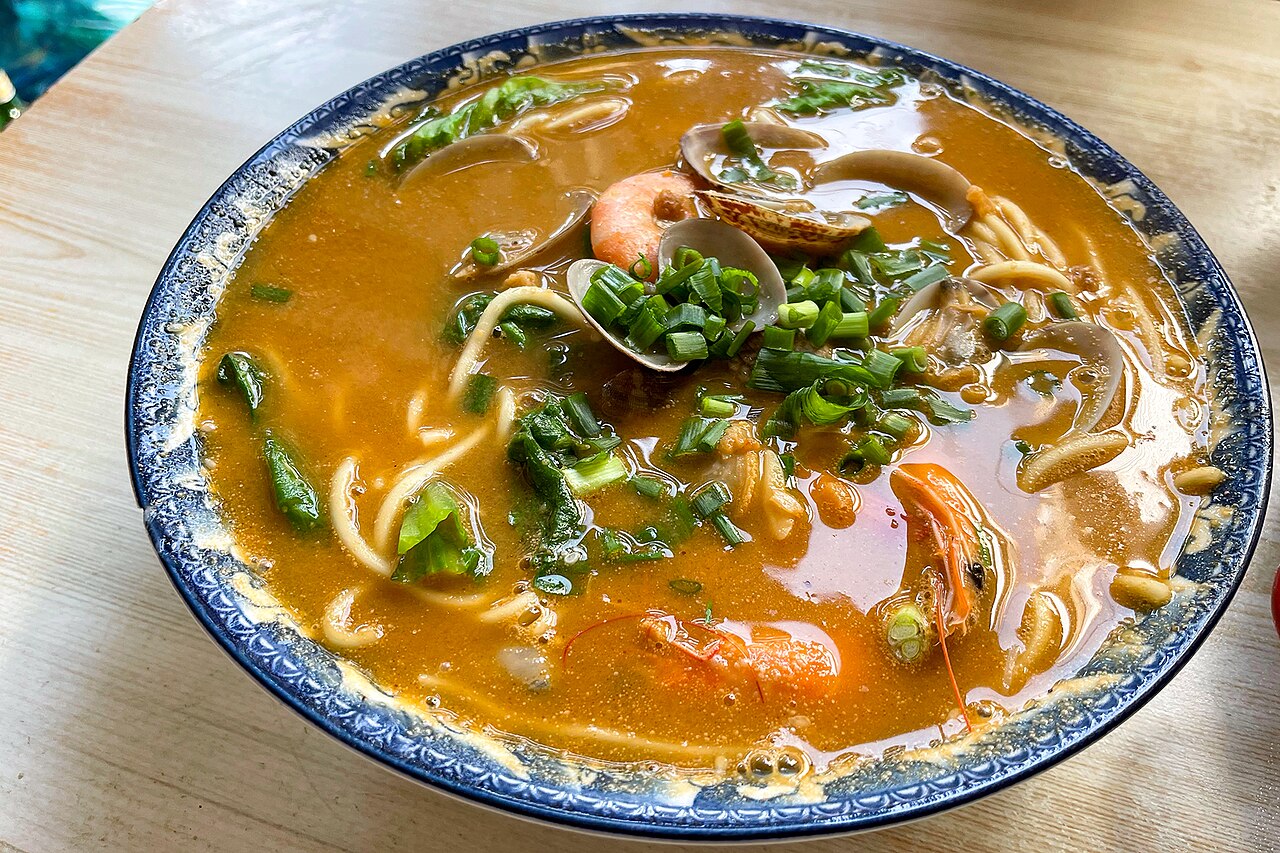
A bowl of Xiamen shacha noodles — yellow noodles in an orange satay-nut broth with shrimp, clams and chopped scallions, in a blue-rimmed bowl 2
Shacha Noodles
沙茶面 · noodles in a satay-nut broth · eaten from breakfast on

Locals happily eat shacha noodles for breakfast. Yellow noodles are blanched and dropped into a warm, orange broth built on shacha (沙茶) sauce — peanuts, dried shrimp and dried fish, a flavour overseas-Chinese returnees carried home from Southeast Asia. Some shops simmer the broth from shrimp heads and peanut butter; it comes out fragrant, nutty and gently sweet-savoury, not spicy. The fun is choosing your own toppings à la carte — shrimp, squid, pork intestine, tofu skin, fish cake — which the cook blanches and tips into the bowl under a ladle of thick broth. Legendary morning spots like Wu Tang (乌糖沙茶面) have a queue from early on.

How: point and pick your toppings · slurp the nutty broth hot
Price: ¥12–30 (~฿60–150) / bowl (by toppings)
When: sold all day · busiest morning to midday
🦪3
Oyster Omelette
海蛎煎 · ô-á-tsian · oysters + sweet-potato starch + egg

A breakfast straight off a hot griddle that locals line up for at the Bashi market. Small, fresh oysters are folded through a batter of sweet-potato starch and egg and fried hard, so you get two textures at once — crisp at the edges, soft and a little gooey in the middle. Xiamen oysters are small but full of clean, sweet brine, finished with a tangy-sweet starch dip and a scatter of scallion and coriander. It's best eaten hot off the pan, and locals often pair it with mianxian paste or congee for a full morning. Look for the griddle with people waiting — that's your sign.

Where: Bashi market · lanes off Zhongshan Rd · old-town stalls
Price: ¥15–30 (~฿75–150) / plate
With: mianxian paste · congee · peanut soup
🍲4
Mianxian Paste
面线糊 · hair-thin noodles in a thick broth · breakfast classic

The most comforting Minnan breakfast on a cool morning. Hair-thin rice vermicelli is cooked in a pork-bone and seafood broth thickened with sweet-potato starch until the whole thing turns smooth and silky — soft, slippery, easy to slurp. You add what you like: oysters, pork intestine, shrimp or other toppings, finished with white pepper and chopped scallion, in a gentle, savoury bowl. It traces back to Quanzhou, Zhangzhou and Xiamen in Fujian, and locals love to tear a youtiao (油条) into it to soak up the broth. Simple but addictive, you'll see it in every old-town lane in the morning.
Where: morning stalls in the old town · Bashi market · Zhongshan Rd lanes
Price: ¥8–18 (~฿40–90) / bowl
Tip: tear in a youtiao · choose your own toppings
More of the Minnan morning

The rest of breakfast — from easy bites to the bold local one

These four round out the Xiamen morning, from the pairing anyone can love to the genuine local specialty the brave should try

🥖5
Youtiao + Soy Milk
油条 + 豆浆 · fried dough sticks + fresh soy milk

The easiest, most familiar pairing on this list. Youtiao are crisp fried dough sticks — hollow and soft inside, golden and crunchy outside — and soy milk (doujiang) is fresh, hot and comes sweet or plain. In Xiamen people eat them together, or carry a youtiao over to dunk in their peanut soup or mianxian paste. The classic move is to tear a youtiao and dip it in the soy milk, so the dough drinks up a little and the texture shifts in your hand. If you're new to Chinese breakfast and not ready for the bolder stuff, start here — filling, easy, nothing to fear.

How: tear and dunk in soy milk · or dip in peanut soup
Price: ¥6–12 (~฿30–60) / set
Where: stalls and breakfast shops citywide · Bashi market
🍚6
Rice Porridge with Sides
稀饭 / 咸粥 · plain congee + seafood and pickle sides

A sit-down Minnan breakfast locals love. Xifan (稀饭) is a loose, brothy plain congee, eaten with a counter of little side dishes — pickled clams, crisp fried whitebait, salted egg, salted fish, stir-fried preserved radish, roasted peanuts, pickles, even tu sun dong. You point and pick a handful, and the mild rice plays off the salty, savoury sides perfectly. The other version is xianzhou (咸粥), a savoury congee cooked with seafood and meat — fragrant, warming and easy on the stomach. It's what people working around the old town grab before the day starts.

Where: congee-and-sides shops in the old town · near the Bashi market
Price: ¥10–25 (~฿50–125) / meal (by sides chosen)
Tip: pick several sides · try tu sun dong as one of them
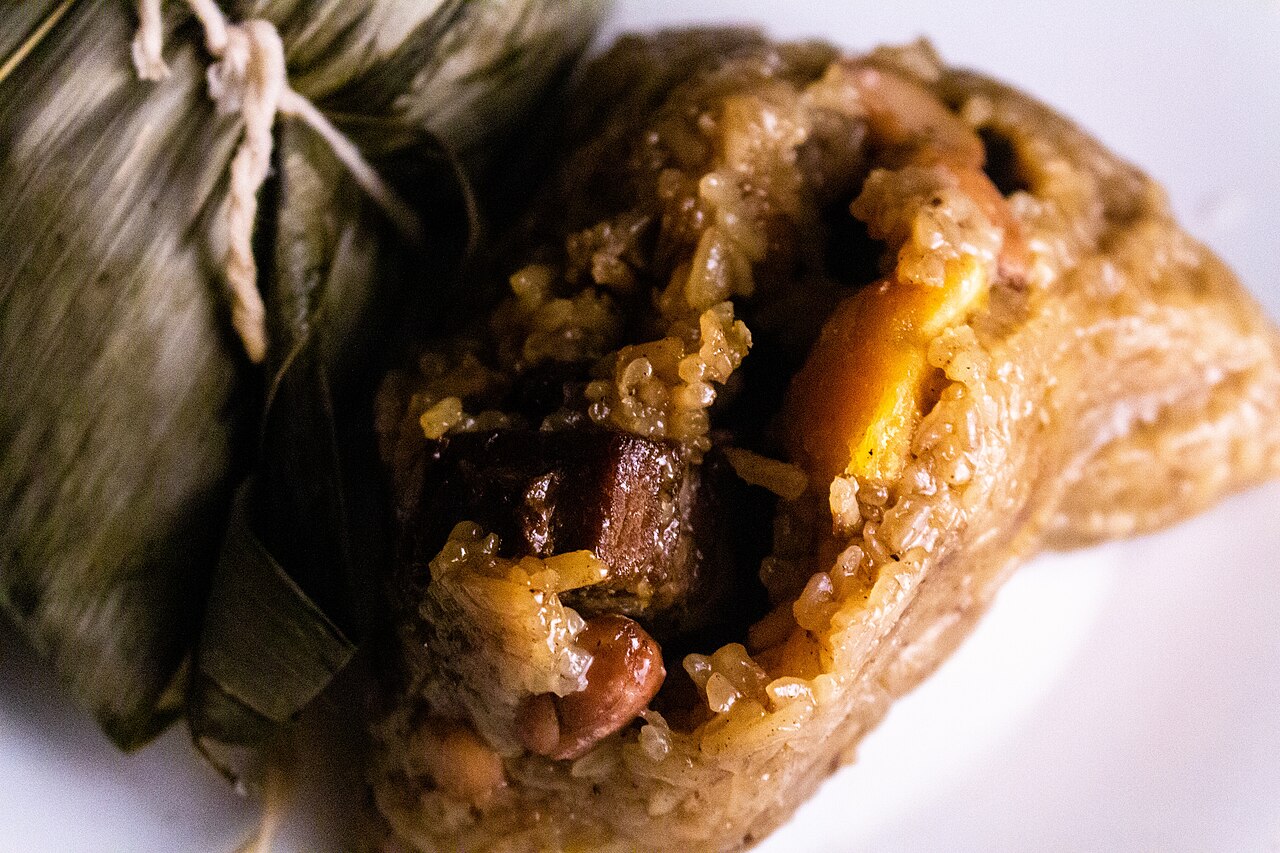
A Xiamen kao bak zong sticky-rice dumpling opened up, showing brown glutinous rice with braised pork belly, chestnut and peanuts in a bamboo leaf 7
Kao Bak Zong
烧肉粽 · sticky-rice dumpling with peanut sauce

Xiamen's version of the rice dumpling, eaten hot and sauced — a heavier breakfast that keeps you going till lunch. Shao rou zong (烧肉粽) is fragrant stir-fried glutinous rice wrapped in a bamboo leaf and packed with marinated pork belly, shiitake, chestnut and salted egg yolk, sometimes dried shrimp or dried scallop, then steamed until the rice is soft and savoury. What sets it apart from the usual zongzi is the peanut sauce and sweet chilli sauce spooned over the top, a sweet-savoury-mildly-spicy lift that cuts the richness of the rice and pork. Old institutions like 1980 Shao Rou Zong near Zhongshan Road have made them for over 40 years — eat it hot for the full aroma.

Where: old zongzi shops in the old town · 1980 Shao Rou Zong, Zhongshan Rd
Price: ¥8–18 (~฿40–90) / dumpling
Tip: ask for peanut + sweet chilli sauce · eat hot
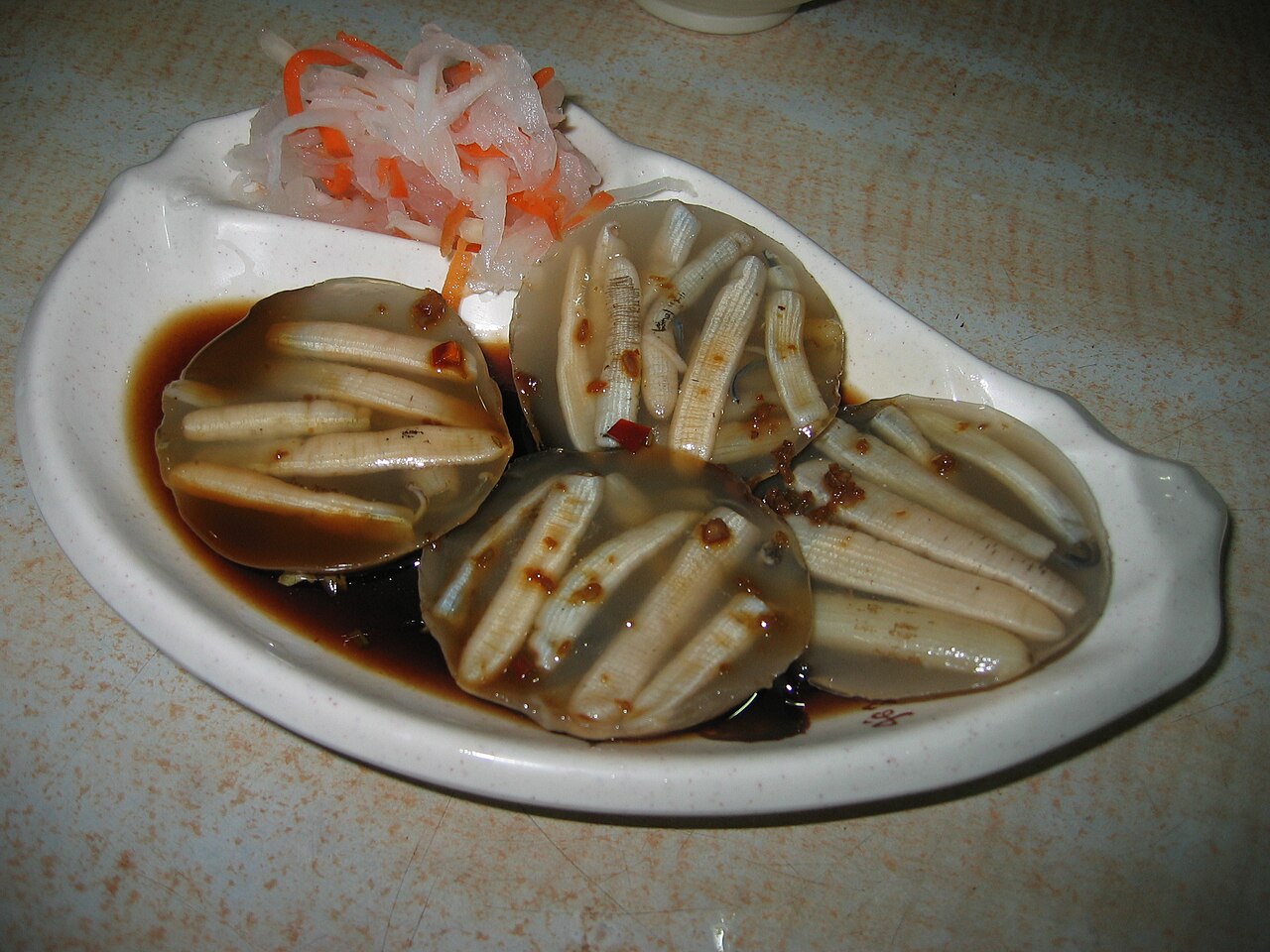
Xiamen tu sun dong — clear cold jelly rounds with marine sandworms set inside, in dark soy sauce, served with shredded pickled radish on a white dish 8
⚠️ Genuine local · looks confronting
Tu Sun Dong (Sandworm Jelly)
土笋冻 · cold jelly made from coastal sandworms

Let's be straight: this one isn't for everyone at first taste. Tu sun dong (土笋冻) is made from small marine sandworms found in coastal mudflats — boiled until the collagen dissolves, then set into a clear cold jelly with the worms suspended inside. Locals eat it cold as a side dish with morning congee, or as a snack, dipped in soy sauce, vinegar and wasabi. It actually tastes mildly salty and faintly of the sea, with a springy, gelatinous bite. It looks confronting and it isn't everyone's thing, but it's a genuine local specialty Xiamen is genuinely proud of. Try one piece before you decide — and there's no need to force it if it's not for you.

Where: Bashi market · congee shops and local specialty stalls in the old town
Price: ¥10–20 (~฿50–100) / small plate
Tip: eat cold with soy-vinegar dip · start with one piece
A note on the Minnan morning: if you don't eat chilli, Xiamen breakfast is a dream — almost everything is mild, fresh and gently sweet. Peanut soup and mianxian paste are the easiest; the oyster omelette and shacha noodles are the city's signatures you shouldn't miss; and a local specialty like tu sun dong is worth one piece as a side before you make up your mind.
Where to eat breakfast

The Bashi market and the old town are your base

The real morning is in the old-town lanes and the wet market — the best stalls run 07:00–09:30 and then sell out, so knowing where to go before you set off saves time

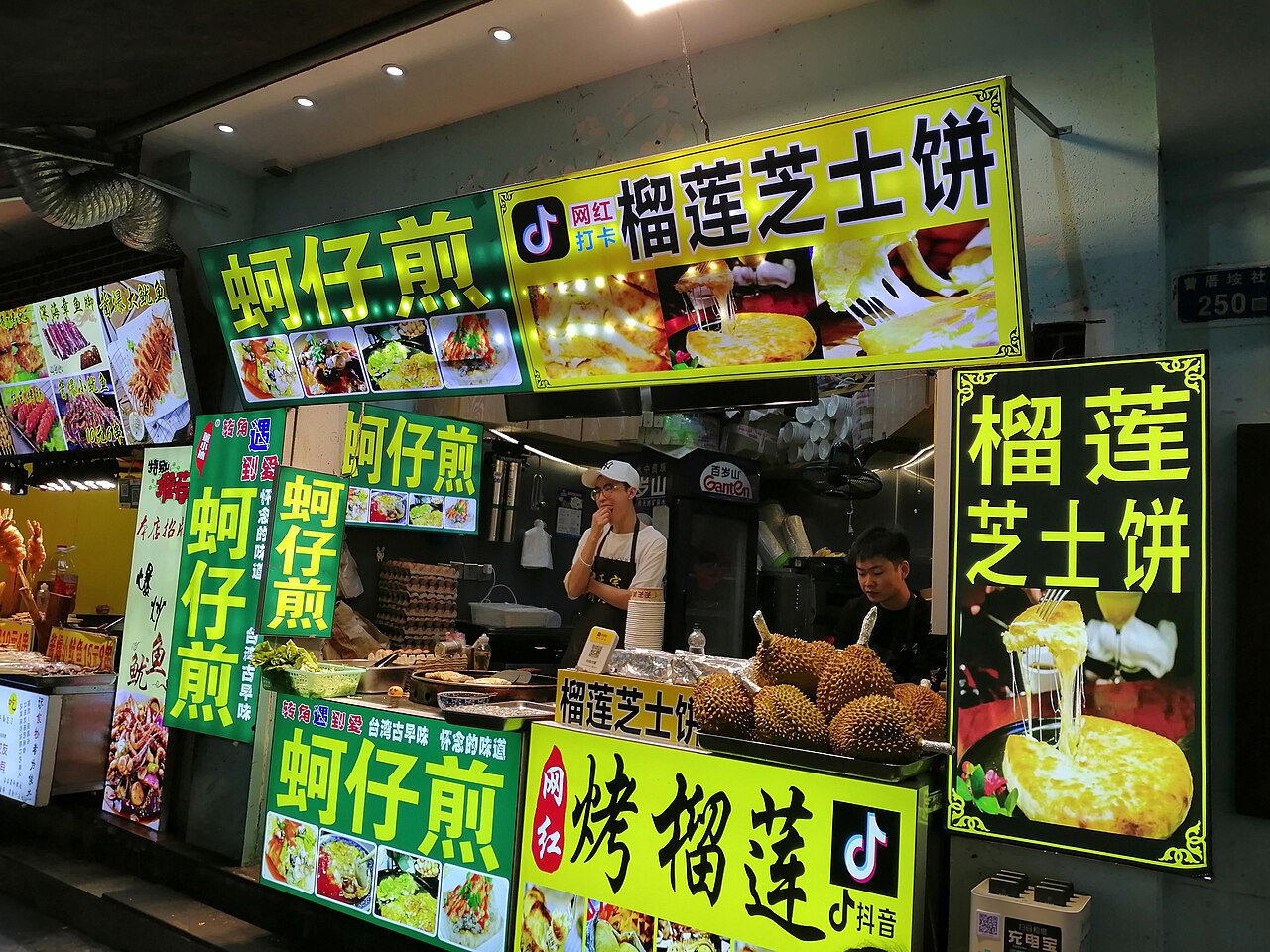
Food stalls at a Xiamen market with a glowing oyster-omelette (蚵仔煎) sign and rows of snack counters
Bashi Market (八市) — the heart of breakfast at local prices
八市 / 第八市场 · Siming District · Metro Line 1 to Zhongshan Rd, then walk

The old wet market where Xiamen genuinely shops and eats breakfast every day, tucked between Kaiyuan Road and Kaihe Road in the old town. Around 7–9am locals queue for peanut soup, wait for oyster omelettes off the griddle and slurp mianxian paste, all in one lane — the cheapest, most authentic eating in the city. Walk through, pick what looks good and order dish by dish; most stalls take WeChat Pay/Alipay.

Best for: peanut soup · oyster omelette · mianxian paste · Time: 07:00–09:30 for the freshest
Zhongshan Road pedestrian street in Xiamen, lined with old arcade (qilou) shophouses in the old town
Zhongshan Rd & Huang Ze He — the legendary morning sweets
中山路 · 黄则和 · pedestrian street since 1925

Xiamen's historic pedestrian street, open since 1925, with old arcade (骑楼) shophouses hiding plenty of old breakfast spots — including the legendary Huang Ze He (黄则和), serving peanut soup and Minnan snacks for over half a century. The main drag is touristy, to be honest, but turn into the side lanes and you'll find the 1980 zongzi shop and proper shacha-noodle counters. It connects on foot to the Bashi market.

Best for: peanut soup · kao bak zong · shacha noodles · Time: roughly 07:00–22:00
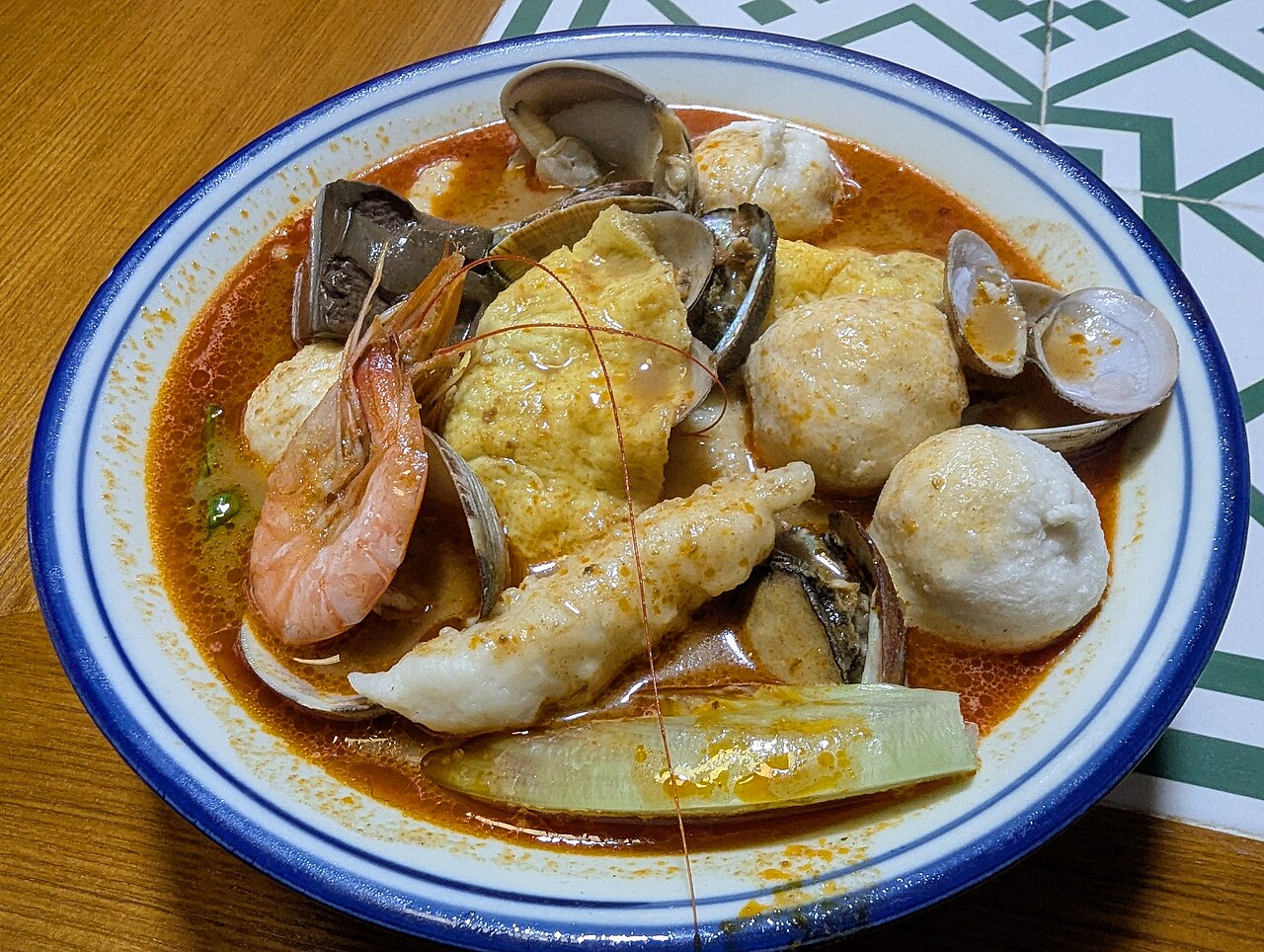
A loaded bowl of Xiamen shacha noodles with shrimp, clams, fish balls, squid and tofu skin in an orange satay-nut broth
Shacha-noodle institutions — the breakfast you can eat all day
沙茶面老店 · across the old town · open early

The best shacha noodles tend to be old shops in the old-town lanes. Legendary spots like Wu Tang (乌糖沙茶面) open early and have a queue before 8am. You order by pointing at the toppings you want from the counter — shrimp, squid, pork intestine, tofu skin, fish cake — and the cook blanches them into your bowl under a thick ladle of satay-nut broth. Look for the shop packed with locals; that's your sign. Good if you sleep in, since it's sold all day rather than selling out early like other morning dishes.

Best for: shacha noodles · point-and-pick toppings · Time: morning to afternoon (busiest early-midday)
The gate and old riverside campus buildings of Xiamen University, an area with student food and the Nanputuo Temple vegetarian hall
Xiamen Univ & Shapowei — student bites and morning cafés
厦门大学 · 沙坡尾 · south-coast area · Metro Line 1

Around Xiamen University and Nanputuo Temple (南普陀) you'll find cheap student breakfasts — baozi, congee, soy milk. Just along, Shapowei (沙坡尾) is an old harbour turned hip waterfront full of cafés. If you'd rather have good coffee and a light morning pastry instead of a heavy Minnan bowl, this area suits — the arty, seaside mood is lovely early in the day, ideal for a slow start before you head out to sightsee.

Best for: student bites · cafés · soy milk + baozi · Time: early to mid-morning
Before you go

Tips worth knowing before you head out for breakfast

Go early — the best things sell out

Most stalls and breakfast shops open around 06:30–07:00, and many of the best things sell out or pack up before 10:00–11:00. The sweet spot is 07:00–09:30 — freshly made, hot, with shorter queues. The legendary oyster-omelette griddles and peanut-soup counters fill up after 8am. If you sleep in, go for shacha noodles, which are sold all day instead.

📱
Use Alipay or WeChat Pay

Market stalls and small shops mostly don't take credit cards, and many take no cash at all — you'll need Alipay or WeChat Pay. Download Alipay before your trip and link a Visa/Mastercard through its international (tourist) mode, and get this sorted back at your hotel. Older institutions like Huang Ze He and shops inside malls are easier to pay at.

👆
Point and order — no Chinese needed

Stalls and congee-and-sides shops mostly have no English menu, but you can point at the side dishes in the counter, or point at what someone else is having and nod. You can also show the Chinese names from this page (e.g. 花生汤 peanut soup, 海蛎煎 oyster omelette, 沙茶面 shacha noodles). Vendors at the Bashi market have seen plenty of visitors — don't be shy.

😋
The bold stuff takes nerve — but don't force it

Tu sun dong is a local specialty that looks confronting to outsiders. If you want to really understand the Xiamen palate, one piece as a side is worth it — but don't force it if it's not for you. Start with peanut soup, mianxian paste, youtiao with soy milk, and oyster omelette, all of which are delicious and easy for everyone.

🌡️
Eat it hot — don't let it sit

Oyster omelette is best while the edges are still crisp and it's just off the griddle; peanut soup and mianxian paste want to be hot too, and kao bak zong is more fragrant the hotter it is. Eat at the stall or at a table beside it rather than saving it for later. (Tu sun dong is the exception — it's meant to be cold.) Standing and eating beside a morning market is part of the Xiamen breakfast.

Frequently asked

FAQ · before you head out for breakfast in Xiamen

How much does breakfast cost in Xiamen?
Breakfast in Xiamen is very cheap. A bowl of peanut soup is ¥5–12 (~฿25–60), a morning bowl of shacha noodles ¥12–30, an oyster omelette ¥15–30, a bowl of mianxian paste ¥8–18, a youtiao-and-soy-milk set ¥6–12, and rice porridge with a few sides ¥10–25. If you try several things at once, a full spread runs ¥25–45 per person (~฿125–225) — still very cheap compared to breakfast in other big cities.
Is Xiamen breakfast food spicy?
No, not at all. Xiamen's Minnan (闽南) cuisine leans light, fresh and gently sweet-savoury, built on seafood, and breakfast is milder still — sweet peanut soup, silky mianxian paste and plain congee. Even the shacha (沙茶) sauce in the noodles is a fragrant, nutty flavour rather than a spicy one. If you don't eat chilli, Xiamen mornings are some of the easiest eating in China. Read more in our shacha noodles guide.
How do you eat breakfast at the Bashi market (八市), and what time should I go?
The Bashi market (八市, or 第八市场) is an old wet market in Xiamen's old town in Siming District — the most authentic and cheapest place for breakfast. Around 7–9am locals queue for peanut soup, wait for oyster omelettes off the griddle and slurp mianxian paste, all in one lane. Walk through, pick what looks good and order dish by dish; most stalls take WeChat Pay or Alipay. Go early for the freshest catch and the shortest queues. See also our street food guide.
What time should I go for breakfast in Xiamen?
Most stalls and breakfast shops open around 06:30–07:00, and the sweet spot is 07:00–09:30 — freshly made and still in good supply. Many of the best things sell out or pack up before 10:00–11:00. The legendary oyster-omelette griddles and peanut-soup counters get busy after 8am. If you sleep in, go for shacha noodles, which are sold all day instead.
What is tu sun dong (土笋冻), and can you really eat it for breakfast?
Tu sun dong (土笋冻) is made from small marine sandworms found in coastal mudflats: they're boiled until the collagen dissolves, then set into a clear cold jelly with the worms suspended inside. Locals eat it cold as a breakfast side dish or a snack, dipped in soy sauce, vinegar and wasabi — it tastes mildly salty and faintly of the sea, with a springy, gelatinous bite. It looks confronting and isn't for everyone, but it's a genuine local specialty Xiamen is proud of. Try one piece before you decide.
Do Xiamen breakfast spots take credit cards or do I need cash?
Market stalls, noodle shops and small breakfast spots mostly take WeChat Pay or Alipay only. Many take neither cash nor foreign cards. Download Alipay before your trip and link a Visa/Mastercard through its international mode. Older institutions like Huang Ze He and shops inside malls are more likely to accept foreign cards.
Klook · breakfast food tour

Take a Xiamen food tour with a local

Walk the Bashi market for the best peanut soup, oyster omelettes off the griddle, mianxian paste and the Minnan bites locals queue for — no language worries, no guessing which stall is good, and no wandering around lost.

See Xiamen food tours on Klook →
Wherebest is a Klook affiliate partner — we may earn a commission when you book through our links, at no extra cost to you.