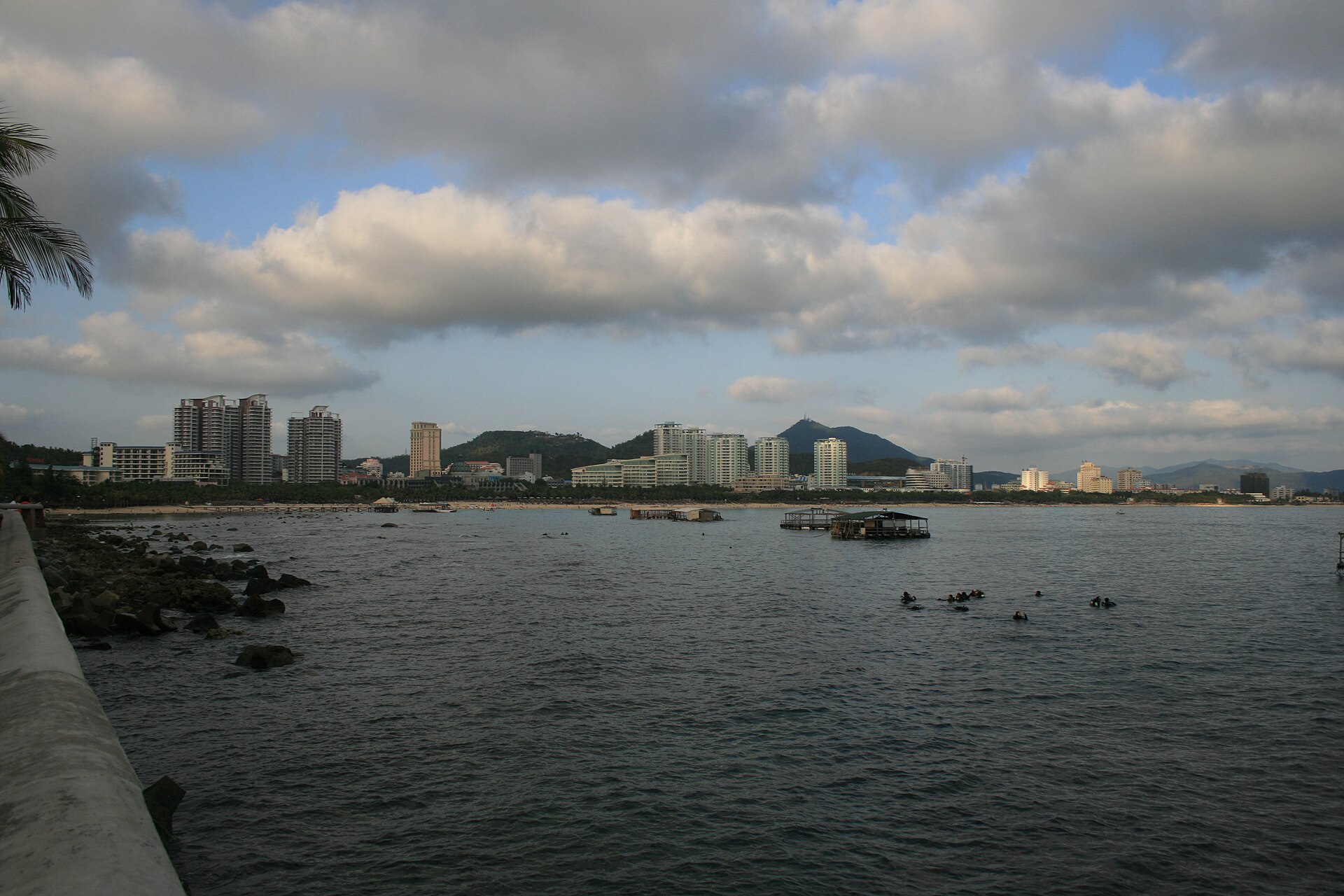
An island that has grown its own coffee since before the war, charcoal-roasted and poured over condensed milk for a sweet Nanyang strength. The old-dad teahouses are the heart of local life, and the sunset beach cafés are the new arrival everyone's chasing.
Picture yourself at a wicker table in a plain old-quarter shop, an old Hainan local playing chess at the next table, and in front of you a cup of dark coffee just strained through a cloth sock onto sweet condensed milk. This coffee wasn't imported from anywhere — it was grown, roasted and brewed on this island. That's the thing most people don't know about Sanya: Hainan is one of the few places in China that genuinely grows coffee, and has been drinking it for a hundred years.
Hainan's coffee story begins with Chinese migrants who left for Southeast Asia more than a century ago and brought the Nanyang (南洋) style back with them when they returned — beans roasted dark with butter and sugar, poured over condensed milk. The island sits on the same latitude as Jamaica and Colombia and grows robusta well, which gave rise to coffee towns like 福山 Fushan and 兴隆 Xinglong. So Hainan coffee isn't the clear, light specialty cup you might expect — it's strong, fragrant and sweet, the kind you drink with breakfast.
To be straight with you, Sanya's specialty beach-café scene is still new and resort-priced — it grew up with the recent tourism boom. But it has its own draw: the sea view and the sunset, something a café in another Chinese city can't give you. The cheap, old, genuine thing — where Hainan life actually happens — is the laoba-cha teahouse, and it's worth seeking out at least once.
In Sanya you aren't only paying for the coffee — you're paying for a seat that watches the sea and the sky change colour.
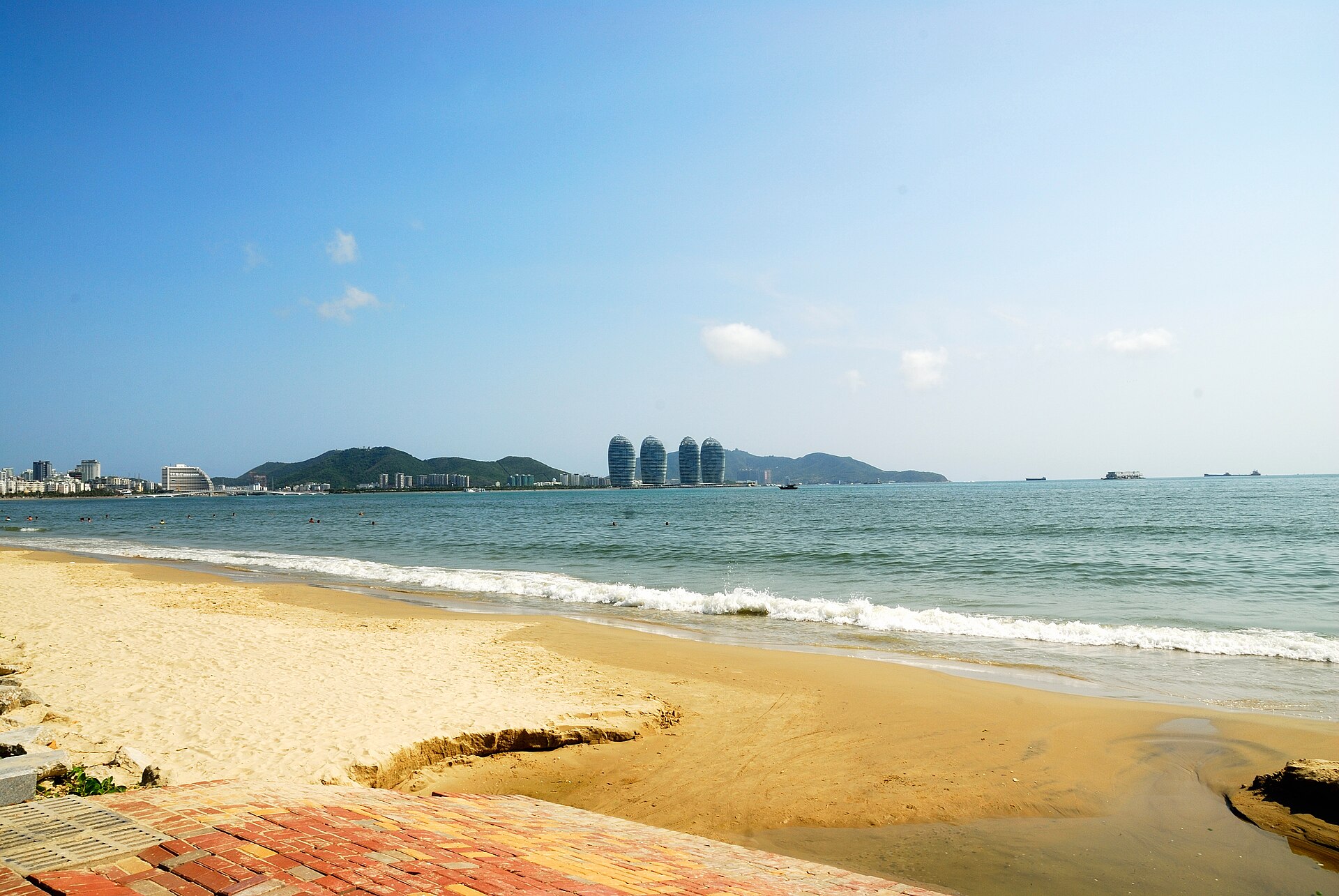
Sanya Bay along the 椰梦长廊 Coconut Dream Corridor — the strip of beachfront cafés that faces west, straight into the sunset.
Sanya's best sea-view cafés are spread across the bays — the 椰梦长廊 Coconut Dream Corridor along Sanya Bay, which runs by the water facing west and so makes the finest sunset spot; Dadonghai, the in-town bay where you can walk to specialty cafés easily; and resort bays like Yalong Bay and Haitang Bay, where the cafés sit inside luxury resorts. Many beachfront cafés angle their seats to face the sea on purpose.
Sanya's charm is the drinks that suit the sea and a tropical island — coconut coffee made with fresh Hainan coconut water, tropical-fruit lattes with mango or passionfruit or flowers, and the traditional dark Hainan brew. An iced coconut coffee on the sand as the sun softens, watching the waves roll in slowly, sums up Sanya in a single cup.
Get the types straight first, then decide whether today is about a sea view, a real Hainan coffee, or sitting in a teahouse like a local.
This is the coffee that sets Sanya apart — Hainan grows its own robusta at 福山 Fushan and 兴隆 Xinglong, roasts it over charcoal with butter and sugar until the beans shine, brews it in a metal kettle, and strains it through a cloth sock onto condensed milk. The result is strong, fragrant and sweet, like Singapore-Malaysia kopi but less bitter. You order it at laoba-cha teahouses all over town or at dedicated Hainan coffee shops. Drinking it hot with breakfast snacks is how Hainan locals actually take it.
Laoba-cha (老爸茶, "old-dad tea") isn't a kind of tea but a culture — Hainan locals sitting over tea, snacks and talk all day. The shops are plain, with wicker and plastic tables on the pavement in the old quarters, serving sweetened black tea or condensed-milk tea alongside Hainan coffee, plus dim-sum-style snacks: pineapple buns, steamed dumplings, baozi, sponge cake and peanuts. The noise is high and the chatter never stops. This is where real Hainan life happens, and it's on the province's intangible-cultural-heritage list.
This is Sanya's new café scene, born with the tourism boom — places right on the sand that face the sea, with seats angled at the sunset. The 椰梦长廊 Coconut Dream Corridor along Sanya Bay is where they cluster thickest. The drinks to order are coconut coffee made with fresh coconut water, tropical-fruit lattes, and cold drinks to beat the heat. To be straight with you, the coffee ranges from fine to good and the prices are resort-level, but what people come for is the sea view and the evening sky.
Hainan is China's tropical-fruit basket and coconut country, and Sanya's cafés lean right into it. Coconut coffee (椰子咖啡) blends espresso with fresh coconut water or coconut milk for a sweet, creamy, cooling cup — some shops serve it inside a real coconut. There are also lattes with mango, passionfruit or flowers, blended coconut drinks, and fresh-fruit smoothies. They suit the island's hot, humid air perfectly, and you'll find them in beachfront cafés and at fruit stalls all over town.
If you want to get to the root of Hainan coffee, you go to the source. 福山 Fushan, in Chengmai County near Haikou, is where the Indonesian-Chinese Chen Xianzhang first grew coffee successfully in Hainan in 1935 — today it's a coffee culture town with Nanyang red-brick architecture, more than 20 coffee shops, and a coffee museum. 兴隆 Xinglong, near Wanning, is the coffee once praised by former Premier Zhou Enlai. Both are far from Sanya, on the north of the island, so they're a trip for if you're driving around Hainan rather than a day out from Sanya itself.
If you want a decent cup cheaply before a full day at the beach, the local chains are the answer. Luckin Coffee is on every corner and the cheapest, pouring a steady latte and fruit drinks for a small price — plenty of its seasonal menu uses coconut or tropical fruit that fits Sanya perfectly. Cotti and M Stand are easy to find in malls and tourist areas too. Order ahead through the app or a WeChat mini-program and it's cheaper and quicker — a good morning cup before you hit the sand.
Four areas every coffee-and-sea lover should know — each one a different experience.
A beachfront road running for kilometres, lined with coconut palms, cafés, restaurants and seaside malls that all face west — which makes it Sanya's best place to watch the sunset. There are café spots around Sanya Bay No.1 and small places right on the sand. At night the bay is quiet and romantic, perfect for nursing a coconut coffee while the waves and sky shift colour. This is the easiest sea-view café strip to reach.
The in-town bay closest to the hotels and shops, with specialty cafés making coconut coffee and tropical-fruit lattes scattered through the area. You can walk from the beach to a café without a long drive, which makes it ideal if you're staying central and want a good spot for an afternoon after a swim, or a morning coffee before you head out. It's the area that balances convenience with a beach-town mood.
If you want the Sanya tourists rarely see, the old quarters around Tianya District are the answer. This is where the laoba-cha teahouses the locals actually use are found. Around the First Market (第一市场) and the old streets, plain tea shops set tables on the pavement — order a condensed-milk tea or a Hainan coffee with a couple of snacks, and watch the slow rhythm of island life. It's half a day that feels completely different from the smart beachfront cafés, and far cheaper.
Two resort bays to the east of Sanya — Yalong Bay is known for its white sand and clear water, and Haitang Bay is the high-end resort strip and home to the largest duty-free complex in China. The cafés here are mostly inside hotels and resorts, the mood is calm, and the sea views are premium. They suit you if you're already staying in a resort and want to sit at a poolside or beachside café without going anywhere. Prices are the highest of Sanya's café areas, but you get the quiet and a view worth the rest.
These places have a real name — some for the sea view, some for the genuine local thing.
A laoba-cha teahouse Sanya locals actually use, opposite the north gate of the Second Agricultural Market on Jiefang Road — a plain neighbourhood spot with tables on the pavement, not a tourist place. Order a condensed-milk tea or a dark Hainan coffee with dim-sum-style snacks like pineapple buns, steamed dumplings and sponge cake. The mood is old Hainan regulars talking through the morning. Sitting here for tea gives you a side of Sanya the beachfront cafés can't. Come in the morning, when the locals are there, for the full atmosphere.
Another laoba-cha teahouse in Sanya's old quarter, on the 2nd floor of a building on Xinfeng Street. The mood is traditional and local — tables packed across the floor, people eating snacks and sipping tea and talking over each other. Order a sweetened black tea or condensed-milk tea and pick your snacks from the steamer baskets and trays on display. It's very cheap and the hot water is bottomless. It's a good place to try a true Hainan-local breakfast before heading out, and the whole meal per person costs less than a single coffee at a beachfront café.
One of the most-talked-about beach cafés in Sanya, at Tianya Village about 40 minutes from the city centre. The design is Cappadocia-inspired cave in earth tones, facing the blue sea, with a signature blend called Sunset Beach and a sea-salt caramel latte finished with neat latte art. It's a good spot for sunset or a brunch. To be straight, it's a way out and resort-priced, but if you want the photogenic sea-view café social media talks about, it's one option. Check the opening hours and how to get there before you go, since it's outside the main tourist strip.
Not one shop but a whole run of beachfront cafés along the 椰梦长廊 Coconut Dream Corridor on Sanya Bay, with café spots around Sanya Bay No.1 and small places right on the sea. The draw is that the bay faces west, so you get the full sunset. Order a coconut coffee or a cold drink, find a seat by the sand, and wait for the sun to drop into the sea. The coffee is fine to good and the prices are tourist-area level, but you come here for the view and the golden hour by the water. Arrive about an hour before dusk to claim a good seat.
If you're serious about Hainan coffee and have time to drive around the island, Fushan is the source of it all. This is where the Indonesian-Chinese Chen Xianzhang first grew coffee successfully in Hainan in 1935. It's now a coffee culture town with Nanyang red-brick, tile-roof architecture, more than 20 coffee shops, a three-storey coffee museum and a giant coffee-cup landmark for photos. To be straight, it's on the north of the island near Haikou, far from Sanya — not a day trip from here, but well worth a stop if you're planning a Hainan road trip.
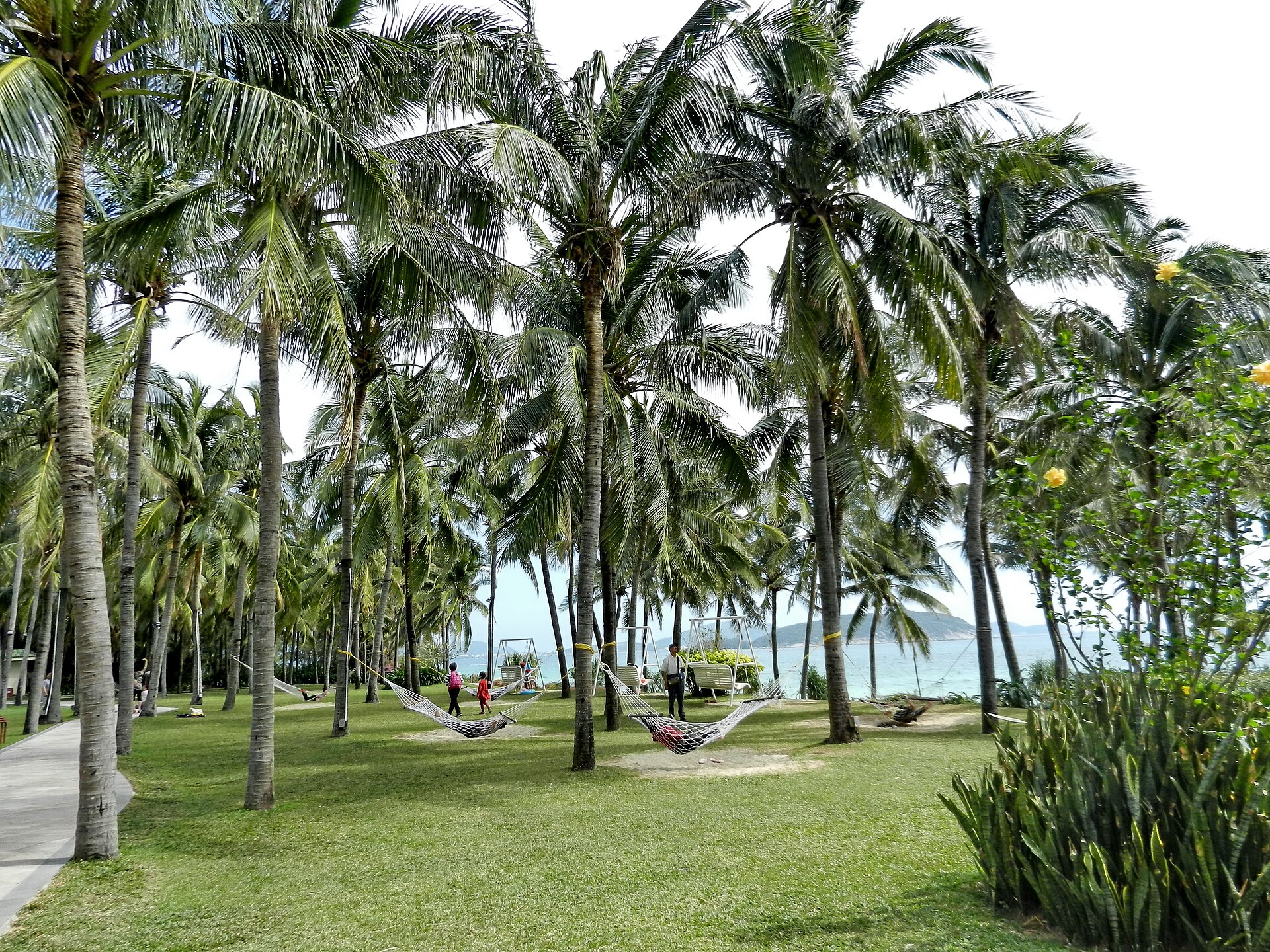
Hainan's coconut groves — fresh coconut water is the heart of Sanya's coconut coffee and tropical drinks.
What you drink and eat in Sanya that's hard to find elsewhere.
A drink that sums up Sanya's roots in a single cup — robusta from Fushan or Xinglong, roasted over charcoal with butter and sugar until it shines, brewed in a metal kettle, strained through a cloth sock onto condensed milk waiting in the bottom of the glass. Stir it together before you sip: it's strong, fragrant and creamy-sweet, like Singapore kopi but softer. Ordered hot with snacks at a laoba-cha teahouse in the morning, it's the way Hainan people have drunk coffee for a hundred years.
The signature of Sanya's modern cafés — espresso shaken with fresh coconut water or Hainan coconut milk for a sweet, creamy, cooling cup. Some shops serve it inside a real coconut so you sip and scoop the flesh as you go; others blend it over ice. It's a drink that fits the island's hot, humid air and a sea view perfectly. If you get the chance to sit at a beachfront café, this is the cup to order.
The heart of the laoba-cha teahouse is the tea — black tea brewed strong with sugar or condensed milk, served in a small pot you top up with hot water all morning. It's rich, sweet and fragrant, and a perfect match for dim-sum snacks. The way of drinking is simple, no ceremony: order a pot and a couple of snacks and sit talking the whole afternoon for a few yuan. It tells you more about Hainan than any specialty cup ever could.
Tea at a laoba-cha teahouse comes with snacks — pineapple buns (crisp sweet tops with custard or barbecue-pork fillings), steamed dumplings, baozi, sponge cake, fried dough sticks and peanuts, brought out in baskets and on trays. You pick what you like and pay by the count, much like Cantonese dim sum but a simpler, cheaper Hainan version. Eaten with a hot condensed-milk tea in the morning, it's a true Hainan-local breakfast you won't find at a beachfront café.
Sanya is almost entirely cashless — most cafés, teahouses and drink stalls take WeChat Pay and Alipay first, and many laoba-cha teahouses and small stalls take WeChat Pay or cash only. Before you travel, set up Alipay and link a Visa/Mastercard through its international mode (it works for visitors · see our China payment guide).
The thing to know is that the most genuine isn't the most expensive — a laoba-cha teahouse in the old quarter gives you a deeper, far cheaper slice of Hainan than a smart beachfront café. Don't be shy about walking into a local place with no English menu; just point at the snacks you want and order a pot of tea. The specialty beach cafés are good for photos and the sunset hour. Treat them as two different experiences and try both.
For beach cafés, the golden window is about an hour before sunset, because Sanya Bay faces west — grab a seat by the sand before the light softens. For teahouses, go in the morning or late afternoon to catch the locals at their tables. If you'll need general internet access in China, set up a VPN before you travel — see our China internet & VPN guide.
Dadonghai bay — the in-town beach where it's easiest to walk from your hotel to a specialty café and a coconut coffee.
Staying around Dadonghai or along Sanya Bay is the easiest way to reach the beach cafés and the eating on foot.