Before the sun fills the bay, Qingdao's seaside morning markets are already awake — hot you tiao with tianmo, a plate of clams beside a bag of fresh beer that locals sip right there at the stall. A breakfast that costs ¥8–25 and tells you more about this beer-and-seafood city than any hotel buffet ever will.
Most visitors to Qingdao sleep in, eat a hotel buffet, and leave thinking the local food is "just beer and clams." That's a genuine miss — you've skipped the most fun meal of the day. The real morning happens in the seaside morning markets (早市), in the old-town corner shops, on pavements where the smell of just-fried you tiao mixes with sea air.
Qingdao is a coastal city in Shandong province, home to Lu cuisine (鲁菜) — the oldest of China's eight great culinary traditions — plus a flood of fresh seafood from Jiaozhou Bay, and a German legacy that left behind both Tsingtao beer and a bakery culture, dating to 1903. Breakfast here is a mix you won't find anywhere else: tianmo, Shandong's savoury millet porridge; you tiao with soft tofu; clams and oysters eaten in the morning, while it's barely light; and strangest of all, fresh beer ladled into a plastic bag that people carry home or sip beside the stall — even early. The whole thing runs about ¥15–25 (~฿75–125) per person.
This guide covers Qingdao breakfast honestly, dish by dish — what's worth trying, what's easy to like, how to eat it, where to find it, and which markets are cheaper and better than the tourist strips.
If you only do one thing, walk into a morning market — you tiao, tianmo, fresh seafood and bag beer, all in one place. ¥8–25.
The safest, most familiar pairing on this list. You tiao is a deep-fried dough stick — a Chinese cruller, hollow and soft inside, crisp and golden outside. Doufunao is silken tofu set as smooth as pudding, ladled over with a Shandong-style sauce that tends to run savoury — seaweed, dried shrimp, pickles, a dusting of white pepper. Qingdaoers eat the two together: tear off pieces of you tiao, dunk them in the tofu, and bite, the dough soaking up just enough sauce to change its texture. If you're new to Chinese breakfast, start here — filling, gentle, and nothing on the plate to fear.
The name translates literally as "sweet froth", but let's be clear up front — tianmo is savoury. It's a millet porridge specific to Shandong, cooked from millet flour until thick and smooth, with peanuts, soybeans, pickled vegetables, sliced tofu and glass noodles stirred in, finished with enough white pepper to give it a gentle kick. It's warm, mildly salty and rounded, and it pairs beautifully with a you tiao or a bun on a cool seaside morning. The name has a few origin stories — some say it comes from the surname Tian of the first person to make it, others from "tian me" (add a little more) — and it's an easy Shandong breakfast for visitors that genuinely fills you up.
3
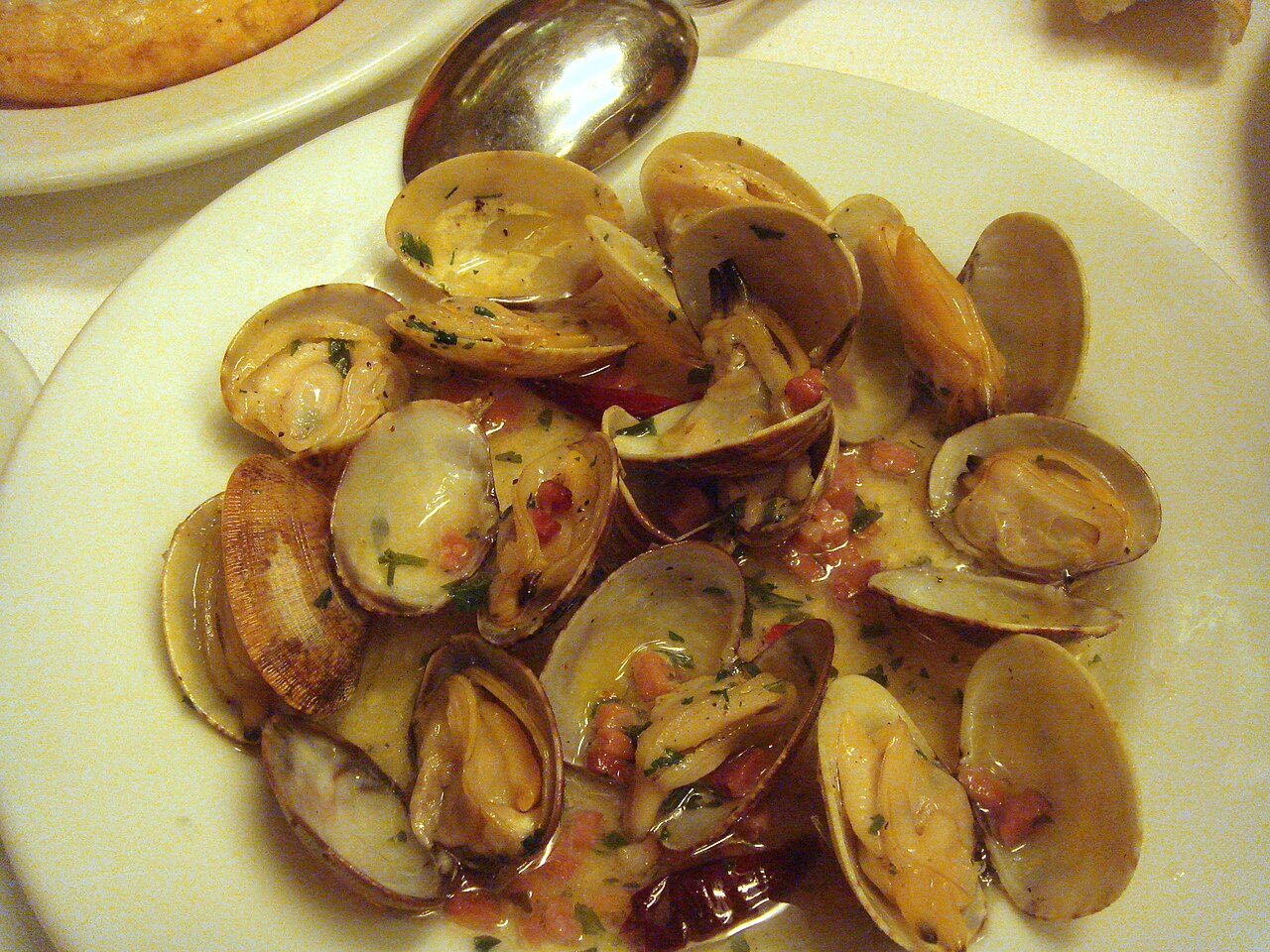
This is the habit that sets Qingdao apart — people here eat seafood from early on. Clams (蛤蜊, which Qingdaoers call "gala") boiled in a clear broth, fresh oysters (海蛎子), and a cool seaweed jelly (海菜凉粉) made from sea greens simmered until they set, dressed with a garlic-vinegar sauce. It's all fresh because it has just come off Jiaozhou Bay. Some order a plate of clams with congee or a bun; some eat it beside a bag of fresh beer at the stall. If you want to go deeper on the catch, there's a separate Qingdao seafood guide.
4
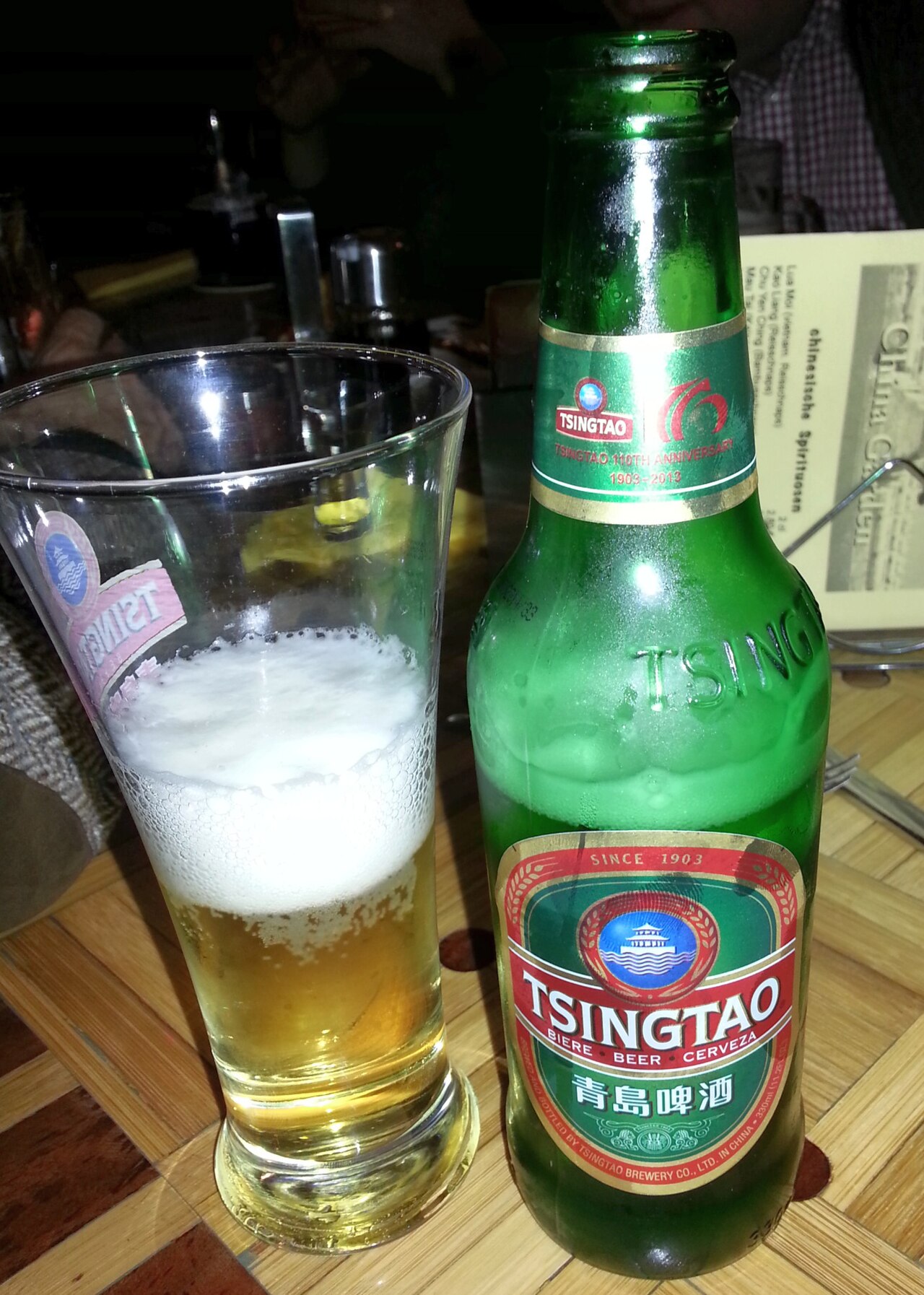
The thing that makes out-of-towners do a double take: in Qingdao, fresh beer is sold by the kilo, ladled into a plastic bag, tied with a rubber band and given a straw — to carry home or sip right there at the stall. And yes, some people buy it in the morning, because the draught Tsingtao (青岛啤酒, brewed here since 1903, a German legacy) ladled from a keg in a local shop is much fresher than the bottled kind. Locals treat fresh beer and boiled clams as the city's perfect pairing (哈啤酒吃蛤蜊 — drink beer, eat clams). The sight of someone walking out of a morning market with a bag of beer is pure Qingdao. For the full story, see the Tsingtao beer guide.
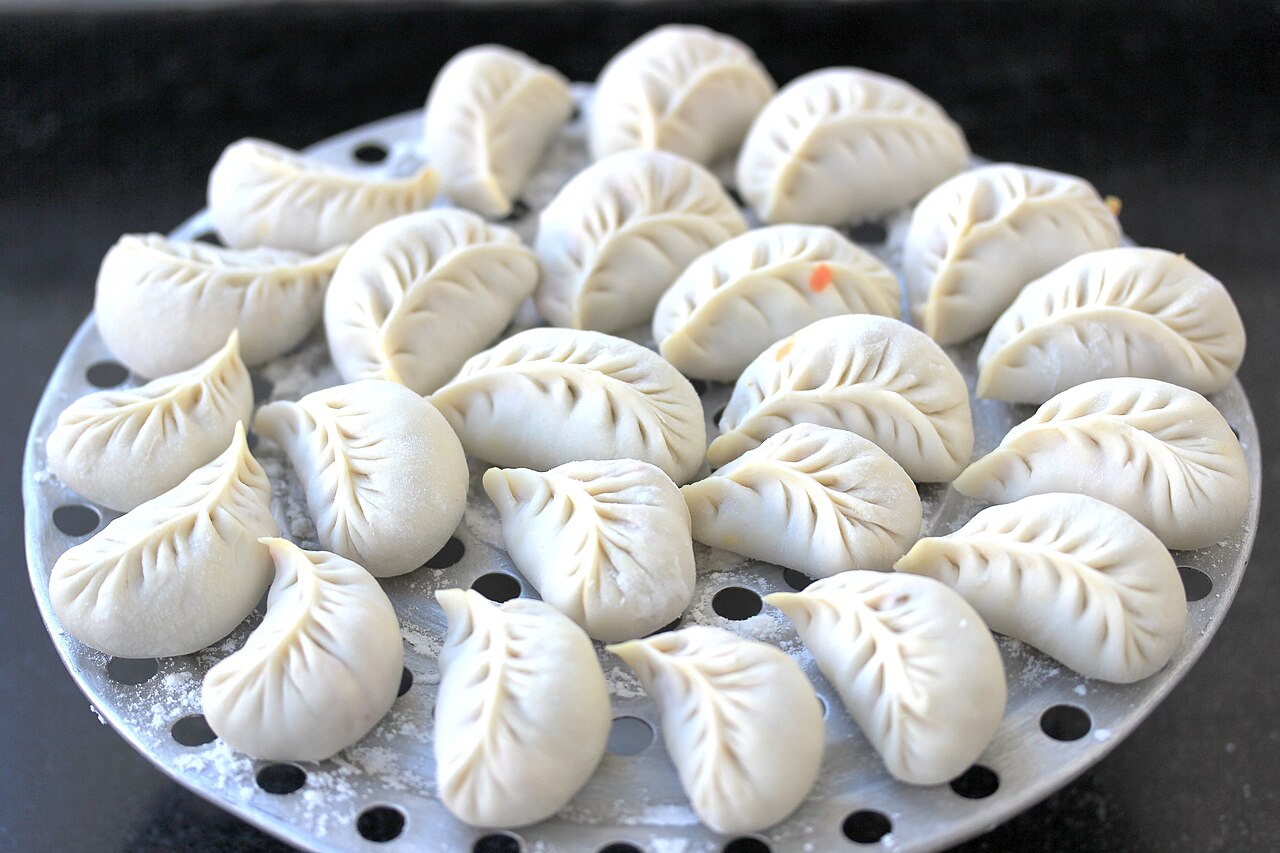
From hot potstickers to the dumpling the city is proud of — these four round out a Qingdao breakfast.
5
A dough-based breakfast that's properly filling and easy for anyone. Guotie are crisp-bottomed potstickers, lined up in rows on a flat pan and fried until the base is a sheet of golden crunch while the tops stay soft and juicy. Popular fillings are pork-and-chives and pork-and-cabbage, and in Qingdao you'll also find seafood versions. Big buns (大包子) come steamer-fresh from bamboo baskets, packed full enough to fill you in a couple of bites. Qingdaoers eat guotie or buns with congee or tianmo — a no-hesitation breakfast you can order with confidence.
6
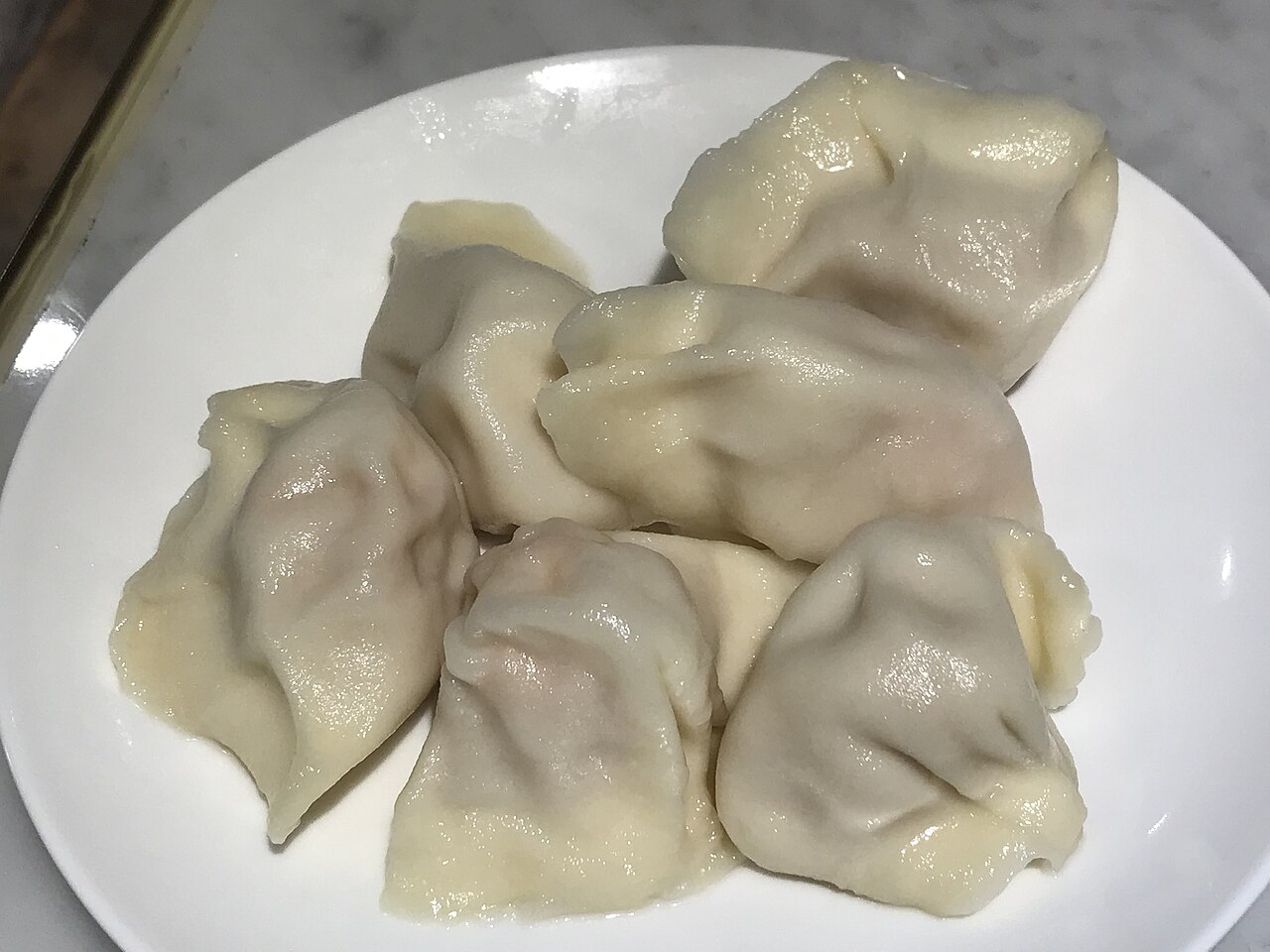
This is the dumpling Qingdao is proud of — filled with finely minced bàyú (Spanish mackerel) and chives, the fish juicy and faintly sweet, never fishy because it's so fresh. Qingdaoers eat them as breakfast or as a main, and there's even a custom, the "mackerel gift" (鲅鱼礼), where a son-in-law brings a fat mackerel to his parents-in-law in spring. If you want to start the morning with something that's genuinely of this city, this is the one — the full story, origins and how to eat it sit in the dedicated mackerel dumplings guide.
A warm, brothy breakfast that settles the stomach on a damp, cool seaside morning. Húntún are thin-skinned wontons floating in a clear bone broth, scattered with seaweed, scallion and dried shrimp — light and easy to drink down. Xiaolongbao are soup buns steamed in small bamboo baskets, the skin thin and the broth sealed inside, so bite carefully or it'll scald you. Qingdaoers have these as a light breakfast or alongside guotie for something heartier. Both are gentle and friendly — a good choice for something warm before a day of sightseeing.
To finish, a side of the city that ordinary China doesn't have. Qingdao was under German administration in the early 20th century, and the legacy lives on in bakeries and cafés scattered through the old town around Zhongshan Road and the Badaguan area. Plenty of younger Qingdaoers start the day with bread, a croissant and coffee rather than congee or you tiao. If you've slept in, or simply want a lighter Western-style breakfast among old European buildings by the sea, this corner is a surprisingly natural fit for the city.
The good markets and shops open 5.30–9.30 am, then sell out — knowing where to go saves you time.
The legendary morning market of the Taidong district, packed with locals doing their shopping. Rows of stalls sell you tiao, tianmo, buns, dumplings and fresh seafood from the bay, with a bag-beer shop in one corner. It's loud and lively with vendors' calls before it's even fully light. By night this district becomes a famous BBQ night market, but come in the morning and you'll find the real life of Qingdao.
The heart of the European-style old town the Germans left behind, with corner shops that open early for you tiao, buns and dumplings, mixed in with long-running bakeries and cafés inside historic buildings. Handy if you're staying near the old town or planning to walk out to Zhanqiao Pier in the morning anyway — grab breakfast first. The setting of old buildings by the sea makes a morning here feel different from anywhere else.
The beer street that's home to the Tsingtao Beer Museum, lined with fresh-beer shops and clam stalls — the place where the city's "fresh beer and boiled clams" pairing actually plays out. In the morning some shops are already selling bag beer and snacks to go with it. If you want to try the local habit of a morning beer-in-a-bag, this is the most direct spot — just remember prices here run a touch higher than the markets in the lanes.
A historic food alley in the old town that gathers a range of Chinese eats — dumplings, soups, fried snacks, sweets — in an atmospheric old-lane setting. But honestly, Pichaiyuan is touristy: pricier and not as good as the morning markets in the residential lanes. It's worth a wander for the atmosphere and photos, but set your expectations as a tourist spot rather than where locals eat breakfast every day.
Most markets and lane stalls open from around 5.30–6.00 am, and are busiest 6.30–8.30 am — freshly made, seafood just off the boats, queues still short. Many pack up by 9.30–10.00 am. If you've slept in, fall back on a shop that stays open all day or an old-town café instead. Dengzhou Road beer street, by contrast, gets going a little later.
Most stalls and small shops take Alipay or WeChat Pay first; some market stalls still take cash in RMB. Download Alipay before you travel and link a Visa or Mastercard via its international visitor mode — get this sorted from your hotel. The bag-beer shops and clam stalls can usually be paid by scanning a QR code.
Seafood at the morning markets in residential areas is fresh and fairly priced, but some spots in the seaside tourist areas overcharge. The trick is to choose a stall with a clearly posted price per kilo, watch them weigh it in front of you, and agree the price before they cook. If you buy fresh shellfish and have a shop boil or stir-fry it, ask the cooking fee per plate up front too — so there are no surprises at the till.
If you see a shop with a keg of fresh beer, try ordering a bag like a local once — they ladle it into a plastic bag, tie it with a rubber band and add a straw. It's cheaper than bottled and much fresher, and you can sip it at the stall beside a plate of clams or carry it back to your hotel. It's a genuinely Qingdao sight you won't find in other Chinese cities. And if you don't drink, skip it with a clear conscience — there's plenty else to eat.
A you tiao is best while it's still crisp and hot; let it cool and it goes soft and loses its best texture. Guotie are the same — the crisp base softens quickly — and clams and dumplings are best straight off the heat. Buy it and eat it right there at the stall, or standing nearby. Eating on your feet in a morning market is part of a Qingdao breakfast — don't save it for later.