Kunming itself is a 1–2 day city — but the real Yunnan begins on the line north. New high-speed rail carries you from Kunming to Dali, Lijiang and Shangri-La in a single day. This page strings the whole region into one trip you can actually plan.
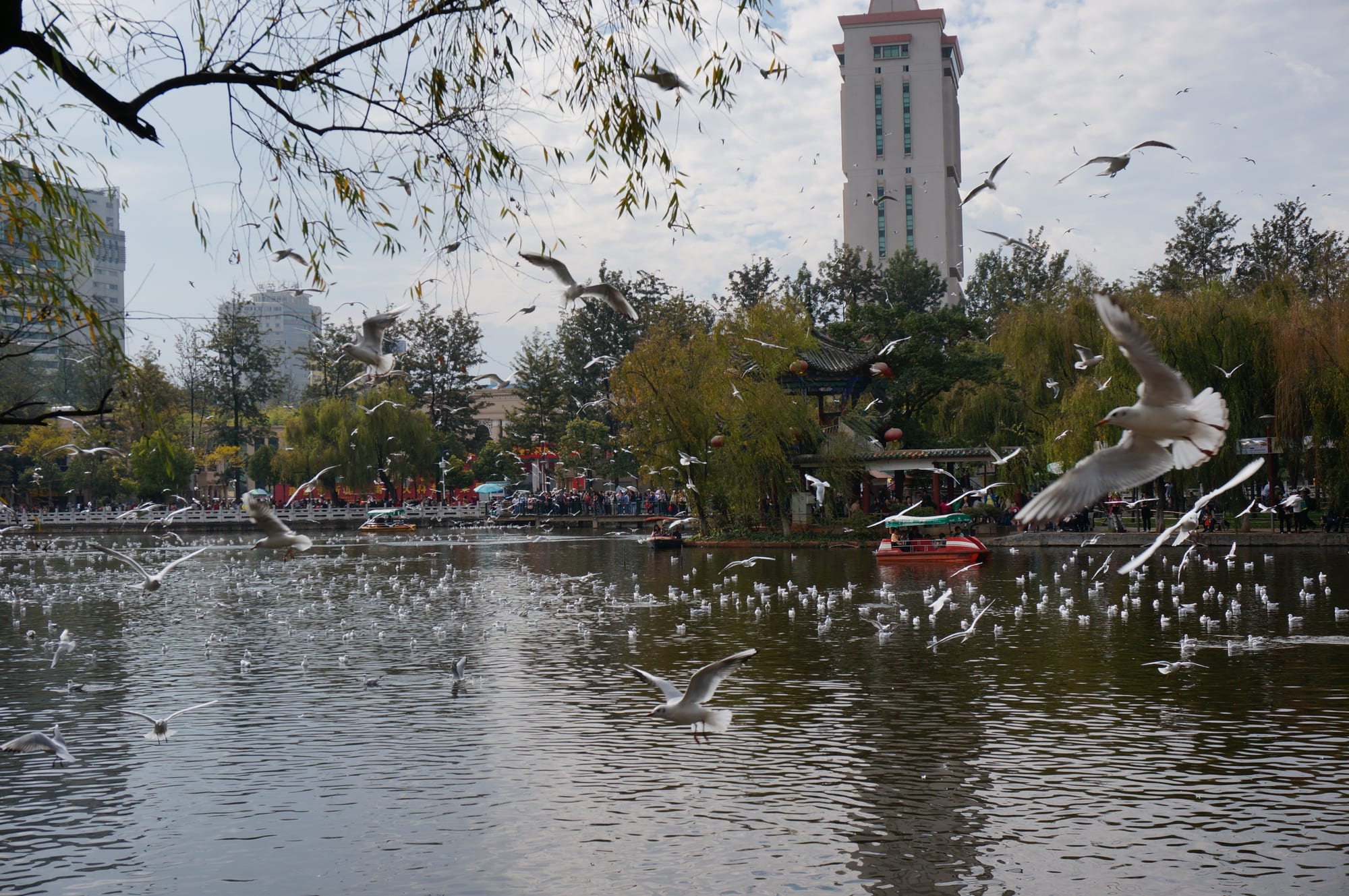
Most people misread Kunming — they treat it as a connection. In fact it is the gateway to Yunnan (云南), the most scenically varied province in China. Kunming's mild, year-round climate earned it the nickname Spring City; it sits at about 1,890 m. Walk Green Lake Park (翠湖) with its red-billed gulls, visit Yuantong Temple, eat a bowl of crossing-the-bridge noodles, and it is a likeable city for a day or two. But the heart of any trip here is the high-speed rail that fans out of Kunming across Yunnan.
This page is a complete guide to planning a whole Yunnan trip with Kunming as your base — from the classic northern route, Kunming → Dali → Lijiang → Shangri-La (how many hours by train, how many nights per stop, and how many days Yunnan really needs), to the southern loop that fewer visitors know (Jianshui, Yuanyang, Xishuangbanna), plus the thing you cannot skip — Kunming South versus Kunming Railway Station and booking tickets with a passport. Before you start, read our China high-speed rail guide and the full Kunming city guide.

Yunnan's most popular route — the four towns line up on a single line north. Moving city to city, one way, is by far the best use of your time.
Begin in Kunming and let yourself adjust to the altitude and the Yunnan pace for a day or two. Walk Green Lake Park, take a day trip to the Stone Forest, eat crossing-the-bridge noodles, then board the train. See our Kunming three-day itinerary if you want a fuller stay before you leave.
From Kunming it is about 2 hours by train to Dali, home of the Bai people on the shore of Erhai Lake (洱海), a blue expanse beneath the Cangshan range. Hire an e-bike or a bicycle to ride around the lake, and wander the walled old town. Dali moves slowly: plenty of travellers arrive for one night and end up staying far longer.
Lijiang is about 3–3.5 hours by rail from Kunming (only ~1.5 hr further on from Dali). It is a UNESCO old town of the Naxi people: cobbled lanes, streams running through the centre, red lanterns after dark. The highlight is Jade Dragon Snow Mountain (玉龙雪山), over 4,500 m, reached by cable car to a glacier viewpoint. Two nights is about right.
The end of the northern line is Shangri-La, in the Diqing Tibetan area, where the scenery turns to high plateau — Tibetan monasteries, grasslands and yaks. The highlight is Pudacuo National Park (普达措), with clear lakes set in pine forest, and Songzanlin Monastery. The new rail line from Kunming takes about 4.5 hours, or you can fly direct. Mind the altitude — this is around 3,200–3,300 m, so climbing up gradually is best.
Choose by your leave and the pace you like — but do not rush it. Yunnan means long distances and a lot of mountains.
Day one in Kunming (acclimatise + Stone Forest) → train to Dali for one night → on to Lijiang for two nights (old town + Jade Dragon Snow Mountain) → fly home from Lijiang or back via Kunming. This is the best-balanced route for a short trip: lake, old towns and a snow mountain, all in. Start with our Kunming one-day itinerary on day one.
Add Shangri-La at the top of the northern line — Kunming 2 days → Dali 2 days → Lijiang 2 days → Shangri-La 2 days, then fly back to Kunming from Shangri-La (or Lijiang). Climbing up one town at a time lets your body acclimatise, so do not compress it below this. If you have extra time, slot in Tiger Leaping Gorge between Lijiang and Shangri-La.
If your trip is longer, or it is your second visit, try the southern loop — a different world again: Jianshui, the Yuanyang rice terraces and Xishuangbanna (see the next section). But the southern and northern routes head in opposite directions from Kunming, so do not cram them into one trip. With limited time, pick one route and do it well rather than racing both.
Yunnan's south is nothing like the north — a Confucian temple, terraced rice fields, and a tropical Dai region that feels familiar to Thai travellers.
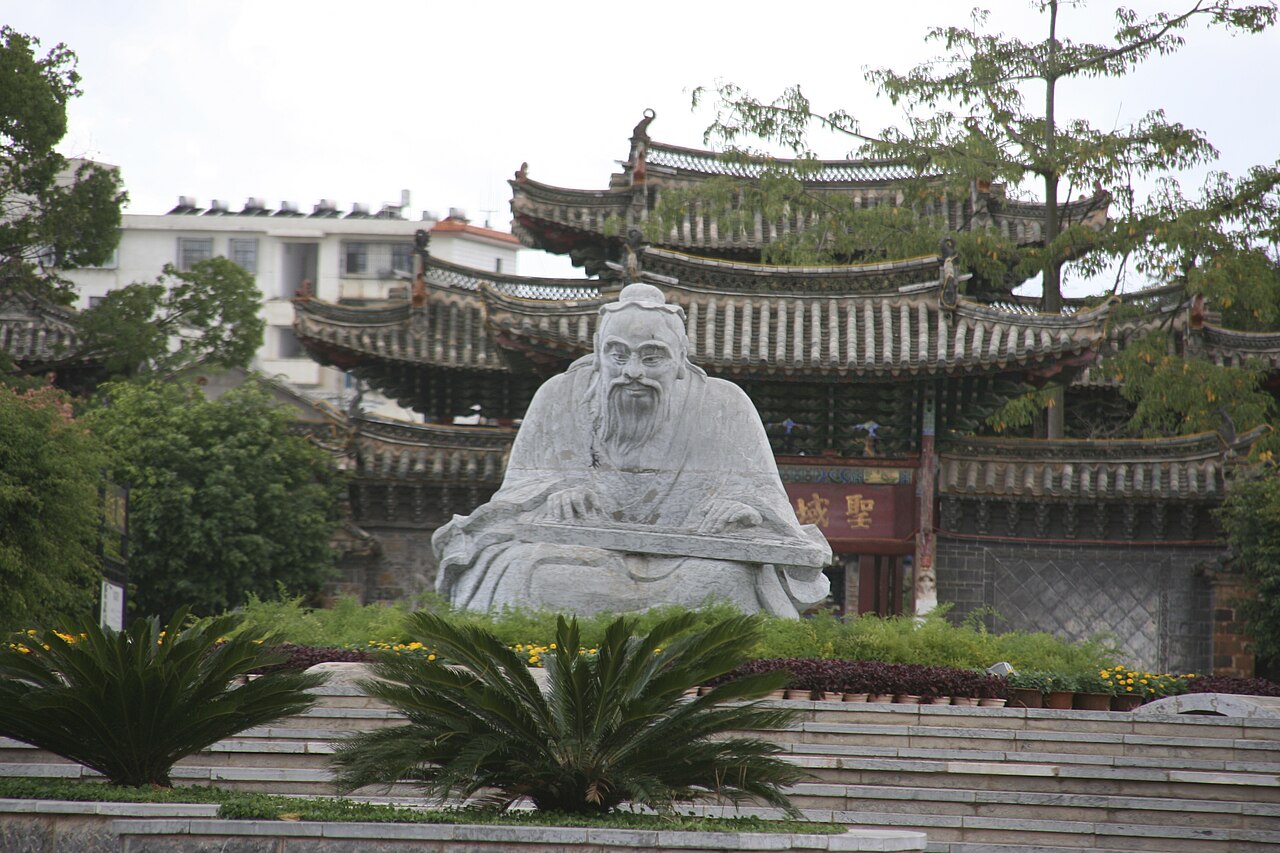
About 2 hours by train from Kunming is Jianshui, an old town with one of the largest Confucian temples (建水文庙) in China, second only to the one in Confucius's home town of Qufu. It also has the Double Dragon Bridge (双龙桥), a seventeen-arch stone span, and a reputation for purple-clay pottery (紫陶). It stays quiet, with far fewer tourists.
The Yuanyang rice terraces (元阳梯田) are a UNESCO World Heritage site, carved into the mountains by the Hani people over more than a thousand years. They are at their most beautiful in the flooding season, November to March, when the terraces catch the sunrise and sunset in gold and pink. There is no direct train yet — connect by bus from Jianshui or hire a car — so it takes effort and an overnight stay to catch the morning light, but the reward is worth it.
The Kunming–Laos rail line runs deep south to Jinghong (景洪), the main town of Xishuangbanna, in about 3.5 hours. This is a tropical region of Dai culture that feels strikingly familiar to Thai travellers — the language, the food, the golden temples and house-like stupas. There is a tropical botanical garden, rainforest, and a night market along the Mekong, close to the Laos border. A good choice if you want a warmer, greener side of Yunnan.
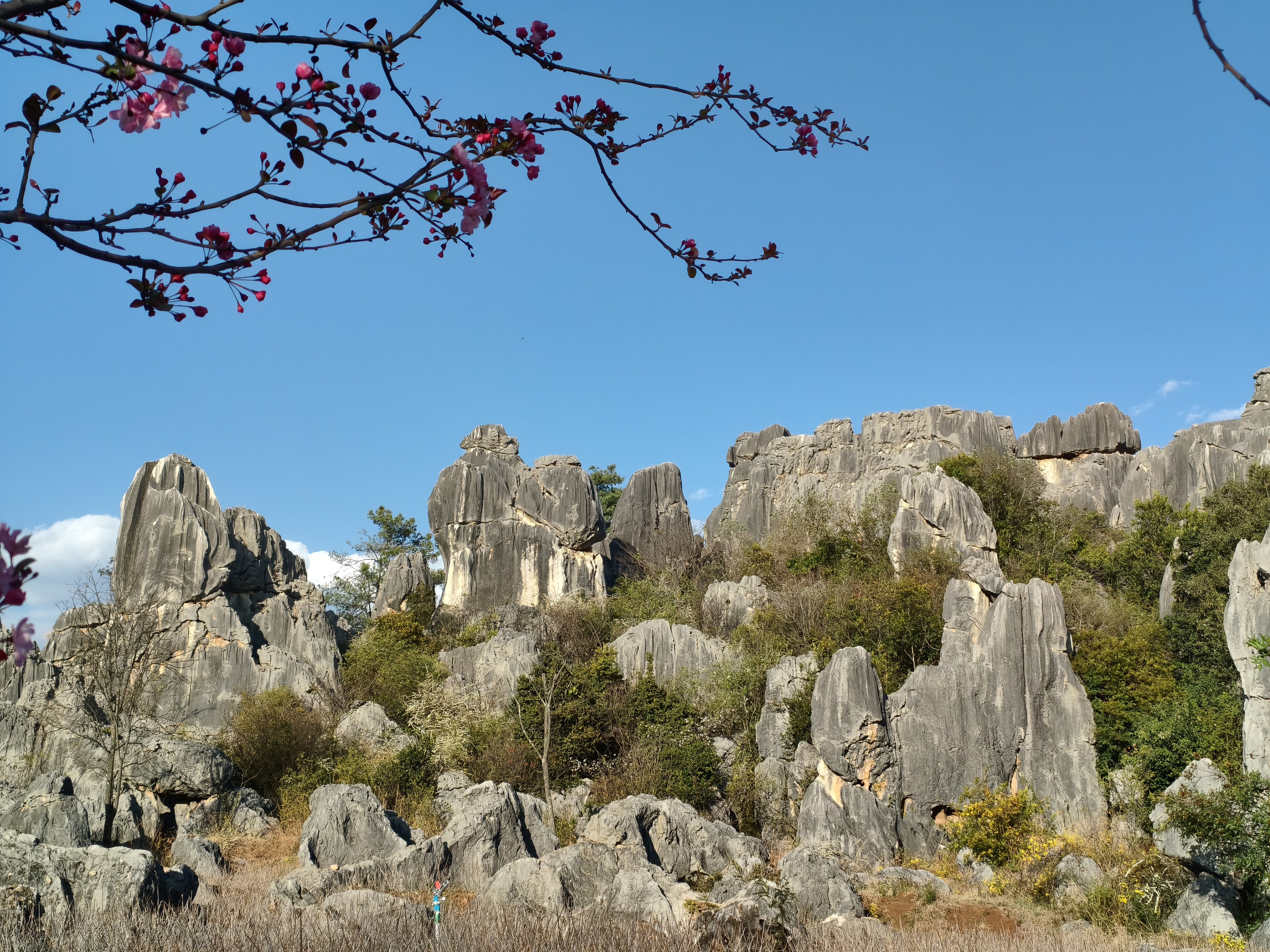
If you would rather not change cities, you can base in Kunming and make several return trips — the Stone Forest (石林), a spectacular field of limestone pinnacles; the Jiuxiang caves (九乡), with stalactites and gorges; and Fuxian Lake (抚仙湖), the clearest lake in Yunnan. All are good for days when you do not want to pack up and move. They are gathered in our Kunming day trips guide.
Kunming South vs Kunming Railway Station — this is the easiest thing to get wrong. High-speed G and D trains to Dali, Lijiang, Jianshui and Xishuangbanna nearly all leave from Kunming South (Kunming South 昆明南站), on the south-eastern edge of the city, reachable by Metro Line 1. Kunming Railway Station (昆明站) is the older downtown station for conventional and some services. Always check the departure station printed on your ticket, because the two are at opposite ends of the city — and allow time to reach it. For getting around town, see our getting around Kunming guide.
Booking the trains — buy on the 12306 app (official, with an English interface, register with your passport) or on Trip.com (the easiest route for visitors, accepts foreign cards). You board by scanning your passport at the gate, with no paper ticket. Yunnan routes really do need booking ahead, unlike a short hop between big cities — especially in high season and over the public holidays, when Kunming–Dali and Kunming–Lijiang trains sell out fast. Our China high-speed rail guide covers the details.
Use Kunming as a base, or pass through? — for the northern route (Dali–Lijiang–Shangri-La), move city to city, one way, then fly back to Kunming from the end point; that is the best use of your time, with no daily return to base. Basing in Kunming for day trips only makes sense for nearby sights such as the Stone Forest, Jiuxiang and Fuxian Lake. The simple rule: Kunming works best as the start and end of a Yunnan trip rather than a place you sleep every night.