12 sights worth your time
Ordered by the experiences Hua Hin visitors recommend most — from the town beach to a cave out of legend.
Picture this: a long stretch of sand running from the fishing pier south towards Khao Takiab, walkable for a kilometre or more, and an in-town beach you can stroll to from many hotels. Its signature is horse riding along the shore, a Hua Hin image for decades (agree the price before you ride, and pick an operator that looks after its horses well). The water is swimmable — there can be jellyfish in some seasons, so check before you go in. The beach faces east into the Gulf, so the sunrises are lovely, and in the evening there are beachfront restaurants and bars to settle into.
 2
2
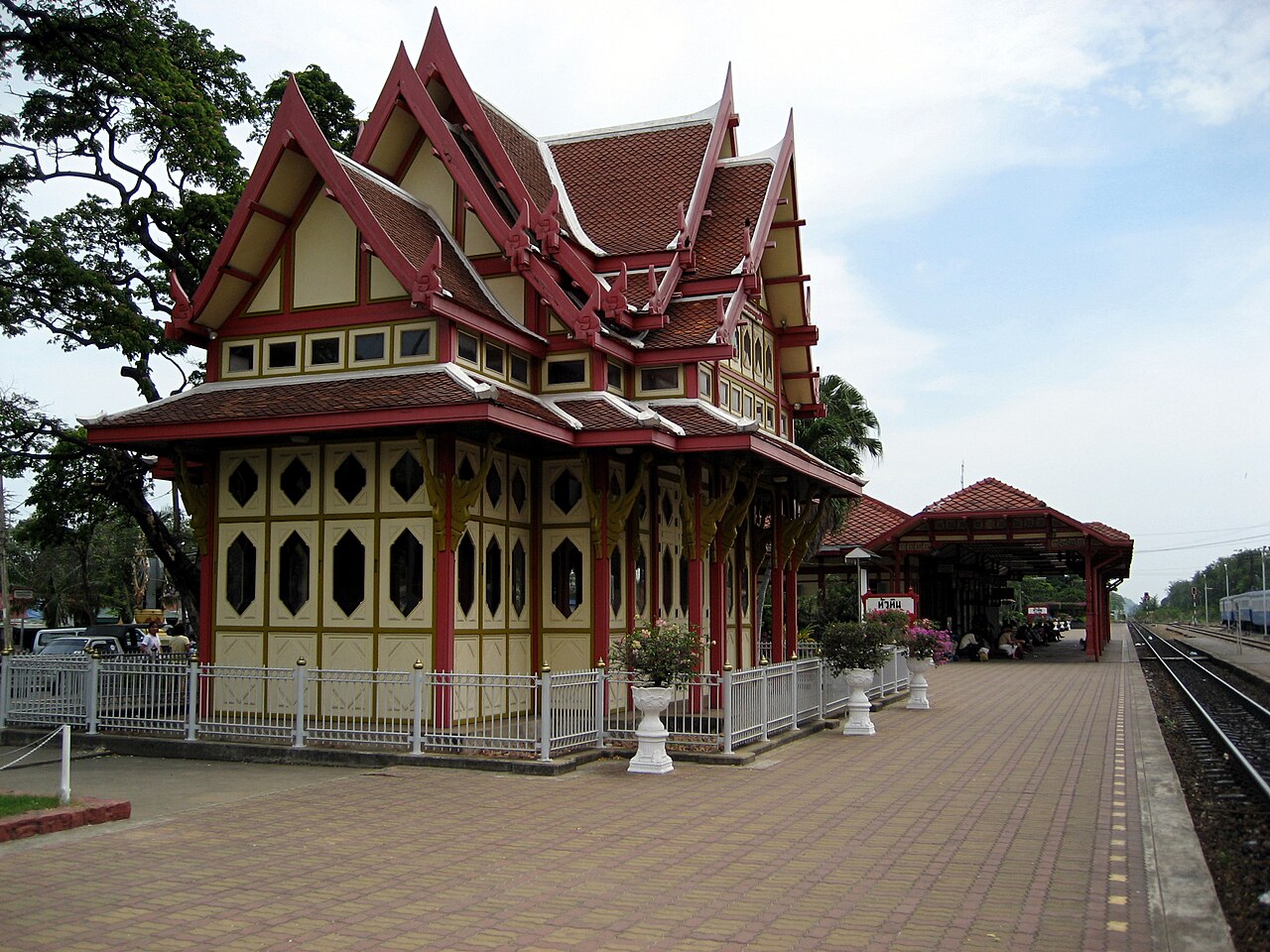
The shot everyone takes in Hua Hin: a cream-and-red, Victorian-gingerbread station building from 1926, widely called the prettiest railway station in Thailand. Beside it stands the Phra Mongkut Klao pavilion, a four-gabled royal waiting room from the reign of Rama VI that originally stood at Sanam Chandra Palace in Nakhon Pathom and was moved here in 1967. It's free to visit and a top photo spot, and crucially it's still a working station — the Southern Line train from Bangkok pulls in right here. Plearn Wan, the retro village, is a short walk away. Go in the morning or late afternoon for soft light and fewer people.
At the south end of Hua Hin bay a small hill juts into the sea — Khao Takiab, "Chopstick Hill", better known as Monkey Mountain. On top are Wat Khao Takiab and Wat Khao Lat, a 19-metre Standing Buddha and sweeping views over the bay; it's free to climb (there's a donation box). The other draw is the troop of macaques that live up here, especially around Wat Khao Lat — and honestly, they're bold and quick to grab things, so don't carry visible food bags or water bottles, keep your glasses, hat and phone tucked away, and don't feed or tease them. Below the hill, Khao Takiab beach has seafood restaurants to head to next.
On weekend evenings the Khao Takiab area has two markets worth wandering, right next to each other. Cicada Market runs Friday to Sunday, about 4pm–11pm, and is an arts-and-crafts market of handmade goods with a live-music stage, a food zone and pretty homeware. Tamarind Market, beside it, opens the same days from about 5pm–11pm and is almost entirely about food, so you can graze your way through dinner. The vibe is more relaxed than the central Night Market, so it's good for a long evening stroll. See all the others in the night-markets guide.
Plearn Wan is a two-storey wooden complex recreating old Hua Hin — shops selling vintage Thai sweets, an old-style coffee shop, tin toys, grandma-era shopfront signs and retro photo corners that make it feel like walking through a memory. It sits in the centre of town on Phetkasem Road, near the railway station. It's free to wander; you only pay for what you eat or buy, so it suits a quick stop on the way to the beach or the station. I'll be straight — it's more a place to stroll, snack and take photos than a half-day attraction, but the nostalgic feel is genuinely charming.
Between Cha-am and Hua Hin (in Phetchaburi province) stands a golden-teak palace on stilts by the sea that's known as the "palace of love and hope", built under Rama VI. The pavilions are pale wood with red roofs, joined by long timber corridors that catch the sea breeze — wonderfully cool to walk through. As a royal residence it has a dress code: shoulders and knees must be covered, sarongs are available to rent or borrow at the entrance, and you take your shoes off before going up. It's open about 8.30am–4.30pm and often closed on Wednesdays, so check the latest hours first. Go early, while it's still cool, for an easy walk and good photos.
About 40 minutes inland from Hua Hin, in the hills, sits the Monsoon Valley vineyard (Hua Hin Hills) — one of Thailand's "new-latitude" wine estates that genuinely grows grapes and makes wine. Rows of vines run off towards the mountains, you can take an open-top jeep tour of the estate, taste at the cellar door, and there's a restaurant with a view to linger over as the evening light comes in. Rough prices: a tasting set starts around ฿290, and a jeep tour with tapas is around ฿1,400 (check the latest before you go). It's at its best in the cool season; there's no public transport up here, so you'll drive, take a tour or use the estate's shuttle.
 8
8
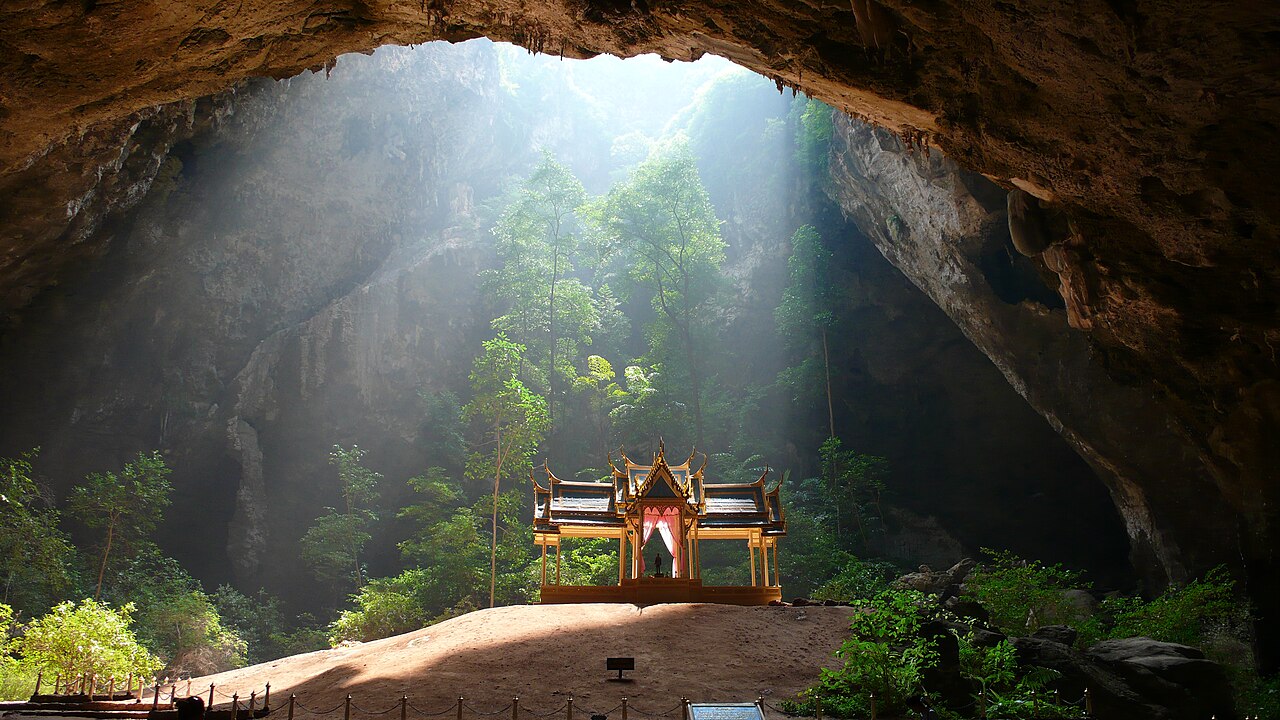
The iconic image of the Gulf coast: the Khuha Kharuehat royal pavilion, a gold-roofed pavilion standing inside a vast cave, with an opening in the cave roof letting a shaft of sunlight drop right onto it — built in 1890 under Rama V. It's in Khao Sam Roi Yot National Park in Prachuap Khiri Khan, about 40–60 minutes south of Hua Hin. Getting in means a boat or a walk along Laem Sala beach, then a fairly tiring climb up to the cave; honestly, it's not for anyone who can't manage the hike, but it's well worth it. The sunbeam is at its best around 10–11.30am in the dry season (November to February). Go early and check the tides first.
About 14km west of Hua Hin town (in Thap Tai) is Wat Huay Mongkol, home to the largest statue of the revered monk Luang Phor Thuad in Thailand — roughly 12 metres tall, set on a mound in a wide open ground and visible from a distance. It's a popular merit-making spot for Thai visitors, with two giant carved wooden elephants flanking the statue that people walk beneath for good luck. The grounds are open and breezy, and entry is free, so it makes a good stop on the way to the vineyard or as part of a day trip. There's a market of food stalls in front of the temple too.
On a low hill above town, Khao Hin Lek Fai park has one of the finest high views over Hua Hin town and the sea — several viewpoints look down over the rooftops, the beach and the Gulf opening out. People come up at dusk for the sunset, or early to exercise in the breeze. It's free, and you can drive or take a vehicle right up to the viewpoints with no long walk, so it's an easy stop for a wide town-and-sea photo before heading back to your hotel. It's a spot Hua Hin locals come to as well, not just visitors.
The Hua Hin Floating Market is a retro-style, purpose-built floating market for visitors — paddle boats selling food along the canal, old wooden buildings, footbridges over the water, Thai dishes, sweets and souvenirs, all easy to photograph. To be honest, it isn't a traditional central-plains floating market, but the setting is sweet and it's conveniently close to town, so it works for a snack and a short photo stop. If you want somewhere livelier, the Night Market or Cicada in the evening is more fun. See them all in the night-markets guide.
There's plenty of beach and palace in town, but with extra time the area delivers. Pranburi, a little south, has quieter beaches, a pine forest and a mangrove boardwalk · Khao Sam Roi Yot / Phraya Nakhon Cave (see the full page above) · Cha-am, the next beach north in Phetchaburi, is quieter and easy on the wallet · Wat Huay Mongkol with its giant Luang Phor Thuad · European-style theme parks like Santorini Park and Swiss Sheep Farm (kitschy, photo-friendly) · and Kaeng Krachan National Park / Pa La-U Waterfall, which need a car. See every option in the day-trips guide.