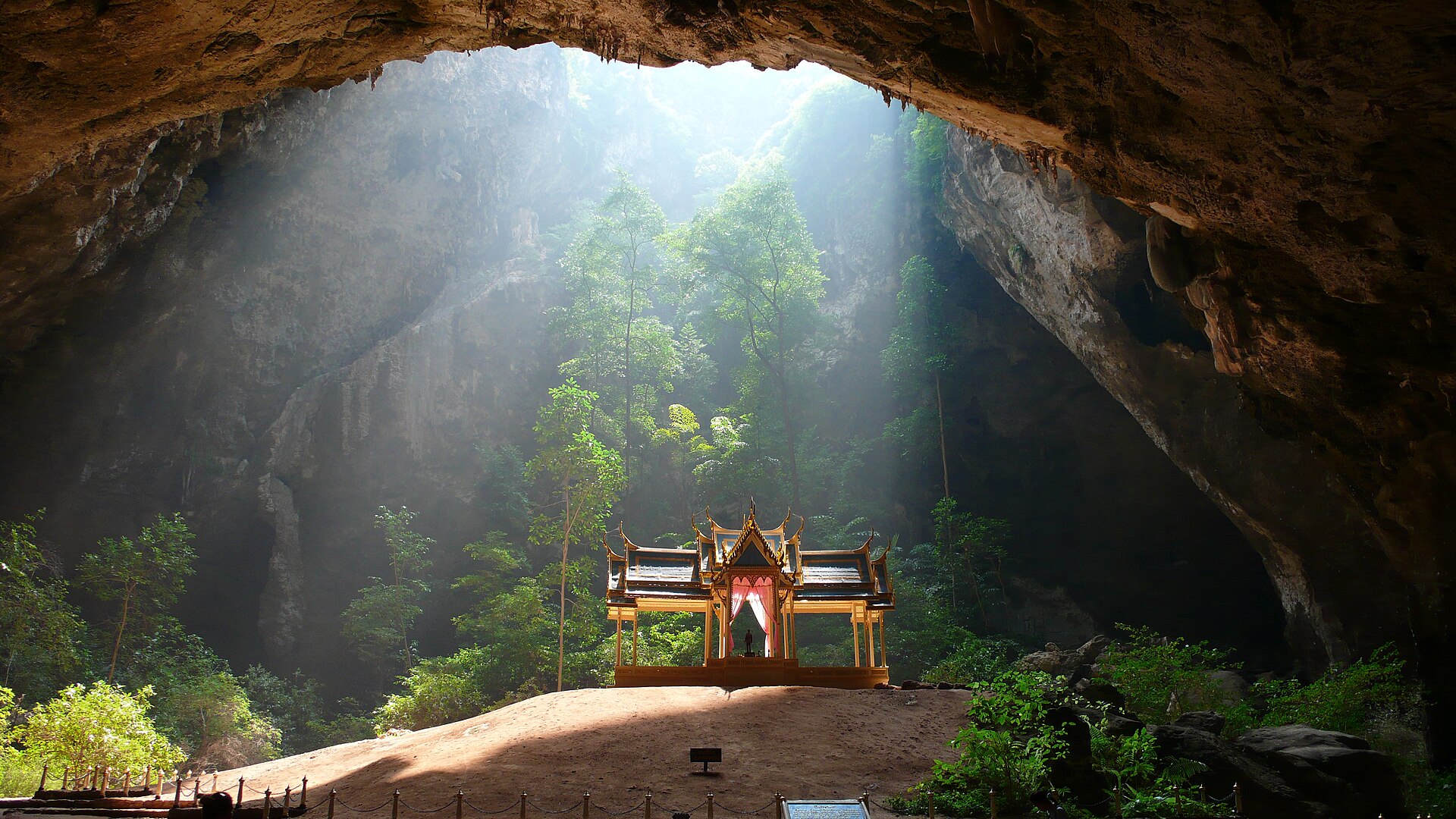
Hua Hin Railway Station is often called the prettiest station in Thailand — a cream-and-red Victorian-Thai timber building and the red-and-gold Phra Mongkut Klao royal waiting room from the reign of Rama VI, now a symbol of the town. It is free to visit, you can photograph it all day, and it is still a working Southern Line station — just a 10-minute walk from Hua Hin Beach.
Let us be honest: Hua Hin has lovely beaches and fun markets, but if you had to pick one image that truly stands for the town, most locals would think of Hua Hin Railway Station first — the station widely called the prettiest in Thailand. The old station building is a cream-and-red timber structure in a Victorian-Thai style, first built around 1910 and rebuilt as the current building around 1926, in the era when Hua Hin was booming because the Southern Line had reached the town and King Rama VI had built Klai Kangwon Palace as his summer residence.
The spot everyone comes to photograph is the Phra Mongkut Klao pavilion, a red-and-gold tiered-roof Thai pavilion standing beside the platform. It was originally built during the reign of Rama VI at Sanam Chandra Palace in Nakhon Pathom, where it served as a waiting room for the royal train. In 1967 it was relocated and reassembled at Hua Hin station and given the name it carries today. That Thai elegance set against a Western-style station is exactly what has made this corner Hua Hin's postcard image for decades.
Ever had this happen — a famous spot that turns out small, or charges a steep entry fee when you arrive? Hua Hin Railway Station is the opposite, because here entry is free, you can photograph it all day, it sits in the centre of town, and it is still a working station. All passenger services use the new elevated station building that opened in 2023, while the old building and the pavilion are preserved as a historic site cared for by the Fine Arts Department — and it is only about a 10-minute walk from Hua Hin Beach.
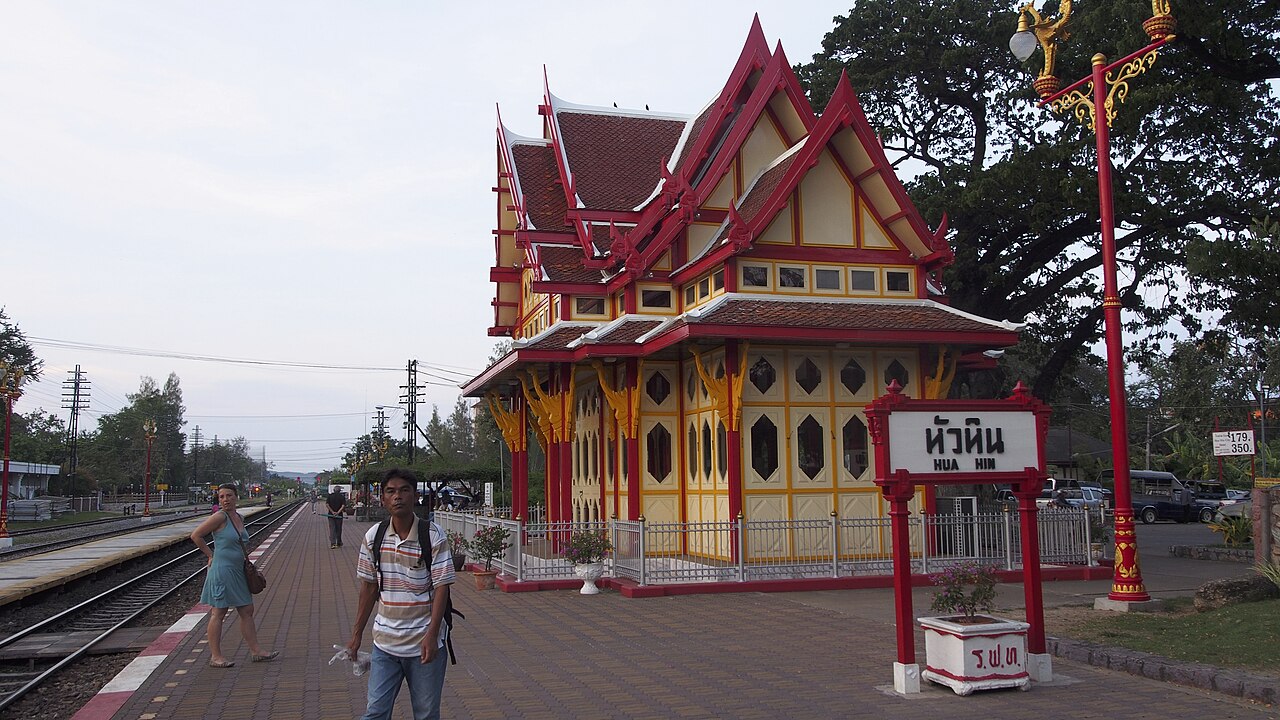
This is not a dead old building — it is a station where people still travel, where you hear platform announcements, and where trains still run past. Its charm is that old beauty and real use sit side by side.
The first thing that catches your eye as you reach the platform is the red and gold of the pavilion set against the cream timber of the station building. Around it are fretwork, Thai-style posts, and the "Hua Hin" station sign that everyone poses beside. The mood is calm and resort-town quiet, nothing like the busy main stations in Bangkok, so you can wander slowly and take in the detail. And because it is still a working station, every so often you actually see a train roll past — a sight you rarely get at a pretty attraction.
If you like collecting beautiful shots, this is the best value spot in Hua Hin — the red-and-gold pavilion, the timber building and the tracks give plenty of angles, entry is free, and 30 to 45 minutes is enough to cover it. Come early or late for soft light and fewer people, then carry on to the other Hua Hin attractions.
Part of the charm here is that you step off the train straight into a beautiful station. For anyone who wants to reach Hua Hin without driving, the Southern Line train from Bangkok is the most atmospheric way to come — you watch the scenery roll by and arrive with a good first impression. Read every way to come in the getting-to-Hua-Hin guide.
The station sits in the centre of Hua Hin, a few minutes' walk from the beach and the night market. It is ideal for families who want a short photo stop on the way to the beach or dinner — the space is open and easy to walk, with nothing to climb — and it makes a tidy starting point for a day on foot around town.
If the station's nostalgia wins you over, carry on to Plearn Wan, a retro 1950s-style village in the north of town near Klai Kangwon Palace, about a 10-minute drive away. It has old-fashioned sweet shops, vintage toys and retro photo corners — a good thematic pairing with the station. See more to do in the Hua Hin attractions guide.
The heart of the place is the Phra Mongkut Klao pavilion, a red-and-gold tiered-roof Thai pavilion standing beside the platform. It was originally built during the reign of Rama VI at Sanam Chandra Palace in Nakhon Pathom, where it served as a royal waiting room for the train, then relocated and reassembled at Hua Hin in 1967. The best angle is from the front at a slight diagonal, so the whole pavilion stands against the sky — and morning light gives the richest red and gold.
The old station building itself is a cream-and-red timber structure in a Victorian-Thai style, rebuilt as the current building around 1926, with fretwork, Thai-style posts and the "Hua Hin" station sign that makes a classic photo. Walk along the long platform and the tracks stretch away beautifully — but do not stand on or cross the tracks for a photo, as trains still run. The view from the platform is more than good enough on its own.
About a 10-minute drive north of the station is Plearn Wan, a retro 1950s–60s-style village decorated with old movie posters, tin toys and old-fashioned sweet shops. The vintage theme pairs well with the station, so it is a good place to continue on the same day. Entry to wander the village is free (you pay at the shops and rides) — check the opening days before you go, as it sometimes closes for upkeep.
The station is in the town centre, about a 10-minute walk to Hua Hin Beach, the long town beach known for its signature beach horse-riding, and a short walk further to the Hua Hin Night Market, where you can eat grilled seafood in the evening. With half a day you can easily string the station, the beach and the night market together, or continue to Khao Takiab at the south end of the bay for the hilltop temple and views.
The charm you cannot get elsewhere is arriving in town by train and stepping down at the prettiest station in Thailand — this is the most atmospheric way to come.
Take the Southern Line train from Krung Thep Aphiwat Central Terminal (Bang Sue Grand Station) directly to Hua Hin station. The journey takes roughly 3 to 3.75 hours, with several departures a day, and fares run from about ฿94 to ฿980 depending on class — from third-class fan seats, through second-class seats and sleepers, up to first-class air-conditioned sleepers. You can book up to about 30 days ahead through the State Railway's app or D-Ticket website. All passenger services use the new elevated station building — just a few steps from the old building and the pavilion to photograph. Compare every way to come in the getting-to-Hua-Hin guide.
For an easy, comfortable ride, second-class air-conditioned is the good-value choice on this route. If you are on a budget and do not mind no air-conditioning, third class is the cheapest. There are several morning and afternoon departures to choose from, and on long weekends and holidays you should book ahead, as seats fill fast. Fares and timetables shift by season, so always check the latest schedule first — see the country-wide picture in the getting around Thailand guide.
This is a historic building cared for by the Fine Arts Department, and still a working station, so visiting respectfully and safely matters as much as getting a good photo.
Because Hua Hin Railway Station is both an attraction and a working station, a little preparation gets you good photos without disturbing anyone. The most important points are safety around the tracks and protecting the fragile old building — follow a few simple rules and you can enjoy it with a clear conscience.
Early morning, roughly 7:00 to 9:00, and the hour before sunset give the softest light and the fewest people. At midday the sun is harsh, so photos can have hard shadows and crowds. For the whole pavilion without people in frame, morning is the answer.
The tracks here still carry trains, so never stand on or cross them for a photo, and always stay behind the yellow line on the platform. The angle from the platform is plenty good. Keep young children close — safety always comes before a photo.
The pavilion and timber building are old and fragile, so do not climb on them or lean hard, and help by not leaving litter. The site is in the care of the Fine Arts Department. Ordinary photography is fine, but for commercial shoots or wedding sets you should ask the staff first.
The area is fairly open, so bring a hat, sunscreen and water, especially in the hot season (March to May) when Hua Hin's sun is strong. Evenings have a cool sea breeze. About 30 to 45 minutes covers the visit, then you can walk on to the beach or the market. See when to go in the best time to visit Hua Hin guide.
The station is in the centre of Hua Hin, within walking distance of many hotels and the beach. If you are staying farther out, a songthaew, motorbike taxi or Grab gets you there easily — Hua Hin has no BTS/MRT skytrain, but it does have the Southern Line train that drops you right at this station.
7:30 — Arrive at Hua Hin Railway Station for soft morning light and photograph the pavilion and timber building with few people about
8:30 — Walk to Hua Hin Beach, about 10 minutes, for a morning stroll along the sand
9:30 — A local breakfast such as pa-tong-go with sangkhaya custard, or rice soup in town
10:30 — A 10-minute ride to Plearn Wan to photograph the retro village
11:30 — Lunch in town, or continue to Khao Takiab in the afternoon
If you have the afternoon and evening, rest at the hotel and come back out:
16:00 — Late afternoon, swim or stroll at Hua Hin Beach in the softer light
18:00 — Walk into town to the Hua Hin Night Market for grilled seafood and local snacks
20:00 — Finish at a seafront spot or a café in town
To plan a full trip with a place to stay, see the 2-day, 1-night Hua Hin plan, and add more around the town with the day trips around Hua Hin — or see the full picture in the Hua Hin attractions guide.