Every stop in detail with metro and tips
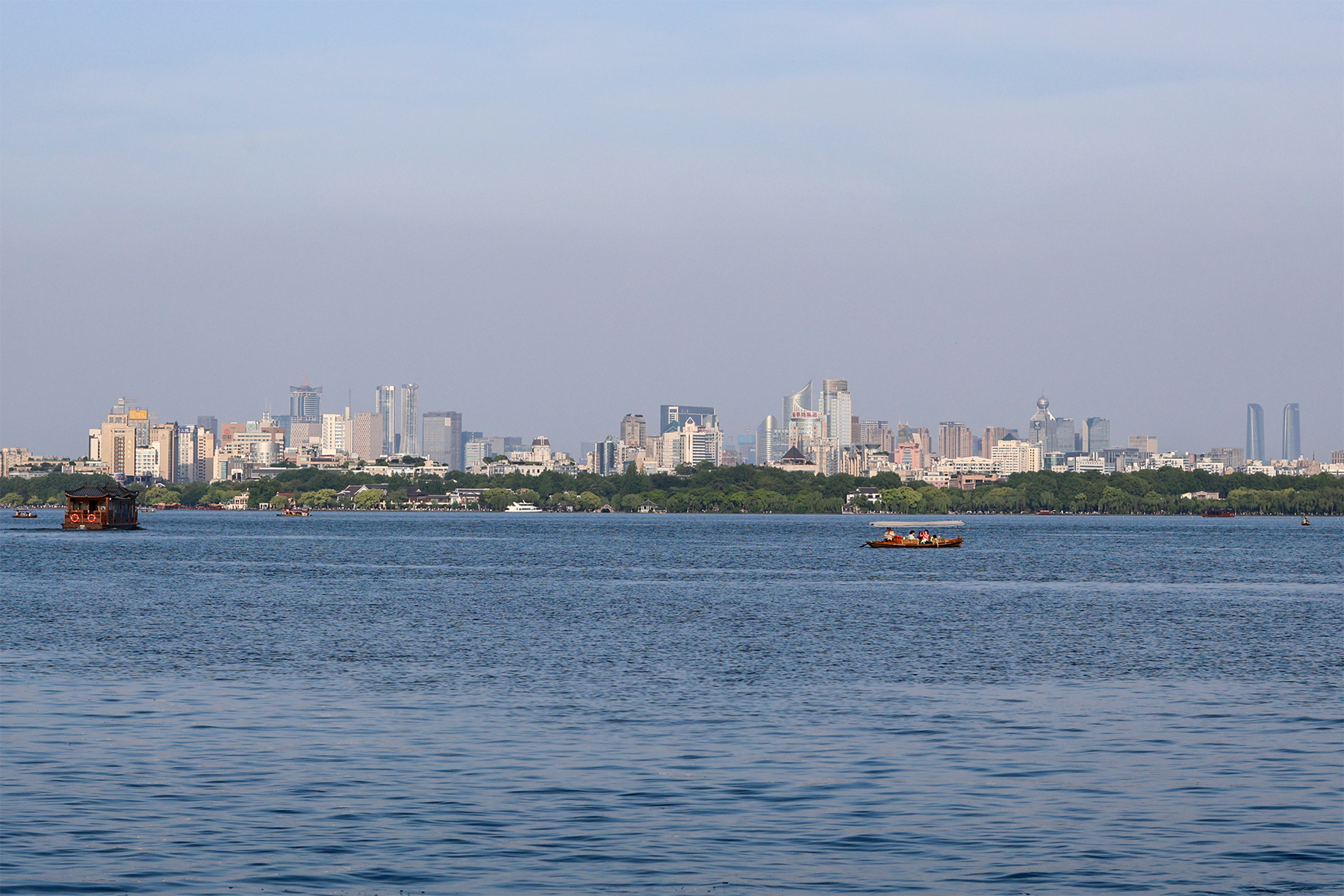
Start the day at West Lake's eastern shore around 8:30 am — exit Metro Line 1 at Longxiangqiao and walk about ten minutes to the water. This early, the crowds are still thin and the light comes soft through the willows. Begin at the Broken Bridge (断桥), named for the way snow melts faster on its sunlit side in winter, making the bridge appear to break in the middle from a distance. It is also the setting of the Legend of the White Snake, a folk tale every Chinese visitor knows by heart.
From the bridge, continue along the Bai Causeway (白堤), a raised walkway associated with the Tang poet Bai Juyi and dating to around 822 AD. It runs straight across the water with the lake on both sides, ending at Gushan (Solitary Hill) island, home to the Zhejiang Provincial Museum, which is free to enter. Take this stretch at an easy pace — about an hour and a half.
From Gushan island, follow the western shore round to the start of the Su Causeway (苏堤), a 2.8-kilometre walkway built in 1089 AD by the Song poet Su Shi (Su Dongpo) during his time as governor of Hangzhou, using earth dredged from the lake. The causeway divides West Lake into a larger eastern half and a smaller western one, carried over the water on six arched stone bridges, with willows alternating with peach trees the whole way. In spring, when the peach blossom is out along the full length, you understand why this view sits in classical Chinese poetry.
The 2.8 km takes about 40–50 minutes on foot. If you want to save your legs for later, rent a public HelloBike (blue frame, scan the QR code in Alipay, first 60 minutes free) and ride the Su Causeway instead — but remember the Bai Causeway and the Hubin pedestrian street are no-cycling zones where guards will ask you to dismount.
Partway along the Su Causeway you will find a boat pier. Take a boat out to Three Pools Mirroring the Moon (三潭印月), the largest island in West Lake, known for its layout of "a lake within the island, an island within the lake." Off the south-east side stand three small stone pagodas rising from the water — and this is the exact scene printed on the back of the one-yuan note in your wallet. The boat ticket is ¥70 and includes entry to the islet; boats run from several piers around the lake, so you can board and disembark at points like Lakeside Park or Zhongshan Park.
Back on shore in the early afternoon, find lunch along the lakefront or in the Hubin district. This is the moment to try Hangzhou's local dishes — Dongpo pork (东坡肉), named after the same poet who built the Su Causeway, or Longjing shrimp (龙井虾仁), stir-fried with the city's famous green tea leaves.
Get off the boat on the southern shore and walk or take a short ride to Leifeng Pagoda (雷峰塔), standing on a low hill at the south end of the lake. The original was built in 975 AD and collapsed in 1924 — in folklore, it imprisoned the White Snake — and a new pagoda was built over the ruins in 2002, with a lift and escalators to the upper levels. From the balconies you look out over the whole of West Lake, the Su Causeway cutting a clean line across the water, and the Three Pools island you have just sailed to.
The timing here is deliberate, because sunset from Leifeng Pagoda is one of the classic West Lake views — the light going gold behind the Su Causeway. "Sunset Glow at Leifeng Pagoda" (雷峰夕照) has been listed among the Ten Scenes of West Lake since imperial times. Check the day's sunset time and ride up about 40 minutes before.
End the day on Hefang Street (河坊街), an old pedestrian street that has kept its Qing-dynasty timber shopfronts along the whole stretch, at the foot of Wushan Hill not far from the lake's southern shore. It is busiest after dark, lined with Longjing tea sellers, centuries-old traditional medicine shops, souvenir stalls, silk fans and snack counters on both sides. Walk it slowly and graze as you go.
Right beside it is the Wushan Night Market (吴山夜市), a run of street-food and trinket stalls — a fine place to eat dinner on the move. If you would rather sit down, the streets around Hefang have plenty of Hangzhou restaurants across a range of prices. Close the day in the old town before catching Metro Line 1 back.
- Lingyin Temple and Feilai Feng — ancient and beautiful, but on the far side of the city; you need half a day to do them justice. Save them for a second day.
- Longjing tea villages (龙井) — the famous green-tea hills require a bus ride uphill and most of half a day there and back.
- Grand Canal (京杭大运河) — another World Heritage site, but north of the centre and off the West Lake circuit entirely.
- Xixi Wetland (西溪湿地) — lovely, but large and out on the city edge; it needs a full day of its own and does not fit a one-day plan.