8 home-style dishes Guilin locals really eat
From the banquet dish every household is proud of, to the seasonal fruit that hangs from the eaves.
 1
1
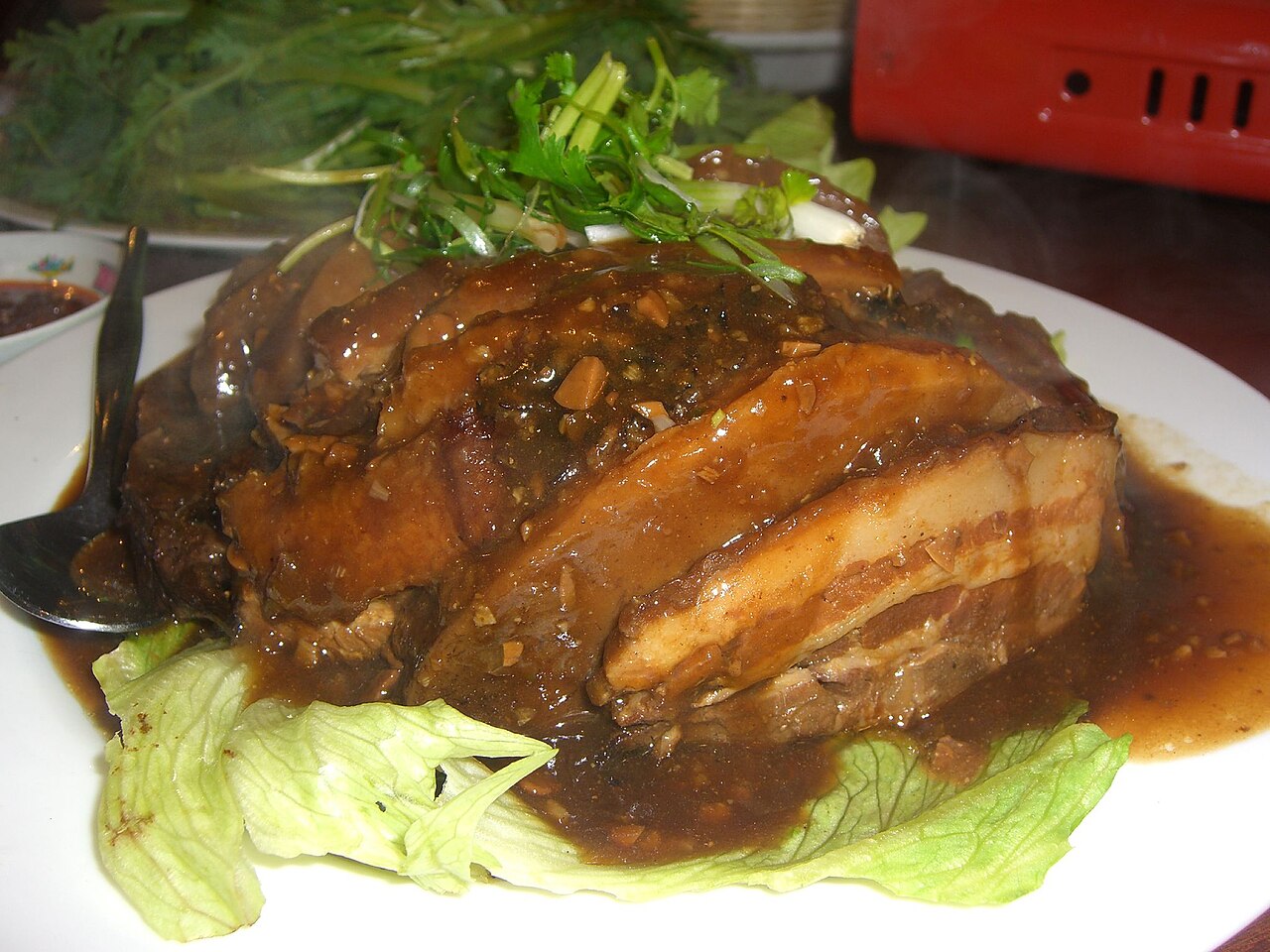
This is the celebratory banquet dish Guangxi locals are proudest of. It uses taro from Lipu county in Guilin, nicknamed the "king of taro" for its high starch content, which gives it a soft, creamy, faintly sweet texture. The pork belly and taro are deep-fried until the surface crisps, marinated with fermented bean curd, rice wine and spices, then arranged in alternating layers, skin-down, and steamed for about two hours until meltingly tender. It's served by inverting the bowl into a neat dome. The taro soaks up the fat from the pork until it's fragrant, the pork turns silky and never greasy — and it's best with a bowl of hot rice.
The Li River is rich in plump, meaty field snails, and Guilin locals stir-fry them into a favourite night-market snack. They're cooked with pickled chilli (酸辣椒), ginger, scallion and Sanhua rice liquor to lift the flavour and chase off any muddiness. You eat them by lifting the lid and sucking the meat straight out of the shell (stalls often snip the tail off so it pulls out easily). The taste is fresh, fragrant and spicy, the texture springy, and a cold beer alongside is the move. It's the boldest plate on this list — but still a fragrant Guangxi kind of heat, not the numbing kind.
Yangshuo has a whole craft called the "eighteen stuffed dishes" (十八酿) — seasoned minced pork packed into anything that will hold it, from snails and tofu to sweet peppers, aubergine and pumpkin flowers, then steamed or braised. The most famous is the stuffed snail (酿田螺), where the snail meat is picked out, minced with pork and packed back into the shell, so each one gives you both the snail's fragrance and the juicy filling. "Eighteen" doesn't mean exactly eighteen — it stands for the sheer variety. It's home cooking so good that some families take bookings a week ahead.
The Li River runs straight through the city, so Guilin always has fresh freshwater fish to cook. Beyond Yangshuo's beer fish, home kitchens like to take a fresh fish and steam it whole or braise it in a clear sauce to keep the natural sweetness of the flesh. Some do a light sweet-and-sour, others steam it with soy and a scatter of ginger and scallion. The flesh is firm and sweet from living in moving water. This is one of the easiest dishes for anyone who doesn't eat spicy — and the clearest example of how the Guangxi kitchen favours freshness over heavy seasoning. A whole fish is priced by weight, so ask before you order.
This dish has a lovely backstory — it was created by nuns at the temples around Xiangbishan (Elephant Trunk Hill), serving vegetarian noodles to pilgrims. It's thin noodles in a clear vegetable broth simmered from shiitake, bamboo shoots and greens, drawing a mellow, natural sweetness without any meat at all, then topped with mushrooms, bamboo and blanched vegetables. Clean, light and pure in line with Buddhist cooking, it's a complete contrast to the punchy bowl of rice noodles you'd eat for breakfast — and a good call for a light meal or a day when you want to give your stomach a rest from richer food.
A traditional nourishing pot from the Guilin area that locals eat with the season. It uses local ginkgo nuts (白果) simmered with an old duck, cooked long enough to draw out a broth that's clear but deep, with falling-apart-tender duck and soft, chewy ginkgo. In Chinese tradition ginkgo is considered cooling and old duck helps clear internal heat, so it's a soup that simply makes you feel settled — opening the appetite and soothing the throat. This is the gentlest side of the Guilin kitchen: no chilli, no heavy seasoning, just a deep sweetness drawn from long, slow cooking. Order it to share as the soup in the middle of the table.
Water chestnut (called 马蹄, literally "horse's hoof", in Chinese) from Guilin is known for being large, thin-skinned and crisp-sweet. Eaten raw it's cool and crunchy; stir-fried with meat or dropped into soup it adds a fresh crunch. But the truly local form is water-chestnut cake (马蹄糕) — grated water chestnut mixed with rice flour and brown sugar, scattered with sesame or enriched with milk, then steamed into a chewy, translucent block that's lightly sweet and good chilled. It's both a dessert and an everyday snack you'll find in markets and along the food streets in town, and it costs just a few yuan.
Gongcheng county in Guilin is known as China's "home of the moon persimmon" — Gongcheng moon persimmons (恭城月柿) are flat and round like a moon, bright orange, crisp and refreshingly sweet eaten fresh, and they've been grown here since the Ming dynasty. Come autumn, around October to November, whole villages hang racks of orange fruit to dry under the eaves — a sight photographers travel for. Once dried, they become persimmon cakes (柿饼), soft and honey-sweet and easy to take home as a gift. It's the sweet, seasonal note that captures Guilin's autumn best.