Before the sky is fully light, Guilin locals are queuing at noodle counters, tossing the strands through dark braised gravy, ladling in their own hot bone broth — and starting the day for under ¥15 a bowl. This is the meal that tells you more about the city by the Li River than any hotel buffet ever could.
Here's the honest truth: if you go to Guilin and eat only the hotel breakfast buffet, you miss the best meal of the day. This is a noodle city, where the whole town gets up to a bowl of noodles every morning the way other people reach for coffee. There are at least two or three noodle shops on every small street, and the real thing happens on a plastic stool in a tiny old-town shop, not in a buffet hall.
Guilin breakfast is the flavour of Guangxi (广西) — mild, fresh, lightly sour with pickles, never the fiery heat of Sichuan. The star is Guilin rice noodles (桂林米粉): round noodles in a dark braised gravy, topped with crispy fried pork, fried beans and pickles. Around it sit Gongcheng oil tea, the savoury Yao tea-soup locals eat as a real meal; horse-meat noodles from a century-old shop; the easy soy milk + youtiao pairing that suits everyone; and Zhuang sticky rice, hot congee and sour pickles. All of it comes to no more than ¥20–35 (~฿100–175) per person.
This page walks you through Guilin breakfast one dish at a time, plainly — what to try, how to order like a local, which shops to find it at, what time to go and what you'll need to bring.
If you only have time for one thing, make it this — ¥8–15 (~฿40–75), tossed dry first, then topped up with your own bone broth.
1
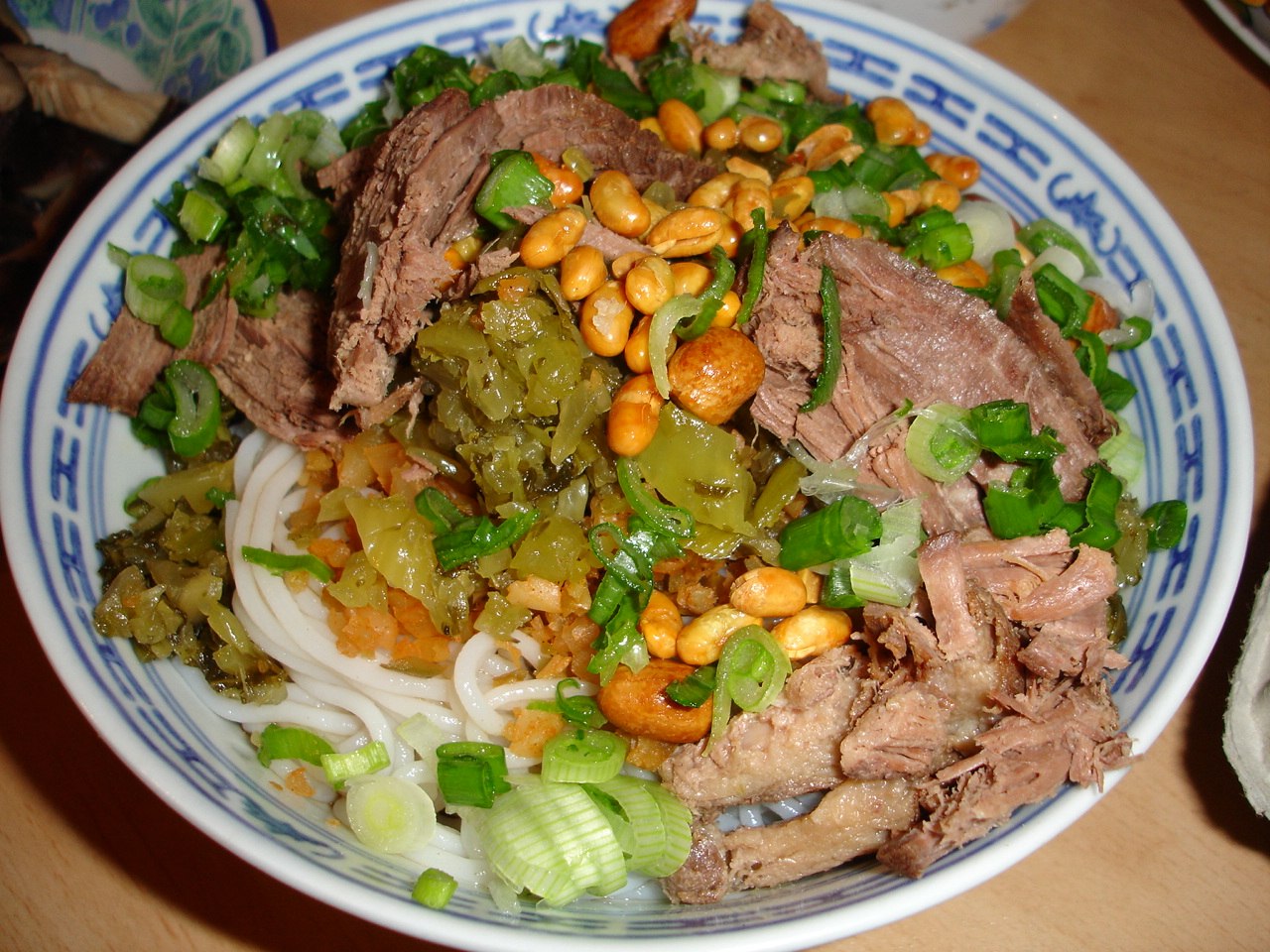
This is the dish the whole city revolves around, and where breakfast starts here — round rice noodles about the thickness of spaghetti, blanched and dressed in a dark braised gravy (卤水) that every shop simmers from 20-plus spices to its own secret recipe. On top go crispy fried pork (锅烧), char siu, peanuts, fried soybeans and spring onion. Toss it dry so the gravy coats every strand, hit the free condiment bar, then ladle in as much bone broth (骨头汤) as you like. Locals have eaten this bowl every morning their whole lives.
2
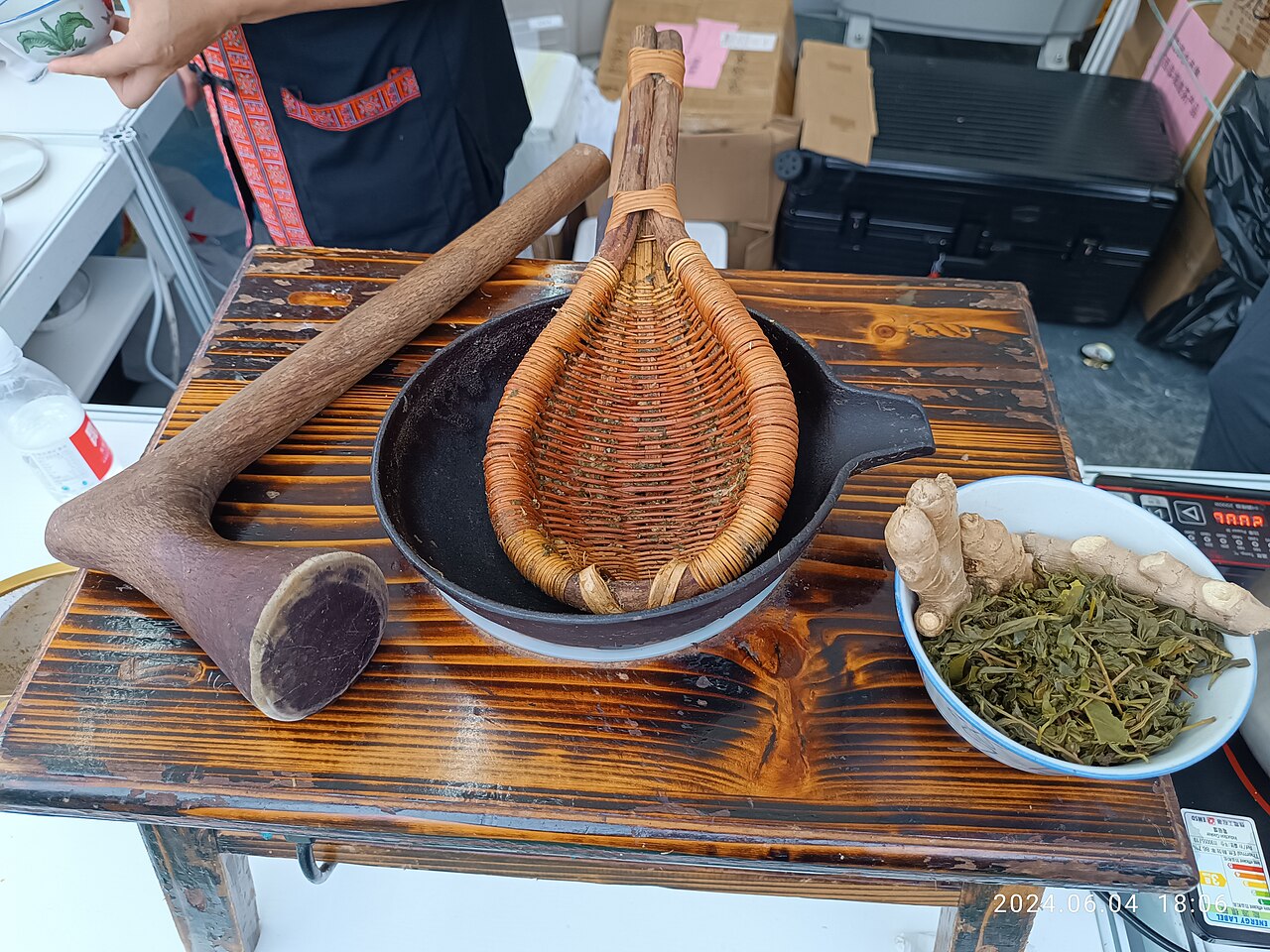
In Guilin plenty of households start the morning not with coffee but with oil tea (打油茶), a specialty of the Yao and Zhuang peoples. Tea leaves are fried with oil, ginger and garlic, then pounded in an iron pot until they break down; hot water makes a green, savoury, slightly bitter brew that's strained and poured over puffed rice, fried peanuts, dough bits and scallion. The first taste is bitter, the finish sweet. People in Gongcheng eat it as a real meal every morning — the local move is to pile in lots of puffed rice. It's UNESCO intangible cultural heritage, and custom says drink at least three bowls.
3
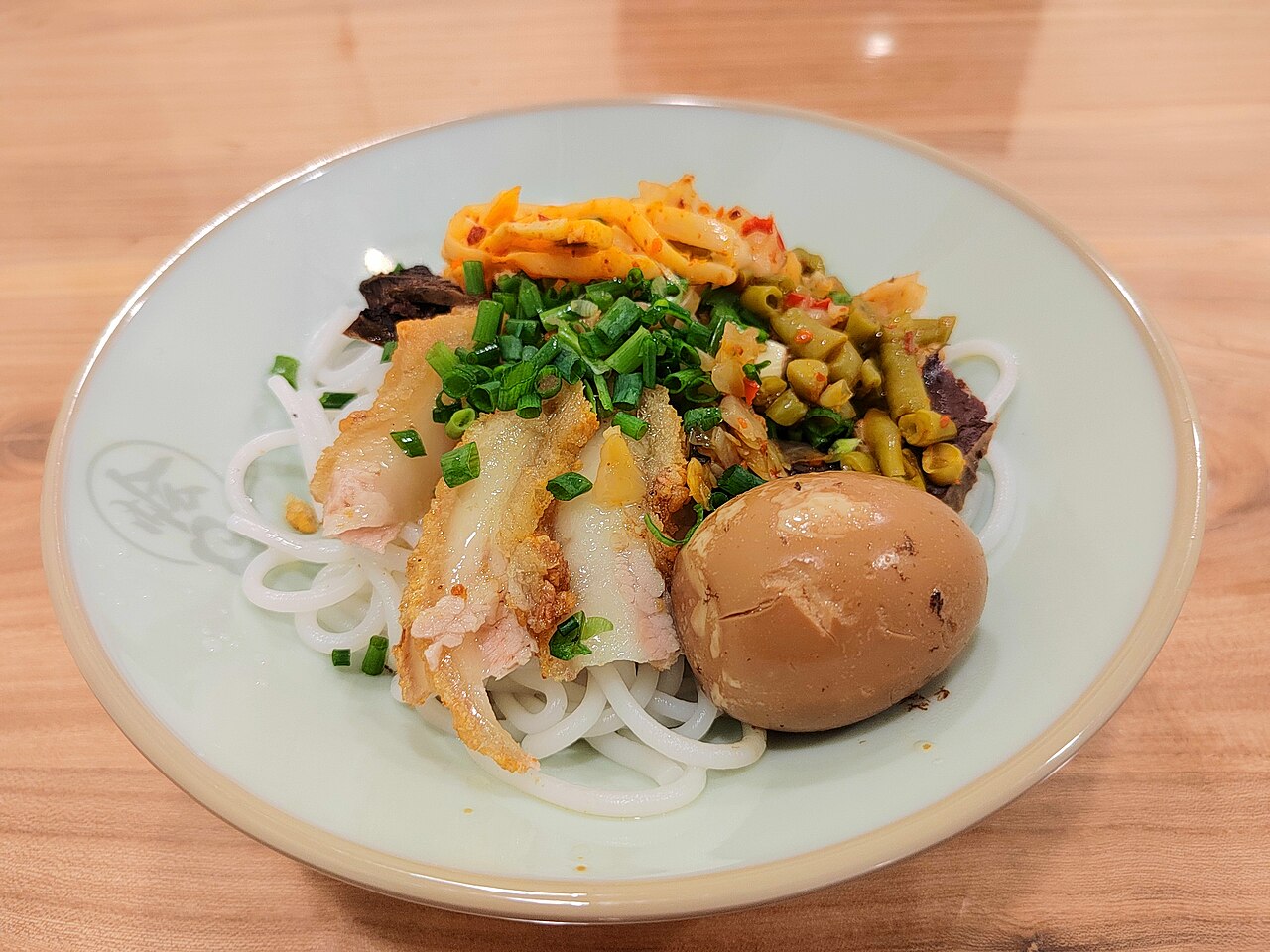
An old-school Guilin noodle you won't easily find elsewhere — served in tiny teacup-sized bowls, topped with thin slices of smoked or boiled horse meat over rice noodles in hot broth. People traditionally worked through several bowls each for breakfast. The legendary shop is Youyi Xuan (又一轩) on Jiefang West Road, open since 1896. The horse meat is tender and fragrant, not gamey the way you might fear, and if you're not ready to try horse, the same shop serves pork or beef toppings too. Honestly, this is a hometown flavour worth trying once if you've made it to Guilin.
4
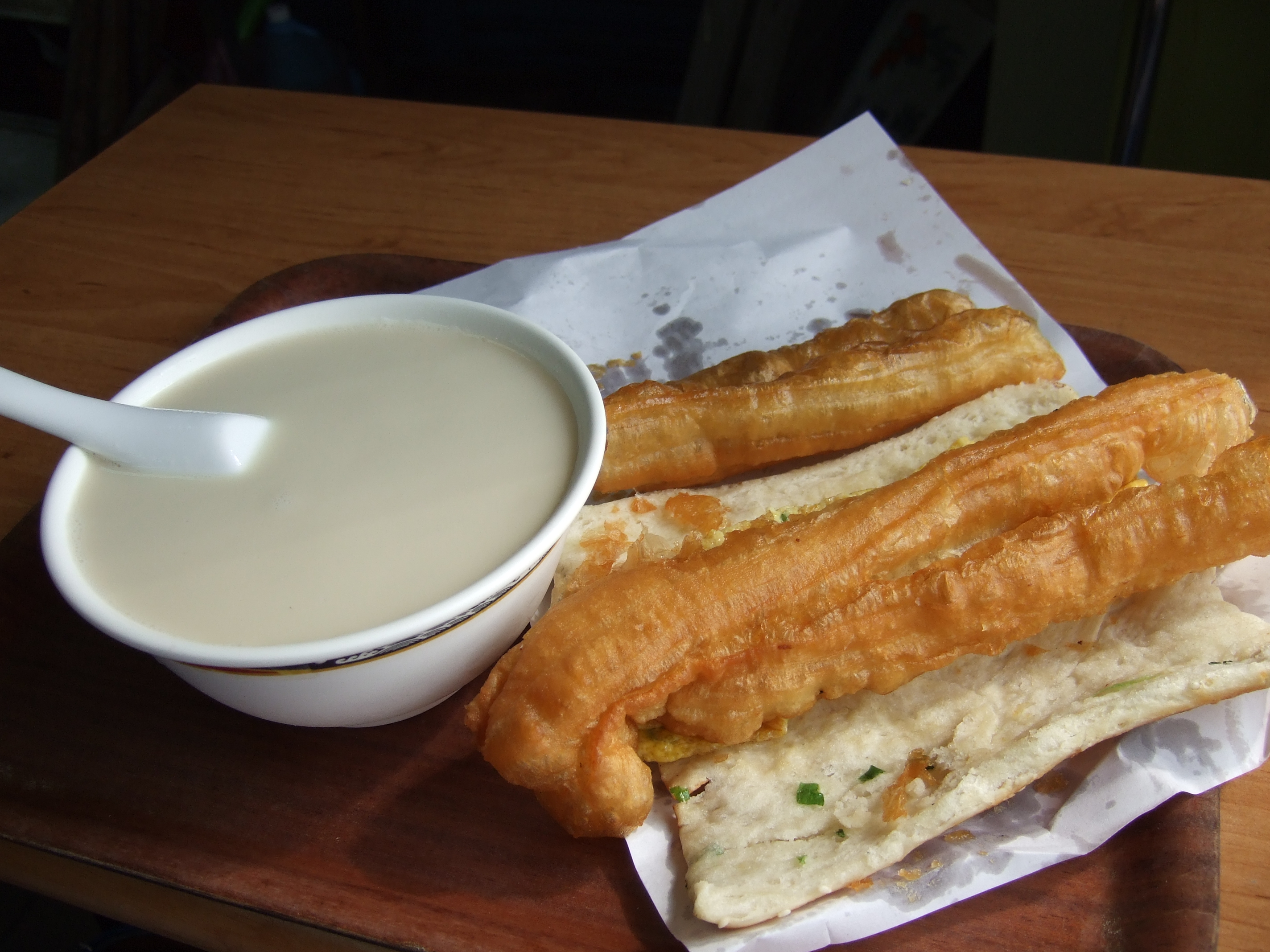
The easiest, most familiar breakfast on this list — youtiao are crispy fried dough sticks (the Chinese cruller), hollow and soft inside, crunchy outside, paired with fresh hot soy milk (doujiang) that comes sweet or savoury. The traditional move is to tear the youtiao and dunk it into the soy milk, so the dough soaks up a little and the texture shifts instantly. You'll find it at stalls and breakfast shops all over the city and in the morning markets. It's the perfect starting point if you're not ready for anything as bold as oil tea — tasty, filling and nothing to be nervous about.
Guangxi is Zhuang country, and the Zhuang are masters of sticky rice — so several breakfast items are built on it. Ciba (糍粑) is glutinous rice pounded until chewy, shaped into cakes and rolled in sweet ground beans or grilled over flame until fragrant, eaten warm in the morning. The other is zongzi (粽子), sticky rice wrapped in bamboo leaves around pork belly, mung bean or salted egg, steamed until it smells of the leaf — easy to unwrap and carry as you walk and sightsee. Some stalls also sell the famous five-colour sticky rice (五色糯米饭), dyed with natural plants. It's hearty, filling and properly local.
6
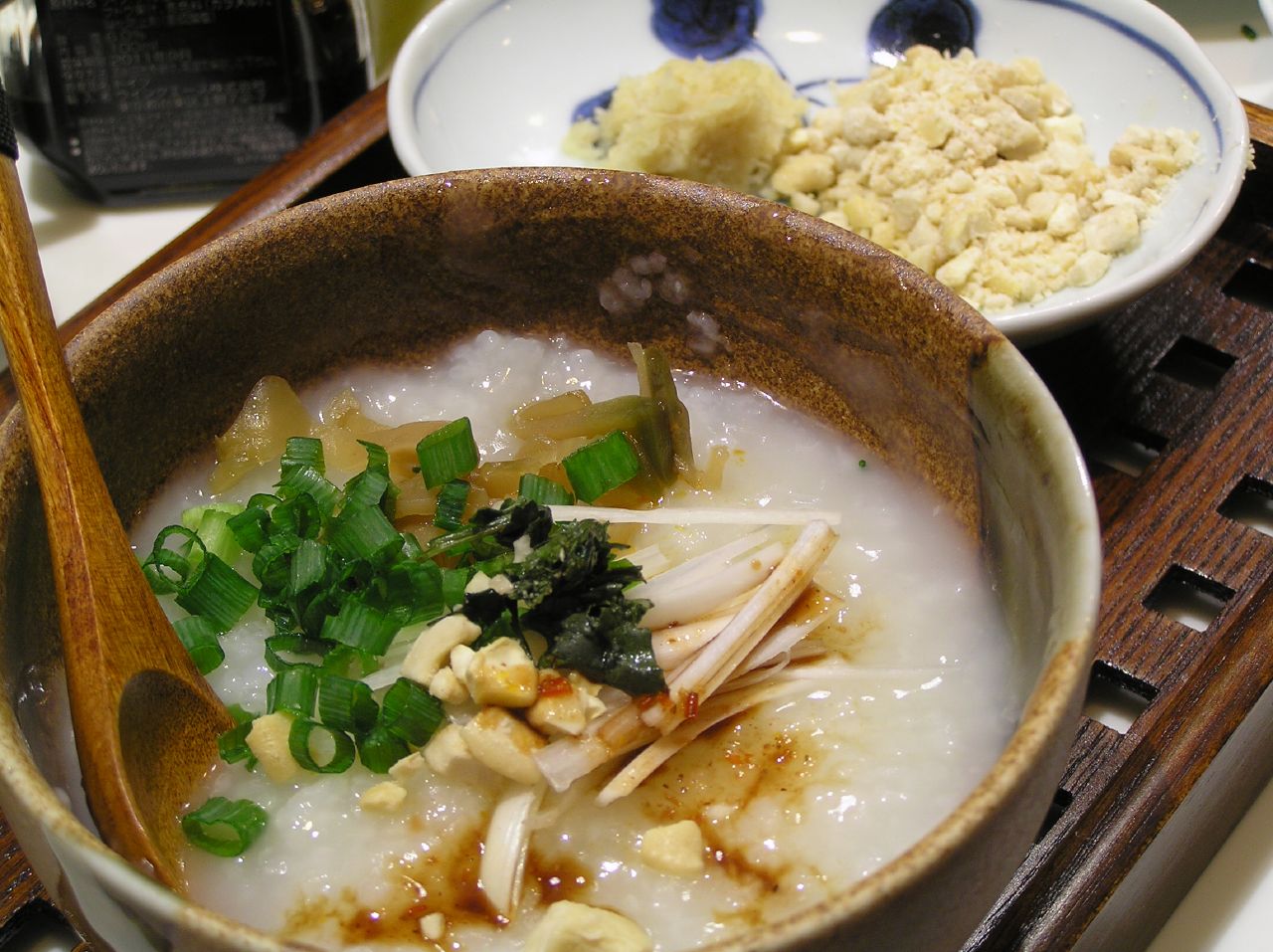
On a morning when you want to start light and warm, congee is the answer — rice simmered until smooth and thick. There's plain white congee (白粥) eaten with salty sides like salted egg, pickles and fermented tofu, and versions cooked with ingredients such as lettuce congee (生菜粥), minced-pork congee, or Li River fish congee made with fresh river fish. It's clear, light, not spicy and easy on the stomach — ideal for a morning that isn't ready for anything heavy, or for anyone who doesn't do chilli. Many noodle shops sell congee alongside, and it pairs well with a crispy youtiao.
While you're walking around looking for a noodle shop, there are roadside nibbles that Guangxi people are hooked on — sour pickles (酸嘢), seasonal fruit and vegetables (mango, guava, cucumber) pickled in vinegar, chilli, salt and ginger, sour-spicy-crunchy and a great wake-up that gets the appetite going in the morning. And water-chestnut cake (马蹄糕), made from water-chestnut flour steamed into translucent springy squares and drizzled with osmanthus honey, cool and refreshing. Both have dedicated stalls along Binjiang Road and in the morning markets, a few yuan a cup — a morning bite that captures the Guangxi palate well.
There's more to Guilin rice noodles than meets the eye — each shop's secret gravy, how the crispy pork is made, what's on the pickle bar, the difference between ordering dry and soup, and why these are not Liuzhou's snail noodles. We've written a separate full guide because the noodle bowl really is the heart of breakfast in Guilin. If you want to understand the morning bowl in depth, read on.
Good noodle and breakfast shops are open 06.00–09.00 and then the gravy runs out — worth knowing before you head out.
The heart of Guilin breakfast — Zhengyang Pedestrian Street (正阳步行街), Yiren Road and the East-West Lanes (东西巷) hold the densest cluster of noodle and breakfast shops. The well-known Chongshan (崇善米粉), a chain going since 1986, has a branch near Zhengyang Street; it's easy to order and within walking distance of many central hotels — a good bet for your first morning before you know your way around.
Jiefang West Road is home to Youyi Xuan (又一轩), the legendary horse-meat noodle shop open since 1896, serving the tiny bowls you work through several at a time. It's breakfast with a side of city history. The lanes around here also hide an old oil-tea shop next to the vegetable market, where locals eat at very local prices.
On the east bank near Seven Star Park (七星公园) sits Laodongjiang (老东江), the noodle shop locals will tell you has thicker, more fragrant gravy and more generous meat. The flagship is over by Shijiayuan Road, packed from morning till night. Handy if you're staying on the east side or planning a morning walk in Seven Star Park anyway — grab a bowl first.
The best Guilin noodles often aren't in the big shops — they're tucked into stalls in the lanes near where you're staying and in the morning markets. Look for the stall where locals are queuing and packed in over breakfast; that's your sign. Order by pointing at a neighbour's bowl and nodding. Wake up late? Lean on a 24-hour shop like Renli (人立米粉), open round the clock.
Most noodle shops and morning stalls open 06.00–06.30. The best window is 07.00–09.00 — the braised gravy is freshly simmered and most fragrant, the toppings are all in stock and locals are filling the shops. Many shops sell out of gravy and close before noon. If you wake up late, lean on chains or a 24-hour shop like Renli (人立米粉) that stays open all day.
Guilin noodles are ordered by the weight of the noodles, not by the bowl. Say erliang (二两) for about 100 grams for a normal serving, or sanliang (三两) for 150 grams if you're hungry. Say it at the counter when you order and they'll blanch and dress the noodles accordingly. Toppings and broth are free to add yourself at the bar.
Plenty of first-timers pour the broth in straight away and wonder why it's underwhelming — the secret is to toss the noodles dry until the gravy coats every strand, add pickles, fried beans and chilli from the bar, eat half the bowl dry, then ladle in the free bone broth at the end to drink it as a soup. Two textures in one bowl. That's how Guilin people actually eat it.
Noodle shops, market stalls and small breakfast spots mostly don't take credit cards, and some take no cash at all — you'll need Alipay or WeChat Pay. Download Alipay before your trip and link a Visa/Mastercard through its international mode. Get this sorted while you're still at your hotel and the mornings are far smoother.
Most noodle shops have no English menu, but pointing at someone else's bowl and nodding works fine, or show the Chinese names from this page (e.g. 桂林米粉 rice noodles · 油茶 oil tea · 豆浆 soy milk). Some shops have photos on the wall to point at. Vendors are used to travellers — don't be shy. Be brave enough to point and you'll eat well.
Want more? We have a separate guide for each — start with whatever you most want to eat.