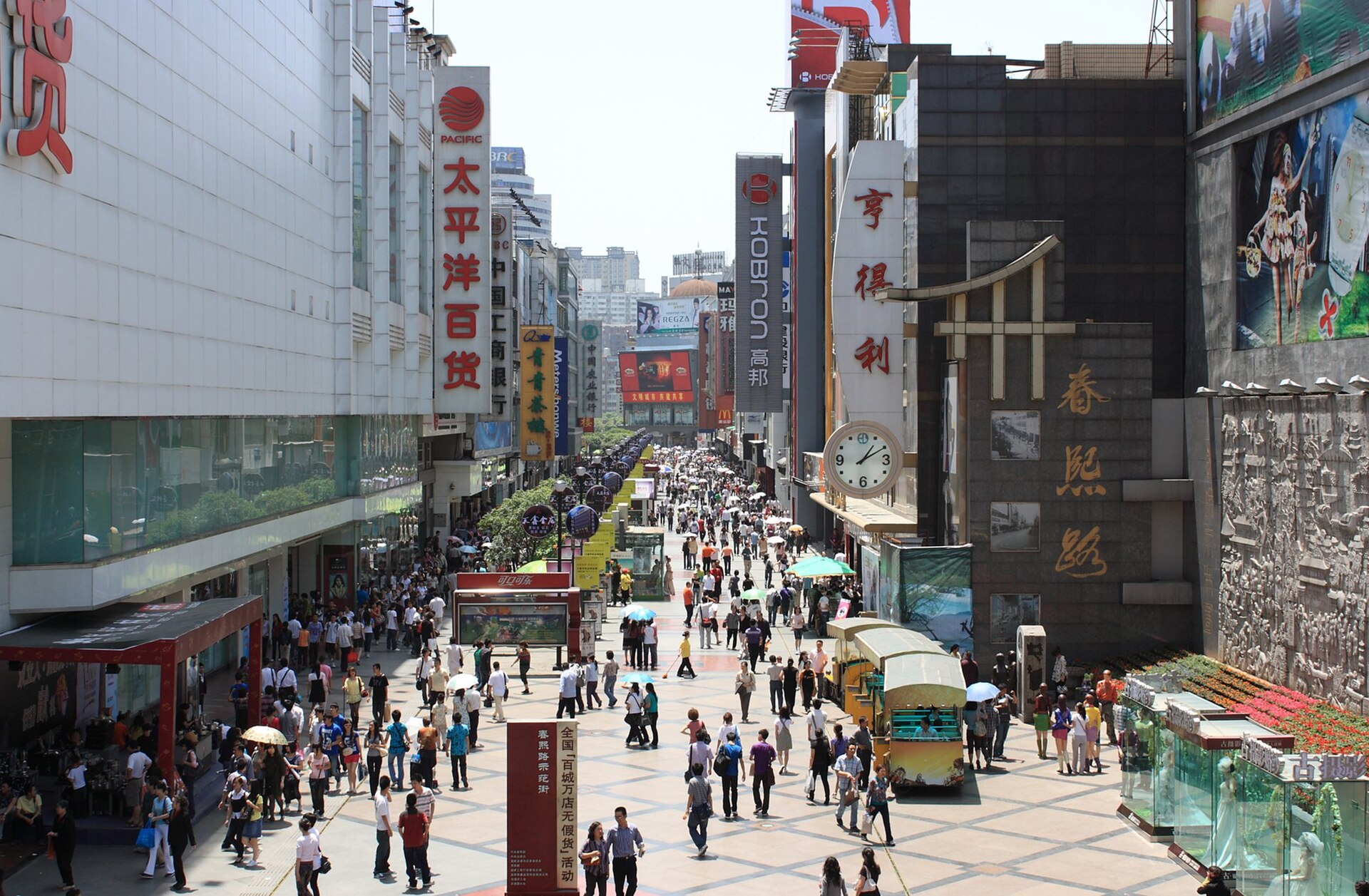
A city famous for its slow life has quietly become one of the biggest coffee scenes in China. Courtyard cafés in old Yulin lanes, specialty roasters by the river, and seriously good coffee at gentler prices than Shanghai — this is where coffee and tea live side by side better than anywhere else in the country.
Picture an old lane in the Yulin district. The original concrete walls still carry trailing osmanthus; a few steps on, the smell of roasting beans drifts out of a doorway no wider than a wardrobe. The owner is pulling a pour-over behind a wooden counter, and a couple of locals are sipping flat whites in the afternoon sun on the pavement outside — exactly the posture their parents held over tea in a teahouse a generation ago. That image tells you almost everything about Chengdu: a city with slowness in its blood.
It surprises people, because Chengdu is the capital of China's tea culture. But the recent numbers are clear — Chengdu is now one of the largest coffee cities in China, second only to Shanghai, and in 2024 it added almost 2,000 new cafés in a single year, ranking third nationally for new openings. Walk through Yulin or along Wangping Street and you will pass cafés in an almost unbroken line.
That coffee fits Chengdu so well is no accident. The city's prized slow life — the habit of sitting for hours with nowhere to be — is the same instinct that once filled the teahouses all afternoon. Younger residents took to coffee naturally because it asks the same thing of you: stay, and take your time. Coffee has not pushed the teahouse out. It has pulled up a chair beside it — and in this city, you get to try both in a single day.
An old district of courtyard cafés, and a polished one with the city's flagship roasters.
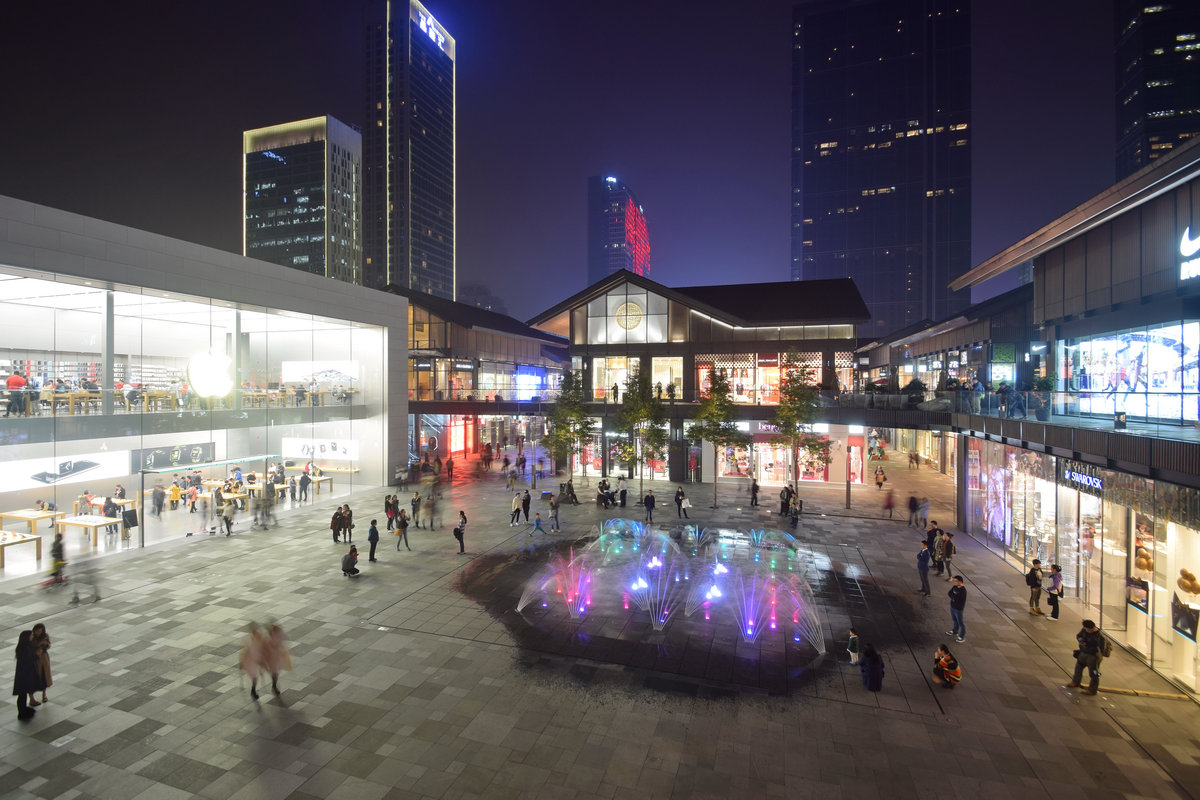
Chengdu's coffee scene splits cleanly into two poles. One is Yulin (玉林), an old neighbourhood in the south of the city: narrow lanes, low houses, ivy-covered concrete walls, and hole-in-the-wall cafés one after another. Locals call it the heart of the city's easy-going life, and it is the most honest place to feel Chengdu's slow rhythm. The other pole is Taikoo Li (太古里), the upscale shopping quarter beside Daci Temple, home to flagship cafés like % Arabica and The Sense.
Beyond the two main districts there is Kuanzhai Alley (宽窄巷子), the historic tourist quarter where Qing-dynasty Sichuan courtyard houses have been turned into cafés — beautiful, but busy with visitors — and Wangping Street (望平街), a roughly 500-metre strip along the Fu River on the east side of the city, lined with quiet independent cafés, bookshops, and the kind of places Chengdu locals actually sit in.
Chengdu's cafés fall into distinct categories. Understanding them before you go means choosing the right mood for the day.
This is what sets Chengdu apart. Cafés that turn an old house or a lane courtyard into a place to sip coffee in the gentle sun. Yulin has the most of them — Yard Coffee (院子) is a good example, folding the city's energy into the calm of a small courtyard where you can sit out the whole afternoon. It is Chengdu's slow life, reinterpreted in coffee form.
The heart of Chengdu's specialty scene — owner-operators who think hard about farm provenance, varietal and roast profile. The Sense (醒食) at Taikoo Li was founded by Jeremy Zhang, China Barista Champion in 2014 and 2016, and rotates single-origin producers every month. Dopamina+ is known for a pour-over menu drawn from roasters around the world, and is regularly named among the cafés coffee people across China talk about.
When you want good coffee without lingering, the local chains are the answer. Luckin Coffee is on almost every corner, from ¥9–15 with app discounts. Manner Coffee, born in Shanghai, has expanded heavily into Chengdu with a genuinely good oat-milk latte for under ¥20. There is Cotti too, and the slightly more design-led M Stand. This is the coffee that got the whole country hooked — good quality at a price that makes it a daily habit.
Wangping Street (望平街) runs about 500 metres along the Fu River, and it is a strip of independent cafés that Chengdu locals genuinely frequent — not just visitors. Old wooden buildings outside, stylish cafés, bookshops and craft stores within. Xiaozhong Coffee (小众咖啡) is one of the specialty spots people here favour. The street is calm by day and good for working; come evening it turns into a small, lively night market.
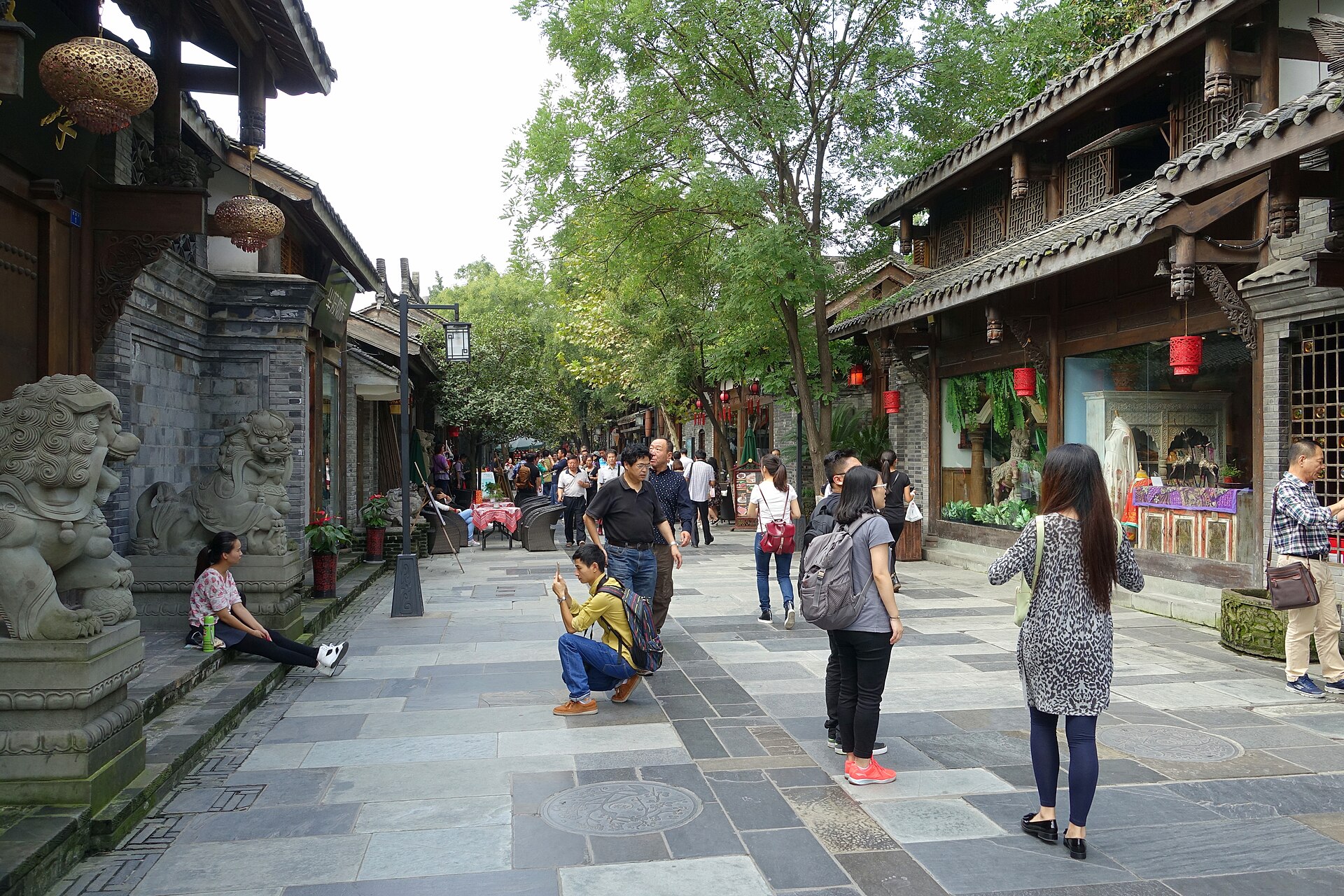
Kuanzhai Alley (宽窄巷子) is Chengdu's classic heritage quarter — rows of Qing-dynasty Sichuan courtyard houses, grey brick walls and carved wooden doors, many of them now cafés that use the inner courtyard for seating. The setting is gorgeous, pure old Chengdu, and perfect for a coffee before or after exploring the lanes. The caveat: it is busy with tourists and pricier than other districts. Come early for the best of it.
Chengdu has its share of cafés designed for the camera — but where the coffee holds up alongside the look. Dongjiao Memory (东郊记忆), a former factory turned arts complex, has stylish spots like Old Speak & Co. Common Sense runs several branches across Tongzilin, Chunxi Road and Yulin, known for flavoured lattes and baking. Some are a gallery downstairs with a café above — a good bet if you want strong coffee and a good backdrop in one stop.
Four areas every coffee lover should know — each one a different experience.
The coffee crowd's number one in Chengdu — old lanes, low houses, ivy-covered walls and hole-in-the-wall cafés one after another. Yulin Fourth Alley has photogenic pastel-walled spots; Yard Coffee (院子) uses a courtyard for seating, where you can sit in the sun all afternoon. This is the most direct way to feel Chengdu's easy pace, and it is an easy stroll from one café to the next.
The upscale shopping quarter beside Daci Temple that gathers some of the country's flagship cafés. The % Arabica branch at Taikoo Li was designed to feel like a little neighbourhood and is reckoned one of the prettiest in China. The Sense (醒食), from barista champion Jeremy Zhang, is here too, serving single-origin coffee alongside its own in-house baking. Prices run higher than other districts, but the quality and setting earn it.
A short riverside strip of about 500 metres that has become a favourite for Chengdu locals rather than tourists. Old wooden buildings on the outside, stylish cafés, bookshops and craft stores within. Xiaozhong Coffee (小众咖啡) is a specialty spot people here like. It is calm and good for working by day; after dark it becomes a small night market — so you can linger from coffee straight through to street snacks.
Chengdu's classic heritage quarter: Qing-dynasty Sichuan courtyard houses, grey brick walls and carved wooden doors, many turned into cafés that seat you in the inner courtyard. The look is pure old Chengdu and very photogenic — ideal before or after walking the lanes. The trade-off is the crowds and higher prices; come early for the best atmosphere.
These have genuine reputations in the scene — check current hours and exact location on WeChat or maps before you go.
% Arabica is a name coffee lovers across Asia know well, and its Taikoo Li branch in Chengdu was designed by its architects to feel like a small neighbourhood — clean white counters, baristas pulling shots with real care. It is widely called one of the prettiest branches in China. People come for a properly good flat white and pour-over, not just the photo.
The Sense was founded by Jeremy Zhang, one of the biggest names in Chinese coffee — a two-time China Barista Champion (2014 and 2016) and the person behind the M2M roasting brand, which roasts over a thousand tonnes of coffee a year. The shop pours blends from light to dark with full tasting notes, rotating a different producer each month, and bakes its own French-style breads and pastries in-house — the Fougasse here is something special.
Dopamina+ sits a few kilometres out of the city centre, in a building that once housed the Five Elephant roastery. Its draw is a pour-over menu of beans selected from a range of roasters around the world — a paradise for anyone serious about a single cup. It is regularly named one of the favourite coffee shops in all of China. If you want to see how far Chengdu's specialty coffee can go, this is the answer — well worth the short taxi ride out.
Yard Coffee is the best example of the Chengdu courtyard café — it turns a Yulin courtyard into open-air seating, blending the city's buzz with the calm of a small yard. People come to sit in the soft sun for the whole afternoon, read, talk with friends. It is the city's slow life rendered in coffee. If you want to understand why Chengdu loves cafés the way it does, spend an afternoon here.
Two names Chengdu locals treat as their regulars. Wild Pigeons is known for quality single-origin beans alongside its own croissants and baguettes. Common Sense runs several branches — Tongzilin, Chunxi Road and Yulin — strong on flavoured lattes, Americanos and bakes like pound cake and canelé. Both are mid-priced and reliably consistent, the easy, no-regret choice when you are in their part of town.
Kuanzhai Alley (宽窄巷子) — old Sichuan courtyard houses, many now cafés that seat you in the inner courtyard · district scene
From straight-up specialty coffee to the Chinese-style drinks you can find in this city.
If you came to Chengdu for the specialty scene, start with a single-origin pour-over. Cafés like Dopamina+ and The Sense carry beans from Ethiopia, Kenya and Colombia, each tasting clearly different — from bright fruit to deep chocolate. Tell the barista the kind of flavour you like and they will steer you to the right bean. It is the best way to get to know this city's coffee.
The cup that got the whole country hooked is the oat-milk latte from chains like Manner and Luckin — smooth, lightly sweet, good well beyond its under-¥20 price. It is the perfect morning cup before you head out sightseeing; order through the app for a discount and skip the queue. A great starting point if you are not yet ready to pay specialty prices but still want a genuinely good coffee.
The wave of tea- and flower-infused coffee that started in Shanghai has reached Chengdu. Plenty of specialty cafés offer an Osmanthus Latte or a fragrant Jasmine Latte; some play with oolong or local Sichuan teas. Osmanthus is a scent Chengdu people have known since childhood — especially around September to November when the flower blooms. It is a drink that tells the story of the city in a single cup.
Many of Chengdu's specialty cafés bake their own. The Sense turns out French-style breads and pastries — a Fougasse and croissant that genuinely deliver. Common Sense is known for its pound cake and canelé; Wild Pigeons for fresh croissants and baguettes. Bakes run about ¥20–45 each. Pair one with a black coffee or a flat white and settle in for the afternoon — this is how you do a café the Chengdu way: no rush, no hurry.
What makes Chengdu special among China's coffee cities is that it never let go of the old — teahouses and cafés live side by side in the same city. In Yulin you will see young residents over a pour-over in a courtyard café while, not far away, their parents' generation plays mahjong in a traditional teahouse. Both groups are doing the same thing: spending time slowly, with no hurry at all.
If you come to Chengdu, we suggest doing both in one trip. A specialty coffee in Yulin in the morning, then an afternoon at Heming Teahouse in People's Park — bamboo chairs, gaiwan tea and the famous ear-cleaning service, a way of relaxing that has belonged to Chengdu long before coffee arrived. Both tell the same story about the heart of this city: the art of living slowly.
Chengdu is an almost entirely cashless city — small spots in the Yulin or Wangping alleys may only take WeChat Pay or Alipay. Before you travel, set up Alipay and link a Visa or Mastercard via its international mode (it works for visitors now · see our China payments guide).
The best window for walking the Yulin café streets is a weekday morning, roughly 9 to 11.30 am — the courtyard cafés catch lovely light and are not yet busy. Weekend afternoons are the busiest stretch, especially the photogenic spots in Yulin Fourth Alley and the cafés inside Kuanzhai Alley.
Chengdu is an easy city to walk, and most café districts sit close to a Metro station — pairing the Metro with your own two feet beats a taxi in rush hour. If you need a VPN for general internet use in China, set it up before you travel — see our China internet & VPN guide.
Chunxi Road & Taikoo Li — central Chengdu, the shopping district that holds flagship cafés like % Arabica and The Sense · district scene
A base around Chunxi Road / Taikoo Li or Yulin puts good cafés within a few minutes' walk.