Home Chengdu China Chengdu Food Guide About
Home  ›  China  ›  Chengdu  ›  Breakfast Guide
🌶️ Chengdu Breakfast Guide · 2026

Breakfast in Chengdu
The spicy morning bowl locals wake up for

Forget the bland congee. In Chengdu, the morning starts with noodles that tingle the tongue, wontons glossy with red chili oil, and a hot bowl of intestine soup dunked with crisp flatbread. One meal, ¥8–20, and you are wide awake for the day.

Why Chengdu mornings are different

Here, breakfast is spicy — and that is the joy

You have probably done it: travelled to China, woken up, eaten the hotel breakfast and got the same congee, boiled eggs and toast you would get anywhere. In Chengdu, that is a missed opportunity. This is the capital of Sichuan cooking, and breakfast here is as bold as every other meal — noodles slicked with chili oil, dumplings swimming in sweet-spicy soy, and bowls of soup that smell of Sichuan peppercorn from across the room.

Picture a small noodle shop at seven in the morning, every stool taken by people bent over their bowls, the cook ladling sauce from a row of a dozen tins beside the wok. This is yānhuǒqì (烟火气) — the smoke, the chatter and the steaming bowl that Chengdu people talk about as the real texture of daily life. It happens on the pavement, not in a buffet hall.

This page walks you through the Chengdu morning bowl one dish at a time, plainly: what it tastes like, how spicy it really is, how to eat it, where to find it, and how to order if heat is not your thing. Bold flavour is the default here, but there is always a way through.

The Chengdu morning bowl

Numbing-spicy from sunrise — get to know it first

These four are the heart of a Chengdu breakfast. They carry 麻 (má, numbing) from Sichuan peppercorn and 辣 (là, spicy) from chili — together, that is "málà".
Understand "málà" before your first bowl

The signature taste of Chengdu breakfast is málà (麻辣). The 麻 is a cool, fizzing numbness on the tongue from Sichuan peppercorn (花椒 huājiāo); the 辣 is the heat from red chili. Together they are nothing like Thai or Western spicy — it numbs first, then burns. It can surprise you the first time, but plenty of people are hooked by bowl one. Not ready? Just ask for wei la (微辣 = mild).

🍜
Dan Dan Noodles
担担面 · Dàndànmiàn

Dry, numbing-spicy ¥8–15

🌶️
Tian Shui Mian
甜水面 · Tiánshuǐmiàn

Thick, sweet-spicy ¥8–12

🥟
Long Chao Shou
龙抄手 · Lóngchāoshǒu

Wontons, red oil ¥12–20

🍲
Feichang Fen
肥肠粉 · Féichángfěn

Intestine noodle soup ¥12–18

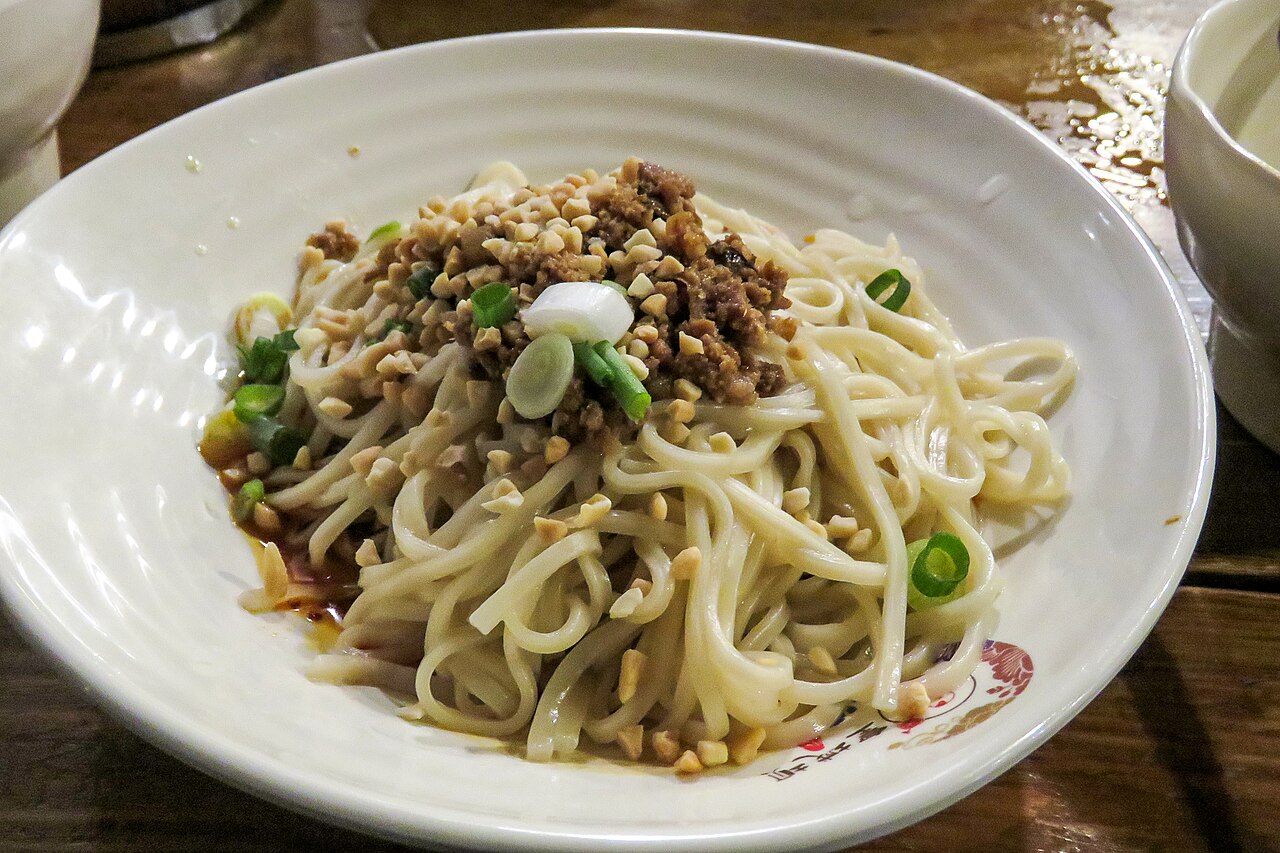
Dan dan noodles in a white bowl, topped with crispy minced pork, crushed peanuts and sliced scallion, with red chili oil pooling at the base 1
Dan Dan Noodles (Dàndànmiàn)
担担面 · dry noodles, chili oil, crispy pork, peanuts

This is the dish that represents Chengdu breakfast more than any other. Wheat noodles are blanched just right, then dressed with Sichuan-peppercorn chili oil, soy and sesame, and topped with crisp fried minced pork, crushed peanuts and preserved 芽菜 (ya cai) vegetable. The original Chengdu version is a dry noodle — only a little sauce sitting at the bottom of the bowl, not the soupy bowl seen abroad. Toss everything so the noodles get coated, and you get salt, fragrance and a gentle numbing tingle all at once. The bowl is small but the flavour fills your mouth.

Tastes like: savoury first, numbing-spicy after, sesame and Sichuan peppercorn
Price: ¥8–15 / bowl (~฿40–75)
How to eat: toss the noodles before eating — the sauce is at the bottom
🌶️2
Tian Shui Mian (Tiánshuǐmiàn)
甜水面 · thick chewy noodles in a sweet-spicy sauce

The name translates as "sweet-water noodles", but there is actually no soup — these are dressed dry noodles. The signature is the noodle itself: hand-cut into thick, square-edged ropes, dense and chewy like udon. They are tossed in a dark-red sauce of sweet soy, chili flakes, minced garlic, ground Sichuan peppercorn and coarse brown sugar, so the flavour is sweet up front and numbing-spicy behind — a profile you rarely meet in other Sichuan dishes. A famous spot is Dong Zi Kou Zhang Lao Er near Wenshu Monastery, a no-frills noodle shack open since 1944. A small bowl, but the taste stays with you.
Tastes like: sweet first, numbing-spicy after, thick chewy noodles
Price: ¥8–12 / bowl (~฿40–60)
Where: old noodle shops near Wenshu Monastery · Kuanzhai Alley
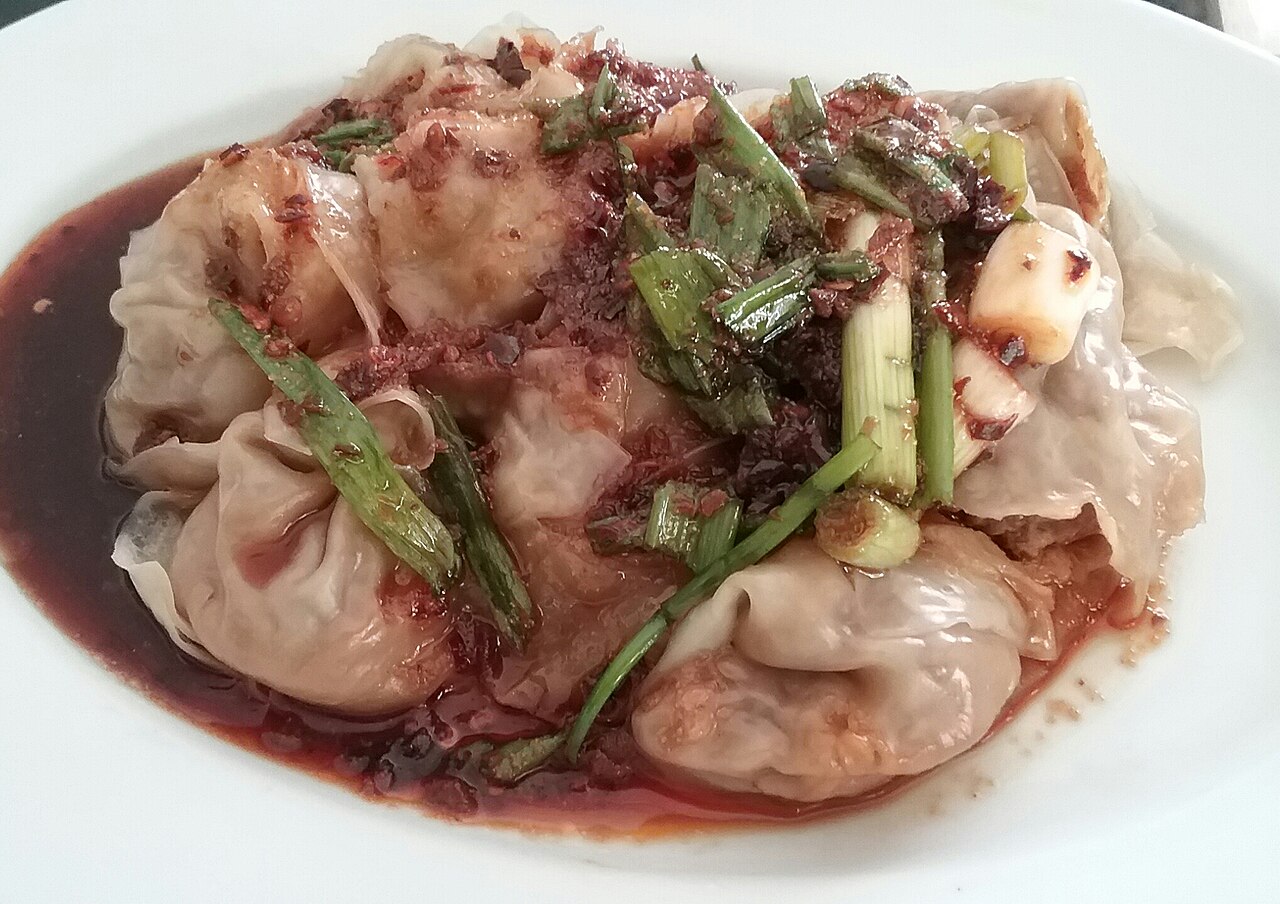
Long chao shou — folded Sichuan wontons on a white plate, glossy with red chili oil and scattered with scallion and ground Sichuan peppercorn 3
Long Chao Shou (Lóngchāoshǒu)
龙抄手 · Sichuan wontons in red chili oil

Sichuanese call wontons "chao shou" (抄手), meaning "folded arms", after the way they are wrapped and tucked. Long Chao Shou is a famous restaurant founded in the 1940s by Zhang Guangwu, and its name became shorthand for the Sichuan wonton itself. The wrapper is very thin, the all-pork filling firm. There are two main styles: clear, in a pork-bone broth, or hong you chao shou (红油抄手), dressed in red chili oil, sweet soy and Sichuan peppercorn. The red-oil version is the morning favourite — slippery wrappers, juicy filling, fragrant oil clinging to every bite.
Where: Long Chao Shou (龙抄手 · main branch on Chunxi Road) · old wonton shops citywide
Price: ¥12–20 / bowl (~฿60–100)
Order: hong you (红油 = dressed in chili oil) for the true Sichuan version
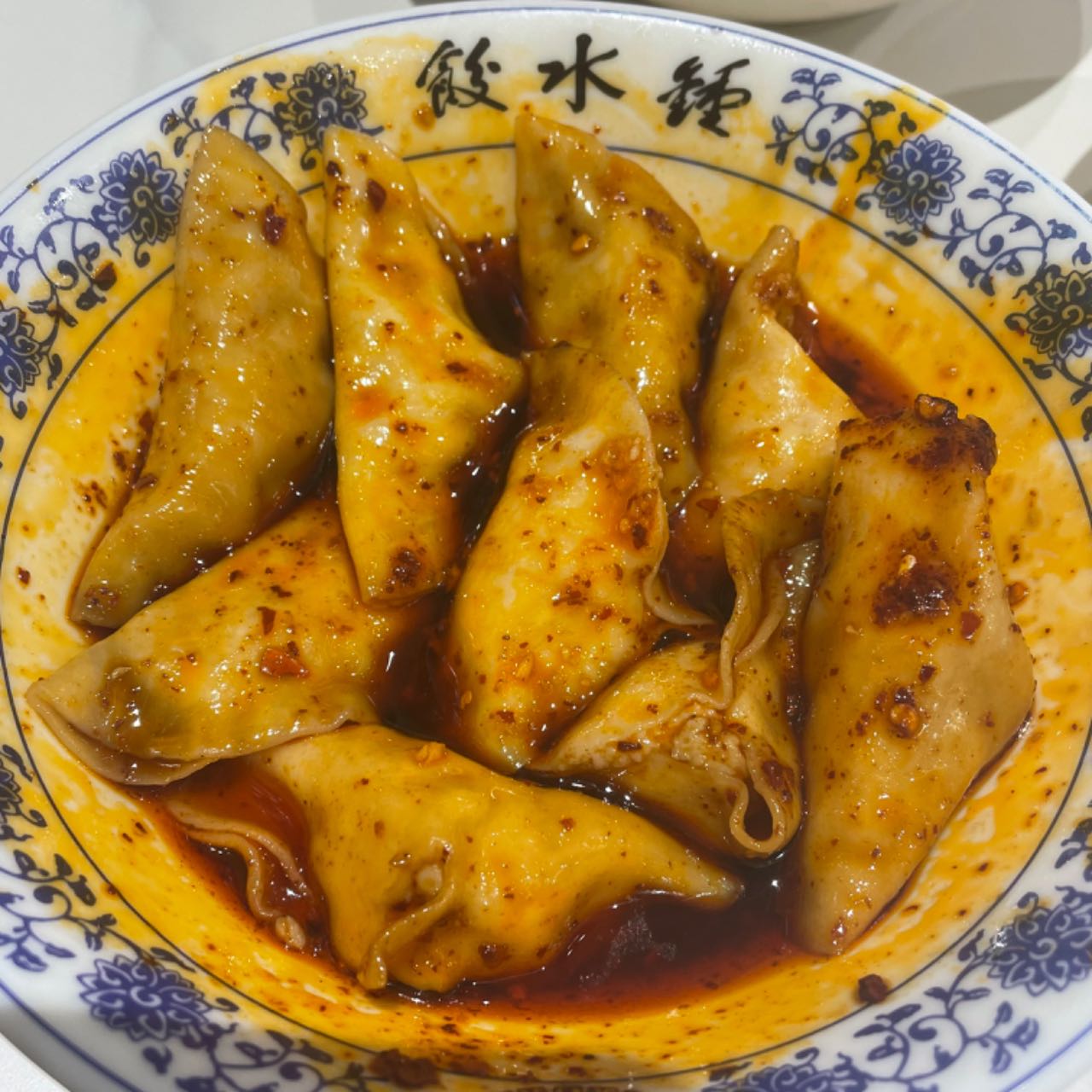
Zhong dumplings — crescent-shaped dumplings in a blue-and-white bowl, coated in red chili oil and sweet soy sauce 4
Zhong Dumplings (Zhōngshuǐjiǎo)
钟水饺 · crescent dumplings in sweet soy and chili oil

Zhong dumplings are one of Chengdu's three most famous snacks, alongside Long Chao Shou. They were created by a man named Zhong Shaobai back in the late 19th century. The dumplings are crescent-shaped, filled with pork only (no vegetable), boiled, then dressed with fuzhi jiangyou (复制酱油) — a special sweet soy simmered with sugar and spices — finished with red chili oil and minced garlic. The result is sweet, fragrant and only mildly spicy. They are easier to eat than they look; Sichuan children eat them too, and they are far gentler than feichang fen.
Where: Zhong Shui Jiao (钟水饺 · old shops near Chunxi/Zongfu Road) · Sichuan snack houses
Price: ¥12–18 / plate of 10 (~฿60–90)
Tastes like: sweet from the simmered soy, only lightly spicy — beginner-friendly
Warm bowls and morning snacks

Intestine noodles, egg cakes and soy milk — the Chengdu morning rounded out

Eat these alongside a bowl of noodles, or on their own — some are spicy, some are not spicy at all.

🍲5
Feichang Fen (Féichángfěn)
肥肠粉 · sweet-potato noodles in pork-intestine soup

If dan dan noodles are the dry bowl, feichang fen is the warming one. The noodles are made from sweet potato — clear, slippery and bouncy — floating in a pork-bone broth that tingles with chili and Sichuan peppercorn, along with braised pork intestine (肥肠) simmered until tender and clean-tasting, plus peanuts, fried soybeans and coriander. Locals pair it with guokui (锅盔), a crisp baked flatbread torn and dunked into the soup to soak up the flavour. Some shops let you add jie zi (节子, knotted intestine). The legendary spot is Gan Ji Feichang Fen (甘记肥肠粉), going strong for over 30 years, with house-made noodles and intestine so clean that regulars queue for it.

Where: Gan Ji Feichang Fen (甘记肥肠粉 · Jinniu district) · feichang fen shops in almost every lane
Price: ¥12–18 / bowl + guokui ¥3–5 (~฿60–90)
Eat with: guokui (锅盔) dunked in the soup · add jie zi if you like
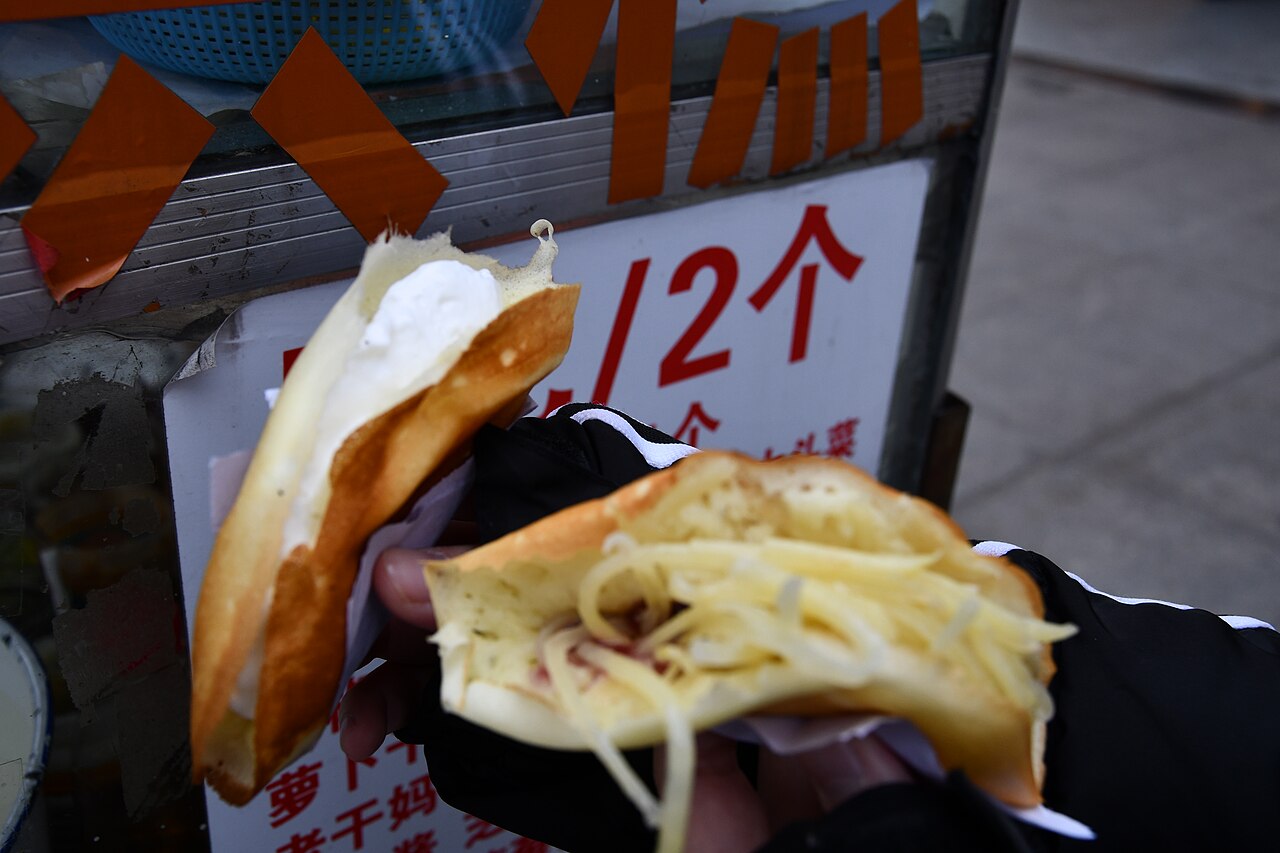
Dan hong gao — two half-moon egg cakes held in hand at a street stall, one with cream filling and one with shredded filling, a price sign reading 2 yuan behind 6
Dan Hong Gao (Dànhōnggāo)
蛋烘糕 · half-moon egg cakes, sweet or savoury

The morning snack Chengdu kids grow up on. A fermented batter of egg and brown sugar is poured into small round brass moulds, baked until the edges crisp and turn fragrant, then folded into a half-moon and filled. Sweet versions take cream, condensed milk, ground nuts or black sesame; savoury ones take pork floss, pickles or chopped sausage. Each is a couple of bites — crisp outside, soft inside, smelling of egg and caramel. They cost just ¥2–4 each. You will spot the carts outside school gates and along the tourist lanes — a non-spicy treat for when you want a break.

Where: carts outside schools · Kuanzhai Alley · Jinli · general morning markets
Price: ¥2–4 / piece (~฿10–20)
Pick a filling: sweet (cream/nuts) or savoury (pork floss) — not spicy
🥛7
Soy Milk + You Tiao (Dòujiāng)
豆浆 + 油条 · warm soy milk with a crisp fried dough stick

Not every Chengdu breakfast is fiery. The gentlest set is hot soy milk (豆浆) with a you tiao (油条), a crisp, hollow fried dough stick. Locals dunk the you tiao into the soy milk and bite — the dough soaks up a little sweetness and the texture changes instantly. Soy milk comes sweet or plain, and you can pair it with a steamed bun or a tea egg. You will find this set at general breakfast shops and chains like Yonghe King. It is a good choice if you want to rest your palate, or ease into the morning before the next round of málà.

Where: breakfast shops citywide · Yonghe King chain (picture menus)
Price: soy milk ¥3–5 + you tiao ¥2–3 (~฿25–40)
Tastes like: not spicy at all — the gentle option for your tongue
🫓8
Guokui (Guōkuī)
锅盔 · crisp baked flatbread, dunked or stuffed

Guokui is a wheat-flour flatbread baked on a griddle and in an oven until crisp outside and soft within — the natural partner to feichang fen, torn into pieces and dunked into the soup. But it is good on its own, too. Chengdu has a famous stuffed version, Juntun guokui (军屯锅盔), packed with seasoned minced pork and Sichuan peppercorn and baked until the crust puffs into flaky layers; one bite gives you both crunch and warm, lightly spicy pork. Some shops do beef and pickled-vegetable fillings too. It is a filling, easy-to-carry bite for a few yuan.

Where: beside feichang fen shops · street bread stalls · tourist lanes
Price: ¥3–8 / piece (~฿15–40)
Try: Juntun guokui (军屯锅盔) with pork — the crust puffs into flaky layers
Breakfast neighbourhoods

Which area to head for that morning

Each area has its own strength — knowing before you set out saves you time.

Chunxi Road & Zongfu Road
春熙路 · Metro Line 2/3, Chunxi Road station

The downtown where the legendary names sit — the main Long Chao Shou (龙抄手) branch and Zhong Shui Jiao (钟水饺) are both in this area, a few minutes' walk from the station. Ideal if you want to try Sichuan wontons and classic snacks in one spot. These restaurants open into the afternoon, so there is no rush like with the street stalls.

Best for: Long Chao Shou · Zhong dumplings · Sichuan snacks · Hours: from 7.00 am
Wenshu Monastery
文殊院 · Metro Line 1, Wenshu Monastery station

The streets around Wenshu Monastery are an old food quarter where locals actually eat. Decades-old tian shui mian and feichang fen shops are scattered down the lanes. On a weekday morning they are packed, almost entirely with Chengdu people, and the quiet temple nearby makes the meal feel special.

Best for: tian shui mian · feichang fen · morning noodles · Hours: 6.30–10.00 am
Kuanzhai Alley
宽窄巷子 · Metro Line 4, Kuanzhai Alley station

The "wide and narrow" alleys that every visitor knows. Early, before the crowds, there are stalls lined up selling dan hong gao, guokui and Sichuan snacks. Good if you want to eat as you stroll the old lanes. To be honest, prices run a little higher than the back-lane local shops because it is a tourist quarter — but it is convenient and very photogenic.

Best for: dan hong gao · guokui · snacks to walk with · Hours: from 8.30 am (come before the crowds)
Your own neighbourhood & back lanes
社区 · near hotels and wet markets in each district

The secret of Chengdu breakfast is that the best noodle and feichang fen shops are usually tiny places in residential lanes, with no English sign. Step out of your hotel around seven and look for the shop where locals are crowded over their bowls — that is the signal it is good. Point at the menu, or at a neighbour's bowl, and you are sorted.

Best for: dan dan noodles · feichang fen · the real thing at local prices · Hours: 6.30–9.30 am
Before you go

Tips worth knowing before you set out

🌶️
How to order if you cannot take heat

Bold is the default in Chengdu. If you do not want it fierce, remember three phrases: wei la (微辣 = mild) · bu yao la (不要辣 = no chili) · bu yao huajiao (不要花椒 = no Sichuan peppercorn). The peppercorn is what makes your tongue go numb, and some people dislike the numbness more than the heat — you can leave it out separately. Honestly, non-spicy food is harder to find here than in most cities, but most shops are happy to adjust.

📱
Use Alipay or WeChat Pay

Most breakfast shops and stalls do not take credit cards, and some take no cash at all — you need Alipay or WeChat Pay. Download Alipay before you travel and link a Visa or Mastercard through its international visitor mode; this step makes everything much easier. Famous spots like the main Long Chao Shou branch and the Yonghe King chain usually have picture menus and take cards.

👆
Point and order — no Chinese needed

Most local breakfast shops have no English menu, but you can point at a neighbour's bowl and nod, or show the Chinese name from this page. Feichang fen and noodle shops often have photos on the wall or a price board. The cooks are used to visitors — no need to feel shy.

Chengdu wakes up late — seven is the sweet spot

Chengdu is famous for its slow, easy pace, so breakfast is busiest from 7.00 to 9.00 am — no need to be up at five like at Shanghai's morning markets. Many famous shops stay open into the afternoon or all day, but the produce and the freshly simmered broth are at their best in the morning, and the room is full of locals eating before work.

🥛
There is always a non-spicy option

If you want to rest your palate, order soy milk with you tiao, a sweet-filled dan hong gao, or a steamed bun. None of these are spicy, and they are everywhere. Alternating — one spicy bowl, one gentle bite — is a good way to explore Chengdu food without burning your tongue out.

Frequently asked

FAQ · before you go hunting for breakfast in Chengdu

Is Chengdu breakfast spicy for everything?
Most of it is bold and genuinely chili-laced, but not everything is fiery. Dan dan noodles and feichang fen arrive with red chili oil and Sichuan peppercorn, which adds a numbing tingle (麻 má). Tian shui mian is sweet first, spicy second. Soy milk, you tiao, sweet-filled dan hong gao and some guokui are not spicy at all. If you cannot take heat, ask for wei la (微辣 = mild) or bu yao la (不要辣 = no chili). Honestly, finding non-spicy food in Chengdu is harder than in most cities, but stalls are happy to adjust.
How much does a Chengdu breakfast cost?
Chengdu breakfast is very cheap. A bowl of dan dan noodles runs ¥8–15 (~฿40–75). Tian shui mian is ¥8–12. Long chao shou or Zhong dumplings cost ¥12–20. A bowl of feichang fen is ¥12–18. Dan hong gao egg cakes are ¥2–4 each. Soy milk is ¥3–5. If you sample several things across one morning, expect to spend ¥25–40 per person (~฿125–200).
How do I pay for breakfast in Chengdu?
Most breakfast shops and stalls accept WeChat Pay or Alipay only. A few old-school places still take cash in RMB, but this is increasingly rare. Download Alipay before you arrive and link a Visa or Mastercard using its international visitor mode. Famous spots like the main Long Chao Shou branch and long-running feichang fen shops usually have picture menus you can point at.
How early should I arrive for Chengdu breakfast?
Most noodle and feichang fen shops open between 6.30 and 7.00 am and are busiest from 7.00 to 9.00 am, when locals eat before work. Chengdu wakes up a little later than the coastal cities. Many famous shops stay open into the afternoon or all day, unlike Shanghai's street stalls that sell out fast — but the broth is freshest and best in the morning.
What is feichang fen and how do I eat it?
Feichang fen (肥肠粉) is chewy sweet-potato noodles in a pork-bone broth tingling with chili and Sichuan peppercorn, topped with tender braised pork intestine, peanuts, fried soybeans and coriander, finished with a ladle of red oil. Locals eat it with guokui (锅盔), a crisp baked flatbread you tear and dunk into the soup. Some shops let you add jie zi (节子, knotted intestine). The famous spot is Gan Ji Feichang Fen (甘记肥肠粉), going strong for over 30 years. A non-spicy version is hard to get here, so ask ahead if you want it mild.
Klook · Chengdu Food Tour

Chengdu Food Tour with a Local Guide

Get taken to the noodle shops Chengdu people actually eat at — dan dan noodles, feichang fen, red-oil wontons that locals queue for. No worrying about the language, no guessing which shop is good or how spicy it will be.

See Chengdu Food Tours on Klook →
Wherebest is a Klook affiliate partner — we may earn a commission when you book through our link, at no extra cost to you.