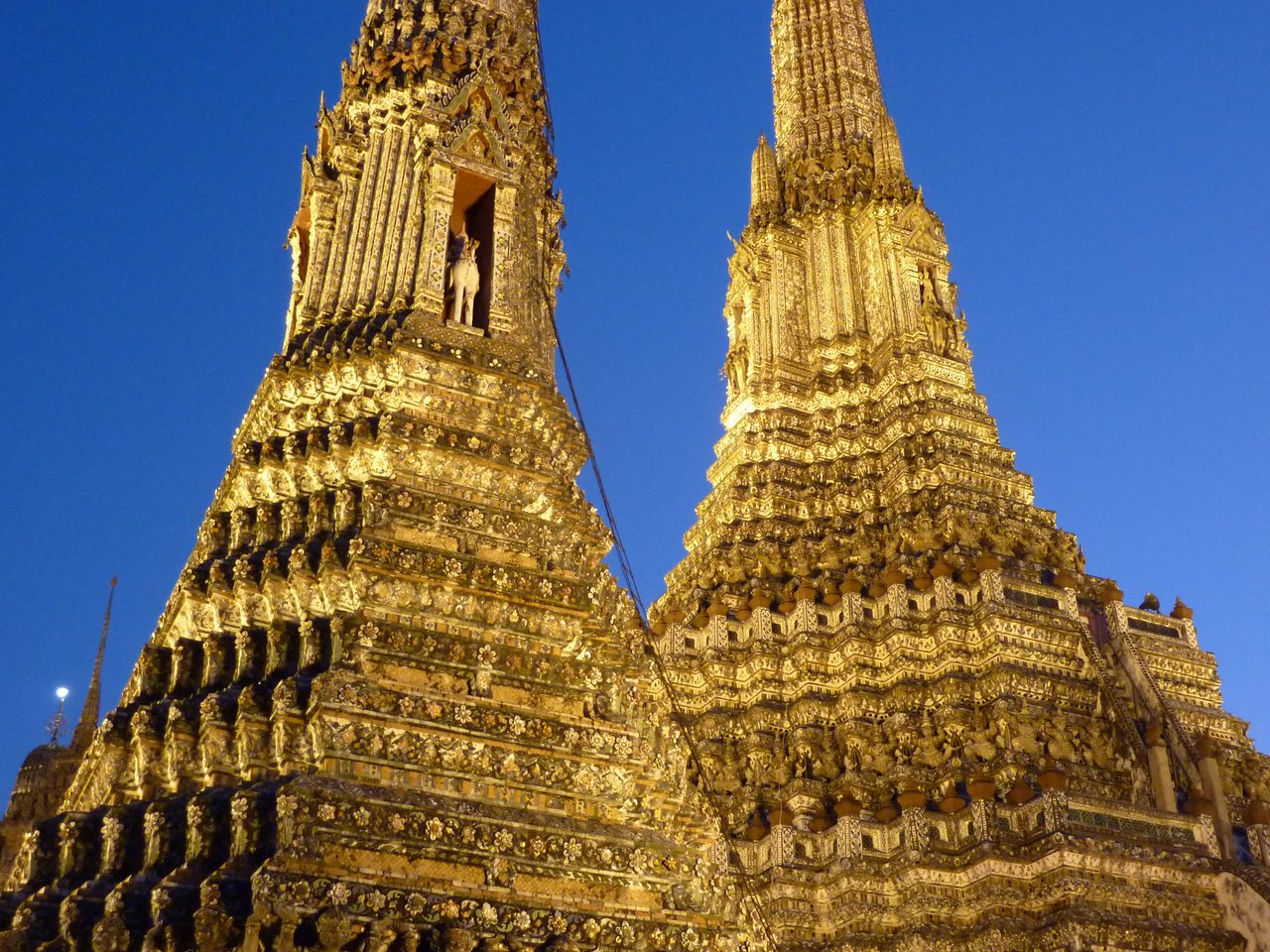
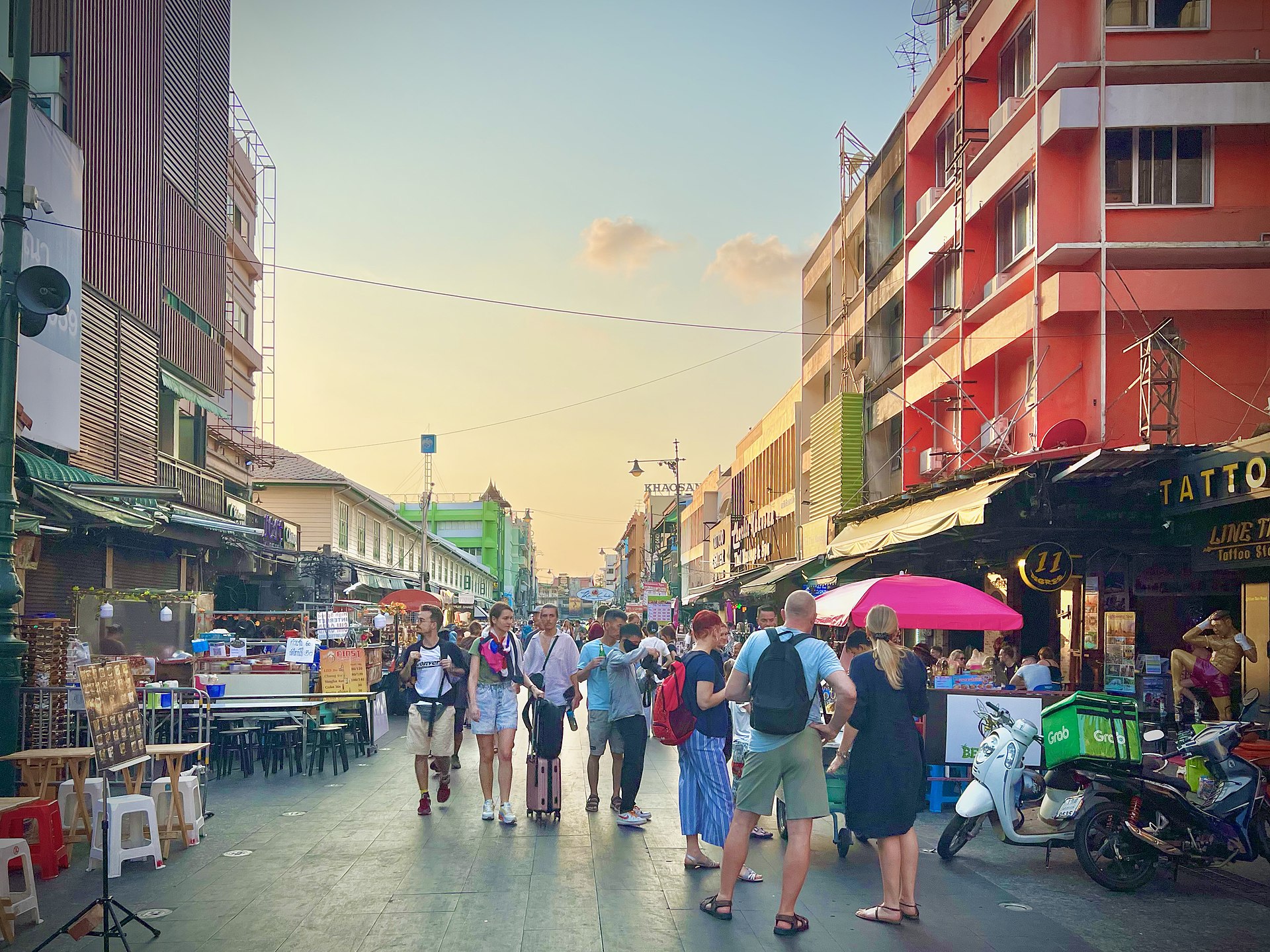
If Sukhumvit is modern Bangkok, the Old Town on Rattanakosin Island is where the city began — the Grand Palace, Wat Phra Kaew, Wat Pho, Wat Arun across the river and Khao San Road, all packed onto one small island by the Chao Phraya that you can explore on foot and by boat.
Picture a Bangkok with no glass towers and no malls — only golden temple roofs, white palace walls, old shophouses along the road, and a river crowded with boats. That is the Old Town, or Rattanakosin Island (the Phra Nakhon district), the spot where Bangkok was founded more than two hundred years ago. This small island, wrapped by the Chao Phraya on one side and a moat-canal on the other, holds the Grand Palace, the most important temples in the country, and the world-famous backpacker strip of Khao San Road.
The heart of it for visitors sits close enough to walk. It starts at the Grand Palace and Wat Phra Kaew at the centre of the island, continues to Wat Pho just to the south (the giant Reclining Buddha and the home of traditional Thai massage), and looks across the river to Wat Arun on the Thonburi side. The northern end of the island is the Khao San–Rambuttri strip, alongside the old shophouse quarters around Tha Tien and Phra Athit, where street food and cafés are tucked away.
Here is the use case: you have come all the way to Bangkok and you still have not seen the postcard version of the city. The Old Town is the answer to that. This is not where you come to shop or sit on a rooftop bar — it is where you come to see where Bangkok and Thailand began: walk the temples, ride a boat along the river, eat a plate of curry-and-rice on the street, and finish the evening on Khao San if you want some noise. It is all within a short walk or a few minutes on a boat.
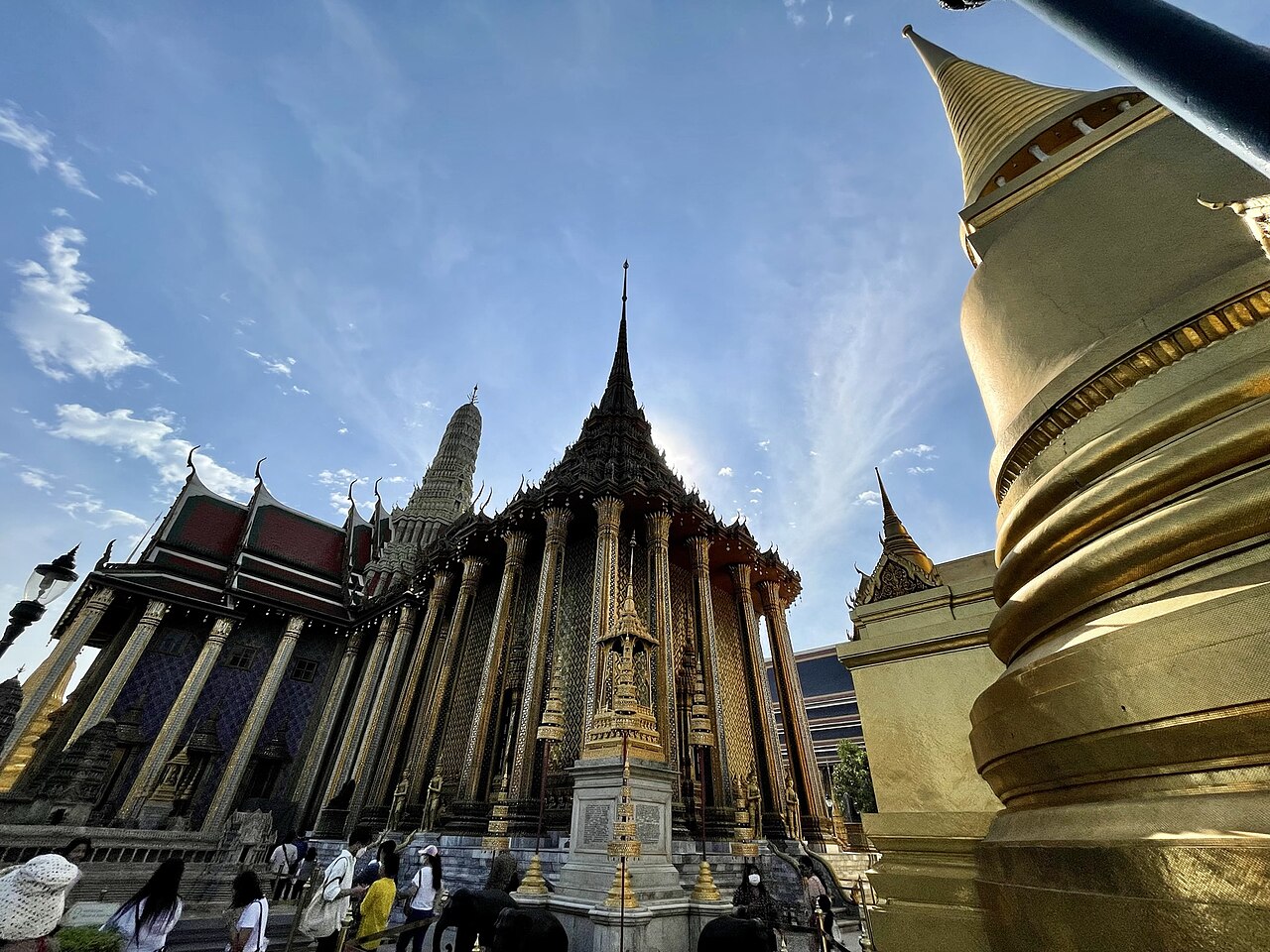
The Old Town does not trade on modern city life; it trades on history, religion and the river — temples, palaces, old shophouses, and a Chao Phraya that is still a working highway.
The appeal of the Old Town is a kind of original Bangkok you can still reach out and touch. Step off a boat and you are at a palace wall and a row of spires; turn into a lane and old shophouses have become curry shops and cafés; walk a little further and you pass a flower market, monks' supply stores and street stalls that have been there for decades. Come evening, the light catches the spire of Wat Arun across the river, and if you want some noise, Khao San is a short walk away. This is the Bangkok people come to in order to feel the roots of the city, not just to pose for a photo.
The Old Town is where Thailand's most important temples and palaces sit close enough to walk between. The Grand Palace and Wat Phra Kaew are the centre; just south is Wat Pho with its giant Reclining Buddha; and across the river is Wat Arun with its porcelain-clad prang. You can see three or four major temples in a single day, linked by the cross-river ferry. It is the best possible starting point for a first trip to Bangkok.
If you like to shoot, the Old Town is the best ground in Bangkok — layered temple roofs, the prang of Wat Arun backlit at dusk, the old shophouses around Tha Tien and the Giant Swing, the Golden Mount looking out over the whole quarter, and boats on the Chao Phraya. Morning and evening light give completely different moods. Photographers tend to arrive at first light, before the crowds and the heat build.
The Old Town has one of the densest clusters of long-running food shops in Bangkok — curry-and-rice, noodles, pad thai and Thai sweets around Tha Tien and Tha Chang, famous old stalls people queue for around the Giant Swing and Phra Nakhon, and late-night eats on Khao San. Prices are still much gentler than the modern side of town. It is a neighbourhood where you genuinely eat well on a small budget. More at the Bangkok street food guide.
Khao San Road and Soi Rambuttri are one of the oldest backpacker centres in Asia — hostels, budget rooms, bars, restaurants and tour-and-transport agencies, busy until late. To be straight about it: some travellers love the party atmosphere, others find it too touristy. If you want something calmer, the Rambuttri side and the riverside around Phra Athit are a short walk away but a very different mood.
The centre of Rattanakosin Island and the number-one sight of the Old Town. Inside is Wat Phra Kaew (the Temple of the Emerald Buddha), home to the Emerald Buddha, Thailand's most revered Buddha image. Open daily from roughly 08:30 to 15:30, with an admission fee for foreign visitors (check the current price before you go). A strict dress code applies — no sleeveless tops, no short shorts or skirts, no see-through clothing. Go early at opening, because it gets crowded and very hot.
Just south of the Grand Palace, a few minutes on foot. The draw is the enormous gilded Reclining Buddha with mother-of-pearl soles, and the temple is the birthplace of traditional Thai massage, with a teaching school on site. Open roughly 08:00 to 18:00 with a small admission fee. You can walk here straight from the palace in the same trip; it is a little greener and a touch less crowded than the palace side.
Wat Arun is on the Thonburi side, directly across the water from Tha Tien. Cross on the ferry from Tha Tien pier, which takes only a few minutes and costs roughly ฿5–10 each way. Its draw is the tall central prang clad in Chinese porcelain that glitters in the light. Open about 08:00 to 18:00 with a small admission fee. Late afternoon is the prettiest time, and the classic shot is Wat Arun backlit against the sunset, photographed from the Tha Tien side.
The northern end of the island is Khao San Road and Soi Rambuttri, the famous backpacker centre. Quiet by day with cafés and restaurants, it turns into a walking street at night, full of bars, live music, food stalls and travellers from everywhere. To be straight with you: some people love the buzz, others would rather skip it — both are fine. If you want a more relaxed feel, the adjoining Rambuttri side and Phra Athit by the river are calmer and more characterful.
The eastern edge of the island has more worth your time — the Golden Mount at Wat Saket, where you climb the spiral steps to pay respects and take in a 360-degree view over the whole Old Town, and the Giant Swing with Wat Suthat nearby. This quarter still has old shophouses, monks'-supply stores and long-running local restaurants. It is a good area to wander beyond the headline temples.
Tha Tien is the old riverside shophouse quarter in front of Wat Pho — both the ferry pier across to Wat Arun and a cluster of cafés, riverside restaurants and hostels in old buildings. You can sit with a coffee and watch Wat Arun across the water. The Chao Phraya express boat (orange flag) stops at Tha Tien, Tha Chang and Phra Athit, so the river itself doubles as a sightseeing route linking ICONSIAM, Yaowarat (Chinatown) and Sathorn.
From cheap curry-and-rice on the street to riverside cafés facing Wat Arun, this is the neighbourhood you come to for old Bangkok on a small budget.
The Old Town has one of the densest clusters of long-established food shops in Bangkok — curry-and-rice, noodles, pad thai, Thai sweets and late-night eats around Tha Tien and Tha Chang, the Giant Swing and Phra Nakhon, and the lanes around the temples. Most plates are still light on the wallet at around ฿40–80, and a few famous places draw long queues — come early or mid-afternoon for fewer people. For the citywide picture, see the Bangkok food guide.
More cafés have opened in the old shophouses and riverside rooms around Tha Tien and Phra Athit in recent years, several of them with a view across the water to Wat Arun — a clear change of pace from the mall cafés on the modern side of town. Coffee usually runs ฿70–150 a cup. It is the right kind of break after a morning of temples. To go deeper into Bangkok café culture, see the Bangkok café guide.
If you want a lively dinner with a drink, Khao San and Rambuttri have street-food stalls, restaurants and bars open late, at easy-going backpacker prices — a bottle of beer runs roughly ฿80–140 (check first, it varies). It is a completely different mood from the rooftop bars over in Sukhumvit and Silom. To compare nights out across the whole city, including the modern-side rooftops, see the Bangkok rooftop bars guide.
Bangkok's best base for travellers who lead with temples, palaces and history — from riverside boutiques to Khao San hostels.
The strongest argument for basing yourself in the Old Town is simple: you wake up within walking distance of the Grand Palace and the main temples, and skip the morning traffic — which matters, because these sights are best visited early, before the crowds and the heat. The area runs from boutique hotels and guesthouses in old riverside buildings to the hostels and budget rooms around Khao San and Rambuttri that backpackers worldwide have used for decades.
The honest trade-off: nights here are much quieter than Sukhumvit (except the Khao San zone, which stays lively until late), there are fewer international restaurants, cafés and malls than the modern side of the city, and there is no BTS — you rely on the MRT Blue Line, the boats or Grab. If your trip is built around shopping, international food and nightlife, Sukhumvit or Silom may suit you better. But if temples and history are the heart of the trip, the Old Town is the base that fits best.
Want the other neighbourhoods and the whole-city picture too?
The Old Town is the one neighbourhood in Bangkok you can sightsee by train and by boat at once. The MRT Blue Line now reaches it, and the Chao Phraya express boat runs along the riverbank past the key piers — both beat the traffic better than a car. Note: there is no BTS here.
08:30 — Start at the Grand Palace and Wat Phra Kaew right at opening (dress modestly) and see them before the crowds and the heat build.
10:30 — Walk on to Wat Pho nearby and see the giant Reclining Buddha.
11:30 — Take the cross-river ferry from Tha Tien to Wat Arun (roughly ฿5–10).
12:30 — Lunch: street food or a riverside café around Tha Tien, looking across to Wat Arun.
Carry on from the half-day route above and fill the afternoon and evening with the northern and eastern parts of the island:
14:00 — Walk or take a tuk-tuk to the Golden Mount (Wat Saket) and climb up for the view over the whole Old Town.
15:30 — Stop at the Giant Swing and Wat Suthat, and wander the old shophouse quarter.
17:00 — Back to the Tha Tien side to photograph Wat Arun backlit against the sunset.
19:00 — Dinner and a wander along Khao San–Rambuttri (Khao San for the buzz, Rambuttri for something calmer).
Want a fuller plan? See the Bangkok one-day itinerary, the two-day itinerary, or plan the whole trip with the complete Bangkok city guide.