Xi'an sits deep inland with a continental climate and four sharply different seasons — blossoms in April, fierce heat and rain in July, clear blue skies in October, and cold dry winters that come with snow on the city wall and bargain hotel rates. Each has something to offer, and each has something to warn you about.
Xi'an has two golden windows that are hard to separate. If you can only pick one month, we lean October — clear blue skies, dry comfortable air around 10–20°C, and the kind of weather that lets you walk the Terracotta Army and climb the city wall all day without breaking a sweat. One catch: book your hotel early and arrive after October 7, since the first week is China's National Day Golden Week, when domestic travellers move en masse and prices peak.
If blossoms and fresh air are the draw, pick April — flowers across the parks and along the city wall, mild temperatures of 10–21°C, and noticeably thinner crowds than October. Summer and winter each have their own charm, but both ask for more preparation to get the most from them — we will walk you through each one in turn.
The weather, what it delivers, and what you are trading for it — told straight.
City Wall · Spring
Great
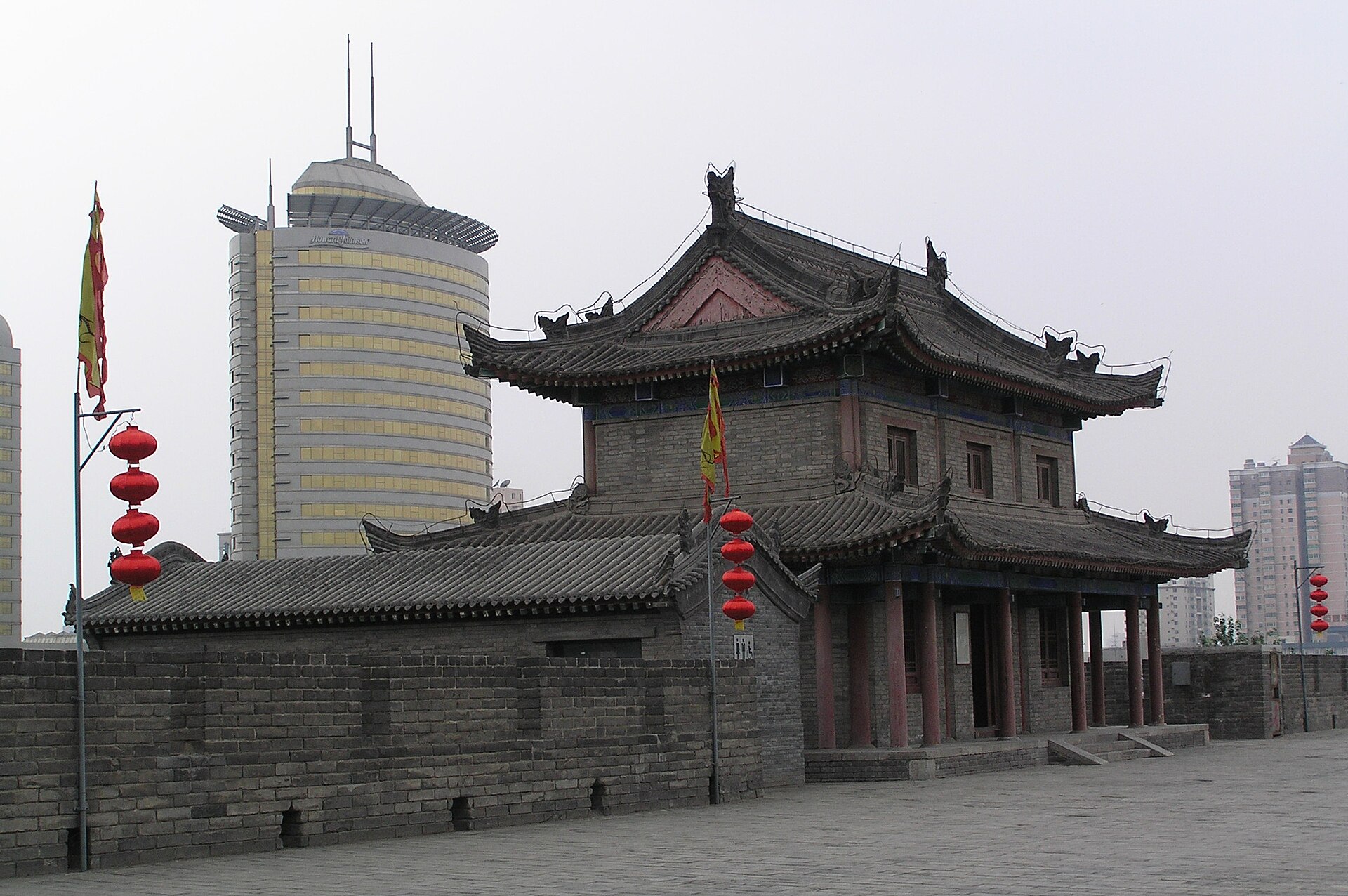
This is the season most travellers love. The air warms gradually — March is still cool at 4–14°C, April hits its stride at 10–21°C, and blossoms open across the parks and along the city wall. Cherry and peach flowers against ancient brick make for some of the city's best photographs. May warms further to 14–26°C, still very walkable but starting to feel the first heat of summer.
The one thing to know about spring: late March and April can bring the occasional dust storm as temperatures swing rapidly, and watch for the Labour Day Golden Week (1–5 May), when domestic travel surges.
Terracotta Army · Summer
Come prepared
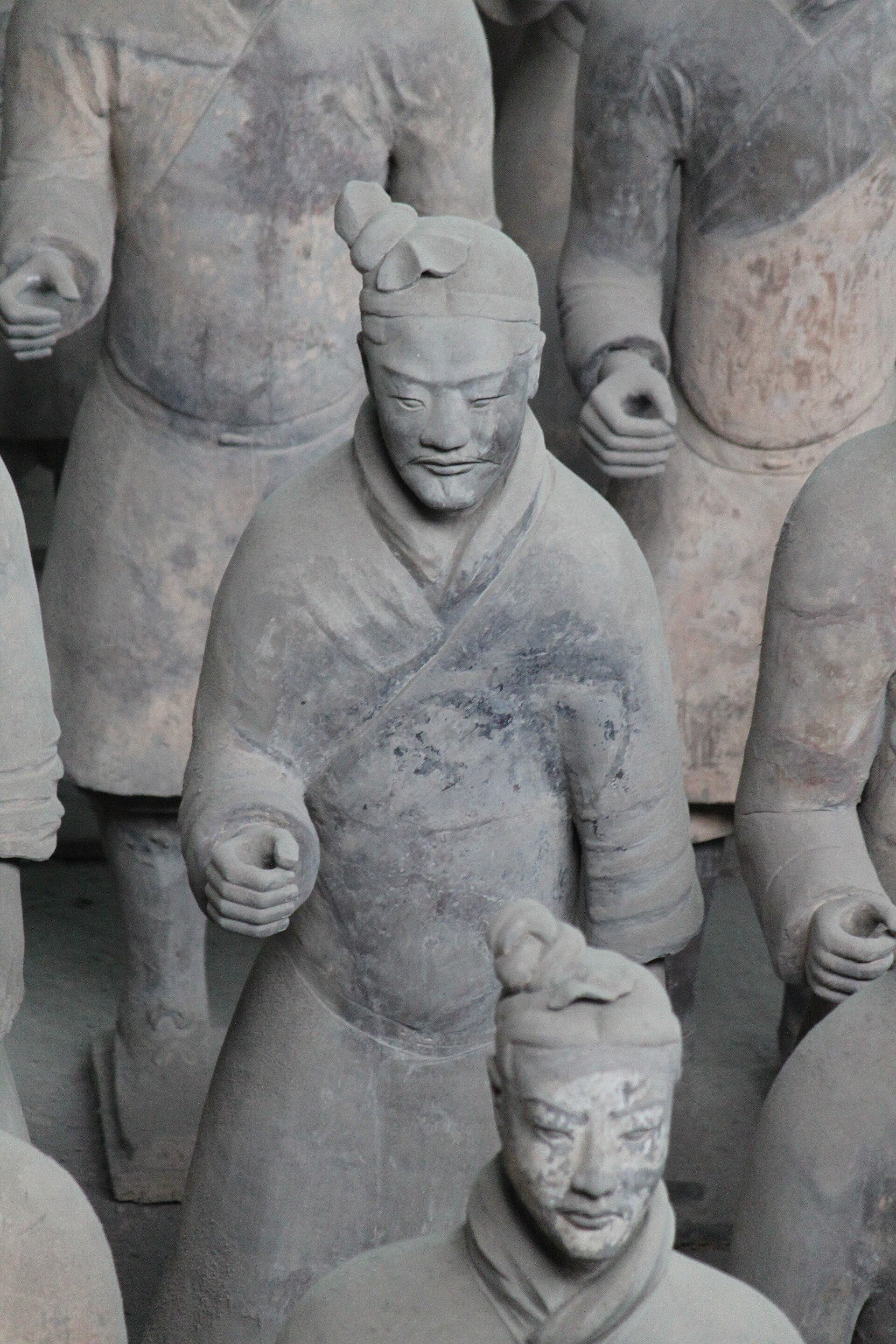
Xi'an in summer is genuinely hot — it sits deep inland with no coastal breeze to soften the edge. July and August daytime highs reach 35–40°C, and this is the wettest stretch of the year, with frequent late-afternoon thunderstorms. The catch worth knowing: the main halls at the Terracotta Army are semi-open hangars that get stuffy in the heat, and crowds peak now because it coincides with the Chinese school holidays.
It is not a write-off if you plan well. Visit the Warriors right at opening, keep outdoor sightseeing to the early morning and evening, and retreat to the cool of the Shaanxi History Museum in the heat of the day.
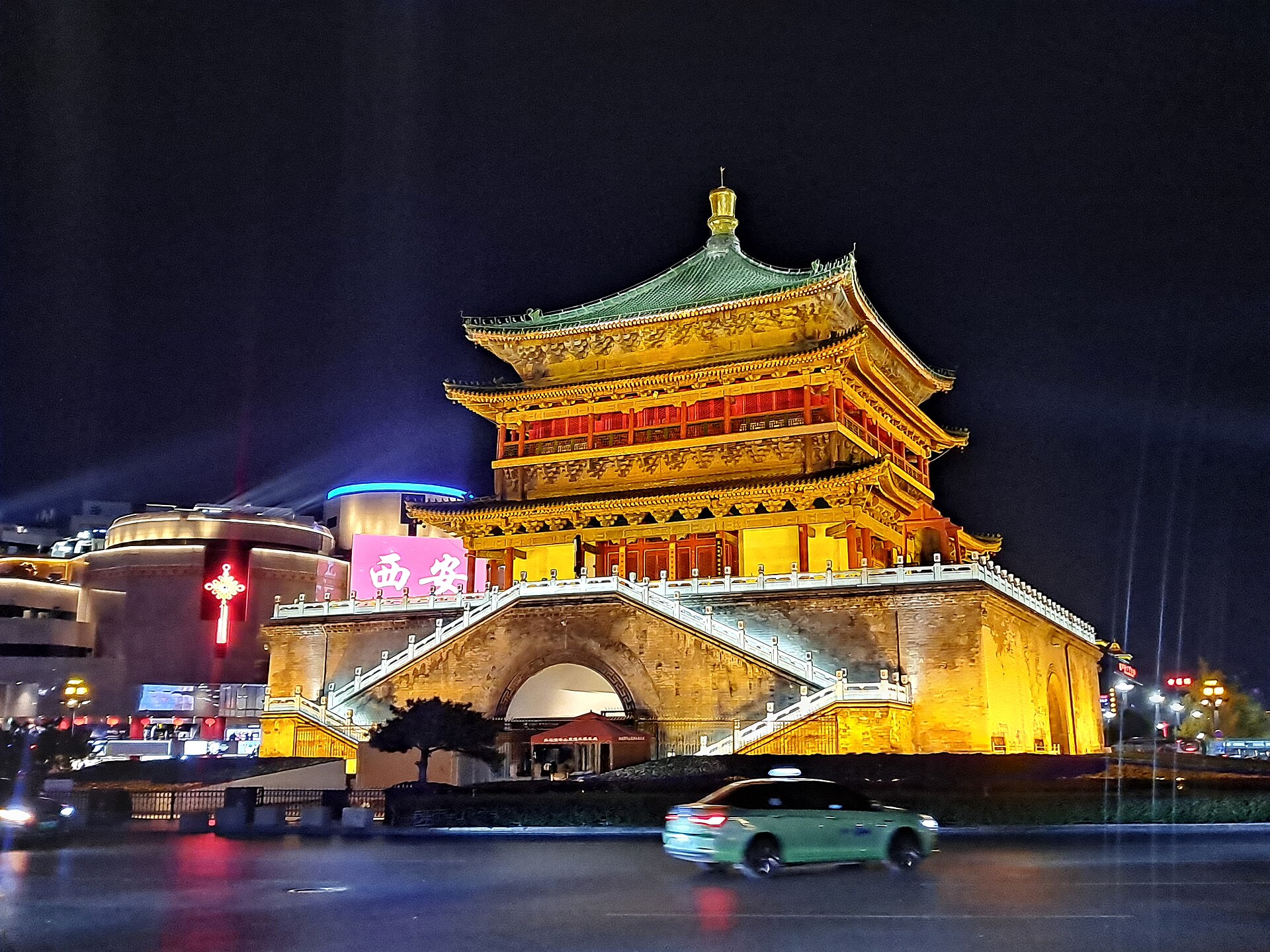
Bell Tower · Autumn
The best
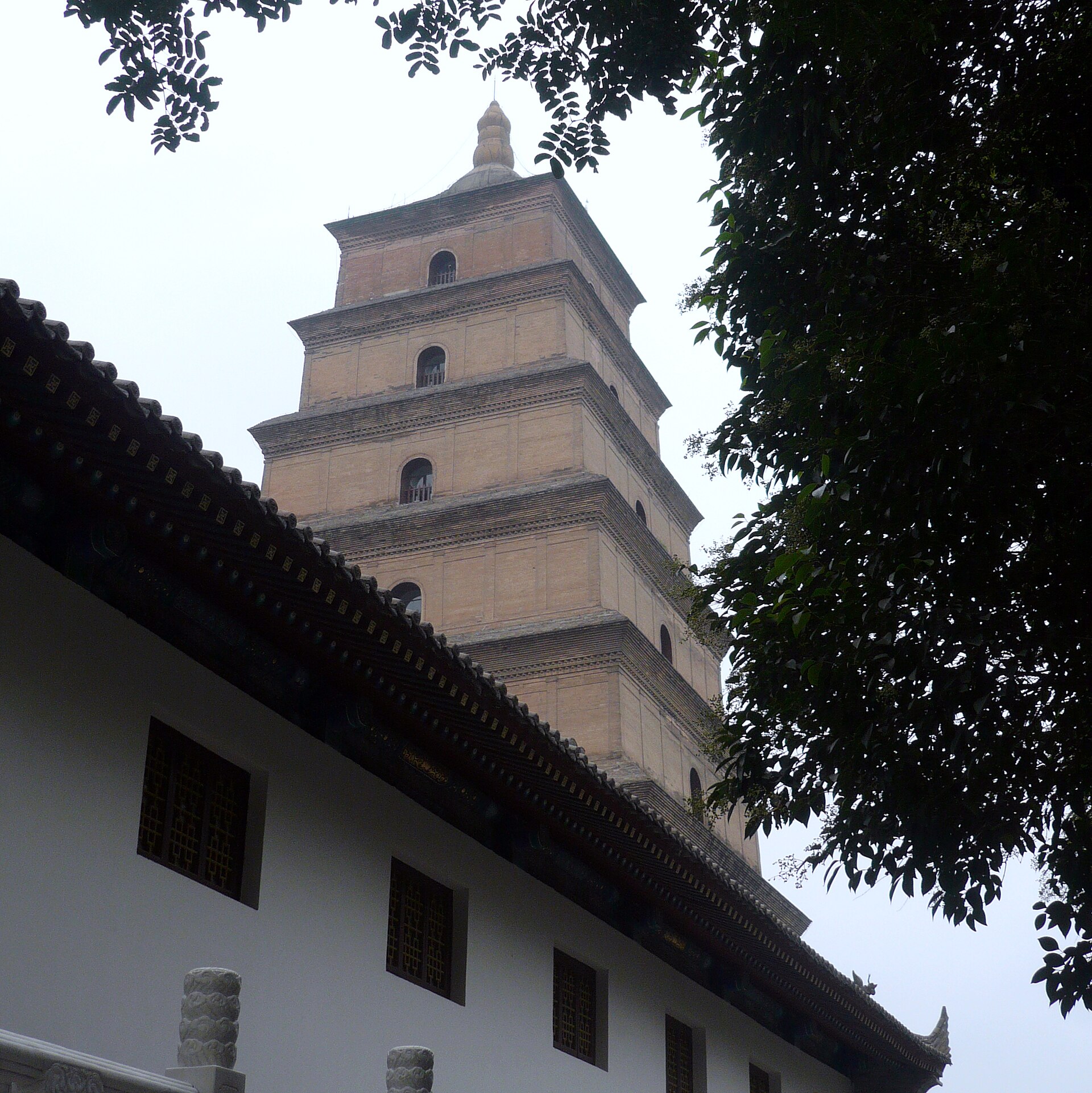
This is the other answer to when Xi'an is at its best: clear skies, dry comfortable air and low humidity. September is still warm at 16–25°C, October settles into an ideal 10–20°C, and you can walk all day without tiring. The city wall and the Big Wild Goose Pagoda are at their sharpest and most photogenic. By late October the foliage turns gold across the parks and around the pagoda.
The one thing to note: November cools fast — from the low teens early in the month to just 3–12°C by the end. Bring a warmer jacket. But the skies stay clear and the crowds thin steadily as the month goes on.
Xi'an at night · Winter
Its own kind of charm
Xi'an winters are cold and dry. January is the coldest month, with daytime highs around 3–5°C and nights that can drop below freezing to -5°C. The air is dry rather than the damp cold of coastal cities, but it still bites. The upside is real: the fewest tourists of the year, the lowest hotel prices, and — if you are lucky enough to catch snow — the city wall, Bell Tower and Big Wild Goose Pagoda look genuinely beautiful under a white dusting.
The winter highlight is the City Wall Lantern Festival over Chinese New Year, when the ancient ramparts are strung with lantern displays along their full length. The flip side: many small restaurants close for one to two weeks over the festival, and the Terracotta Army and city wall get packed. Outside Chinese New Year, winter is the quietest and cheapest season by a wide margin.
Temperature, rainfall and crowd levels — in one table for easy comparison.
| Month | Temperature | Rain | Crowds | Notes |
|---|---|---|---|---|
| January | -5–5°C | Low | Low | Coldest month · cheapest hotels · lantern festival |
| February | -2–9°C | Low | High (CNY) | Chinese New Year — shops close · temple fairs |
| March | 4–14°C | Low | Moderate | Warming up · occasional dust storms |
| April | 10–21°C | Moderate | Moderate | Blossoms · best weather of the year |
| May | 14–26°C | Moderate | High (Golden Week) | 1–5 May: Labour Day crowds and price spike |
| June | 20–33°C | Moderate–heavy | Moderate | Heat building · rainy season begins |
| July | 24–38°C | Heavy | High (holidays) | Hottest and wettest · Warriors packed |
| August | 23–35°C | Heavy | High (holidays) | Hot and humid continues · still busy |
| September | 16–25°C | Moderate | Moderate | Weather improving · skies clearing |
| October | 10–20°C | Low | High (Golden Week) | 1–7 Oct: peak crowds · after 8th: best of the year |
| November | 3–12°C | Low | Moderate | Cooling fast · autumn foliage · clear skies |
| December | -3–6°C | Low | Low | Low prices · cold and dry |
China's national holidays generate the largest annual human movements on Earth. Here is what that means for your trip.
China's largest holiday. Hundreds of millions of people travel to their home towns and tourist destinations simultaneously. In Xi'an the atmosphere is genuinely festive — the city wall lantern festival, temple fairs, colourful crowds — but hotels charge peak prices, small restaurants and local shops close for 7–14 days, and the Terracotta Army and major sights are packed. If you want to experience the festival itself, plan everything well in advance. If you want a calmer trip, pick a different time.
China's second major holiday window. Domestic tourism surges; the Terracotta Army and city wall become difficult to walk through. Hotels fill and prices rise by 30–60%. The weather is good, but if you must travel during this period, book accommodation one to two months ahead and brace for queues at each sight.
The largest Golden Week of the year, with hundreds of millions of domestic trips in a single week. Xi'an is one of the top destinations. The Terracotta Army, city wall and Muslim Quarter become extremely crowded — walking speed drops to a crawl and hotel prices hit their annual peak. The obvious workaround: arrive on or after October 8. The weather is identical — clear, mild, dry — but the crowds dissolve almost overnight and prices normalise immediately.
These are reasons to time your visit, not reasons to avoid it.
The finest reason to visit Xi'an in winter. The ancient city wall — over 13 km around — becomes a ribbon of light, strung with lantern displays along its full length and lit from roughly 18:00 to 24:00. Walking the ramparts surrounded by lanterns is an experience you won't find elsewhere. It starts around New Year's Day and runs for several weeks into early spring — check the current year's dates before you go.
The Lunar New Year temple fair at the City God Temple brings together prayer, street food, folk performances and traditional crafts — lively but grounded, a window onto how Xi'an actually celebrates the new year. It sits close to the Great Mosque and the Muslim Quarter, so you can wander on to eat afterwards.
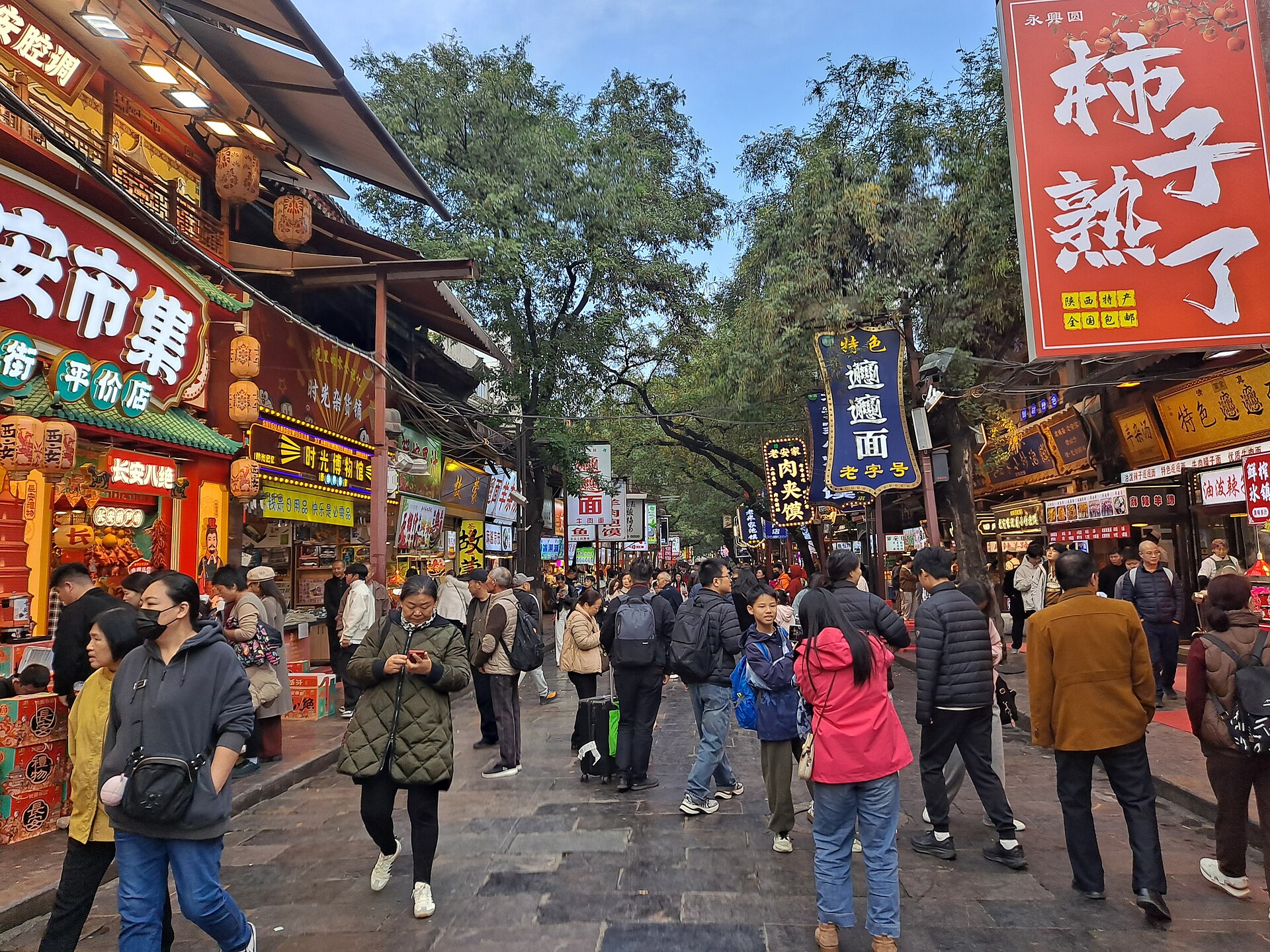
Not an organised festival, but the season when Xi'an is at its prettiest and tastiest. Clear blue skies, foliage turning gold around the Big Wild Goose Pagoda, and persimmon (柿子) season — the fruit that goes into Shaanxi's famous fried persimmon cakes. Hunt them down in the Muslim Quarter; it is a flavour you can only get at this time of year.
Not exhaustive — just the things that actually matter for Xi'an.
Whatever month you arrive, there is something worth seeing.