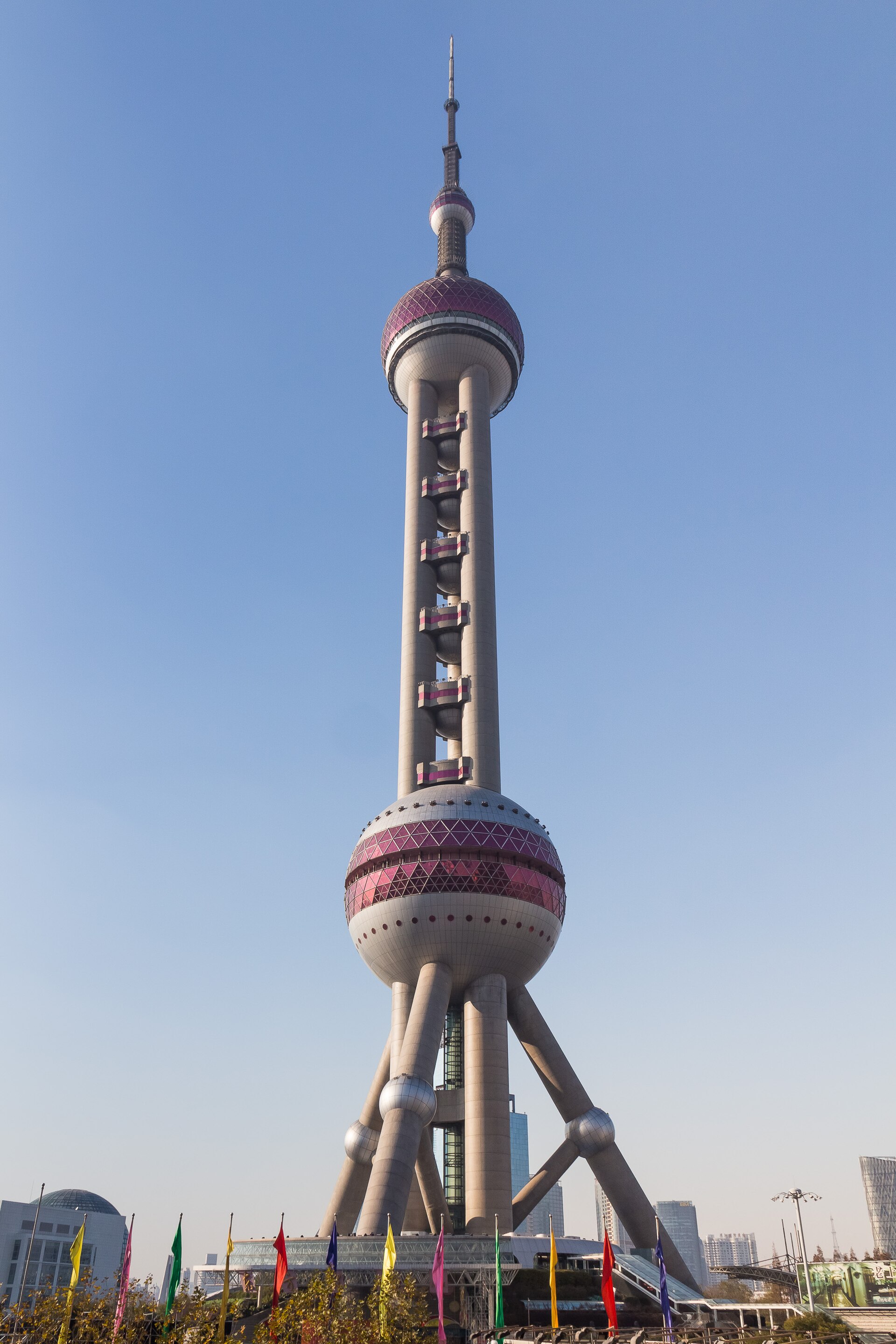
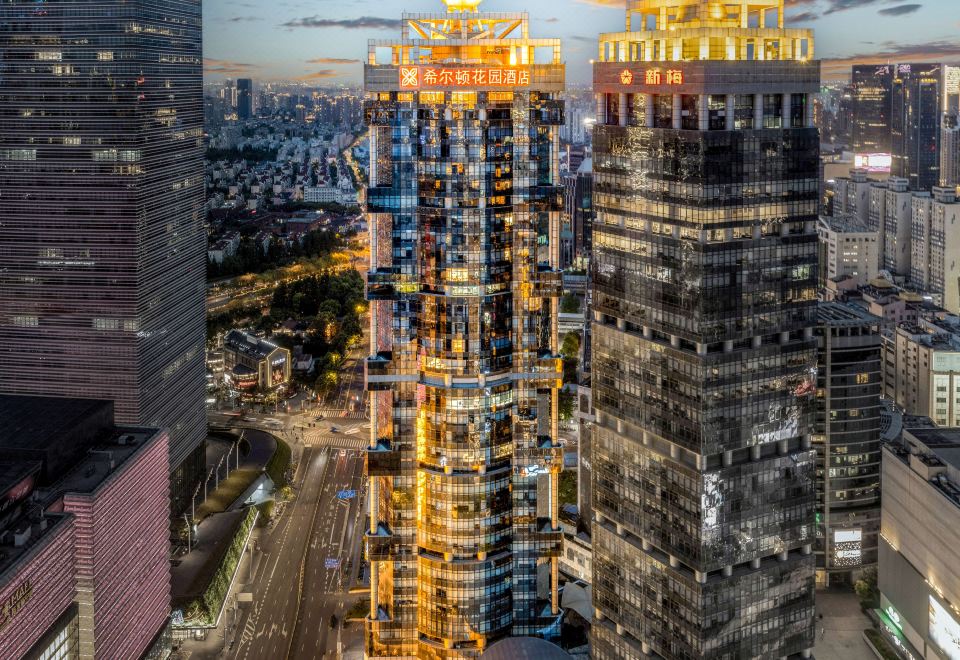
The skyline that made Shanghai famous worldwide — supertall towers clustered at the river's edge, the Oriental Pearl in pink and silver, and the Huangpu at night when both banks light up together.
Stand on the eastern bank of the Huangpu River and look up. Shanghai Tower rises 632 metres — the tallest building in China and the second tallest on earth (only the Burj Khalifa is taller). Beside it, the Shanghai World Financial Center (SWFC) reaches 492 metres, its square aperture cut into the top earning it the nickname "bottle-opener." Beside that, Jin Mao Tower at 421 metres, all pagoda-stacked setbacks and gleaming metal. Turn slightly and the Oriental Pearl Tower — 468 metres of pink and silver spheres — rises over everything like something from a 1990s vision of the future. All four of these structures are within easy walking distance of a single metro station.
This is Lujiazui (陆家嘴), the financial district in the Pudong (浦东) district on the east bank of the Huangpu, directly across the water from the Bund — which is Shanghai's "old face," all colonial-era European facades from the early 20th century. In the early 1990s, the ground where these towers now stand was paddy field. The Chinese government designated Pudong a special economic zone in 1990 and development moved at a pace that had no real precedent. The result is a skyline that has appeared in more travel photographs, textbook covers and TV establishing shots than almost any other urban view on earth.
The honest thing to say about Lujiazui is this: the photographs do not prepare you for the scale. Every visitor who has seen the skyline in pictures says the same thing when they arrive in person — it is much larger, and much closer together, than it appears from any image. Standing at the base of Shanghai Tower and looking up at something that does not stop for 632 metres is a physical experience that is difficult to describe and worth having.
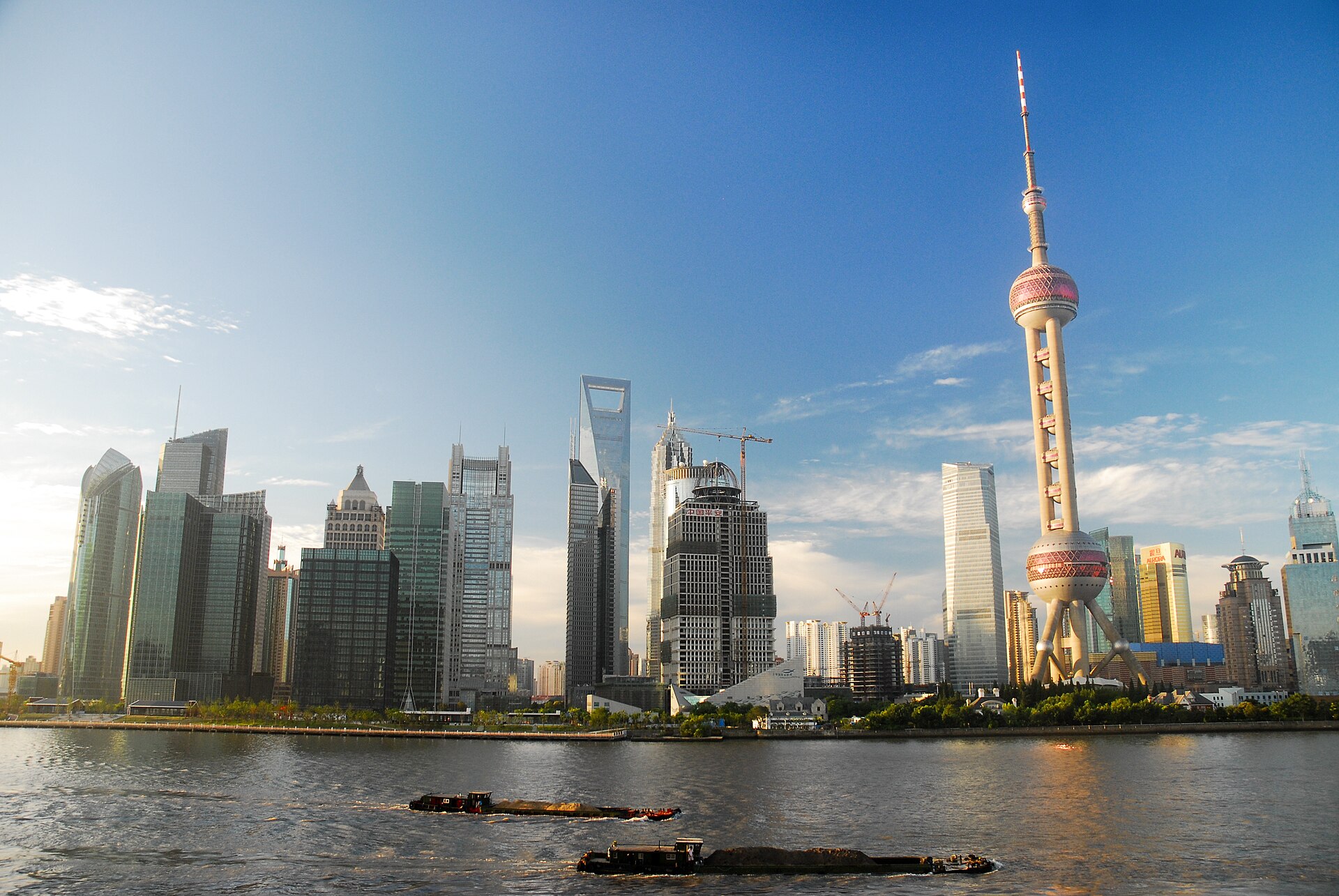
Finance and ambition by day. One of the best free light shows on earth after dark.
Lujiazui is the opposite of the Former French Concession in almost every dimension: the streets are wide, the buildings are enormous, there are no trees, and the scale is explicitly intended to make an impression. Where the Concession invites you to slow down, Lujiazui makes you look up. The neighbourhood is functional rather than atmospheric in the daytime — but at night, when both banks of the Huangpu illuminate together, the visual effect is one of the most remarkable things a city produces for free anywhere in the world.
Shanghai Tower, designed by Gensler, twists 120 degrees from base to tip — reducing wind load by 24 per cent. It has a double-skin facade: an inner curtain wall enclosing the offices, an outer envelope creating a thermal buffer. SWFC's square aperture at the top was originally circular (referencing the Japanese flag, changed under pressure). Jin Mao references Chinese pagoda proportions with the number eight — considered auspicious — embedded throughout its dimensions. These are not just tall buildings; they are engineering arguments made in steel and glass.
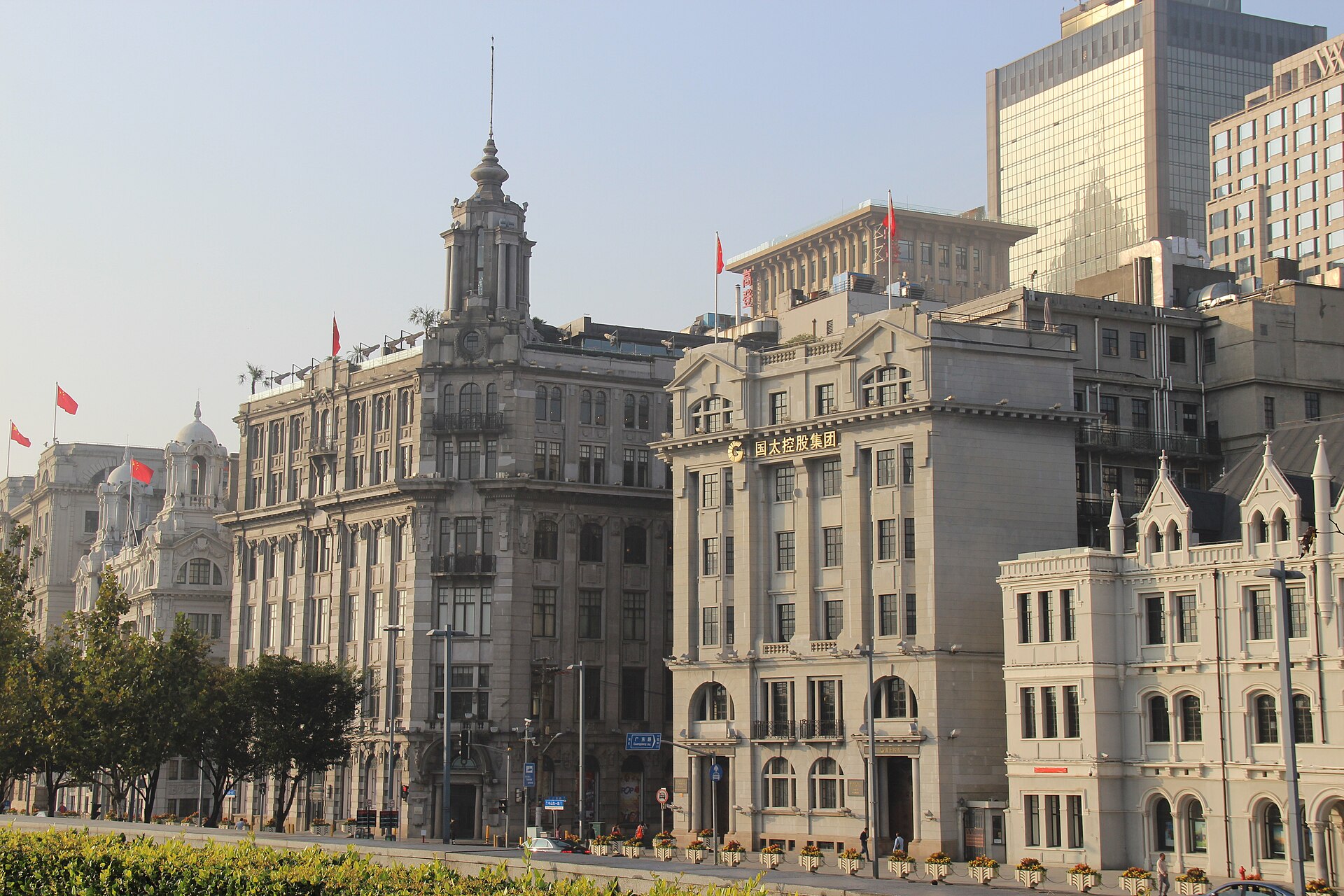
Most visitors stand on the Bund to photograph Pudong. Fewer realise that coming to the Pudong side gives you the best photograph of the Bund — the colonial facades lined up across the water, properly separated and legible in a way they never are when you are standing in front of them. Walk south along Binjiang Avenue to where the river bends and you can frame both banks in a single image. That is the shot most photographers come looking for, and it requires standing on this side of the river to get it.
Pudong is considerably more than just Lujiazui. Shanghai Ocean Aquarium sits immediately adjacent to the Oriental Pearl Tower. The China Art Museum (converted from the China Pavilion of the 2010 World Expo) is further south. Century Park is the city's largest green space. And Shanghai Disneyland is 40 minutes by metro — a full day on its own. For families prepared to use Pudong as a base, two to three days here is genuinely comfortable.
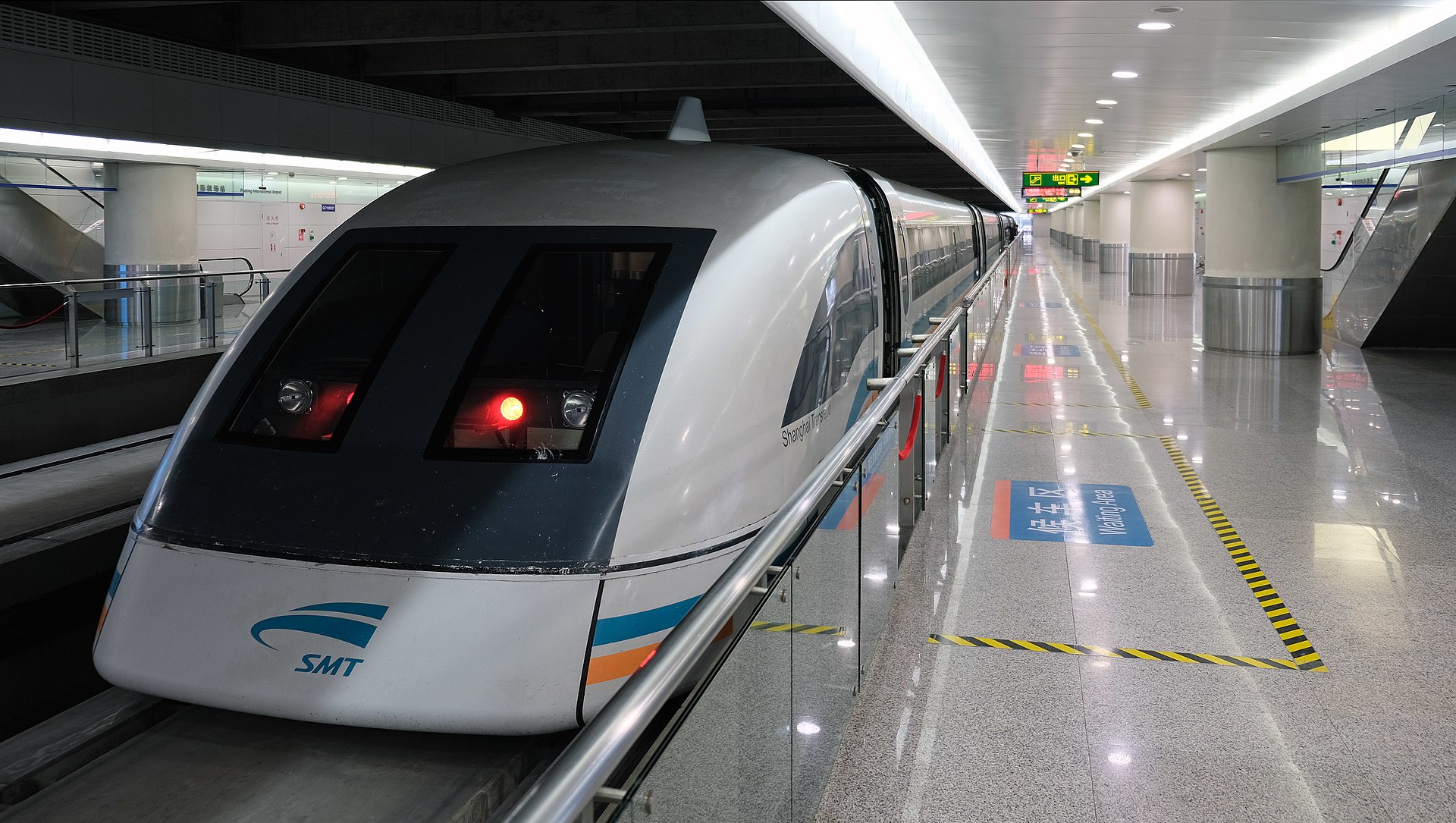
If you are arriving at Pudong International Airport, this neighbourhood makes immediate practical sense. The Maglev train from PVG reaches Longyang Road in seven to eight minutes at up to 430 km/h; from there, two stops on Metro Line 2 brings you to Lujiazui. For business travellers with meetings in the Pudong CBD, staying here eliminates the time cost of crossing the river. The hotels are built for this — large, international, well-equipped and reliably efficient.
China's tallest building and the world's second tallest. The observation deck on floor 118 — at approximately 546 metres — is the highest publicly accessible viewpoint in China. From here, SWFC and Jin Mao appear small below you, which puts the scale into perspective. The floor-to-ceiling windows are angled at 52 degrees, allowing a direct vertical view down to the street. Ticket approximately ¥180–220 (~฿900–1,100); book in advance online to avoid queuing. Open daily 09:00–21:00.
Full guide: Shanghai observation deck guide — all three towers compared
The "bottle-opener" — the trapezoidal aperture cut into its crown was originally designed as a circle, changed to a square after objections that it resembled the Rising Sun symbol. The observation deck at floor 100 (474 m) features a glass-floored sky walk between the two sides of the building: a narrow transparent bridge 100 floors up with nothing below your feet. For visitors who find the glass-floor experience more visceral than the simple panorama of Shanghai Tower, this is often the preferred choice. Ticket approximately ¥160–180 (~฿800–900). Open daily 08:00–23:00.
The oldest of the three supertalls (completed 1999) and, for many visitors, the most elegant. Its stepped silhouette is explicitly derived from traditional Chinese pagoda proportions — every dimension contains the number eight, considered auspicious in Chinese culture. The upper floors house the Grand Hyatt Shanghai, whose atrium rises 152 metres from lobby to ceiling, making it one of the tallest hotel atria in the world. Guests staying here experience this for free. Non-guests can reach the Cloud 9 Bar on floor 87 — drink prices are not cheap, but the view over Pudong is unrestricted and the design of the space is worth seeing.
The pink-and-silver TV tower that opened in 1994 — a 1990s vision of the future that has become, slightly against the odds, one of the most recognisable skyline elements in any city on earth. Its two main spheres (one large, one smaller) are described in Chinese as "two pearls on the Huangpu." The main viewing area is at the glass-floor deck at approximately 259 m; the Space Module sits at 350 m for those who want to go higher. Ticket approximately ¥199 (~฿995) including the Shanghai History Museum at the tower's base — a serious and well-produced museum that traces the city from fishing village to metropolis. Open daily 08:00–21:30.
Full guide: Oriental Pearl Tower — everything you need before you go
The promenade running along the Pudong bank of the Huangpu, stretching roughly 2.5 kilometres. Free to walk at all hours. The early morning — before 08:00 — gives you the avenue largely to yourself: Shanghainese residents doing tai chi or exercising, soft light on the water, and the Bund facades across the river with no tourist crowds obscuring them. After 20:00, both banks illuminate and what functions as a nightly light show begins — buildings outlined in LED, the river reflecting everything twice. Walking this stretch at night, looking across at the illuminated Bund, is one of those experiences that photographs cannot adequately represent. It is simply worth doing.
Shanghai IFC (International Finance Centre), connected to SWFC, is the area's flagship luxury mall — Cartier, Prada, the Taiwanese bookshop chain Eslite and a strong restaurant floor. The upper floors are The Ritz-Carlton Pudong and JW Marriott. Super Brand Mall (正大广场) directly on the riverfront is larger and more accessible in price, ranging from international mid-market brands to local food courts serving proper Shanghainese food. For those who find both too expensive, the streets immediately around and behind the towers have everyday options at ordinary prices. Bring Alipay or WeChat Pay rather than relying on cash.
The view of the Bund from this side is the one most visitors did not know they needed. And the food halls inside the towers are better than you might expect.
Most visitors go to the Bund to photograph Pudong, and that is a good idea. But the photograph most of them actually want — the Bund's colonial facades arranged in an uninterrupted line across the water — can only be taken from this side of the river. Standing at the Bund itself, you are among the buildings; the perspective collapses and the individual structures are hard to read. From Binjiang Avenue on the Pudong side, the whole facade opens up, the spacing becomes clear, and the buildings read as the coordinated visual argument they were designed to be. Walk south along the promenade until the river bends; from that point you can frame both the Bund and the Pudong towers in a single photograph. That composition is the image most travel magazines use, and it requires standing exactly here to get it.
Full guide: The Bund — the complete guide to Shanghai's most famous riverfront
The neighbourhood has a full range of dining options by virtue of having some of Shanghai's largest malls and most expensive hotels concentrated in a small area. Fine dining on the upper floors of the towers — views from 87 or 100 floors up — is available and costs what you would expect. More useful for most visitors: the food halls inside Super Brand Mall and Shanghai IFC both carry decent versions of Shanghainese food at broadly reasonable prices compared to full-service restaurants. Look for benbang cai (本帮菜) — the sweet-savoury cooking style native to Shanghai — and specifically for shengjian bao (pan-fried dumplings, crispy on the bottom) and hongshaorou (red-braised pork belly). For a more thorough guide to the city's food: Shanghai food guide.
Wake up to a skyline view. Walk to three of the world's tallest buildings before breakfast. Get to the airport in twenty minutes.
The case for basing yourself in Lujiazui is straightforward: you are inside the skyline rather than looking at it from across the river. Hotels here have some of the best room views in Shanghai — upper-floor rooms in the riverside properties face the Bund directly, which means waking up to exactly the image that made you want to come to Shanghai in the first place. For business travellers, the Pudong CBD is on the doorstep and Pudong Airport is 20 minutes away by Maglev and metro.
The honest limitations: Lujiazui is quieter than Puxi at night — there is no equivalent to the French Concession's café streets, the lane-house neighbourhoods or the animated food and bar scene of Jing'an. If your itinerary is weighted towards those experiences, staying on the west bank and crossing by metro or ferry for the skyline views may be the more practical arrangement. For the comparison in full: Puxi vs Pudong — which side to stay on.
Or read individual hotel reviews for properties in Pudong:
The neighbourhood is well connected from every part of Shanghai and has a direct link to Pudong Airport. Choose your route based on where you are coming from.
The fastest passenger train in regular commercial operation anywhere in the world. The Maglev runs between Pudong International Airport (PVG) and Longyang Road — a distance of 30 kilometres in seven to eight minutes. Maximum speed in standard daytime operation is 430 km/h; the speed display inside the carriage counts up and down visibly. Tickets: ¥50 (~฿250) single, ¥80 (~฿400) return; a 10 per cent discount applies if you show a same-day flight boarding pass. Sit on the right-hand side when departing the city for the clearest speed-display view. This is one of those experiences that is genuinely hard to convey in words — 430 km/h is fast enough to feel categorically different from anything else on rails.
Full guide: Getting from Pudong Airport to the city — Maglev, metro, taxi and all options
In the Pudong district but considerably further east — about 40 minutes from Lujiazui on Metro Line 2 then Line 11 to the Disney Resort terminal station. Opened in 2016, the park has eight themed lands including the newest addition, Zootopia, which opened in December 2023. TRON Lightcycle Power Run here runs faster than the Walt Disney World version. Tickets start at ¥475 (~฿2,375) on weekdays and ¥719 (~฿3,595) on peak days and weekends. Book well ahead for school holidays and Golden Week (the first week of October). A single day is enough to cover the main attractions if you prioritise Lightning Lane for the major rides.
Full guide: Shanghai Disneyland — the complete guide for first-time visitors